


 购物车
购物车 个人中心
个人中心
Salute to Adventurers
¥8.09
Salute to Adventurers is an historical novel, which tells the story of Andrew Garvald , a young Scottish merchant, who migrates to the Jamestown Colony. This story includes survival, pirates, Indians, and love. According to Wikipedia, "John Buchan, 1st Baron Tweedsmuir (26 August 1875 – 11 February 1940) was a Scottish novelist and Unionist politician who served as Governor General of Canada. Buchan's 100 works include nearly thirty novels, seven collections of short stories and biographies of Sir Walter Scott, Caesar Augustus, and Oliver Cromwell. Buchan's most famous of his books were the spy thrillers (including) The 39 Steps (which was converted to a play as well as an Alfred Hitchcock movie starring Robert Donat as Richard Hannay, though with Buchan's story much altered.) The "last Buchan" (as Graham Greene entitled his appreciative review) was the 1941 novel Sick Heart River (American title: Mountain Meadow), in which a dying protagonist confronts in the Canadian wilderness the questions of the meaning of life. The insightful quotation "It's a great life, if you don't weaken" is famously attributed to Buchan, as is "No great cause is ever lost or won, The battle must always be renewed, And the creed must always be restated."
Phineas Redux
¥8.09
First published in serial form in the "Graphic: An Illustrated Weekly Newspaper" beginning in 1873 and in book form in 1873. The books of the Palliser series are: Can You Forgive Her? Phineas Finn, The Eustace Diamonds, Phineas Redux, The Prime Minister, and The Duke's Children. According to Wikipedia: "Anthony Trollope ( 1815 – 1882 ) became one of the most successful, prolific and respected English novelists of the Victorian era. Some of Trollope's best-loved works, known as the Chronicles of Barsetshire, revolve around the imaginary county of Barsetshire; he also wrote penetrating novels on political, social, and gender issues and conflicts of his day. Trollope has always been a popular novelist. Noted fans have included Sir Alec Guinness (who never travelled without a Trollope novel), former British Prime Ministers Harold Macmillan and Sir John Major, economist John Kenneth Galbraith, American novelists Sue Grafton and Dominick Dunne and soap opera writer Harding Lemay. Trollope's literary reputation dipped somewhat during the last years of his life, but he regained the esteem of critics by the mid-twentieth century. "Of all novelists in any country, Trollope best understands the role of money. Compared with him even Balzac is a romantic." — W. H. Auden"
Dubliners
¥8.09
According to Wikipedia: "Dubliners is a collection of 15 short stories by James Joyce, first published in 1914. The fifteen stories were meant to be a naturalistic depiction of the Irish middle class life in and around Dublin in the early years of the 20th century. The stories were written at the time when Irish nationalism was at its peak, and a search for a national identity and purpose was raging; at a crossroads of history and culture, Ireland was jolted by various converging ideas and influences. They centre on Joyce's idea of an epiphany: a moment where a character has a special moment of self-understanding or illumination. Many of the characters in Dubliners later appear in minor roles in Joyce's novel Ulysses. The initial stories in the collection are narrated by children as protagonists, and as the stories continue, they deal with the lives and concerns of progressively older people. This is in line with Joyce's tripartite division of the collection into childhood, adolescence and maturity."
The Forest Runners, A Story of the Great War Trail in Early Kentucky
¥8.09
Historical novel from the Young Trailers series. According to Wikipedia: "Joseph Alexander Altsheler (1862 - 1919), was an American author of popular juvenile historical fiction. Altsheler was born in Three Springs, Kentucky to Joseph and Louise Altsheler. In 1885, he took a job at the Louisville Courier-Journal as a reporter and later, an editor. He started working for the New York World in 1892, first as the paper's Hawaiian correspondent and then as the editor of the World's tri-weekly magazine. Due to a lack of suitable stories, he began writing children's stories for the magazine.
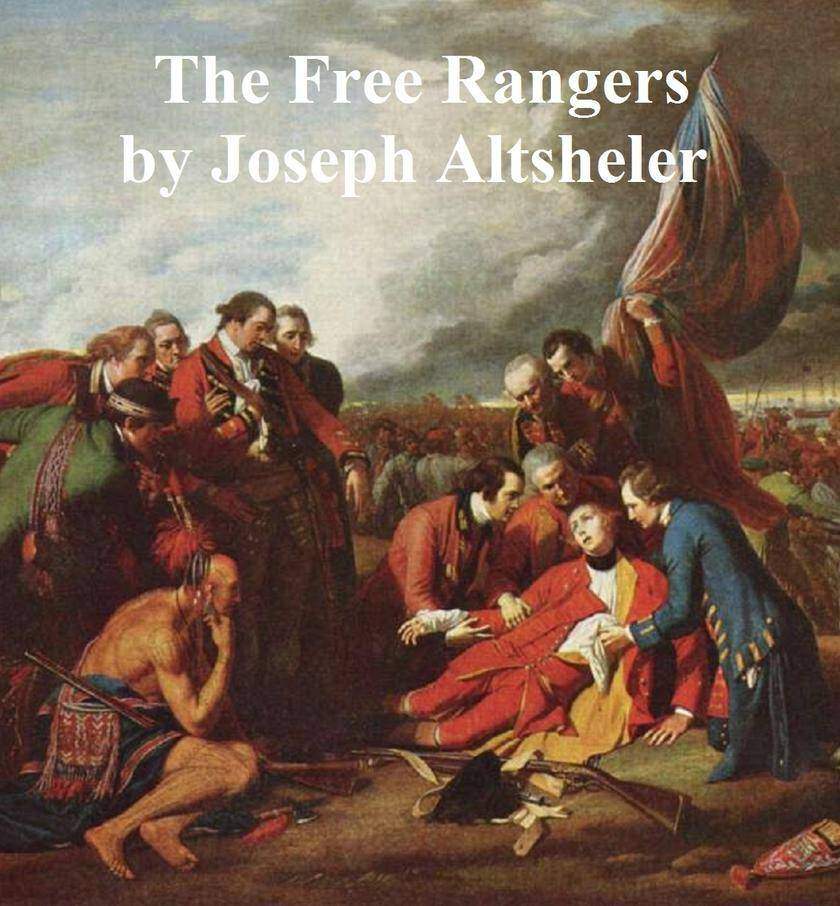
Free Rangers, A Story of the Early Days Along the Mississippi
¥8.09
Historical novel from the Young Trailers series. According to Wikipedia: "Joseph Alexander Altsheler (1862 - 1919), was an American author of popular juvenile historical fiction. Altsheler was born in Three Springs, Kentucky to Joseph and Louise Altsheler. In 1885, he took a job at the Louisville Courier-Journal as a reporter and later, an editor. He started working for the New York World in 1892, first as the paper's Hawaiian correspondent and then as the editor of the World's tri-weekly magazine. Due to a lack of suitable stories, he began writing children's stories for the magazine.
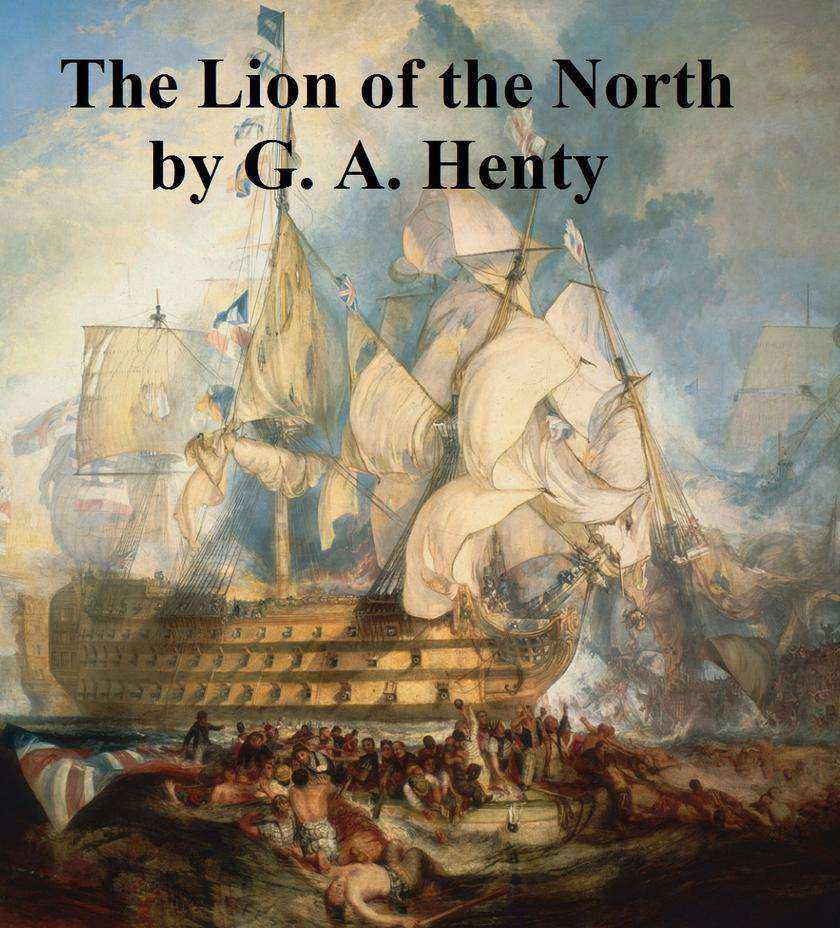
The Lion of the North, A Tale of the Times of Gustavus Adolphus
¥8.09
Historical novel set during the Thirty Years War. According to the Preface: "You are nowadays called upon to acquire so great a mass of learning and information in the period of life between the ages of twelve and eighteen that it is not surprising that but little time can be spared for the study of the history of foreign nations. Most lads are, therefore, lamentably ignorant of the leading events of even the most important epochs of Continental history, although, as many of these events have exercised a marked influence upon the existing state of affairs in Europe, a knowledge of them is far more useful, and, it may be said, far more interesting than that of the comparatively petty affairs of Athens, Sparta, Corinth, and Thebes." According to Wikipedia: "George Alfred Henty (8 December 1832 - 16 November 1902), referred to as G. A. Henty, was a prolific English novelist, special correspondent, and Imperialist born in Trumpington, Cambridgeshire, England. He is best known for his historical adventure stories that were popular in the late 19th century. His works include Out on the Pampas (1871), The Young Buglers (1880), With Clive in India (1884) and Wulf the Saxon (1895)."

Saint George for England
¥8.09
Historical novel set in the 14th century, during the Hundred Years War between England and France. The Preface begins: "You may be told perhaps that there is no good to be obtained from tales of fighting and bloodshed, - that there is no moral to be drawn from such histories. Believe it not. War has its lessons as well as Peace. You will learn from tales like this that determination and enthusiasm can accomplish marvels, that true courage is generally accompanied by magnanimity and gentleness, and that if not in itself the very highest of virtues, it is the parent of almost all the others, since but few of them can be practised without it. The courage of our forefathers has created the greatest empire in the world around a small and in itself insignificant island; if this empire is ever lost, it will be by the cowardice of their descendants." According to Wikipedia: "George Alfred Henty (8 December 1832 - 16 November 1902), referred to as G. A. Henty, was a prolific English novelist, special correspondent, and Imperialist born in Trumpington, Cambridgeshire, England. He is best known for his historical adventure stories that were popular in the late 19th century. His works include Out on the Pampas (1871), The Young Buglers (1880), With Clive in India (1884) and Wulf the Saxon (1895)."
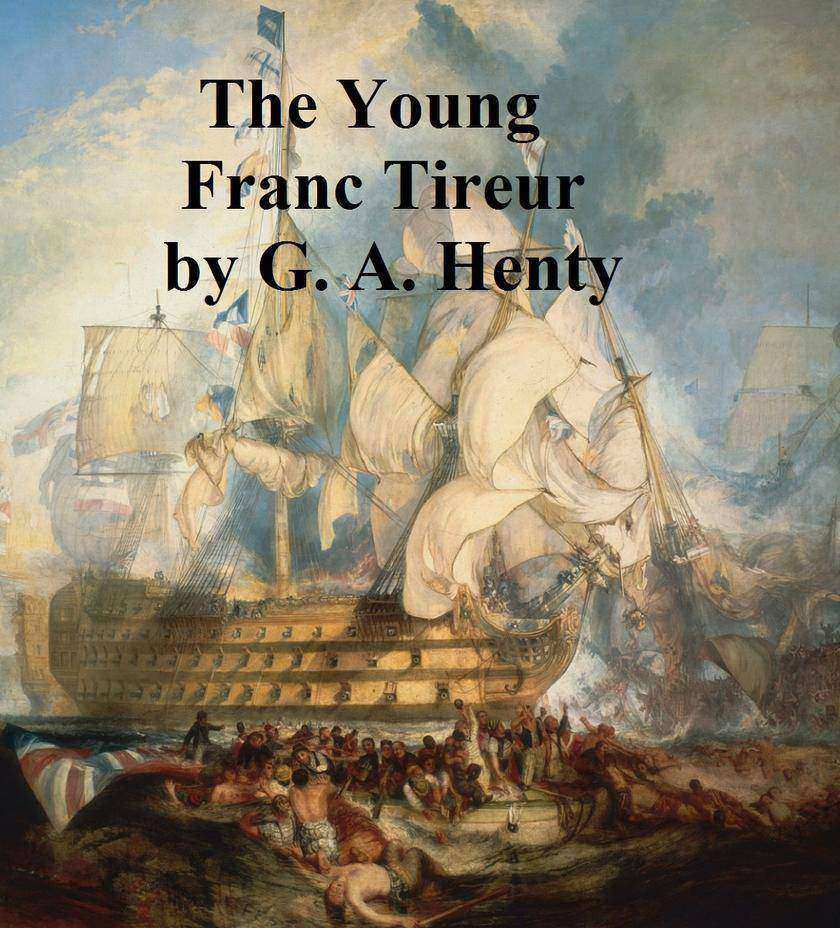
The Young Franc Tireurs
¥8.09
Historical novel set in the late 19th century, during the Franco-Prussian War. The Preface begins: "The present story was written and published a few months, only, after the termination of the Franco-German war. At that time the plan--which I have since carried out in The Young Buglers, Cornet of Horse, and In Times of Peril, and which I hope to continue, in further volumes--of giving, under the guise of historical tales, full and accurate accounts of all the leading events of great wars, had not occurred to me. My object was only to represent one phase of the struggle--the action of the bodies of volunteer troops known as franc tireurs." According to Wikipedia: "George Alfred Henty (8 December 1832 - 16 November 1902), referred to as G. A. Henty, was a prolific English novelist, special correspondent, and Imperialist born in Trumpington, Cambridgeshire, England. He is best known for his historical adventure stories that were popular in the late 19th century. His works include Out on the Pampas (1871), The Young Buglers (1880), With Clive in India (1884) and Wulf the Saxon (1895)."

The Heart of Mid-Lothian
¥8.09
Historical novel, first published in 1818. Set in Edinburgh, Richmond, and London in 1736. According to Wikipedia: "Sir Walter Scott, 1st Baronet (1771 – 1832) was a prolific Scottish historical novelist and poet popular throughout Europe during his time. In some ways Scott was the first English-language author to have a truly international career in his lifetime, with many contemporary readers all over Europe, Australia, and North America. His novels and poetry are still read, and many of his works remain classics of both English-language literature and of Scottish literature. Famous titles include Ivanhoe, Rob Roy, The Lady of The Lake, Waverley, The Heart of Midlothian and The Bride of Lammermoor."
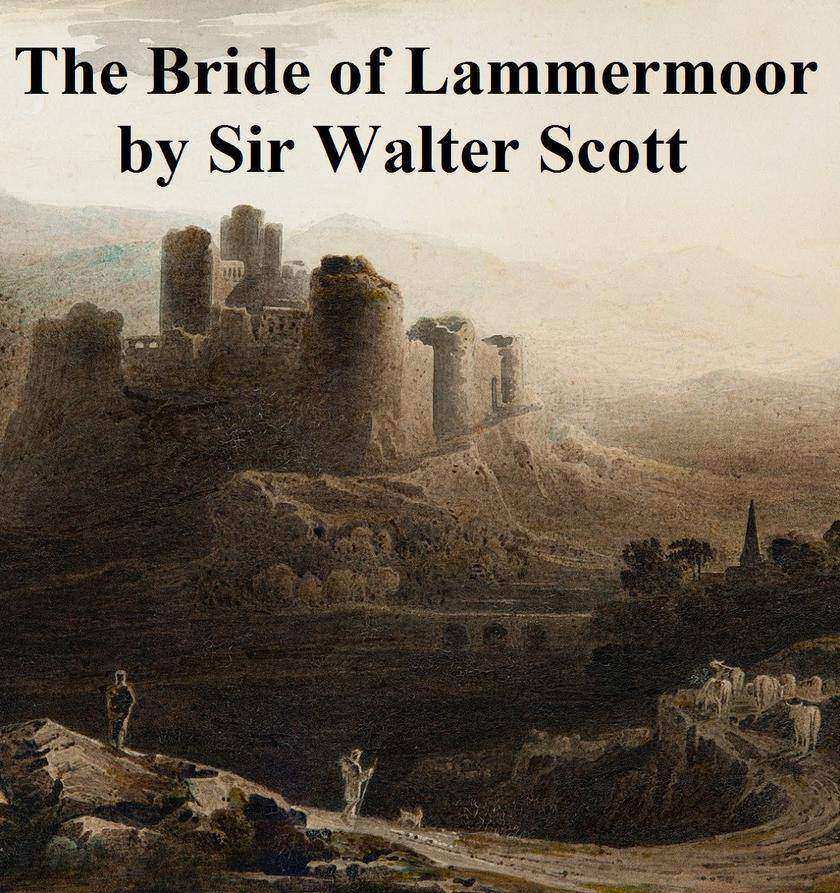
The Bride of Lammermoor
¥8.09
Historical novel, first published in 1819. Set in East Lothian, in 1709-1711. According to Wikipedia: "Sir Walter Scott, 1st Baronet (1771 – 1832) was a prolific Scottish historical novelist and poet popular throughout Europe during his time. In some ways Scott was the first English-language author to have a truly international career in his lifetime, with many contemporary readers all over Europe, Australia, and North America. His novels and poetry are still read, and many of his works remain classics of both English-language literature and of Scottish literature. Famous titles include Ivanhoe, Rob Roy, The Lady of The Lake, Waverley, The Heart of Midlothian and The Bride of Lammermoor."

Redgauntlet
¥8.09
Historical novel, first published in 1824. Set in Southern Scotland and Cumberland, England, in 1766. According to Wikipedia: "Sir Walter Scott, 1st Baronet (1771 – 1832) was a prolific Scottish historical novelist and poet popular throughout Europe during his time. In some ways Scott was the first English-language author to have a truly international career in his lifetime, with many contemporary readers all over Europe, Australia, and North America. His novels and poetry are still read, and many of his works remain classics of both English-language literature and of Scottish literature. Famous titles include Ivanhoe, Rob Roy, The Lady of The Lake, Waverley, The Heart of Midlothian and The Bride of Lammermoor."
Arsene Lupin
¥8.09
According to Wikipedia: "Maurice Marie ?mile Leblanc (11 November 1864 – 6 November 1941) was a French novelist and writer of short stories, known primarily as the creator of the fictional gentleman thief and detective Arsène Lupin, often described as a French counterpart to Arthur Conan Doyle's creation Sherlock Holmes.
The Extraordinary Adventures of Arsene Lupin
¥8.09
According to Wikipedia: "Maurice Marie ?mile Leblanc (11 November 1864 – 6 November 1941) was a French novelist and writer of short stories, known primarily as the creator of the fictional gentleman thief and detective Arsène Lupin, often described as a French counterpart to Arthur Conan Doyle's creation Sherlock Holmes.
On the Irrawaddy
¥8.09
Historical novel, set during British colonial war in the 19th century. According to the Preface: "With the exception of the terrible retreat from Afghanistan, none of England's many little wars have been so fatal--in proportion to the number of those engaged--as our first expedition to Burma. It was undertaken without any due comprehension of the difficulties to be encountered, from the effects of climate and the deficiency of transport; the power, and still more the obstinacy and arrogance of the court of Ava were altogether underrated; and it was considered that our possession of her ports would assuredly bring the enemy, who had wantonly forced the struggle upon us, to submission." According to Wikipedia: "George Alfred Henty (8 December 1832 - 16 November 1902), referred to as G. A. Henty, was a prolific English novelist, special correspondent, and Imperialist born in Trumpington, Cambridgeshire, England. He is best known for his historical adventure stories that were popular in the late 19th century. His works include Out on the Pampas (1871), The Young Buglers (1880), With Clive in India (1884) and Wulf the Saxon (1895)."
In the Closed Room
¥8.09
Short story for children. According to Wikipedia: "Frances Hodgson Burnett, ( 1849 - 1924) was an English–American playwright and author. She is best known for her children's stories, in particular The Secret Garden, A Little Princess, and Little Lord Fauntleroy. Born Frances Eliza Hodgson in Cheetham Hill, Manchester, her father died in 1854, and the family had to endure poverty and squalor in the Victorian slums of Manchester. Following the death of her mother in 1867, an 18-year-old Frances was now the head of a family of four younger siblings. She turned to writing to support them all, with a first story published in Godey's Lady's Book in 1868. Soon after she was being published regularly in Godey's, Scribner's Monthly, Peterson's Ladies' Magazine and Harper's Bazaar. Her main writing talent was combining realistic detail of working-class life with a romantic plot. Her first novel was published in 1877; That Lass o' Lowrie's was a story of Lancashire life. After moving with her husband to Washington, D.C., Burnett wrote the novels Haworth's (1879), Louisiana (1880), A Fair Barbarian (1881), and Through One Administration (1883), as well as a play, Esmeralda (1881), written with William Gillette...Her later works include Sara Crewe (1888) - later rewritten as A Little Princess (1905); The Lady of Quality (1896) - considered one of the best of her plays; and The Secret Garden (1909), the children's novel for which she is probably best known today. The Lost Prince was published in 1915..."
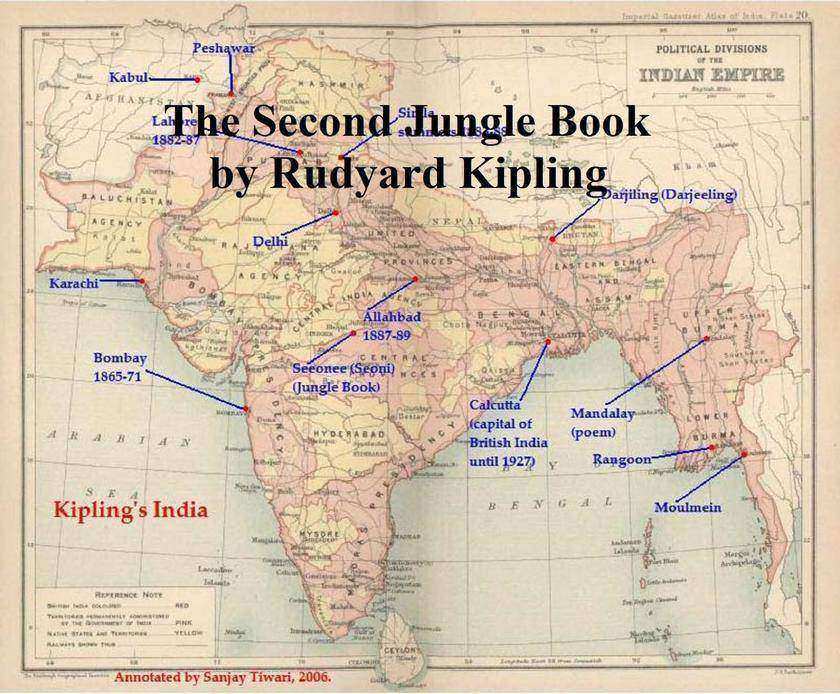
The Second Jungle Book
¥8.09
12 black-and-white illustrations. Classic Kipling short stories and verse, including the last of the Mowgli stories. How Fear Came, The Law of the Jungle, The Miracle of Purun Bhagat, A Song of Kabir, Letting in the Jungle, Mowgli's Song against People, The Undertakers, A Ripple Song, The King's Ankus, The Song of the Little Hunter, Quiquern, 'Angutivaun Taina', Red Dog, Chil's Song, The Spring Running, and The Outsong. According to Wikipedia: "Joseph Rudyard Kipling (1865 – 1936) was an English author and poet. Born in Bombay, British India (now Mumbai), he is best known for his works The Jungle Book (1894) and Rikki-Tikki-Tavi (1902), his novel, Kim (1901); his poems, including Mandalay (1890), Gunga Din (1890), If— (1910); and his many short stories, including The Man Who Would Be King (1888). He is regarded as a major "innovator in the art of the short story"; his children's books are enduring classics of children's literature; and his best works speak to a versatile and luminous narrative gift. Kipling was one of the most popular writers in English, in both prose and verse, in the late 19th and early 20th centuries.[2] The author Henry James said of him: "Kipling strikes me personally as the most complete man of genius (as distinct from fine intelligence) that I have ever known." In 1907, he was awarded the Nobel Prize in Literature, making him the first English language writer to receive the prize, and to date he remains its youngest recipient. Among other honours, he was sounded out for the British Poet Laureateship and on several occasions for a knighthood, all of which he declined."
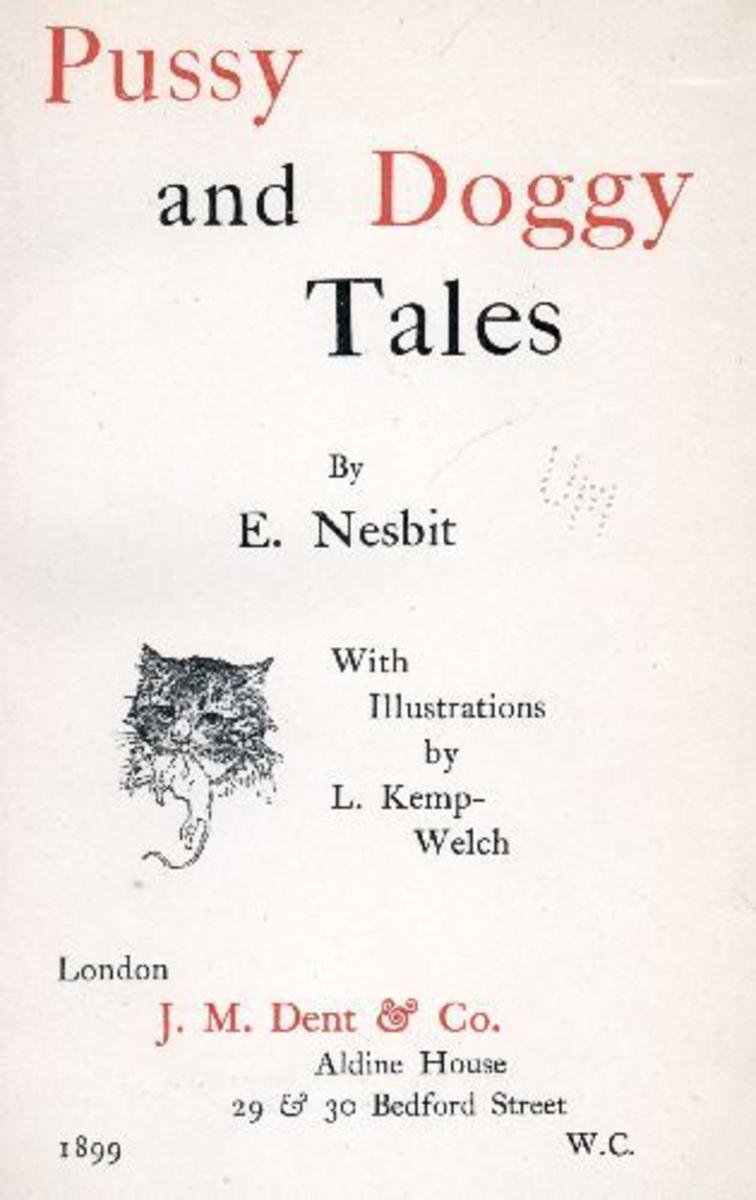
Pussy and Doggy Tales
¥8.09
Stories for children. With 25 illustrations. According to Wikipedia: "Edith Nesbit (married name Edith Bland; 15 August 1858 – 4 May 1924) was an English author and poet whose children's works were published under the name of E. Nesbit. She wrote or collaborated on over 60 books of fiction for children, several of which have been adapted for film and television. She was also a political activist and co-founded the Fabian Society, a precursor to the modern Labour Party.... Nesbit published approximately 40 books for children, both novels and collections of stories. Collaborating with others, she published almost as many more. According to her biographer Julia Briggs, Nesbit was "the first modern writer for children": "(Nesbit) helped to reverse the great tradition of children's literature inaugurated by [Lewis] Carroll, [George] MacDonald and Kenneth Grahame, in turning away from their secondary worlds to the tough truths to be won from encounters with things-as-they-are, previously the province of adult novels." Briggs also credits Nesbit with having invented the children's adventure story. Among Nesbit's best-known books are The Story of the Treasure Seekers (1898) and The Wouldbegoods (1899), which both recount stories about the Bastables, a middle class family that has fallen on relatively hard times. Her children's writing also included numerous plays and collections of verse. She created an innovative body of work that combined realistic, contemporary children in real-world settings with magical objects and adventures and sometimes travel to fantastic worlds."
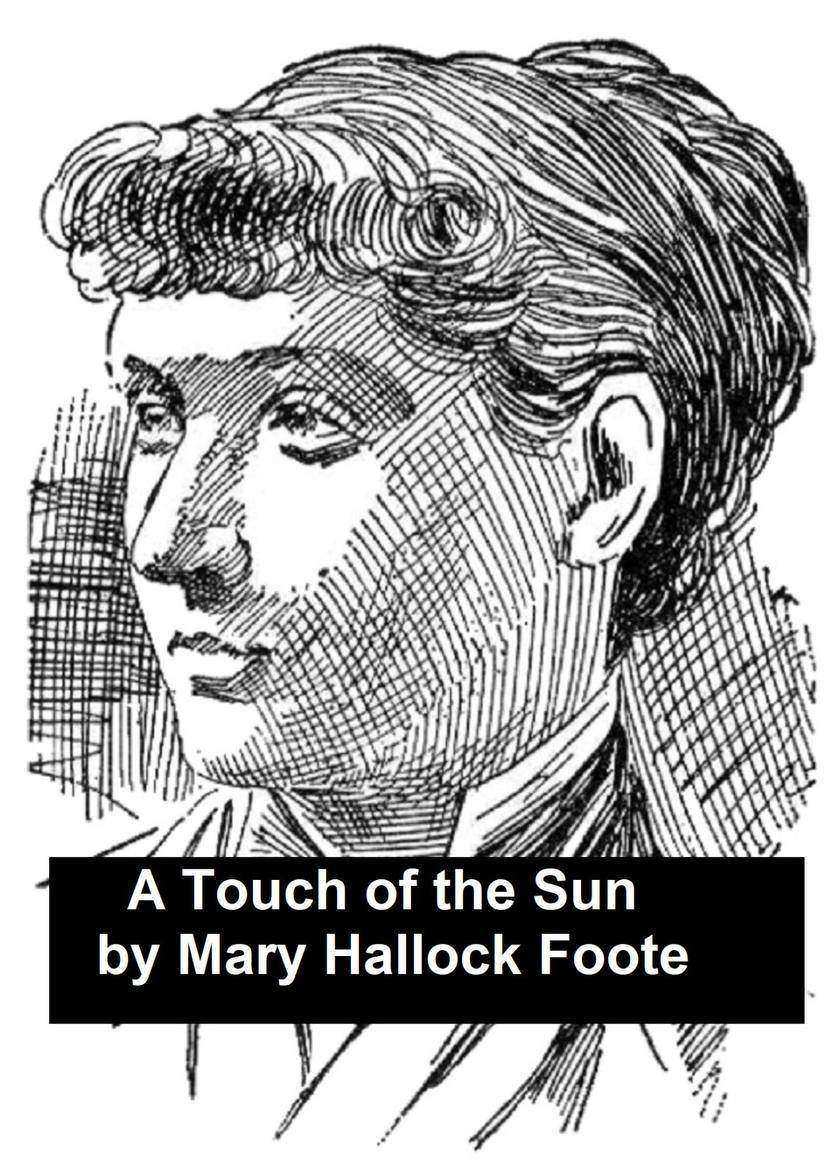
A Touch of the Sun and Other Short Stories
¥8.09
Collection of stories, first published in 1903. According to Wikipedia: "Mary Hallock was born November 9, 1847, in Milton, New York, of English Quaker ancestry. A singular girl and youth, she attended the Female Collegiate Seminary in Poughkeepsie, New York, then studied art in New York City at the new Cooper Institute School of Design for Women. By her early twenties she had become established in New York City as an accomplished artist-illustrator for notable publishers there. In 1876 Hallock married a young mining engineer, Arthur De Wint Foote, then moved cross-continent to live with him at the New Almaden mine near San Jose, California. Subsequently, as Arthur pursued his engineering career, she followed him throughout the West; to Leadville, Colorado, to Deadwood, South Dakota, then to Boise, Idaho, where Arthur originated a major irrigation project on the Boise River; then to Morelia, Michoacán, Mexico, and finally to Grass Valley, California, where Arthur advanced to managing the North Star mine, and retired there...Wallace Stegner's novel Angle of Repose (Pulitzer Prize, 1971) is based directly upon Mary Hallock Foote's extensive personal correspondence.'
The Witch and Other Stories
¥8.09
This collection includes: THE WITCH, PEASANT WIVES, THE POST, THE NEW VILLA, DREAMS, THE PIPE, AGAFYA, AT CHRISTMAS TIME, GUSEV, THE STUDENT, IN THE RAVINE, THE HUNTSMAN, HAPPINESS, A MALEFACTOR, and PEASANTS. According to Wikipedia: "Anton Pavlovich Chekhov (1860 – 1904) was a Russian short-story writer, playwright and physician, considered to be one of the greatest short-story writers in world literature. His career as a dramatist produced four classics and his best short stories are held in high esteem by writers and critics Chekhov practised as a doctor throughout most of his literary career: "Medicine is my lawful wife," he once said, "and literature is my mistress." Chekhov renounced the theatre after the disastrous reception of The Seagull in 1896; but the play was revived to acclaim in 1898 by Constantin Stanislavski's Moscow Art Theatre, which subsequently also produced Uncle Vanya and premiered Chekhov’s last two plays, Three Sisters and The Cherry Orchard. These four works present a special challenge to the acting ensemble as well as to audiences, because in place of conventional action Chekhov offers a "theatre of mood" and a "submerged life in the text." Chekhov had at first written stories only for the money, but as his artistic ambition grew, he made formal innovations which have influenced the evolution of the modern short story. His originality consists in an early use of the stream-of-consciousness technique, later adopted by James Joyce and other modernists, combined with a disavowal of the moral finality of traditional story structure He made no apologies for the difficulties this posed to readers, insisting that the role of an artist was to ask questions, not to answer them."
Dead Men Tell No Tales
¥8.09
Classic mystery/detective novel. According to Wikipedia: "Ernest William Hornung (June 7, 1866 – March 22, 1921)... was an English author, most famous for writing the Raffles series of novels about a gentleman thief in late Victorian London. Hornung was the third son of John Peter Hornung, a Hungarian, and was born in Middlesbrough, England. He was educated at Uppingham School during some of the later years of its great headmaster, Edward Thring. He spent most of his life in England and France, but in 1884 left for Australia and stayed for two years where he working as a tutor at Mossgiel station. Although his Australian experience had been so short, it coloured most of his literary work from A Bride from the Bush published in 1899, to Old Offenders and a few Old Scores, which appeared after his death. He returned from Australia in 1886, and married Constance ("Connie") Doyle (1868-1924), the sister of Sir Arthur Conan Doyle in 1893. Hornung published the poems Bond and Free and Wooden Crosses in The Times. The character of A. J. Raffles, a "gentleman thief", first appeared in Cassell's Magazine in 1898 and the stories were later collected as The Amateur Cracksman (1899). Other titles in the series include The Black Mask (1901), A Thief in the Night (1905), and the full-length novel Mr. Justice Raffles (1909).."
The Gambler
¥8.09
According to Wikipedia: "The Gambler is a short novel by Fyodor Dostoevsky about a young tutor in the employment of a formerly wealthy Russian general. The novella reflects Dostoevsky's own addiction to roulette, which was in more ways than one the inspiration for the book: Dostoevsky completed the novella under a strict deadline to pay off gambling debts."


