


 购物车
购物车 个人中心
个人中心

The Human Machine
¥8.09
Dodo Collections brings you another classic from Arnold Bennett, ‘The Human Machine’. This is a typical example of the sort of self-improvement essays or book that Arnold Bennett produced so readily during his heyday. In Britain in the first decades of the 20th century, there was a demand for anything that would help ordinary people better themselves, and Bennett obliged with volumes on Mental Efficiency, how to live 24 hours a day, how to improve one's literary taste, as well as books on the life of a novelist, etc. Bennett (1867-1931) was a British novelist. He was born in a modest house in Hanley in the Potteries district of Staffordshire. At age 21 he went to London as a solicitor's clerk. He won a literary competition in Tit Bits magazine in 1889 and was encouraged to take up journalism full time. From 1900 he devoted himself full time to writing, giving up the editorship and writing much serious criticism, and also theatre journalism, one of his special interests. In 1902 Anna of the Five Towns, the first of a succession of stories which detailed life in the Potteries appeared. In 1908 The Old Wives' Tale was published, and was an immediate success throughout the English-speaking world. His most famous works are the Clayhanger (1910) trilogy and The Old Wives' Tale. These books draw on his experience of life in the Potteries, as did most of his best work. Among his other books are: The Grand Babylon Hotel (1902), The Grim Smile of the Five Towns (1907), Hilda Lessways (1911), The Author's Craft (1914), The Lion's Share (1916), and The Roll-Call (1919).?
Mental Efficiency, and Other Hints to Men and Women
¥8.09
Dodo Collections brings you another classic from Arnold Bennett, ‘Mental Efficiency, and Other Hints to Men and Women’. This book on Mental Efficiency was typical of the self-improvement essays and books that Arnold Bennett produced alongside his outstanding fiction. Even all these years later, it still makes a lot of sense, and modern readers will be amused and instructed! Bennett (1867-1931) was a British novelist. He was born in a modest house in Hanley in the Potteries district of Staffordshire. At age 21 he went to London as a solicitor's clerk. He won a literary competition in Tit Bits magazine in 1889 and was encouraged to take up journalism full time. From 1900 he devoted himself full time to writing, giving up the editorship and writing much serious criticism, and also theatre journalism, one of his special interests. In 1902 Anna of the Five Towns, the first of a succession of stories which detailed life in the Potteries appeared. In 1908 The Old Wives' Tale was published, and was an immediate success throughout the English-speaking world. His most famous works are the Clayhanger (1910) trilogy and The Old Wives' Tale. These books draw on his experience of life in the Potteries, as did most of his best work. Among his other books are: The Grand Babylon Hotel (1902), The Grim Smile of the Five Towns (1907), Hilda Lessways (1911), The Author's Craft (1914), The Lion's Share (1916), and The Roll-Call (1919).
Buried Alive: A Tale of These Days
¥8.09
Dodo Collections brings you another classic from Arnold Bennett, ‘"Buried Alive: A Tale of These Days".’ ? An ingenious satire, "Buried Alive" is Bennett at his most charming and wittiest. It is the story a renowned but exceedingly shy painter, Priam Farll, who assumes the identity of his dead valet, Henry Leek, as a means of avoiding press attention. The novel was enormously successful as a play, retitled The Great Adventure, and later as the film "Holy Matrimony." ? Enoch Arnold Bennett (always known as Arnold Bennett) was one of the most remarkable literary figures of his time, a product of the English Potteries that he made famous as the Five Towns. Yet he could hardly wait to escape his home town, and he did so by the sheer force of his ambition to succeed as an author. In his time he turned his hand to every kind of writing, but he will be remembered for such novels as The Old Wives' Tale, the Clayhanger trilogy (Clayhanger, Hilda Lessways, and These Twain), and The Card. He also wrote such intriguing self-improvement books as Literary Taste, How To Live on 24 Hours a Day, The Human Machine, etc. After a local education Bennett finished his education at the University of London and for a time was editor of Woman magazine. After 1900 he devoted himself entirely to writing; dramatic criticism was one of his foremost interests. Bennett is best known, however, for his novels, several of which were written during his residence in France. ? Bennett's infancy was spent in genteel poverty, which gave way to prosperity as his father succeeded as a solicitor. From this provincial background he became a novelist. His enduring fame is as a Chronicler of the Potteries towns, the setting and inspiration of some of his most famous and enduring literary work and the place where he grew up.

The Price of Love
¥8.09
Dodo Collections brings you another classic from Arnold Bennett, ‘The Price of Love’. A story of small-town intrigue, that begins with a large sum of money being entrusted and then mysteriously disappearing. The novel was extremely popular and one of Bennett's greatest successes. Bennett (1867-1931) was a British novelist. He was born in a modest house in Hanley in the Potteries district of Staffordshire. At age 21 he went to London as a solicitor's clerk. He won a literary competition in Tit Bits magazine in 1889 and was encouraged to take up journalism full time. From 1900 he devoted himself full time to writing, giving up the editorship and writing much serious criticism, and also theatre journalism, one of his special interests. In 1902 Anna of the Five Towns, the first of a succession of stories which detailed life in the Potteries appeared. In 1908 The Old Wives' Tale was published, and was an immediate success throughout the English-speaking world. His most famous works are the Clayhanger (1910) trilogy and The Old Wives' Tale. These books draw on his experience of life in the Potteries, as did most of his best work. Among his other books are: The Grand Babylon Hotel (1902), The Grim Smile of the Five Towns (1907), Hilda Lessways (1911), The Author's Craft (1914), The Lion's Share (1916), and The Roll-Call (1919).
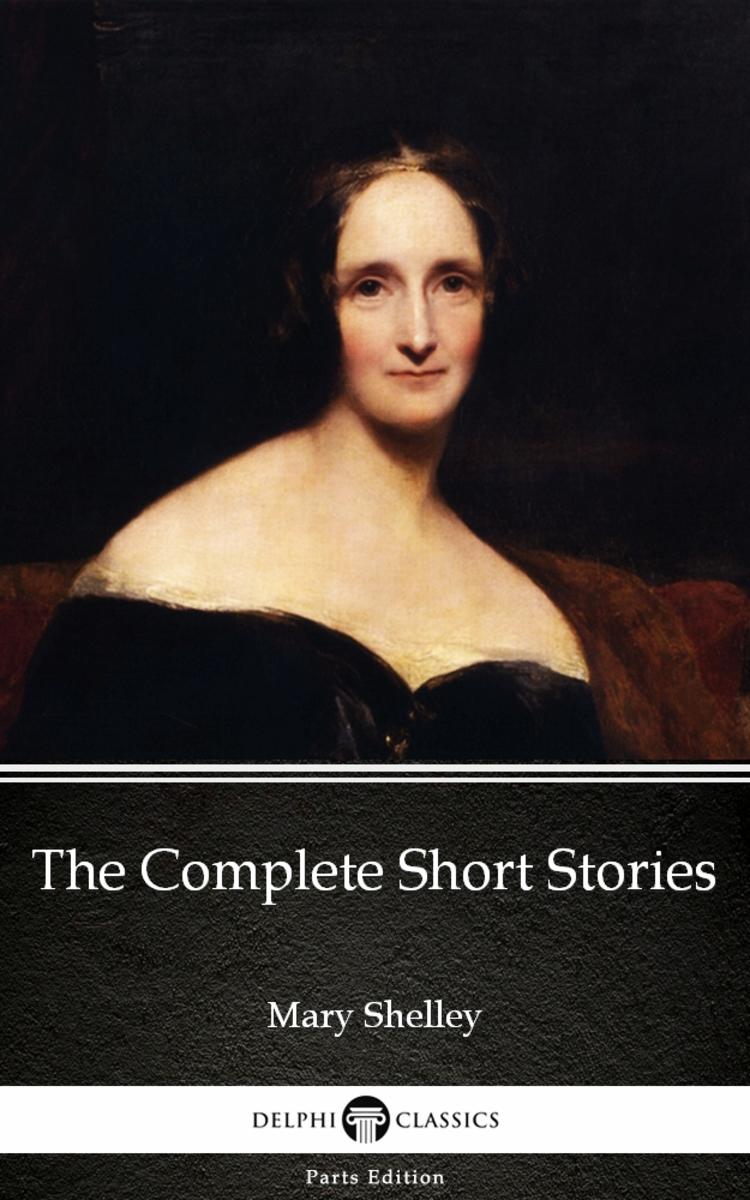
The Complete Short Stories by Mary Shelley - Delphi Classics (Illustrated)
¥8.09
This eBook features the unabridged text of ‘The Complete Short Stories by Mary Shelley - Delphi Classics (Illustrated)’ from the bestselling edition of ‘The Complete Works of Mary Shelley’. Having established their name as the leading publisher of classic literature and art, Delphi Classics produce publications that are individually crafted with superior formatting, while introducing many rare texts for the first time in digital print. The Delphi Classics edition of Shelley includes original annotations and illustrations relating to the life and works of the author, as well as individual tables of contents, allowing you to navigate eBooks quickly and easily. eBook features: * The complete unabridged text of ‘The Complete Short Stories by Mary Shelley - Delphi Classics (Illustrated)’ * Beautifully illustrated with images related to Shelley’s works * Individual contents table, allowing easy navigation around the eBook * Excellent formatting of the text Please visit www.delphiclassics.com to learn more about our wide range of titles
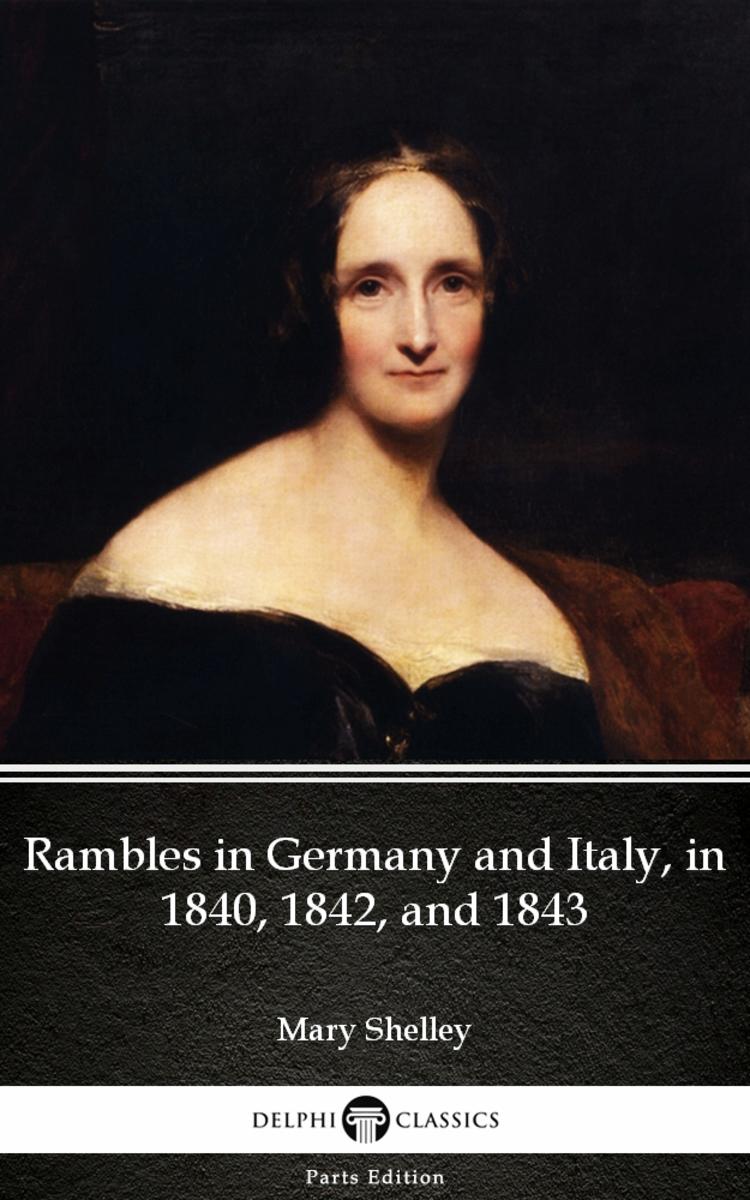
Rambles in Germany and Italy, in 1840, 1842, and 1843 by Mary Shelley
¥8.09
This eBook features the unabridged text of ‘Rambles in Germany and Italy, in 1840, 1842, and 1843 by Mary Shelley - Delphi Classics (Illustrated)’ from the bestselling edition of ‘The Complete Works of Mary Shelley’. Having established their name as the leading publisher of classic literature and art, Delphi Classics produce publications that are individually crafted with superior formatting, while introducing many rare texts for the first time in digital print. The Delphi Classics edition of Shelley includes original annotations and illustrations relating to the life and works of the author, as well as individual tables of contents, allowing you to navigate eBooks quickly and easily. eBook features: * The complete unabridged text of ‘Rambles in Germany and Italy, in 1840, 1842, and 1843 by Mary Shelley - Delphi Classics (Illustrated)’ * Beautifully illustrated with images related to Shelley’s works * Individual contents table, allowing easy navigation around the eBook * Excellent formatting of the text Please visit www.delphiclassics.com to learn more about our wide range of titles
The Bravo by James Fenimore Cooper - Delphi Classics (Illustrated)
¥8.09
This eBook features the unabridged text of ‘The Bravo by James Fenimore Cooper - Delphi Classics (Illustrated)’ from the bestselling edition of ‘The Complete Works of James Fenimore Cooper’. Having established their name as the leading publisher of classic literature and art, Delphi Classics produce publications that are individually crafted with superior formatting, while introducing many rare texts for the first time in digital print. The Delphi Classics edition of Cooper includes original annotations and illustrations relating to the life and works of the author, as well as individual tables of contents, allowing you to navigate eBooks quickly and easily. eBook features: * The complete unabridged text of ‘The Bravo by James Fenimore Cooper - Delphi Classics (Illustrated)’ * Beautifully illustrated with images related to Cooper’s works * Individual contents table, allowing easy navigation around the eBook * Excellent formatting of the text Please visit www.delphiclassics.com to learn more about our wide range of titles
Anelida and Arcite by Geoffrey Chaucer - Delphi Classics (Illustrated)
¥8.09
This eBook features the unabridged text of ‘Anelida and Arcite by Geoffrey Chaucer - Delphi Classics (Illustrated)’ from the bestselling edition of ‘The Complete Works of Geoffrey Chaucer’. Having established their name as the leading publisher of classic literature and art, Delphi Classics produce publications that are individually crafted with superior formatting, while introducing many rare texts for the first time in digital print. The Delphi Classics edition of Chaucer includes original annotations and illustrations relating to the life and works of the author, as well as individual tables of contents, allowing you to navigate eBooks quickly and easily. eBook features: * The complete unabridged text of ‘Anelida and Arcite by Geoffrey Chaucer - Delphi Classics (Illustrated)’ * Beautifully illustrated with images related to Chaucer’s works * Individual contents table, allowing easy navigation around the eBook * Excellent formatting of the textPlease visit www.delphiclassics.com to learn more about our wide range of titles
A Second Home by Honoré de Balzac - Delphi Classics (Illustrated)
¥8.09
This eBook features the unabridged text of ‘A Second Home by Honoré de Balzac - Delphi Classics (Illustrated)’ from the bestselling edition of ‘The Collected Works of Honoré de Balzac’. Having established their name as the leading publisher of classic literature and art, Delphi Classics produce publications that are individually crafted with superior formatting, while introducing many rare texts for the first time in digital print. The Delphi Classics edition of Balzac includes original annotations and illustrations relating to the life and works of the author, as well as individual tables of contents, allowing you to navigate eBooks quickly and easily. eBook features: * The complete unabridged text of ‘A Second Home by Honoré de Balzac - Delphi Classics (Illustrated)’ * Beautifully illustrated with images related to Balzac’s works * Individual contents table, allowing easy navigation around the eBook * Excellent formatting of the text Please visit www.delphiclassics.com to learn more about our wide range of titles
Glengarry School Days
¥8.09
Canadian novel, first published in 1902. According to Wikipedia: "Rev. Dr. Charles William Gordon, or Ralph Connor, (September 13, 1860 – October 31, 1937) was a Canadian novelist, using the Connor pen name while maintaining his status as a Church leader, first in the Presbyterian and later the United churches in Canada. Gordon was also at one time a master at Upper Canada College. He sold more than five million copies of his works in his lifetime,[1] and some of his works are still in print.... Gordon became interested in writing during his student days at the University of Toronto. He published his first novel, Black Rock, in 1898. While the book was moderately successful in Canada, his second novel, The Sky Pilot, gained him international attention in 1899 and sold more than 1,000,000 copies. The Sky Pilot, like many of his works, was a frontier adventure with strong themes of morality and justice. He continued to write until his death in 1937."
Salammbo
¥8.09
According to Wikipedia: "Salammbo (1862) is a historical novel by Gustave Flaubert that interweaves historical and fictional characters. The action takes place immediately before and during the Mercenary Revolt against Carthage in the third century BC. Flaubert's main source was Book I of Polybius's Histories. It was not a particularly well-studied period of history and required a great deal of work from the author, who enthusiastically left behind the realism of his masterpiece Madame Bovary for this tale of blood-and-thunder. The book, which Flaubert researched painstakingly, is largely an exercise in sensuous and violent exoticism. Following the success of Madame Bovary, it was another best-seller and sealed his reputation. The Carthaginian costumes described therein even left traces on the fashions of the time. Nevertheless, in spite of its classic status in France, it is practically unknown today among English-speakers."

Erewhon Revisited
¥8.09
According to Wikipedia: "Samuel Butler (4 December 1835 - 18 June 1902) was an iconoclastic Victorian author who published a variety of works, including the Utopian satire Erewhon and the posthumous novel The Way of All Flesh, his two best-known works, but also extending to examinations of Christian orthodoxy, substantive studies of evolutionary thought, studies of Italian art, and works of literary history and criticism . Butler also made prose translations of The Iliad and The Odyssey which remain in use to this day."
Pamela
¥8.09
According to Wikipedia: "Samuel Richardson (19 August 1689 – 4 July 1761) was an 18th-century English writer and printer. He is best known for his three epistolary novels: Pamela: Or, Virtue Rewarded (1740), Clarissa: Or the History of a Young Lady (1748) and The History of Sir Charles Grandison (1753). Outside of his writing career, Richardson was an established printer and publisher for most of his life and printed almost 500 different works and various journals and magazines."
The Money Master
¥8.09
According to Wikipedia: "Sir Horatio Gilbert George Parker, 1st Baronet PC (November 23, 1862 – September 6, 1932), known as Gilbert Parker, Canadian novelist and British politician, was born at Camden East, Addington, Ontario, the son of Captain J. Parker, R.A... The best of his novels are those in which he first took for his subject the history and life of the French Canadians; and his permanent literary reputation rests on the fine quality, descriptive and dramatic, of his Canadian stories. Pierre and his People (1892) was followed by Mrs. Falchion (1893), The Trail of the Sword (1894), When Valmond came to Pontiac (1895), An Adventurer of Icy North (1895), and The Seats of the Mighty (1896, dramatized in 1897). The Seats of the Mighty was a historical novel depicting the English conquest of Quebec with James Wolfe and the Marquis de Montcalm as two of the characters. The Lane that had no Turning (1900) contains some of his best work. In The Battle of the Strong (1898) he broke new ground, laying his scene in the Channel Islands. His chief later books were The Right of Way (1901), Donovan Pasha (1902), The Ladder of Swords (1904), The Weavers (1907), Northern Lights (1909) and The Judgment House (1913). Parker had three that made it into the top 10 on the annual list of bestselling novels in the United States two of which were on it for two years in a row."
The Companions of Jehu
¥8.09
Adventure set in 19th century France. According to Wikipedia: "Alexandre Dumas, père (French for "father", akin to 'Senior' in English), born Dumas Davy de la Pailleterie (1802 — 1870) was a French writer, best known for his numerous historical novels of high adventure which have made him one of the most widely read French authors in the world. Many of his novels, including The Count of Monte Cristo, The Three Musketeers, Twenty Years After, and The Vicomte de Bragelonne were serialized. He also wrote plays and magazine articles and was a prolific correspondent.
The Queen's Necklace
¥8.09
An historical adventure story from the days of Marie Antoinette and Louis XVI. According to Wikipedia: "Alexandre Dumas, père (French for "father", akin to 'Senior' in English), born Dumas Davy de la Pailleterie (1802 — 1870) was a French writer, best known for his numerous historical novels of high adventure which have made him one of the most widely read French authors in the world. Many of his novels, including The Count of Monte Cristo, The Three Musketeers, Twenty Years After, and The Vicomte de Bragelonne were serialized. He also wrote plays and magazine articles and was a prolific correspondent."
The Mill Mystery
¥8.09
The Mill Mystery
Barchester Towers
¥8.09
Barchester Towers
The Conjure Woman
¥8.09
The Conjure Woman
The Mystery of the Yellow Room
¥8.09
The Mystery of the Yellow Room
The Phantom of the Opera
¥8.09
The Phantom of the Opera


