


 购物车
购物车 个人中心
个人中心
Woman in White
¥8.09
According to Wikipedia: "The Woman in White is an epistolary novel written by Wilkie Collins in 1859, serialized in 1859–1860, and first published in book form in 1860. It is considered to be among the first mystery novels and is widely regarded as one of the first (and finest) in the genre of 'sensation novels'. The story is considered an early example of detective fiction with the hero, Walter Hartright, employing many of the sleuthing techniques of later private detectives."
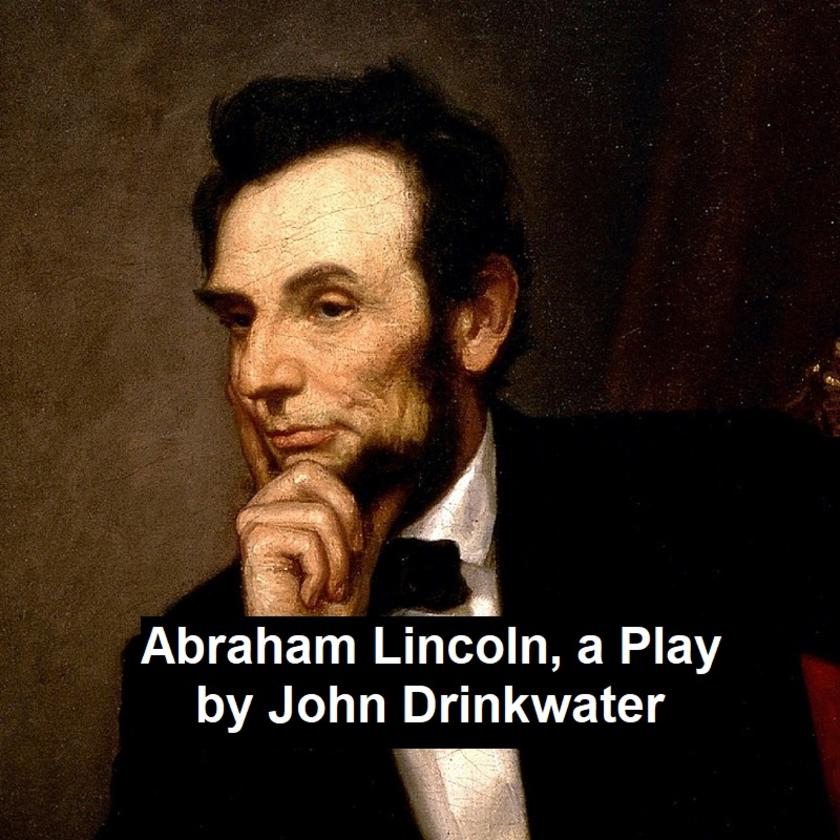
Abraham Lincoln, a Play
¥8.09
Play first published in 1919. According to Wikipedia: "Abraham Lincoln (February 12, 1809 - April 15, 1865) was the sixteenth President of the United States, serving from March 4, 1861 until his assassination. As an outspoken opponent of the expansion of slavery in the United States, Lincoln won the Republican Party nomination in 1860 and was elected president later that year. During his term, he helped preserve the United States by leading the defeat of the secessionist Confederate States of America in the American Civil War. He introduced measures that resulted in the abolition of slavery, issuing his Emancipation Proclamation in 1863 and promoting the passage of the Thirteenth Amendment to the Constitution in 1865."
The Bravest of the Brave
¥8.09
Classic historical novel. "There are few great leaders whose lives and actions have so completely fallen into oblivion as those of the Earl of Peterborough. His career as a general was a brief one, extending only over little more than a year, and yet in that time he showed a genius for warfare which has never been surpassed, and performed feats of daring worthy of taking their place among those of the leaders of chivalry." According to Wikipedia: "George Alfred Henty (8 December 1832 - 16 November 1902), referred to as G. A. Henty, was a prolific English novelist, special correspondent, and Imperialist born in Trumpington, Cambridgeshire, England. He is best known for his historical adventure stories that were popular in the late 19th century. His works include Out on the Pampas (1871), The Young Buglers (1880), With Clive in India (1884) and Wulf the Saxon (1895)."
The Boy Knight
¥8.09
Classic historical novel. According to Wikipedia: "George Alfred Henty (8 December 1832 - 16 November 1902), referred to as G. A. Henty, was a prolific English novelist, special correspondent, and Imperialist born in Trumpington, Cambridgeshire, England. He is best known for his historical adventure stories that were popular in the late 19th century. His works include Out on the Pampas (1871), The Young Buglers (1880), With Clive in India (1884) and Wulf the Saxon (1895)."
Eccentric Preachers
¥8.09
Profiles of Protestant preachers by a 19th century English Baptist, known as "the Prince of Preachers". Chapters include: 1. What is Eccentricity? 2. Who have been called Eccentric? 3. Causes of Eccentricity 4. Hugh Latimer 5. Hugh Peters 6. Daniel Burgess 7. John Berridge 8. Rowland Hill 9. Matthew Wilks 10. William Dawson 11. Jacob Gruber 12. Edward Taylor 13. Edward Brooke 14. Billy Bray. According to Wikipedia: "Charles Haddon Spurgeon, commonly C.H. Spurgeon, ( 1834 – 1892) was a British Reformed Baptist preacher who remains highly influential among Christians of different denominations, among whom he is still known as the "Prince of Preachers." He also founded the charity organization now known as Spurgeon's, that works worldwide with families and children, as well as a famous theological college which after his death was called after him: Spurgeon's College. Spurgeon was a prolific author of many types of works including sermons, an autobiography, a commentary, books on prayer, a devotional, a magazine, and more. Many sermons were transcribed as he spoke and were translated into many languages during his lifetime. Arguably, no other author, Christian or otherwise, has more material in print than C.H. Spurgeon."
Lay Morals and Other Essays
¥8.09
A collection of essays, beginning with ruminations on ethics. The book starts: "The problem of education is twofold: first to know, and then to utter. Every one who lives any semblance of an inner life thinks more nobly and profoundly than he speaks; and the best of teachers can impart only broken images of the truth which they perceive. Speech which goes from one to another between two natures, and, what is worse, between two experiences, is doubly relative. The speaker buries his meaning; it is for the hearer to dig it up again; and all speech, written or spoken, is in a dead language until it finds a willing and prepared hearer. Such, moreover, is the complexity of life, that when we condescend upon details in our advice, we may be sure we condescend on error; and the best of education is to throw out some magnanimous hints. No man was ever so poor that he could express all he has in him by words, looks, or actions; his true knowledge is eternally incommunicable, for it is a knowledge of himself..."
The Warlord of Mars
¥8.09
Science fiction adventure first published in 1918. According to Wikipedia: "Edgar Rice Burroughs (1875 – 1950) was an American author, best known for his creation of the jungle hero Tarzan and the heroic John Carter, although he produced works in many genres.
The Gods of Mars
¥8.09
Science fiction adventure, first published in 1914. According to Wikipedia: "Edgar Rice Burroughs (1875 – 1950) was an American author, best known for his creation of the jungle hero Tarzan and the heroic John Carter, although he produced works in many genres."
The Game
¥8.09
Classic Jack London novel. According to Wikipedia: "Jack London (1876 – 1916) was an American author who wrote The Call of the Wild, White Fang, and The Sea Wolf along with many other popular books. A pioneer in the then-burgeoning world of commercial magazine fiction, he was one of the first Americans to make a lucrative career exclusively from writing."
The Master of the World
¥8.09
Science fiction novel first published in 1904. Sequel to Robur the Conqueror. According to Wikipedia: "Jules Gabriel Verne (February 8, 1828 – March 24, 1905) was a French author who pioneered the science-fiction genre. He is best known for his novels Journey to the Center of the Earth (written in 1864), From the Earth to the Moon (1865), Twenty Thousand Leagues Under the Sea (1869–1870), and Around the World in Eighty Days (1873). Verne wrote about space, air, and underwater travel before navigable aircraft and practical submarines were invented, and before any means of space travel had been devised. Consequently he is often referred to as the "Father of science fiction", along with H. G. Wells. Verne is the second most translated author of all time, only behind Agatha Christie with 4162 translations, according to Index Translationum. Some of his work has been made into films."
New Chronicles of Rebecca
¥8.09
Sequel to Rebecca of Sunnybrook Farm. According to Wikipedia: "Kate Douglas Wiggin ( 1856 - 1923) was an American children's author and educator. Kate Douglas Smith Wiggin was born in Philadelphia, and was of Welsh descent. She started the first free kindergarten in San Francisco in 1878 (the Silver Street Free Kindergarten). With her sister in the 1880s she also established a training school for kindergarten teachers. She was also a writer of children's books, the best known being The Birds' Christmas Carol (1887) and Rebecca of Sunnybrook Farm (1903)."
The Poison Belt
¥8.09
Sequel to The Lost World (which was the basis for the television series of that name). According to Wikipedia: "Sir Arthur Ignatius Conan Doyle, (22 May 1859 – 7 July 1930) was an author most noted for his stories about the detective Sherlock Holmes, which are generally considered a major innovation in the field of crime fiction, and for the adventures of Professor Challenger. He was a prolific writer whose other works include science fiction stories, historical novels, plays and romances, poetry, and non-fiction."

Essays on Paul Bourget
¥8.09
Short collection of short essays, including "What Paul Bourget Thinks of Us" and "A Little Note to M. Paul Bourget". According to Wikipedia: "Samuel Langhorne Clemens (November 30, 1835 - April 21, 1910), better known by the pen name Mark Twain, was a humorist, satirist, lecturer and writer from the United States of America. Twain is most noted for his novels Adventures of Huckleberry Finn, which has since been called the Great American Novel, and The Adventures of Tom Sawyer. He is also known for his quotations. During his lifetime, Twain became a friend to presidents, artists, leading industrialists and European royalty. Twain enjoyed immense public popularity, and his keen wit and incisive satire earned him praise from both critics and peers. American author William Faulkner called Twain 'the father of American literature.'"
Shorter Prose Pieces
¥8.09
Short collection of short pieces, including Phrases And Philosophies for the Use of The Young, Mrs. Langtry as Hester Grazebrook, Slaves of Fashion, Woman's Dress, More Radical Ideas upon Dress Reform, Costume, The American Invasion, Sermons in Stones at Bloomsbury, and L'Envoi. According to Wikipedia: "Oscar Fingal O'Flahertie Wills Wilde (1854 - 1900) was an Irish playwright, novelist, poet, and author of short stories. Known for his barbed wit, he was one of the most successful playwrights of late Victorian London, and one of the greatest celebrities of his day. As the result of a famous trial, he suffered a dramatic downfall and was imprisoned for two years of hard labour after being convicted of the offence of 'gross indecency.'"
The Human Drift
¥8.09
Classic Jack London short stories, including The Human Drift, Small-Boat Sailing, Four Horses and a Sailor, Nothing that Ever Came to Anything, That Dead Men Rise up Never, A Classic of the Sea, A Wicked Woman (Curtain Raiser), and The Birth Mark (Sketch). According to Wikipedia: "Jack London (1876 – 1916) was an American author who wrote The Call of the Wild, White Fang, and The Sea Wolf along with many other popular books. A pioneer in the then-burgeoning world of commercial magazine fiction, he was one of the first Americans to make a lucrative career exclusively from writing."
The Americanism of George Washington
¥8.09
Short essay, first published in 1906. According to Wikipedia: "Washington is seen as a symbol of the United States and republicanism in practice. His devotion to civic virtue made him an exemplary figure among early American politicians. Washington died in 1799, and in his funeral oration, Henry Lee said that of all Americans, he was "first in war, first in peace, and first in the hearts of his countrymen." Washington has been consistently ranked by scholars as one of the greatest U.S. Presidents."
Night-Born
¥8.09
Classic Jack London short stories, including THE NIGHT-BORN, THE MADNESS OF JOHN HARNED, WHEN THE WORLD WAS YOUNG, THE BENEFIT OF THE DOUBT, WINGED BLACKMAIL, BUNCHES OF KNUCKLES, WAR, UNDER THE DECK AWNINGS, TO KILL A MAN, and THE MEXICAN. Classic Jack London short stories, including MOON-FACE, THE LEOPARD MAN'S STORY, LOCAL COLOR, AMATEUR NIGHT, THE MINIONS OF MIDAS, THE SHADOW AND THE FLASH, ALL GOLD CANYON, and PLANCHETTE. According to Wikipedia: "Jack London (1876 – 1916) was an American author who wrote The Call of the Wild, White Fang, and The Sea Wolf along with many other popular books. A pioneer in the then-burgeoning world of commercial magazine fiction, he was one of the first Americans to make a lucrative career exclusively from writing."
Tales of the Fish Patrol
¥8.09
Classic Jack London short stories. According to Wikipedia: "Jack London (1876 – 1916) was an American author who wrote The Call of the Wild, White Fang, and The Sea Wolf along with many other popular books. A pioneer in the then-burgeoning world of commercial magazine fiction, he was one of the first Americans to make a lucrative career exclusively from writing."
On the Makaloa Mat, Island Tales
¥8.09
Classic Jack London stories, including On the Makaloa Mat, The Bones of Kahekili, When Alice Told her Soul, Shin-Bones, The Water Baby, The Tears of Ah Kim, and The Kanaka Surf. According to Wikipedia: "Jack London (1876 – 1916) was an American author who wrote The Call of the Wild, White Fang, and The Sea Wolf along with many other popular books. A pioneer in the then-burgeoning world of commercial magazine fiction, he was one of the first Americans to make a lucrative career exclusively from writing."
Tales of the Klondyke
¥8.09
Classic Jack London stories, including The God of His Fathers, The Great Interrogation, Which Make Men Remember, Siwash, The Man with the Gash, Jan the Unrepentant, Grit of Women, Where the Trail Forks, A Daughter of the Aurora, At the Rainbow's End, and The Scorn of Women. According to Wikipedia: "Jack London (1876 – 1916) was an American author who wrote The Call of the Wild, White Fang, and The Sea Wolf along with many other popular books. A pioneer in the then-burgeoning world of commercial magazine fiction, he was one of the first Americans to make a lucrative career exclusively from writing."
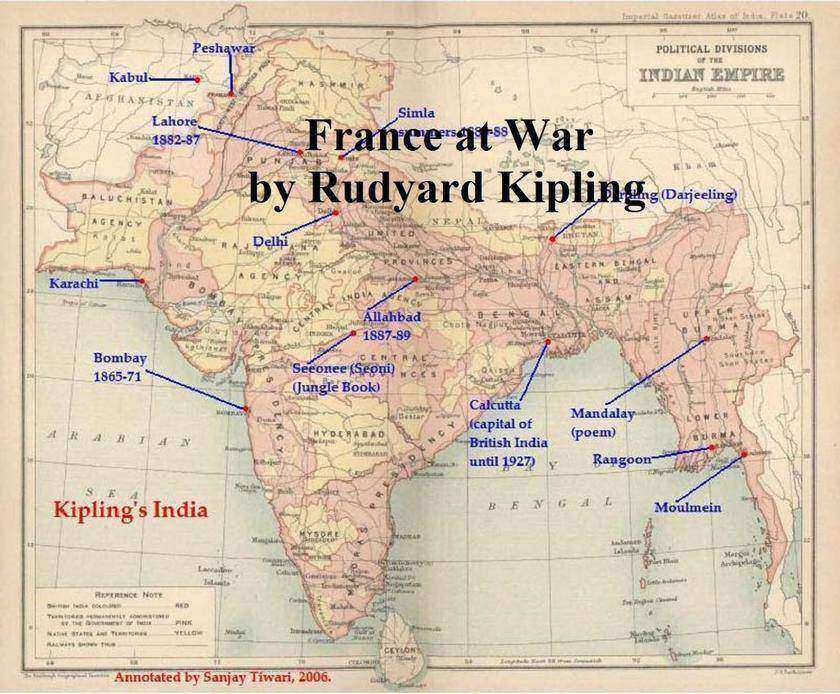
France at War
¥8.09
Classic Kipling novel. According to Wikipedia: "Joseph Rudyard Kipling (1865 – 1936) was an English author and poet. Born in Bombay, British India (now Mumbai), he is best known for his works The Jungle Book (1894) and Rikki-Tikki-Tavi (1902), his novel, Kim (1901); his poems, including Mandalay (1890), Gunga Din (1890), If— (1910); and his many short stories, including The Man Who Would Be King (1888). He is regarded as a major "innovator in the art of the short story"; his children's books are enduring classics of children's literature; and his best works speak to a versatile and luminous narrative gift. Kipling was one of the most popular writers in English, in both prose and verse, in the late 19th and early 20th centuries.[2] The author Henry James said of him: "Kipling strikes me personally as the most complete man of genius (as distinct from fine intelligence) that I have ever known." In 1907, he was awarded the Nobel Prize in Literature, making him the first English language writer to receive the prize, and to date he remains its youngest recipient. Among other honours, he was sounded out for the British Poet Laureateship and on several occasions for a knighthood, all of which he declined.


