


 购物车
 个人中心


Making Gray Gold
¥241.33
This first hand report on the work of nurses and other caregivers in a nursing home is set powerfully in the context of wider political, economic, and cultural forces that shape and constrain the quality of care for America's elderly. Diamond demonstrates in a compelling way the price that business-as-usual policies extract from the elderly as well as those whose work it is to care for them.In a society in which some two million people live in 16,000 nursing homes, with their numbers escalating daily, this thought-provoking work demands immediate and widespread attention."e;[An] unnerving portrait of what it's like to work and live in a nursing home. . . . By giving voice to so many unheard residents and workers Diamond has performed an important service for us all."e;-Diane Cole, New York Newsday"e;With Making Gray Gold, Timothy Diamond describes the commodification of long-term care in the most vivid representation in a decade of round-the-clock institutional life. . . . A personal addition to the troublingly impersonal national debate over healthcare reform."e;-Madonna Harrington Meyer, Contemporary Sociology
Little Magazine in Contemporary America
¥229.55
Little magazines have often showcased the best new writing in America. Historically, these idiosyncratic, small-circulation outlets have served the dual functions of representing the avant-garde of literary expression while also helping many emerging writers become established authors. Although changing technology and the increasingly harsh financial realities of publishing over the past three decades would seem to have pushed little magazines to the brink of extinction, their story is far more complicated.In this collection, Ian Morris and Joanne Diaz gather the reflections of twenty-three prominent editors whose little magazines have flourished over the past thirty-five years. Highlighting the creativity and innovation driving this diverse and still vital medium, contributors offer insights into how their publications sometimes succeeded, sometimes reluctantly folded, but mostly how they evolved and persevered. Other topics discussed include the role of little magazines in promoting the work and concerns of minority and women writers, the place of universities in supporting and shaping little magazines, and the online and offline future of these publications.Selected contributorsBetsy Sussler, BOMB; Lee Gutkind, Creative Nonfiction; Bruce Andrews, L=A=N=G=U=A=G=E; Dave Eggers, McSweeney's; Keith Gessen, n+1; Don Share, Poetry; Jane Friedman, VQR; Amy Hoffman, Women's Review of Books; and more.?

What Did the Romans Know?
¥229.55
What did the Romans know about their worldQuite a lot, as Daryn Lehoux makes clear in this fascinating and much-needed contribution to the history and philosophy of ancient science. Lehoux contends that even though many of the Romans' views about the natural world have no place in modern science-the umbrella-footed monsters and dog-headed people that roamed the earth and the stars that foretold human destinies-their claims turn out not to be so radically different from our own.?Lehoux draws upon a wide range of sources from what is unquestionably the most prolific period of ancient science, from the first century BC to the second century AD. He begins with Cicero's theologico-philosophical trilogy On the Nature of the Gods, On Divination, and On Fate, illustrating how Cicero's engagement with nature is closely related to his concerns in politics, religion, and law. Lehoux then guides readers through highly technical works by Galen and Ptolemy, as well as the more philosophically oriented physics and cosmologies of Lucretius, Plutarch, and Seneca, all the while exploring the complex interrelationships between the objects of scientific inquiry and the norms, processes, and structures of that inquiry. This includes not only the tools and methods the Romans used to investigate nature, but also the Romans' cultural, intellectual, political, and religious perspectives. Lehoux concludes by sketching a methodology that uses the historical material he has carefully explained to directly engage the philosophical questions of incommensurability, realism, and relativism.?By situating Roman arguments about the natural world in their larger philosophical, political, and rhetorical contexts, What Did the Romans Knowdemonstrates that the Romans had sophisticated and novel approaches to nature, approaches that were empirically rigorous, philosophically rich, and epistemologically complex.

Urban Blues
¥211.90
Charles Keil examines the expressive role of blues bands and performers and stresses the intense interaction between performer and audience. Profiling bluesmen Bobby Bland and B. B. King, Keil argues that they are symbols for the black community, embodying important attitudes and roles-success, strong egos, and close ties to the community. While writing Urban Blues in the mid-1960s, Keil optimistically saw this cultural expression as contributing to the rising tide of raised political consciousness in Afro-America. His new Afterword examines black music in the context of capitalism and black culture in the context of worldwide trends toward diversification."e;Enlightening. . . . [Keil] has given a provocative indication of the role of the blues singer as a focal point of ghetto community expression."e;-John S. Wilson, New York Times Book Review"e;A terribly valuable book and a powerful one. . . . Keil is an original thinker and . . . has offered us a major breakthrough."e;-Studs Terkel, Chicago Tribune"e;[Urban Blues] expresses authentic concern for people who are coming to realize that their past was . . . the source of meaningful cultural values."e;-Atlantic"e;An achievement of the first magnitude. . . . He opens our eyes and introduces a world of amazingly complex musical happening."e;-Robert Farris Thompson, Ethnomusicology?"e;[Keil's] vigorous, aggressive scholarship, lucid style and sparkling analysis stimulate the challenge. Valuable insights come from treating urban blues as artistic communication."e;-James A. Bonar, Boston Herald?
Commentary on The Complete Greek Tragedies. Aeschylus
¥211.90
This commentary offers a rich introduction and useful guide to the seven surviving plays attributed to Aeschylus. Though it may profitably be used with any translation of Aeschylus, the commentary is based on the acclaimed Chicago translations, The Complete Greek Tragedies, edited by David Grene and Richmond Lattimore.James C. Hogan provides a general introduction to Aeschylean theater and drama, followed by a line-by-line commentary on each of the seven plays. He places Aeschylus in the historical, cultural, and religious context of fifth-century Athens, showing how the action and metaphor of Aeschylean theater can be illuminated by information on Athenian law athletic contests, relations with neighboring states, beliefs about the underworld, and countless other details of Hellenic life. Hogan clarifies terms that might puzzle modern readers, such as place names and mythological references, and gives special attention to textual and linguistic issues: controversial questions of interpretation; difficult or significant Greek words; use of style, rhetoric, and commonplaces in Greek poetry; and Aeschylus's place in the poetic tradition of Homer, Hesiod, and the elegiac poets. Practical information on staging and production is also included, as are maps and illustrations, a bibliography, indexes, and extensive cross-references between the seven plays. Forthcoming volumes will cover the works of Sophocles and Euripides.
"e;Do You Know...?"e;
¥211.90
Every night, somewhere in the world, three or four musicians will climb on stage together. Whether the gig is at a jazz club, a bar, or a bar mitzvah, the performance never begins with a note, but with a question. The trumpet player might turn to the bassist and ask, "e;Do you know 'Body and Soul'?"e;-and from there the subtle craft of playing the jazz repertoire is tested in front of a live audience. These ordinary musicians may never have played together-they may never have met-so how do they smoothly put on a show without getting booed offstage.In "e;Do You Know . . . ?"e; Robert R. Faulkner and Howard S. Becker-both jazz musicians with decades of experience performing-present the view from the bandstand, revealing the array of skills necessary for working musicians to do their jobs. While learning songs from sheet music or by ear helps, the jobbing musician's lexicon is dauntingly massive: hundreds of thousands of tunes from jazz classics and pop standards to more exotic fare. Since it is impossible for anyone to memorize all of these songs, Faulkner and Becker show that musicians collectively negotiate and improvise their way to a successful performance. Players must explore each others' areas of expertise, develop an ability to fake their way through unfamiliar territory, and respond to the unpredictable demands of their audience-whether an unexpected gang of polka fanatics or a tipsy father of the bride with an obscure favorite song."e;Do You Know . . . ?"e; dishes out entertaining stories and sharp insights drawn from the authors' own experiences and observations as well as interviews with a range of musicians. Faulkner and Becker's vivid, detailed portrait of the musician at work holds valuable lessons for anyone who has to think on the spot or under a spotlight.

Wittgenstein's Lectures on the Foundations of Mathematics, Cambridge, 1939
¥211.90
For several terms at Cambridge in 1939, Ludwig Wittgenstein lectured on the philosophical foundations of mathematics. A lecture class taught by Wittgenstein, however, hardly resembled a lecture.He sat on a chair in the middle of the room, with some of the class sitting in chairs, some on the floor. He never used notes. He paused frequently, sometimes for several minutes, while he puzzled out a problem. He often asked his listeners questions and reacted to their replies. Many meetings were largely conversation.These lectures were attended by, among others, D. A. T. Gasking, J. N. Findlay, Stephen Toulmin, Alan Turing, G. H. von Wright, R. G. Bosanquet, Norman Malcolm, Rush Rhees, and Yorick Smythies. Notes taken by these last four are the basis for the thirty-one lectures in this book.The lectures covered such topics as the nature of mathematics, the distinctions between mathematical and everyday languages, the truth of mathematical propositions, consistency and contradiction in formal systems, the logicism of Frege and Russell, Platonism, identity, negation, and necessary truth. The mathematical examples used are nearly always elementary.
Music between Us
¥206.01
From our first social bonding as infants to the funeral rites that mark our passing, music plays an important role in our lives, bringing us closer to one another. In?The Music between Us, philosopher Kathleen Marie Higgins investigates this role, examining the features of human perception that enable music's uncanny ability to provoke, despite its myriad forms across continents and throughout centuries, the sense of a shared human experience.Drawing on disciplines such as philosophy, psychology, musicology, linguistics, and anthropology, Higgins's richly researched study showcases the ways music is used in rituals, education, work, healing, and as a source of security and-perhaps most importantly-joy. By participating so integrally in such meaningful facets of society, Higgins argues, music situates itself as one of the most fundamental bridges between people, a truly cross-cultural form of communication that can create solidarity across political divides. Moving beyond the well-worn takes on music's universality,?The Music between Us?provides a new understanding of what it means to be musical and, in turn, human.?
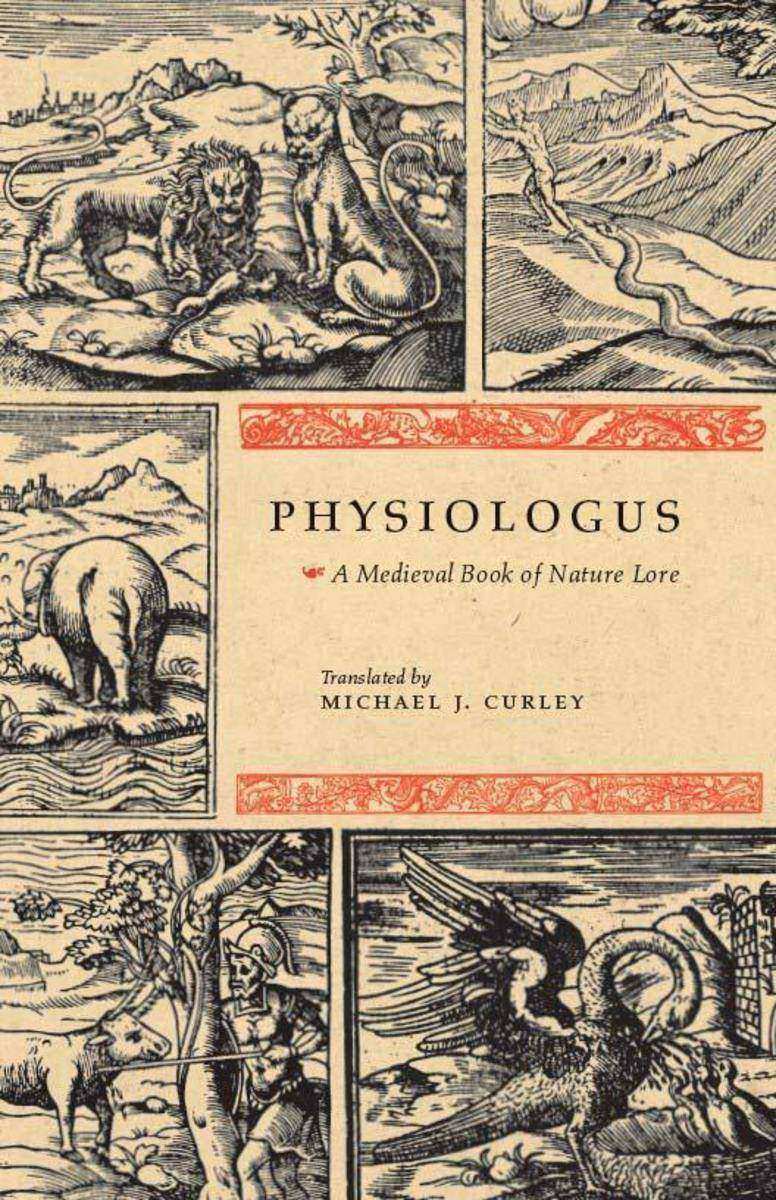
Physiologus
¥188.35
One of the most popular and widely read books of the Middle Ages, Physiologus contains allegories of beasts, stones, and trees both real and imaginary, infused by their anonymous author with the spirit of Christian moral and mystical teaching.Accompanied by an introduction that explains the origins, history, and literary value of this curious text, this volume also reproduces twenty woodcuts from the 1587 version. Originally composed in the fourth century in Greek, and translated into dozens of versions through the centuries, Physiologus will delight readers with its ancient tales of ant-lions, centaurs, and hedgehogs-and their allegorical significance."e;An elegant little book . . . still diverting to look at today. . . . The woodcuts reproduced from the 1587 Rome edition are alone worth the price of the book."e;-Raymond A. Sokolov, New York Times Book Review

House of Many Ways
¥51.50
A chaotically magical sequel to Howl’s Moving Castle. Charmain Baker is in over her head. Looking after Great Uncle William's tiny cottage while he's ill should have been easy, but Great Uncle William is better known as the Royal Wizard Norland and his house bends space and time. Its single door leads to any number of places - the bedrooms, the kitchen, the caves under the mountains, the past, to name but a few. By opening that door, Charmain is now also looking after an extremely magical stray dog, a muddled young apprentice wizard and a box of the king's most treasured documents, as well as irritating a clan of small blue creatures. Caught up in an intense royal search, she encounters an intimidating sorceress named Sophie. And where Sophie is, can the Wizard Howl and fire demon Calcifer be far behind?

Warsaw 1920: Lenin’s Failed Conquest of Europe
¥70.44
The dramatic and little-known story of how, in the summer of 1920, Lenin came within a hair's breadth of shattering the painstakingly constructed Versailles peace settlement and spreading Bolshevism to western Europe. In 1920 the new Soviet state was a mess, following a brutal civil war, and the best way of ensuring its survival appeared to be to export the revolution to Germany, itself economically ruined by defeat in World War I and racked by internal political dissension. Between Russia and Germany lay Poland, a nation that had only just recovered its independence after more than a century of foreign oppression. But it was economically and militarily weak and its misguided offensive to liberate the Ukraine in the spring of 1920 laid it open to attack. Egged on by Trotsky, Lenin launched a massive westward advance under the flamboyant Marshal Tukhachevsky. All that Great Britain and France had fought for over four years now seemed at risk. By the middle of August the Russians were only a few kilometres from Warsaw, and Berlin was less than a week's march away. Then occurred the 'Miracle of the Vistula': the Polish army led by Jozef Pilsudski regrouped and achieved one of the most decisive victories in military history. As a result, the Versailles peace settlement survived, and Lenin was forced to settle for Communism in one country. The battle for Warsaw bought Europe nearly two decades of peace, and communism remained a mainly Russian phenomenon, subsuming many of the autocratic and Byzantine characteristics of Russia's tsarist tradition.

South by Java Head
¥63.77
The 50th anniversary edition of this classic World War 2 adventure set in south-east Asia. February, 1942: Singapore lies burning and shattered, defenceless before the conquering hordes of the Japanese Army, as the last boat slips out of the harbour into the South China Sea. On board are a desperate group of people, each with a secret to guard, each willing to kill to keep that secret safe. Who or what is the dissolute Englishman, Farnholme? The elegant Dutch planter, Van Effen? The strangely beautiful Eurasian girl, Gudrun? The slave trader, Siran? The smiling and silent Nicholson who is never without his gun? Only one thing is certain: the rotting tramp steamer is a floating death trap, carrying a cargo of human TNT. Dawn sees them far out to sea but with the first murderous dive bombers already aimed at their ship. Thus begins an ordeal few are to survive, a nightmare succession of disasters wrought by the hell-bent Japanese, the unrelenting tropical sun and by the survivors themselves, whose hatred and bitterness divides them one against the other. Written after the acclaimed and phenomenally successful HMS Ulysses and The Guns of Navarone, this was MacLean’s third book, and it contains all the hallmarks of those other two classics. Rich with stunning visual imagery, muscular narrative power, brutality, courage and breathtaking excitement, the celebration of the 50th anniversary of South by Java Head offers readers a long-denied chance to enjoy one of the greatest war novels ever written.

Far Afield
¥288.41
Anthropology has long had a vexed relationship with literature, and nowhere has this been more acutely felt than in France, where most ethnographers, upon returning from the field, write not one book, but two: a scientific monograph and a literary account. In?Far Afield-brought to English-language readers here for the first time-Vincent Debaene puzzles out this phenomenon, tracing the contours of anthropology and literature's mutual fascination and the ground upon which they meet in the works of thinkers from Marcel Mauss and Georges Bataille to Claude Levi-Strauss and Roland Barthes.?The relationship between anthropology and literature in France is one of careful curiosity. Literary writers are wary about anthropologists' scientific austerity but intrigued by the objects they collect and the issues they raise, while anthropologists claim to be scientists but at the same time are deeply concerned with writing and representational practices. Debaene elucidates the richness that this curiosity fosters and the diverse range of writings it has produced, from Proustian memoirs to proto-surrealist diaries. In the end he offers a fascinating intellectual history, one that is itself located precisely where science and literature meet.

Scientific Babel
¥147.15
English is the language of science today. No matter which languages you know, if you want your work seen, studied, and cited, you need to publish in English. But that hasn't always been the case. Though there was a time when Latin dominated the field, for centuries science has been a polyglot enterprise, conducted in a number of languages whose importance waxed and waned over time-until the rise of English in the twentieth century.?So how did we get from there to hereHow did French, German, Latin, Russian, and even Esperanto give way to EnglishAnd what can we reconstruct of the experience of doing science in the polyglot pastWith Scientific Babel, Michael D. Gordin resurrects that lost world, in part through an ingenious mechanism: the pages of his highly readable narrative account teem with footnotes-not offering background information, but presenting quoted material in its original language. The result is stunning: as we read about the rise and fall of languages, driven by politics, war, economics, and institutions, we actually see it happen in the ever-changing web of multilingual examples. The history of science, and of English as its dominant language, comes to life, and brings with it a new understanding not only of the frictions generated by a scientific community that spoke in many often mutually unintelligible voices, but also of the possibilities of the polyglot, and the losses that the dominance of English entails.?Few historians of science write as well as Gordin, and Scientific Babel reveals his incredible command of the literature, language, and intellectual essence of science past and present. No reader who takes this linguistic journey with him will be disappointed.

Discovery of Insulin
¥265.87
In a brilliant, definitive history of one of the most significant and controversial medical events of modern times, award-winning historian Michael Bliss brings to light a bizarre clash of scientific personalities. When F. G. Banting and J. J. R. Macleod won the 1923 Nobel Prize for discovering and isolating insulin, Banting immediately announced that he was dividing his share of the prize with his young associate, C. H. Best. Macleod divided his share with a fourth member of the team, J. B. Collip. For the next sixty years medical opinion was intensely divided over the allotment of credit for the discovery of insulin. In resolving this controversy, Bliss also offers a wealth of new detail on such subjects as the treatment of diabetes before insulin and the life-and-death struggle to manufacture insulin.
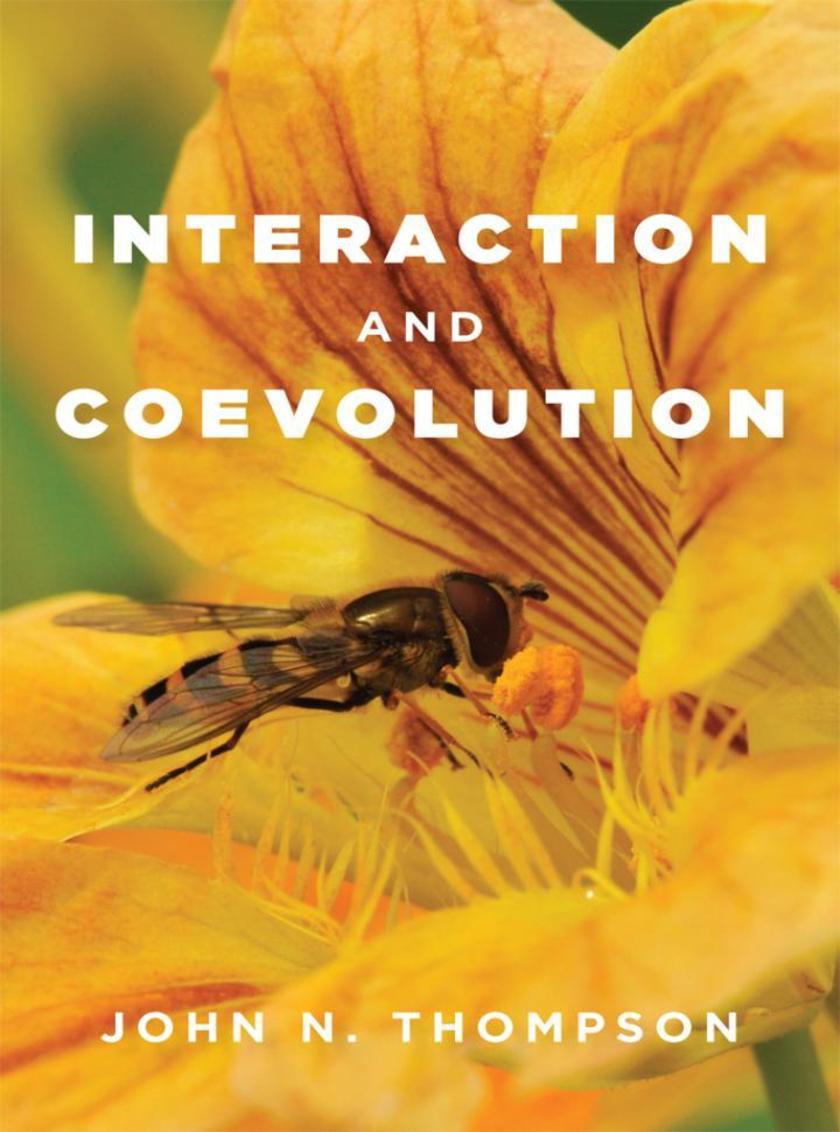
Interaction and Coevolution
¥165.81
"e;It is not only the species that change evolutionarily through interactions . . . the interactions themselves also change."e; Thus states John N. Thompson in the foreword to Interaction and Coevolution, the first title in his series of books exploring the relentless nature of evolution and the processes that shape the web of life. Originally published in 1982 more as an idea piece-an early attempt to synthesize then academically distinct but logically linked strands of ecological thought and to suggest avenues for further research-than as a data-driven monograph, Interaction and Coevolution would go on to be considered a landmark study that pointed to the beginning of a new discipline. Through chapters on antagonism, mutualism, and the effects of these interactions on populations, speciation, and community structure, Thompson seeks to explain not only how interactions differ in the selection pressures they exert on species, but also when interactions are most likely to lead to coevolution. In this era of climate change and swiftly transforming environments, the ideas Thompson puts forward in Interaction and Coevolution are more relevant than ever before.
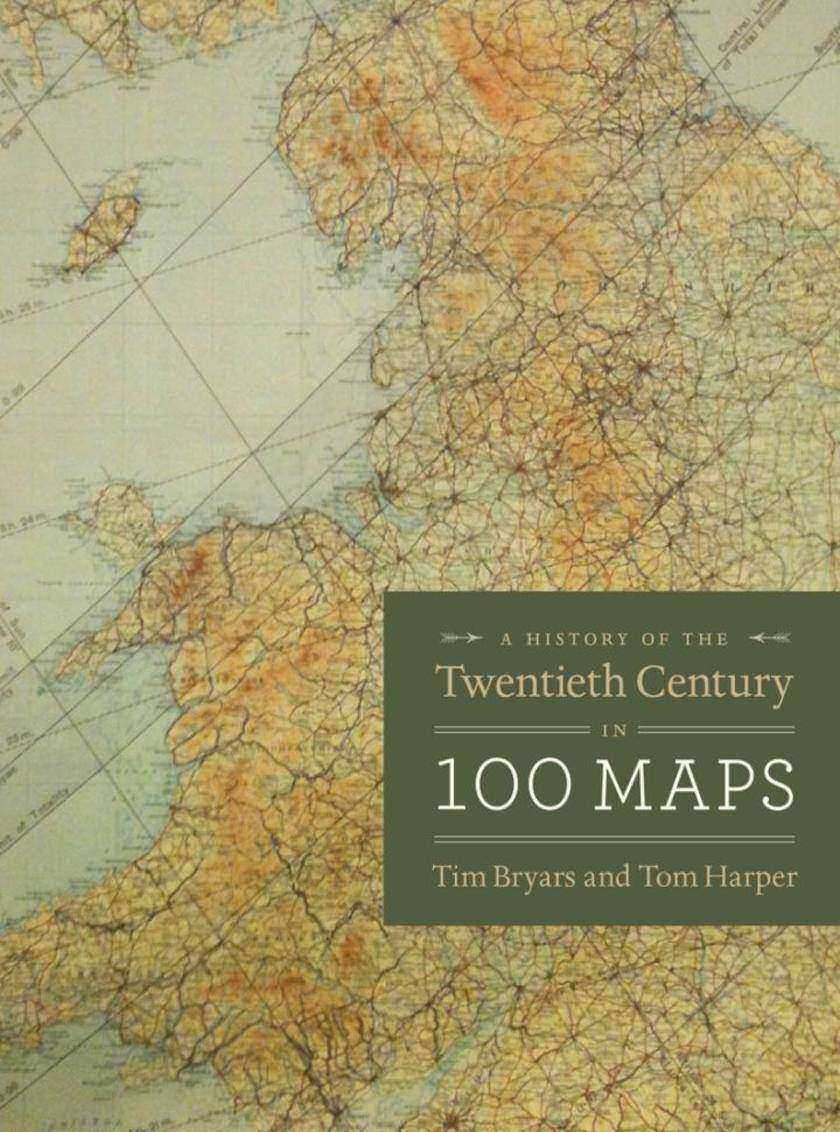
History of the Twentieth Century in 100 Maps
¥317.84
The twentieth century was a golden age of mapmaking, an era of cartographic boom. Maps proliferated and permeated almost every aspect of daily life, not only chronicling geography and history but also charting and conveying myriad political and social agendas. Here Tim Bryars and Tom Harper select one hundred maps from the millions printed, drawn, or otherwise constructed during the twentieth century and recount through them a narrative of the century's key events and developments.?As Bryars and Harper reveal, maps make ideal narrators, and the maps in this book tell the story of the 1900s-which saw two world wars, the Great Depression, the Swinging Sixties, the Cold War, feminism, leisure, and the Internet. Several of the maps have already gained recognition for their historical significance-for example, Harry Beck's iconic London Underground map-but the majority of maps on these pages have rarely, if ever, been seen in print since they first appeared. There are maps that were printed on handkerchiefs and on the endpapers of books; maps that were used in advertising or propaganda; maps that were strictly official and those that were entirely commercial; maps that were printed by the thousand, and highly specialist maps issued in editions of just a few dozen; maps that were envisaged as permanent keepsakes of major events, and maps that were relevant for a matter of hours or days.?As much a pleasure to view as it is to read, A History of the Twentieth Century in 100 Maps celebrates the visual variety of twentieth century maps and the hilarious, shocking, or poignant narratives of the individuals and institutions caught up in their production and use.
Deep Rhetoric
¥311.96
"e;Rhetoric is the counterpart of logic,"e; claimed Aristotle. "e;Rhetoric is the first part of logic rightly understood,"e; Martin Heidegger concurred. "e;Rhetoric is the universal form of human communication,"e; opined Hans-Georg Gadamer. But in Deep Rhetoric, James Crosswhite offers a groundbreaking new conception of rhetoric, one that builds a definitive case for an understanding of the discipline as a philosophical enterprise beyond basic argumentation and is fully conversant with the advances of the New Rhetoric of Chaim Perelman and Lucie Olbrechts-Tyteca.Chapter by chapter, Deep Rhetoric develops an understanding of rhetoric not only in its philosophical dimension but also as a means of guiding and conducting conflicts, achieving justice, and understanding the human condition. Along the way, Crosswhite restores the traditional dignity and importance of the discipline and illuminates the twentieth-century resurgence of rhetoric among philosophers, as well as the role that rhetoric can play in future discussions of ontology, epistemology, and ethics. At a time when the fields of philosophy and rhetoric have diverged, Crosswhite returns them to their common moorings and shows us an invigorating new way forward.

Doctors and Demonstrators
¥353.16
Since Roe v. Wade, abortion has continued to be a divisive political issue in the United States. In contrast, it has remained primarily a medical issue in Britain and Canada despite the countries' shared heritage. Doctors and Demonstrators looks beyond simplistic cultural or religious explanations to find out why abortion politics and policies differ so dramatically in these otherwise similar countries.?Drew Halfmann argues that political institutions are the key. In the United States, federalism, judicial review, and a private health care system contributed to the public definition of abortion as an individual right rather than a medical necessity. Meanwhile, Halfmann explains, the porous structure of American political parties gave pro-choice and pro-life groups the opportunity to move the issue onto the political agenda. A groundbreaking study of the complex legal and political factors behind the evolution of abortion policy, Doctors and Demonstrators will be vital for anyone trying to understand this contentious issue.
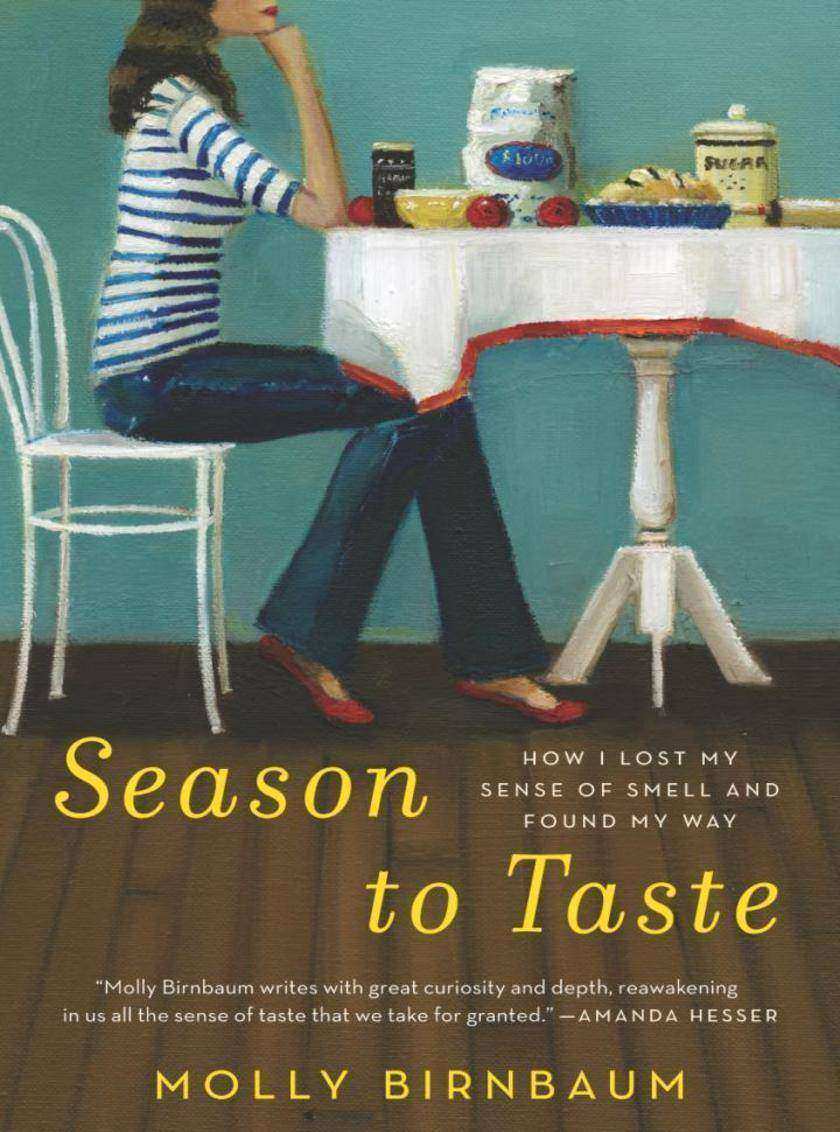
Season to Taste
¥95.11
An aspiring chef's moving account of finding her way in the kitchen and beyond after a tragic accident destroys her sense of smellAt twenty-two, just out of college, Molly Birnbaum spent her nights reading cookbooks and her days working at a Boston bistro, preparing to start training at the prestigious Culinary Institute of America. She knew exactly where she wanted the life ahead to lead: She wanted to be a chef. But shortly before she was due to matriculate, she was hit by a car while out for a run in Boston. The accident fractured her skull, broke her pelvis, tore her knee to shreds and destroyed her sense of smell. The flesh and bones would heal...but her sense of smell?And not being able to smell meant not being able to cook. She dropped her cooking school plans, quit her restaurant job, and sank into a depression.Season to Taste is the story of what came next: how she picked herself up and set off on a grand, entertaining quest in the hopes of learning to smell again. Writing with the good cheer and great charm of Laurie Colwin or Ruth Reichl, she explores the science of olfaction, pheromones, and Proust's madeleine; she meets leading experts, including the writer Oliver Sacks, scientist Stuart Firestein, and perfumer Christophe Laudamiel; and she visits a pioneering New Jersey flavor lab, eats at Grant Achatz's legendary Chicago restaurant Alinea, and enrolls at a renowned perfume school in the South of France, all in an effort to understand and overcome her condition.A moving personal story packed with surprising facts about our senses, Season to Taste is filled with unforgettable de*ions of the smells Birnbaum rediscovers from cinnamon, cedarwood, and fresh bagels to rosemary chicken, lavender, and apple pie as she falls in love, learns to smell from scratch, and starts, once again, to cook.

The Girl Who Fell to Earth
¥83.03
When Sophia Al-Maria's mother sends her away from rainy Washington State to stay with her husband's desert-dwelling Bedouin family in Qatar, she intends it to be a sort of teenage cultural boot camp. What her mother doesn't know is that there are some things about growing up that are universal. In Qatar, Sophia is faced with a new world she'd only imagined as a child. She sets out to find her freedom, even in the most unlikely of places. Both family saga and coming-of-age story, The Girl Who Fell to Earth takes readers from the green valleys of the Pacific Northwest to the dunes of the Arabian Gulf and on to the sprawling chaos of Cairo. Struggling to adapt to her nomadic lifestyle, Sophia is haunted by the feeling that she is perpetually in exile: hovering somewhere between two families, two cultures, and two worlds. She must make a place for herself a complex journey that includes finding young love in the Arabian Gulf, rebellion in Cairo, and, finally, self-discovery in the mountains of Sinai. The Girl Who Fell to Earth heralds the arrival of an electric new talent and takes us on the most personal of quests: the voyage home.


