


 购物车
购物车 个人中心
个人中心
The Eleven Comedies of Aristophanes
¥8.09
All 11 comedies, literally translated. Two volumes in one file. Includes: Knights, Acharnians, Peace, Lysistrata, The Clouds, The Wasps, The Birds, The Frogs, The Thesmophoriazusae, The Ecclesiazusae, and Plutus. According to Wikipedia: "Aristophanes (ca. 446 BCE – ca. 386 BCE), son of Philippus, of the deme Cydathenaus, was a prolific and much acclaimed, comic playwright of ancient Athens. Eleven of his forty plays have come down to us virtually complete. These, as well as fragments of some of his other plays, provide us with the only real example we have of a genre of comic drama known as Old Comedy and they are in fact used to define the genre. Also known as the Father of Comedy and the Prince of Ancient Comedy, Aristophanes has been said to recreate the life of ancient Athens more convincingly than any other author. His powers of ridicule were feared and acknowledged by influential contemporaries - although more than one contemporary, satirical playwright caricatured the philosopher Socrates, his student Plato singled out Aristophanes' play The Clouds as slander contributing to his old mentor's trial and execution."
With Kitchener in the Soudan
¥8.09
Historical novel set in the Sudan in the late 19th century. The Preface begins: "The reconquest of the Soudan will ever be mentioned as one of the most difficult, and at the same time the most successful, enterprises ever undertaken. The task of carrying an army hundreds of miles across a waterless desert; conveying it up a great river, bristling with obstacles; defeating an enormously superior force, unsurpassed in the world for courage; and, finally, killing the leader of the enemy and crushing out the last spark of opposition; was a stupendous one. After the death of Gordon, and the retirement of the British troops, there was no force in existence that could have barred the advance of the fanatical hordes of the Mahdi, had they poured down into Egypt. The native Egyptian army was, as yet, in the earliest stage of organization; and could not be relied upon to stand firm against the wild rush of the Dervishes." According to Wikipedia: "George Alfred Henty (8 December 1832 - 16 November 1902), referred to as G. A. Henty, was a prolific English novelist, special correspondent, and Imperialist born in Trumpington, Cambridgeshire, England. He is best known for his historical adventure stories that were popular in the late 19th century. His works include Out on the Pampas (1871), The Young Buglers (1880), With Clive in India (1884) and Wulf the Saxon (1895)."
By Right of Conquest
¥8.09
Historical novel that makes you feel like you are there. According to Wikipedia: "George Alfred Henty (8 December 1832 - 16 November 1902), referred to as G. A. Henty, was a prolific English novelist, special correspondent, and Imperialist born in Trumpington, Cambridgeshire, England. He is best known for his historical adventure stories that were popular in the late 19th century. His works include Out on the Pampas (1871), The Young Buglers (1880), With Clive in India (1884) and Wulf the Saxon (1895)"
Omoo: A Sequel to Typee
¥8.09
Autobiographical novel. "Omoo is so close a sequel to "Typee," that it almost forms a part of that work. Herman Melville's second book appeared in 1847, published (as its forerunner had been the year before) simultaneously in London and New York. In 'Omoo,' as Mr. Arthur Stedman says- 'We leave for the most part the dreamy pictures of island life, and find ourselves sharing the extremely realistic discomforts of a Sydney whaler in the early forties.' Both books are without a doubt largely autobiographical, and based on the writer's early sea-adventures, of which his voyage in the "Acushnet" in 1841-2 was the most memorable." According to Wikipedia: "Herman Melville (August 1, 1819 – September 28, 1891) was an American novelist, short story writer, essayist and poet. His first two books gained much attention, though they were not bestsellers, and his popularity declined precipitously after only a few years. By the time of his death he had been almost completely forgotten, but his longest novel, Moby-Dick — largely considered a failure during his lifetime, and most responsible for Melville's fall from favor with the reading public — was recognized in the 20th century as one of the chief literary masterpieces of both American and world literature."
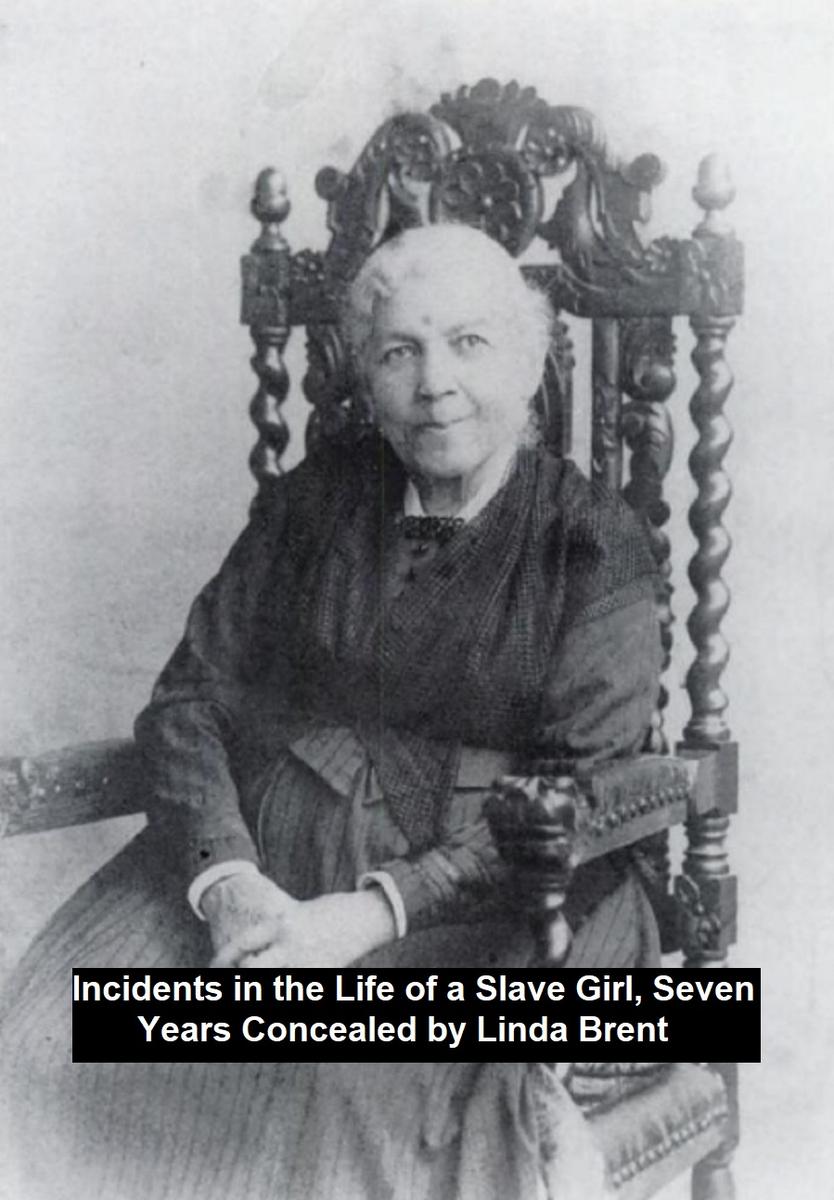
Incidents in the Life of a Slave Girl, Seven Years Concealed
¥8.09
Autobiography of a slave girl, first published in 1861. According to Wikipedia: "Harriet Ann Jacobs (February 11, 1813 – March 7, 1897) was an American writer, who escaped from slavery and became an abolitionist speaker and reformer. Jacobs' single work, Incidents in the Life of a Slave Girl, published in 1861 under the pseudonym Linda Brent, was one of the first autobiographical narratives about the struggle for freedom by female slaves and an account of the sexual harassment and abuse they endured."
A Book of Sibyls
¥8.09
Biographical sketches of Mrs. Barbauld, Miss Edgeworth, Mrs. Opie, and Jane Austen, first published in 1883. According to Wikipedia: " Anne Isabella, Lady Ritchie, née Thackeray (9 June 1837 – 26 February 1919) was an English writer. She was the eldest daughter of William Makepeace Thackeray.
Israel Potter: His Fifty Years of Exile
¥8.09
Biography of a soldier in the American Revolution. Melville explains, "Biography, in its purer form, confined to the ended lives of the true and brave, may be held the fairest meed of human virtue--one given and received in entire disinterestedness--since neither can the biographer hope for acknowledgment from the subject, nor the subject at all avail himself of the biographical distinction conferred. Israel Potter well merits the present tribute--a private of Bunker Hill, who for his faithful services was years ago promoted to a still deeper privacy under the ground, with a posthumous pension, in default of any during life, annually paid him by the spring in ever-new mosses and sward." According to Wikipedia: "Herman Melville (August 1, 1819 – September 28, 1891) was an American novelist, short story writer, essayist and poet. His first two books gained much attention, though they were not bestsellers, and his popularity declined precipitously after only a few years. By the time of his death he had been almost completely forgotten, but his longest novel, Moby-Dick — largely considered a failure during his lifetime, and most responsible for Melville's fall from favor with the reading public — was recognized in the 20th century as one of the chief literary masterpieces of both American and world literature."
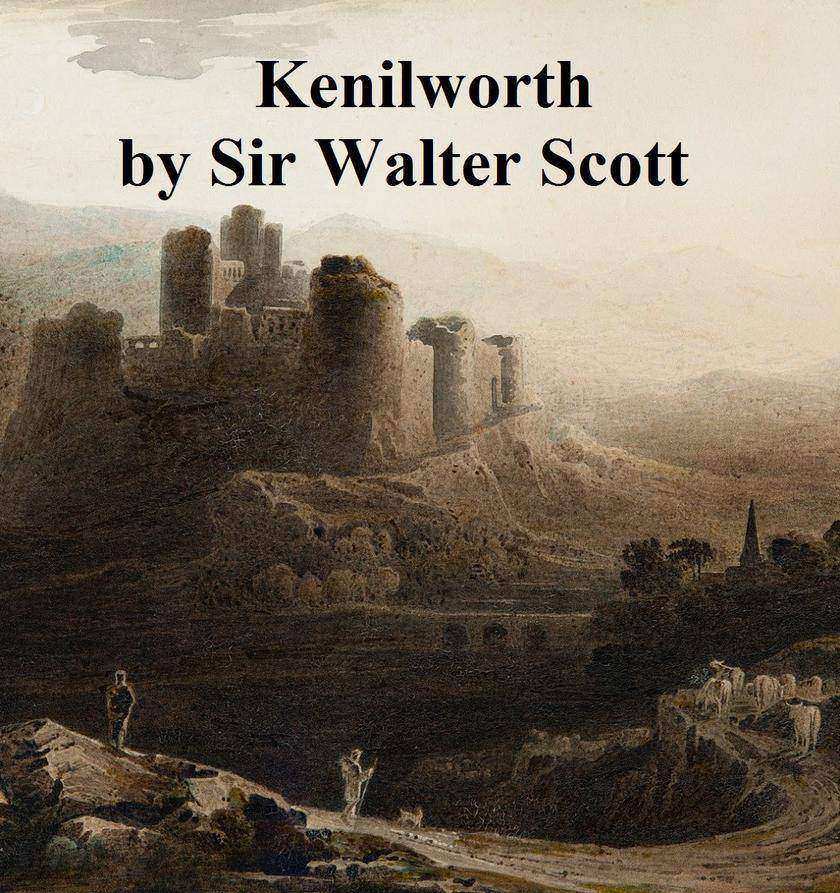
Kenilworth
¥8.09
Historical novel, first published in 1821. Set in Southern England in 1575. According to Wikipedia: "Sir Walter Scott, 1st Baronet (1771 – 1832) was a prolific Scottish historical novelist and poet popular throughout Europe during his time. In some ways Scott was the first English-language author to have a truly international career in his lifetime, with many contemporary readers all over Europe, Australia, and North America. His novels and poetry are still read, and many of his works remain classics of both English-language literature and of Scottish literature. Famous titles include Ivanhoe, Rob Roy, The Lady of The Lake, Waverley, The Heart of Midlothian and The Bride of Lammermoor."
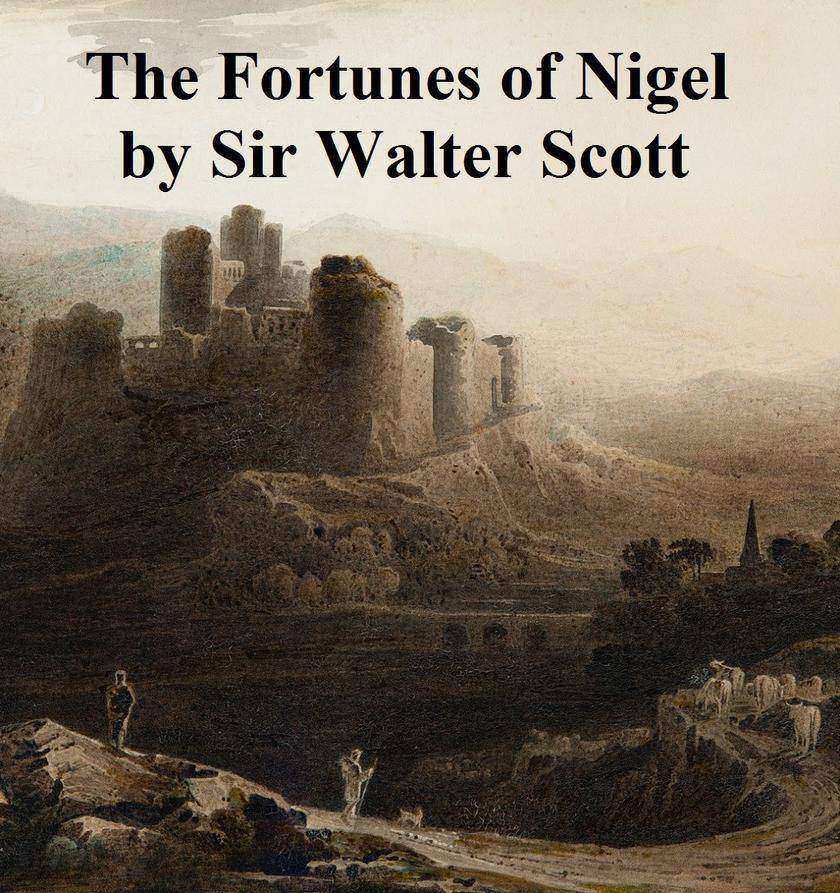
The Fortunes of Nigel
¥8.09
Historical novel, first published in 1822. Set in London and Greenwich, England, in 1616-1618. According to Wikipedia: "Sir Walter Scott, 1st Baronet (1771 – 1832) was a prolific Scottish historical novelist and poet popular throughout Europe during his time. In some ways Scott was the first English-language author to have a truly international career in his lifetime, with many contemporary readers all over Europe, Australia, and North America. His novels and poetry are still read, and many of his works remain classics of both English-language literature and of Scottish literature. Famous titles include Ivanhoe, Rob Roy, The Lady of The Lake, Waverley, The Heart of Midlothian and The Bride of Lammermoor."
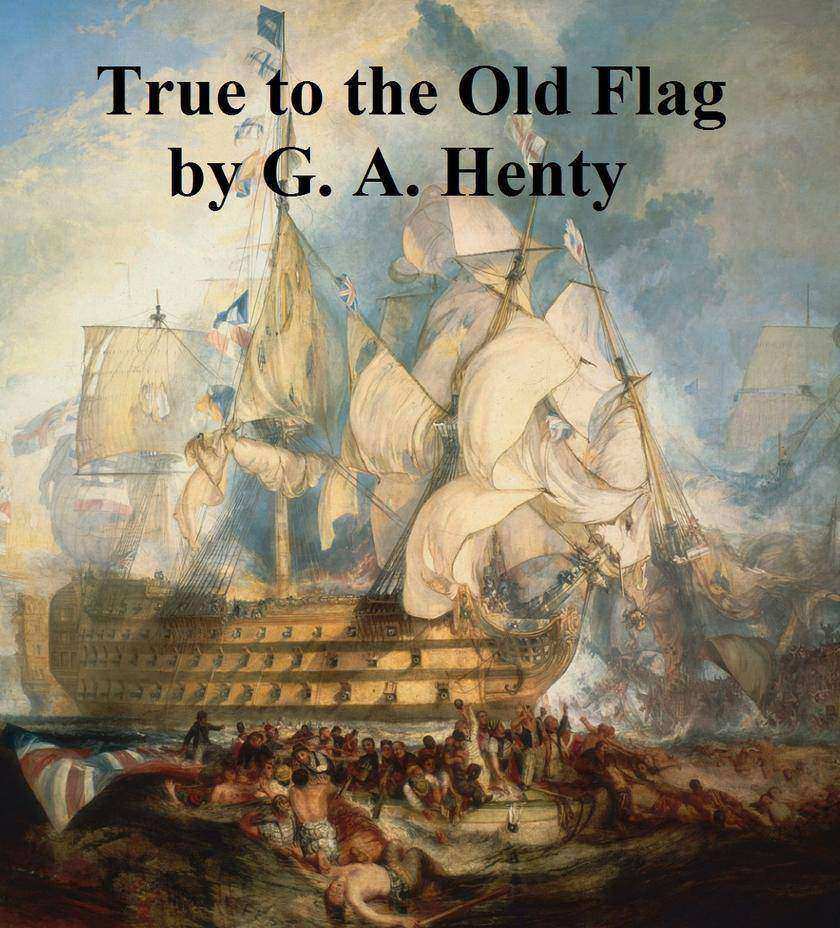
True to the Old Flag
¥8.09
Historical novel, set during the American Revolution, and told from the British perspective. The Preface begins: "You have probably been accustomed to regard the war between England and her colonies in America as one in which we were not only beaten but, to some extent, humiliated. Owing to the war having been an unsuccessful one for our arms, British writers have avoided the subject, and it has been left for American historians to describe. These, writing for their own countrymen, and drawing for their facts upon gazettes, letters, and other documents emanating from one side only, have, naturally, and no doubt insensibly, given a very strong color to their own views of the events, and English writers have been too much inclined to accept their account implicitly. There is, however, another and very different side to the story, and this I have endeavored to show you. The whole of the facts and details connected with the war can be relied upon as accurate. According to Wikipedia: "George Alfred Henty (8 December 1832 - 16 November 1902), referred to as G. A. Henty, was a prolific English novelist, special correspondent, and Imperialist born in Trumpington, Cambridgeshire, England. He is best known for his historical adventure stories that were popular in the late 19th century. His works include Out on the Pampas (1871), The Young Buglers (1880), With Clive in India (1884) and Wulf the Saxon (1895)."
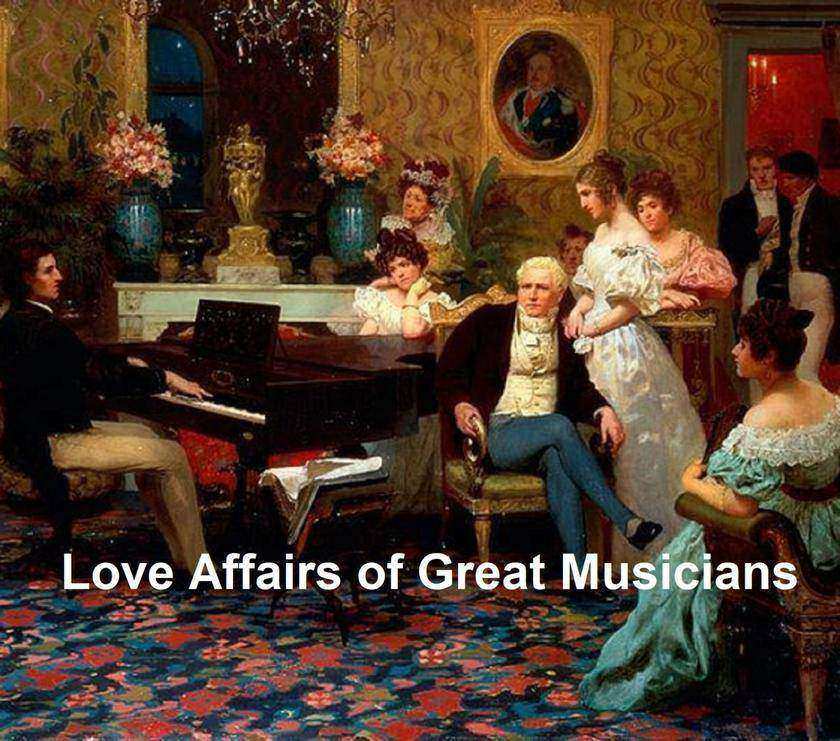
The Love Affairs of Great Musicians
¥8.09
First published in 1903. Biographical chapters cover Liszt, Mozart, Bach, Haydn, Beethoven, Chopin, Purcell, Gluck, Wagner, Tschaikovski, Schumann, and others.
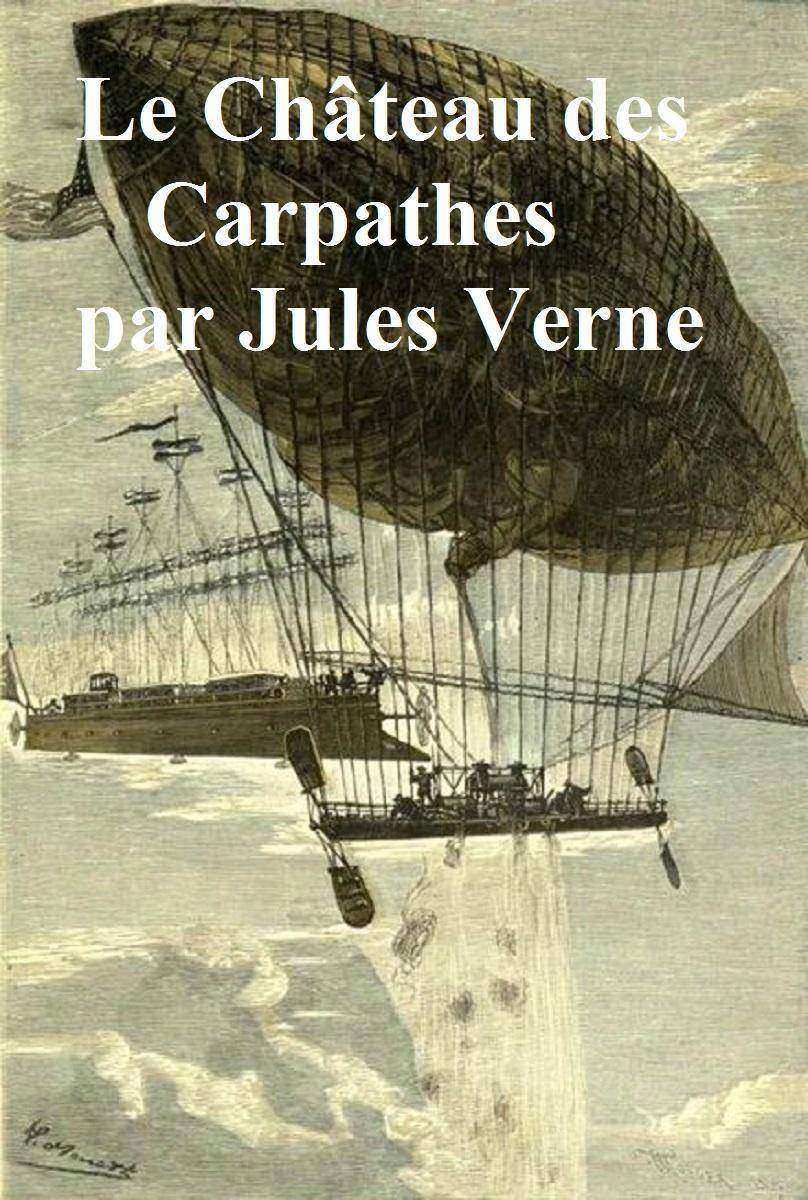
Le Chateau des Carpathes
¥8.09
Roman d'aventure classique, en fran?ais original. Selon Wikipédia: ?Jules Gabriel Verne (8 février 1828 - 24 mars 1905) est un auteur fran?ais qui a été le pionnier du genre de la science-fiction, notamment des romans comme Voyage au centre de la terre (1864), Vingt mille lieues sous la mer (1870) et autour du monde en quatre-vingts jours (1873) Verne a écrit sur l'espace, l'air et les voyages sous-marins avant que les voyages aériens et les sous-marins pratiques soient inventés. Selon Index Translationum, il est le troisième auteur le plus traduit au monde, certains de ses livres ont été transformés en films ... Verne, avec HG Wells, est souvent surnommé le ?père de la science-fiction?
Timon d'Athenes (Timon of Athens in French)
¥8.09
Traduit par Fran?ois Pierre Guillaume Guizot (1787 - 1874), historien fran?ais et homme d'?tat. Publié en 1862. Selon Wikipedia: "La vie de Timon d'Athènes est une pièce de William Shakespeare sur la fortune d'un Athénien nommé Timon (et probablement influencé par le philosophe du même nom, aussi), généralement considéré comme l'un des ses travaux les plus obscurs et les plus difficiles, groupés à l'origine avec les tragédies, sont généralement considérés comme tels, mais certains savants les groupent avec les pièces à problèmes.
The New Jerusalem
¥8.09
Travelogue and related essays. According to Wikipedia: "Gilbert Keith Chesterton (1874 - 1936) was an influential English writer of the early 20th century. His prolific and diverse output included journalism, philosophy, poetry, biography, Christian apologetics, fantasy and detective fiction. Chesterton has been called the "prince of paradox."[1] He wrote in an off-hand, whimsical prose studded with startling formulations. For example: "Thieves respect property. They merely wish the property to become their property that they may more perfectly respect it."[2] He is one of the few Christian thinkers who are equally admired and quoted by both liberal and conservative Christians, and indeed by many non-Christians. Chesterton's own theological and political views were far too nuanced to fit comfortably under the "liberal" or "conservative" banner."
Helen of the Old House
¥8.09
Dodo Collections brings you another classic from Harold Bell Wright, ‘Helen of the Old House.’ ? ‘In a solidly American tale, Bell Wright vivifies his characters in palpable surroundings. His narrative makes readers feel as though they are witnesses to the action as it takes place. Against a backdrop of union politics in a factory town, the book takes a strong swipe at Communism while simultaneously decrying corporate greed. Ironically, this work-published in the 1920s-while strongly opposed to Karl Marx's ruinous philosophy never uses the word, "communism." The repeated references are subtle but unmistakable as when a "foreign" labor-organizing rabble-rouser says that his greatest allegiance is to the "Big Union." ? On the other side of the coin, the criticisms of big business are limited to corruption and extreme selfishness. These vices are seen as invidious precisely because they abuse capitalism. The concept of getting rich via hard work is esteemed, as are the virtues of honesty, generosity, and devotion to one's fellow man.’ (Amazon Review SF 13/09/02) ? Harold Bell Wright (May 4, 1872 – May 24, 1944) was a best-selling American writer of fiction, essays, and non-fiction during the first half of the 20th century. Although mostly forgotten or ignored after the middle of the 20th century, he is said to have been the first American writer to sell a million copies of a novel and the first to make $1 million from writing fiction. Between 1902 and 1942 Wright wrote 19 books, several stage plays, and many magazine articles. More than 15 movies were made or claimed to be made from Wright's stories, including Gary Cooper's first major movie, The Winning of Barbara Worth (1926) and the John Wayne film, The Shepherd of the Hills (1941).

The Bobbsey Twins at Meadow Brook
¥8.09
According to Wikipedia: "Laura Lee Hope is a pseudonym used by the Stratemeyer Syndicate for the Bobbsey Twins and several other series of children's novels. Actual writers taking up the pen of Laura Lee Hope include Edward Stratemeyer, Howard and Lilian Garis, Elizabeth Ward, Harriet (Stratemeyer) Adams, and Nancy Axelrad. Laura Lee Hope was first used as a pseudonym in 1904 for the debut of the Bobbsey Twins. Series: The Bobbsey Twins (1904-), The Outdoor Girls (23 vols. 1913-1933), The Moving Picture Girls (7 vols. 1914-1916), Bunny Brown (20 vols. 1916-1931), Six Little Bunkers (14 vols. 1918-1930), Make Believe Stories (12 vols. c. 1920-1923), Blythe Girls (12 vols. 1925-1932)."

Benita: an African Romance
¥8.09
Dodo Collections brings you another classic from H. Rider Haggard, ‘Benita, an African Romance.’ An adventurous trader, it is said, hearing the legend of a great treasure buried a party of Portuguese hundreds of years before, as a last resource attempted its discovery by the help of a mesmerist. A child was put into a trance, and gave his mesmerist details of the adventures and death of the unhappy Portuguese men and women. With much other detail, the boy described the burial of the great treasure and its exact situation so accurately that the white man and the mesmerist were able to dig for and find the place "where it had been" -- for the bags were gone, swept out by the floods of the river. In another trance, the boy revealed where the sacks still lay; but before the white trader could renew his search for them, the party was hunted out of the country by natives whose superstitious fears were aroused, barely escaping with their lives. Sir Henry Rider Haggard was an English writer of adventure novels set in exotic locations, predominantly Africa, and the creator of the Lost World literary genre. His stories, situated at the lighter end of the scale of Victorian literature, continue to be popular and influential. He was also involved in agricultural reform and improvement in the British Empire. His breakout novel was King Solomon's Mines (1885), which was to be the first in a series telling of the multitudinous adventures of its protagonist, Allan Quatermain. Haggard was made a Knight Bachelor in 1912 and a Knight Commander of the Order of the British Empire in 1919. He stood unsuccessfully for Parliament as a Conservative candidate for the Eastern division of Norfolk in 1895. The locality of Rider, British Columbia, was named in his memory.

Fair Margaret
¥8.09
Dodo Collections brings you another classic from H. Rider Haggard, ‘Fair Margaret’ In the turbulent reign of King Henry VII, Peter Brome finds himself with a soldier's blood on his hands -- blood the Spanish ambassador's men demand be repaid. Poor and fatherless, Peter delivered the killing blow in self-defense -- and because of his helpless love for Margaret -- dark-eyed daughter of John Castell, the kindly and wealthy merchant who has overseen his upbringing. Now another pursues fair Margaret -- the powerful Marquis d'Aguilar of Spain, traveling in England upon a secret mission for the Inquisition. More than love hangs in the balance? ? Sir Henry Rider Haggard was an English writer of adventure novels set in exotic locations, predominantly Africa, and the creator of the Lost World literary genre. His stories, situated at the lighter end of the scale of Victorian literature, continue to be popular and influential. He was also involved in agricultural reform and improvement in the British Empire.? His breakout novel was?King Solomon's Mines(1885), which was to be the first in a series telling of the multitudinous adventures of its protagonist, Allan Quatermain. Haggard was made a Knight Bachelor in 1912 and a Knight Commander of the Order of the British Empire in 1919. He stood unsuccessfully for Parliament as a Conservative candidate for the Eastern division of Norfolk in 1895. The locality of Rider, British Columbia, was named in his memory.
54-40 or Fight
¥8.09
Classic western. According to Wikipedia: "Emerson Hough (1857-1923) was an American author, best known for writing western stories. Hough was born in Newton, Iowa, and graduated from the University of Iowa with a law degree. He moved to White Oaks, New Mexico, and practiced law there but eventually turned to literary work by taking camping trips and writing about them for publication. He is best known as a novelist, writing The Mississippi Bubble as well as The Covered Wagon, about Oregon Trail pioneers, which later became successful as a movie, running 59 weeks at the Criterion Theater in New York City, passing the record set by Birth of a Nation. Other notable works included Story of the Cowboy, Way of the West, Singing Mouse Stories, and Passing of the Frontier, and writing the "Out-of-Doors" column for the Saturday Evening Post."

The Bobbsey Twins or Merry Days Indoors and Out
¥8.09
According to Wikipedia: "Laura Lee Hope is a pseudonym used by the Stratemeyer Syndicate for the Bobbsey Twins and several other series of children's novels. Actual writers taking up the pen of Laura Lee Hope include Edward Stratemeyer, Howard and Lilian Garis, Elizabeth Ward, Harriet (Stratemeyer) Adams, and Nancy Axelrad. Laura Lee Hope was first used as a pseudonym in 1904 for the debut of the Bobbsey Twins. Series: The Bobbsey Twins (1904-), The Outdoor Girls (23 vols. 1913-1933), The Moving Picture Girls (7 vols. 1914-1916), Bunny Brown (20 vols. 1916-1931), Six Little Bunkers (14 vols. 1918-1930), Make Believe Stories (12 vols. c. 1920-1923), Blythe Girls (12 vols. 1925-1932)."
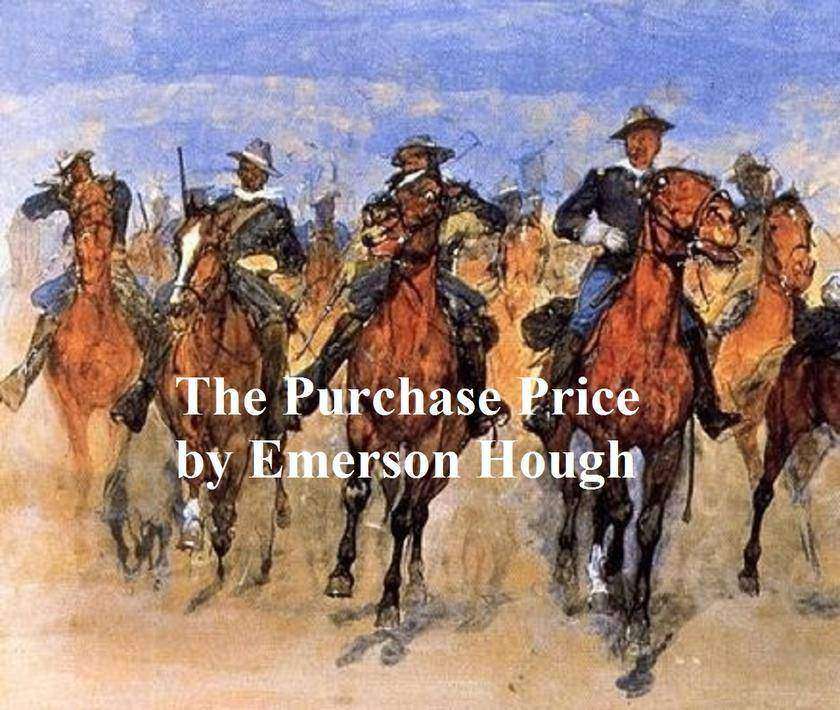
The Purchase Price Or the Cause of Compromise
¥8.09
Classic western. According to Wikipedia: "Emerson Hough (1857-1923) was an American author, best known for writing western stories. Hough was born in Newton, Iowa, and graduated from the University of Iowa with a law degree. He moved to White Oaks, New Mexico, and practiced law there but eventually turned to literary work by taking camping trips and writing about them for publication. He is best known as a novelist, writing The Mississippi Bubble as well as The Covered Wagon, about Oregon Trail pioneers, which later became successful as a movie, running 59 weeks at the Criterion Theater in New York City, passing the record set by Birth of a Nation. Other notable works included Story of the Cowboy, Way of the West, Singing Mouse Stories, and Passing of the Frontier, and writing the "Out-of-Doors" column for the Saturday Evening Post."


