


 购物车
购物车 个人中心
个人中心
Modeste Mignon
¥8.09
Classic novel. According to Wikipedia: "Honore de Balzac (May 20, 1799 - August 18, 1850) was a nineteenth-century French novelist and playwright. His magnum opus was a sequence of almost 100 novels and plays collectively entitled La Comedie humaine, which presents a panorama of French life in the years after the fall of Napoleon Bonaparte in 1815. Due to his keen observation of detail and unfiltered representation of society, Balzac is regarded as one of the founders of realism in European literature. He is renowned for his multi-faceted characters; even his lesser characters are complex, morally ambiguous and fully human. Inanimate objects are imbued with character as well; the city of Paris, a backdrop for much of his writing, takes on many human qualities."
Weir of Hermiston
¥8.09
Classic novel. According to Wikipedia: "Robert Louis (Balfour) Stevenson ( 1850 - 1894), was a Scottish novelist, poet, and travel writer, and a leading representative of Neo-romanticism in English literature. He was the man who "seemed to pick the right word up on the point of his pen, like a man playing spillikins", as G. K. Chesterton put it. He was also greatly admired by many authors, including Jorge Luis Borges, Ernest Hemingway, Rudyard Kipling, Vladimir Nabokov, and J. M. Barrie. Most modernist writers dismissed him, however, because he was popular and did not write within their definition of modernism. It is only recently that critics have begun to look beyond Stevenson's popularity and allow him a place in the canon."
The Man of PropertyVolume 1 of the Forsyte Saga
¥8.09
Classic novel. "Being the experiences of Mr. John Lavender in the Time of War". According to Wikipedia: "John Galsworthy ( 1867— 1933) was an English novelist and playwright. Notable works include The Forsyte Saga (1906—1921) and its sequels, A Modern Comedy and End of the Chapter. He won the Nobel Prize in Literature in 1932.
A Man's Woman
¥8.09
Classic novel. According to Wikipedia: "Benjamin Franklin Norris, Jr. (March 5, 1870 – October 25, 1902) was an American novelist, during the Progressive Era, writing predominantly in the naturalist genre. His notable works include McTeague (1899), The Octopus: A California Story (1901), and The Pit (1903). Although he did not openly support socialism as a political system, his work nevertheless evinces a socialist mentality and influenced socialist/progressive writers such as Upton Sinclair. Like many of his contemporaries, he was profoundly influenced by the advent of Darwinism, and Thomas Henry Huxley's philosophical defense of it. Norris was particularly influenced by an optimistic strand of Darwinist philosophy taught by Joseph LeConte, whom Norris studied under while at the University of California, Berkeley. Through many of his novels, notably McTeague, runs a preoccupation with the notion of the civilized man overcoming the inner "brute," his animalistic tendencies. His peculiar, and often confused, brand of Social Darwinism also bears the influence of the early criminologist Cesare Lombroso and the French naturalist Emile Zola."
Eight Hundred Leagues on the Amazon
¥8.09
Classic novel. According to Wikipedia: "Jules Gabriel Verne (February 8, 1828-March 24, 1905) was a French author who pioneered the science-fiction genre. He is best known for novels such as Journey to the Center of the Earth (1864), Twenty Thousand Leagues under the Sea (1870), and Around the World in Eighty Days (1873). Verne wrote about space, air, and underwater travel before air travel and practical submarines were invented, and before practical means of space travel had been devised. He is the third most translated author in the world, according to Index Translationum. Some of his books have been made into films. Verne, along with H. G. Wells, is often popularly referred to as the "Father of Science Fiction"
The Merry Men and Other Stories
¥8.09
Classic novel. According to Wikipedia: "Robert Louis (Balfour) Stevenson ( 1850 - 1894), was a Scottish novelist, poet, and travel writer, and a leading representative of Neo-romanticism in English literature. He was the man who "seemed to pick the right word up on the point of his pen, like a man playing spillikins", as G. K. Chesterton put it. He was also greatly admired by many authors, including Jorge Luis Borges, Ernest Hemingway, Rudyard Kipling, Vladimir Nabokov, and J. M. Barrie. Most modernist writers dismissed him, however, because he was popular and did not write within their definition of modernism. It is only recently that critics have begun to look beyond Stevenson's popularity and allow him a place in the canon."
Catherine
¥8.09
Classic novel. According to Wikipedia: "Thackeray is most often compared to one other great novelist of Victorian literature, Charles Dickens. During the Victorian era, he was ranked second only to Dickens, but he is now much less read and is known almost exclusively for Vanity Fair. In that novel he was able to satirize whole swaths of humanity while retaining a light touch. It also features his most memorable character, the engagingly roguish Becky Sharp. As a result, unlike Thackeray's other novels, it remains popular with the general reading public; it is a standard fixture in university courses and has been repeatedly adapted for movies and television. In Thackeray's own day, some commentators, such as Anthony Trollope, ranked his History of Henry Esmond as his greatest work, perhaps because it expressed Victorian values of duty and earnestness, as did some of his other later novels. It is perhaps for this reason that they have not survived as well as Vanity Fair, which satirizes those values."
The Newcombes
¥8.09
Classic novel. According to Wikipedia: "Thackeray is most often compared to one other great novelist of Victorian literature, Charles Dickens. During the Victorian era, he was ranked second only to Dickens, but he is now much less read and is known almost exclusively for Vanity Fair. In that novel he was able to satirize whole swaths of humanity while retaining a light touch. It also features his most memorable character, the engagingly roguish Becky Sharp. As a result, unlike Thackeray's other novels, it remains popular with the general reading public; it is a standard fixture in university courses and has been repeatedly adapted for movies and television. In Thackeray's own day, some commentators, such as Anthony Trollope, ranked his History of Henry Esmond as his greatest work, perhaps because it expressed Victorian values of duty and earnestness, as did some of his other later novels. It is perhaps for this reason that they have not survived as well as Vanity Fair, which satirizes those values."
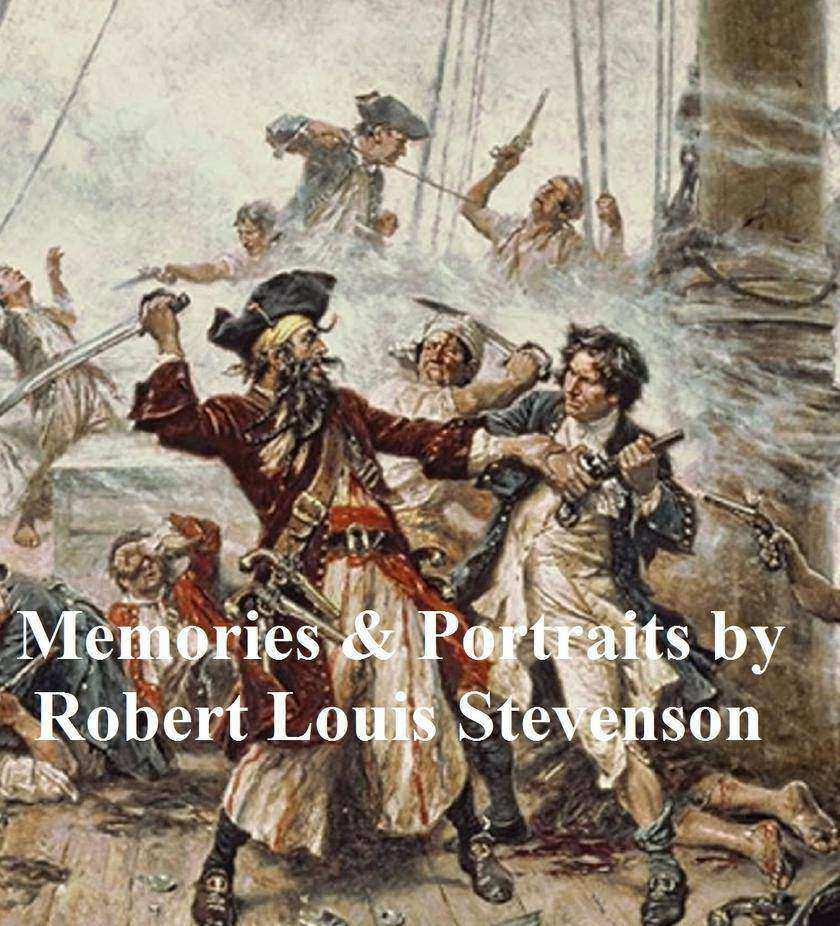
Memories and Portraits
¥8.09
Memoirs by the author of Treasure Island. He explains at the beginning: "This volume of papers, unconnected as they are, it will be better to read through from the beginning, rather than dip into at random. A certain thread of meaning binds them. Memories of childhood and youth, portraits of those who have gone before us in the battle - taken together, they build up a face that "I have loved long since and lost awhile," the face of what was once myself. This has come by accident; I had no design at first to be autobiographical; I was but led away by the charm of beloved memories and by regret for the irrevocable dead; and when my own young face (which is a face of the dead also) began to appear in the well as by a kind of magic, I was the first to be surprised at the occurrence."
Tales of Hearsay
¥8.09
Classic Conrad short stories, including: The Warrior's Soul, Prince Roman, The Tale, The Black Mate. According to Wikipedia: "Joseph Conrad (1857 – 1924) was a Polish-born English novelist. Many critics regard him as one of the greatest novelists in the English language—a fact that is remarkable, as he did not learn to speak English fluently until he was in his twenties (and always with a strong Polish accent). He became a naturalized British subject in 1886. Conrad is recognized as a master prose stylist. Some of his works have a strain of romanticism, but more importantly he is recognized as an important forerunner of modernist literature. His narrative style and anti-heroic characters have influenced many writers, including Ernest Hemingway, D. H. Lawrence, F. Scott Fitzgerald, Graham Greene, William S. Burroughs, Joseph Heller, V.S. Naipaul, Italo Calvino and J. M. Coetzee."
Mother Carey's Chickens
¥8.09
Novel for children and teens. According to Wikipedia: "Kate Douglas Wiggin ( 1856 - 1923) was an American children's author and educator. Kate Douglas Smith Wiggin was born in Philadelphia, and was of Welsh descent. She started the first free kindergarten in San Francisco in 1878 (the Silver Street Free Kindergarten). With her sister in the 1880s she also established a training school for kindergarten teachers. She was also a writer of children's books, the best known being The Birds' Christmas Carol (1887) and Rebecca of Sunnybrook Farm (1903)."

The Railway Children
¥8.09
Novel for children. According to Wikipedia: "Edith Nesbit (married name Edith Bland; 15 August 1858 – 4 May 1924) was an English author and poet whose children's works were published under the name of E. Nesbit. She wrote or collaborated on over 60 books of fiction for children, several of which have been adapted for film and television. She was also a political activist and co-founded the Fabian Society, a precursor to the modern Labour Party.... Nesbit published approximately 40 books for children, both novels and collections of stories. Collaborating with others, she published almost as many more. According to her biographer Julia Briggs, Nesbit was "the first modern writer for children": "(Nesbit) helped to reverse the great tradition of children's literature inaugurated by [Lewis] Carroll, [George] MacDonald and Kenneth Grahame, in turning away from their secondary worlds to the tough truths to be won from encounters with things-as-they-are, previously the province of adult novels." Briggs also credits Nesbit with having invented the children's adventure story. Among Nesbit's best-known books are The Story of the Treasure Seekers (1898) and The Wouldbegoods (1899), which both recount stories about the Bastables, a middle class family that has fallen on relatively hard times. Her children's writing also included numerous plays and collections of verse. She created an innovative body of work that combined realistic, contemporary children in real-world settings with magical objects and adventures and sometimes travel to fantastic worlds."
The Story of the Amulet
¥8.09
Novel for children. According to Wikipedia: "Edith Nesbit (married name Edith Bland; 15 August 1858 – 4 May 1924) was an English author and poet whose children's works were published under the name of E. Nesbit. She wrote or collaborated on over 60 books of fiction for children, several of which have been adapted for film and television. She was also a political activist and co-founded the Fabian Society, a precursor to the modern Labour Party.... Nesbit published approximately 40 books for children, both novels and collections of stories. Collaborating with others, she published almost as many more. According to her biographer Julia Briggs, Nesbit was "the first modern writer for children": "(Nesbit) helped to reverse the great tradition of children's literature inaugurated by [Lewis] Carroll, [George] MacDonald and Kenneth Grahame, in turning away from their secondary worlds to the tough truths to be won from encounters with things-as-they-are, previously the province of adult novels." Briggs also credits Nesbit with having invented the children's adventure story. Among Nesbit's best-known books are The Story of the Treasure Seekers (1898) and The Wouldbegoods (1899), which both recount stories about the Bastables, a middle class family that has fallen on relatively hard times. Her children's writing also included numerous plays and collections of verse. She created an innovative body of work that combined realistic, contemporary children in real-world settings with magical objects and adventures and sometimes travel to fantastic worlds."
The Philosophy of Style
¥8.09
Classic essay, first published in 1852. According to Wikipedia: "Herbert Spencer (27 April 1820 – 8 December 1903) was an English philosopher, prominent classical liberal political theorist, and sociological theorist of the Victorian era. Spencer developed an all-embracing conception of evolution as the progressive development of the physical world, biological organisms, the human mind, and human culture and societies. As a polymath, he contributed to a wide range of subjects, including ethics, religion, anthropology, economics, political theory, philosophy, biology, sociology, and psychology. During his lifetime he achieved tremendous authority, mainly in English-speaking academia. In 1902 he was nominated for the Nobel Prize in Literature. Indeed, in Great Britain and the United States at "one time Spencer's disciples had not blushed to compare him with Aristotle!" He is best known for coining the concept "survival of the fittest," which he did in Principles of Biology (1864), after reading Charles Darwin's On the Origin of Species. This term strongly suggests natural selection, yet as Spencer extended evolution into realms of sociology and ethics, he made use of Lamarckism rather than natural selection."
The Story of the Treasure Seekers
¥8.09
Novel for children. According to Wikipedia: "Edith Nesbit (married name Edith Bland; 15 August 1858 – 4 May 1924) was an English author and poet whose children's works were published under the name of E. Nesbit. She wrote or collaborated on over 60 books of fiction for children, several of which have been adapted for film and television. She was also a political activist and co-founded the Fabian Society, a precursor to the modern Labour Party.... Nesbit published approximately 40 books for children, both novels and collections of stories. Collaborating with others, she published almost as many more. According to her biographer Julia Briggs, Nesbit was "the first modern writer for children": "(Nesbit) helped to reverse the great tradition of children's literature inaugurated by [Lewis] Carroll, [George] MacDonald and Kenneth Grahame, in turning away from their secondary worlds to the tough truths to be won from encounters with things-as-they-are, previously the province of adult novels." Briggs also credits Nesbit with having invented the children's adventure story. Among Nesbit's best-known books are The Story of the Treasure Seekers (1898) and The Wouldbegoods (1899), which both recount stories about the Bastables, a middle class family that has fallen on relatively hard times. Her children's writing also included numerous plays and collections of verse. She created an innovative body of work that combined realistic, contemporary children in real-world settings with magical objects and adventures and sometimes travel to fantastic worlds."
The Count's Millions
¥8.09
Classic French mystery novel, in English translation. According to Wikipedia: "?mile Gaboriau (November 9, 1832 – September 28, 1873) was a French writer, novelist, journalist, and a pioneer of detective fiction... after publishing some novels and miscellaneous writings, found his real gift in L'Affaire Lerouge (1866). The book, which was Gaboriau's first detective novel, introduced an amateur detective. It also introduced a young police officer named Monsieur Lecoq, who was the hero in three of Gaboriau's later detective novels. The character of Lecoq was based on a real-life thief turned police officer, Eugène Fran?ois Vidocq (1775–1857)." One of Robert Louis Stevenson's favorite authors.
Cesarine Dietrich
¥8.09
Roman fran?ais classique en fran?ais original. Selon Wikipedia: "Amandine Aurore Lucile Dupin, Baronne Dudevant (1 juillet 1804 - 8 juin 1876), mieux connue sous son pseudonyme George Sand, était une romancière et féministe fran?aise .... Une liaison avec l'écrivain Jules Sandeau a annoncé ses débuts littéraires. Ils ont publié quelques histoires en collaboration, en les signant "Jules Sand." Elle a par conséquent adopté, pour son premier roman indépendant, Indiana (1832), le nom de plume qui l'a rendue célèbre - George Sand. Rose et Blanche (1831), écrit en collaboration avec Jules Sandeau, puisant dans son enfance à la campagne, elle écrit les romans ruraux La Mare au Diable (1846), Fran?ois le Champi (1847-1848), La Petite Fadette ( 1849) et Les Beaux Messieurs Bois-Doré (1857). Un hiver à Majorque décrit la période qu'elle et Chopin ont passée sur cette ?le entre 1838 et 1839. Ses autres romans incluent Indiana (1832), Lélia (1833), Mauprat ( 1837), Le Compagnon du Tour de France (1840), Consuelo (1842-1843), et Le Meunier d'Angibault (1845). Parmi les autres pièces de thé?tre et pièces autobiographiques figurent Histoire de ma vie (1855), Elle et Lui (1859) (sur son affaire avec Musset), Journal Intime (publié à titre posthume en 1926) et Correspondance. Sand exécutait souvent ses ?uvres thé?trales dans son petit thé?tre privé du domaine de Nohant. Sand est l'auteur de critiques littéraires et de textes politiques. Sa citation la plus répandue étant ?Il n’ya qu’un seul bonheur dans la vie: aimer et être aimé?.
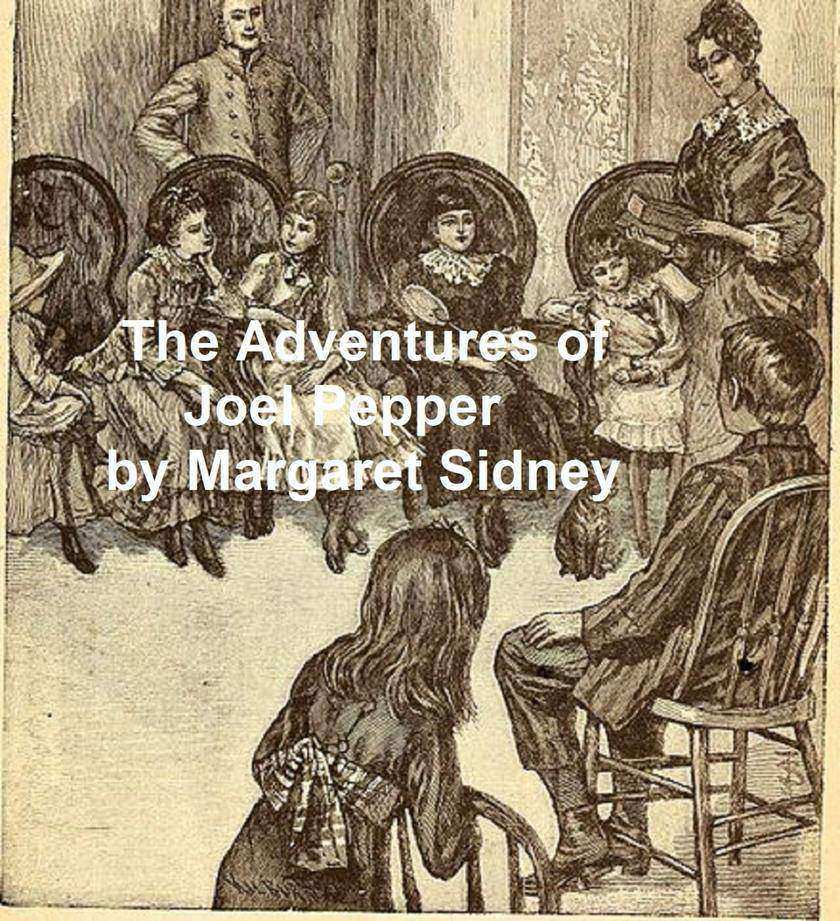
The Adventures of Joel Pepper
¥8.09
Novel from the Five Little Peppers series. According to Wikipedia: "Margaret Sidney was the pseudonym of Harriett Mulford Stone ( 1844– 1924). She was an American author, born in New Haven, Connecticut. In 1878, at the age of 34, she began sending short stories to Wide Awake, a children's magazine in Boston. Two of her stories, "Polly Pepper's Chicken Pie" and "Phronsie Pepper's New Shoes", proved to be very popular with readers. Daniel Lothrop, the editor of the magazine, requested that Stone write more. The success of Harriett's short stories prompted her to write the now-famous Five Little Peppers series. This series was first published in 1881, the year that Stone married Daniel Lothrop. Daniel had founded the D. Lothrop Company of Boston, who published Harriett's books under her pseudonym, Margaret Sidney. Harriett and Daniel may have both had an interest in history and in famous authors. In 1883, they purchased the house in which both Louisa May Alcott and Nathaniel Hawthorne lived. Nicknamed The Wayside, the house is located in Concord, Massachusetts."
Roundabout Papers
¥8.09
Classic novel. According to Wikipedia: "Thackeray is most often compared to one other great novelist of Victorian literature, Charles Dickens. During the Victorian era, he was ranked second only to Dickens, but he is now much less read and is known almost exclusively for Vanity Fair. In that novel he was able to satirize whole swaths of humanity while retaining a light touch. It also features his most memorable character, the engagingly roguish Becky Sharp. As a result, unlike Thackeray's other novels, it remains popular with the general reading public; it is a standard fixture in university courses and has been repeatedly adapted for movies and television. In Thackeray's own day, some commentators, such as Anthony Trollope, ranked his History of Henry Esmond as his greatest work, perhaps because it expressed Victorian values of duty and earnestness, as did some of his other later novels. It is perhaps for this reason that they have not survived as well as Vanity Fair, which satirizes those values."
An Ideal Husband
¥8.09
Classic play. According to Wikipedia: "An Ideal Husband is an 1895 comedic stage play by Oscar Wilde which revolves around blackmail and political corruption, and touches on the themes of public and private honour. The action is set in London, in "the present", and takes place over the course of twenty-four hours. "Sooner or later," Wilde notes, "we shall all have to pay for what we do." But he adds that, "No one should be entirely judged by their past." Together with The Importance of Being Earnest, it is often considered Wilde's dramatic masterpiece. After Earnest it is his most popularly produced play... Oscar Fingal O'Flahertie Wills Wilde (1854 - 1900) was an Irish playwright, novelist, poet, and author of short stories. Known for his barbed wit, he was one of the most successful playwrights of late Victorian London, and one of the greatest celebrities of his day. As the result of a famous trial, he suffered a dramatic downfall and was imprisoned for two years of hard labour after being convicted of the offence of 'gross indecency.'"
Works of Freytag and Fontane
¥8.09
This collection includes works by Gustav Freytag and Theodor Fontane. The German Classics Of The Nineteenth And Twentieth Centuries, Volume 1, edited by Kuno Francke.


