


 购物车
购物车 个人中心
个人中心
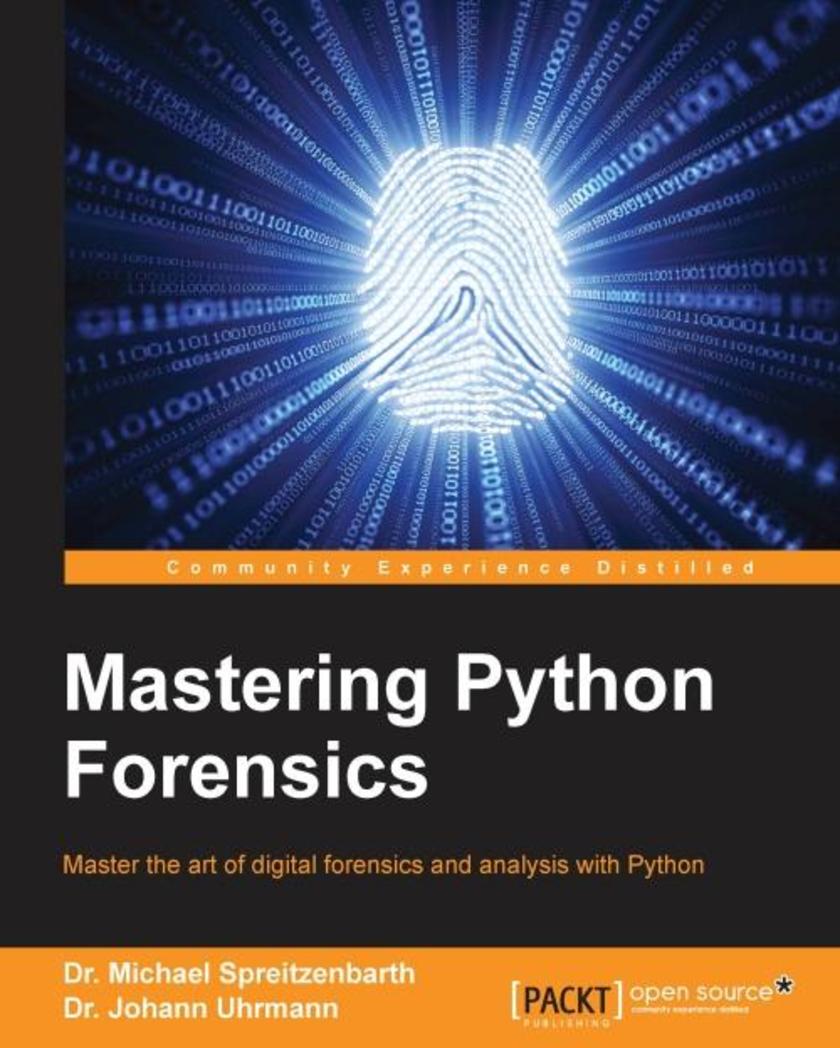
Mastering Python Forensics
¥71.93
Master the art of digital forensics and analysis with PythonAbout This BookLearn to perform forensic analysis and investigations with the help of Python, and gain an advanced understanding of the various Python libraries and frameworksAnalyze Python *s to extract metadata and investigate forensic artifactsThe writers, Dr. Michael Spreitzenbarth and Dr. Johann Uhrmann, have used their experience to craft this hands-on guide to using Python for forensic analysis and investigations Who This Book Is For If you are a network security professional or forensics analyst who wants to gain a deeper understanding of performing forensic analysis with Python, then this book is for you. Some Python experience would be helpful.What You Will LearnExplore the forensic analysis of different platforms such as Windows, Android, and vSphereSemi-automatically reconstruct major parts of the system activity and time-lineLeverage Python ctypes for protocol decodingExamine artifacts from mobile, Skype, and browsersDiscover how to utilize Python to improve the focus of your analysisInvestigate in volatile memory with the help of volatility on the Android and Linux platforms In Detail Digital forensic analysis is the process of examining and extracting data digitally and examining it. Python has the combination of power, expressiveness, and ease of use that makes it an essential complementary tool to the traditional, off-the-shelf digital forensic tools. This book will teach you how to perform forensic analysis and investigations by exploring the capabilities of various Python libraries. The book starts by explaining the building blocks of the Python programming language, especially ctypes in-depth, along with how to automate typical tasks in file system analysis, common correlation tasks to discover anomalies, as well as templates for investigations. Next, we’ll show you cryptographic algorithms that can be used during forensic investigations to check for known files or to compare suspicious files with online services such as VirusTotal or Mobile-Sandbox. Moving on, you’ll learn how to sniff on the network, generate and analyze network flows, and perform log correlation with the help of Python *s and tools. You’ll get to know about the concepts of virtualization and how virtualization influences IT forensics, and you’ll discover how to perform forensic analysis of a jailbroken/rooted mobile device that is based on iOS or Android. Finally, the book teaches you how to analyze volatile memory and search for known malware samples based on YARA rules.Style and approach This easy-to-follow guide will demonstrate forensic analysis techniques by showing you how to solve real-word-scenarios step by step.
Getting Started with Python Data Analysis
¥63.21
Learn to use powerful Python libraries for effective data processing and analysisAbout This BookLearn the basic processing steps in data analysis and how to use Python in this area through supported packages, especially Numpy, Pandas, and MatplotlibCreate, manipulate, and analyze your data to extract useful information to optimize your systemA hands-on guide to help you learn data analysis using Python Who This Book Is For If you are a Python developer who wants to get started with data analysis and you need a quick introductory guide to the python data analysis libraries, then this book is for you.What You Will LearnUnderstand the importance of data analysis and get familiar with its processing stepsGet acquainted with Numpy to use with arrays and array-oriented computing in data analysisCreate effective visualizations to present your data using MatplotlibProcess and analyze data using the time series capabilities of PandasInteract with different kind of database systems, such as file, disk format, Mongo, and RedisApply the supported Python package to data analysis applications through examplesExplore predictive analytics and machine learning algorithms using Scikit-learn, a Python library In Detail Data analysis is the process of applying logical and analytical reasoning to study each component of data. Python is a multi-domain, high-level, programming language. It’s often used as a *ing language because of its forgiving syntax and operability with a wide variety of different eco-systems. Python has powerful standard libraries or toolkits such as Pylearn2 and Hebel, which offers a fast, reliable, cross-platform environment for data analysis. With this book, we will get you started with Python data analysis and show you what its advantages are. The book starts by introducing the principles of data analysis and supported libraries, along with NumPy basics for statistic and data processing. Next it provides an overview of the Pandas package and uses its powerful features to solve data processing problems. Moving on, the book takes you through a brief overview of the Matplotlib API and some common plotting functions for DataFrame such as plot. Next, it will teach you to manipulate the time and data structure, and load and store data in a file or database using Python packages. The book will also teach you how to apply powerful packages in Python to process raw data into pure and helpful data using examples. Finally, the book gives you a brief overview of machine learning algorithms, that is, applying data analysis results to make decisions or build helpful products, such as recommendations and predictions using scikit-learn.Style and approach This is an easy-to-follow, step-by-step guide to get you familiar with data analysis and the libraries supported by Python. Topics are explained with real-world examples wherever required.
PrimeFaces Theme Development
¥63.21
Create, package, and customize stunning themes using PrimeFacesAbout This BookBuild PrimeFaces themes that meet the industry standardsCustomize your themes for mobile web applications with PrimeFaces MobileA precise, example-oriented guide to help you create interesting themes using the PrimeFaces tools Who This Book Is For If you are a Web Designer who wants to create and modify PrimeFaces themes then this book is for you. Basic knowledge of JSF, CSS, and HTML is assumed.What You Will LearnUse Maven to create JSF ProjectsCreate a custom theme using JQuery UI toolsPackage your theme for distribution and use your PrimeFaces-based web applications as drop in librariesDevelop additional dynamic look and feel elements that themes do not already supplyApply look and feel elements dynamically to views without causing page refreshesReduce code repetition by applying page templates to your JSF project In Detail Developing stunning themes for web applications has never been easier! PrimeFaces delivers a powerful set of features that enables JSF developers to create and customize awesome themes on the web. It is very easy to use because it comes as a single JAR file and requires no mandatory XML configuration. With more than 30 out-of-the-box themes, jQuery integration, a mobile UI toolkit, Ajax Push technology, and much more, PrimeFaces takes JSF application development to a whole new level! This book is a hands-on example-rich guide to creating and customizing PrimeFaces themes using available tools. Beginning with creating a JSF project and integrating the PrimeFaces library, this book will introduce you to the features of theme components, how these are structured, and how PrimeFaces uses JQuery UI to apply a theme to your application. You will learn to examine and change the CSS rules and get creative by setting standard icons and adding new icons to them. You will use a combination of JavaScript and CSS to enhance your application with help of scheduler component and go on to adapt and package your custom theme so that it is compatible with the Resource Manager. Finally, you will explore PrimeFaces mobile apps, ensuring themes are compatible with your mobile applications best practices for theme design.Style and approach This book is a concise, hands-on guide to developing PrimeFaces themes, working from the ground up with examples in each topic implemented in a web application. You will be encouraged to explore areas of your own interest without the requirement to stick to the letter of the chapter.
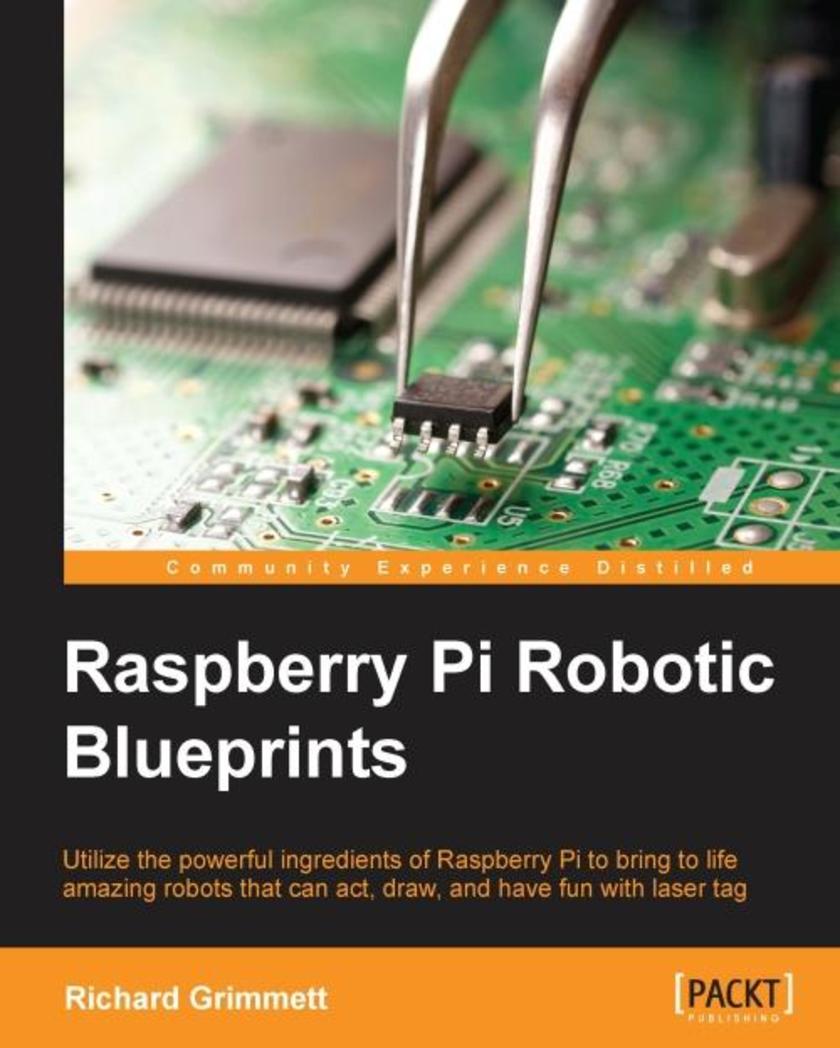
Raspberry Pi Robotic Blueprints
¥80.65
Utilize the powerful ingredients of Raspberry Pi to bring to life your amazing robots that can act, draw, and have fun with laser tagsAbout This BookLearn to implement a number of features offered by Raspberry Pi to build your own amazing robotsUnderstand how to add vision and voice to your robots.This fast-paced practical guide comprises a number of creative projects to take your Raspberry Pi knowledge to the next level Who This Book Is For This all-encompassing guide was created for anyone who is interested in expanding their knowledge in applying the peripherals of Raspberry Pi. If you have a fancy for building complex-looking robots with simple, inexpensive, and readily available hardware, then this book is ideal for you. Prior understanding of Raspberry Pi with simple mechanical systems is recommended.What You Will LearnAdd sensors to your robot so that it can sense the world around itKnow everything there is to know about accessing motors and servos to provide movement to the robotic platformExplore the feature of adding vision to your robot so it can “see” the world around itRefine your robot with the skill of speech recognition so that it can receive commandsPolish your robot by adding speech output so it can communicate with the world around itMaximize the use of servos in Raspberry Pi to create a drawing robotStrengthen your robot by adding wireless communication skills so you can see what the robot is seeing and control it from a distanceBuild an unbelievable autonomous hexcopter controlled by Raspberry Pi In Detail The Raspberry Pi is a series of credit card-sized single-board computers developed in the UK by the Raspberry Pi Foundation with the intention of promoting the teaching of basic computer science in schools. The Raspberry Pi is known as a tiny computer built on a single circuit board. It runs a Linux operating system, and has connection ports for various peripherals so that it can be hooked up to sensors, motors, cameras, and more. Raspberry Pi has been hugely popular among hardware hobbyists for various projects, including robotics. This book gives you an insight into implementing several creative projects using the peripherals provided by Raspberry Pi. To start, we’ll walk through the basic robotics concepts that the world of Raspberry Pi offers us, implementing wireless communication to control your robot from a distance. Next, we demonstrate how to build a sensible and a visionary robot, maximizing the use of sensors and step controllers. After that, we focus on building a wheeled robot that can draw and play hockey. To finish with a bang, we’ll build an autonomous hexcopter, that is, a flying robot controlled by Raspberry Pi. By the end of this book, you will be a maestro in applying an array of different technologies to create almost any imaginable robot.Style and approach This book is an easy-to-follow, project-based guide that throws you directly into the action of creating almost any imaginable robot through blueprints. It is full of step by step instructions and screenshots to help you build amazing robots in no time at all.
Mastering Google App Engine
¥90.46
Build robust and highly scalable web applications with Google App EngineAbout This BookGet an in-depth look at how Google App Engine works under the hoodDesign and model your application around Google's highly scalable distributed NoSQL datastore to unlock its full potentialA comprehensive guide to ensure your mastery of Google App Engine Who This Book Is For If you have been developing web applications in Python or any other dynamic language but have always wondered how to write highly scalable web applications without getting into system administration and other plumbing, then this is the book for you. No experience in writing scalable applications is required.What You Will LearnScale and develop your applications with Google App Engine's runtime environmentGet to grips with request handling mechanism and write request handlersDeep dive into Google's distributed NoSQL and highly scalable datastore and design your application around itImplement powerful search with scalable datastorePerform long-running tasks in the background using task queuesWrite compartmentalized apps using multi tenancy, memcache, and other Google App Engine runtime servicesHandle web requests using the CGI, WSGI, and multi-threaded configurationsDeploy, tweak, and manage apps in production on Google App Engine In Detail Developing web applications that serve millions of users is no easy task, as it involves a number of configurations and administrative tasks for the underlying software and hardware stack. This whole configuration requires not only expertise, but also a fair amount of time as well. Time that could have been spent on actual application functionality. Google App Engine allows you develop highly scalable web applications or backends for mobile applications without worrying about the system administration plumbing or hardware provisioning issues. Just focus writing on your business logic, the meat of the application, and let Google's powerful infrastructure scale it to thousands of requests per second and millions of users without any effort on your part. This book takes you from explaining how scalable applications work to designing and developing robust scalable web applications of your own, utilizing services available on Google App Engine. Starting with a walkthrough of scalability is and how scalable web applications work, this book introduces you to the environment under which your applications exist on Google App Engine. Next, you will learn about Google's datastore, which is a massively scalable distributed NoSQL solution built on top of BigTable. You will examine the BigTable concepts and operations in detail and reveal how it is used to build Google datastore. Armed with this knowledge, you will then advance towards how to best model your data and query that along with transactions. To augment the powerful distributed dataset, you will deep dive into search functionality offered on Google App Engine. With the search and storage sorted out, you will get a look into performing long running tasks in the background using Google App Engine task queues along with sending and receiving emails. You will also examine the memcache to boost web application performance, image processing for common image manipulation tasks. You will then explore uploading, storing, and serving large files using Blobstore and Cloud storage. Finally, you will be presented with the deployment and monitoring of your applications in production along with a detailed look at dividing applications into different working modules.Style and approach This book is an in-depth guide where you will examine the problems in the context of highly scalable web applications. This book will take you through the libraries, services, and required configuration and finally puts everything together into a small web application that showcases all the capabilities of Google App Engine.
Windows PowerShell for .NET Developers - Second Edition
¥90.46
Efficiently administer and maintain your development environment with Windows PowerShellAbout This BookExplore *ing and automation techniques with Windows PowerShellGain concrete knowledge of Windows PowerShell *ing to perform professional level *ingDiscover the benefits of the Configuration Management Platform with this step-by-step guide that includes real-world *ing examples Who This Book Is For If you are an IT professional or developer who has worked on the .Net platform and you want to learn automation using Windows PowerShell, then this book is for you. This self-start guide takes you from the basics and gradually moves to an intermediate level to show you how to perform professional *ing.What You Will LearnUnderstand the concepts of building PowerShell *s and the basics of programmingManage the LYNC, Exchange, and SharePoint platformsCreate a Pull server using a SMB file share and HTTP and HTTPSUse .NET classes in Windows PowerShell and C# to manage Exchange OnlineUse PowerShell in C# to manage Exchange Online and work with .NET classes in PowerShellAutomate LYNC clients, consuming Client Server Object Models to administrate SharePoint Online In Detail Windows PowerShell 5.0 for .NET Developers is your self-start guide to performing automation using Windows PowerShell. This book will help you to understand the PowerShell syntax and grammar and will also teach you techniques to remove the rough edges of manual deployments. Packed with PowerShell *s and sample C# codes to automate tasks, it also includes real-world scenarios such as administrating office servers to help you save time and perform deployments swiftly and efficiently. The book begins with the Windows PowerShell basics, explores the significant features of Windows Management Framework 5.0, covers the basic concepts of Desired State Configuration and the importance of idempotent deployments. By the end of the book, you will have a good understanding of Windows PowerShell’s features and will be able to automate your tasks and manage configuration effectively.Style and approach This is an easy-to-follow step-by-step guide with text-enabled screenshots. Each topic is explained with codes and examples. It also includes multiple approaches for a number of tasks to let you choose the best one for you depending on your scenario.
Learning PowerShell DSC
¥90.46
Get started with the fundamentals of PowerShell DSC and utilize its power to automate deployment and configuration of your serversAbout This BookCreate flexible and maintainable deployments using DSC configuration *s that stand the test of timeExplore the in depth details of the core architecture, concepts, and practices used by PowerShell DSCA step-by-step guide that shows you how to start using and taking advantage of PowerShell DSC Who This Book Is For This book is intended for system administrators, developers, or engineers who are responsible for configuration management and automation and wish to learn PowerShell Desired State Configuration for efficient management, configuration and deployment of systems and applications.What You Will LearnUnderstand configuration management and why you need itCraft flexible, reusable, and maintainable configuration *s for thousands of serversCreate custom DSC resources to manage any application or server settingApply configuration data to deploy applications to different environmentsUtilize DSC push deployments to test your configuration *s and custom DSC resourcesInstall, configure and use DSC pull serversRun a Windows MSI packageDeploy a website In Detail Windows PowerShell is a task-based command-line shell and *ing language designed especially for system administration. PowerShell DSC is a new management platform that enables you to deploy and manage configuration data for software services and manage the environment in which these services run. This book begins with an overview of the basics of PowerShell DSC by covering the architecture and components of the Desired Sate Configuration. It will then familiarize you with the set of PowerShell language extensions and new PowerShell commands. It will help you understand and create DSC configurations with the help of practical examples, and to create DSC custom resources for your custom applications. Finally, you will learn to deploy a real world application using PowerShell DSC. By the end of the book, you will have better knowledge about the powerful Desired State Configuration platform, which helps you to achieve continuous delivery, and efficient management and easy deployment of data for systems.Style and approach This book is an in-depth guide to using PowerShell DSC, full of real-world experiences and best practices using PowerShell DSC. The topics are explained and build on one another other to provide a holistic learning experience. At the end, all the features learned will be used to create a real world application deployment using DSC.
Internet of Things with Arduino Blueprints
¥71.93
Develop interactive Arduino-based Internet projects with Ethernet and WiFiAbout This BookBuild Internet-based Arduino devices to make your home feel more secureLearn how to connect various sensors and actuators to the Arduino and access data from InternetA project-based guide filled with schematics and wiring diagrams to help you build projects incrementally Who This Book Is For This book is intended for those who want to learn more about Arduino and make Internet-based interactive projects with Arduino. If you are an experienced software developer who understands the basics of electronics, then you can quickly learn how to build the Arduino projects explained in this book.What You Will LearnMake a powerful Internet controlled relay with an embedded web server to monitor and control your home electrical appliancesBuild a portable Wi-Fi signal strength sensor to give haptic feedback about signal strength to the userMeasure water flow speed and volume with liquid flow sensors and record real-time readingsSecure your home with motion-activated Arduino security cameras and upload images to the cloudImplement real-time data logging of a solar panel voltage with Arduino cloud connectorsTrack locations with GPS and upload location data to the cloudControl a garage door light with your Twitter feedControl infrared enabled devices with IR remote and Arduino In Detail Arduino is a small single-chip computer board that can be used for a wide variety of creative hardware projects. The hardware consists of a simple microcontroller, board, and chipset. It comes with a Java-based IDE to allow creators to program the board. Arduino is the ideal open hardware platform for experimenting with the world of the Internet of Things. This credit card sized Arduino board can be used via the Internet to make more useful and interactive Internet of things projects. Internet of Things with Arduino Blueprints is a project-based book that begins with projects based on IoT and cloud computing concepts. This book covers up to eight projects that will allow devices to communicate with each other, access information over the Internet, store and retrieve data, and interact with users—creating smart, pervasive, and always-connected environments. It explains how wired and wireless Internet connections can be used with projects and the use of various sensors and actuators. The main aim of this book is to teach you how Arduino can be used for Internet-related projects so that users are able to control actuators, gather data from various kinds of sensors, and send and receive data wirelessly across HTTP and TCP protocols. Finally, you can use these projects as blueprints for many other IoT projects and put them to good use. By the end of the book, you will be an expert in the use of IoT with Arduino to develop a set of projects that can relate very well to IoT applications in the real world.Style and approach Every chapter in this book clearly explains how to assemble components through easy-to-follow steps on while laying out important concepts, code snippets, and expected output results so that you can easily end up with a successful project where you can also enhance or modify the project according to your requirements.

Implementing NetScaler VPX? - Second Edition
¥71.93
Implement the new features of Citrix NetScaler 11 to optimize and deploy secure web services on multiple virtualization platformsAbout This BookLearn how to design, set up, and deploy NetScaler VPX along with the new Jumbo frames in a virtual environment using your GUI as well as your CLI for both public and private clouds to make all your web applications faster and more secureEnrich your networking skills utilizing the new features of AAA by following the instructions to optimize network trafficA step-by-step guide that will show you how to work with the latest NetScaler, 11, by implementing its new features using sample scenarios and real-world examples Who This Book Is For This book is for Citrix administrators who are just getting started with NetScaler, have some basic networking skills This book does not require prior experience of NetScaler.What You Will LearnConfigure different VPN solutions and learn about ICA Proxy, Unified Gateway and SSL VPNSet up load balancing for SharePoint, Exchange, Lync, SQL and other Citrix componentsGain insights into traffic management with NetScaler, Wireshark, and Citrix InsightProtect your web services with an application firewall, HTTP, DOS, and AAAOptimize traffic using front-end optimization, caching, and compressionDeploy a high availability environmentUse NetScaler in public cloud providers such as Azure or AmazonAdvance your network knowledge of TCP and SSL optimization In Detail With a large demand for responsive websites and availability of services, IT administrators are faced with an ever-rising need for services that are optimized for speed. NetScaler VPX is a software-based virtual appliance that provides users with the comprehensive NetScaler feature set. Implementing apps and cloud-based services is much easier with its increased service performance and integrated security features. This book will give you an insight into all the new features that NetScaler VPXhas to offer. Starting off with the basics, you will learn how to set NetScaler up and configure it in a virtual environment including the new features available in version 11, such as unified gateway and portal theme customization. Next, the book will cover how to deploy NetScalar on Azure and Amazon, and you will also discover how to integrate it with an existing Citrix infrastructure. Next, you will venture into other topics such as load balancing Microsoft and Citrix solutions, configuring different forms of high availability Global Server Load Balancing (GSLB), and network optimization. You will also learn how to troubleshoot and analyze data using NetScaler's extensive array of features. Finally, you will discover how to protect web services using an application firewall and will get to grips with other features such as HTTP, DOS, and AAA.Style and approach This easy-to-follow guide is full of detailed step-by step-instructions on how to implement the key components in NetScaler, using real-world examples and sample scenarios.
Team Foundation Server 2015 Customization
¥71.93
Take your expertise to the next level by unraveling various techniques to customize TFS 2015About This BookLearn how to efficiently modify your TFS-specific dashboards for complex server pluginsFind out the pros and cons of various extension points and customizations in TFSA fast-paced guide with highly concentrated information on TFS customizations Who This Book Is For This book is intended for anyone with experience with TFS, and in particular, those intermediate users who want to add more value to their organization by making its TFS users more productive. The book requires basic coding skills.What You Will LearnCustomize TFS 2015 dashboard and administer various componentsConfigure board cards, swim lanes, and columnsExplore the types of changes that can be made on the TFS process templatesCreate your own custom control for the Web and client work item formsBuild up new check-in policiesGet to grips with your personal server plugins and their usesCustomize both XAML builds and the new build systemSchedule jobs for more complicated business rules to run on a scheduleExtend your TFS possibilities with service hooks and VSO extensions In Detail Team Foundation Server is an efficacious collaboration tools that will allow you to share code, track records, software, all in a single package. Integrate it with your existing IDE or editor and let your team work in a flexible environment that adapts to projects of all shapes and sizes. Explore what gives you the edge over other developers by knowing the tips and quick fixes of customizing TFS. Effectively minimize the time users spend interacting with TFS so that they can be more productive. In this book you will quickly cover lots of TFS extension points, from the very basic task of customizing and configuring dashboards to customizing automated builds and check-in policies. You will learn how to create dashboards in TFS 2015, as well as add tiles, graphs, and more useful modifications. You'll perform customizations that make TFS work for you by streamlining your team’s boards. You'll cast modifications to the process template and learn the tips and tricks required to make efficient and valuable uses of your team’s board. From team-specific dashboards to complex server plugins, everything is covered in this concentrated guide to aid your knowledge. Delving deep, this book covers the pros and cons of check-in policies, as well as their proper debugging and deployment strategies. After that you will learn about advanced XAML builds and TFS jobs to further experiment with the activities of your jobs on your system. Finally, you will learn about service hooks and the amazing utility of .VSO extensions to help you create new extensions and explore new levels of customization.Style and approach This is an easy-to-follow guide with clearly explained and demonstrated examples.

WordPress Search Engine Optimization - Second Edition
¥80.65
A complete guide to dominating search engines with your WordPress siteAbout This BookEverything you need to get your WordPress site to the top of search engines and bring thousands of new customers to your blog or businessLearn everything from keyword research and link building to customer conversions, in this complete guidePacked with real-word examples to help get your site noticed on Google, Yahoo, and Bing Who This Book Is For This book is for anyone who runs any of the over 90,000,000 WordPress installations throughout the world. If you can login to your WordPress website, you can implement most of the tips in this book without any coding experience.What You Will LearnThe elements that search engines use to rank websites—and how to optimize your site for premium placementHarness social media sites to extend the reach of your site and gain more visitorsDiscover the high-volume, high-value search phrases that customers use when searching for your products or servicesAvoid dangerous black-hat optimization techniques and the people who advocate and purvey themBuild high-quality, high-value links from other websites to raise your rankings in search enginesCreate optimized and engaging content that both search engines and readers will loveAvoid common SEO mistakes that can get your site penalized by search engines In Detail WordPress is a powerful platform for creating feature-rich and attractive websites but, with a little extra tweaking and effort, your WordPress site can dominate search engines and bring thousands of new customers to your business. WordPress Search Engine Optimization will show you the secrets that professional SEO companies use to take websites to the top of search results. You'll take your WordPress site to the next level; you'll brush aside even the stiffest competition with the advanced tutorials in this book.Style and approach This is a practical, hands-on book based around sound SEO techniques specifically applied to WordPress. Each chapter starts with a brief overview of the important concepts then quickly moves into practical step-by-step actions you can take immediately. Throughout the book, you'll get clear instructions and detailed screenshots, so you can see exactly what to do each step of the way.
What is Your Life's Work?
¥128.85
What Is Your Life's Workcaptures a most extraordinary moment in each of our lives the time when we sit down with loved ones and attempt to answer the big question about what really matters. Bill Jensen has created a wonderfully practical space for you to explore who you are, what you stand for, what you believe in, what's risky, what's not, what's worth it, what you're struggling with, and what you've accomplished.He has captured the intimate exchanges between mothers and daughters, fathers and sons, and caring teammates all talking about what really matters at work, and in life. Their conversations are as real as yours would be: "Don't kiss tush, beware carnivorous sheep." "Honey, there are no shortcuts." "My daughter was limp with pain ... and I'm worried about deadlines. What was I thinking?!?!" "Speak up if you don't agree." "Be a respectful rebel." In What Is Your Life's Workyou will discover a new way to see and know who you are in today's more-better-faster world. Exposed is what usually stays private; the raw truths we've all experienced, the personal frailties and mistakes we'd like to hide, and the proudest achievements we'd like to celebrate.In the letters and work diaries of others, we see ourselves. In their struggles, we see our own.Bill Jensen has made it his life's work to battle corporate stupidity and help us all simplify our workdays, take more control, and rediscover our passions. As your trail guide and partner, he will take you through five distinct discoveries that thousands have encountered in finding their voices: Finding Yourself Finding the Lessons to Be Learned,the Questions to Be Asked Finding the Choices That Really Matter Finding the Courage to Choose Finding Joy, Serenity, and FulfillmentWhile it touches your heart and lifts your soul, What Is Your Life's Workdoes not shy away from difficult introspection. You are an active participant in this book. Yes, you will find value here stories of people like you, new ways of looking at what really matters, or simple confirmation that others have chosen the same path as you.But the ultimate takeaway asks something of you in return: Take something from this book and pay it forward. Start a new conversation with a loved one about what really matters about your own life's work.You will get back even more than you give. You will have brought these pages to life.
The Art of Mindfulness
¥54.46
This selection from Thich Nhat Hanh's bestselling The Art of Power illuminates the core Buddhist concept of mindfulness for the Western readerIn The Art of Mindfulness, one of the most revered Buddhist teachers in the world, Thich Nhat Hanh delivers a life changing practice to overcome our overdriven mind, to let go of preoccupations and multitasking and focus solely on the task at hand. By devoting 100% of our attention 100% of the time on what we are doing in the moment, we can alleviate suffering, fear, and anxiety. With the energy of mindfulness and the capacity of looking deeply, we can find the insights to transform and heal any situation.

Dinner: A Love Story
¥166.09
Jenny Rosenstrach, and her husband, Andy, regularly, some might say pathologically, cook dinner for their family every night.?Even when they work long days. Even when their kids' schedules pull them in eighteen different directions. They are not superhuman.?They are not from another planet. With simple strategies and common sense, Jenny figured out how to break down dinner—the food, the timing, the anxiety, from prep to cleanup—so that her family could enjoy good food, time to unwind, and simply be together.Using the same straight-up, inspiring voice that readers of her award-winning blog, Dinner: A Love Story,?have come to count on, Jenny never judges and never preaches. Every meal she dishes up?is a real meal, one that has been cooked and eaten and enjoyed at least a half dozen times by someone in Jenny's house. With inspiration and game plans for any home cook at any level, Dinner: A Love Story is as much for the novice who doesn't know where to start as it is for the gourmand who doesn't know how to start over when she finds herself feeding an intractable toddler or for the person who never thought about home-cooked meals until he or she became a parent.?This book is, in fact, for anyone interested in learning how to?make a meal to be shared with someone they love, and about how so many good, happy things?happen when we do.

Bread for the Journey
¥94.10
When beloved author Henri Nouwen set out to record this daybook of totally new reflections, he suddenly found himself on "a true spiritual adventure." For in these 366 original, interlocking morsels of daily wisdom, Nouwen provides both sustenance and a trail for us to follow, as he unveils, to his own surprise, his personal map of faith. From the delicate interplay of human experience to the surrender to Christ and the embrace of Christian community, that journey of Christian spirituality is explored and celebrated here in each eloquent, thought–provoking passage, "The table is one of the most intimate places in our lives. It is there that we give ourselves to one another. When we say, 'Take some more, let me serve you another plate, let me pour you another glass, don't be shy, enjoy it,' we say a lot more than our words express. We invite our friends to become part of our lives. We want them to be nurtured by the same food and drink that nurture us. We desire communion.... Every breakfast, lunch, or dinner can become a time of growing communion with one another." Intimately personal and inspiring, Bread for the Journey is a daily feast of fresh insight into the challenges and deep joys of a life lived in close communion with God. Nouwen is a wise, loving companion who invites us along as he finds joy in the community of loss, true freedom in forgiveness of others, and hope in surprising places. Each daily meditation is a stepping–stone along a path of private discovery, offering Nouwen's seasoned yet fresh ideas on kindness, love, suffering, and prayer, the Church as God's people, and the importance of Jesus in one's life–reflecting, as a whole, Nouwen's own 'personal creed.' Bread for the Journey brims with daily nourishment and guidance for devoted followers and new friends alike –– food for thought on a yearlong journey of discovery and faith.
Barbarians at the Gate
¥100.71
Barbarians at the Gate has been called one of the most influential business books of all time -- the definitive account of the largest takeover in Wall Street history. Bryan Burrough and John Helyar's gripping account of the frenzy that overtook Wall Street in October and November of 1988 is the story of deal makers and publicity flaks, of strategy meetings and society dinners, of boardrooms and bedrooms -- giving us not only a detailed look at how financial operations at the highest levels are conducted but also a richly textured social history of wealth at the twilight of the Reagan era. Barbarians at the Gate -- a business narrative classic -- is must reading for everyone interested in the way today's world really works.
Tao Te Ching
¥83.03
Lao-tzu's Tao Te Ching, or Book of the Way, is the classic manual on the art of living and one of the wonders of the world. In eighty-one brief chapters, the Tao Te Ching llods at the basic predicatment of being alive and gives advice that imparts balance and perspective, a serene and generous spirit. This book is about wisdom in action. It teaches how wo work for the good with the efforless skill that comes from being in accord with the Tao (the basic principle of the universe) and applies equally to good government and sexual love, to childrearing, business, and ecology. The Tao Te Ching is the most widely traslated book in world literature, after the Bible. Yet the gemlike lucidity of the original has eluded most previous translations, and they have obscured some of its central ideas. Now the Tao Te ching has been rendered into English by the eminent scholar and traslator Stephen Mitchell. Mr. Mitchell's Dropping Ashes on the Buddha is a modern Zen classic, and his translations of Rilke and of the Book of Job have already been called definitive for our time.
Beowulf
¥55.33
A verse translation of the first great narrative poem in the English language that captures the feeling and tone of the original.
Balancing Heaven and Earth
¥138.41
One of this century's most popular psychology scholars, Robert A.Johnson was among the first to present Carl Jung's rich but complex theories with simple elegance and grace,opening them to an entirely new and hungry audience. His masterful works--including the best selling He, She, Inner Work, and Owning Your Own Shadow-are known and loved as much for their beautiful retellings of timeless myths and folktales as for their deep wisdom and profound insight. Balancing Heaven and Earth reveals, for the first time, Johnson's own fascinating and mystical life-from his near-death experience at the age of eleven to the lifelong soul journey that has informed his writing and taught him how to live a spiritual life in the endlessly challenging modern world. Full of compelling, humorous, and surprising stories of encounters with an assortment of "sages, saints, and sinners," it lays bare Johnson's own inner world and its dazzeling landscape of powerful dreams, mystical visions, and synchronistic events. Beginnning with a vivid retelling of the childhood accident that claimed the lower part of his right leg, Johnson describes the life-defining moment when he was transported by a mystical vision to a realm that exists just beyond ordinary consciousness-a realm he calls the "Golden World." With this experience, described as "both my curse and my blessing," Johnson is launched on a spiritual quest that leads him in search of Eastern wisdom, to encounters with such wise men as J. Krishnamurti and D.T. Suzuki, and finally to Carl Jung, who shows him his destiny revealed in a dream. Johnson's experiences lead him to a unique understanding and acceptance of the slender connecting threads at work in all our lives, guiding us and shaping who we are-"call it fate, destiny, or the hand of God." As much a personal guide as a memoir, Balancing Heaven and Earth teaches us to follow , as Johnson has, the subtle influences of dreams, visions, and even our deepest sufferings in order to live attuned to our spiritual selves. A pure delight for Johnson's many fans and a splendid example of his trademark blend of illustrative myth and psychological insight, this is a work of incomparable beauty and inspiration showcasing the wisdom of a lifetime.
The One Thing Holding You Back
¥138.41
"By the time you finish this book, there will be nothing holding you back." from the Introduction Most people have a vision for their lives that they're not pursuing, half-heartedly pursuing, or pursuing with all their might yet somehow falling short. This vision can be modest or grand. It may involve breaking free of a destructive habit or finding a truly healthy relationship. It might have to do with making a real difference in the world or helping to lead a company to extraordinary success. In The One Thing Holding You Back, Raphael Cushnir, a leading voice in the world of personal and professional development, reveals that whenever people aren't living their dreams it's because they're not yet willing and able to feel specific emotions related to those dreams. Once we access and understand these emotions, our dreams can and will come true.Cushnir asserts that mere emotional awareness, commonly referred to as emotional intelligence, is not enough. For maximum benefit we must directly and consistently connect with our emotions. In particular, we need to connect with the emotions we routinely avoid, resist, or attempt to dismiss. It's these emotions that possess the key to our greatest goals. And learning to connect with them is another rarely taught but essential skill.The One Thing Holding You Back provides real solutions that can be implemented immediately and without external support and includes true stories of people who have put Cushnir's process to work and transformed their lives. Delivering a step-by-step program in accessible language, this landmark book will turn the obstacles in front of us into tremendous opportunities for achieving the life we always wanted.

The Power of Style
¥138.41
"Everyone gets dressed and getting dressed affects everything." —Bobbie Thomas, the TODAY show style editor Beyond understanding your best colors and figure-flattering clothes, Bobbie takes a unique step back in this inspiring guide to empower you to feel stylish, smart, sexy, and satisfied—with a look that's uniquely your own… You can't live life naked, so after you brush your teeth in the morning, you put "something" on. It's the first decision of your day, but have you ever considered that it's also one of the most importantStyle goes far beyond fashion and beauty and is a powerful way to say who we are and get what we want. Your "style speak" comes through in a louder "voice" than anything you might scream from a rooftop. But often, there is so much focus on the outside that we forget to step back and understand that style really starts inside. From your love life to your career, and the less obvious moments in between, the way people see you will filter your opportunities. Ultimately, what they see is what you get. In part I of this must-have style guide, Bobbie Thomas will help you identify what you'd like others to see and boost your confidence, and in part II , she'll show you how to find your best colors and cuts, edit your closet, and more, so you can build a better, more useful wardrobe.


