


 购物车
购物车 个人中心
个人中心
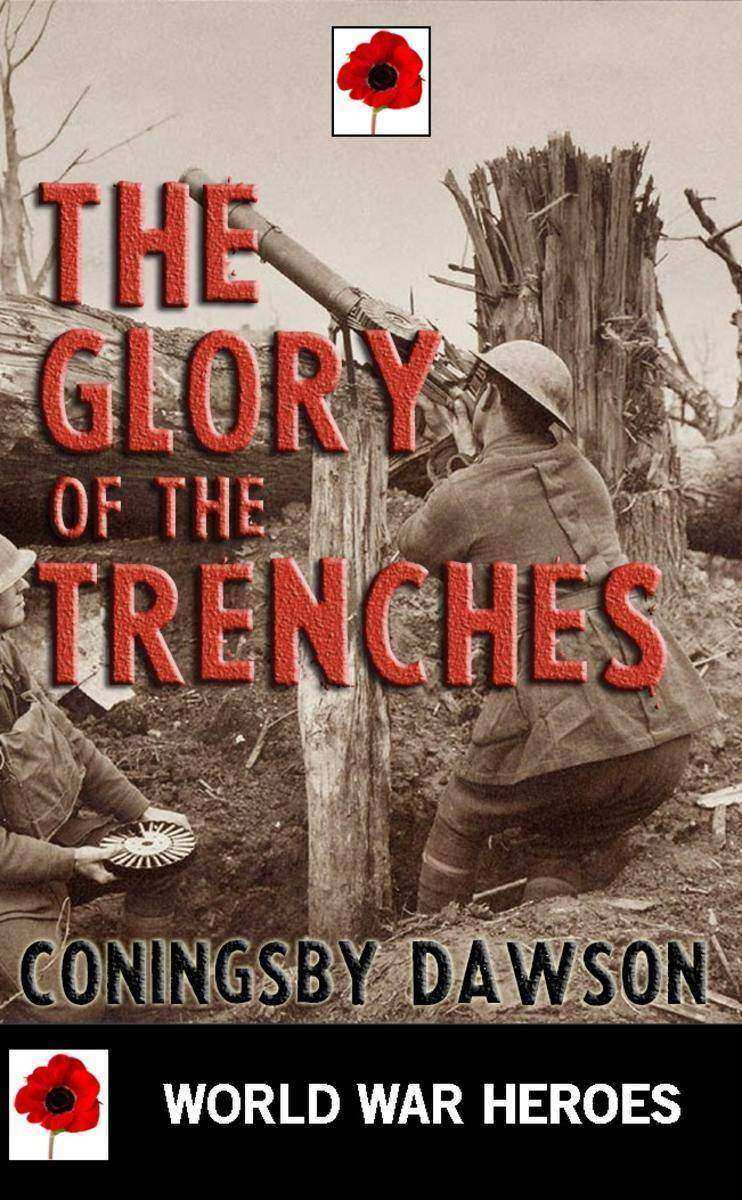
The Glory of the Trenches
¥8.09
In 1914, Coningsby Dawson went to Ottawa, saw Sir Sam Hughes, and was offered a commission in the Canadian Field Artillery on the completion of his training at the Royal Military College of Canada, at Kingston, Ontario. "His long training at Kingston had been very severe. It included besides the various classes which he attended a great deal of hard exercise, long rides or foot marches over frozen roads before breakfast, and so forth."
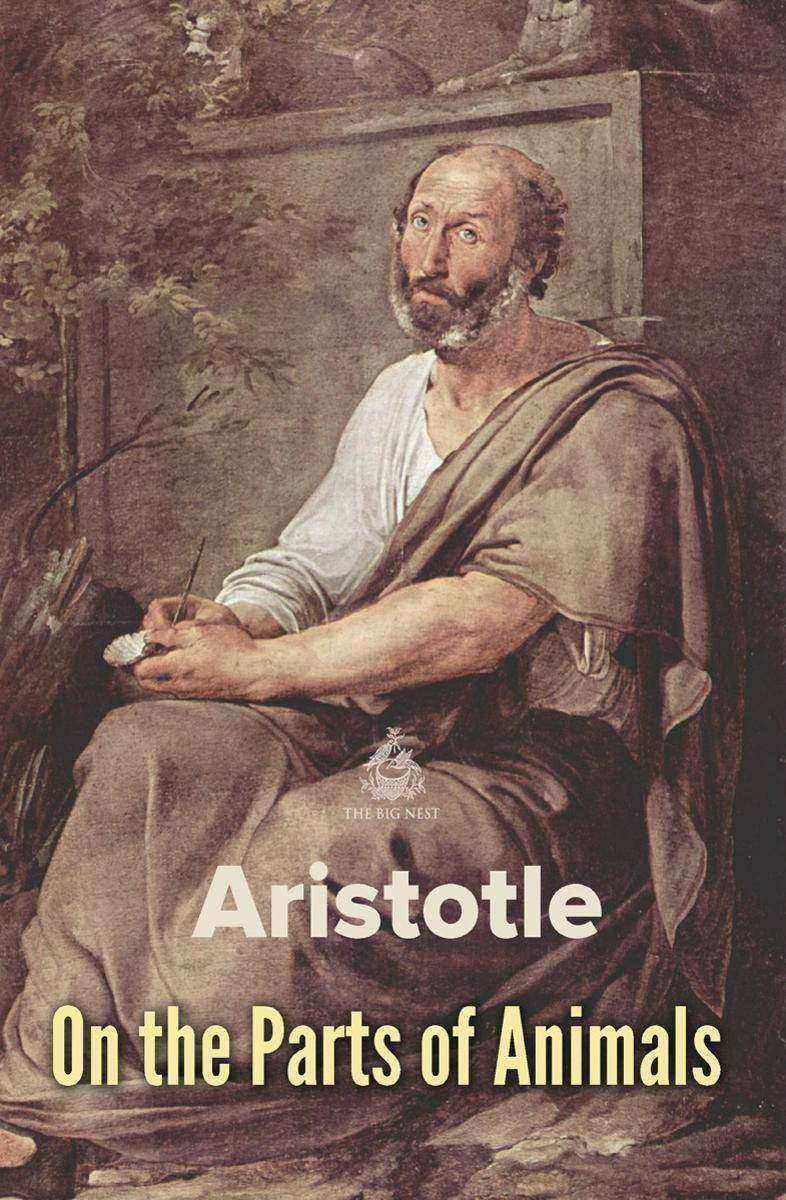
On the Parts of Animals
¥40.79
Every systematic science, the humblest and the noblest alike, seems to admit of two distinct kinds of proficiency; one of which may be properly called scientific knowledge of the subject, while the other is a kind of educational acquaintance with it. For an educated man should be able to form a fair off-hand judgement as to the goodness or badness of the method used by a professor in his exposition. To be educated is in fact to be able to do this; and even the man of universal education we deem to be such in virtue of his having this ability.
The Enchiridion
¥40.79
The Enchiridion or Manual of Epictetus is a guide on Stoic philosophy and ethical advice compiled by Arrian, a 2nd-century disciple of the Greek philosopher Epictetus. The book has played a disproportionately large role in the rise of modern attitudes and modern philosophy. Montaigne had a copy of the Enchiridion among his books. Frederick the Great carried the book with him on all campaigns. It was a source of inspiration and encouragement to Anthony, Earl of Shaftesbury, in the serious illness which ended only in his death; many pages of his diaries contain passages copied from the Enchiridion. It has been studied and widely quoted by Scottish philosophers like Francis Hutcheson, Adam Smith, and Adam Ferguson who valued Stoic moral philosophy for its reconciliation of social dependency and personal independence.
The Discourses
¥40.79
The Discourses are a series of extracts of the teachings of the Stoic philosopher Epictetus written down by Arrian c. 108 AD. It is a guide for the advanced student of Stoicism to show him the best roads toward the goal of becoming a true philosopher.
On Sense and the Sensible
¥40.79
Having now definitely considered the soul, by itself, and its several faculties, we must next make a survey of animals and all living things, in order to ascertain what functions are peculiar, and what functions are common, to them. What has been already determined respecting the soul must be assumed throughout. The remaining parts of our subject must be now dealt with, and we may begin with those that come first.

Southern England (Collins New Naturalist Library, Book 108)
¥231.22
Illustrated with beautifully detailed photographs throughout, New Naturalist Southern England comprehensively explores the formation of these wonderful landscapes that are so universally admired. Most people share an enthusiasm for beautiful and breathtaking scenery, explored variously through the physical challenge of climbing to the top of the tallest mountains or the joy of viewing the work of a painter; but while easy to admire from a distance, such landscapes are usually difficult to explain in words. Harnessing recent developments in computer technology, the latest New Naturalist volume uses the most up-to-date and accurate maps, diagrams and photographs to analyse the diverse landscapes of Southern England. Peter Friend highlights the many famous and much loved natural landscapes of the southern half of England, ranging from the Chalk Downs to the bays of Cornwall, Devon and Dorset, and provides detailed explanations for the wide variety of natural events and processes that have caused such an exciting range of surroundings. Setting apart the topography that has resulted from natural rather than man-made occurrences, Friend focuses on each region individually, from East Anglia to London and the Thames Valley, and explains the history and development of their land structures through detailed de*ions and colourful diagrams.

Nature Conservation (Collins New Naturalist Library, Book 91)
¥182.47
This latest volume in the New Naturalist series provides a comprehensive study of wildlife conservation in Britain, concentrating on events in the last 30 years. As our environment is subjected to increasing assault from climatic changes and pollutants, conservation has become a growing concern for both specialists and generalists alike. The first chapter of this book considers the political and institutional development of nature conservation and reviews the physical and biological nature of Britain, its geology, climate and wildlife habitats. Subsequent chapters cover the loss of habitats and species, how these losses have been managed and the techniques used to survey and monitor the integration of nature conservation policies in industries from agriculture to forestry and fisheries. Marren continues by discussing how nature conservation has emerged from the sidelines to become a major concern. He addresses the role of the media, weighs up the successes and failures of the conservation movement and looks to what the future may hold.

A Country Parish (Collins New Naturalist Library, Book 9)
¥456.66
The natural history of an ordinary English country parish was one of the first subjects that suggested themselves when the New Naturalist series was planned. Collins are delighted to announce the republication in facsimile form of the first editions of the very first volumes in the New Naturalist Library. Originally planned in the darkest days of World War II and first published in 1945, this series is the longest running nature series in the world. It is a reflection of the quality of the authors and the books they wrote, that they are still sought after 73 years later. The books will be identical in every way to the original first editions, including the iconic jackets by Clifford and Rosemary Ellis. The natural history of an ordinary English country parish was one of the first subjects that suggested themselves when the New Naturalist series was planned. Being chiefly farmland and therefore practically all man-made, most country parishes are extremely complex from the naturalist's point of view and also inevitably contain a vast amount of human history. Any attempt to describe their plants and animals has to be closely related with the ways of man himself, who must be regarded as the chief element in the community - a fact which has been obvious enough to naturalists ever since the days of Gilbert White. For this book we were fortunate to find an author who combined a thorough all-round knowledge of natural history with a sound insight into human customs, history, pastimes and farming methods. Arnold Boyd lived in Cheshire all his life - and in keeping with the best tradition of English amateur naturalists, he excelled as a collector of facts, as is apparent from his previous books, his writing in the Manchester Guardian and other journals, and in his assistant editorship of British Birds. By weaving together his collection of facts he presents us with a book of remarkable unity and which shows a wide grasp of every aspect of the living communities. This charming yet erudite portrait will protect his beloved parish for ever from the ravages of human forgetfulness.

Grass and Grassland (Collins New Naturalist Library, Book 48)
¥456.66
The use of natural and seeded grass pastures for the feeding of livestock and other unfamiliar uses for the ubiquitous grass family are described in this succinct and beautifully illustrated work. This edition is exclusive to newnaturalists.com The New Naturalist series has already covered many facets of the interrelationship between man and nature, but the grass family is probably the most important man in the whole plant kingdom - just how important is shown in this book. Dr. Moore, the Principal of Seale Hayne Agricultural College in Devon, is our leading authority on grasses and their utilization. His special interest is the use of natural and seeded grass pastures for the feeding of livestock. Striking advances have been made in recent years in the improvement of such pastures and Dr. Moore deals very fully with this vital link in the feeding of the human race; but he also covers that other equally important role of the grass family in our economy, the cultivation of cereal crops for the production of grain. Grass lawns and playing fields form a centre-piece in most British gardens and public parks and there is a chapter on these, but the horticultural value of grasses as ornamental plants in herbaceous borders and woodland gardens is less well known. These and many other unfamiliar uses for the ubiquitous grass family are described in this succinct and beautifully illustrated work.

Pesticides and Pollution (Collins New Naturalist Library, Book 50)
¥456.66
Pesticides and Pollution examines the problems of pollution of air, land, river, and the sea, by herbicides, pesticides, sewage, industrial effluents, gases, radiation, leakages, over-drainage, mistakes and mismanagement, in Britain today. From an objective and scientific standpoint, Dr. Mellanby examines the problems of pollution of air, land, river, and the sea, by herbicides, pesticides, sewage, industrial effluents, gases, radiation, leakages, over-drainage, mistakes and mismanagement, in Britain to-day. He sets out to placate neither farmers nor naturalists, but to explain in each case what is happening, to point to both dangers and practical necessities, and to discuss what steps should be taken. Dr. Mellanby is Director of the Nature Conservancy's Monks Wood Experimental Station, was head of the Entomology department at Rothamsted, and for many years before that did research in medical entomology both in Britain and the tropics.
British Birds of Prey (Collins New Naturalist Library, Book 60)
¥456.66
Leslie Brown's account of our 15 resident, 7 vagrant and 2 migrant species of eagles, falcons, hawks and vultures in Britain presents a great mass of scientific information about our birds of prey in a manner as attractive to the general reader as to the dedicated ornithologist. The diurnal raptors are among the most arresting and dramatic of British bird species, from the magnificent and immense golden eagle of the Highlands to the more widespread but equally spectacular peregrine falcon and the frequent and adaptable kestrel of motorways and urban ledges. Leslie Brown's account of our 15 resident, 7 vagrant and 2 migrant species of eagles, falcons, hawks and vultures in Britain presents a great mass of scientific information about these birds in a manner as attractive to the general reader as to the dedicated ornithologist. Each of the resident species is discussed in detail - its status, past and present; its feeding and hunting behaviour; its life history; its breeding behaviour; migration and the threats to its survival. Then the biology of the birds of prey, changes in their habitat and status, their food habits, breeding behaviour, their territories and populations are examined in depth in separate chapters. An acknowledged world authority on birds of prey - co-author with Dean Amadon of Eagles, Hawks and Falcons of the World, and author of many other books besides - Leslie Brown is immensely enthusiastic; and the many tables, maps, figures and bibliography are all indicative of the thoroughness of his research. Also illustrated with 40 superb black and white photographs.
The Natural History of Orkney (Collins New Naturalist Library, Book 70)
¥456.66
This is the first survey of the islands' natural history, complete in one volume. Because Orkney is exceptional, it is vital reading for the serious naturalist, as well as for being a comprehensive and absorbing guide for every visitor. This edition is exclusive to newnaturalists.com Orkney is a very special place for naturalists. Closer to Oslo than to London, its geography and climate create quite distinct environmental conditions - even though it is only six miles from the Scottish mainland. On these islands of fierce gales, long summer days and long winter nights, the wildlife has adapted in intriguing ways… Starlings adapt to ground-nesting…local sheep eat seaweed…and there are voles exclusive to Orkney. Here is one of the very few areas where the rare and delicate Scottish Primrose thrives…where you find the British stronghold of the Hen Harrier, and vast colonies of seabirds and seals. This is the first - and long-needed - survey of the islands' natural history, complete in one volume. Because Orkney is exceptional, it is vital reading for the serious naturalist, as well as for being a comprehensive and absorbing guide for every visitor. In his tracing of the island's evolution from its geological creation to the effects of oil technology; in the detailed, yet fascinating exploration of the plants and animals (and where best to see them), Professor Berry's expertise and enthusiasm is backed by that of local specialists, and Orkney's long tradition of natural history study. Appendices include definitive lists of all the species of flora and fauna on record, and an extensive bibliography.
The New Naturalists (Collins New Naturalist Library, Book 82)
¥228.28
A history of the most successful, significant and long-running natural history series in the world. A history of the most successful, significant and long-running natural history series in the world. In 1995 Collins published the 82nd volume in the New Naturalist series to coincide with its 50th anniversary. Ten years on, Peter Marren has revised this fascinating account of the series. He covers the illustrious careers of its authors, how each title was conceived and received, and includes plates of the sketches and roughs of the jackets. It also gives behind-the-scenes details of the also-rans and the books-that-never-were. This will appeal to the collector's market - it has a lengthy appendix dedicated to collecting the series with advice on how to spot a good edition, and a star rating according to scarcity - and will mark the 60th anniversary of the publication of the first new naturalist title. Peter Marren is a trained ecologist who worked as a woodland scientist, conservation officer and author-editor with the Natural Conservancy Council between 1977 and 1992. He has written numerous book and articles and contributes regularly to British Wildlife.
Redcoat: The British Soldier in the Age of Horse and Musket
¥80.25
Redcoat is the brilliant story of the common British soldier from 1700 to 1900, based on the letters and diaries of the men who served and the women who followed them. Delving into the history of the period – charting events including Wolfe's victory and death at Quebec, Wellington's Peninsular War, Waterloo, the retreat from Kabul and the Sikh wars – celebrated military historian Richard Holmes provides a comprehensive portrait of a fallible but extraordinarily successful fighting force.

The Frozen Water Trade (Text Only)
¥72.99
The story of the 19th-century ice trade, in which ice from the lakes of New England – valued for its incredible purity – revolutionised domestic life around the world. In the days before artificial refrigeration, it was thought impossible to transport ice for long distances. But one man, Frederic Tudor, was convinced it could be done. This is the story of how, almost single-handedly, and in the face of near-universal mockery, he established a vast industry that would introduce the benefits of fresh ice to large parts of the globe. Thanks to Tudor, the American fashion for drinks ‘on the rocks’ spread to tropical areas such as the West Indies and British India. By the 1830s fleets of schooners carried the frozen cargo, packed with sawdust and tarpaulins for insulation, to all corners of the world. The harvesting of the ice from New England’s lakes employed thousands of men. The frozen water trade had a profound influence on the tastes of a large part of the world, but with the development of artificial cooling systems in the first quarter of the 20th century, the huge industry established by Frederic Tudor vanished as if it had never been. Note that it has not been possible to include the same picture content that appeared in the original print version.
Bird Migration (Collins New Naturalist Library, Book 113)
¥206.30
The phenomenon of bird migration has fascinated people from time immemorial. The arrivals and departures of different species marked the seasons, heralding spring and autumn, and providing a reliable calendar long before anything better became available. Migration is shown by many kinds of animals, including butterflies and other insects, mammals, marine turtles and fish, but in none is it as extensively developed as in birds. The collective travel routes of birds span almost the entire globe, with some extreme return journeys covering more than 30,000 km. As a result of migration, bird distributions are continually changing – in regular seasonal patterns, and on local, regional or global scales. Migration has repeatedly prompted familiar questions, such as where birds go or come from, why do they do it, how do they know when and where to travel, and how do they find their way? In this book, Ian Newton sets out to answer these – and other – questions. The book is divided into four main sections: the first is introductory, describing the different types of bird movements, methods of study, and the main migration patterns seen around the British Isles; the second part is concerned mainly with the process of migration – with timing, energy needs, weather effects and navigation; the third with evolution and change in migratory behaviour; and the fourth with the geographical and ecological aspects of bird movements.
Dartmoor (Collins New Naturalist Library, Book 111)
¥385.34
New Naturalist Dartmoor explores the complex and fascinating history of one of southern England's greatest National Parks, an area of enormous interest to naturalists and tourists alike. Dartmoor is said to be the loneliest wilderness in England. This has been said more often of Dartmoor than any other part of our country. Traditionally in the world of fiction as well as that of fact, Dartmoor has been renowned as a vast and empty moorland area, the property of nature rather than of man. It has always been the public's idea of a lonely place. Not many generations ago it was regarded with a certain amount of awe and nowadays it is one of our most important centres of recreation, an island in upland England of abundant interest to the naturalist. In 1951 it became a National Park, one of the first of several places that have been so designated in Great Britain, helping to conserve and promote both its beauty and cultural heritage. Spanning miles of open moorland, whilst also hiding small secluded river valleys, rare plants and endangered birds, Dartmoor is a place of variety, and has evolved in the public's mind from a forbidding place to that of romance and mystery. In the latest addition to the long-running New Naturalist series, Ian Mercer sets out to explore every aspect of this important area of southern Devon. Focusing not only on its extensive history and physical landscape, but also its cultural place within Great Britain, this is both a comprehensive and engaging look at the wild and rugged landscape that has inspired so many poets, painters and musicians over countless centuries.

Stonehenge: Neolithic Man and the Cosmos
¥100.06
JOHN NORTH moved in 1977 from Oxford to the University of Groningen, where he is Professor of the History of Philosophy and the Exact Sciences. He is a member of the Royal Netherlands Academy, the Royal Danish Academy and is a Fellow of the British Academy.
Horse Trader: Robert Sangster and the Rise and Fall of the Sport of Kings
¥154.12
It was always tense in The Rooms when they were proposing to elect a statesman to membership. Actually, it was always tense in The Rooms whomever they were proposing to elect to membership. But a statesman created a special feeling of apprehension. Such an event happened only every fifty years or so, because, by and large, the Jockey Club did not see statesmen as the right calibre of chap. Most of them had depressingly brilliant intellects coupled with dazzling charm and tact. Or, put in the more ducal vernacular of the Club, they were too clever by half, ‘too smarmy’.The Earl of Rosebery, during his Lordship’s tenure as Prime Minister of England, had of course been a member of the Club back in 1894 when his colt Ladas had won the Derby at Epsom. However, having been a member since the age of twenty-two, the touchy business of electing a statesman had never really applied.The Jockey Club had admitted an Under-Secretary of State for War, Earl Cadogan, in the middle of the nineteenth century, in the knowledge that he was much preoccupied with the unrest along India’s north-west frontier. The same applied, in smaller measure, to the Marquis of Londonderry and the Earl of Zetland in the 1880s when they were appointed as successive Lords-Lieutenants of Ireland. Different frontier, similar unrest among the natives and one or two furrowed brows in the Club. Lord Randolph Churchill, Chancellor of the Exchequer and owner of an Oaks winner in 1889, had had to be elected. And they could not quite avoid accepting his often fractious son Sir Winston, who won the Jockey Club Cup in 1950 with his stout-hearted grey Colonist II shortly before becoming Prime Minister for the second time.

A Death in Belmont
¥73.58
A compelling portrait of 1960s America that takes as its starting point the brutal events of 11 March 1963, the day on which the lives of three complete strangers – a black handyman, an Italian-American carpenter and a second-generation Jewish housewife – collided in the leafy Boston suburb of Belmont. These three people did not know one another, but, by the end of the day, the housewife had been raped and strangled, the handyman had been arrested on suspicion of being the notorious Boston Strangler, and the real Boston Strangler – carpenter Al DeSalvo – had returned home to his wife and children. It was not until two years later that DeSalvo admitted to the gruesomely violent murders of thirteen women. Also unwittingly drawn into the drama were one-year-old Sebastian Junger's own family, who posed for a photograph with DeSalvo the day after the Belmont strangling, at the completion of his work on their studio. Taking the chilling family snap as his inspiration, Junger explores the worlds of the three protagonists and, in so doing, creates a portrait of America in the 1960s that touches on the historic themes of the era: the assassination of JFK, the rise of the immigrants and the troubling race relations that prefigured the death of Martin Luther King. This new work by Sebastian Junger, the acclaimed author of ‘Perfect Storm’ and ‘Fire’, is as enlightening as it is haunting. Taking as its foundation the events that shocked a quiet community in 1963, ‘A Death in Belmont’ expands to encompass an entire nation at a time of extraordinary social turmoil.

Birds Britannia
¥132.53
Birds and bird lore provide a fascinating window onto our social and cultural history, and can tell us much about our changing relationship with the British landscape, our people and society. We Brits love our birds. They hold a special place in our hearts – whether it's the sound of birdsong on a spring morning, the sight of a Barn Owl hunting on a summer's evening, or a Robin perched on our garden spade. In this book, Stephen Moss focusses on some of our most beloved and charismatic birds. He explores their fascinating biology, and their place in the evolving culture and history of the British people. The author delves into the worlds of Sea Birds (Puffin, Sea Eagle and Gannet), Water Birds (Kingfisher, Swan and Avocet), Countryside Birds (Red Grouse, Nightingale and Skylark ) and Town & Garden Birds (Robin, House Sparrow and Magpie), weaving their stories together to tell four very different stories about the changing face of Britain.


