


 购物车
 个人中心


Americans in Paris: Life and Death under Nazi Occupation 1940–44
¥95.75
An elegantly written and highly informative account of a group of Americans living in Paris when the city fell to the Nazis in June 1940. In the early hours of 14 June 1940, Nazi troops paraded through the streets of Paris, marking the beginning of the city’s four-year occupation. French troops withdrew in order to avoid a battle and the potential destruction of their capital. It wasn't long before German tanks rumbled past the Arc de Triomphe and down the Champs Elysees to the Place de la Concorde. The American community in Paris was the largest in Continental Europe, totalling approximately 30,000 before the Second World War. Although Ambassodor Bullitt advised those without vital business in the city to leave in 1939, over half of the Americans in Paris chose to stay. Many had professional and family ties to the city; the majority, though, had a peculiarly American love for the city, rooted in the bravery of the Marquis de la Fayette and the 17,000 Frenchmen who volunteered to fight for American independence in 1776. An eclectic group, they included black soldiers from the Harlem Hellfighters, who were determined not to return to the racial segregation that they faced at home, rich socialites like Peggy Guggenheim and Florence Jay Gould, as well as painters, musicians, bankers and businessmen. There were those whose lives went on as if the Germans were ephemera, those who collaborated and those, like Dr Sumner Jackson and Etta Shiber, who worked underground for the resistance movement. This is a book about adventure, intrigue, passion and deceit, and one which follows its characters into the Maquis, the concentration camps and overseas. Filled with a huge amount of new analysis on the Second World War, ‘Americans in Paris’ is a fascinating, revealing and moving read.
Fighting Rommel
¥9.71
This is Mike Sadler’s story, one of five true-life recollections from the Second World War in Tales From The Special Forces Club. The Special Forces Club is a fabled gentlemen’s club, based in the heart of London. It has a closely guarded secret: you have to be a genuine hero to be a member. Mike Sadler was in Rhodesia working on a farm when he decided to join up and fight Hitler. He would become one of the legendary men in the Long Range Desert Group, roaming behind Erwin Rommel’s front line and causing havoc and confusion to the German Africa Korp. He would also go on to serve with distinction in the SAS. This is his story.
Our Country Nurse
¥37.08
All seems tranquil as newly qualified Health Visitor Sarah motors into a small Kentish hilltop village in her new green mini. She’s barely out of the car when she’s called to assist the midwife with a bride who’s gone into labour in the middle of her own wedding reception. And so her adventures begin… As a health visitor Nurse Sarah is as green as grass but she puts her best foot into wellies and braves the mad dogs, killer ganders and muddy tracks of the farming community. Despite set-backs young Sarah is determined to help the mums she meets, from struggling young mothers in unmodernised farmhouses, to doyennes of the county dinner party set who slave over stuffed olive hors-d'oeuvres. Village life in 1970s isn’t always quite the Good Life Sarah’s been expecting; her attempts at self-sufficiency and cider making lead to drunk badgers and spirited house parties – but will it be the clergyman, the vet or the young doctor that win Sarah’s heart. During her first year in Kent, Nurse Sarah Hill get stuck in – reuniting families and helping mums in the midst of community full of ancient feuds, funny little ways and just a bit of magic.
Warriors: Extraordinary Tales from the Battlefield
¥81.03
An exhilarating and uplifting account of the lives of sixteen ‘warriors’ from the last three centuries, hand-picked for their bravery or extraordinary military experience by the eminent military historian, author and ex-editor of the Daily Telegraph, Sir Max Hastings. Over the course of forty years of writing about war, Max Hastings has grown fascinated by outstanding deeds of derring-do on the battlefield (land, sea or air) – and by their practitioners. He takes as his examples sixteen people from different nationalities in modern history – including Napoleon’s ‘blessed fool’ Baron Marcellin de Marbot (the model for Conan Doyle’s Brigadier Gerard); Sir Harry Smith, whose Spanish wife Juana became his military companion on many a campaign in the early 19th-century; Lieutenant John Chard, an unassuming engineer who became the hero of Rorke’s Drift in the Zulu wars; and Squadron Leader Guy Gibson, the ‘dam buster’ whose heroism in the skies of World War II earned him the nation's admiration, but few friends. Every army, in order to prevail on the battlefield, needs a certain number of people capable of courage beyond the norm. In this book Max Hastings investigates what this norm might be – and how it has changed over the centuries. While celebrating feats of outstanding valour, he also throws a beady eye over the awarding of medals for gallantry – and why it is that so often the most successful warriors rarely make the grade as leaders of men.
Lakes, Loughs and Lochs (Collins New Naturalist Library, Book 128)
¥257.90
Another volume in the popular New Naturalist series, this book gives a comprehensive account of the natural history of Britain and Ireland’s inland waters, many of which are popular holiday destinations. The study of life in British lakes and rivers has been traditionally neglected in natural history publications, and yet the intricacies of plant and animal ecology as a whole can be readily studied in a pond or lake. Not since Macan and Worthington’s landmark publication in 1951, Life in Lakes and Rivers – volume 15 in the New Naturalist series – has there been a comprehensive overview of British freshwater life. In Brian Moss’s much-anticipated new volume, he gives a passionate account of the natural history of our lakes, loughs and lochs. Our understanding of lakes has changed enormously since the days of Macan and Worthington. From new techniques using stable isotopes and molecular biology to ambitious approaches using whole lakes for experiments; from advances in chemical methods that detect tiny traces of organic substances to the development of new electronic instruments, it is becoming increasingly urgent to make use of these advances to help maintain and conserve some of the most damaged of the Earth’s ecosystems. Freshwaters form the fascinating threads that stitch together the landscapes of our planet with a myriad of exchanges involving an array of organisms, from algae and insects to hippopotami and otters. Healthy lakes and their shores influence our quality of life and they strengthen the economy. They are important ecosystems that can sustain a healthy balance of aquatic life, provide us with much enjoyment, and help support our socio-economic needs. At the same time they suffer the consequences of human abuses of the land – increasing urbanisation, intensive farming, drainage and an increasing invasion of non-native species, to name but a few. Moss explores the richness of their fundamental ecology, emphasizing the need to view these freshwater systems as a whole, and not to manage or assess them in isolation, as well as the importance of ongoing conservation efforts.
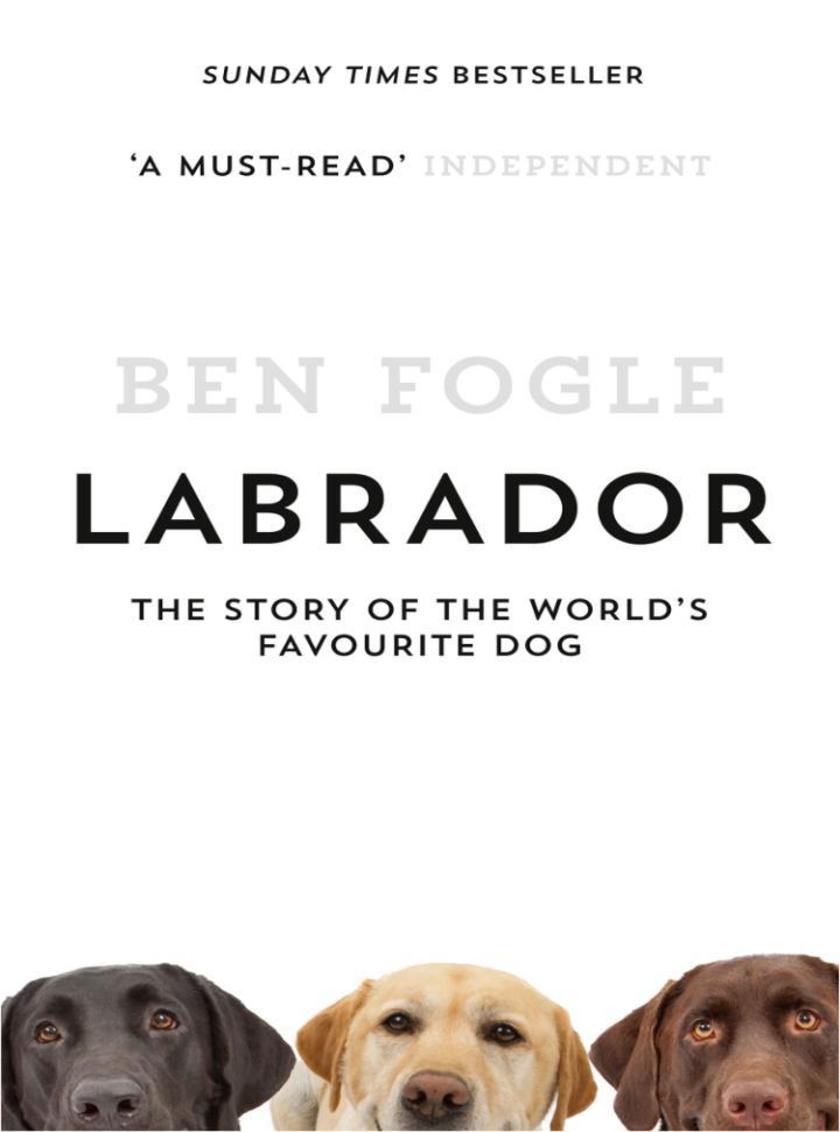
Labrador: The Story of the World’s Favourite Dog
¥66.22
Sunday Times Bestseller ‘Passionate and well-researched’ Tatler ‘A must-read’ Independent A social history of Labradors, and how they have become the world’s most beloved dogs, by writer, presenter and long-time dog lover Ben Fogle. Labradors are the most popular breed of dog in the world. Not only a great family companion, they also excel at hunting, tracking, retrieving, guiding and rescuing. But where did the breed originally come from? How did it develop? When did black, yellow and chocolate Labradors first appear? Did they really all come from Labrador in Canada and are they really all related to just one dog? In this first history of the Labrador, Ben Fogle goes in search of what makes Labradors so special. Their extraordinary companionship, intelligence, work ethic and loyalty is captured by Ben as he weaves the story of the breed into his own story of his beloved Inca. Ben visits Canada, discovers hair-raising stories of early Labrador exploits and uncovers stories of RNIB Labradors and Labradors at war, Labradors as working dogs and every other manifestation of the Labrador’s character. Exploring their origin, early characteristics, their use as gun dogs, as therapy dogs, as police dogs, as search and rescue dogs and last – and absolutely not least – as family pets, Ben tells the story of a dog breed which has captured our imagination and love for hundreds of years.
Ancient Greece (Collins Gem)
¥36.79
From theatre to politics, no other single civilisation has influenced the Western world more profoundly than that of ancient Greece. From the roots of democracy to philosophy and mathematics, it’s fascinating to learn how much western civilisation has stemmed from that of ancient Greece. This book offers an introduction to the lives of the ancient Greeks, their mythologies and traditions and their culture and learning. With colour illustrations supporting a clear, informative and engaging text, this guide is a perfect companion for both adults and children alike. Includes: ? Geography – map of Greece ? History – the different civilizations from the Minoans through to the Hellenistic period ? Religion – gods, festivals, oracles and muses ? Mythology – Homer's Odyssey, the Minotaur, Icarus ? Daily life in Ancient Greece – everyday life for all levels of society; the jobs, family life, leisure activities ? Politics – democracy and the Athenian council ? Learning and knowledge – philosophy, science, mathematics, medicine and literature ? War – important wars; the army and navy ? Greece Today – temples, archaeology and the monuments that can still be seen today
Ancient Rome (Collins Gem)
¥38.36
From the Colosseum to Hadrian’s Wall, Gem Ancient Rome shows us how Rome’s vast empire laid the foundations of today’s civilisation. From aqueducts to baths, from gladiators to emperors, the fascinating history of and mythology of ancient Rome are brought to life in this entertaining and highly-readable guide. With their sophisticated army, monuments and roads, the Romans literally paved the way to modern Europe. Learn about the hand-to-hand combat at gladiatorial shows, rediscover the myths and legends of the Roman gods and find out how and why Rome became the conquering superpower that it did. History will come to life in this engaging and comprehensive introduction to one of the most fascinating and influential places the world has ever known. Includes: ? Geography – map of the Roman Empire ? History – a timeline with the accomplishments of the emperors ? Culture – what the Romans did for us ? Religion – Gods and Festivals ? Mythology – Virgil's Aeneid, Romulus and Remus ? Daily life in Ancient Greece – different levels in society, the jobs, family life, leisure activities ? Politics – transition from Republic to Dictatorship ? Learning and knowledge – Law, Science, Architecture, Literature, Art ? War – important wars, the Empire, the army and navy ? Rome Today – temples, archaeology, and modern tourist sites
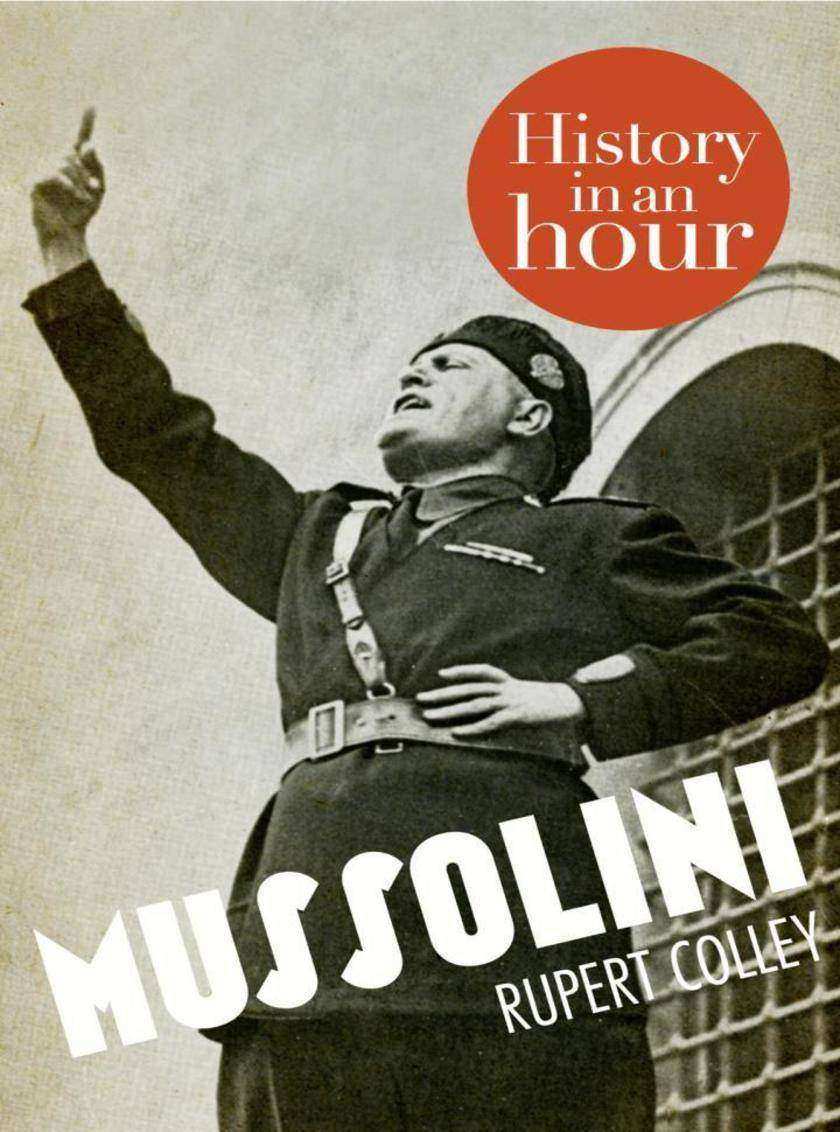
Mussolini: History in an Hour
¥18.05
Love history? Know your stuff with History in an Hour. ‘Il Duce’, Benito Mussolini, was one of the key figures in the creation of fascism. Famed for his dictatorial style, his political cunning and admired – initially – by Hitler, Mussolini led the National Fascist Party and ruled Italy as Prime Minister from 1922 until his ousting in 1943. In so doing, he paved the way towards Italy’s defeat in World War Two, and some of the 20th century’s most destructive ideologies and practices. Following expulsion from Italian Socialist Party, Mussolini denounced all efforts of class conflict, and instead later commanded a Fascist March on Rome to become the youngest Prime Minister in Italian history. Thereafter he set about dismantling the apparatus of democracy and initiated what would become known as the one-party totalitarian state. With World War II came defeat, humiliation and his bloody deposing. Explaining his ideologies, policies, actions and flaws, ‘Mussolini: History in an Hour’ is the concise life of the man whose ideas helped create some of the worst horrors of the modern history. Love history? Know your stuff with History in an Hour…
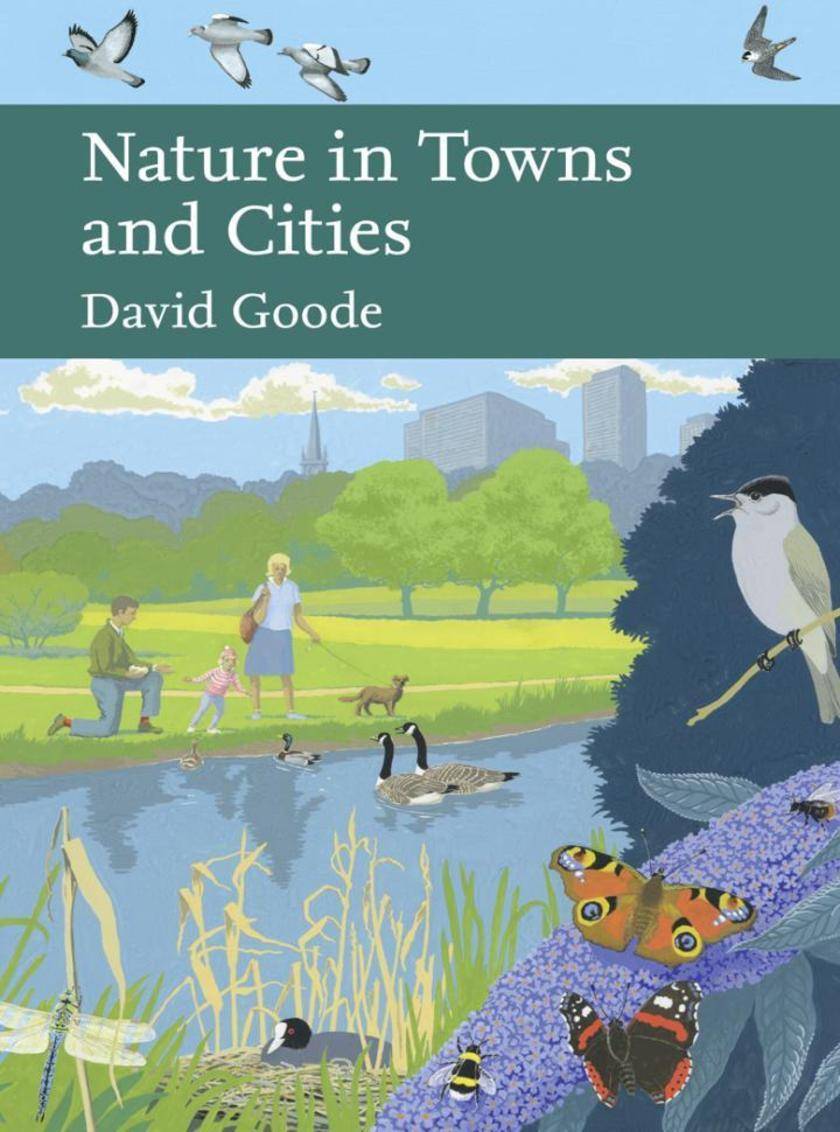
Nature in Towns and Cities (Collins New Naturalist Library, Book 127)
¥269.78
The latest in the New Naturalist series documents the parks and green spaces unique to Britain's cities – and the wildlife that has flourished in these habitats. Not since Richard Fitter’s landmark publication in 1945, ‘London’s Natural History’ – volume 3 in the New Naturalist series – has there been a comprehensive guide to urban natural history. Since then there have been major advances in the conservation of nature in our towns and cities, and there is even more to say about how animals and plants have adapted, in varying degrees, to urbanisation. But this is not merely an exploration of natural history within the urban environment – David Goode uses his knowledge of urban ecology to describe the range of habitats and species which exist within urban areas, and shows how our understanding is being applied to encourage a greater variety of nature into towns and cities. He illustrates how an ecological approach can be incorporated within planning and design to create a range of habitats from tiny oases to extensive new urban woodland and wetlands.
The Great Divorce
¥58.86
A stunning new edition of this timeless allegory of heaven and hell, repackaged and rebranded as part of the C.S. Lewis Signature Classics range. C.S. Lewis’s dazzling allegory about heaven and hell and the chasm fixed between them, is one of his most brilliantly imaginative tales which will appeal to readers of all ages. Lewis communicates deep spiritual truths through the sheer power of the fantastic. In The Great Divorce the writer in a dream boards a bus on a drizzly afternoon and embarks on an incredible voyage through Heaven and Hell. He meets a host of supernatural beings far removed from his expectations and comes to significant realisations about the ultimate consequences of everyday behaviour. This is the starting point for a profound meditation upon good and evil. “If we insist on keeping Hell (or even Earth) we shall not see Heaven: if we accept Heaven we shall not be able to retain even the smallest and most intimate souvenirs of Hell.”
The Homing Instinct: Meaning and Mystery in Animal Migration
¥73.58
The story and science of how animals find their way home. Home is the place we long for most, when we feel we have travelled too far, for too long. Since boyhood, acclaimed scientist and author Bernd Heinrich has returned every year to a beloved patch of woods in his native western Maine. But while it’s the pull of nostalgia that informs our desire to go back, what is it that drives the homing instinct in animals? Heinrich explores the fascinating science behind the mysteries of animal migration: how geese imprint true visual landscape memory over impossible distances; how the subtlest of scent trails are used by many creatures, from fish to insects to amphibians, to pinpoint their home; and how the tiniest of songbirds are equipped for solar and magnetic orienteering over vast distances. Most movingly, Heinrich chronicles the spring return of a pair of sandhill cranes to their pond in the Alaska tundra. With his marvellously evocative prose, Heinrich portrays the psychological state of the newly arrived birds, articulating just what their yearly return truly means, to the birds and to those fortunate enough to witness this transcendently beautiful ritual. The Homing Instinct is an enchanting study of this phenomenon of the natural world, reminding us that to discount our own feelings toward home is to ignore biology itself.
A History of Television in 100 Programmes
¥76.91
An entertaining and illuminating celebration of televisual history by cultural historian Phil Norman For decades, television occupied a unique position in the national imagination. By today’s standards the ‘box’ was tiny, but it dominated the living room in a way its technically superior descendants never quite manage. Has the television lost its power in the internet age? Cultural historian Phil Norman goes in search of such questions as he tells the history of TV through 100 ground-breaking programmes. He celebrates the joy of the TV schedule which, in the days of just a few channels, threw up dizzy juxtapositions on a daily basis: an earnest play might be followed by a variety spectacular; a horror anthology that drove children behind furniture followed a sketch show that chewed the carpet. This riotous mix, now slowly disappearing as themed channels and on-demand services take over, gave television a sense of community that no other media could compete with. The wonderful variety of programmes in the book includes overlooked gems and justly wiped follies, overcooked spectaculars and underfunded experiments – just as much a part of TV history as the national treasures and stone-cold classics. A History of Television in 100 Programmes revels in the days when television was at the most exciting, creative stage of any medium: a cottage industry with the world at its feet.
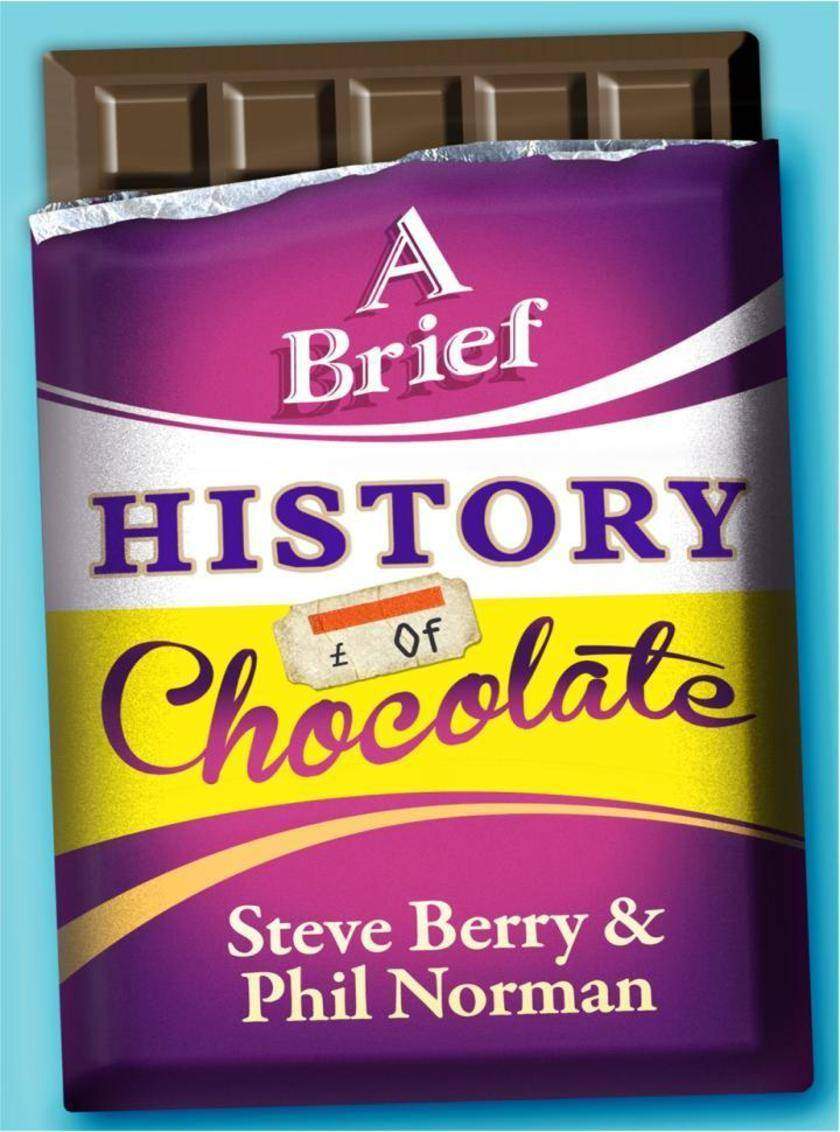
A Brief History of Chocolate
¥22.66
An illustrated guide to chocolate that every self-respecting chocoholic should read. Do you remember when a Snickers was a Marathon? And when you could burst in to a sweet shop and ask for ‘an Oliver Twist, two Tiffins and a Big Wig, please!’ and keep a straight face? Those were the good days: when a Dairy Milk bar was 22p and you’d never seen anything as big as a Wagon Wheel. Revisit some of your forgotten favourites and current addictions, as Steve Berry and Phil Norman take you on a tour of cocoa’s finest moments. Fully illustrated with hundreds of wrappers, ads and pack shots, ‘A Brief History of Chocolate’ brings together research from the archives, factories and warehouses of some of the leading chocolate manufacturers in the country to create a book that is packed full of fascinating historical research… … and lots and lots of chocolate. Warning: may contain nuts A ‘Brief History of Chocolate’ originally featured in ‘The Great British Tuck Shop’, the ultimate book of sweetie nostalgia.
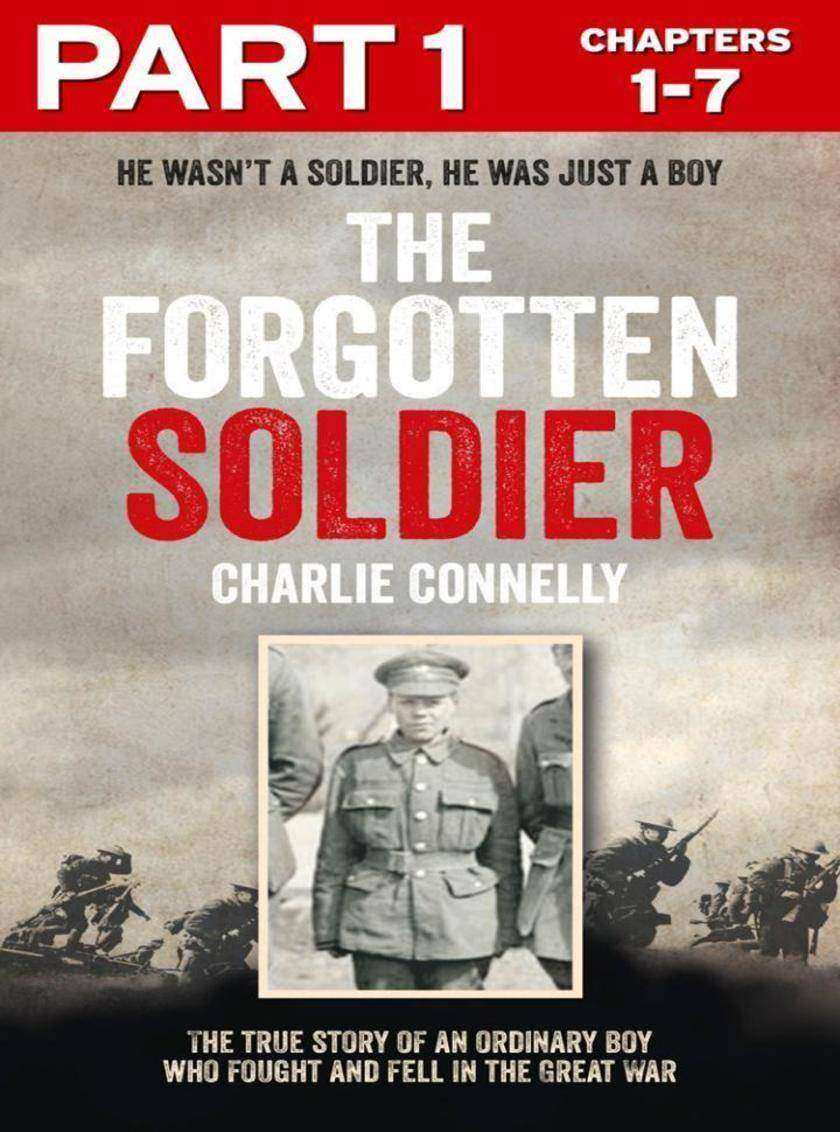
The Forgotten Soldier (Part 1 of 3)
免费
Bestselling author Charlie Connelly returns with a First World War memoir of his great uncle, Edward Connelly, who was an ordinary boy sent to fight in a war the likes of which the world had never seen. But this is not just his story; it is the story of all the young forgotten soldiers who fought and bravely died for their country The Forgotten Soldier tells the story of Private Edward Connelly, aged 19, killed in the First World War a week before the Armistice and immediately forgotten, even, it seems, by his own family. Edward died on exactly the same day, and as part of the same military offensive, as Wilfred Owen. They died only a few miles apart and yet there cannot be a bigger contrast between their legacies. Edward had been born into poverty in west London on the eve of the twentieth century, had a job washing railway carriages, was con*ed into the army at the age of eighteen and sent to the Western Front from where he would never return. He lies buried miles from home in a small military cemetery on the outskirts of an obscure town close to the French border in western Belgium. No-one has ever visited him. Like thousands of other young boys, Edward’s life and death were forgotten. By delving into and uncovering letters, poems and war diaries to reconstruct his great uncle’s brief life and needless death; Charlie fills in the blanks of Edward’s life with the experiences of similar young men giving a voice to the voiceless. Edward Connelly’s tragic story comes to represent all the young men who went off to the Great War and never came home. This is a book about the unsung heroes, the ordinary men who did their duty with utmost courage, and who deserve to be remembered.
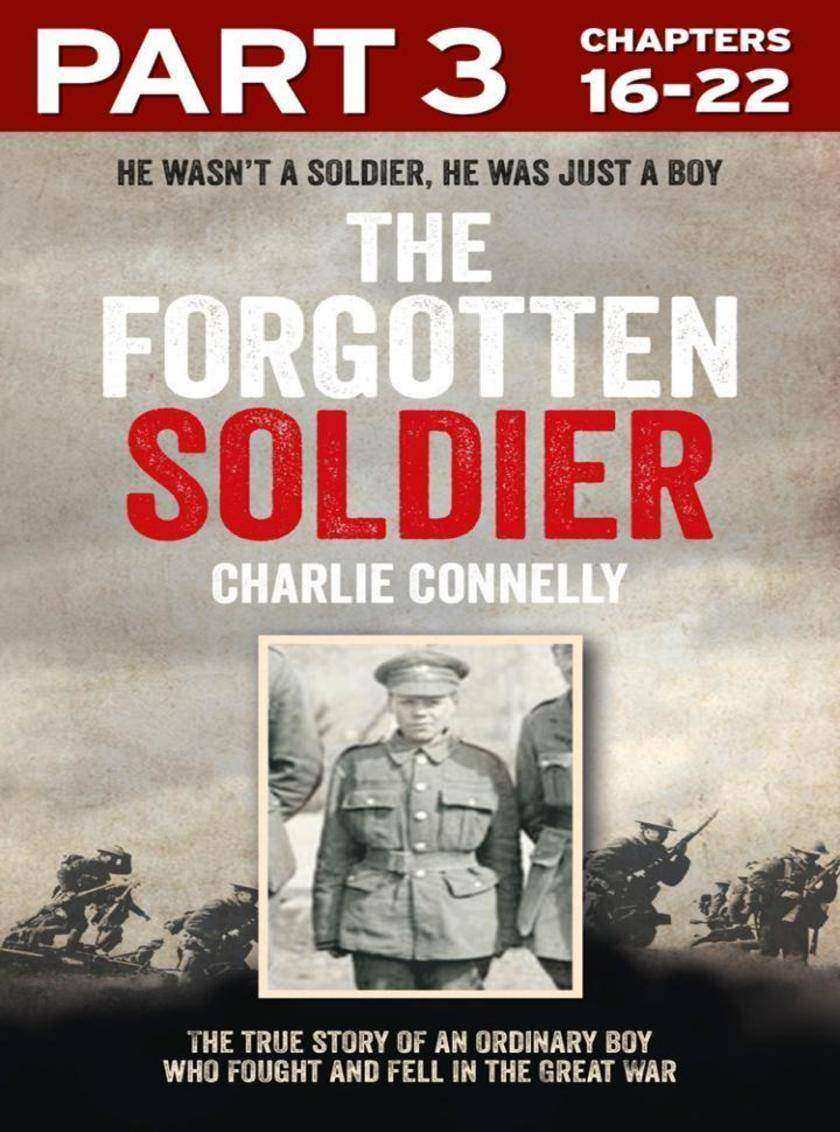
The Forgotten Soldier (Part 3 of 3)
¥47.48
Bestselling author Charlie Connelly returns with a First World War memoir of his great uncle, Edward Connelly, who was an ordinary boy sent to fight in a war the likes of which the world had never seen. But this is not just his story; it is the story of all the young forgotten soldiers who fought and bravely died for their country The Forgotten Soldier tells the story of Private Edward Connelly, aged 19, killed in the First World War a week before the Armistice and immediately forgotten, even, it seems, by his own family. Edward died on exactly the same day, and as part of the same military offensive, as Wilfred Owen. They died only a few miles apart and yet there cannot be a bigger contrast between their legacies. Edward had been born into poverty in west London on the eve of the twentieth century, had a job washing railway carriages, was con*ed into the army at the age of eighteen and sent to the Western Front from where he would never return. He lies buried miles from home in a small military cemetery on the outskirts of an obscure town close to the French border in western Belgium. No-one has ever visited him. Like thousands of other young boys, Edward’s life and death were forgotten. By delving into and uncovering letters, poems and war diaries to reconstruct his great uncle’s brief life and needless death; Charlie fills in the blanks of Edward’s life with the experiences of similar young men giving a voice to the voiceless. Edward Connelly’s tragic story comes to represent all the young men who went off to the Great War and never came home. This is a book about the unsung heroes, the ordinary men who did their duty with utmost courage, and who deserve to be remembered.
Fifty Great Things to Come Out of the Midlands
¥9.71
Celebrate the heart of Britain in this fun and informative mini-ebook. Rugby, Walkers Crisps, Conkers. These are just a handful of the many great things to have come out of the Midlands. In this celebratory list, journalist and loyal Midlander Robert Shore counts down fifty of the best gifts the Midlands has given the world. Knowledge no Midlander – nay, Brit! – should be without. From the author of Bang in the Middle.
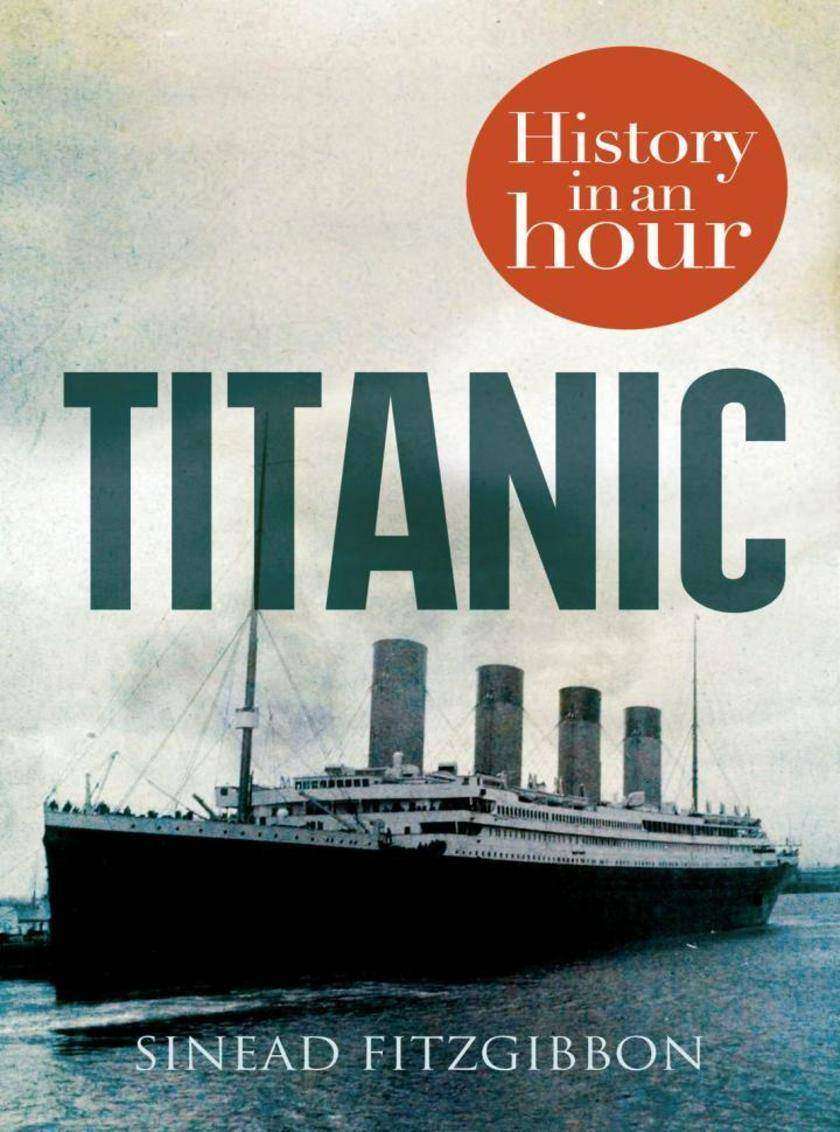
Titanic:History in an Hour
¥14.81
Love history? Know your stuff with History in an Hour. The sinking of the Titanic 100 years ago in 1912, and the subsequent deaths of over 1,500 passengers, sent shock waves around the world. Never before or since has a maritime disaster in a time of peace had such an impact. TITANIC: HISTORY IN AN HOUR is an entertaining and well researched account of the events leading up to the sinking of this ‘unsinkable’ ship, providing an fascinating commentary on the pressures of the White Star Line, the importance of class to Titanic’s unfortunate passengers and the legacy of the disaster in Britain and America. TITANIC:HISTORY IN AN HOUR is a gripping and accessible account. Know your stuff: read about the Titanic in just one hour.
God’s Secret Agents: Queen Elizabeth's Forbidden Priests and the Hatching of the
¥102.51
A thrilling account of treachery, loyalty and martyrdom in Elizabethan England from an exceptional new writer. As darkness fell on the evening of Friday, 28 October 1588, just weeks after the defeat of the Spanish Armada, two young Englishmen landed in secret on a Norfolk beach. They were Jesuit priests. Their aim was to achieve by force of argument what the Armada had failed to do by force of arms: return England to the Catholic Church. Eighteen years later their mission had been shattered by the actions of a small group of terrorists, the Gunpowder Plotters; they themselves had been accused of designing ‘that most horrid and hellish conspiracy’; and the future of every Catholic they had come to save depended on the silence of an Oxford joiner, builder of priest-holes, being tortured in the Tower of London. ‘God’s Secret Agents’ tells the story of Elizabeth’s ‘other’ England, a country at war with an unseen enemy, a country peopled – according to popular pamphlets and Government proclamations – with potential traitors, fifth-columnists and assassins. And it tells this story from the perspective of that unseen ‘enemy’, England’s Catholics, a beleaguered, alienated minority, struggling to uphold its faith. Ultimately, ‘God’s Secret Agents’ is the story of men who would die for their cause undone by men who would kill for it.
Consuming Passions: Leisure and Pleasure in Victorian Britain
¥80.25
A delightful and fascinating social history of Victorians at leisure, told through the letters, diaries, journals and novels of nineteenth-century men and women, from the author of the bestselling ‘The Victorian House’. Imagine a world where only one in five people owns a book, where just one in ten has a knife or a fork – a world where five people out of every six do not own a cup to hold a hot drink. That was what England was like in the early eighteenth century. Yet by the close of the nineteenth century, the Industrial Revolution had brought with it not just factories, railways, mines and machines but also fashion, travel, leisure and pleasure. Leisure became an industry – a cornucopia of excitement for the masses – and it was spread by newspapers, advertising, promotions and publicity – all of which were eighteenth-century creations. It was Josiah Wedgwood and his colleagues who invented money-back guarantees, free delivery and celebrity endorsements. New technology such as the railways brought audiences to ever-more-elaborate extravaganzas, whether it was theatrical spectaculars with breathtaking pyrotechnics and hundreds of extras – ‘hippodramas' recreating the battle of Waterloo – or the Great Exhibition itself, proudly displaying 'the products of all quarters of the globe' under twenty-two acres of the sparkling 'Crystal Palace'. In ‘Consuming Passions’, the bestselling author of ‘The Victorian House’ explores this dramatic revolution in science, technology and industry – and how a world of thrilling sensation, lavish spectacle and unimaginable theatricality was born.
The Sisters Who Would Be Queen: The tragedy of Mary, Katherine and Lady Jane Gre
¥81.03
The dramatic untold story of the three tragic Grey sisters, all heirs to the Tudor throne, all victims to their royal blood. Lady Jane Grey is an icon of innocence abused. Remembered as the ‘Nine Days Queen’, she has been mythologized as a child-woman sacrificed to political expedience. But behind the legend lay a rebellious adolescent who became a leader, and no mere victim. Growing up in her shadow, Jane’s sisters Katherine and Mary would have to tread carefully to survive. The dramatic lives of the younger Grey sisters remain little known, but both women became heirs and rivals to the Tudor monarchs, Mary and Elizabeth I. To gain Queen Mary’s trust, teenaged Katherine ignored Jane’s final request not to change her religion, only to risk her life with a marriage that threatened Queen Elizabeth’s throne. While Katherine’s friends fought to save her, the youngest Grey sister, Mary, stayed at court. Though too poor and plain to be significant, she looked set to escape the burden of her royal blood. But then she too fell in love and incurred the Queen’s fury. Exploding the many myths of Lady Jane’s life, and casting fresh light onto Elizabeth’s reign, acclaimed historian Leanda de Lisle brings the Grey sisters’ tumultuous world to life: at a time when a royal marriage could gain you a kingdom, or cost you everything.


