


 购物车
购物车 个人中心
个人中心
Real Time Analytics with SAP HANA
¥71.93
Enhance your SAP HANA skills using this step-by-step guide to creating and reporting data models for real-time analyticsAbout This BookThis book will help you to process analytical and transactional data in real time with the help of SAP HANA.Walk through the steps of the data modeling process and build various data models and artifacts in SAP HANA Studio.Packed with rich examples and use cases that are closely focused on developing real-time applications. Who This Book Is For If you are a SAP HANA data modeler, developer, implementation/migration consultant, project manager, or architect who is responsible for implementing/migrating to SAP HANA, then this book is for you.What You Will LearnGet to grips with the basic building blocks of Analytics/Data models in the SAP HANA environment.Discover various schemas, modeling principles, Joins, and the architecture of the SAP HANA engine.Build data models and artifacts in Sap HANA Studio.Design decision tables and understand the concept of transport management in the SAP HANA landscape.Work with the different views in SAP HANA Studio.Explore full-text search and fuzzy search in SAP HANA.Create your own scenarios and use cases using sample data and code. In Detail SAP HANA is an in-memory database created by SAP. SAP HANA breaks traditional database barriers to simplify IT landscapes, eliminating data preparation, pre-aggregation, and tuning. SAP HANA and in-memory computing allow you to instantly access huge volumes of structured and unstructured data, including text data, from different sources. Starting with data modeling, this fast-paced guide shows you how to add a system to SAP HANA Studio, create a schema, packages, and delivery unit. Moving on, you’ll get an understanding of real-time replication via SLT and learn how to use SAP HANA Studio to perform this. We’ll also have a quick look at SAP Business Object DATA service and SAP Direct Extractor for Data Load. After that, you will learn to create HANA artifacts—Analytical Privileges and Calculation View. At the end of the book, we will explore the SMART DATA access option and AFL library, and finally deliver pre-packaged functionality that can be used to build information models faster and easier.Style and approach This is an easy-to-follow, step-by-step, rapid guide to help you learn analytics in SAP HANA through ample hands-on exercises and use case scenarios.
Apache Mahout Clustering Designs
¥63.21
Explore clustering algorithms used with Apache MahoutAbout This BookUse Mahout for clustering datasets and gain useful insightsExplore the different clustering algorithms used in day-to-day workA practical guide to create and evaluate your own clustering models using real world data sets Who This Book Is For This book is for developers who want to try out clustering on large datasets using Mahout. It will also be useful for those users who don’t have background in Mahout, but have knowledge of basic programming and are familiar with basics of machine learning and clustering. It will be helpful if you know about clustering techniques with some other tool.What You Will LearnExplore clustering algorithms and cluster evaluation techniquesLearn different types of clustering and distance measuring techniquesPerform clustering on your data using K-Means clusteringDiscover how canopy clustering is used as pre-process step for K-MeansUse the Fuzzy K-Means algorithm in Apache MahoutImplement Streaming K-Means clustering in MahoutLearn Spectral K-Means clustering implementation of Mahout In Detail As more and more organizations are discovering the use of big data analytics, interest in platforms that provide storage, computation, and analytic capabilities has increased. Apache Mahout caters to this need and paves the way for the implementation of complex algorithms in the field of machine learning to better analyse your data and get useful insights into it. Starting with the introduction of clustering algorithms, this book provides an insight into Apache Mahout and different algorithms it uses for clustering data. It provides a general introduction of the algorithms, such as K-Means, Fuzzy K-Means, StreamingKMeans, and how to use Mahout to cluster your data using a particular algorithm. You will study the different types of clustering and learn how to use Apache Mahout with real world data sets to implement and evaluate your clusters. This book will discuss about cluster improvement and visualization using Mahout APIs and also explore model-based clustering and topic modelling using Dirichlet process. Finally, you will learn how to build and deploy a model for production use.Style and approach This book is a hand's-on guide with examples using real-world datasets. Each chapter begins by explaining the algorithm in detail and follows up with showing how to use mahout for that algorithm using example data-sets.

Cocos2d-x Cookbook
¥80.65
Over 50 hands-on recipes to help you efficiently administer and maintain your games with Cocos2d-xAbout This BookBuild exciting games, apps, and other cross-platform GUI based interactive programs with Cocos2d-xExplore the nitty-gritty of the latest Cocos2d-x on the block, version 3.6A step-by-step guide that shows you the functionalities of Cocos2d-x followed by an explanation of how they work Who This Book Is For If you are a game developer and want to learn more about cross-platform game development in Cocos2d-x, then this book is for you. Knowledge of C++, Xcode, Eclipse, and how to use commands in the terminal are prerequisites for this book.What You Will LearnInstall and set up Cocos2d-x for your development environmentBuild, test, and release game applications for iOS and AndroidDevelop your games for multiple platformsCustomize Cocos2d-x for your gamesUse a physical engine in your gamesSave and load text, JSON, XML, or other formatsExplore the brand new features of Cocos2d-x In Detail Cocos2d-x is a suite of open source, cross-platform game-development tools used by thousands of developers all over the world. Cocos2d-x is a game framework written in C++, with a thin platform-dependent layer. Completely written in C++, the core engine has the smallest footprint and the fastest speed of any other game engine, and is optimized to be run on all kinds of devices. You will begin with the initial setup and installation of Cocos2d before moving on to the fundamentals needed to create a new project. You will then explore and create the sprites, animations, and actions that you will include in the game. Next you will look at strings and create labels, including a label with True Type Font (TTF) font support. Later, you will learn about layer and scene creation and transition. Then you will create the GUI parts essential for a game, such as buttons and switches. After that, you will breathe life into the game with background music and sound effects using the all new Cocos2d-x audio engine. You will then discover how to manage resource files and implement processes that depend on the operating system. Finally, you will polish your game with physics such as gravity and elevation, learn about tools that will help you make games more robust and stable, and get to know best practices to improve the game you have developed.Style and approach This book is an easy-to-follow guide with ample recipes to help you better understand Cocos2d-x.

Infusionsoft Cookbook
¥99.18
Over 88 recipes for effective use of Infusionsoft to mitigate your CRM needs, marketing automation, conducting online business optimallyAbout This BookMaximize client engagement by automating lead capture and follow-upCollect information and set up lead scoring in Infusionsoft to enhance your marketing interactions to build more clientsSet up online shopping carts, manage your online store, and enhance user experience Who This Book Is For If you want to excel in the use of Infusionsoft to develop a set of common applications or project types and solutions effectively, this book is perfect for you. This book will empower you to provide better results for your clients, faster! It is assumed that you are familiar with and use Infusionsoft.What You Will LearnSet up and configure features that will enhance new user creation using InfusionsoftAttract leads and build your list efficientlyUnderstand the different strategies to sell and get paidCreate amazing customer experiences by following up and automating messagesMaster techniques to use Infusionsoft for internal administrative functionsMake better business decisions by mastering the reporting functionalitySave time and simplifying day-to-day usage using InfusionsoftGet to know the Ninja hacks while working with Infusionsoft efficiently. In Detail Infusionsoft is an all-in-one software-as-a-service (SaaS) for small business sales and marketing. It empowers businesses with the same level of automation and personalization that were previously only available to large corporate enterprises with deep pockets. You can easily manage customer relationships, target communications in an automated manner, and sell their products/services online effectively. Starting with recipes on the general setup and core competencies related to Infusionsoft, you will then learn about tools to enhance user experience. Further on, you'll dive deep into different strategies to attract, sell, and wow your customers. You’ll also explore different ways to manage administrative tasks and reporting, which are crucial to perform better workflow management. Later, you will become proficient in lead generation and lead management, referral management, report generation, and working with the campaign builder. Finally, the book closes with unsupported ninja hacks to take your business strategies into the stratosphere!Style and approach A recipe-based guide that covers real-life scenarios on optimising marketing automation, lifecycle management, lead generation, inventory management, and adding ecommerce functionality

Mrs Queen Takes the Train
¥83.03
After decades of service and years of watching her family's troubles splashed across the tabloids, Britain's Queen is beginning to feel her age. She needs some proper cheering up. An unexpected opportunity offers her relief: an impromptu visit to a place that holds happy memories—the former royal yacht, Britannia, now moored near Edinburgh. Hidden beneath a skull-emblazoned hoodie, the limber Elizabeth (thank goodness for yoga) walks out of Buckingham Palace into the freedom of a rainy London day and heads for King's Cross to catch a train to Scotland. But a characterful cast of royal attendants has discovered her missing. In uneasy alliance a lady-in-waiting, a butler, an equerry, a girl from the stables, a dresser, and a clerk from the shop that supplies Her Majesty's cheese set out to find her and bring her back before her absence becomes a national scandal.Mrs Queen Takes the Train is a clever novel, offering a fresh look at a woman who wonders if she, like Britannia herself, has, too, become a relic of the past. William Kuhn paints a charming yet biting portrait of British social, political, and generational rivalries—between upstairs and downstairs, the monarchy and the government, the old and the young. Comic and poignant, fast paced and clever, this delightful debut tweaks the pomp of the monarchy, going beneath its rigid formality to reveal the human heart of the woman at its center.
A Natural History of Time
¥147.15
The quest to pinpoint the age of the Earth is nearly as old as humanity itself. For most of history, people trusted mythology or religion to provide the answer, even though nature abounds with clues to the past of the Earth and the stars. In A Natural History of Time, geophysicist Pascal Richet tells the fascinating story of how scientists and philosophers examined those clues and from them built a chronological scale that has made it possible to reconstruct the history of nature itself.Richet begins his story with mythological traditions, which were heavily influenced by the seasons and almost uniformly viewed time cyclically. The linear history promulgated by Judaism, with its story of creation, was an exception, and it was that tradition that drove early Christian attempts to date the Earth. For instance, in 169 CE, the bishop of Antioch, for instance declared that the world had been in existence for quote;5,698 years and the odd months and days quote;Until the mid-eighteenth century, such natural timescales derived from biblical chronologies prevailed, but, Richet demonstrates, with the Scientific Revolution geological and astronomical evidence for much longer timescales began to accumulate. Fossils and the developing science of geology provided compelling evidence for periods of millions and millions of years-a scale that even scientists had difficulty grasping. By the end of the twentieth century, new tools such as radiometric dating had demonstrated that the solar system is four and a half billion years old, and the universe itself about twice that, though controversial questions remain.The quest for time is a story of ingenuity and determination, and like a geologist, Pascal Richet carefully peels back the strata of that history, giving us a chance to marvel at each layer and truly appreciate how far our knowledge-and our planet-have come.
On Borrowed Time
¥311.96
Life is short. This indisputable fact of existence has driven human ingenuity since antiquity, whether through efforts to lengthen our lives with medicine or shorten the amount of time we spend on work using technology. Alongside this struggle to manage the pressure of life's ultimate deadline, human perception of the passage and effects of time has also changed. In On Borrowed Time, Harald Weinrich examines an extraordinary range of materials-from Hippocrates to Run Lola Run-to put forth a new conception of time and its limits that, unlike older models, is firmly grounded in human experience. Weinrich's analysis of the roots of the word time connects it to the temples of the skull, demonstrating that humans first experienced time in the beating of their pulses. Tracing this corporeal perception of time across literary, religious, and philosophical works, Weinrich concludes that time functions as a kind of sixth sense-the crucial sense that enables the other five. Written with Weinrich's customary narrative elegance, On Borrowed Time is an absorbing-and, fittingly, succinct-meditation on life's inexorable brevity.
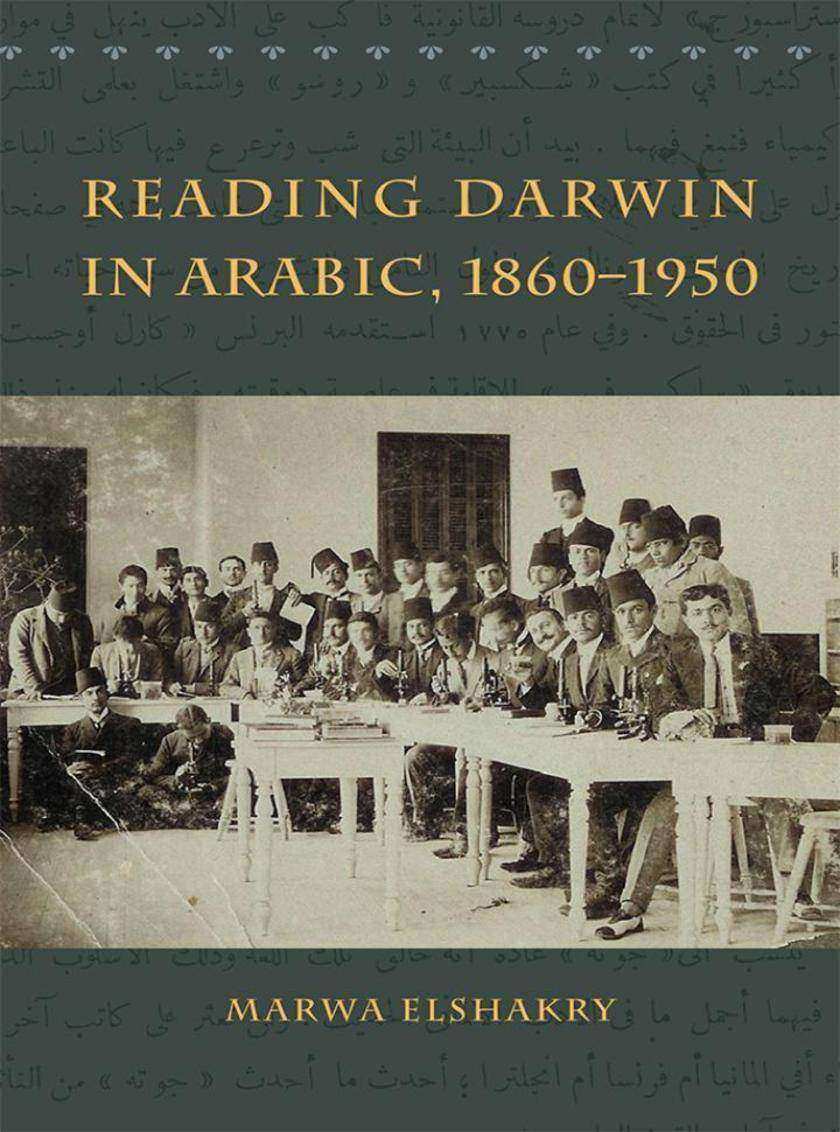
Reading Darwin in Arabic, 1860-1950
¥370.82
In Reading Darwin in Arabic, Marwa Elshakry questions current ideas about Islam, science, and secularism by exploring the ways in which Darwin was read in Arabic from the late 1860s to the mid-twentieth century. Borrowing from translation and reading studies and weaving together the history of science with intellectual history, she explores Darwin's global appeal from the perspective of several generations of Arabic readers and shows how Darwin's writings helped alter the social and epistemological landscape of the Arab learned classes.?Providing a close textual, political, and institutional analysis of the tremendous interest in Darwin's ideas and other works on evolution, Elshakry shows how, in an age of massive regional and international political upheaval, these readings were suffused with the anxieties of empire and civilizational decline. The politics of evolution infiltrated Arabic discussions of pedagogy, progress, and the very sense of history. They also led to a literary and conceptual transformation of notions of science and religion themselves. Darwin thus became a vehicle for discussing *ural exegesis, the conditions of belief, and cosmological views more broadly. The book also acquaints readers with Muslim and Christian intellectuals, bureaucrats, and theologians, and concludes by exploring Darwin's waning influence on public and intellectual life in the Arab world after World War I.?Reading Darwin in Arabic is an engaging and powerfully argued reconceptualization of the intellectual and political history of the Middle East.
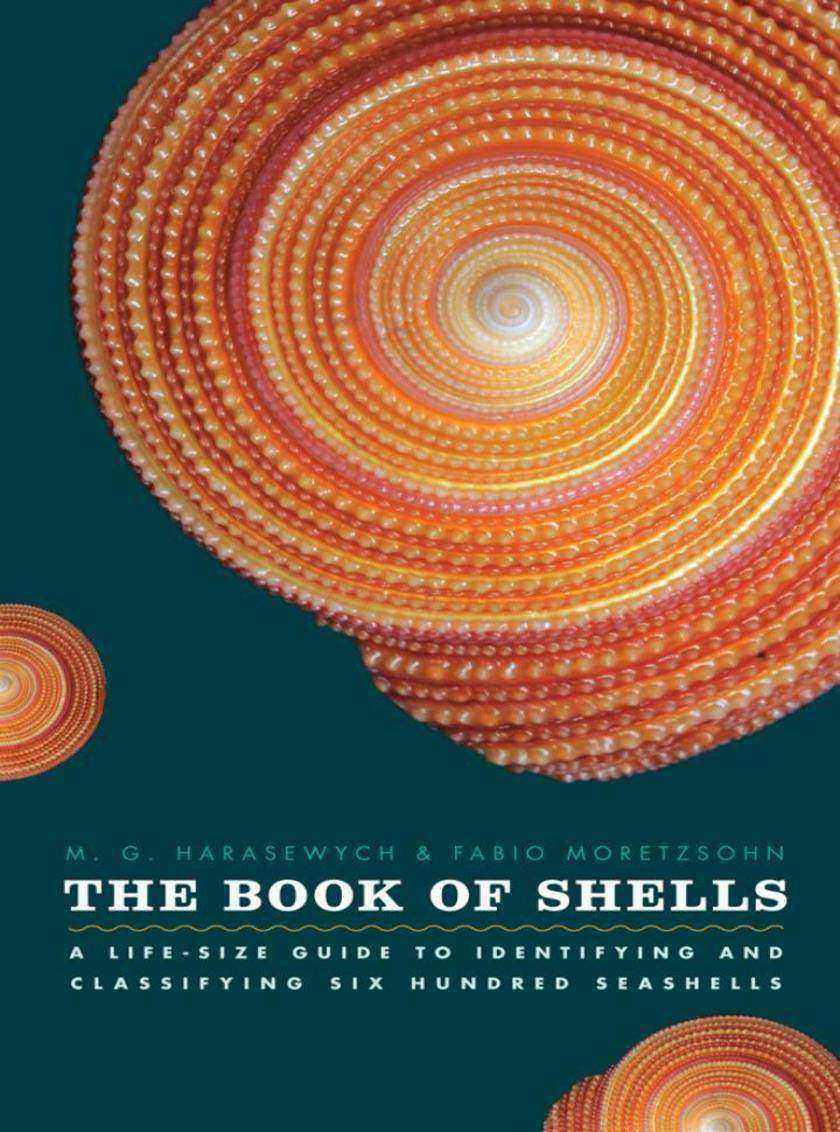
Book of Shells
¥194.24
Who among us hasn't marveled at the diversity and beauty of shellsOr picked one up, held it to our ear, and then gazed in wonder at its shape and hueMany a lifelong shell collector has cut teeth (and toes) on the beaches of the Jersey Shore, the Outer Banks, or the coasts of Sanibel Island. Some have even dived to the depths of the ocean. But most of us are not familiar with the biological origin of shells, their role in explaining evolutionary history, and the incredible variety of forms in which they come.Shells are the external skeletons of mollusks, an ancient and diverse phylum of invertebrates that are in the earliest fossil record of multicellular life over 500 million years ago. There are over 100,000 kinds of recorded mollusks, and some estimate that there are over amillion more that have yet to be discovered. Some breathe air, others live in fresh water, but most live in the ocean. They range in size from a grain of sand to a beach ball and in weight from a few grams to several hundred pounds. And in this lavishly illustrated volume, they finally get their full due.The Book of Shells offers a visually stunning and scientifically engaging guide to six hundred of the most intriguing mollusk shells, each chosen to convey the range of shapes and sizes that occur across a range of species. Each shell is reproduced here at its actual size, in full color, and is accompanied by an explanation of the shell's range, distribution, abundance, habitat, and operculum-the piece that protects the mollusk when it's in the shell. Brief scientific and historical accounts of each shell and related species include fun-filled facts and anecdotes that broaden its portrait.The Matchless Cone, for instance, or Conus cedonulli, was one of the rarest shells collected during the eighteenth century. So much so, in fact, that a specimen in 1796 was sold for more than six times as much as a painting by Vermeer at the same auction. But since the advent of scuba diving, this shell has become far more accessible to collectors-though not without certain risks. Some species of Conus produce venom that has caused more than thirty known human deaths.The Zebra Nerite, the Heart Cockle, the Indian Babylon, the Junonia, the Atlantic Thorny Oyster-shells from habitats spanning the poles and the tropics, from the highest mountains to the ocean's deepest recesses, are all on display in this definitive work.
Letters to an American Lady
¥87.15
On October 26, 1950, C. S. Lewis wrote the first of more than a hundred letters he would send to a woman he had never met, but with whom he was to maintain a correspondence for the rest of his life.Ranging broadly in subject matter, the letters discuss topics as profound as the love of God and as frivolous as preferences in cats. Lewis himself clearly had no idea that these letters would ever see publication, but they reveal facets of his character little known even to devoted readers of his fantasy and scholarly writings a man patiently offering encouragement and guidance to another Christian through the day-to-day joys and sorrows of ordinary life.Letters to an American Lady stands as a fascinating and moving testimony to the remarkable humanity and even more remarkable Christianity of C. S. Lewis, and is richly deserving of the position it now takes among the balance of his Christian writings.
HarperOne
¥161.78
God in the Dock is one of the best known of C.S. Lewis's collections of essays and includes Myth Become Fact, The Grand Miracle, Priestesses in the Church and, of course, God in the Dock.

A Letter of Consolation
¥67.32
Finding faith in a time of sorrow Beloved author Henri Nouwen reflects on the spiritual significance of death and life in this moving meditation dedicated to "all those who suffer the pain that death can bring and who search for new life."

Keeping the Faith
¥66.50
Practical guide addresses issues of faith for battered women an invaluable resource for victims of domestic violence and the crisis centers that counsel them.
Telling Secrets
¥77.49
With eloquence, candor, and simplicity, a celebrated author tells the story of his father's alcohol abuse and suicide and traces the influence of this secret on his life as a son, father, husband, minister, and writer.
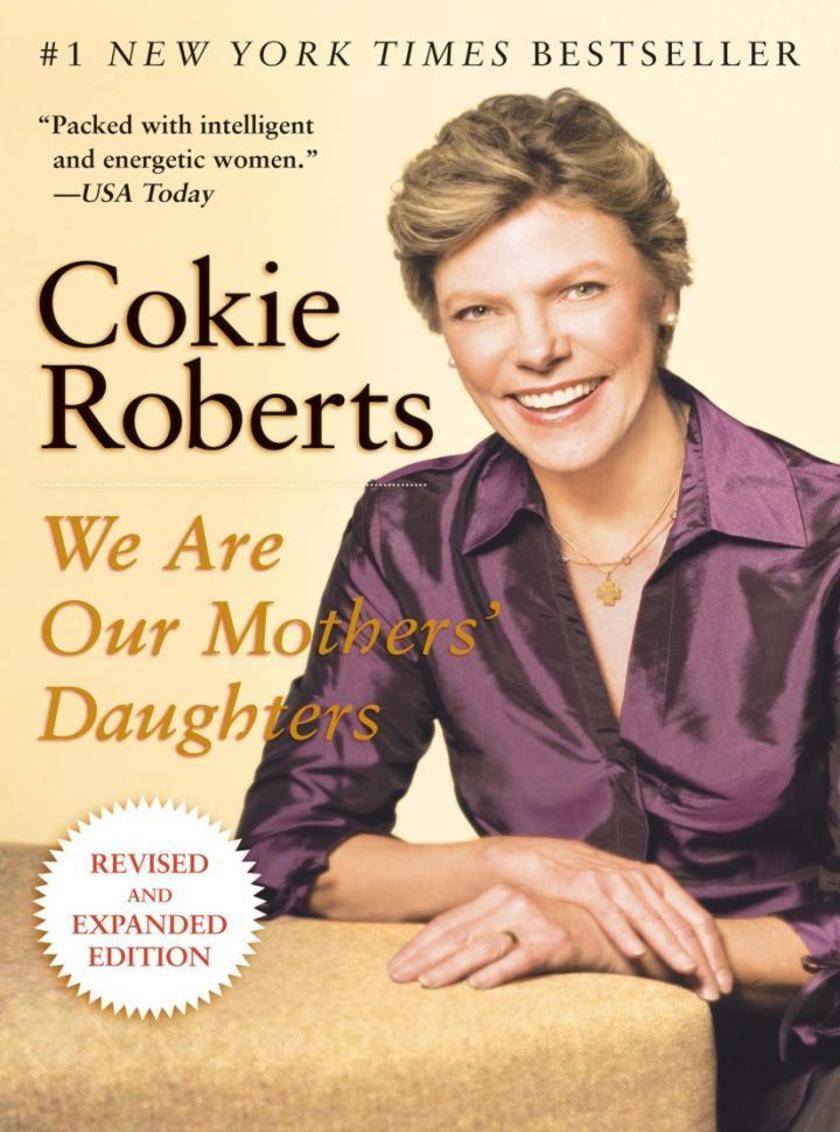
We Are Our Mothers' Daughters
¥77.49
In this tenth-anniversary edition of We Are Our Mothers' Daughters, renowned political commentator Cokie Roberts once again examines the nature of women's roles through the revealing lens of her personal experience. From mother to mechanic, sister to soldier, Roberts reveals how much progress has now been made and how much further we have to go. Updated and expanded to include a diverse new cast of women, this collection of essays offers tremendous insight into the opportunities and challenges that women encounter today. In a series of new profiles and revealing updates, Roberts reflects upon the number of female achievers who have graced the public stage in the past decade. In addition to the illuminating and sometimes surprising history of women in a variety of fields, several chapters also introduce us to some of the fascinating women she has encountered during the course of her reporting career including Hillary Clinton, Nancy Pelosi, Laura Bush, Billie Jean King, Michelle Rhee, and Dorothy Height. Looking into the future, Roberts focuses on the question of "What next?", exploring how several women including herself have begun to define themselves in the next stages of their lives. She also relates moving anecdotes about the women in her personal life, including her mother, former congresswoman Lindy Boggs. Sensitive, straightforward, and perceptive, We Are Our Mothers' Daughters celebrates the new diversity of choices and perspectives available to women today and affirms the bonds of sisterhood over the centuries a vital, powerful interconnection among all women, regardless of background.

Babyproofing Your Marriage
¥94.10
Warning! New parents are likely to experience:Scorekeeping An exceedingly complex, often relentless, tit-for-tat war waged by husbands and wives over the division of parenting responsibilities and domestic chores. The Ten O'Clock Shoulder Tap Considered by many men to be a form of foreplay. A paw on a wife's shoulder is how some men indicate their desire for sex. The Tap is rarely accompanied by a term of endearment or any other verbal form of communication and is seldom well received by the often-sleeping/almost-always-exhausted wife. The frustrated husband, meanwhile, wonders if his wife has pulled a Bait and Switch in the bedroom.Clash of the Grannies A high stakes "who will have the greatest influence on the grandkids" tournament played by each set of grandparents. Competitive categories include: the Title Championship (who gets to be called "Grandma"), the Battle for Floor and Wall Space, the Battle for Face Time, and Gratuitous Grandparental Gift-Giving. The Babyproofers are three women who wouldn't trade their roles as mothers for anything, and they love their husbands deeply. But after living through it and hearing the stories of hundreds of other couples, they know that with young children in the house, you need to block the stairs with baby gates, put plastic covers over the outlets, AND take the necessary steps to safeguard your marriage. Babyproofing Your Marriage is the warts-and-all truth about how having children can affect your relationship. The authors explore the transition to parenthood in light of their own experiences, with input from their husbands and commentary from men and women across the country. Their evenhanded approach to both sides of the marital equation allows spouses to understand each other in a whole new way. With loads of humor and practical advice, the Babyproofers will guide first-time parents and veterans alike around the rocky shores of the early parenting years. Don't fall prey to common relationship pitfalls: Babyproof Your Marriage!

The Proper Care and Feeding of Marriage
¥90.77
Dr. Laura Schlessinger reveals how to bring a marriage back from the brink of disaster.Jumping off her million-copy bestseller The Proper Care and Feeding of Husbands, Dr. Laura Schlessinger exposes the sensitive and loving truths necessary to produce and sustain a wonderfully satisfying marriage. First and foremost, men and women need to understand and appreciate the uniqueness of masculinity and femininity. Both husband and wife have power in their relationship, and both need to realize this to ensure for themselves the personal satisfaction they yearn for. Dr. Laura explores the best ways a couple can relate, caretake, and nurture each other, and how to rescue a troubled marriage that seems doomed to fail. Using real-life examples from her call-in radio show, Dr. Laura focuses on the typical mistakes made by men and women in their relationships, and gives us real-life solutions for keeping our unions strong, loving, and lasting.
The Garden of Truth
¥83.92
The headlines are filled with the politics of Islam, but there is another side to the world's fastest-growing religion. Sufism is the poetry and mysticism of Islam. This mystical movement from the early ninth century rejects worship motivated by the desire for heavenly reward or the fear of punishment, insisting rather on the love of God as the only valid form of adoration. Sufism has made significant contributions to Islamic civilization in music and philosophy, dance and literature. The Sufi poet Rumi is the bestselling poet in America. But in recent centuries Sufism has been a target for some extremist Islamic movements as well as many modernists. The Garden of Truth presents the beliefs and vision of the mystical heart of Islam, along with a history of Sufi saints and schools of thought.In a world threatened by religious wars, depleting natural resources, a crumbling ecosystem, and alienation and isolation, what has happened to our humanityWho are we and what are we doing hereThe Sufi path offers a journey toward truth, to a knowledge that transcends our mundane concerns, selfish desires, and fears. In Sufism we find a wisdom that brings peace and a relationship with God that nurtures the best in us and in others.Noted scholar Seyyed Hossein Nasr helps you learn the secret wisdom tradition of Islam and enter what the ancient mystics call the "garden of truth." Here, liberate your mind, experience peace, discover your purpose, fall in love with the Divine, and find your true, best self.

How I Stayed Alive When My Brain Was Trying to Kill Me
¥83.92
The statistics on suicide are staggering. According to the US Center for Disease Control and Prevention, in 1997 in the USA more teenagers and young adults died from suicide than from cancer, heart disease, AIDS, birth defects, stroke, pneumonia, influenza and chronic lung disease combined. It is also an international epidemic.Susan Blauner is the perfect emissary for a message of hope and a program of action for these millions of people. She's been though it, and speaks and writes eloquently about feelings and fantasies surrounding suicide.

Stories Grandparents Tell About Their Grandchildren
¥55.86
Stories Grandparents Tell About Their Grandchildren is a touching and humorous collection of anecdotes and memories from grandparents about their grandchildren. From the pranks and charm of small tots to the adventures and achievements of older grandchildren, these stories are sure to strike a familiar chord in anyone who is -- or has -- a grandparent. Both personal and universal, this collection is about real life and the challenges and wonders of the world we live in. Most of all, there are no unhappy endings: grandparents know all about persevering and overcorming, and the common thread throughout their stories is their affirmation of life. Stories Grandparents Tell About Their Grandchildren is a perfect read for every matriarch and patriarch in your family, and for the people who love them.
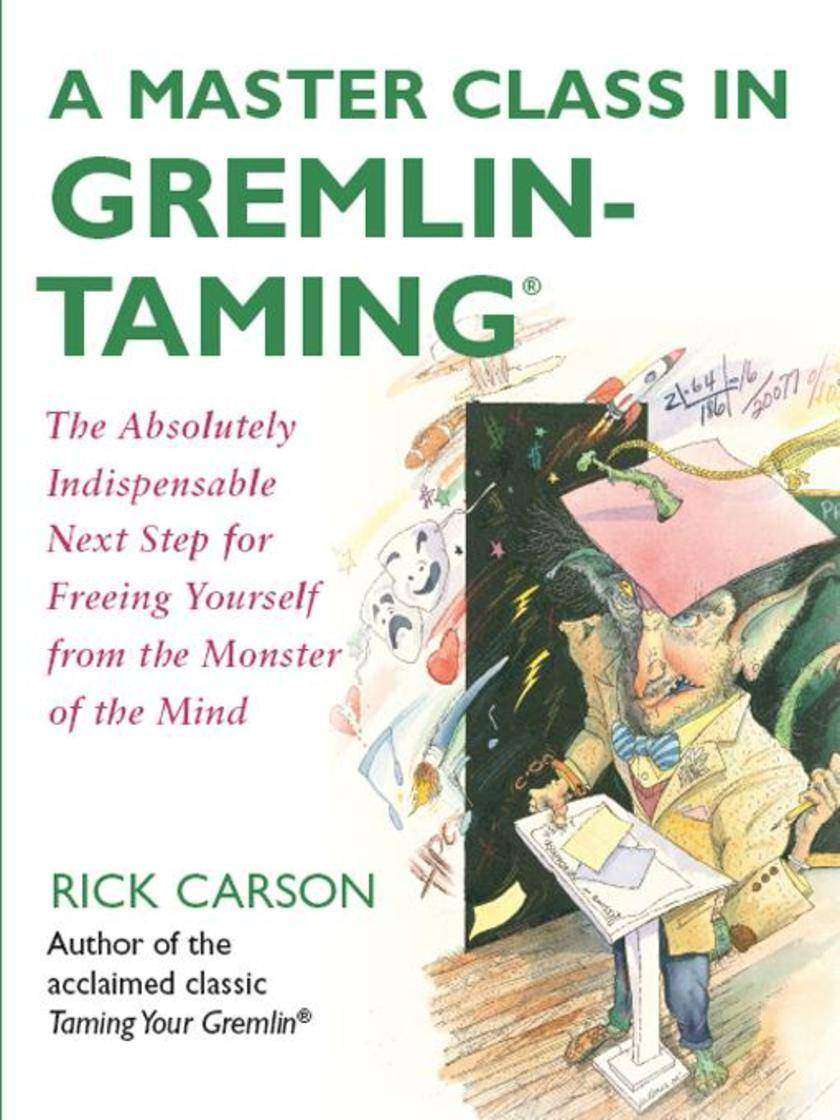
A Master Class in Gremlin-Taming(R)
¥94.10
Rick Carson's Taming Your Gremlin has helped hundreds of thousands of people combat the inner saboteur lurking in the recesses of every human mind. Now Rick takes you to the next level by revealing new ways to escape your gremlin. Rick shows how to access the "natural you" a place of clear feelings and pure potential. He also shares his powerful I CREATE method: seven keys for creating rewarding relationships, which our gremlins love to mess with. With wit, wisdom, and plenty of real-life vignettes, Rick helps gremlin-tamers at all levels give gremlins less than the time of day.


