


 购物车
 个人中心

Building a Market
¥394.36
Each year, North Americans spend as much money fixing up their homes as they do buying new ones. This obsession with improving our dwellings has given rise to a multibillion-dollar industry that includes countless books, consumer magazines, a cable television network, and thousands of home improvement stores.Building a Market charts the rise of the home improvement industry in the United States and Canada from the end of World War I into the late 1950s. Drawing on the insights of business, social, and urban historians, and making use of a wide range of documentary sources, Richard Harris shows how the middle-class preference for home ownership first emerged in the 1920s-and how manufacturers, retailers, and the federal government combined to establish the massive home improvement market and a pervasive culture of Do-It-Yourself.?Deeply insightful, Building a Market is the carefully crafted history of the emergence and evolution of a home improvement revolution that changed not just American culture but the American landscape as well.
River Jordan
¥394.36
As the site of several miracles in the Jewish and Christian traditions, the Jordan is one of the world's holiest rivers. It is also the major political and symbolic border contested by Israelis and Palestinians. Combining biblical and folkloric studies with historical geography, Rachel Havrelock explores how the complex religious and mythological representations of the river have shaped the current conflict in the Middle East.Havrelock contends that the intractability of the Israeli-Palestinian conflict stems from the nationalist myths of the Hebrew Bible, where the Jordan is defined as a border of the Promised Land. Both Israelis and Palestinians claim the Jordan as a necessary boundary of an indivisible homeland. Examining the Hebrew Bible alongside ancient and modern maps of the Jordan, Havrelock chronicles the evolution of Israel's borders based on nationalist myths while uncovering additional myths that envision Israel as a bi-national state. These other myths, she proposes, provide roadmaps for future political configurations of the nation. Ambitious and masterful in its scope, River Jordan brings a fresh, provocative perspective to the ongoing struggle in this violence-riddled region.
Mastering Iron
¥394.36
Veins of iron run deep in the history of America. Iron making began almost as soon as European settlement, with the establishment of the first ironworks in colonial Massachusetts. Yet it was Great Britain that became the Atlantic world's dominant low-cost, high-volume producer of iron, a position it retained throughout the nineteenth century. It was not until after the Civil War that American iron producers began to match the scale and efficiency of the British iron industry.?In Mastering Iron, Anne Kelly Knowles argues that the prolonged development of the US iron industry was largely due to geographical problems the British did not face. Pairing exhaustive manu* research with analysis of a detailed geospatial database that she built of the industry, Knowles reconstructs the American iron industry in unprecedented depth, from locating hundreds of iron companies in their social and environmental contexts to explaining workplace culture and social relations between workers and managers. She demonstrates how ironworks in Alabama, Maryland, Pennsylvania, and Virginia struggled to replicate British technologies but, in the attempt, brought about changes in the American industry that set the stage for the subsequent age of steel.?Richly illustrated with dozens of original maps and period art work, all in full color, Mastering Iron sheds new light on American ambitions and highlights the challenges a young nation faced as it grappled with its geographic conditions.
Restoring Justice
¥370.82
In the wake of Watergate, Gerald Ford appointed eminent lawyer and scholar Edward H. Levi to the post of attorney general-and thus gave him the onerous task of restoring legitimacy to a discredited Department of Justice. Levi was famously fair-minded and free of political baggage, and his inspired addresses during this tumultuous time were critical to rebuilding national trust. They reassured a tense and troubled nation that the Department of Justice would act in accordance with the principles underlying its name, operating as a nonpartisan organization under the strict rule of law.For Restoring Justice, Jack Fuller has carefully chosen from among Levi's speeches a selection that sets out the attorney general's view of the considerable challenges he faced: restoring public confidence through discussion and acts of justice, combating the corrosive skepticism of the time, and ensuring that the executive branch would behave judicially. Also included are addresses and Congressional testimonies that speak to issues that were hotly debated at the time, including electronic surveillance, executive privilege, separation of powers, antitrust enforcement, and the guidelines governing the FBI-many of which remain relevant today. Serving at an almost unprecedentedly difficult time, Levi was among the most admired attorney generals of the modern era. Published here for the first time, the speeches in Restoring Justice offer a superb sense of the man and his work.
More Important Than the Music
¥370.82
Today, jazz is considered high art, America's national music, and the catalog of its recordings-its discography-is often taken for granted. But behind jazz discography is a fraught and highly colorful history of research, fanaticism, and the intense desire to know who played what, where, and when. This history gets its first full-length treatment in Bruce D. Epperson's More Important Than the Music. Following the dedicated few who sought to keep jazz's legacy organized, Epperson tells a fascinating story of archival pursuit in the face of negligence and deception, a tale that saw curses and threats regularly employed, with fisticuffs and lawsuits only slightly rarer.Epperson examines the documentation of recorded jazz from its casual origins as a novelty in the 1920s and '30s, through the overwhelming deluge of 12-inch vinyl records in the middle of the twentieth century, to the use of computers by today's discographers. Though he focuses much of his attention on comprehensive discographies, he also examines the development of a variety of related listings, such as buyer's guides and library catalogs, and he closes with a look toward discography's future. From the little black book to the full-featured online database, More Important Than the Music offers a history not just of jazz discography but of the profoundly human desire to preserve history itself.
Trade and Romance
¥370.82
In Trade and Romance, Michael Murrin examines the complex relations between the expansion of trade in Asia and the production of heroic romance in Europe from the second half of the thirteenth century through the late seventeenth century. He shows how these tales of romance, ostensibly meant for the aristocracy, were important to the growing mercantile class as a way to gauge their own experiences in traveling to and trading in these exotic locales. Murrin also looks at the role that growing knowledge of geography played in the writing of the creative literature of the period, tracking how accurate, or inaccurate, these writers were in depicting far-flung destinations, from Iran and the Caspian Sea all the way to the Pacific.?With reference to an impressive range of major works in several languages-including the works of Marco Polo, Geoffrey Chaucer, Matteo Maria Boiardo, Lus de Cames, Ferno Mendes Pinto, Edmund Spenser, John Milton, and more-Murrin tracks numerous accounts by traders and merchants through the literature, first on the Silk Road, beginning in the mid-thirteenth century; then on the water route to India, Japan, and China via the Cape of Good Hope; and, finally, the overland route through Siberia to Beijing. All of these routes, originally used to exchange commodities, quickly became paths to knowledge as well, enabling information to pass, if sometimes vaguely and intermittently, between Europe and the Far East. These new tales of distant shores fired the imagination of Europe and made their way, with surprising accuracy, as Murrin shows, into the poetry of the period.
Fire under the Ashes
¥370.82
In Fire under the Ashes, John Donoghue recovers the lasting significance of the radical ideas of the English Revolution, exploring their wider Atlantic history through a case study of Coleman Street Ward, London. Located in the crowded center of seventeenth-century London, Coleman Street Ward was a hotbed of political, social, and religious unrest. There among diverse and contentious groups of puritans a tumultuous republican underground evolved as the political means to a more perfect Protestant Reformation. But while Coleman Street has long been recognized as a crucial location of the English Revolution, its importance to events across the Atlantic has yet to be explored.Prominent merchant revolutionaries from Coleman Street led England's imperial expansion by investing deeply in the slave trade and projects of colonial conquest. Opposing them were other Coleman Street puritans, who having crossed and re-crossed the ocean as colonists and revolutionaries, circulated new ideas about the liberty of body and soul that they defined against England's emergent, political economy of empire. These transatlantic radicals promoted social justice as the cornerstone of a republican liberty opposed to both political tyranny and economic slavery-and their efforts, Donoghue argues, provided the ideological foundations for the abolitionist movement that swept the Atlantic more than a century later.
Framing Finance
¥253.10
As the banking crisis and its effects on the world economy have made plain, the stock market is of colossal importance to our livelihoods. In Framing Finance, Alex Preda looks at the history of the market to figure out how we arrived at a point where investing is not only commonplace, but critical, as market fluctuations threaten our plans to send our children to college or retire comfortably. As Preda discovers through extensive research, the public was once much more skeptical. For investing to become accepted, a deep-seated prejudice against speculation had to be overcome, and Preda reveals that over the course of the eighteenth and nineteenth centuries groups associated with stock exchanges in New York, London, and Paris managed to redefine finance as a scientific pursuit grounded in observational technology. But Preda also notes that as the financial data in which they trafficked became ever more difficult to understand, charismatic speculators emerged whose manipulations of the market undermined the benefits of widespread investment. And so, Framing Finance ends with an eye on the future, proposing a system of public financial education to counter the irrational elements that still animate the appeal of finance.
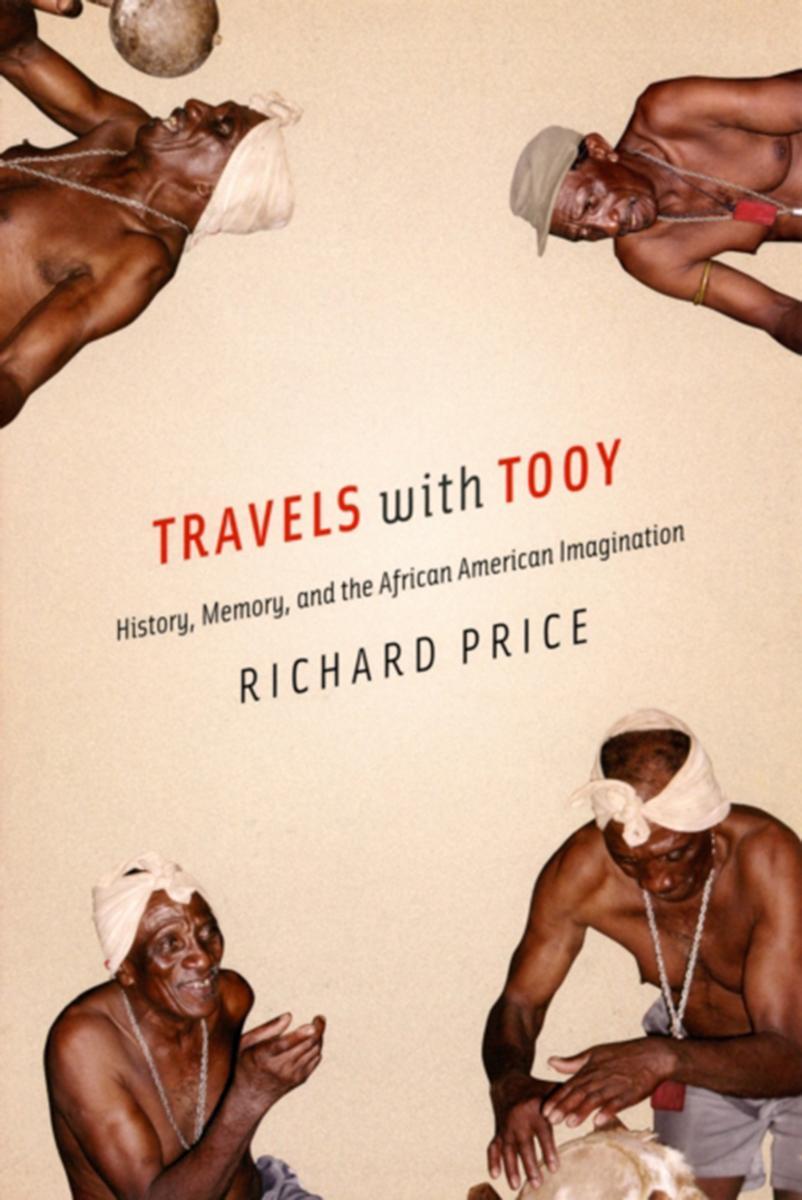
Travels with Tooy
¥265.87
At first glance, the rough shantytowns that ring Cayenne, where Haitian, Brazilian, Guyanese, and Suriname migrants live cheek by jowl, might seem the least likely of places to meet a fellow intellectual. And yet . . . The poverty that threatens to crush the spirit of both the hardworking and the unemployed can leave largely untouched the richness of the imagination. Amidst the mud and stench and random violence, Tooy—captain of the Saramakas of Cayenne—runs a household in which spiritual and rhetorical gifts abound. I’ve felt privileged to play a part in it during the past seven years.
The Cybernetic Brain
¥282.53
Cybernetics is often thought of as a grim military or industrial science of control. But as Andrew Pickering reveals in this beguiling book, a much more lively and experimental strain of cybernetics can be traced from the 1940s to the present.The Cybernetic Brain explores a largely forgotten group of British thinkers, including Grey Walter, Ross Ashby, Gregory Bateson, R. D. Laing, Stafford Beer, and Gordon Pask, and their singular work in a dazzling array of fields. Psychiatry, engineering, management, politics, music, architecture, education, tantric yoga, the Beats, and the sixties counterculture all come into play as Pickering follows the history of cybernetics' impact on the world, from contemporary robotics and complexity theory to the Chilean economy under Salvador Allende. What underpins this fascinating history, Pickering contends, is a shared but unconventional vision of the world as ultimately unknowable, a place where genuine novelty is always emerging. And thus, Pickering avers, the history of cybernetics provides us with an imaginative model of open-ended experimentation in stark opposition to the modern urge to achieve domination over nature and each other.

The Paradoxes of Integration
¥200.12
Tali Mendelberg and Janelle . In 1999, while at Princeton University, Tali and I started talking about race and social environments. At the time I was writing about how suburban social contexts influence civic participation, and she suggested it might be interesting to examine their impact on racial attitudes. This piqued my interest, and, working together, we published a paper examining how economic and racial contexts shaped whites' racial attitudes. A year later, while at Yale University, Janelle and I began to wonder if these same effects might be evident among minority populations as well. As an undergraduate at UCLA, Janelle had worked as a researcher on the Multi-City Study of Urban Inequality (MCSUI) and told me the data might be a great source for testing some hypotheses about interminority attitudes. Working together, we later published a paper using the Los Angeles portion of the MCSUI study. I am greatly indebted to both Tali and Janelle for helping me first engage this difficult topic and work through many core issues in this analysis.
Power of the Between
¥188.35
It is the anthropologist's fate to always be between things: countries, languages, cultures, even realities. But rather than lament this, anthropologist Paul Stoller here celebrates the creative power of the between, showing how it can transform us, changing our conceptions of who we are, what we know, and how we live in the world.Beginning with his early days with the Peace Corps in Africa and culminating with a recent bout with cancer, The Power of the Between is an evocative account of the circuitous path Stoller's life has taken, offering a fascinating depiction of how a career is shaped over decades of reading and research. Stoller imparts his accumulated wisdom not through grandiose pronouncements but by drawing on his gift for storytelling. Tales of his apprenticeship to a sorcerer in Niger, his studies with Claude Lvi-Strauss in Paris, and his friendships with West African street vendors in New York City accompany philosophical reflections on love, memory, power, courage, health, and illness.Graced with Stoller's trademark humor and narrative elegance, The Power of the Between is both the story of a distinguished career and a profound meditation on coming to terms with the impermanence of all things.
Madwomen
¥200.12
A schoolteacher whose poetry catapulted her to early fame in her native Chile and an international diplomat whose boundary-defying sexuality still challenges scholars, Gabriela Mistral (1889-1957) is one of the most important and enigmatic figures in Latin American literature of the last century. The Locas mujeres poems collected here are among Mistral's most complex and compelling, exploring facets of the self in extremis-poems marked by the wound of blazing catastrophe and its aftermath of mourning. From disquieting humor to balladlike lyricism to folkloric wisdom, these pieces enact a tragic sense of life, depicting "e;madwomen"e; who are anything but mad. Strong and intensely human, Mistral's poetic women confront impossible situations to which no sane response exists. This groundbreaking collection presents poems from Mistral's final published volume as well as new editions of posthumous work, featuring the first English-language appearance of many essential poems. Madwomen promises to reveal a profound poet to a new generation of Anglophone readers while reacquainting Spanish readers with a stranger, more complicated "e;madwoman"e; than most have ever known.
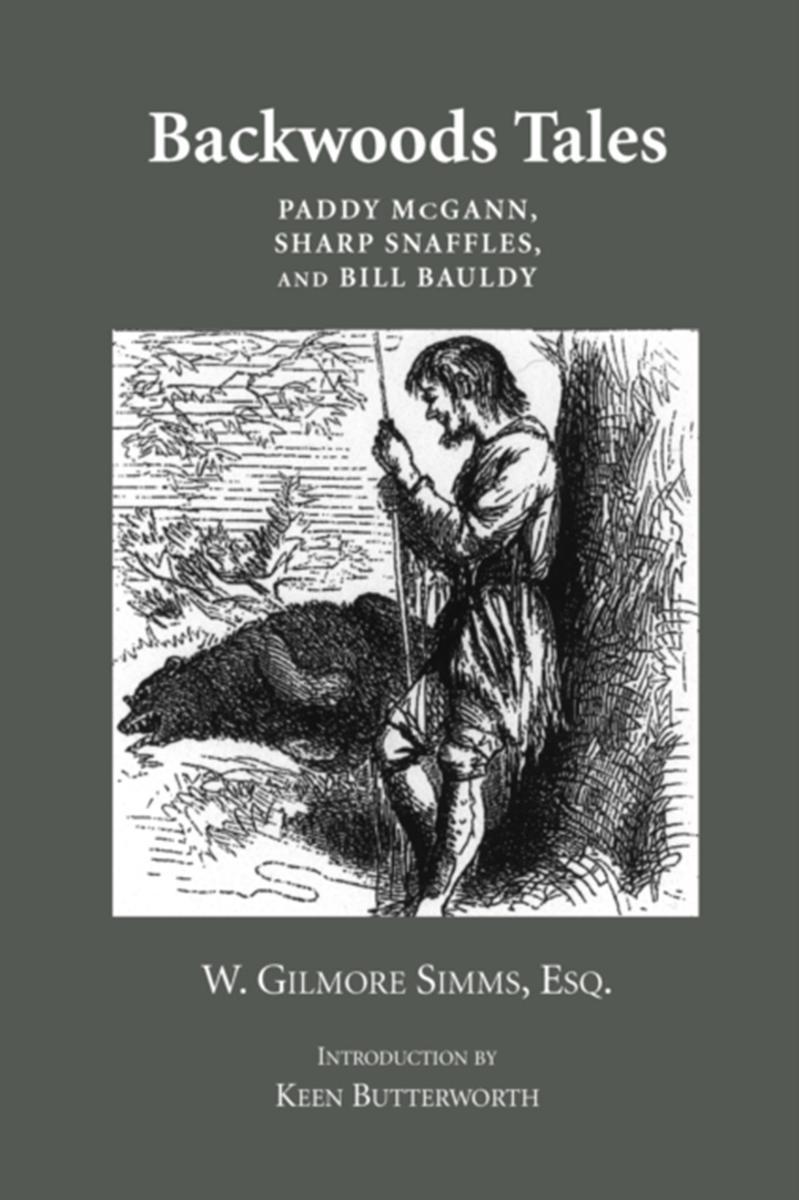
Backwoods Tales: Paddy McGann, Sharp Snaffles, and Bill Bauldy
¥299.50
The University of Arkansas Press edition of the Selected Fiction of William Gilmore Simms has as its aim to publish the major novels and short fiction in reliable texts, together with scholarly introductions, annotations, and other matter useful to scholars, critics, and teachers of Simms's work. The edition includes novels in the Border Romances series and the Revolutionary War series, together with writings that treat warfare with Native Americans and selections from Simms's short fiction. The scope of these writings is wide, capturing the American frontier in its westward advance across the Appalachian Mountains to the Mississippi River during the early and mid-nineteenth century.
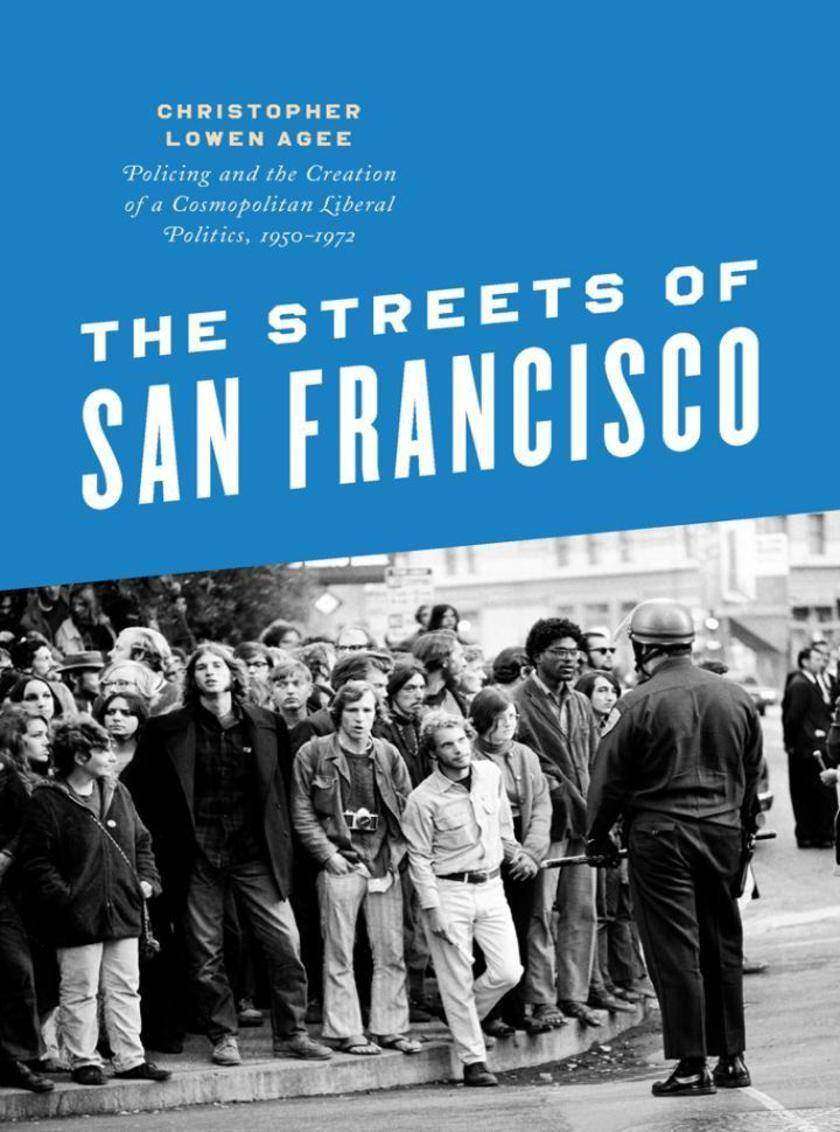
Streets of San Francisco
¥370.82
During the Sixties the nation turned its eyes to San Francisco as the city's police force clashed with movements for free speech, civil rights, and sexual liberation.?These conflicts on the street forced Americans to reconsider the role of the police officer in a democracy. In The Streets of San Francisco Christopher Lowen Agee explores the surprising and influential ways in which San Francisco liberals answered that question, ultimately turning to the police as partners, and reshaping understandings of crime, policing, and democracy.The Streets of San Francisco uncovers the seldom-reported, street-level interactions between police officers and San Francisco residents and finds that police discretion was the defining feature of mid-century law enforcement.?Postwar police officers enjoyed great autonomy?when dealing with North Beach beats, African American gang leaders,?gay and lesbian bar owners, Haight-Ashbury hippies, artists who created sexually explicit works, Chinese American entrepreneurs, and a wide range of other San Franciscans. Unexpectedly, this police independence grew into a source of both concern and inspiration for the thousands of young professionals streaming into the city's growing financial district.?These young professionals ultimately used the issue of police discretion to forge a new cosmopolitan liberal coalition that incorporated both marginalized San Franciscans and rank-and-file police officers. The success of this model in San Francisco resulted in the rise of cosmopolitan liberal coalitions throughout the country, and today, liberal cities across America ground themselves in similar understandings of democracy, emphasizing both broad diversity and strong policing.

Ministry of Presence
¥370.82
Most people in the United States today no longer live their lives under the guidance of local institutionalized religious leadership, such as rabbis, ministers, and priests; rather, liberals and conservatives alike have taken charge of their own religious or spiritual practices. This shift, along with other social and cultural changes, has opened up a perhaps surprising space for chaplains-spiritual professionals who usually work with the endorsement of a religious community but do that work away from its immediate hierarchy, ministering in a secular institution, such as a prison, the military, or an airport, to an ever-changing group of clients of widely varying faiths and beliefs.In?A Ministry of Presence, Winnifred Fallers Sullivan explores how chaplaincy works in the United States-and in particular how it sits uneasily at the intersection of law and religion, spiritual care, and government regulation. Responsible for ministering to the wandering souls of the globalized economy, the chaplain works with a clientele often unmarked by a specific religious identity, and does so on behalf of a secular institution, like a hospital. Sullivan's examination of the sometimes heroic but often deeply ambiguous work yields fascinating insights into contemporary spiritual life, the politics of religious freedom, and the never-ending negotiation of religion's place in American institutional life.
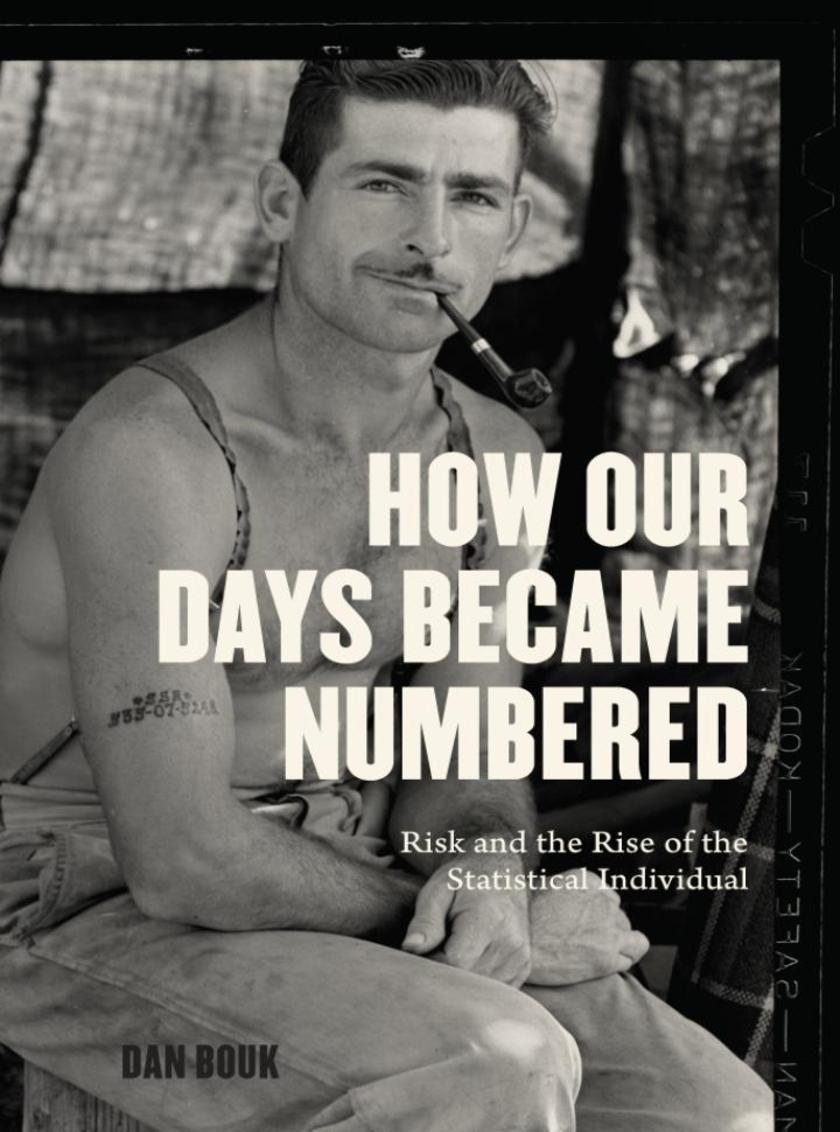
How Our Days Became Numbered
¥329.62
Long before the age of "e;Big Data"e; or the rise of today's "e;self-quantifiers,"e; American capitalism embraced "e;risk"e;--and proceeded to number our days. Life insurers led the way, developing numerical practices for measuring individuals and groups, predicting their fates, and intervening in their futures. Emanating from the gilded boardrooms of Lower Manhattan and making their way into drawing rooms and tenement apartments across the nation, these practices soon came to change the futures they purported to divine.How Our Days Became Numbered tells a story of corporate culture remaking American culture--a story of intellectuals and professionals in and around insurance companies who reimagined Americans' lives through numbers and taught ordinary Americans to do the same. Making individuals statistical did not happen easily. Legislative battles raged over the propriety of discriminating by race or of smoothing away the effects of capitalism's fluctuations on individuals. Meanwhile, debates within companies set doctors against actuaries and agents, resulting in elaborate, secretive systems of surveillance and calculation.Dan Bouk reveals how, in a little over half a century, insurers laid the groundwork for the much-quantified, risk-infused world that we live in today. To understand how the financial world shapes modern bodies, how risk assessments can perpetuate inequalities of race or sex, and how the quantification and claims of risk on each of us continue to grow, we must take seriously the history of those who view our lives as a series of probabilities to be managed.

Learning to Love Form 1040
¥311.96
No one likes paying taxes, much less the process of filing tax returns. For years, would-be reformers have advocated replacing the return-based mass income tax with a flat tax, federal sales tax, or some combination thereof. Congress itself has commissioned studies on the feasibility of a system of exact withholding. But might the much-maligned return-based taxation method serve an important yet overlooked civic purpose?In Learning to Love Form 1040, Lawrence Zelenak argues that filing taxes can strengthen fiscal citizenship by prompting taxpayers to reflect on the contract they have with their government and the value-or perceived lack of value-they receive in exchange for their money. Zelenak traces the mass income tax to its origins as a means for raising revenue during World War II. Even then, debates raged over the merits of consumption-based versus income taxation, as well as whether taxes should be withheld from payroll or paid at the time of filing. The result is the income tax system we have today-a system whose maddening complexity, intended to accommodate citizens in widely different circumstances, threatens to outweigh any civic benefits.If sitcoms and political cartoons are any indication, public understanding of the income tax is badly in need of a corrective. Zelenak clears up some of the most common misconceptions and closes with suggestions for how the current system could be substantially simplified to better serve its civic purpose.
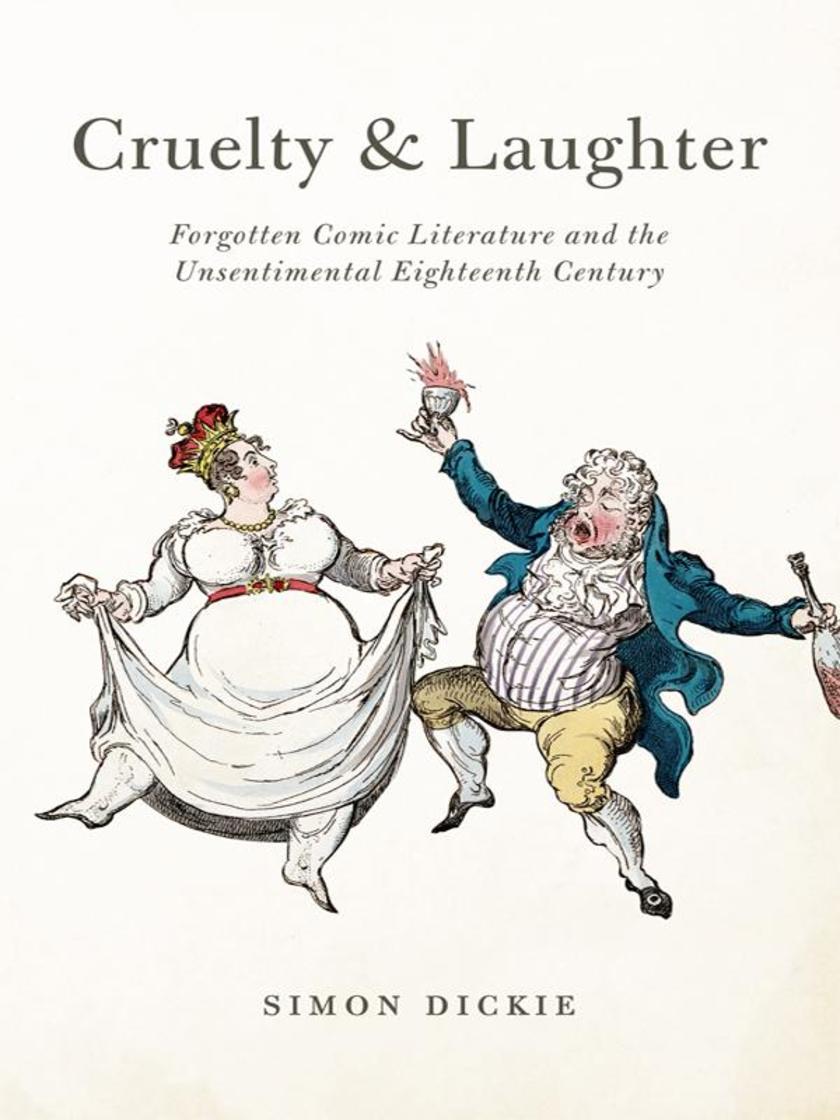
Cruelty and Laughter
¥311.96
Eighteenth-century British culture is often seen as polite and sentimental-the creation of an emerging middle class. Simon Dickie?disputes these assumptions in Cruelty and Laughter, a wildly enjoyable but shocking plunge into the forgotten comic literature of the age. Beneath the surface of Enlightenment civility, Dickie uncovers a rich vein of?cruel humor?that?forces us to recognize just how slowly?ordinary human sufferings became worthy of sympathy.Delving into an enormous archive of comic novels, jestbooks, farces, variety shows, and cartoons,?Dickie finds?a vast repository of jokes about cripples, blind men, rape, and wife-beating. Epigrams about syphilis and scurvy sit alongside one-act comedies about hunchbacks in love. He shows us that everyone-rich and poor, women as well as men-laughed along. In the process,?Dickie also expands our understanding of many of the century's major authors, including Samuel Richardson, Lady Mary Wortley Montagu, Tobias Smollett, Frances Burney, and Jane Austen. He devotes particular attention to Henry Fielding's Joseph Andrews, a novel that reflects repeatedly on the limits of compassion and the ethical problems of laughter. Cruelty and Laughter is an engaging, far-reaching study of the other side of culture in eighteenth-century Britain.
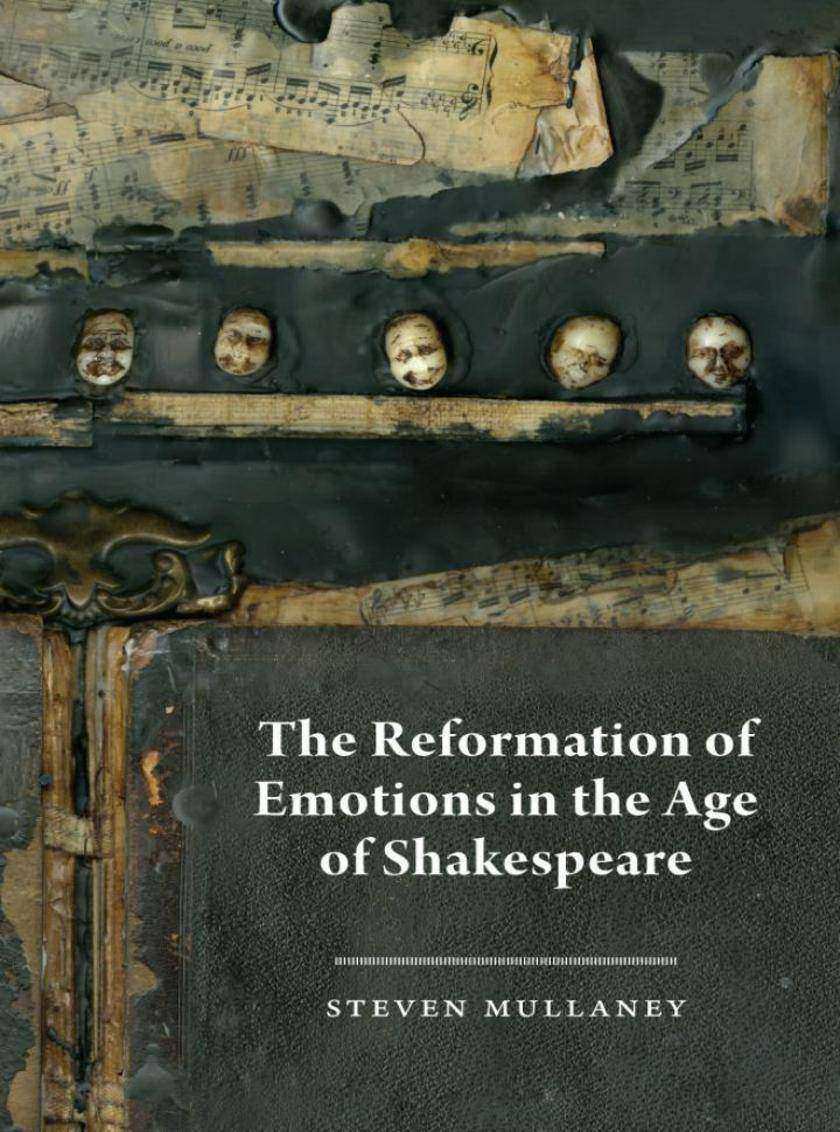
Reformation of Emotions in the Age of Shakespeare
¥288.41
The crises of faith that fractured Reformation Europe also caused crises of individual and collective identity. Structures of feeling as well as structures of belief were transformed; there was a reformation of social emotions as well as a Reformation of faith.As Steven Mullaney shows in?The Reformation of Emotions in the Age of Shakespeare, Elizabethan popular drama played a significant role in confronting the uncertainties and unresolved traumas of Elizabethan Protestant England. Shakespeare and his contemporaries-audiences as well as playwrights-reshaped popular drama into a new form of embodied social, critical, and affective thought. Examining a variety of works, from revenge plays to Shakespeare's first history tetralogy and beyond, Mullaney explores how post-Reformation drama not only exposed these faultlines of society on stage but also provoked playgoers in the audience to acknowledge their shared differences. He demonstrates that our most lasting works of culture remain powerful largely because of their deep roots in the emotional landscape of their times.

Before Mickey
¥288.41
This witty and fascinating study reminds us that there was animation before Disney: about thirty years of creativity and experimentation flourishing in such extraordinary work as Girdie the Dinosaur and Felix the Cat. Before Mickey, the first and only in-depth history of animation from 1898-1928, includes accounts of mechanical ingenuity, marketing and art. Crafton is equally adept at explaining techniques of sketching and camera work, evoking characteristic styles of such pioneering animators as Winsor McCay and Ladislas Starevitch, placing work in its social and economic context, and unraveling the aesthetic impact of specific cartoons."e;Before Mickey's scholarship is quite lively and its de*ions are evocative and often funny. The history of animation coexisted with that of live-action film but has never been given as much attention."e;-Tim Hunter, New York Times


