


 购物车
 个人中心

My Life and Work
¥8.09
My Life and Work
Moths of the Limberlost
¥8.09
Moths of the Limberlost

Memoirs of Jacques Casanova de Seingalt
¥8.09
Memoirs of Jacques Casanova de Seingalt

Pragmatism
¥8.09
Pragmatism
Note-Book of Anton Chekhov
¥8.09
Note-Book of Anton Chekhov
The Art of Literature
¥8.09
The Art of Literature
12 Winning Leadership Qualities
¥8.09
12 Winning Leadership Qualities

Real Estate Investing: 7 Ways ANYONE Can Use to Make Money in Real Estate
¥8.09
Real Estate Investing: 7 Ways ANYONE Can Use to Make Money in Real Estate
On the Significance of Science and Art
¥8.09
Classic long essay. According to Wikipedia: " As a fiction writer, Tolstoy is widely regarded as one of the greatest of all novelists, particularly noted for his masterpieces War and Peace and Anna Karenina. In their scope, breadth and realistic depiction of 19th-century Russian life, the two books stand at the peak of realist fiction. As a moral philosopher Tolstoy was notable for his ideas on nonviolent resistance through works such as The Kingdom of God is Within You, which in turn influenced such twentieth-century figures as Mohandas K. Gandhi and Martin Luther King, Jr."

Autobiography of John Stuard Mill
¥8.09
According to Wikipedia: "John Stuart Mill (20 May 1806 – 8 May 1873), English philosopher, political theorist, political economist, civil servant and Member of Parliament, was an influential British Classical liberal thinker of the 19th century whose works on liberty justified freedom of the individual in opposition to unlimited state control. He was a proponent of utilitarianism, an ethical theory developed by Jeremy Bentham, although his conception of it was very different from Bentham's. Hoping to remedy the problems found in an inductive approach to science, such as confirmation bias, he clearly set forth the premises of falsification as the key component in the scientific method."

The Life of Thomas Telford, Civil Engineer
¥8.09
According to Wikipedia: "Thomas Telford (1757–1834) was a Scottish civil engineer, architect and stonemason, and a noted road, bridge and canal builder. After establishing himself as an engineer of road and canal projects in Shropshire, he designed numerous infrastructure projects in his native Scotland, as well as harbours and tunnels. Such was his reputation as a prolific designer of highways and related bridges, he was dubbed The Colossus of Roads, and, reflecting his command of all types of civil engineering in the early 19th century, he was elected as the first President of the Institution of Civil Engineers, a post he retained for 14 years until his death.... Samuel Smiles (23 December 1812 – 16 April 1904), was a Scottish author and reformer. ... Smiles is best known today as the writer of books extolling virtues of self help, and biographies lauding the achievements of "heroic" engineers."
Uncle Tom's Cabin
¥8.09
Eram ?n Her?str?u, la parcul de distrac?ii, ?Luna-parc“, cum i se spunea pe atunci, ?ase b?ie?i ?i o fat?: Vintil? Iv?nceanu, Virgil Mazilescu, Daniel Turcea, Mihai Teclu, George Almosnino, Iulian Neac?u ?i Nora Iuga. Infatua?ii, arogan?ii, scandalagii, cosmopoli?ii – ONIRICII. B?ie?ii trecuser? un pic de dou?zeci, ?fata“ trecuse bini?or de treizeci, important era c? nu se vedea. Ne d?deam ?n ma?inu?e; caramboluri ?i chiote! Pe urm?, la bere, Pur?i – a?a ?i spuneam eu lui Vintil? – se ia de Iulian: ?Da’ neagra ta, cum ?i zice, dactilografa de noapte, te mai viziteaz??“... ?i urechea mea p?lnie se f?cu ?i la dou? noaptea, la ma?ina mea, am b?tut eu mai departe ce-mi dicta ea. (Nora Iuga, iulie 2010)
Anatomy of Melancholy
¥8.09
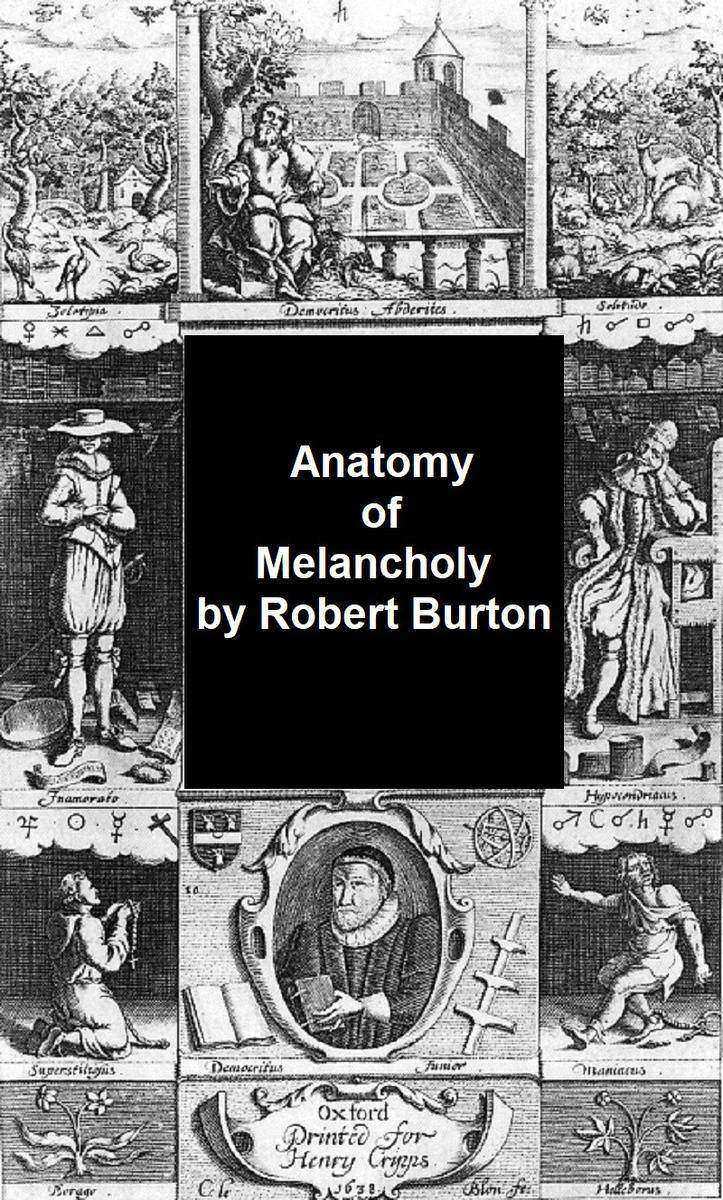
According to Wikipedia: "The Anatomy of Melancholy (Full title: The Anatomy of Melancholy, What it is: With all the Kinds, Causes, Symptomes, Prognostickes, and Several Cures of it. In Three Maine Partitions with their several Sections, Members, and Subsections. Philosophically, Medicinally, Historically, Opened and Cut Up) is a book by Robert Burton, first published in 1621. Burton's book consists mostly of a collection of opinions of a multitude of writers, grouped under quaint and old-fashioned divisions; in a solemn tone Burton endeavoured to prove indisputable facts by weighty quotations. The subjects discussed and determined by Burton ranged from the doctrines of religion to military discipline, from inland navigation to the morality of dancing-schools. On its surface, the book is presented as a medical textbook in which Burton applies his vast and varied learning, in the scholastic manner, to the subject of melancholia (which includes what is now termed clinical depression). Though presented as a medical text, The Anatomy of Melancholy is as much a sui generis work of literature as it is a scientific or philosophical text, and Burton addresses far more than his stated subject. In fact, the Anatomy uses melancholy as the lens through which all human emotion and thought may be scrutinized, and virtually the entire contents of a 17th-century library are marshalled into service of this goal. It is encyclopedic in its range and reference. In his satirical preface to the reader, Burton's persona Democritus Junior explains, "I write of melancholy by being busy to avoid melancholy." This is characteristic of the author's style, which often supersedes the book's strengths as a medical text or historical document as its main source of appeal to admirers. Both satirical and serious in tone, the Anatomy is "vitalized by (Burton's) pervading humour",[3] and Burton's digressive and inclusive style, often verging on a stream of consciousness, consistently informs and animates the text."
Records of a Family of Engineers
¥8.09
Robert Louis Stevenson's account of his ancestors. According to Wikipedia: "Robert Louis (Balfour) Stevenson ( 1850 - 1894), was a Scottish novelist, poet, and travel writer, and a leading representative of Neo-romanticism in English literature. He was the man who "seemed to pick the right word up on the point of his pen, like a man playing spillikins", as G. K. Chesterton put it. He was also greatly admired by many authors, including Jorge Luis Borges, Ernest Hemingway, Rudyard Kipling, Vladimir Nabokov, and J. M. Barrie. Most modernist writers dismissed him, however, because he was popular and did not write within their definition of modernism. It is only recently that critics have begun to look beyond Stevenson's popularity and allow him a place in the canon."

Mastering Rejections In One Sitting
¥8.09
Mastering Rejections In One Sitting
In the South Seas
¥8.09
Classic travelogue/memoir. According to Wikipedia: "Robert Louis (Balfour) Stevenson ( 1850 - 1894), was a Scottish novelist, poet, and travel writer, and a leading representative of Neo-romanticism in English literature. He was the man who "seemed to pick the right word up on the point of his pen, like a man playing spillikins", as G. K. Chesterton put it. He was also greatly admired by many authors, including Jorge Luis Borges, Ernest Hemingway, Rudyard Kipling, Vladimir Nabokov, and J. M. Barrie. Most modernist writers dismissed him, however, because he was popular and did not write within their definition of modernism. It is only recently that critics have begun to look beyond Stevenson's popularity and allow him a place in the canon."
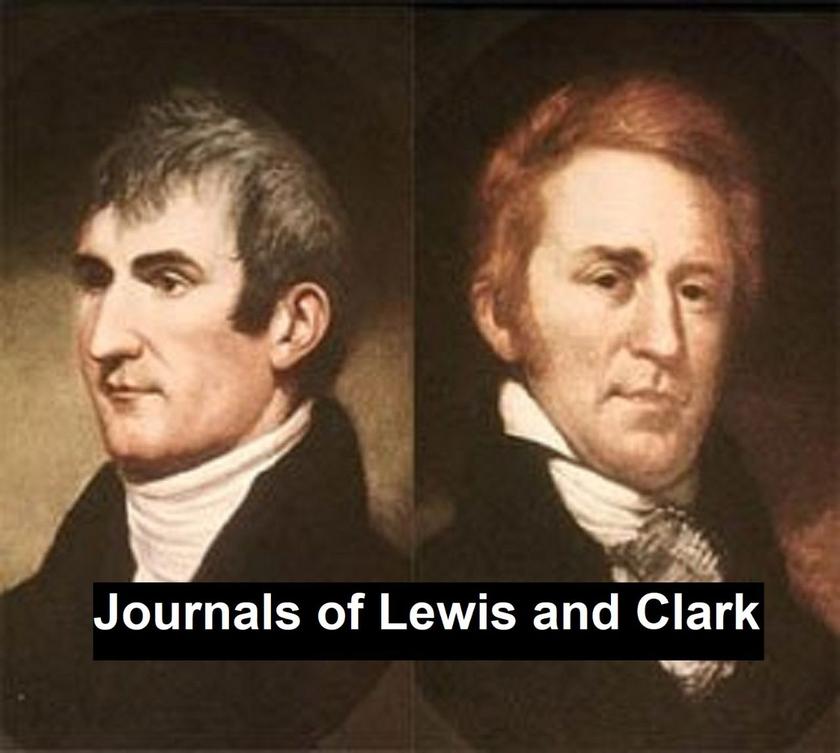
The Journals of Lewis and Clark
¥8.09
This edition retains the original idiosyncratic spelling and punctuation. " "These Journals are from May 14, 1804, the day the expedition left the Mississippi River, to September 26, 1806, a day or two after they arrived back in St. Louis. It includes all possible Journal entries of Lewis and Clark. Most of the "courses and distances" and "celestial observations" have been omitted. The notes and most of the corrections of past editors have been removed." According to Wikipedia: "The Lewis and Clark Expedition (1803–1806), headed by Meriwether Lewis and William Clark, was the first American overland expedition to the Pacific coast and back."
The Memoirs of Victor Hugo
¥8.09
According to Wikipedia: "Victor-Marie Hugo (26 February 1802 – 22 May 1885) was a French poet, playwright, novelist, essayist, visual artist, statesman, human rights activist and exponent of the Romantic movement in France. In France, Hugo's literary fame comes first from his poetry but also rests upon his novels and his dramatic achievements. Among many volumes of poetry, Les Contemplations and La Légende des siècles stand particularly high in critical esteem, and Hugo is sometimes identified as the greatest French poet. Outside France, his best-known works are the novels Les Misérables and Notre-Dame de Paris (known in English also as The Hunchback of Notre Dame). Though a committed conservative royalist when he was young, Hugo grew more liberal as the decades passed; he became a passionate supporter of republicanism, and his work touches upon most of the political and social issues and artistic trends of his time. He is buried in the Panthéon."
What's Wrong with the World
¥8.09
Book-length collection of essays. According to Wikipedia: "Gilbert Keith Chesterton (1874 - 1936) was an influential English writer of the early 20th century. His prolific and diverse output included journalism, philosophy, poetry, biography, Christian apologetics, fantasy and detective fiction. Chesterton has been called the "prince of paradox."[1] He wrote in an off-hand, whimsical prose studded with startling formulations. For example: "Thieves respect property. They merely wish the property to become their property that they may more perfectly respect it."[2] He is one of the few Christian thinkers who are equally admired and quoted by both liberal and conservative Christians, and indeed by many non-Christians. Chesterton's own theological and political views were far too nuanced to fit comfortably under the "liberal" or "conservative" banner."
Washington in Domestic Life, From Original Letters and Manuscripts
¥8.09
Brief biographical essay. The introduction begins: "The manuscript or paper here published was prepared from a collection of original letters from General Washington on matters, for the most part, purely domestic and personal, addressed to Colonel Tobias Lear, his private Secretary for a part of the time he was President; and then, and during periods much longer, his confidential friend. They came into my hands through the voluntary kindness of Mrs. Lear, of the city of Washington, the estimable relict of Colonel Lear, and niece of Mrs. Washington, whose friendship it was my good lot and that of my family to enjoy; as we did that of Colonel Lear while he lived. The latter died in Washington in 1816. "

Romulus
¥8.09
According to Wikipedia: "Romulus and Remus are Rome's twin founders in its traditional foundation myth, although the former is sometimes said to be the sole founder. Their maternal grandfather is Numitor, rightful king of Alba Longa, a descendant of the Trojan prince, Aeneas and father to Rhea Silvia (also known as Ilia). Before their conception, Numitor's brother Amulius deposes his brother, kills his sons and forces Rhea to become a Vestal Virgin, intending to deprive Numitor of lawful heirs and thus secure his own position; but Rhea conceives Romulus and Remus by the god Mars or the demi-god Hercules. When the twins are born, Amulius has them exposed to die but they are saved by a series of miraculous interventions. A she-wolf finds them and suckles them. Then a shepherd and his wife foster them and raise them to manhood as shepherds. The twins prove to be natural leaders, and acquire many followers. When told their true identities, they kill Amulius, restore Numitor to the throne of Alba Longa and decide to found a new city for themselves."


