Is Shakespeare Dead? from My Autobiography
¥8.09
From Chapter 1: "A friend has sent me a new book, from England--The Shakespeare Problem Restated--well restated and closely reasoned; and my fifty years' interest in that matter--asleep for the last three years--is excited once more. It is an interest which was born of Delia Bacon's book--away back in that ancient day--1857, or maybe 1856. About a year later my pilot-master, Bixby, transferred me from his own steamboat to the Pennsylvania, and placed me under the orders and instructions of George Ealer--dead now, these many, many years. I steered for him a good many months--as was the humble duty of the pilot-apprentice: stood a daylight watch and spun the wheel under the severe superintendence and correction of the master. He was a prime chess player and an idolater of Shakespeare. He would play chess with anybody; even with me, and it cost his official dignity something to do that. "
Richard I
¥8.09
According to Wikipedia: "Richard I (8 September 1157 – 6 April 1199) was King of England from 6 July 1189 until his death. He also ruled as Duke of Normandy, Duke of Aquitaine, Duke of Gascony, Lord of Ireland, Lord of Cyprus, Count of Anjou, Count of Maine, Count of Nantes, and Overlord of Brittany at various times during the same period. He was known as C?ur de Lion, or Richard the Lionheart, even before his accession, because of his reputation as a great military leader and warrior.[1] The Saracens called him Melek-Ric or Malek al-Inkitar - King of England. By age 16, Richard was commanding his own army, putting down rebellions in Poitou against his father, King Henry II.[1] Richard was a central Christian commander during the Third Crusade, effectively leading the campaign after the departure of Philip Augustus and scoring considerable victories against his Muslim counterpart, Saladin, but was unable to reconquer Jerusalem. Although only speaking French and spending very little time in England (he lived in his Duchy of Aquitaine, in the southwest of France, preferring to use his kingdom as a source of revenue to support his armies), he was seen as a pious hero by his subjects. He remains one of the very few Kings of England remembered by his epithet, rather than regnal number, and is an enduring, iconic figure in England."
Peter the Great
¥8.09
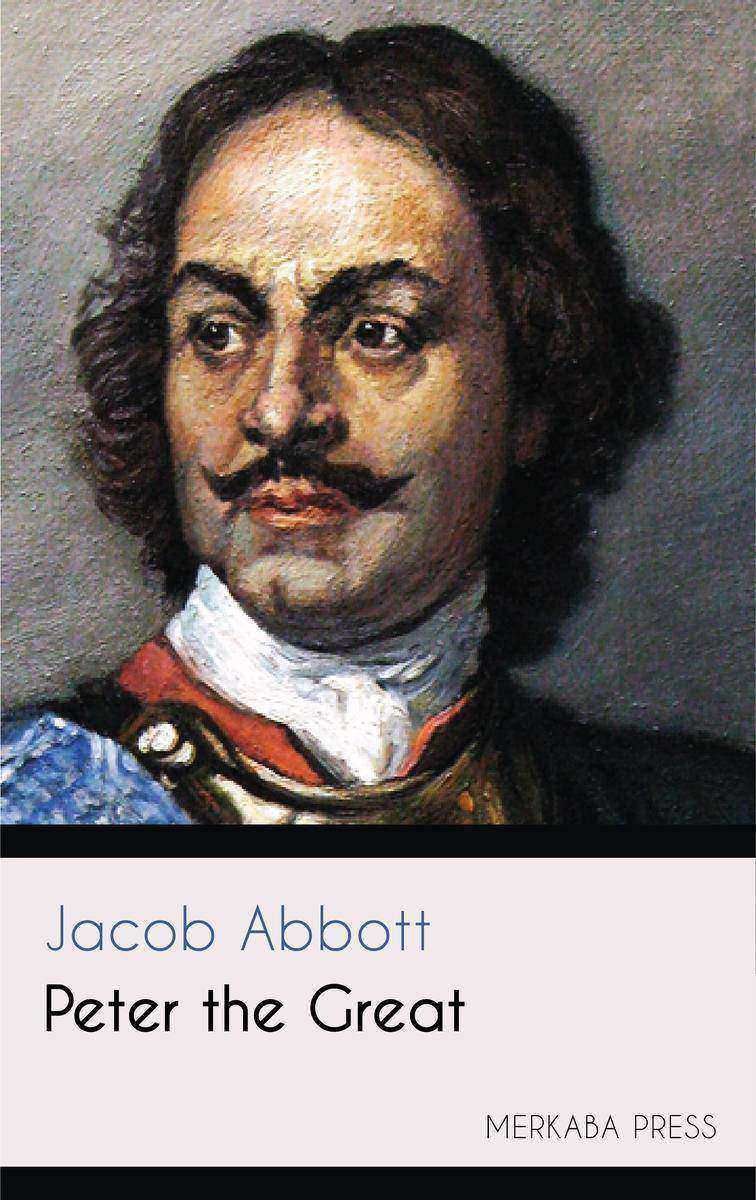
According to Wikipedia: "Peter I the Great or Pyotr Alexeyevich Romanov (9 June [O.S. 30 May] 1672 – 8 February 1725) ruled Russia and later the Russian Empire from 7 May 1682 until his death, jointly ruling before 1696 with his weak and sickly half-brother, Ivan V. He carried out a policy of modernization and expansion that transformed the Tsardom of Russia into a 3-billion acre Russian Empire, a major European power."
Passages from the French and Italian Notebooks of Nathaniel Hawthorne
¥8.09
Journal of his stays in France and Italy, two volumes in one file. According to Wikipedia: "Nathaniel Hawthorne (1804 –1864) was an American novelist and short story writer... Much of Hawthorne's writing centers around New England and many feature moral allegories with a Puritan inspiration. His fiction works are considered part of the Romantic movement and, more specifically, dark romanticism. His themes often center on the inherent evil and sin of humanity and his works often have moral messages and deep psychological complexity. His published works include novels, short stories, and a biography of his friend Franklin Pierce."
Twenty Years at Hull-House, with Autobiographical Notes
¥8.09
According to Wikipedia: "Jane Addams (September 6, 1860 – May 21, 1935) was a founder of the U.S. Settlement House movement, and one of the first American women to be awarded the Nobel Peace Prize."
Autobiography of John Stuard Mill
¥8.09
According to Wikipedia: "John Stuart Mill (20 May 1806 – 8 May 1873), English philosopher, political theorist, political economist, civil servant and Member of Parliament, was an influential British Classical liberal thinker of the 19th century whose works on liberty justified freedom of the individual in opposition to unlimited state control. He was a proponent of utilitarianism, an ethical theory developed by Jeremy Bentham, although his conception of it was very different from Bentham's. Hoping to remedy the problems found in an inductive approach to science, such as confirmation bias, he clearly set forth the premises of falsification as the key component in the scientific method."
Plutarch's Morals, Ethical Essays
¥8.09
From the Preface: "Plutarch, who was born at Chaeronea in Boeotia, probably about A.D. 50, and was a contemporary of Tacitus and Pliny, has written two works still extant, the well-known _Lives_, and the less-known _Moralia_. The _Lives_ have often been translated, and have always been a popular work. Great indeed was their power at the period of the French Revolution. The _Moralia_, on the other hand, consisting of various Essays on various subjects (only twenty-six of which are directly ethical, though they have given their name to the _Moralia_), are declared by Mr. Paley "to be practically almost unknown to most persons in Britain, even to those who call themselves scholars." According to Wikipedia: "Lucius Mestrius Plutarchus (c. AD 46 - 120 — commonly known in English as Plutarch — was a Roman historian (of Greek ethnicity), biographer, essayist, and Middle Platonist. Plutarch was born to a prominent family in Chaeronea, Boeotia, a town about twenty miles east of Delphi. His known works consist of the Parallel Lives and the Moralia."
Washington and His Colleagues, A Chronicle of the Rise and Fall of Federalism
¥8.09
According to Wikipedia: "Washington is seen as a symbol of the United States and republicanism in practice. His devotion to civic virtue made him an exemplary figure among early American politicians. Washington died in 1799, and in his funeral oration, Henry Lee said that of all Americans, he was "first in war, first in peace, and first in the hearts of his countrymen." Washington has been consistently ranked by scholars as one of the greatest U.S. Presidents."
Up From Slavery
¥8.09
According to Wikipedia: "Booker Taliaferro Washington (April 5, 1856 – November 14, 1915) was an American educator, orator, author and leader of the African-American community. He was freed from slavery as a child, and after working at several menial jobs in West Virginia, earned his way through an education at Hampton Institute and Wayland Seminary. Upon recommendation of Hampton founder Sam Armstrong, as a young man, he was appointed as the first leader of the new Tuskegee Institute, then a teachers' college for blacks."
Incidents in the Life of a Slave Girl, Seven Years Concealed
¥8.09
Autobiography of a slave girl, first published in 1861. According to Wikipedia: "Harriet Ann Jacobs (February 11, 1813 – March 7, 1897) was an American writer, who escaped from slavery and became an abolitionist speaker and reformer. Jacobs' single work, Incidents in the Life of a Slave Girl, published in 1861 under the pseudonym Linda Brent, was one of the first autobiographical narratives about the struggle for freedom by female slaves and an account of the sexual harassment and abuse they endured."
A Book of Sibyls
¥8.09
Biographical sketches of Mrs. Barbauld, Miss Edgeworth, Mrs. Opie, and Jane Austen, first published in 1883. According to Wikipedia: " Anne Isabella, Lady Ritchie, née Thackeray (9 June 1837 – 26 February 1919) was an English writer. She was the eldest daughter of William Makepeace Thackeray.
Israel Potter: His Fifty Years of Exile
¥8.09
Biography of a soldier in the American Revolution. Melville explains, "Biography, in its purer form, confined to the ended lives of the true and brave, may be held the fairest meed of human virtue--one given and received in entire disinterestedness--since neither can the biographer hope for acknowledgment from the subject, nor the subject at all avail himself of the biographical distinction conferred. Israel Potter well merits the present tribute--a private of Bunker Hill, who for his faithful services was years ago promoted to a still deeper privacy under the ground, with a posthumous pension, in default of any during life, annually paid him by the spring in ever-new mosses and sward." According to Wikipedia: "Herman Melville (August 1, 1819 – September 28, 1891) was an American novelist, short story writer, essayist and poet. His first two books gained much attention, though they were not bestsellers, and his popularity declined precipitously after only a few years. By the time of his death he had been almost completely forgotten, but his longest novel, Moby-Dick — largely considered a failure during his lifetime, and most responsible for Melville's fall from favor with the reading public — was recognized in the 20th century as one of the chief literary masterpieces of both American and world literature."
Essays of Montaigne
¥8.09
The complete essays, translated by Charles Cotton (1630-1687) and edited by William Hazlitt. From the Preface: "This great French writer deserves to be regarded as a classic, not only in the land of his birth, but in all countries and in all literatures. His Essays, which are at once the most celebrated and the most permanent of his productions, form a magazine out of which such minds as those of Bacon and Shakespeare did not disdain to help themselves; and, indeed, as Hallam observes, the Frenchman's literary importance largely results from the share which his mind had in influencing other minds, coeval and subsequent."
The Letters of Henry James
¥8.09
Dodo Collections brings you another classic from Henry James, ‘The Letters of Henry James’. ? The Complete Letters of Henry James fills a crucial gap in modern literary studies by presenting in a scholarly edition the complete letters of one of the great novelists and letter writers of the English language. Comprising more than ten thousand letters reflecting on a remarkably wide range of topics—from James’s own life and literary projects to broader questions on art, literature, and criticism. ? Henry James, OM (15 April 1843 – 28 February 1916) was an American writer who spent most of his writing career in Britain. He is regarded as one of the key figures of 19th-century literary realism. He was the son of Henry James, Sr. and the brother of philosopher and psychologist William James and diarist Alice James. ? He is best known for a number of novels showing Americans encountering Europe and Europeans. His method of writing from a character's point of view allowed him to explore issues related to consciousness and perception, and his style in later works has been compared to impressionist painting. His imaginative use of point of view, interior monologue and unreliable narrators brought a new depth to narrative fiction. ? James contributed significantly to literary criticism, particularly in his insistence that writers be allowed the greatest possible freedom in presenting their view of the world. James claimed that a text must first and foremost be realistic and contain a representation of life that is recognizable to its readers. Good novels, to James, show life in action and are, most importantly, interesting. In addition to his voluminous works of fiction he published articles and books of travel, biography, autobiography, and criticism, and wrote plays. James alternated between America and Europe for the first twenty years of his life; eventually he settled in England, becoming a British subject in 1915, one year before his death. James was nominated for the Nobel Prize in Literature in 1911, 1912, and 1916.
Romulus
¥8.09
According to Wikipedia: "Romulus and Remus are Rome's twin founders in its traditional foundation myth, although the former is sometimes said to be the sole founder. Their maternal grandfather is Numitor, rightful king of Alba Longa, a descendant of the Trojan prince, Aeneas and father to Rhea Silvia (also known as Ilia). Before their conception, Numitor's brother Amulius deposes his brother, kills his sons and forces Rhea to become a Vestal Virgin, intending to deprive Numitor of lawful heirs and thus secure his own position; but Rhea conceives Romulus and Remus by the god Mars or the demi-god Hercules. When the twins are born, Amulius has them exposed to die but they are saved by a series of miraculous interventions. A she-wolf finds them and suckles them. Then a shepherd and his wife foster them and raise them to manhood as shepherds. The twins prove to be natural leaders, and acquire many followers. When told their true identities, they kill Amulius, restore Numitor to the throne of Alba Longa and decide to found a new city for themselves."
Richard III
¥8.09
According to Wikipedia: "Richard III (2 October 1452 – 22 August 1485) was King of England for two years, from 1483 until his death in 1485 during the Battle of Bosworth Field. He was the last king of the House of York and the last of the Plantagenet dynasty. His defeat at the Battle of Bosworth Field was the decisive battle of the Wars of the Roses and is sometimes regarded as the end of the Middle Ages in England. He is the subject of an eponymous historical play by William Shakespeare. When his brother Edward IV died in April 1483, Richard was named Lord protector of the realm for Edward's son and successor, the 12-year-old King Edward V... There were two major rebellions against Richard. The first, in October 1483, was led by staunch opponents of Edward IV and most notably by Richard's former ally, Henry Stafford, 2nd Duke of Buckingham. The revolt collapsed and Buckingham was executed at Salisbury near the Bull's Head Inn. In August 1485 there was another rebellion against Richard, headed by Henry Tudor, 2nd Earl of Richmond (later King Henry VII) and his uncle Jasper. The rebels landed troops, composed mainly of mercenaries, and Richard fell in the Battle of Bosworth Field, the last English king to die in battle (and the only king to die in battle on English soil since Harold II, at the Battle of Hastings in 1066)."
Letters of Pliny
¥8.09
Classic collection of letters. According to Wikipedia: "Gaius Plinius Caecilius Secundus, born Gaius Caecilius or Gaius Caecilius Cilo (61 AD – ca. 112 AD), better known as Pliny the Younger, was a lawyer, author, and magistrate of Ancient Rome. Pliny's uncle, Pliny the Elder, helped raise and educated him. They were both witnesses to the eruption of Vesuvius on 24 August 79 AD. Pliny is known for his hundreds of surviving letters, which are an invaluable historical source for the time period. Many are addressed to reigning emperors or to notables such as the historian, Tacitus. Pliny himself was a notable figure, serving as an imperial magistrate under Trajan (reigned AD 98–117)."
A Miscellany of Men
¥8.09
Classic collection of essays, including: THE SUFFRAGIST, THE POET AND THE CHEESE, THE THING, THE MAN WHO THINKS BACKWARDS, THE NAMELESS MAN, THE GARDENER AND THE GUINEA, THE VOTER AND THE TWO VOICES, THE MAD OFFICIAL, THE ENCHANTED MAN, THE SUN WORSHIPPER, THE WRONG INCENDIARY, THE FREE MAN, THE HYPOTHETICAL HOUSEHOLDER, THE PRIEST OF SPRING, THE REAL JOURNALIST, THE SENTIMENTAL SCOT, THE SECTARIAN OF SOCIETY, THE FOOL, THE CONSCRIPT AND THE CRISIS, THE MISER AND HIS FRIENDS, THE MYSTAGOGUE, THE RED REACTIONARY, THE SEPARATIST AND SACRED THINGS, THE MUMMER, THE ARISTOCRATIC 'ARRY, THE NEW THEOLOGIAN, THE ROMANTIC IN THE RAIN, THE FALSE PHOTOGRAPHER, THE SULTAN, THE ARCHITECT OF SPEARS, THE MAN ON TOP, THE OTHER KIND OF MAN, THE MEDIAEVAL VILLAIN, THE DIVINE DETECTIVE, THE ELF OF JAPAN, THE CHARTERED LIBERTINE, THE CONTENTED MAN, and THE ANGRY AUTHOR: HIS FAREWELL . According to Wikipedia: "Gilbert Keith Chesterton (29 May 1874 – 14 June 1936) was an influential English writer of the early 20th century. His prolific and diverse output included journalism, philosophy, poetry, biography, Christian apologetics, fantasy and detective fiction. Chesterton has been called the "prince of paradox." Time magazine, in a review of a biography of Chesterton, observed of his writing style: "Whenever possible Chesterton made his points with popular sayings, proverbs, allegories—first carefully turning them inside out."
Orthodoxy
¥8.09
Classic collection of essays. The Preface begins: " This book is meant to be a companion to "Heretics," and to put the positive side in addition to the negative. Many critics complained of the book called "Heretics" because it merely criticised current philosophies without offering any alternative philosophy. This book is an attempt to answer the challenge. It is unavoidably affirmative and therefore unavoidably autobiographical. The writer has been driven back upon somewhat the same difficulty as that which beset Newman in writing his Apologia; he has been forced to be egotistical only in order to be sincere. While everything else may be different the motive in both cases is the same. It is the purpose of the writer to attempt an explanation, not of whether the Christian Faith can be believed, but of how he personally has come to believe it. The book is therefore arranged upon the positive principle of a riddle and its answer." According to Wikipedia: "Gilbert Keith Chesterton (29 May 1874 – 14 June 1936) was an influential English writer of the early 20th century. His prolific and diverse output included journalism, philosophy, poetry, biography, Christian apologetics, fantasy and detective fiction. Chesterton has been called the "prince of paradox." Time magazine, in a review of a biography of Chesterton, observed of his writing style: "Whenever possible Chesterton made his points with popular sayings, proverbs, allegories—first carefully turning them inside out."
Reviews
¥8.09
Large book-length collection of According to Wikipedia: "Oscar Fingal O'Flahertie Wills Wilde (1854 - 1900) was an Irish playwright, novelist, poet, and author of short stories. Known for his barbed wit, he was one of the most successful playwrights of late Victorian London, and one of the greatest celebrities of his day. As the result of a famous trial, he suffered a dramatic downfall and was imprisoned for two years of hard labour after being convicted of the offence of 'gross indecency.'"
Boswell's Life of Johnson
¥8.09
The edition of 1886, edited by George Brikbek Hill. This file also includes Boswell's Journal of a Tour to the Hebrides and Johnson's Diary of a Journey into North Wales. According to Wikipedia: "James Boswell, 9th Laird of Auchinleck (1740 - 1795) was a lawyer, diarist, and author born in Edinburgh, Scotland; he is best known for his biography of Samuel Johnson. He was the eldest son of a judge, Alexander Boswell, 8th Laird of Auchinleck and his wife Euphemia Erskine, Lady Auchinleck; he inherited his father’s estate Auchinleck in Ayrshire. Boswell's mother was a strict Calvinist, and he felt that his father was cold to him. His name has passed into the English language as a term (Boswell, Boswellian, Boswellism) for a constant companion and observer. Boswell is also known for the detailed and frank journals that he wrote for long periods of his life, which remained undiscovered until the 1920s. These included voluminous notes on the grand tour of Europe that he took as a young nobleman and, subsequently, of his tour of Scotland with Johnson. His journals also record meetings and conversations with eminent individuals belonging to The Club, including Lord Monboddo, David Garrick, Edmund Burke, Reynolds and Oliver Goldsmith. His written works focus chiefly on others, but he was admitted as a good companion and accomplished conversationalist in his own right."

购物车
个人中心