


 购物车
 个人中心

Biological System: A Tutorial Study Guide
¥32.62
Biological System: A Tutorial Study Guide
Pharmacokinetics: A Tutorial Study Guide
¥32.62
Pharmacokinetics: A Tutorial Study Guide

Clinical Updates in the Management of Severe Asthma
¥0.01
Clinical Updates in the Management of Severe Asthma
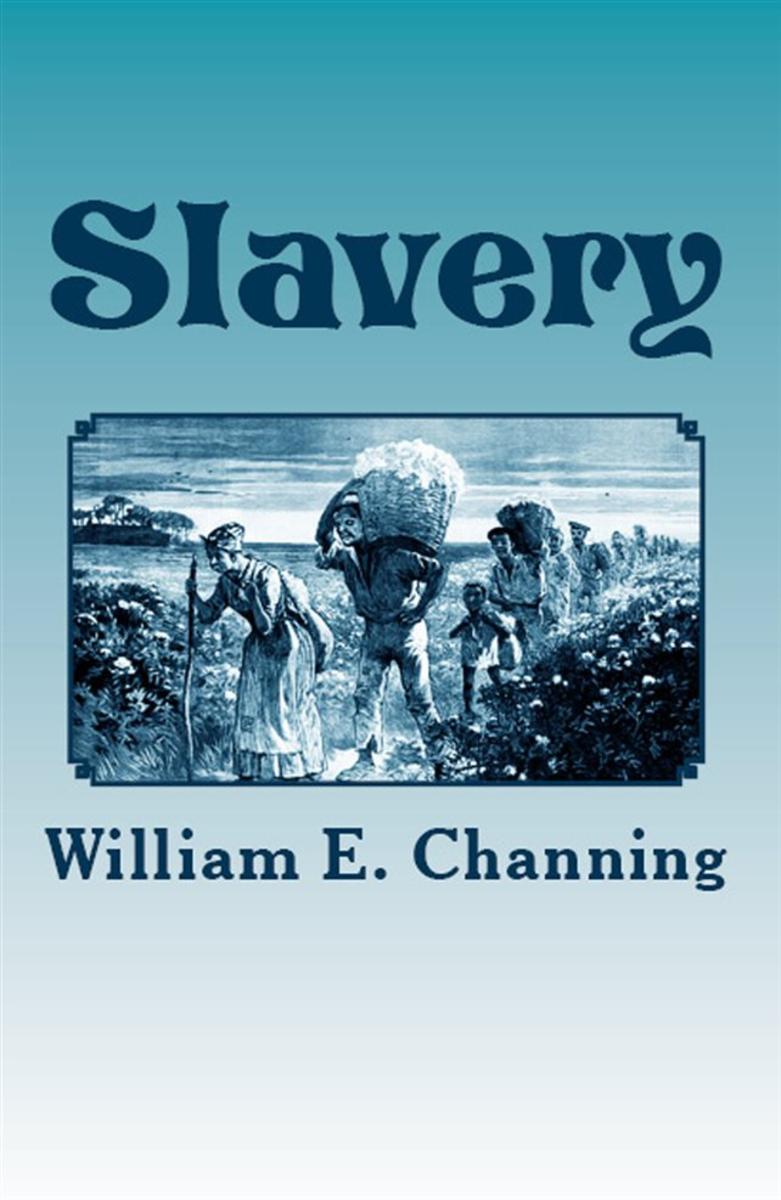
Slavery
¥27.88
The first question to be proposed by a rational being is, not what is profitable, but what is Right. Duty must be primary, prominent, most conspicuous, among the objects of human thought and pursuit. If we cast it down from its supremacy, if we inquire first for our interests and then for our duties, we shall certainly err. We can never see the Right clearly and fully, but by making it our first concern. No judgment can be just or wise, but that which is built on the conviction of the paramount worth and importance of Duty. This is the fundamental truth, the supreme law of reason; and the mind, which does not start from this in its inquiries into human affairs, is doomed to great, perhaps fatal error. The Right is the supreme good, and includes all oth-er goods. In seeking and adhering to it, we secure our true and only happiness. All prosperity, not founded on it, is built on sand. If human affairs are controlled, as we believe, by Almighty Rectitude and Impartial Goodness, then to hope for happiness from wrong do-ing is as insane as to seek health and prosperity by rebelling against the laws of nature, by sowing our seed on the ocean, or making poison our common food. There is but one unfailing good; and that is, fidelity to the Everlasting Law written on the heart, and rewritten and republished in God's Word. Slavery ought to be discussed. We ought to think, feel, speak, and write about it. But whatever we do in regard to it should be done with a deep feeling of re-sponsibility, and so done as not to put in jeopardy the peace of the slave-holding States. On this point public opinion has not been and cannot be too strongly pro-nounced. Slavery, indeed, from its very nature, must be a ground of alarm wherever it exists. Slavery and security can by no device be joined together. But we may not, must not, by rashness and passion increase the peril. To instigate the slave to insurrection is a crime for which no rebuke and no punishment can be too severe. This would be to involve slave and master in common ruin. It is not enough to say, that the Constitution is violated by any action endangering the slave-holding portion of our country. A higher law than the Constitution forbids this unholy interference. Were our national union dissolved, we ought to reprobate, as sternly as we now do, the slightest manifestation of a disposition to stir up a servile war. Still more, were the free and the slave-holding States not only separated, but engaged in the fiercest hostilities, the former would deserve the abhorrence of the world, and the indignation of Heaven, were they to resort to insurrection and massacre as means of victory. Better were it for us to bare our own breasts to the knife of the slave, than to arm him with it against his master. ? ABOUT AUTHOR William Ellery Channing (1780 – 1842) was the foremost Unitarian preacher in the United States in the early nineteenth century and along with Andrews Norton, (1786-1853), one of Unitarianism's leading theologians. He was known for his articulate and impassioned sermons and public speeches, and as a prominent thinker in the liberal theology of the day. Channing's religion and thought were among the chief influences on the New England Transcendentalists, though he never countenanced their views, which he saw as extreme. The beliefs he espoused, especially within his "Baltimore Sermon" of May 5, 1819, at the ordination of a future famous theologian and educator in his own right, Jared Sparks, (1789-1866), as the first minister (1819-1823) of the newly organized (1817) "First Independent Church of Baltimore" (later the "First Unitarian Church of Baltimore (Unitarian and Universalist)"). Here he espoused his principles and tenets of the developing philosophy and theology of "Unitarianism" resulted in the organization later in 1825 of the first Unitarian denomination in America (American Unitarian Association) and the later developments and mergers between Unitarians and Universalists resulting finally in the Unitarian Universalist Association of America in 1961. In later years Channing addressed the topic of slavery, although he was never an ardent abolitionist. Channing wrote a book in 1835, entitled, "SLAVERY" James Munroe and Company, publisher. Channing, however, has been described as a "romantic racist" in "Black Abolitionism: A Quest for Human Dignity" by Beverly Eileen Mitchell (133–38). He held a common American belief about the inferiority of African people and slaves and held a belief that once freed, Africans would need overseers. The overseers (largely former slave masters) were necessary because the slaves would lapse into laziness. Furthermore, he did not join the abolitionist movement because he did not agree with their way of conducting themselves, and he felt that voluntary associations limited a person's autonomy. Therefore, he often chose to remain separate from organizations and reform movements. This middle position characterized his attitude about
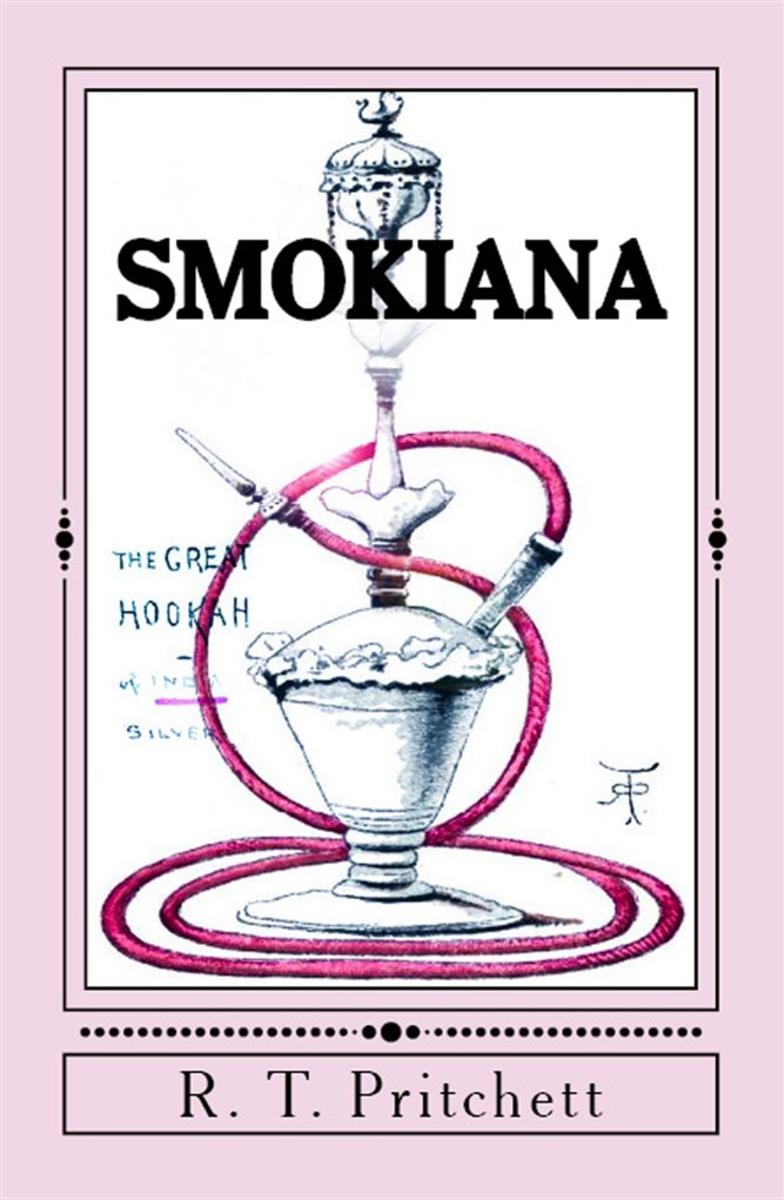
Smokiana
¥27.88
Although Smoking is generally associated with Tobacco only, yet there are other plants whose leaves are used for similar purposes & these will be referred to as we come to the different means of using them. Our first Woodcut of Tobacco is from STELLA—ROMA 1669. a work of great value as giving Pipes & the Hookah of Persia as well as Plants but we will start with some of the growths now most generally known of the “NICOTIANA” Family which is very widely spread over the face of the Earth & has of late made great strides in Borneo & Sumatra. We are greatly indebted to old German woodcuts for solid infor-mation anent details of Habits & customs of the 16th. Century which our own people have not handed down to us, take for instance “Hans Sachs.” Book of Trades. Had smoking been in vogue in his day he would have given it—or rather Jost Ammon would have illustrated it so here in 1616 A.D. we find a Sturdy German, blowing a tremendous cloud. It is taken from an old work now in Frankfurt—viz

A Tangled Tale: "The Mathematical Recreations of Lewis Carroll for Childs"
¥27.80
TO MY PUPIL.?Beloved pupil! Tamed by thee,?Addish-, Subtrac-, Multiplica-tion,?Division, Fractions, Rule of Three,?Attest thy deft manipulation!??Then onward! Let the voice of Fame?From Age to Age repeat thy story,?Till thou hast won thyself a name?Exceeding even Euclid's glory!??This Tale originally appeared as a serial in The Monthly Packet, beginning in April, 1880. The writer's intention was to embody in each Knot (like the medicine so dexterously, but ineffectually, con-cealed in the jam of our early childhood) one or more mathematical questions "in Arithmetic, Algebra, or Geometry, as the case might be" for the amusement, and possible edification, of the fair readers of that Magazine.?LEWIS CARROLL???"Goblin, lead them up and down."???The ruddy glow of sunset was already fading into the sombre shadows of night, when two travellers might have been observed swiftly—at a pace of six miles in the hour—descending the rugged side of a mountain; the younger bounding from crag to crag with the agility of a fawn, while his companion, whose aged limbs seemed ill at ease in the heavy chain armour habitually worn by tourists in that district, toiled on painfully at his side.??As is always the case under such circumstances, the younger knight was the first to break the silence.?"A goodly pace, I trow!" he exclaimed. "We sped not thus in the ascent!"??"Goodly, indeed!" the other echoed with a groan. "We clomb it but at three miles in the hour."?"And on the dead level our pace is——?" the younger suggested; for he was weak in statistics, and left all such details to his aged companion.?"Four miles in the hour," the other wearily replied. "Not an ounce more," he added, with that love of metaphor so common in old age, "and not a farthing less!"??"'Twas three hours past high noon when we left our hostelry," the young man said, musingly. "We shall scarce be back by supper-time. Perchance mine host will roundly deny us all food!"?"He will chide our tardy return," was the grave reply, "and such a rebuke will be meet."?"A brave conceit!" cried the other, with a merry laugh. "And should we bid him bring us yet another course, I trow his answer will be tart!"
The Way To Geometry
¥27.80
Plato saith “tov peov akei gewmetreiv”, That "God doth alwayes worke by Geometry", that is, as the wiseman doth interprete it, Sap. XI. 21. Omnia in mensura & numero & pondere disponere. Dispose all things by measure, and number, and weight: Or, as the learned Plutarch speaketh; He adorneth and layeth out all the parts of the world according to ra-te, proportion, and similitude. ??Now who, I pray you, understandeth what these termes meane, but he which hath some meane skill in Geometry? Therefore none but such an one, may be able to declare and teach these things unto ot-hers.??How many things are there in holy Scripture which may not well be understood without some meane skill in Geometry? The Fabricke and bignesse of Noah's Arke: The Sciagraphy of the Temple set out by Ezechiel, Who may understand, but he that is skilfull in these Arts? I speake not of many and sundry words both in the New and Old Testaments, whose genuine and proper signification is merely Geometricall: And cannot well be conceived but of a Geometer.??To the Reader:??Friendly Reader, that which is here set forth to thy view, is a Translation out of Ramus. ??Formerly indeed Translated by one Mr. Thomas Hood, but never before set forth with the Demonst-rations and Diagrammes, which being cut before the Authors death, and the Worke it selfe finished, the Coppie I having in mine hands, never had thought for the promulgation of it, but that it should have died with its Author, considering no small prejudice usually attends the printing of dead mens Workes, and wee see the times, the world is now all eare and tongue, the most given with the Athenians, to little else than to heare and tell newes: ??And if Apelles that skilfull Artist alwayes found so-mewhat to be amended in those Pictures which he had most curiously drawne; surely much in this Worke might have beene amended if the Authour had lived to refine it..
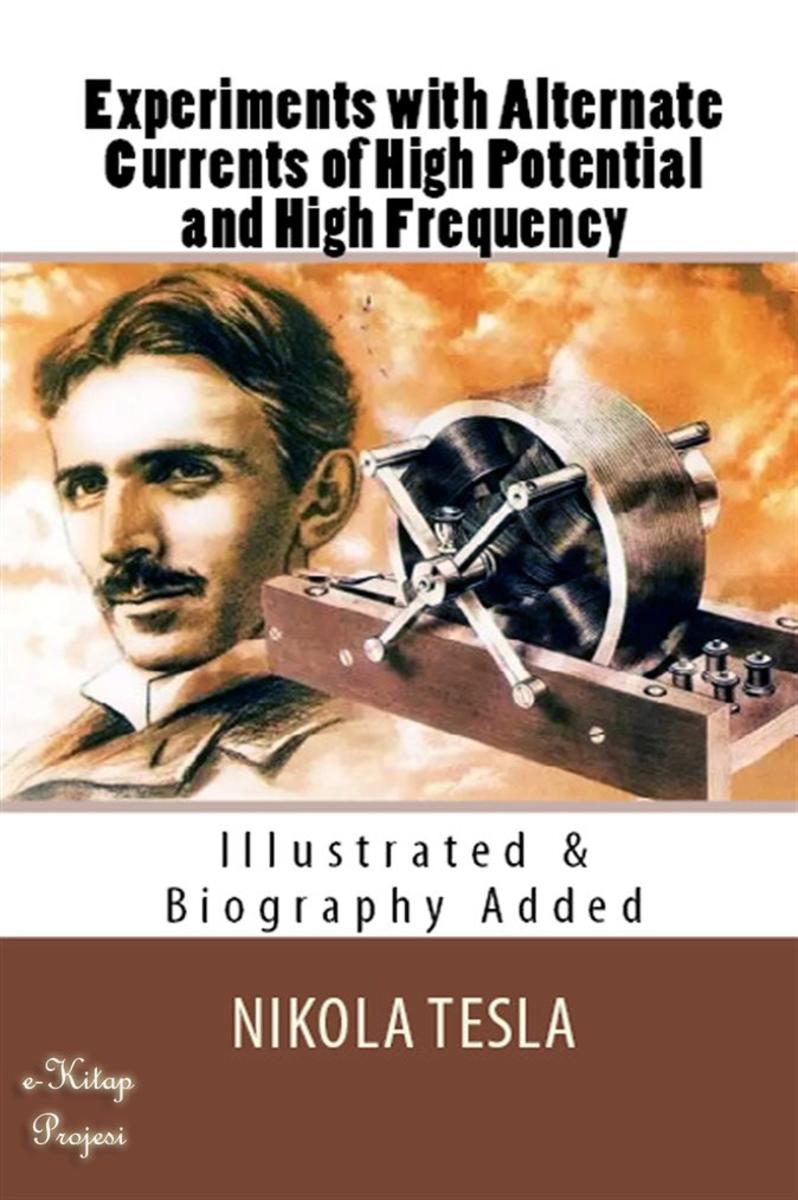
Experiments with Alternate Currents of High Potential and High Frequency
¥23.14
It was in this interesting border region, and from among these valiant Eastern folk, that Nikola Tesla was born in the year 1857, and the fact that he, today, finds himself in America and one of our foremost electricians, is striking evidence of the extraordinary attractiveness alike of electrical pursuits and of the country where electricity enjoys its widest application. Mr. Tesla's native place was Smiljan, Lika, where his father was an eloquent clergyman of the Greek Church, in which, by the way, his family is still prominently represented. His mother enjoyed great fame throughout the countryside for her skill and originality in needlework, and doubtless transmitted her ingenuity to Nikola; though it naturally took another and more masculine direction. The boy was early put to his books, and upon his father's removal to Gospic he spent four years in the public school, and later, three years in the Real School, as it is called. His escapades were such as most quick witted boys go through, although he varied the programme on one occasion by getting imprisoned in a remote mountain chapel rarely visited for service; and on another occasion by falling headlong into a huge kettle of boiling milk, just drawn from the paternal herds. A third curious episode was that connected with his efforts to fly when, attempting to navigate the air with the aid of an old umbrella, he had, as might be expected, a very bad fall, and was laid up for six weeks.. ABOUT AUTHOR: Nikola Tesla (1856 –1943) was a Serbian American inventor, electrical engineer, mechanical engineer, physicist, and futurist best known for his contributions to the design of the modern alternating current (AC) electricity supply system. Tesla gained experience in telephony and electrical engineering before emigrating to the United States in 1884 to work for Thomas Edison in New York City. He soon struck out on his own with financial backers, setting up laboratories and companies to develop a range of electrical devices. His patented AC induction motor and transformer were licensed by George Westinghouse, who also hired Tesla for a short time as a consultant. His work in the formative years of electric power development was involved in a corporate alternating current/direct current "War of Currents" as well as various patent battles. Tesla went on to pursue his ideas of wireless lighting and electricity distribution in his high-voltage, high-frequency power experiments in New York and Colorado Springs, and made early (1893) pronouncements on the possibility of wireless communication with his devices. He tried to put these ideas to practical use in an ill-fated attempt at intercontinental wireless transmission, his unfinished Wardenclyffe Tower project. In his lab he also conducted a range of experiments with mechanical oscillators/generators, electrical discharge tubes, and early X-ray imaging. He also built a wireless controlled boat, one of the first ever exhibited. Tesla was renowned for his achievements and showmanship, eventually earning him a reputation in popular culture as an archetypal "mad scientist". His patents earned him a considerable amount of money, much of which was used to finance his own projects with varying degrees of success. He lived most of his life in a series of New York hotels, through his retirement. Tesla died on 7 January 1943. His work fell into relative obscurity after his death, but in 1960 the General Conference on Weights and Measures named the SI unit of magnetic flux density the tesla in his honor. There has been a resurgence in popular interest in Tesla since the 1990s.
El origen de las especies
¥8.82
El origen de las especies (The origin of species, en inglés) o más exactamente El origen de las especies mediante la selección natural o la conservación de las razas favorecidas en la lucha por la vida es un libro escrito por Charles Darwin (1809 -1882), publicado el 24 de noviembre de 1859 (John Murrap, Londres); agotó los 1.250 ejemplares impresos en el primer día. En él, expuso por primera vez sus ideas sobre la selección natural y la teoría de la evolución. Esta obra es un trabajo fundamental dentro de la historia de la ciencia y la biología. En él, Darwin argumenta largamente su teoría sobre cómo los organismos evolucionan gradualmente por medio de la selección natural, presentando evidencias de su teoría acumuladas en su viaje en el HMS Beagle en los a?os 1831-1836. Su teoría se oponía ampliamente a las teorías vigentes en su época, creacionismo y catastrofismo. El libro puede ser leído por no especialistas. Aunque las ideas presentadas constituyen la base de la biología moderna continúan siendo controvertidas para ciertos grupos religiosos quienes se apoyan en una interpretación literal de textos religiosos a favor de explicaciones creacionistas.

Memoirs of Sherlock Holmes
¥40.79
Original Sherlock Holmes stories written by Sir Arthur Conan Doyle which brought him international fame as one of the greatest crime fiction writers. Conan Doyle wrote several volumes of stories featuring detective Holmes and Dr. Watson but, in 1893, hoping to concentrate on more serious writing, he attempted to kill off Holmes. This attempt resulted in a public outcry and later made him resurrect Holmes. This edition features some of the most popular original Sherlock Holmes stories including: Silver Blaze, The Yellow Face, The Stock-Broker's Clerk, The “Gloria Scott”, The Musgrave Ritual, The Reigate Puzzle, The Crooked Man, The Resident Patient, The Greek Interpreter, The Naval Treaty, The Final Problem.

Bedpans to Boardrooms
¥21.34
Bedpans to Boardrooms

Tools and Function Lists: Engineering Tools Manual
¥20.44
Tools and Function Lists: Engineering Tools Manual

Blockchain Blueprint
¥24.44
Blockchain Blueprint
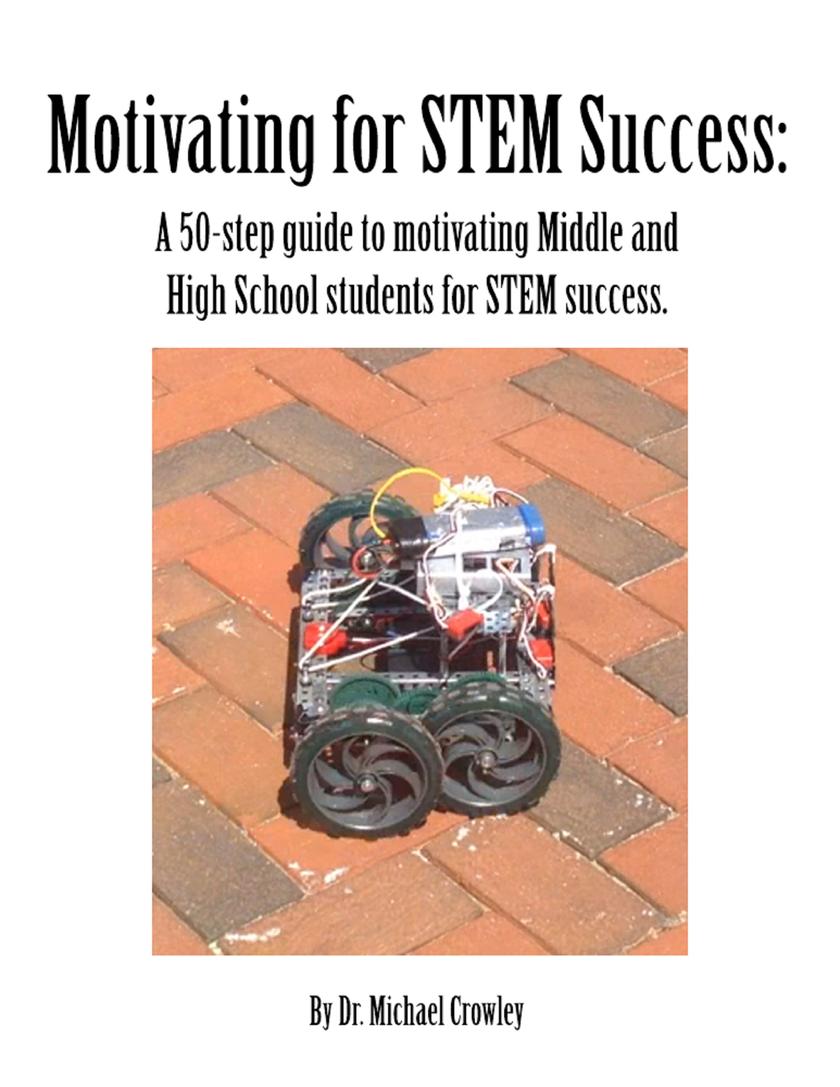
Motivating for STEM Success
¥81.67
Motivating for STEM Success
The Astronomy of the Bible
¥24.44
The Astronomy of the Bible
Astronomy for Amateurs
¥24.44
Astronomy for Amateurs
Schizophrenia: A Tutorial Study Guide
¥32.62
Schizophrenia: A Tutorial Study Guide
Neuropsychopharmacology: An Introduction: A Tutorial Study Guide
¥32.62
Neuropsychopharmacology: An Introduction: A Tutorial Study Guide
Pharmacology: An Introduction: A Tutorial Study Guide
¥32.62
Pharmacology: An Introduction: A Tutorial Study Guide
Cytoplasmic Release of Neurotransmitters: A Tutorial Study Guide
¥32.62
Cytoplasmic Release of Neurotransmitters: A Tutorial Study Guide
Origin of Species: A Tutorial Study Guide
¥32.62
Origin of Species: A Tutorial Study Guide


