


 购物车
购物车 个人中心
个人中心

Kingpin - avagy hogyan vette át az uralmat egy hacker a milliárddolláros cyberal
¥57.14
Основные принципы лечебного питания и советы по подбору продуктов Рецепты вкусных блюд, эффективных в борьбе с болезнями Очень часто мы полагаемся на таблетки и лекарства, хотя действенные и полезные средства от недугов всегда под рукой! Рецепты блюд, приведенные в книге, позволят вам отказаться от большинства медикаментов. Блюда содержат множество целебных веществ и помогут не только поддержать здоровье, но и излечить подагру и диабет, болезни сердца и сосудов, суставов и позвоночника, печени, почек, щитовидной и поджелудочной железы. Вы сможете составить индивидуальное меню здорового питания. Здесь представлены рецепты супов, блюд из мяса, рыбы, грибов, овощей, круп, молочных продуктов и т. д. Используются только доступные ингредиенты. Готовьте с нашей книгой – и избавляйтесь от болезней! Osnovnye principy lechebnogo pitanija i sovety po podboru produktov Recepty vkusnyh bljud, jeffektivnyh v bor'be s boleznjami Ochen' chasto my polagaemsja na tabletki i lekarstva, hotja dejstvennye i poleznye sredstva ot nedugov vsegda pod rukoj! Recepty bljud, privedennye v knige, pozvoljat vam otkazat'sja ot bol'shinstva medikamentov. Bljuda soderzhat mnozhestvo celebnyh veshhestv i pomogut ne tol'ko podderzhat' zdorov'e, no i izlechit' podagru i diabet, bolezni serdca i sosudov, sustavov i pozvonochnika, pecheni, pochek, shhitovidnoj i podzheludochnoj zhelezy. Vy smozhete sostavit' individual'noe menju zdorovogo pitanija. Zdes' predstavleny recepty supov, bljud iz mjasa, ryby, gribov, ovoshhej, krup, molochnyh produktov i t. d. Ispol'zujutsja tol'ko dostupnye ingredienty. Gotov'te s nashej knigoj – i izbavljajtes' ot boleznej!

Az ?t tornacsuka a Pannon Csillagdában
¥13.16
Книга расскажет о причинах возникновения таких серьезных хронических недугов как радикулит и ревматизм, их формах и соответствующих народных методах и рецептах лечения, проверенных многими поколениями. И сейчас не утратили свою эффективность, став незаменимыми помощниками официальной медикаментозной медицины, оздоровительные банные процедуры, минеральные воды, отвары и настои лекарственных трав для внутреннего и наружного применения, разнообразные массажи и комплексы лечебных упражнений, рецепты лечения эфирными маслами, продуктами пчеловодства, солями и металлами. Их подробное описание для регулярного применения, а также рецепты блюд сбалансированной ежедневной диеты для лечебного питания помогут вернуть здоровье и силу вашему позвоночнику и суставам.Kniga rasskazhet o prichinah vozniknovenija takih ser'eznyh hronicheskih nedugov kak radikulit i revmatizm, ih formah i sootvetstvujushhih narodnyh metodah i receptah lechenija, proverennyh mnogimi pokolenijami. I sejchas ne utratili svoju jeffektivnost', stav nezamenimymi pomoshhnikami oficial'noj medikamentoznoj mediciny, ozdorovitel'nye bannye procedury, mineral'nye vody, otvary i nastoi lekarstvennyh trav dlja vnutrennego i naruzhnogo primenenija, raznoobraznye massazhi i kompleksy lechebnyh uprazhnenij, recepty lechenija jefirnymi maslami, produktami pchelovodstva, soljami i metallami. Ih podrobnoe opisanie dlja reguljarnogo primenenija, a takzhe recepty bljud sbalansirovannoj ezhednevnoj diety dlja lechebnogo pitanija pomogut vernut' zdorov'e i silu vashemu pozvonochniku i sustavam.

Bosszú: A harag ébredése
¥52.48
Az egészségügyi szakemberek fontos feladata a kliensekkel folytatott beszélgetés. A diagnózis felállításán túl a terápia megbeszélése, valamint a megel?zésr?l szóló tájékoztatás is hozzájárul a hatékony gyógyításhoz. A korszer?, bizonyíték-alapú gyógyításban az egészségügyi szakember-kliens diskurzusok tanulmányozása megkerülhetetlen részét képezik az egészségtudományi kutatásoknak, hiszen a róluk készített részletes, módszeres és mélységi elemzések kiegészítik a statisztikai tényeken alapuló megk?zelítéseket. A k?nyv egészségügyi szakemberek és hallgatók-orvosok, ápolók, szülészn?k, gyógytornászok, dietetikusok- számára nyújt áttekint? képet a kvalitatív elemzések fajtáiról, módszereir?l és technikáiról, hogy segítséget nyújtson a kutatások megválasztásában, kidolgozásában és publikálásában. A szerz? mind a kézi, mind a számítógépes adatfeldolgozási módszereket példákon keresztül mutatja be, valamint a kül?nb?z? diskurzus-elemzési módszereket magyar k?zleményekb?l vett szemelvények segítségével illusztrálja. A glosszárium jelent?s segítséget nyújt a filozófiai és nyelvészeti kifejezések megértésében. A k?nyv használható kutatásmódszertani segédk?nyvként, de ?nállóan, egy kurzus részeként is alkalmazható.

The Sign of the Four
¥18.74
Copernicus, the astronomer, whose discoveries make him the great predecessor of Kepler and Newton, did not come from a noble family, as certain other early astronomers have done, for his father was a tradesman. Chroniclers are, however, careful to tell us that one of his uncles was a bishop. We are not acquainted with any of those details of his childhood or youth which are often of such interest in other cases where men have risen to exalted fame. It would appear that the young Nicolaus, for such was his Christian name, received his education at home until such time as he was deemed sufficiently advanced to be sent to the University at Cracow. The education that he there obtained must have been in those days of a very primitive description, but Copernicus seems to have availed himself of it to the utmost. He devoted himself more particularly to the study of medicine, with the view of adopting its practice as the profession of his life. The tendencies of the future astronomer were, however, revealed in the fact that he worked hard at mathematics, and, like one of his illustrious successors, Galileo, the practice of the art of painting had for him a very great interest, and in it he obtained some measure of success.??By the time he was twenty-seven years old, it would seem that Copernicus had given up the notion of becoming a medical practitioner, and had resolved to devote himself to science. He was engaged in teaching mathematics, and appears to have acquired some reputation. His growing fame attracted the notice of his uncle the bishop, at whose suggestion Copernicus took holy orders, and he was presently appointed to a canonry in the cathedral of Frauenhurg, near the mouth of the Vistula.? To Frauenburg, accordingly, this man of varied gifts retired. Possessing somewhat of the ascetic spirit, he resolved to devote his life to work of the most serious description. He eschewed all ordinary society, restricting his intimacies to very grave and learned companions, and refusing to engage in conversation of any useless kind. It would seem as if his gifts for painting were condemned as frivolous; at all events, we do not learn that he continued to practise them. In addition to the discharge of his theological duties, his life was occupied partly in ministering medically to the wants of the poor, and partly with his researches in astronomy and mathematics. His equipment in the matter of instruments for the study of the heavens seems to have been of a very meagre description. He arranged apertures in the walls of his house at Allenstein, so that he could observe in some fashion the passage of the stars across the meridian. That he possessed some talent for practical mechanics is proved by his construction of a contrivance for raising water from a stream, for the use of the inhabitants of Frauenburg. Relics of this machine are still to be Been.??The intellectual slumber of the Middle Ages was destined to be awakened by the revolutionary doctrines of Copernicus. It may be noted, as an interesting circumstance, that the time at which he discovered the scheme of the solar system has coincided with a remarkable epoch in the world's history. The great astronomer had just reached manhood at the time when Columbus discovered the new world.??Before the publication of the researches of Copernicus, the orthodox scientific creed averred that the earth was stationary, and that the apparent movements of the heavenly bodies were indeed real movements. Ptolemy had laid down this doctrine 1,400 years before. In his theory this huge error was associated with so much important truth, and the whole presented such a coherent scheme for the explanation of the heavenly movements, that the Ptolemaic theory was not seriously questioned until the great work of Copernicus appeared. No doubt others, before Copernicus, had from time to time in some vague fashion surmised, with more or less plausibility, that the sun..

Ихтияндр: Повесть, основанная на реальных событиях
¥11.77
A ciência e a tecnologia na contemporaneidade condicionam a organiza??o social e as formas existentes e emergentes de desigualdade e exclus?o tanto em cada sociedade como entre sociedades e regi?es do mundo. Os contextos de acesso e apropria??o do conhecimento científico e tecnológico s?o diversificados, como diferenciados s?o os públicos que se constituem em rela??o com esses contextos e modos de acesso e de apropria??o. Os textos desta colet?nea problematizam sob diferentes aspectos as quest?es críticas para a compreens?o e aplica??o do conceito de apropria??o social do conhecimento científico e tecnológico.
Дивись уперед: Над?йний шлях до омр?яного життя
¥30.25
Ez a k?nyv két év kutatómunkája alapján íródott. Fórumokon, internetes hozzászólásokban megnyilvánuló vélemények, és a velük kapcsolatban felmerült kérdések, illetve válaszok adják az írás gerincét. Nem orvos, nem tudós, nem kutató írta szaknyelven, hanem egy egyszer?, érz? ember, hétk?znapi nyelven, k?zérthet?en, azon igyekezve, hogy párhuzamot vonjon a szexuális irányultság két végletével és megértesse, hogy e szexuális orientációk egyenérték?ek. A kül?nleges szerelmi szálon futó t?rténet humorral, drámával f?szerezve bemutatja azokat a k?zponti problémákat, melyek a gy?l?letet táplálják a melegek felé és igyekszik utat mutatni az elfogadás irányába. Ma irtózol a homoszexuálisoktól. De mi lesz holnap, amikor a gyermeked, a legjobb barátod vagy a legkedvesebb rokonod megvallja, hogy ? úgy boldog? Az élet sorban osztja a pofonokat és nem tudhatjuk, mikor csattan a mi orcánkon... A k?nyv címét az alábbi idézet ihlette: ?Adj tüzedb?l lángot annak, aki kér!” /Marcus Tullius Cicero/ ?

The Dark House
¥7.93
Illiberális. Inkorrekt. Igaz. Oriana Fallaci a Harag - trilógia második k?tetében még tovább megy, ítéletet hoz Európa felett, amely véleménye szerint már nem is Európa, hanem Eurábia, az Iszlám egyik gyarmata.
Leonardo Da Vinci: "A Psychological Study of an Infantile Reminiscence"
¥28.04
FROM the eastern gate of Mardin the road decants itself plainwards in a skein of curves and zigzags—a vertical descent of 2000 feet, spinning out its gradients to a length of five or six miles. It is not at all a bad road. One could easily bicycle down it—and perhaps even bicycle up it if in specially strenuous mood. But it is, as it were, the swan-song of the modern Ottoman Telfords, and as soon as it reaches the level it reverts into a sheaf of footpaths. Henceforth to the end of our journey we saw no more metalled roads.We had now, too, a further reminder of the fact that we were quitting civilization, for a couple of zaptiehs rode with us to escort us over the stage to Nisibin. Hitherto such protection had been deemed needless: but in these remoter districts the Government prefers to have some tangible assurance of a European traveller’s safety, seeing that it is liable to be held responsible if he is unfortunate enough to come to grief. Thus that modest intruder finds himself passed on from city to city with all the pomp and circumstance of an armed cavalry escort; and afflicted at every stage with the consciousness that he is passing current at a face value vastly in excess of his intrinsic worth. The zaptiehs are a sort of military police, analogous to the Spanish Civil Guard or the Royal Irish Constabulary; though we fear that these two corps d’elite would not be likely to feel gratified at a suggestion that such deplorable ragamuffins should “march through Coventry” with them. Personally, for the most part, they are good-humoured and obliging fellows; accepting rough weather and hard lodging with the utmost philosophy. Also they rather welcome the chance of a little escort duty. It is a pleasant change from the monotony of garrison life; and there is a tip to look forward to finally, though this must be “under the rose.” “You have not mentioned that you’ve given us a present?” said one of our fellows with engaging na?veté when we asked him to carry back a letter—“Because it isn’t allowed!” But though Western civilization extends thus far no longer, there is not wanting tangible evidence to prove that it was here long ago. In the midst of one of the first plain villages there rises, like a lofty aiguille, the angle of a Roman watch tower. It seems impossible that such a slender fragment should be able to withstand wind and weather much longer; but hitherto the huge square blocks have stood firm though all support has fallen away. A Roman church (or more probably a Roman house converted into a church) stands in another village; and at the end of a short day’s journey we turned aside to visit some yet more striking remains. The mountains at this point ravel out on to the plain in a line of gently sloping spurs, and from between two of these issues a broad and shallow but never-failing stream. The spurs immediately westward of it are conspicuously gashed across with wide deep transverse trenches; and as we draw nearer we perceive that the ridge on each side of the river is crested with a ruined rampart, and that the hollow enclosed between them is a regular sugar bowl of huge disjointed stones. Here and there out of the chaos rises the fragment of a mighty tower or a massive skeleton archway, and presently we can descry a few wretched Kurdish hovels half hidden among the débris of the great devastated city.

文字改革国际化:东亚国家文化现代化的路径研究
¥34.00
本书从政治学角度出发,重现了文字改革国际化背后的国际政治社会因素,并将这些影响因素归纳为四个变量,选取中国、日本、越南三个东亚国家近现代文字改革国际化的程行研究,梳理了三个国家近现代文字改革国际化不同阶段的历史面貌和四个变量对改革过程的影响,通过对三个国家的对比,得出文字改革国际化的东亚规律和中国特征。

On the Origin of Species
¥8.09
On the Origin of Species
Bedpans to Boardrooms
¥21.34
Bedpans to Boardrooms

Ebola Free World-Stopping The Killer Virus: How Nigeria Did It And How Other Cou
¥32.62
Ebola Free World-Stopping The Killer Virus: How Nigeria Did It And How Other Countries Can Too
Tell My Mother I'm Not Dead
¥63.67
This book divides into two parts. The first is a personal narrative of the impact of the death of the author's son Ralph on him and his family and his efforts to see if there was any evidence for his continued existence (generated largely through visits to mediums) that a thinking person could take seriously. The second is an attempt to evaluate that evidence objectively (based on an extensive survey of current and past scientific research in the UK and the USA). The title reflects the inevitable tension between emotion and intellect in such an enquiry.

50 Quick Diet Tips
¥14.62
Do you want to lose weight? Are you struggling with your diet? These 50 quick diet tips will help you lose weight, and also keep that weight off. Using common sense and not fads, the advice in the book will help you lose the weight goal you are wanting to.

Amputated Souls
¥73.48
Amputated Souls explores the subject of psychiatry and psychiatric practices and the assault upon human rights and human freedom constituted by these practices, tracing the history of lobotomy, ECT and antipsychotic drugs, and their use, from 1935 to the present day.

Why Aren't Normal People Normal?
¥29.33
Asperger syndrome is a form of autism affecting an individual's ability to understand, communicate and interact with other people. As it is often not obvious from their outward appearance that someone has Asperger syndrome, people do not always realise that they are different, leading to confusion on both sides.This new book by Olley Edwards, who has herself grown up with Asperger syndrome, aims to help Asperger girls gain a better understanding of their condition and take control of their lives to become more effective and happy individuals - without changing who they are.Why Aren't Normal People Normal? explains the difficulties that girls with Asperger syndrome may encounter and gives practical suggestions for coping with everyday situations. This is a much-needed, practical, self-help book written by someone who has first-hand experience of trying to co-exist with 'normal' people. This book is for anyone with Asperger syndrome and all the many as yet undiagnosed girls who are feeling socially isolated and misunderstood without understanding why.
Bridges to Success
¥73.48
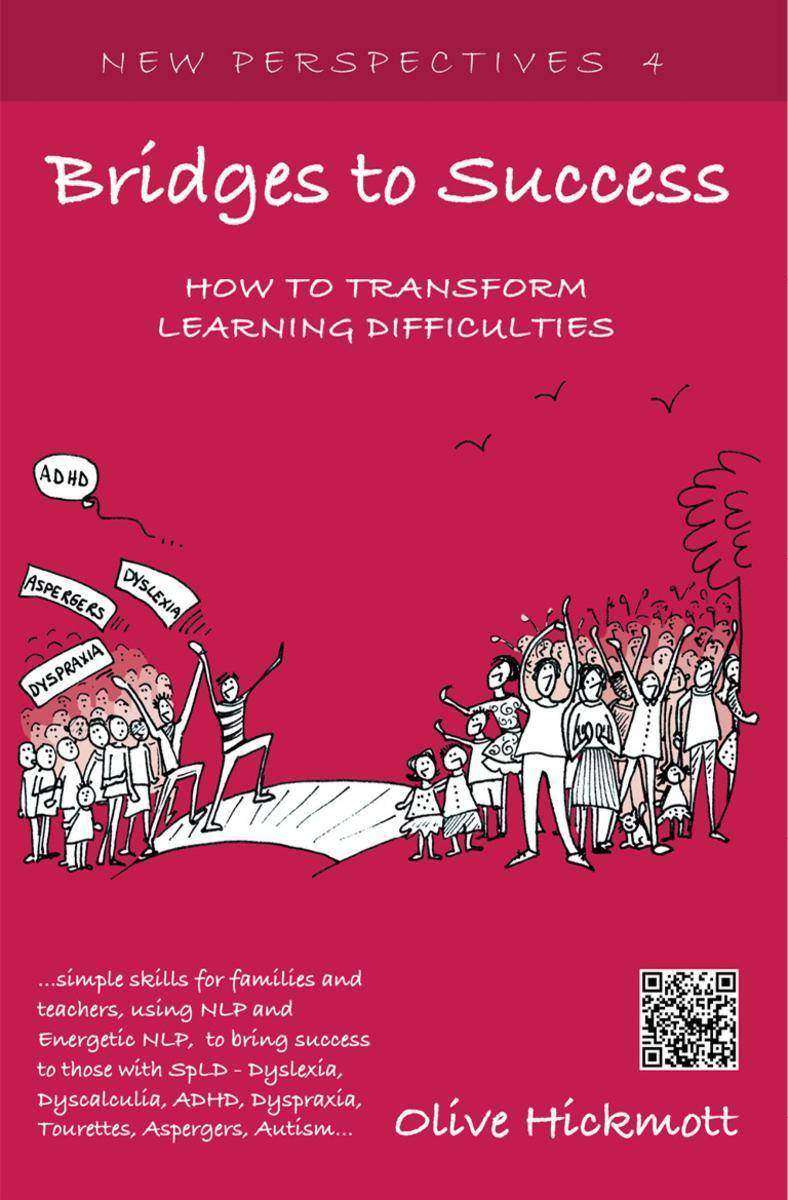
When you know something works you have to teach others. Learn how to transform learning difficulties into successful learning differences, enabling youngsters and adults alike to succeed. Bridges to Success offers visually talented yet challenged individuals a completely new perspective, empowering them to change themselves and the system around them. The focus is on positives and how people can be their very best. Threads of research, a wealth of experience and a variety of evidence have been pieced together to offer simple skills that anyone can learn to start making changes for the whole family and for any educational practice.

Last Orders
¥39.14
This is a hands-on guide to discover how long you will live, what you're worth and who gets what when you die. It takes you step by step through everything you need for a personal action plan, including your digital legacy, your will, your final years, your death, funeral, and all your last orders for after you've gone. Relax. Stop worrying. Here are the answers to sort out your online and real world affairs and solve all those life and death problems. LAST ORDERS covers everything clearly, simply and honestly. An essential read for everyone who is not immortal.
Spirit Revelations
¥68.57
This is an account of incredible yet documented precognitive dreams and synchronicities. They show that our minds are far more powerful than we thought and that we can access true and detailed information without using our normal senses and even of the future.These experiences offer us genuine spiritual guidance in our everyday lives and have profound implications for our understanding of consciousness.Endorsed by the world-renouned scientist Rupert Sheldrake as "e;vivid and fascinating... pioneering research."e;

Managing Conflicts
¥24.43
This book is a practical resource to help leaders manage, resolve cnflicts and reconcile the parties involved. Essential skills to accomplish this goal are embedded in discussion of major concepts and descriptions of real life situations.
Facing Neuralgia
¥39.14
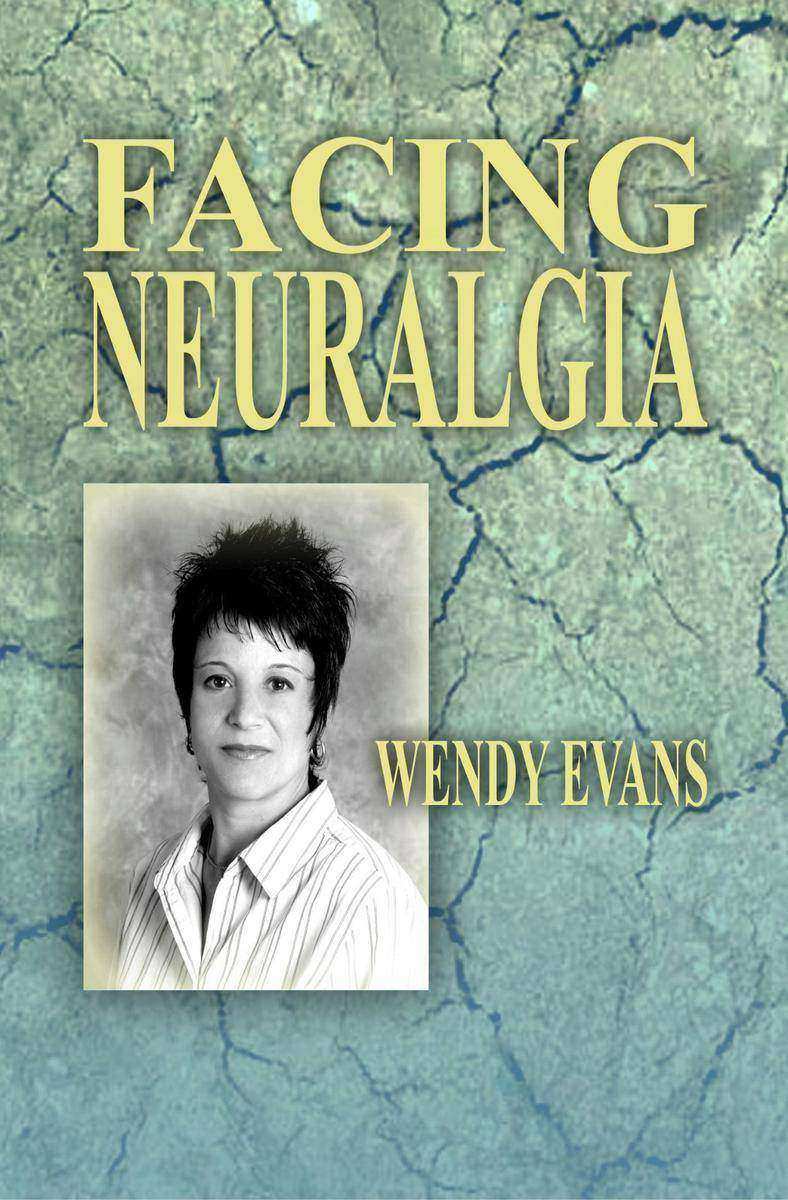
At the age of thirty Wendy Evans, a vivacious, versatile and devoted primary school teacher with singing and acting talents, was struck down by a devastating and very rare nerve disease with serious and debilitating symptoms including pain and foreign body sensations in her throat, shock-like pains in her ears and neck, and difficulty and pain when talking, swallowing, chewing, coughing and yawning. As a consequence, her teaching career and singing aspirations were tragically cut short. Frustratingly, despite numerous doctors' and consultants' appointments, and innumerable tests and scans, the medical profession seemed unable to diagnose her problem, to the point that it was viewed as purely psychosomatic and she was seen as a paranoid malingerer suffering from stress and depression and whose problems would be best served by a psychiatrist and a concoction of drugs. But Wendy knew different and was determined to obtain a definitive diagnosis for her condition, which was making her life increasingly unbearable. Wendy's book takes you on a journey from the onset of the illness, through the following 18 months of searching for the cause of her terrible disease and developing an understanding of her disorder, until she finally received a diagnosis of glossopharyngeal neuralgia and underwent brain surgery. When this did not prove to be the cure, she began to look at alternative therapies as a possible way of managing the disease and has finally mapped out a brighter future for herself, regaining control of her life through treatments such as the Bowen technique, craniosacral therapy, energy healing and remedial massage therapies.


