


 购物车
 个人中心

Le Roi Jean (King John in French)
¥8.09
L'histoire de Shakespeare joue King John, en traduction fran?aise. Selon Wikipedia: "La vie et la mort du roi John, une pièce d'histoire de William Shakespeare, dramatise le règne de John, roi d'Angleterre (gouverné 1199-1216), fils d'Henri II d'Angleterre et d'Aliénor d'Aquitaine et père de Henry III d'Angleterre On pense qu'il a été écrit au milieu des années 1590, mais il n'a pas été publié avant d'être publié dans le premier folio en 1623. "
Leonora
¥8.09
Dodo Collections brings you another classic from Arnold Bennett, ‘"Leonora."’ ? Enoch Arnold Bennett (always known as Arnold Bennett) was one of the most remarkable literary figures of his time, a product of the English Potteries that he made famous as the Five Towns. Yet he could hardly wait to escape his home town, and he did so by the sheer force of his ambition to succeed as an author. In his time he turned his hand to every kind of writing, but he will be remembered for such novels as The Old Wives' Tale, the Clayhanger trilogy (Clayhanger, Hilda Lessways, and These Twain), and The Card. He also wrote such intriguing self-improvement books as Literary Taste, How To Live on 24 Hours a Day, The Human Machine, etc. ? After a local education Bennett finished his education at the University of London and for a time was editor of Woman magazine. After 1900 he devoted himself entirely to writing; dramatic criticism was one of his foremost interests. Bennett is best known, however, for his novels, several of which were written during his residence in France. ? Bennett's infancy was spent in genteel poverty, which gave way to prosperity as his father succeeded as a solicitor. From this provincial background he became a novelist. ? His enduring fame is as a Chronicler of the Potteries towns, the setting and inspiration of some of his most famous and enduring literary work and the place where he grew up.
Henry V in French
¥8.09
Pièce d'histoire de Shakespeare, Henry V, en traduction fran?aise. Selon Wikipédia: "Henry V est une pièce d'histoire de William Shakespeare, dont on pense qu'elle a été écrite vers 1599. Ses titres complets sont The Cronicle History of Henri Quint (dans le texte du premier quarto) et The Life of Henry the Fifth (dans le premier texte du Folio) raconte l'histoire du roi Henry V d'Angleterre, en se concentrant sur les événements qui ont précédé et suivi la bataille d'Azincourt (1415) pendant la guerre de Cent Ans.
King John/ Leben und Tod des Konigs Johann: Bilingual edition
¥8.09
Bilingual, English and German. Shakespeare history play King John, in English with line numbers and in German translation. According to Wikipedia: "The Life and Death of King John, a history play by William Shakespeare, dramatises the reign of John, King of England (ruled 1199–1216), son of Henry II of England and Eleanor of Aquitaine and father of Henry III of England. It is believed to have been written in the mid-1590s but was not published until it appeared in the First Folio in 1623." Zweisprachig, Englisch und Deutsch. Shakespeare Geschichte spielen King John, in Englisch mit Zeilennummern und in deutscher ?bersetzung. Laut Wikipedia: "Das Leben und der Tod von K?nig John, ein Geschichtsstück von William Shakespeare, dramatisiert die Herrschaft von John, K?nig von England (regierte 1199-1216), Sohn von Heinrich II. Von England und Eleonore von Aquitanien und Vater von Henry Es wird angenommen, dass es in der Mitte der 1590er Jahre geschrieben wurde, aber nicht ver?ffentlicht wurde, bis es im Ersten Folio 1623 erschien.

Electricity for Boys
¥8.09
Publisher's warning -- This book was originally published in 1914. It does an excellent job of explaining basics of electricity. It is also of historical interest. But electricity can be dangerous. The readily available tools and supplies of today differ from those common at the time this book was written. Before engaging in actual experiments or projects, you should consult an up-to-date guide, and not rely solely on the information you see here. With over 120 illustrations. "A working guide, in the successive steps of electricity, described in simple terms... The author has adopted the unique plan of setting forth the fundamental principles in each phase of the science, and practically applying the work in the successive stages. It shows how the knowledge has been developed, and the reasons for the various phenomena, without using technical words so as to bring it within the compass of every boy. It has a complete glossary of terms." 127 black-and-white illustrations.
The After House
¥8.09
According to Wikipedia: "Mary Roberts Rinehart (August 12, 1876-September 22, 1958) was a prolific author often called the American Agatha Christie. She is considered the source of the phrase "The butler did it", although she did not actually use the phrase herself, and also considered to have invented the "Had-I-But-Known" school of mystery writing.... Rinehart wrote hundreds of short stories, poems, travelogues and special articles. Many of her books and plays, such as The Bat (1920) were adapted for movies, such as The Bat (1926), The Bat Whispers (1930), and The Bat (1959). While many of her books were best-sellers, critics were most appreciative of her murder mysteries. Rinehart, in The Circular Staircase (1908), is credited with inventing the "Had-I-But-Known" school of mystery writing. The Circular Staircase is a novel in which "a middle-aged spinster is persuaded by her niece and nephew to rent a country house for the summer. The house they choose belonged to a bank defaulter who had hidden stolen securities in the walls. The gentle, peace-loving trio is plunged into a series of crimes solved with the help of the aunt. This novel is credited with being the first in the "Had-I-But-Known" school."[3] The Had-I-But-Known mystery novel is one where the principal character (frequently female) does less than sensible things in connection with a crime which have the effect of prolonging the action of the novel. Ogden Nash parodied the school in his poem Don't Guess Let Me Tell You: "Sometimes the Had I But Known then what I know now I could have saved at least three lives by revealing to the Inspector the conversation I heard through that fortuitous hole in the floor." The phrase "The butler did it", which has become a cliché, came from Rinehart's novel The Door, in which the butler actually did do it, although that exact phrase does not actually appear in the work."
The Bat
¥8.09
According to Wikipedia: "Mary Roberts Rinehart (August 12, 1876-September 22, 1958) was a prolific author often called the American Agatha Christie.[1] She is considered the source of the phrase "The butler did it", although she did not actually use the phrase herself, and also considered to have invented the "Had-I-But-Known" school of mystery writing.... Rinehart wrote hundreds of short stories, poems, travelogues and special articles. Many of her books and plays, such as The Bat (1920) were adapted for movies, such as The Bat (1926), The Bat Whispers (1930), and The Bat (1959). While many of her books were best-sellers, critics were most appreciative of her murder mysteries. Rinehart, in The Circular Staircase (1908), is credited with inventing the "Had-I-But-Known" school of mystery writing. The Circular Staircase is a novel in which "a middle-aged spinster is persuaded by her niece and nephew to rent a country house for the summer. The house they choose belonged to a bank defaulter who had hidden stolen securities in the walls. The gentle, peace-loving trio is plunged into a series of crimes solved with the help of the aunt. This novel is credited with being the first in the "Had-I-But-Known" school."[3] The Had-I-But-Known mystery novel is one where the principal character (frequently female) does less than sensible things in connection with a crime which have the effect of prolonging the action of the novel. Ogden Nash parodied the school in his poem Don't Guess Let Me Tell You: "Sometimes the Had I But Known then what I know now I could have saved at least three lives by revealing to the Inspector the conversation I heard through that fortuitous hole in the floor." The phrase "The butler did it", which has become a cliché, came from Rinehart's novel The Door, in which the butler actually did do it, although that exact phrase does not actually appear in the work."
The Confessions of Nat Turner
¥8.09
According to Wikipedia: "Nathaniel "Nat" Turner (October 2, 1800 – November 11, 1831) was an American slave who led a slave rebellion in Virginia on August 21, 1831 that resulted in 56 deaths among their victims, the largest number of white fatalities to occur in one uprising in the antebellum southern United States. He gathered supporters in Southampton County, Virginia. Turner's killing of whites during the uprising makes his legacy controversial. For his actions, Turner was convicted, sentenced to death, and executed. In the aftermath, the state executed 56 blacks accused of being part of Turner's rebellion. Two hundred additional blacks were beaten and killed, as part of overreaction by white militias and mobs. Virginia and other southern states passed legislation reducing rights of free blacks and slaves. Across the South, state legislators passed new laws prohibiting education of slaves and free blacks, restricting rights of assembly and other civil rights for free blacks, and requiring white ministers to be present at black worship services."
Memoirs of Margaret Fuller Ossoli
¥8.09
According to Wikipedia: "Sarah Margaret Fuller Ossoli (May 23, 1810 – July 19, 1850) was a journalist, critic and women's rights activist associated with the American transcendental movement. She was the first full-time female book reviewer in journalism. Her book Woman in the Nineteenth Century is considered the first major feminist work in the United States."

Winesburg, Ohio
¥8.09
According to Wikipedia: "Winesburg, Ohio (full title: Winesburg, Ohio: A Group of Tales of Ohio Small-Town Life) is a 1919 short story cycle by the American author Sherwood Anderson. The work is structured around the life of protagonist George Willard, from the time he was a child to his growing independence and ultimate abandonment of Winesburg as a young man. It is set in the fictional town of Winesburg, Ohio (not to be confused with the actual Winesburg), which is based loosely on the author's childhood memories of Clyde, Ohio... Sherwood Anderson (September 13, 1876 – March 8, 1941) was an American writer, mainly of short stories, most notably the collection Winesburg, Ohio. That work's influence on American fiction was profound[1], and its literary voice can be heard in Ernest Hemingway, William Faulkner, Thomas Wolfe, John Steinbeck, Erskine Caldwell and others."
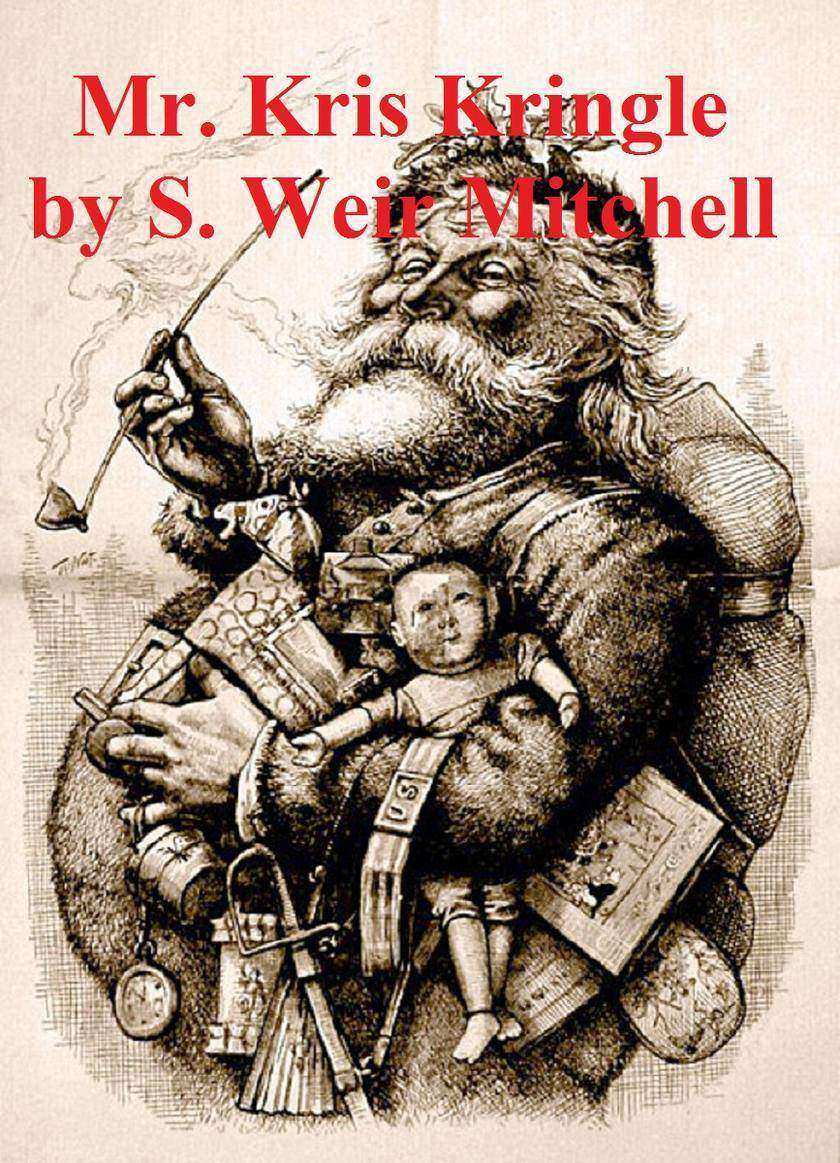
Mr. Kris Kringle: A Christmas Tale (Illustrated)
¥8.09
According to Wikipedia: "Silas Weir Mitchell (February 15, 1829–January 4, 1914) was an American physician and writer... In 1863 he wrote a clever short story, combining physiological and psychological problems, entitled "The Case of George Dedlow", in the Atlantic Monthly. Thenceforward, Mitchell, as a writer, divided his attention between professional and literary pursuits. In the former field, he produced monographs on rattlesnake poison, on intellectual hygiene, on injuries to the nerves, on neurasthenia, on nervous diseases of women, on the effects of gunshot wounds upon the nervous system, and on the relations between nurse, physician, and patient; while in the latter, he wrote juvenile stories, several volumes of respectable verse, and prose fiction of varying merit, which, however, gave him a leading place among the American authors of the close of the 19th century. His historical novels, Hugh Wynne, Free Quaker (1897), The Adventures of Fran?ois (1898) and The Red City (1909), take high rank in this branch of fiction. He was also Charlotte Perkins Gilman's doctor and his use of a rest cure on her provided the idea for "The Yellow Wallpaper", a short story in which the narrator is driven insane by her rest cure."
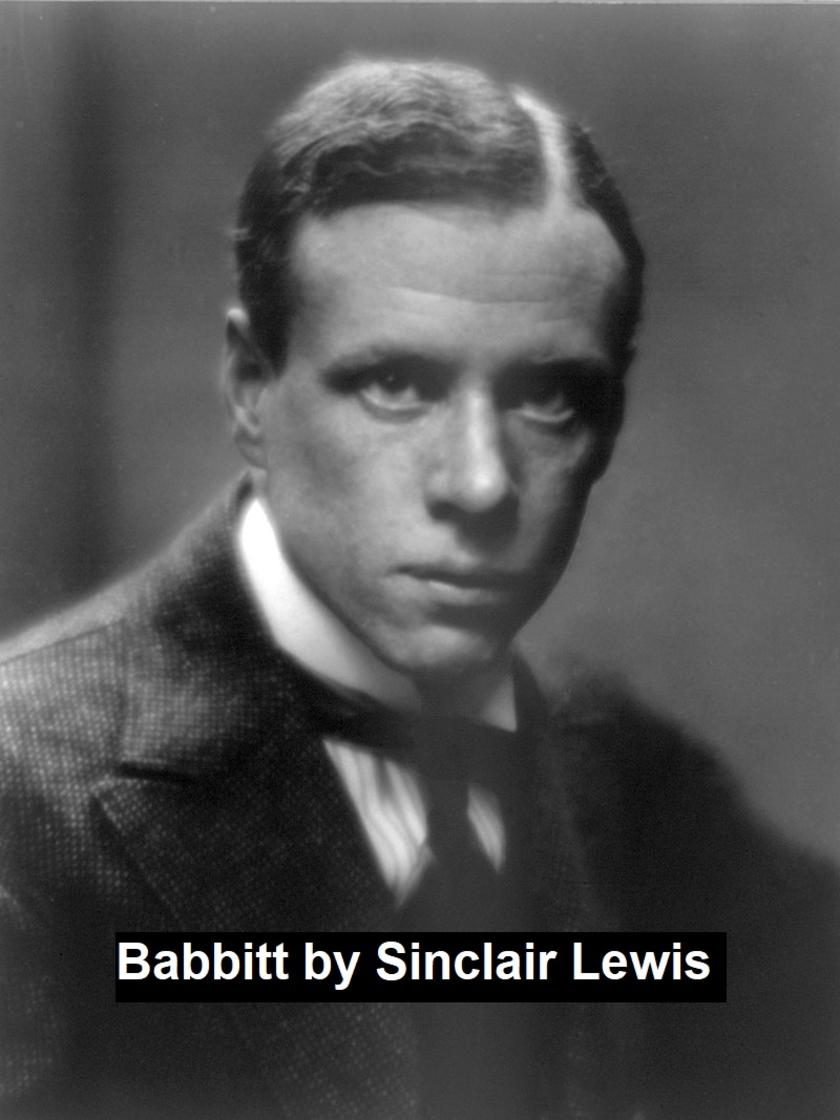
Babbitt
¥8.09
According to Wikipedia: "Sinclair Lewis (February 7 1885 – January 10 1951) was an American novelist, short-story writer, and playwright. In 1930, he became the first American to be awarded the Nobel Prize in Literature, "for his vigorous and graphic art of description and his ability to create, with wit and humor, new types of characters." His works are known for their insightful and critical views of American society and capitalist values, as well as their strong characterizations of modern working women."
The Path of the King
¥8.09
The Path of the King is a travel through historic events that traces a band of gold as it is passed from a young Viking to Abraham Lincoln. The following is a quotation from its original publication (AL BURT COMPANY PUBLISHERS, 1921): "We wonder that so great a man as Abraham Lincoln should spring from humble people but who knows what his more distant ancestry might have been In a series of dramatic chapters Mr Buchan tells what he imagines to have been the ancestry of Lincoln The worthy son of a northern chieftain who had come down with his people into Normandy, a Norman knight who fought under Duke William and settled in England, a French knight emissary of Saint Louis to Kubla Khan, a proud demoiselle friend to Jeanne d Arc, a French gentleman who went with Columbus on his second voyage, an avenger of Saint Bartholomew's Day, a friend to Sir Walter Raleigh, a supporter of Cromwell, a soldier of fortune under Marlborough, a mighty hunter in Virginia, all these says Mr Buchan were Lincoln's forebears Their blood ran in his veins and made him in James Russell Lowell's phrase the last of the kings." According to Wikipedia, "John Buchan, 1st Baron Tweedsmuir (26 August 1875 – 11 February 1940) was a Scottish novelist and Unionist politician who served as Governor General of Canada. Buchan's 100 works include nearly thirty novels, seven collections of short stories and biographies of Sir Walter Scott, Caesar Augustus, and Oliver Cromwell. Buchan's most famous of his books were the spy thrillers (including) The 39 Steps (which was converted to a play as well as an Alfred Hitchcock movie starring Robert Donat as Richard Hannay, though with Buchan's story much altered.) The "last Buchan" (as Graham Greene entitled his appreciative review) was the 1941 novel Sick Heart River (American title: Mountain Meadow), in which a dying protagonist confronts in the Canadian wilderness the questions of the meaning of life. The insightful quotation "It's a great life, if you don't weaken" is famously attributed to Buchan, as is "No great cause is ever lost or won, The battle must always be renewed, And the creed must always be restated."
Sir Quixote of the Moors
¥8.09
John Buchan (1875-1940) was a Scottish novelist, historian, and politician, who served as governor general of Canada. His best-known fiction is The Thirty-Nine Steps, featuring the action hero Richard Hannay.
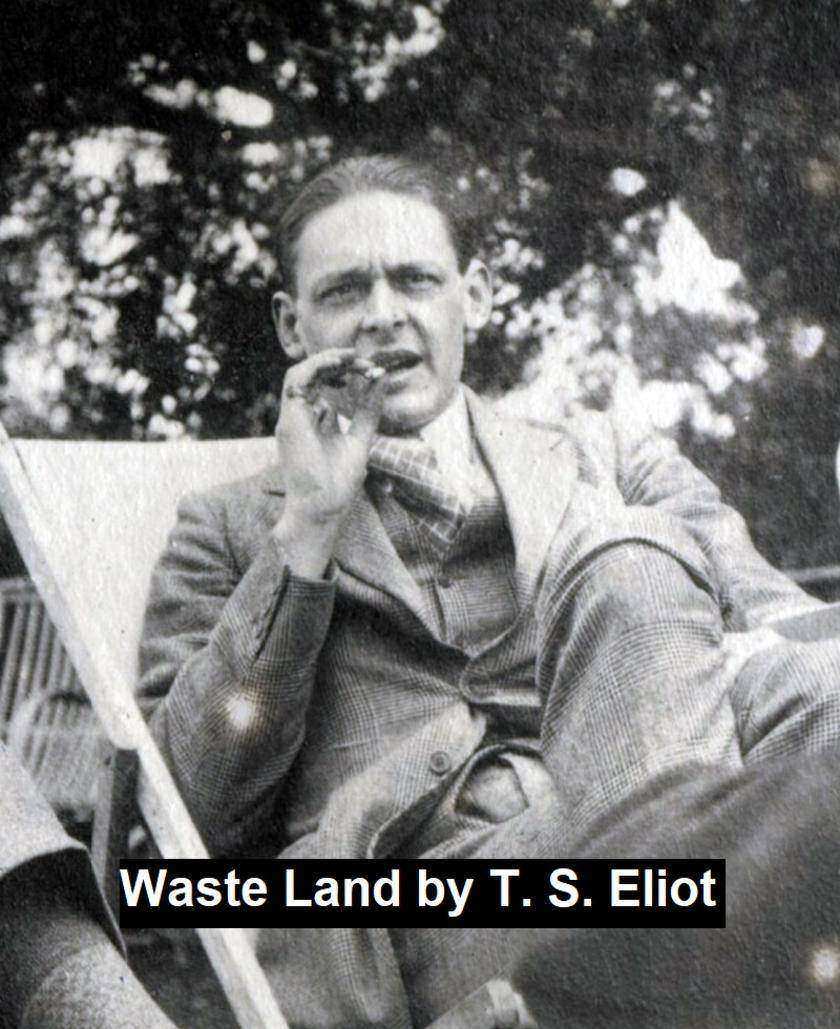
Waste Land
¥8.09
According to Wikipedia, "The Waste Land is a 434-line Modernist poem by T. S. Eliot published in 1922. It has been called "one of the most important poems of the 20th century." Despite the poem's obscurity-its shifts between satire and prophecy, its abrupt and unannounced changes of speaker, location and time, its elegiac but intimidating summoning up of a vast and dissonant range of cultures and literatures-the poem has become a familiar touchstone of modern literature. Among its famous phrases are "April is the cruellest month" (its first line); "I will show you fear in a handful of dust"; and (its last line) the mantra in the Sanskrit language "Shantih shantih shantih." Thomas Stearns Eliot (September 26, 1888 - January 4, 1965) was an American-born English poet, playwright, and literary critic, arguably the most important English-language poet of the 20th century. The poem that made his name, The Love Song of J. Alfred Prufrock started in 1910 and published in Chicago in 1915-is regarded as a masterpiece of the modernist movement. He followed this with what have become some of the best-known poems in the English language, including Gerontion (1920), The Waste Land (1922), The Hollow Men (1925), Ash Wednesday (1930), and Four Quartets (1945). He is also known for his seven plays, particularly Murder in the Cathedral (1935). He was awarded the Nobel Prize in Literature in 1948."
Whirligigs
¥8.09
Classic short story collection, including O. Henry's most famous story -- The Ransom of Red Chief. According to Wikipedia: "O. Henry was the pseudonym of the American writer William Sydney Porter (September 11, 1862 – June 5, 1910). O. Henry's short stories are well known for their wit, wordplay, warm characterization and clever twist endings... O. Henry's stories are famous for their surprise endings, to the point that such an ending is often referred to as an "O. Henry ending." He was called the American answer to Guy de Maupassant. Both authors wrote twist endings, but O. Henry stories were much more playful and optimistic. His stories are also well known for witty narration. Most of O. Henry's stories are set in his own time, the early years of the 20th century. Many take place in New York City and deal for the most part with ordinary people: lerks, policemen, waitresses. Fundamentally a product of his time, O. Henry's work provides one of the best examples of catching the entire flavor of an age written in the English language. Whether roaming the cattle-lands of Texas, exploring the art of the "gentle grafter," or investigating the tensions of class and wealth in turn-of-the-century New York, O. Henry had an inimitable hand for isolating some element of society and describing it with an incredible economy and grace of language. Some of his best and least-known work resides in the collection Cabbages and Kings, a series of stories which each explore some individual aspect of life in a paralytically sleepy Central American town while each advancing some aspect of the larger plot and relating back one to another in a complex structure which slowly explicates its own background even as it painstakingly erects a town which is one of the most detailed literary creations of the period. The Four Million was his first collection of stories. It opens with a reference to Ward McAllister's "assertion that there were only 'Four Hundred' people in New York City who were really worth noticing. But a wiser man has arisen—the census taker—and his larger estimate of human interest has been preferred in marking out the field of these little stories of the 'Four Million.'" To O. Henry, everyone in New York counted. He had an obvious affection for the city, which he called "Bagdad-on-the-Subway,"[3] and many of his stories are set there—but others are set in small towns and in other cities."
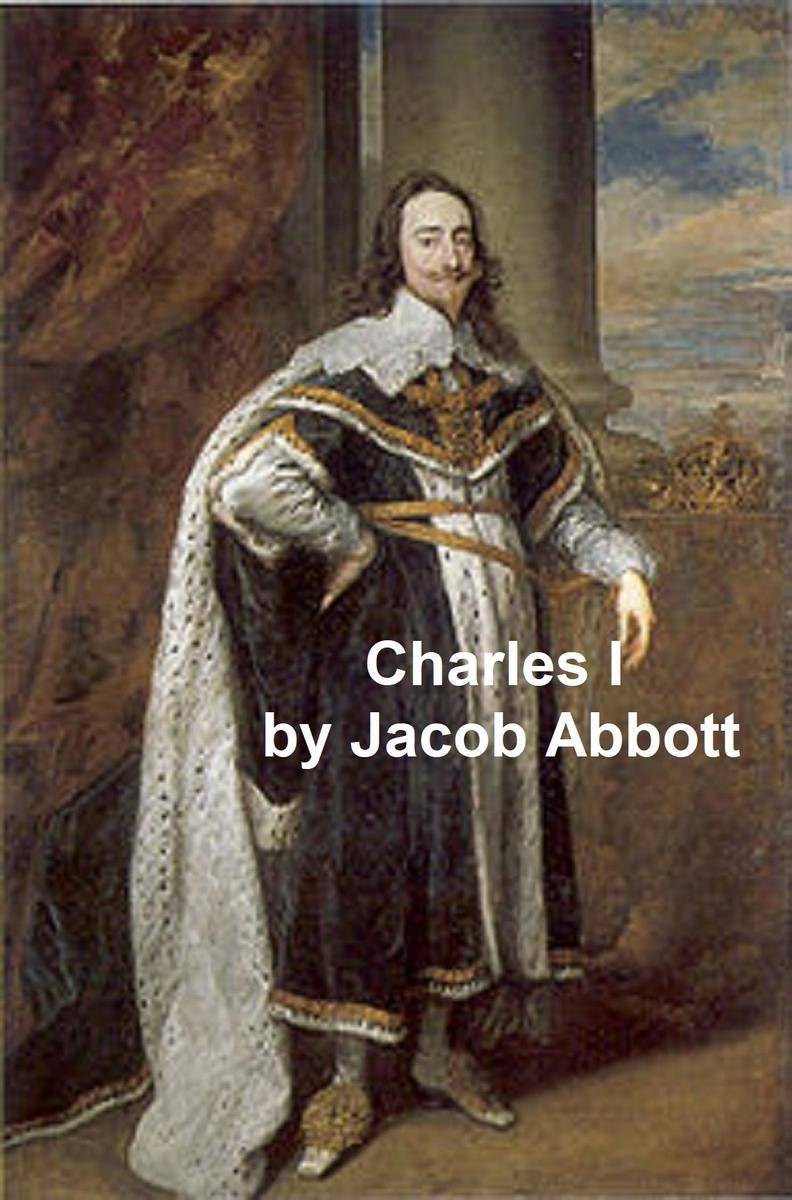
Charles I
¥8.09
According to Wikipedia: "Jacob Abbott (November 14, 1803 – October 31, 1879) was an American writer of children's books. Abbott was born at Hallowell, Maine to Jacob and Betsey Abbott. He graduated from Bowdoin College in 1820; studied at Andover Theological Seminary in 1821, 1822, and 1824; was tutor in 1824-1825, and from 1825 to 1829 was professor of mathematics and natural philosophy at Amherst College; was licensed to preach by the Hampshire Association in 1826; founded the Mount Vernon School for Young Ladies in Boston in 1829, and was principal of it in 1829-1833; was pastor of Eliot Congregational Church (which he founded), at Roxbury, Massachusetts in 1834-1835; and was, with his brothers, a founder, and in 1843-1851 a principal of Abbott's Institute, and in 1845-1848 of the Mount Vernon School for Boys, in New York City. He was a prolific author, writing juvenile fiction, brief histories, biographies, religious books for the general reader, and a few works in popular science. He died in Farmington, Maine, where he had spent part of his time after 1839, and where his brother, Samuel Phillips Abbott, founded the Abbott School."
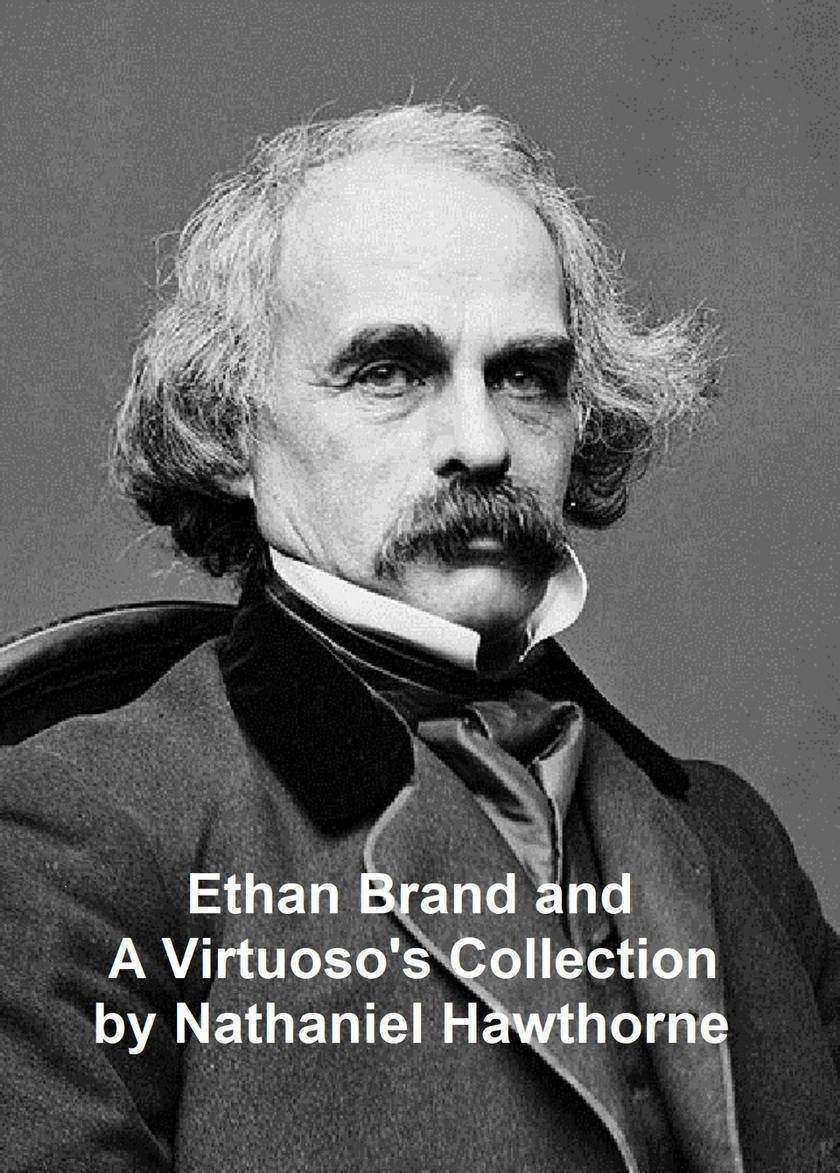
Ethan Brand and A Virtuoso's Collection
¥8.09
Two short stories by Nathaniel Hawthorne related to the legend of "the wandering Jew". According to Wikipedia: "Nathaniel Hawthorne (1804 –1864) was an American novelist and short story writer... Much of Hawthorne's writing centers around New England and many feature moral allegories with a Puritan inspiration. His fiction works are considered part of the Romantic movement and, more specifically, dark romanticism. His themes often center on the inherent evil and sin of humanity and his works often have moral messages and deep psychological complexity. His published works include novels, short stories, and a biography of his friend Franklin Pierce."
The Social Web
¥8.09
This pioneering book, first published in 1997, details the process to empower businesses and individuals to build websites based on common interests and social interaction. It provides insights that are as relevant now as they were when the book was written.
Siddhartha, an Indian Tale
¥8.09
Classic novel, first published in 1922. According to Wikipedia: "Siddhartha is a novel by Hermann Hesse that deals with the spiritual journey of a boy known as Siddhartha from the Indian subcontinent during the time of the Buddha. The book, Hesse's ninth novel, was written in German, in a simple yet powerful and lyrical style. It was published in the U.S. in 1951 and became influential during the 1960s. Hesse dedicated Siddhartha to Ninon Hesse, his wife. The word Siddhartha is made up of two words in the Sanskrit language, siddha (achieved) + artha (meaning or wealth). The two words together mean "he who has found meaning (of existence)" or "he who has attained his goals". The Buddha's name, before his renunciation, was Prince Siddhartha Gautama. In this book, the Buddha is referred to as "Gotama".
The Laughing Cavalier, the Story of the Ancestor of the Scarlet Pimpernel
¥8.09
Classic historical novel, set in the Netherlands in the 17th century, related to the Scarlet Pimpernel series. According to Wikipedia: "The Scarlet Pimpernel is a classic play and adventure novel by Baroness Emmuska Orczy, set during the Reign of Terror following the start of the French Revolution. The story is a precursor to the "disguised superhero" tales such as Zorro. The play was produced and adapted by Julia Neilson and Fred Terry. It first opened on 15 October 1903 at Nottingham’s Theatre Royal; it was not a success. Terry, however, had confidence in the play and, with a rewritten last act, took it to London where it opened at the New Theatre on 5 January 1905. The premier of the London production was enthusiastically received by the audience, but critics considered the play 'old-fashioned.' In spite of negative reviews, the play became a popular success, running 122 performances and enjoying numerous revivals. The Scarlet Pimpernel became a favourite of London audiences, playing more than 2,000 performances and becoming one of the most popular shows staged in England to that date. The novel was published soon after the play's opening and was an immediate success. Orczy gained a following of readers in Britain and throughout the world. The popularity of the novel encouraged her to write a number of sequels for her "reckless daredevil" over the next 35 years. The play was performed to great acclaim in France, Italy, Germany and Spain, while the novel was translated into 16 languages. Subsequently, the story has been adapted for television, film, a musical and other media. The international success of The Scarlet Pimpernel allowed Orczy and her husband to live out their lives in luxury. Over the years, they lived on an estate in Kent, a bustling London home and an opulent villa in Monte Carlo. Orczy wrote in her autobiography, Links in the Chain of Life: "I have so often been asked the question: "But how did you come to think of The Scarlet Pimpernel?" And my answer has always been: "It was God's will that I should." And to you moderns, who perhaps do not believe as I do, I will say, "In the chain of my life, there were so many links, all of which tended towards bringing me to the fulfillment of my destiny." According to Wikipedia: "Baroness Emma Magdolna Rozália Mária Jozefa Borbála "Emmuska" Orczy de Orczi (23 September 1865 – 12 November 1947) was a British novelist, playwright and artist of Hungarian noble origin. She was most notable for her series of novels featuring the Scarlet Pimpernel. Some of her paintings were exhibited at the Royal Academy in London."


