


 购物车
购物车 个人中心
个人中心

Protect Your Family Against Terrorism
¥48.95
Today we are all living under a credible terrorist threat, yet many people remain unprepared. Would you and your family know how to react if you were caught up in a terrorist attack? Do you take the necessary steps to protect your family from potential atrocities whenever you leave home?This book delivers the advice you need to help you and your family stay safe. Written in an easy-to-understand format by security experts with many years of field experience in both military and civilian scenarios, it describes how best to prepare for the possibility of an attack, how to react should an incident occur close to you, and what to do in the immediate aftermath.With sections that cover a range of scenarios from an attack on the subway or on public transport to an incident at a beach hotel or even on a cruise ship, you will find straight-talking, no-nonsense advice based on real scenarios that helps you and your loved ones to make decisions and take action that could mean the difference between life and death.In addition to the various specific scenarios, you are also provided with advice on how to enhance your situational awareness in any situation, enabling you to protect your family from the next inevitable attack. Also included is a comprehensive checklist detailing actions to take prior to travelling away from home.Terrorist atrocities are becoming more frequent. Don't let your family find themselves in a dangerous situation without the knowledge of how best to react - Protect Your Family Against Terrorism.
Two Sides of the Shield
¥19.52
A fantastic novel by English writer Charlotte Mary Yonge, a sequel to her earlier work 'Scenes and Characters; or Eighteen Months at Beechcroft'.
Uncommercial Traveller
¥19.52
Charles Dickens's fantastic collection of literary sketches and reminiscences.
A-Z of Atari ST Games
¥19.52
The A-Z of Atari ST Games: Volume 1 features reviews of three different games for each letter of the alphabet. The games range from the very earliest releases in the mid 80s to the modern homebrew games of today. This book shows you just how diverse the library of titles is for the Atari ST range and how it became one of the popular home computers of all time.
Valley of Decision
¥19.52
Edith Wharton's first published novel is set in late-18th century Italy during the years that Europe was shaken by the French Revolution. Odo Valsecca inherits a dukedom and is forced to choose between his personal liberal ideals and the conservatism of his family tradition.

Szobortánc
¥58.29
Soman Chainani els? regénye, a New York Times bestseller Jók és Rosszak Iskolája folytatásában Sophie és Agatha visszatér Gavaldonba, és boldogan élnek saját világukban, ám az élet nem olyan tündérmese, amilyennek képzelték… Agatha már úgy érzi, bárcsak más boldog befejezést kívánt volna a mesének, ám ekkor véletlenül megtalálja és kinyitja a Jók és Rosszak Iskolájának kapuját. A lányok azzal szembesülnek, hogy az a világ, amit az els? tanévben tapasztaltak, megváltozott. A boszorkányok és a hercegn?k a Lányok Iskolájában laknak. Elhatározták, hogy kirekesztik életükb?l a hercegeket. Tedros és a fiúk a Rossz Iskolája régi tornyainak lakói lettek. A két iskola k?z?tt háború van kit?r?ben. Vajon Agatha és Sophie helyre tudják állítani a békét? Vajon Sophie jó tud maradni úgy, hogy Tedros állandóan üld?zi? ?s kihez húz Agatha szíve? A barátn?jéhez vagy a hercegéhez? Soman Chainani kül?nleges világot teremtett. A Newbery-díj legutóbbi jutalmazottja, Ann M. Martin ?páratlan mesének” nevezi, amely ?csupa romantika, varázslat, humor és rejtvény. Legszívesebben egyhuzamban olvasnánk végig.”
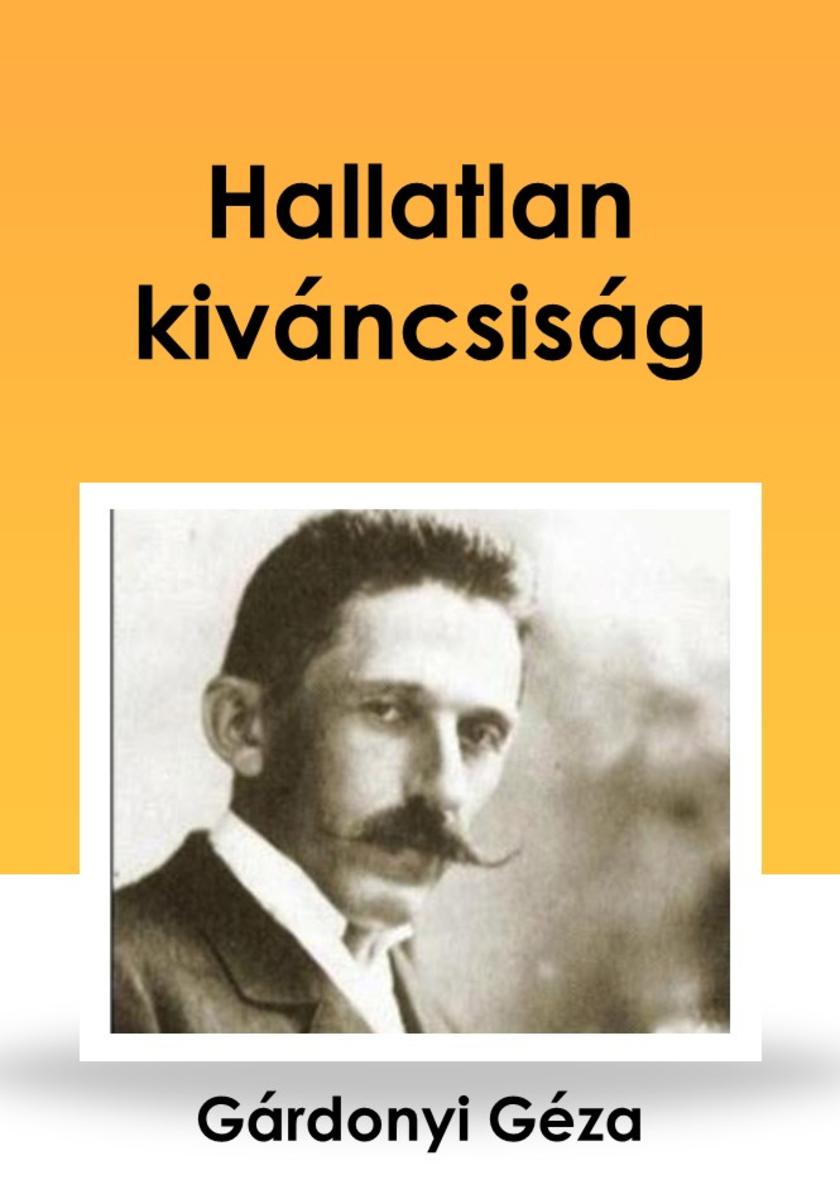
Hallatlan kiváncsiság
¥8.67
In creating psychoanalysis, a clinical method for treating psychopathology through dialogue between a patient and a psychoanalyst, Freud developed therapeutic techniques such as the use of free association (in which patients report their thoughts without reservation and in whichever order they spontaneously occur) and discovered transference (the process in which patients displace on to their analysts feelings derived from their childhood attachments), establishing its central role in the analytic process. Freud’s redefinition of sexuality to include its infantile forms led him to formulate the Oedipus complex as the central tenet of psychoanalytical theory. His analysis of his own and his patients' dreams as wish-fulfillments provided him with models for the clinical analysis of symptom formation and the mechanisms of repression as well as for elaboration of his theory of the unconscious as an agency disruptive of conscious states of mind. Freud postulated the existence of libido, an energy with which mental processes and structures are invested and which generates erotic attachments, and a death drive, the source of repetition, hate, aggression and neurotic guilt. In his later work Freud drew on psychoanalytic theory to develop a wide-ranging interpretation and critique of religion and culture. Psychoanalysis remains influential within psychotherapy, within some areas of psychiatry, and across the humanities. As such it continues to generate extensive and highly contested debate with regard to its therapeutic efficacy, its scientific status and as to whether it advances or is detrimental to the feminist cause. Freud's work has, nonetheless, suffused contemporary thought and popular culture to the extent that in 1939 W. H. Auden wrote, in a poem dedicated to him: "to us he is no more a person / now but a whole climate of opinion / under whom we conduct our different lives". About Author: Sigmund Freud (Born Sigismund Schlomo Freud; 6 May 1856 – 23 September 1939) was an Austrian neurologist who became known as the founding father of psychoanalysis. Freud qualified as a doctor of medicine at the University of Vienna in 1881, and then carried out research into cerebral palsy, aphasia and microscopic neuroanatomy at the Vienna General Hospital. He was appointed a university lecturer in neuropathology in 1885 and became a professor in 1902.

Kis karácsony, nagy karácsony
¥29.02
Sosem értetted a szakk?nyveket az autizmusról? Itt az alkalom, hogy olvasmányos és humoros formában megismerd a legfontosabb tudnivalókat a gyanújelekt?l a diagnózison át, a terápiáig. K?zérthet?, szakkifejezés mentes k?nyv szül?knek, nagyszül?knek és laikusoknak. Mit nevezünk autizmusnak és mi okozza? Mi az a BNO szám? Milyen terápiák vannak és melyik jó a gyerekemnek? Kérdések a diagnózis után? Családom nem fogadja el az autista gyerekemet, mit tehetek? Milyen támogatásokat kérhetek, és hol intézzem? Mi lesz vele ha én már nem leszek? ?s még számtalan más kérdés...
![Arizona's Yesterday: [Illustrated]](https://platform-permanent.ddimg.cn/pt-media-info-soa-resource/digital/product/73/24/1901167324_ii_cover.jpg?version=c64b4722-1085-4db6-b41f-ac670a5886a7)
Arizona's Yesterday: [Illustrated]
¥8.09
This story belongs to the year 1837, and was regarded by the generations of that and a succeeding time as the most miraculous of all the recorded deliverances from death at sea. It may be told thus: Mr. Montagu Vanderholt sat at breakfast with his daughter Violet one morning in September. Vanderholt's house was one of a fine terrace close to Hyde Park. He was a rich man, a retired Cape merchant, and his life had been as chequered as Trelawney's, with nothing of romance and nothing of imagination in it. He was the son of honest parents, of Dutch extraction, and had run away to sea when about twelve years old. Nothing under the serious heavens was harsher, more charged with misery, suffering, dirt, and wretchedness, than seafaring in the days when young Vanderholt, with an idiot's cunning, fled to it from his father's comfortable little home. He got a ship, was three years absent, and on his return found both his father and mother dead. He went again to sea, and, fortunately for him, was shipwrecked in the neighbourhood of Simon's Bay. The survivors made their way to Cape Town, and presently young Vanderholt got a job, and afterwards a position. He then became a master, until, after some eight or ten years of heroic perseverance, attended by much good luck, behold Mr. Vanderholt full-blown into a colonial merchant prince. How much he was worth when he made up his mind to settle in England, after the death of his wife, and when he had disposed of his affairs so as to leave himself as free a man as ever he had been when he was a common Jack Swab, really signifies nothing. It is certain he had plenty, and plenty is enough, even for a merchant prince of Dutch extraction. Besides Violet, he had two sons, who will not make an appearance on this little brief stage. They are dismissed, therefore, with this brief reference—that both were in the army, and both, at the time of this tale, in India. Violet was Vanderholt's only daughter, and he loved her exceedingly. She was not beautiful, but she was fair to see, with a pretty figure, and an arch, gay smile. You saw the Dutch blood in her eyes, as you saw it in her father's, whose orbs of vision, indeed, were ridiculously small—scarcely visible in their bed of socket and lash. An English mother had come to Violet's help in this matter. Taking her from top to toe, with her surprising quantity of brown hair, soft complexion, good mouth, teeth, and figure, Violet Vanderholt was undoubtedly a fine girl. THE LAST ENTRY "OPINIONS OF THE PRESS ON THE LAST ENTRY": '"The Last Entry" is a rattling good salt-water yarn, told in the author's usual breezy, exhilarating style.'-”Daily Mail. 'In this new novel Mr. Russell has cleverly thrown its events into the year 1837, and there are one or two ingenious passages which add to the Diamond Jubilee interest which that date suggests.... "The Last Entry" is as certain of general popularity as any of Mr. Russell's former tales of the marvels of the sea.'-”Glasgow Herald. 'We do not think it possible for anyone to dip into this novel without desiring to finish it, and it adds another to the long list of successes of our best sea author.'-”Librarian. 'In addition to mutiny and murder, "The Last Entry" contains many of those good things which have made Mr. Russell's pages a joy to so many lovers of the sea during the last twenty years.... "The Last Entry" is a welcome addition to Mr. Clark Russell's library.'-”Speaker. 'The writer is as realistic and picturesque as usual in his vivid descriptions of the stagnant life on board the homeward-bound Indiaman.'-”Times. 'It is full of pleasant vigour.... As is always the case in Mr. Clark Russell's books, the elements are treated with the pen of an artist.'-”Standard. 'We expected plenty of go, of fresh and vigorous description of sea-faring life, coupled with a story which would not be wanting in interest. All this we have here.'”-Tablet.
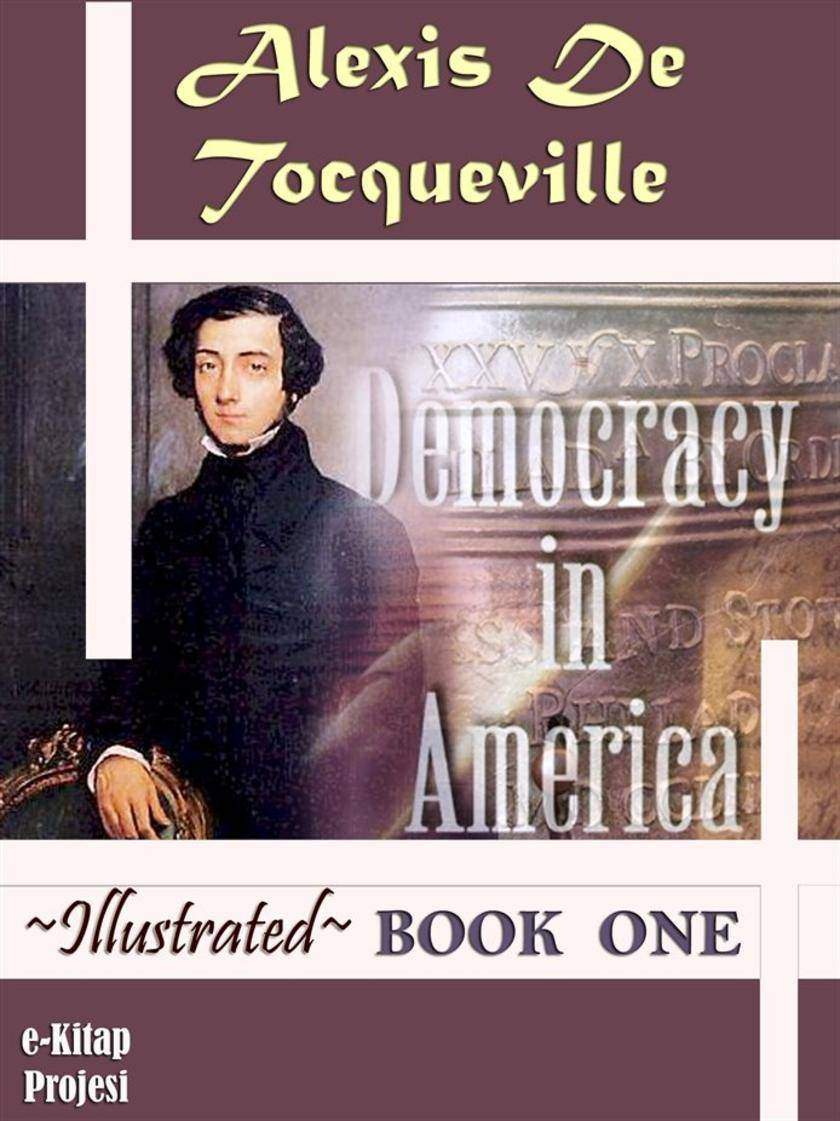
Democracy in America: Book One
¥28.04
A young girl named Fanny Price comes to live with her wealthy uncle and aunt, Sir Thomas and Lady Bertram. Fanny's family is quite poor; her mother, unlike her sister Lady Bertram, married beneath her, and Fanny's father, a sailor, is disabled and drinks heavily. Fanny is abused by her other aunt, Mrs. Norris, a busybody who runs things at Mansfield Park, the Bertrams' estate. The Bertram daughters, Maria and Julia, are shallow, rather cruel girls, intent on marrying well and being fashionable. The elder son, Tom, is a roustabout and a drunk. Fanny finds solace only in the friendship of the younger son, Edmund, who is planning to be a clergyman. Fanny grows up shy and deferential, caught as she typically is between members of the Bertram family. Sir Thomas leaves Mansfield Park for Antigua, where he owns plantations. In his absence, two new figures arrive at Mansfield: Henry and Mary Crawford, the brother and sister of the local minister's wife. Henry and Mary are attractive and cheerful, and they soon become indispensable members of the Mansfield circle. Henry flirts extensively with Maria, who is engaged to marry the boring but wealthy Rushworth. He also flirts with Julia when it suits his purposes. At first, Mary is interested in Tom, the older son and heir, but she soon realizes that he is boring and not really interested in her. She finds herself increasingly attracted to Edmund, although the prospect of marrying a clergyman does not appeal to her, and she is often cruel to him on this account. In the meantime, Fanny has innocently fallen in love with Edmund, although she does not even admit this to herself. Yates, a visiting friend of Tom's, proposes that the group should put on a play. His idea is eagerly received by all except for Edmund and Fanny, who are horrified at the idea of acting. The play goes on anyways, however; Maria and Henry, as well as Mary and Edmund (who has been prevailed upon to take a role to avoid bringing in an outsider to play it), get to play some rather racy scenes with one another. When one of the women cannot make a rehearsal, Fanny is pressured to take a role. She is almost forced to give in when Sir Thomas makes a sudden entrance, having arrived from Antigua. Sir Thomas is unhappy about the play and quickly puts a stop to the improprieties. Since Henry has not declared his love, Maria is married to Rushworth. She and Julia leave Mansfield Park for London. Relationships between the Crawfords and the Bertrams intensify. Edmund nearly proposes to Mary several times, but her condescension and amorality always stop him at the last minute. He confides his feelings to Fanny, who is secretly upset by them. In the meantime, on a lark, Henry has decided to woo Fanny. He is surprised to find himself sincerely in love with her. Fanny has become indispensable as a companion to her aunt and uncle, and on the occasion of her brother William's visit, they give a ball in her honor. Some time after the ball, Henry helps William get a promotion in the Navy. Using this as leverage, he proposes to Fanny, who is mortified and refuses. He continues to pursue her. Her uncle is disappointed that she has refused such a wealthy man, and, as an indirect result, she is sent to stay with her parents in their filthy house. Meanwhile, Edmund has been ordained and continues to debate over his relationship with Mary, to Fanny's dismay. Henry comes to see Fanny at her parents' and renews his suit. He then leaves to take care of business on his estate. Fanny continues to receive letters from Mary encouraging her to take Henry's proposal. A series of events then happen in rapid succession: Tom Bertram falls dangerously ill as a result of his partying and nearly dies; Henry, who has gone not to his estate but to see friends, has run off with the married Maria; Julia, upset over her sister's rash act, elopes with Yates, Tom's friend. Julia and Yates are reconciled to the family. Edmund finally comes and marries Fanny
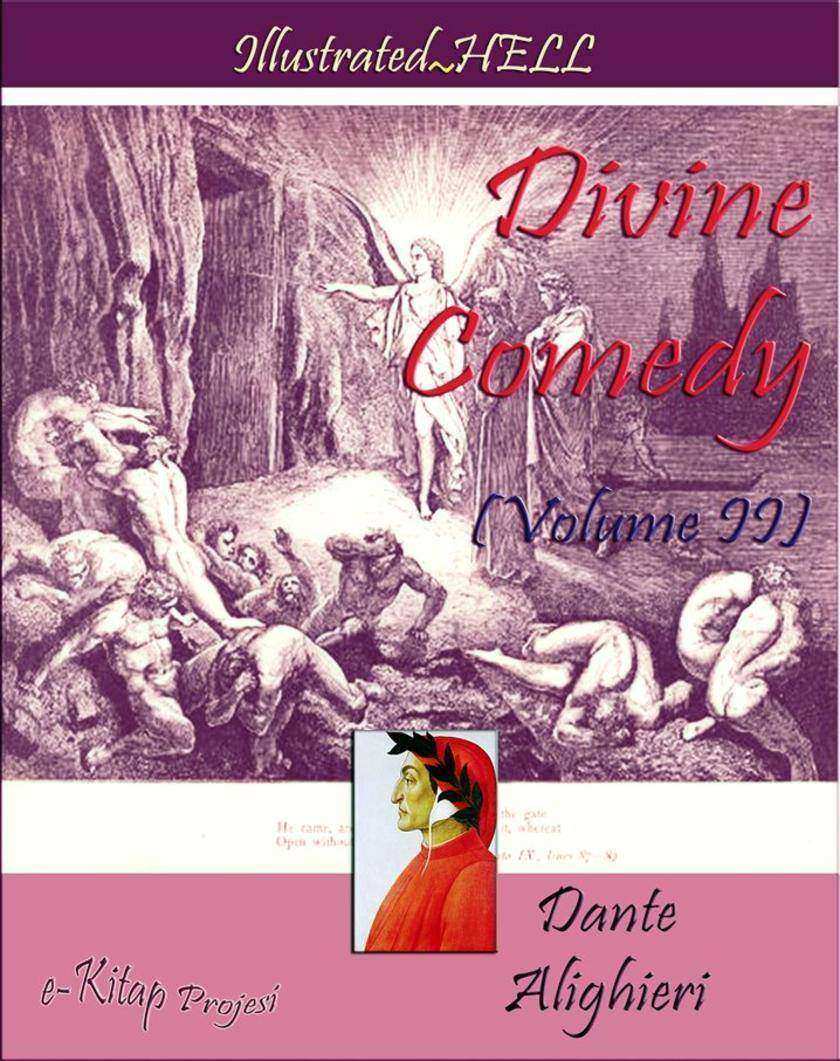
Divine Comedy (Volume II): Illustrated Hell
¥18.74
Micrographia is a historic book by Robert Hooke, detailing the then thirty-year-old Hooke's observations through various lenses. Published in September 1665, the first major publication of the Royal Society, it was the first scientific best-seller, inspiring a wide public interest in the new science of microscopy. It is also notable for coining the biological term cell. Observations: Hooke most famously describes a fly's eye and a plant cell (where he coined that term because plant cells, which are walled, reminded him of a monk's quarters). Known for its spectacular copperplate engravings of the miniature world, particularly its fold-out plates of insects, the text itself reinforces the tremendous power of the new microscope. The plates of insects fold out to be larger than the large folio itself, the engraving of the louse in particular folding out to four times the size of the book. Although the book is best known for demonstrating the power of the microscope, Micrographia also describes distant planetary bodies, the wave theory of light, the organic origin of fossils, and various other philosophical and scientific interests of its author. Publication: Published under the aegis of The Royal Society, the popularity of the book helped further the society's image and mission of being "the" scientifically progressive organization of London. Micrographia also focused attention on the miniature world, capturing the public's imagination in a radically new way. This impact is illustrated by Samuel Pepys' reaction upon completing the tome: "the most ingenious book that I ever read in my life." Hooke also selected several objects of human origin; among these objects were the jagged edge of a honed razor and the point of a needle, seeming blunt under the microscope. His goal may well have been as a way to contrast the flawed products of mankind with the perfection of nature (and hence, in the spirit of the times, of biblical creation). About Author: Robert Hooke (1635 – 1703) was an English natural philosopher, architect and polymath.His adult life comprised three distinct periods: as a scientific inquirer lacking money; achieving great wealth and standing through his reputation for hard work and scrupulous honesty following the great fire of 1666, but eventually becoming ill and party to jealous intellectual disputes. These issues may have contributed to his relative historical obscurity. He was at one time simultaneously the curator of experiments of the Royal Society and a member of its council, Gresham Professor of Geometry and a Surveyor to the City of London after the Great Fire of London, in which capacity he appears to have performed more than half of all the surveys after the fire. He was also an important architect of his time – though few of his buildings now survive and some of those are generally misattributed – and was instrumental in devising a set of planning controls for London whose influence remains today. Allan Chapman has characterised him as "England's Leonardo".Robert Gunther's Early Science in Oxford, a history of science in Oxford during the Protectorate, Restoration and Age of Enlightenment, devotes five of its fourteen volumes to Hooke.Hooke studied at Wadham College during the Protectorate where he became one of a tightly knit group of ardent Royalists led by John Wilkins. Here he was employed as an assistant to Thomas Willis and to Robert Boyle, for whom he built the vacuum pumps used in Boyle's gas law experiments. He built some of the earliest Gregorian telescopes and observed the rotations of Mars and Jupiter. In 1665 he inspired the use of microscopes for scientific exploration with his book, Micrographia. Based on his microscopic observations of fossils, Hooke was an early proponent of biological evolution. He investigated the phenomenon of refraction, deducing the wave theory of light, and was the first to suggest that matter expands when heated and that air is made of small particles separated by relatively large distances. He performed pioneering work in the field of surveying and map-making and was involved in the work, though his plan for London on a grid system was rejected in favour of rebuilding along the existing routes. He also came near to an experimental proof that gravity follows an inverse square law, and hypothesised that such a relation governs the motions of the planets, an idea which was subsequently developed by Newton.
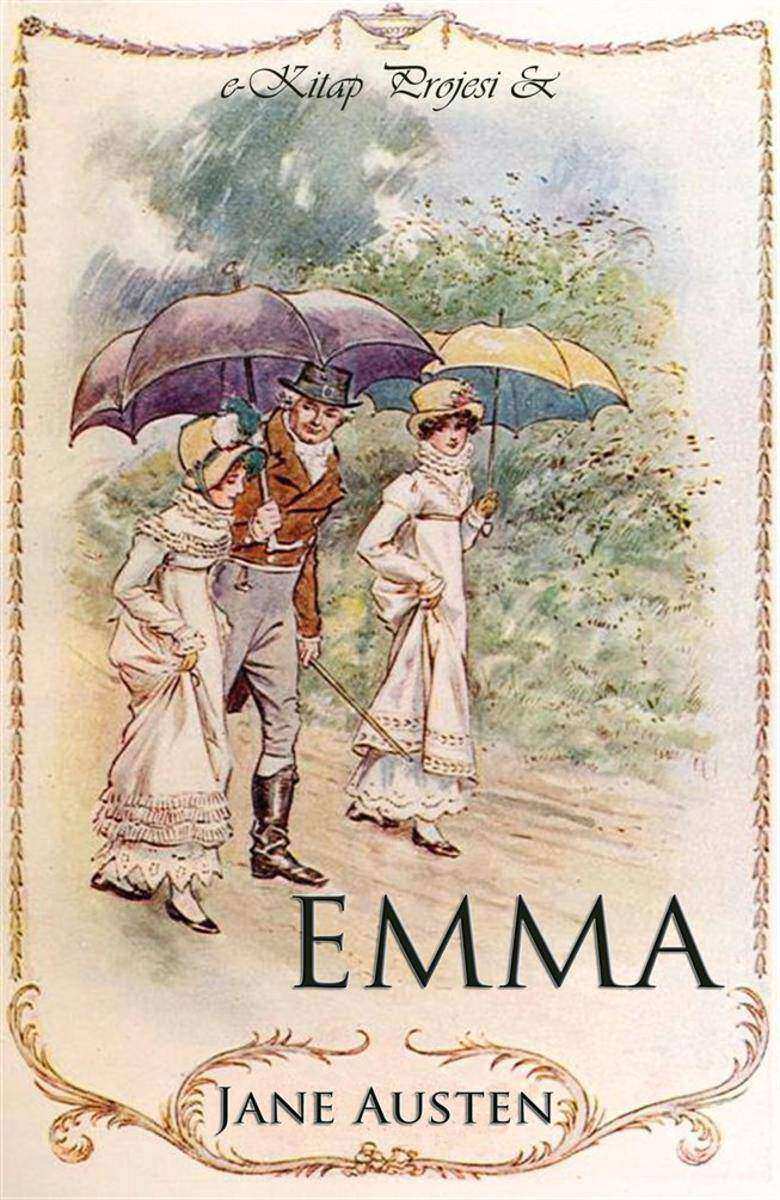
Emma
¥23.30
A few years ago, while visiting or, rather, rummaging about Notre-Dame, the author of this book found, in an obscure nook of one of the towers, the following word, engraved by hand upon the wall:— ? ? ? ? ? ? ? ANArKH. These Greek capitals, black with age, and quite deeply graven in the stone, with I know not what signs peculiar to Gothic caligraphy imprinted upon their forms and upon their attitudes, as though with the purpose of revealing that it had been a hand of the Middle Ages which had inscribed them there, and especially the fatal and melancholy meaning contained in them, struck the author deeply. He questioned himself; he sought to divine who could have been that soul in torment which had not been willing to quit this world without leaving this stigma of crime or unhappiness upon the brow of the ancient church. Afterwards, the wall was whitewashed or scraped down, I know not which, and the inscription disappeared. For it is thus that people have been in the habit of proceeding with the marvellous churches of the Middle Ages for the last two hundred years. Mutilations come to them from every quarter, from within as well as from without. The priest whitewashes them, the archdeacon scrapes them down; then the populace arrives and demolishes them. Thus, with the exception of the fragile memory which the author of this book here consecrates to it, there remains to-day nothing whatever of the mysterious word engraved within the gloomy tower of Notre-Dame,—nothing of the destiny which it so sadly summed up. The man who wrote that word upon the wall disappeared from the midst of the generations of man many centuries ago; the word, in its turn, has been effaced from the wall of the church; the church will, perhaps, itself soon disappear from the face of the earth. It is upon this word that this book is founded.
?tinapló: Wesselényi Miklós utazása Széchenyi Istvánnal, 1821-1822
¥28.78
Janka a csinos, 31 éves pincérn? legh?bb vágya, hogy belépjen életébe a nagy szerelem. Amikor megismerkedik Dáviddal, a híres énekessel, úgy érzi, benne megtalálta azt, akit mindig is keresett. Kapcsolatuk mégsem alakul felh?tlenül, bármilyen szenvedélyesen szerelmes is a popsztárba. Ahogy egyre jobban megismeri Dávidot, kiderül a férfi s?tét oldala. Janka azonban nem tud t?le elszakadni... A regény?arra keresi a választ, hogy milyen egy bántalmazó férfi és egy bántalmazói kapcsolat. Hogyan lehet egy ilyen kapcsolaton túljutni és ?nmagunkra találni annak ellenére, hogy képtelennek érezzük magunkat az elszakadásra? Hogyan lehet egy fájdalmas kapcsolaton túl is újra boldognak lenni?
Essays of Montaigne: {Complete & Illustrated}
¥37.36
The Odyssey (Greek:Odysseia) is one of two major ancient Greek epic poems attributed to Homer. It is, in part, a sequel to the Iliad, the other work ascribed to Homer. The poem is fundamental to the modern Western canon, and is the second oldest extant work of Western literature, the Iliad being the oldest. It is believed to have been composed near the end of the 8th century BC, somewhere in Ionia, the Greek coastal region of Anatolia. The poem mainly centers on the Greek hero Odysseus (known as Ulysses in Roman myths) and his journey home after the fall of Troy. It takes Odysseus ten years to reach Ithaca after the ten-year Trojan War. In his absence, it is assumed he has died, and his wife Penelope and son Telemachus must deal with a group of unruly suitors, the Mnesteres or Proci, who compete for Penelope's hand in marriage. It continues to be read in the Homeric Greek and translated into modern languages around the world. Many scholars believe that the original poem was composed in an oral tradition by an aoidos (epic poet/singer), perhaps a rhapsode (professional performer), and was more likely intended to be heard than read. The details of the ancient oral performance, and the story's conversion to a written work inspire continual debate among scholars. The Odyssey was written in a poetic dialect of Greek—a literary amalgam of Aeolic Greek, Ionic Greek, and other Ancient Greek dialects—and comprises 12,110 lines of dactylic hexameter. Among the most noteworthy elements of the text are its non-linear plot, and the influence on events of choices made by women and serfs, besides the actions of fighting men. In the English language as well as many others, the word odyssey has come to refer to an epic voyage. The Odyssey has a lost sequel, the Telegony, which was not written by Homer. It was usually attributed in Antiquity to Cinaethon of Sparta, but in one source was said to have been stolen from Musaeus by Eugamon or Eugammon of Cyrene (see Cyclic poets). ABOUT AUTHOR: Homeros, In the Western classical tradition, Homer (Ancient Greek: Homeros) is the author of the Iliad and the Odyssey, and is revered as the greatest of ancient Greek epic poets. These epics lie at the beginning of the Western canon of literature, and have had an enormous influence on the history of literature. When he lived is unknown. Herodotus estimates that Homer lived 400 years before his own time, which would place him at around 850 BC, while other ancient sources claim that he lived much nearer to the supposed time of the Trojan War, in the early 12th century BC. Most modern researchers place Homer in the 7th or 8th centuries BC. The formative influence of the Homeric epics in shaping Greek culture was widely recognized, and Homer was described as the teacher of Greece. Homer's works, which are about fifty percent speeches, provided models in persuasive speaking and writing that were emulated throughout the ancient and medieval Greek worlds. Fragments of Homer account for nearly half of all identifiable Greek literary papyrus finds. PeriodFor modern scholars "the date of Homer" refers not to an individual, but to the period when the epics were created. The consensus is that "the Iliad and the Odyssey date from around the 8th century BC, the Iliad being composed before the Odyssey, perhaps by some decades," i.e. earlier than Hesiod, the Iliad being the oldest work of Western literature. Over the past few decades, some scholars have argued for a 7th-century BC date. Oliver Taplin believes that the conclusion of modern researchers is that Homer dates to between 750 to 650 BC. Some of those who argue that the Homeric poems developed gradually over a long period of time give an even later date for the composition of the poems; according to Gregory Nagy for example, they only became fixed texts in the 6th century BC. The question of the historicity of Homer the individual is known as the "Homeric question"; there is no reliable biographical information handed down from classical antiquity. The poems are generally seen as the culmination of many generations of oral story-telling, in a tradition with a well-developed formulaic system of poetic composition. Some scholars, such as Martin West, claim that "Homer" is "not the name of a historical poet, but a fictitious or constructed name."
Korszimfónia: Harmincegy beszélgetés életünkr?l és világunkról
¥28.78
Bels? irányt?nk ahhoz az élethez vezet el, amelyr?l mindig is álmodtunk. Célunk felé tartva ráismerünk azokra a pontokra, ahol irányt kell változtatnunk, hogy kihasználhassuk teljes bels? potenciálunkat. Ez az inspiráló utazás minden életterületen átvezet: segít, hogy felismerjük életfeladatunkat, hogy meghozzuk a helyes d?ntéseket, hogy megvalósítsuk legrejtettebb vágyainkat. A híres életmódtanár ezúttal gyakorlati útmutatót ad ahhoz, miként menedzselhetjük sikeresen a saját életünket. "Már maga az a felismerés, hogy minden élethelyzetben igent mondhatok az életre, hihetetlenül gazdaggá tette a hétk?znapjaimat. ?jra meg újra próbára tettem, hogyan tudom az éveken át gy?jt?tt élettapasztalatokat és az új látásmódot alkalmazni, és az eredmények mindig azt igazolták, hogy minden egyes esetben lehetséges változást elérni. ?ppen csak meg kell teremteni a változás el?feltételeit." (a Szerz?) A K?nyvjelz? magazin 2015. májusi számában megjelent cikk: Okosabban kéne élni
Euthyphro
¥9.24
On the Origin of Species, published on 24 November 1859, is a work of scientific literature by Charles Darwin which is considered to be the foundation of evolutionary biology. Its full title was On the Origin of Species by Means of Natural Selection, or the Preservation of Favoured Races in the Struggle for Life. For the sixth edition of 1872, the short title was changed to The Origin of Species. Darwin's book introduced the scientific theory that populations evolve over the course of generations through a process of natural selection. It presented a body of evidence that the diversity of life arose by common descent through a branching pattern of evolution. Darwin included evidence that he had gathered on the Beagle expedition in the 1830s and his subsequent findings from research, correspondence, and experimentation. Various evolutionary ideas had already been proposed to explain new findings in biology. There was growing support for such ideas among dissident anatomists and the general public, but during the first half of the 19th century the English scientific establishment was closely tied to the Church of England, while science was part of natural theology. Ideas about the transmutation of species were controversial as they conflicted with the beliefs that species were unchanging parts of a designed hierarchy and that humans were unique, unrelated to other animals. The political and theological implications were intensely debated, but transmutation was not accepted by the scientific mainstream. The book was written for non-specialist readers and attracted widespread interest upon its publication. As Darwin was an eminent scientist, his findings were taken seriously and the evidence he presented generated scientific, philosophical, and religious discussion. The debate over the book contributed to the campaign by T. H. Huxley and his fellow members of the X Club to secularise science by promoting scientific naturalism. Within two decades there was widespread scientific agreement that evolution, with a branching pattern of common descent, had occurred, but scientists were slow to give natural selection the significance that Darwin thought appropriate. During the "eclipse of Darwinism" from the 1880s to the 1930s, various other mechanisms of evolution were given more credit. With the development of the modern evolutionary synthesis in the 1930s and 1940s, Darwin's concept of evolutionary adaptation through natural selection became central to modern evolutionary theory, and it has now become the unifying concept of the life sciences. Summary of Darwin's theory: Darwin's theory of evolution is based on key facts and the inferences drawn from them, which biologist Ernst Mayr summarised as follows: ? Every species is fertile enough that if all offspring survived to reproduce the population would grow (fact).? Despite periodic fluctuations, populations remain roughly the same size (fact).? Resources such as food are limited and are relatively stable over time (fact).? A struggle for survival ensues (inference).? Individuals in a population vary significantly from one another (fact).? Much of this variation is inheritable (fact).? Individuals less suited to the environment are less likely to survive and less likely to reproduce; individuals more suited to the environment are more likely to survive and more likely to reproduce and leave their inheritable traits to future generations, which produces the process of natural selection (inference).? This slowly effected process results in populations changing to adapt to their environments, and ultimately, these variations accumulate over time to form new species (inference).
Falling in Love
¥18.74
Art, with its finite means, cannot hope to record the infinite variety and com-plexity of Nature, and so contents itself with a partial statement, addressing this to the imagination for the full and perfect meaning. This inadequation, and the artificial ad-justments which it involves, are tolerated by right of what is known as artistic convention; and as each art has its own particular limitations, so each has its own particular conventions. Sculpture reproduces the forms of Nature, but discards the color without any shock to our ideas of verity; Painting gives us the color, but not the third dimension, and we are satisfied; and Architecture ispurely conventional, since it does not even aim at the imitation of natural form. The Conventions of Line Drawing,Of the kindred arts which group themselves under the head of Painting, none is based on such broad conventions as that with which we are immediately concerned—the art of Pen Drawing. In this medium, Nature's variety of color, when not positively ignored, is suggested by means of sharp black lines, of varying thickness, placed more or less closely together upon white paper; while natural form depends primarily for its representation upon arbitrary boundary lines. There is, of course, no authority in Na-ture for a positive outline: we see objects only by the difference in color of the other objects behind and around them. The technical capacity of the pen and ink medium, however, does not provide a value corresponding to every natural one, so that a broad interpretation has to be adopted which eliminates the less positive values; and, that form may not likewise be sacrificed, the outline becomes necessary, that light objects may stand relieved against light. This outline is the most characteristic, as it is the most indispensable, of the conventions of line drawing. To seek to abolish it only involves a resort to expedients no less artificial, and the results of all such attempts, dependent as they necessarily are upon elaboration of color, and a general indirectness of method, lack some of the best characteristics of pen drawing. More frequently, however, an elaborate color-scheme is merely a straining at the technical limitations of the pen in an effort to render the greatest possible number of values. It may be worth while to inquire whether excellence in pen drawing consists in thus dispensing with its recognized conventions, or in otherwise taxing the technical re-sources of the instrument. This involves the question of Style,—of what characteristic pen methods are,—a question which we will briefly consider...
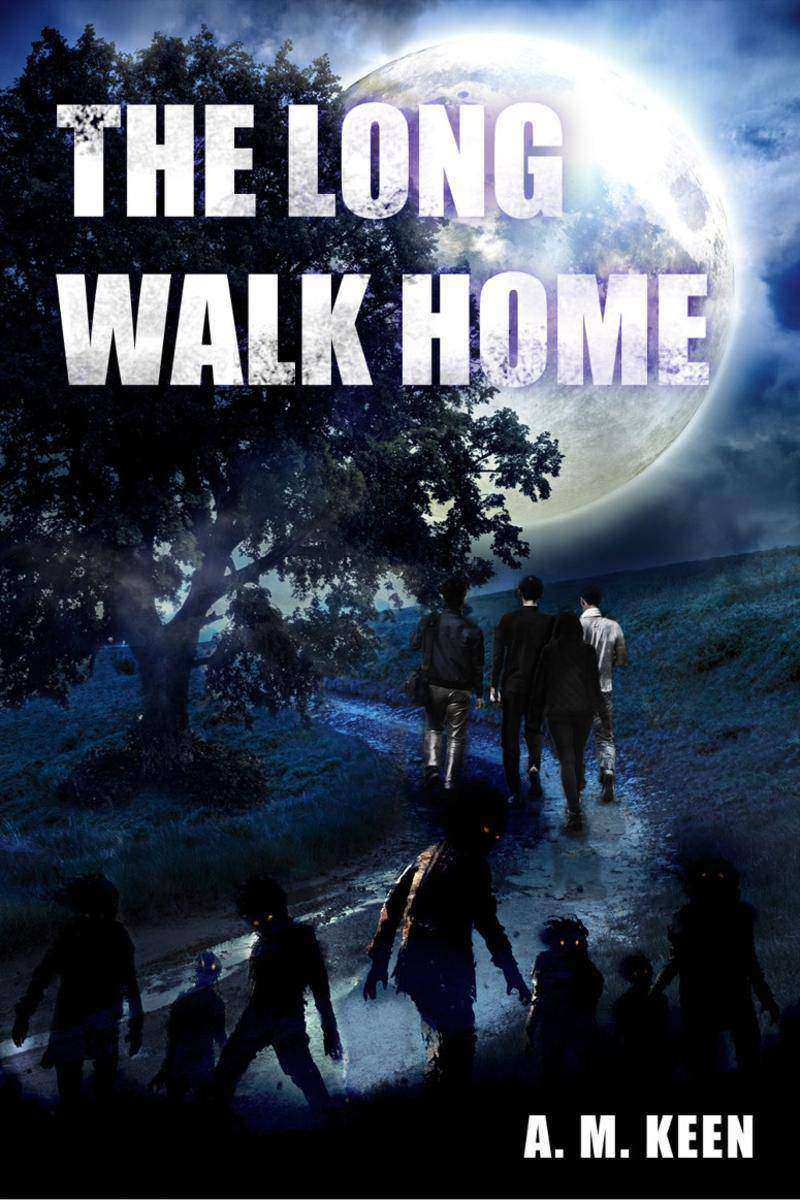
Long Walk Home
¥39.14
In one single day the entire UK changed, and could never revert back to normality. Bombs detonated in every major city across England, releasing the little known 'Non Compos Mentis Virus,' and with it destroying seventy-five percent of the population. However, the virus didn't kill those who contracted it, but instead infected their minds and senses, turning them in to violent psychopaths that can feel no pain and also gave them a new goal in life; to destroy anyone who does not carry the same virus. Bucky Jackson awakes from a minibus crash that killed most of his school cricket team. Rescued by his friend Johnny, the remaining kids and teachers seek sanctuary inside a hardware shop in a small, Northamptonshire town.As the days pass, they decide to try for a safe zone at a football stadium a few towns away. With every step danger lurks, not only from the zombies that swarm the area in their thousands, but more so from the handful of people who survived the virus outbreak. As their journey continues, Bucky is looked to as a leader to help them reach their destination. They encounter killer clowns, hordes of the undead and an organised crime outfit as well as dealing with treachery within their own group. Bucky must learn to unite his team and teach them to rely on each other, as their journey may be longer than anticipated....
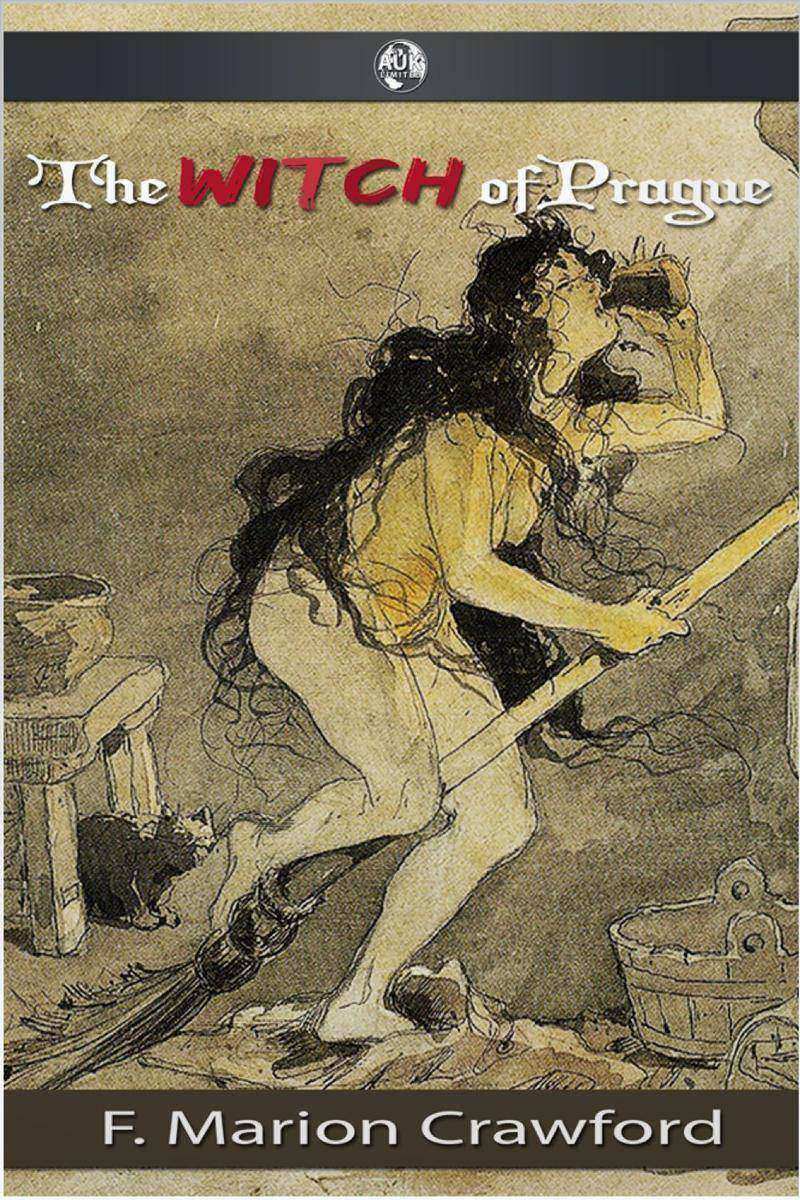
Witch of Prague
¥19.52
A classic fantasy novel by prolific American writer F. Marion Crawford.

101 Amazing Facts about the SNES
¥19.52
This entry in Jimmy Russell's Games Console History series is all about Nintendo's iconic SNES - the Super Nintendo Entertainment System, also known as the Super Famicom in Japan. The book contains over 100 facts about the console, organised into sections such as hardware, peripherals, history, legacy and more, including some incredible information you probably never knew. From retro gamers who were there at the time to total n00bz who think a PlayStation is Old Skool, there's something in this fascinating book for everyone!

A-Z of Atari 2600 Games
¥19.52
The A-Z of Atari 2600 Games: Volume 3 features reviews of three different games for each letter of the alphabet. The games range from the very earliest releases in the 70s to the modern homebrew games of today. This book shows you just how diverse the library of titles is for the Atari 2600 and how it became one of the best selling consoles of all time.


