


 购物车
购物车 个人中心
个人中心

101 Amazing Victoria Beckham Facts
¥19.52
Are you the world's biggest Victoria Beckham Fan? Do you know everything there is to know about the ex-Spice Girl and one of today's greatest fashion icons? Then this is the book for you! In this easy-to-digest eBook are 101 facts about your favourite celebrity - do you know all of them?Test yourself and your friends with these handily-packaged facts easily organised into categories for maximum enjoyment. Sections include Victoria's fashion, her singing career and some crazy facts about her life. Show everyone that you are the master of VB Knowledge!

50 Quick Spooky Halloween Facts
¥9.71
This book is a quick read full of Spooky Facts on Halloween. Do you know where the name comes from? What happens if a bat flies over your house three times? Find out these facts and more in this book!
Brothers - There is no armor against fate
¥25.80
James Shirley was born in London in September 1596. His education was through a collection of England's finest establishments: Merchant Taylors' School, London, St John's College, Oxford, and St Catharine's College, Cambridge, where he took his B.A. degree in approximately 1618. He first published in 1618, a poem entitled Echo, or the Unfortunate Lovers. As with many artists of this period full details of his life and career are not recorded. Sources say that after graduating he became "e;a minister of God's word in or near St Albans."e; A conversion to the Catholic faith enabled him to become master of St Albans School from 1623-25. He wrote his first play, Love Tricks, or the School of Complement, which was licensed on February 10th, 1625. From the given date it would seem he wrote this whilst at St Albans but, after its production, he moved to London and to live in Gray's Inn. For the next two decades, he would write prolifically and with great quality, across a spectrum of thirty plays; through tragedies and comedies to tragicomedies as well as several books of poetry. Unfortunately, his talents were left to wither when Parliament passed the Puritan edict in 1642, forbidding all stage plays and closing the theatres. Most of his early plays were performed by Queen Henrietta's Men, the acting company for which Shirley was engaged as house dramatist. Shirley's sympathies lay with the King in battles with Parliament and he received marks of special favor from the Queen. He made a bitter attack on William Prynne, who had attacked the stage in Histriomastix, and, when in 1634 a special masque was presented at Whitehall by the gentlemen of the Inns of Court as a practical reply to Prynne, Shirley wrote the text-The Triumph of Peace. Shirley spent the years 1636 to 1640 in Ireland, under the patronage of the Earl of Kildare. Several of his plays were produced by his friend John Ogilby in Dublin in the first ever constructed Irish theatre; The Werburgh Street Theatre. During his years in Dublin he wrote The Doubtful Heir, The Royal Master, The Constant Maid, and St. Patrick for Ireland. In his absence from London, Queen Henrietta's Men sold off a dozen of his plays to the stationers, who naturally, enough published them. When Shirley returned to London in 1640, he finished with the Queen Henrietta's company and his final plays in London were acted by the King's Men. On the outbreak of the English Civil War Shirley served with the Earl of Newcastle. However when the King's fortunes began to decline he returned to London. There his friend Thomas Stanley gave him help and thereafter Shirley supported himself in the main by teaching and publishing some educational works under the Commonwealth. In addition to these he published during the period of dramatic eclipse four small volumes of poems and plays, in 1646, 1653, 1655, and 1659. It is said that he was "e;a drudge"e; for John Ogilby in his translations of Homer's Iliad and the Odyssey, and survived into the reign of Charles II, but, though some of his comedies were revived, his days as a playwright were over. His death, at age seventy, along with that of his wife, in 1666, is described as one of fright and exposure due to the Great Fire of London which had raged through parts of London from September 2nd to the 5th. He was buried at St Giles in the Fields, in London, on October 29th, 1666.
Sherlock Holmes and the Whitechapel Murders
¥58.76
It is the year 1888. A madman stalks the East End of London and only Sherlock Holmes and his trusted colleague and scribe Dr. John Watson stand between him and the women he preys upon. However, the World's first Consulting Detective is plunged into a web of intrigue and deceit. Is Jack the Ripper acting alone? Is there a conspiracy to murder fallen women in Whitechapel? How far must Holmes go to stop it? Add a plot to steal the most famous jewels in existence and a sinister figure known only as 'The Professor' and you have more than one mystery to be solved...

Jazz Music Quiz Book
¥24.43
Do you enjoy listening to jazz music? Can you name the many great artists that the genre has produced? Are you familiar with the songs they are known for? If you think you know all about jazz, the time has come to put your knowledge to the test with this exciting new quiz book?Which jazzmen had a hit in 1962 with 'Midnight in Moscow' earning them a gold disc? Who recorded 'Star Dust & Beyond: A Tribute to Artie Shaw' in 2006? What year did Glenn Miller release 'In the Mood'? If you want to find out the answer to these questions, you need look no further than The Jazz Quiz Book.With 100 questions about the people who have played a part in creating the jazz sound through the years including the artists, their nicknames, the bands, the instruments that they played and many favourite songs from yesteryear, this book is sure to appeal to music fans everywhere. If you like jazz, you will love this quiz book.
Sherlock Holmes and the Acton Body-Snatchers
¥19.52
In this compelling short story, Holmes and Watson receive an early internment as punishment for infiltrating the Body-Snatchers Club. Will they survive to solve the nasty ongoing case of the missing boy sopranos? This Sherlockian gem was first published in 2014 in the third collection of the Final Tales of Sherlock Holmes.
Life, Liberty and the Pursuit of Utility
¥132.34
A volume on the nature, ingredients, causes and consequences of human happiness by the father and son team of Anthony and Charles Kenny.
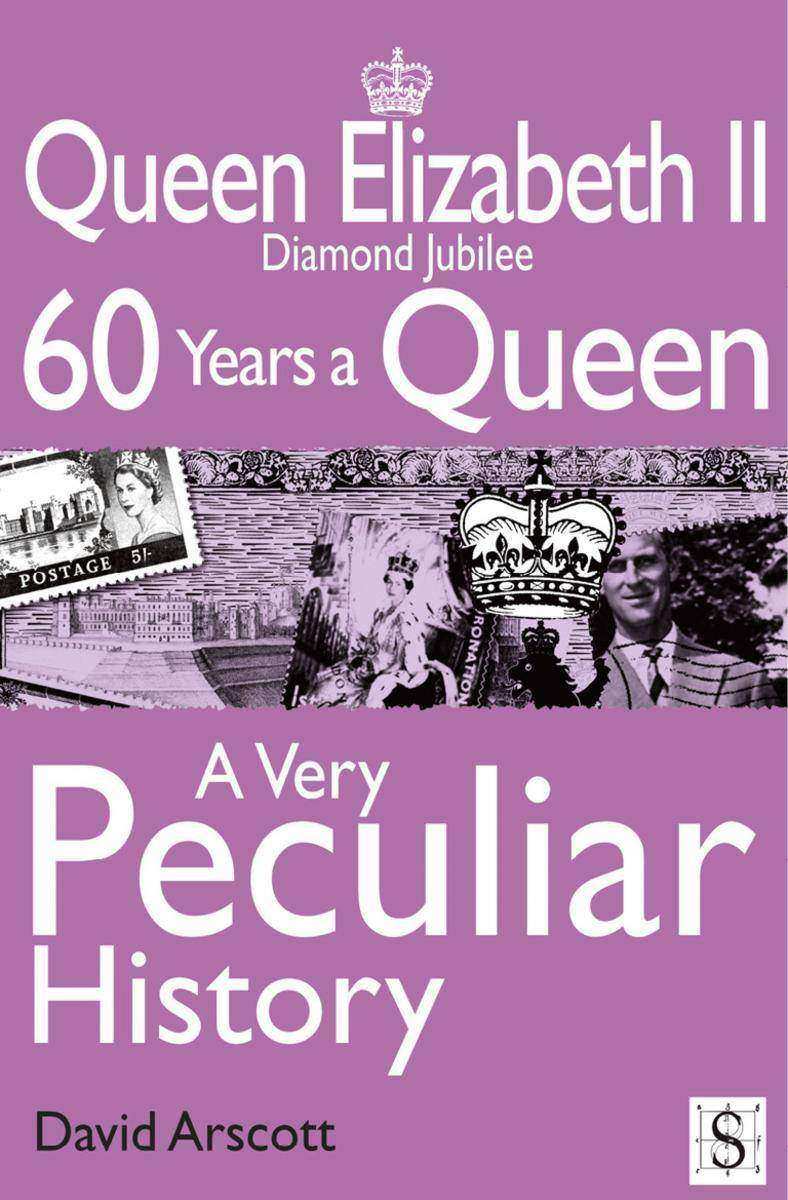
Queen Elizabeth II, A Very Peculiar History
¥58.76
EIIR Queen Elizabeth II, 60 Years a Queen, A Very Peculiar History' uniquely explores the life and times of Her Majesty Queen Elizabeth II as we approach her 2012 Diamond Jubilee. The story that unfolds is one of doughty determination - the story of a young monarch who finds herself thrust into a new world of relentless public exposure, whose own family turns out to be as frail as everyone else's, but who somehow, for a full 60 years and counting, manages to steer the institution through the choppy waters intact. David Arscott provides an eccentric account of the trials and tribulations that have beset the Queen's reign, from the glamour of her coronation, through the gloom of her 'annus horribilis' to the impending dawn of her Diamond Jubilee.
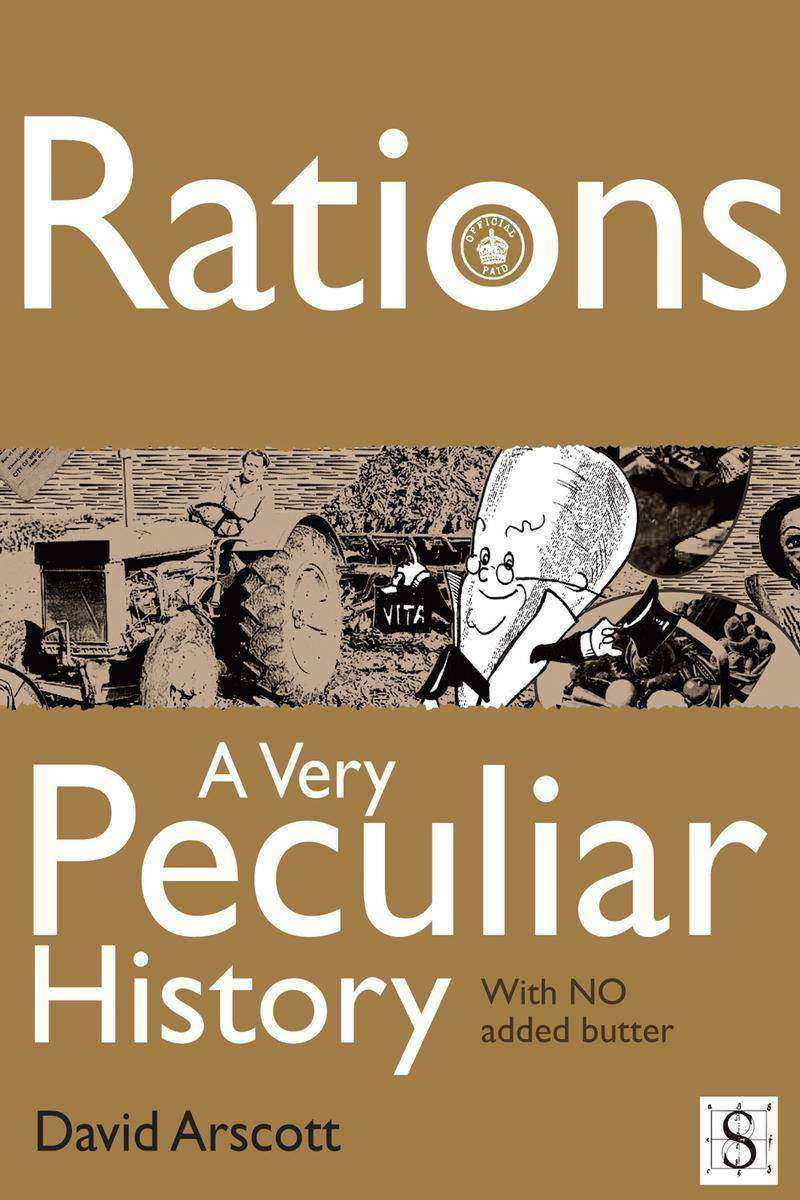
Rations, A Very Peculiar History
¥58.76
When war broke out in 1939, few knew that they would soon be fighting to survive, let alone how or when it would end. 'Rations: A Very Peculiar History' looks at the measures the British government took to ensure the wellbeing of its people during wartime, and how the British public dealt with it. With some stealing, some hoarding, but most just trying to get by, it was one of the bleakest periods in British history. But there's a reason they called it 'the Blitz spirit' - this title features amazing tales of camaraderie and good humour in the face of bombs and hunger. Featuring incredible food-and-energy-saving recipes used at the time, along with quotes from survivors, 'Rations: A Very Peculiar History' will transport you back to a time when even Buckingham Palace and the Ritz hotel weren't above swapping a bit of venison for a bit of lobster.
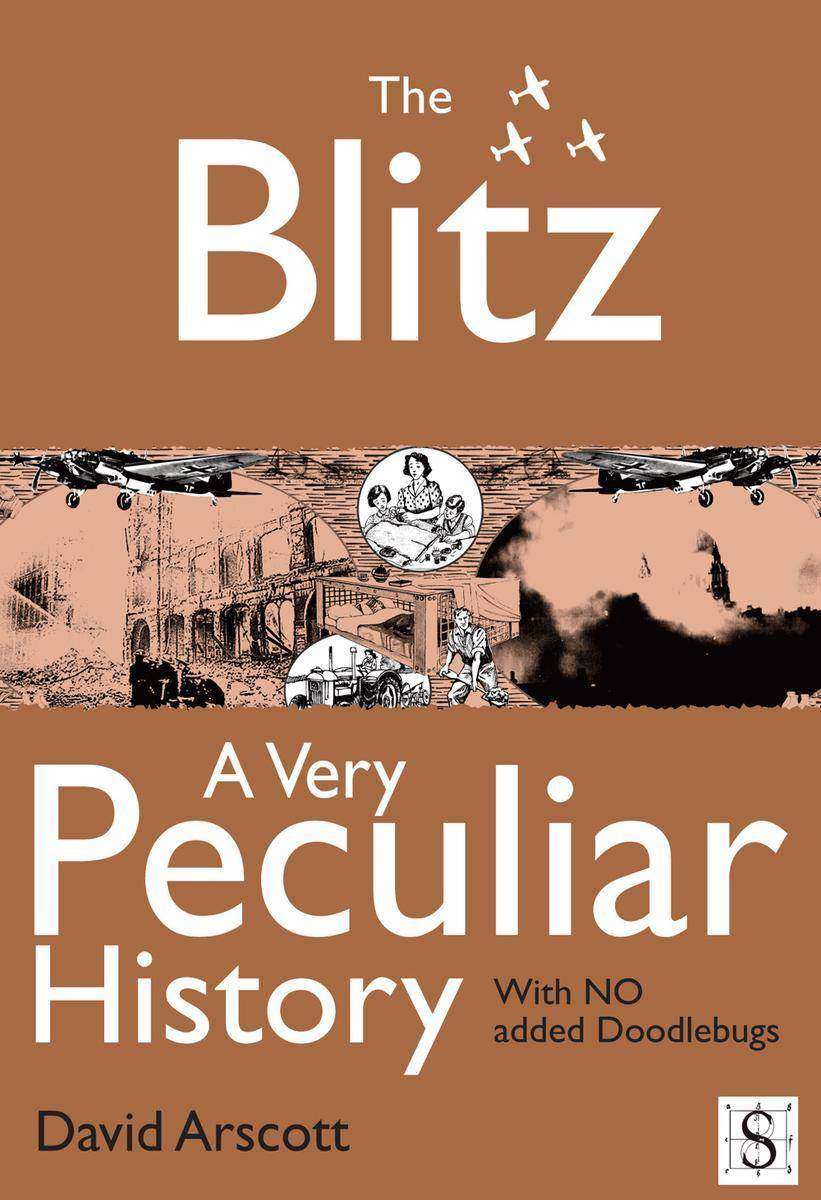
Blitz, A Very Peculiar History
¥58.76
Taking a unique look at how Britain survived the bombing of its major cities, 'The Blitz, A Very Peculiar History' tells a story of blackouts, Bletchley Park and bravery during the darkest (literally) period of World War II. From Dunkirk to Dad's Army, explore the many ways in which Britain tried to foil the incoming bomber planes, featuring quirky stories and fascinating trivia about this period of history. Were German paratroopers really dropped disguised as nuns? Find out the answer to this question and many more even more bizarre ones throughout the course of this amazing tale of sacrifice and survival in the face of adversity.
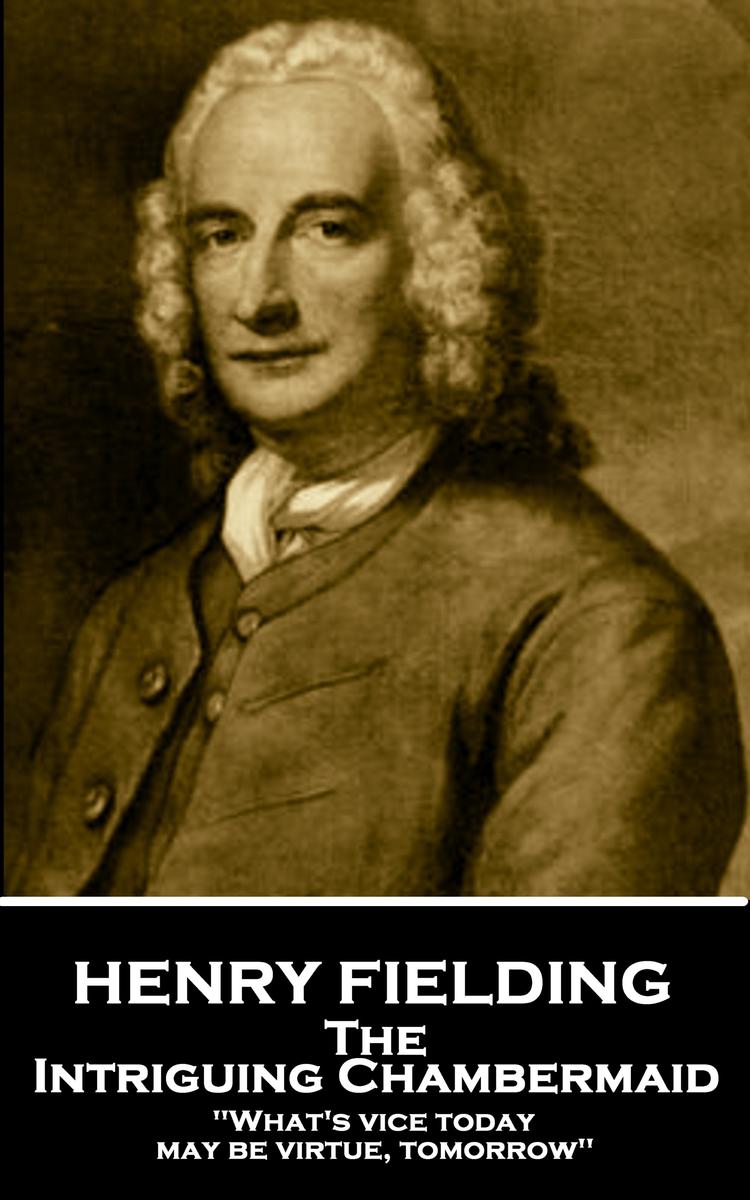
Intriguing Chambermaid - What's vice today may be virtue, tomorrow
¥14.03
Henry Fielding was born at Sharpham Park, near Glastonbury, in Somerset on April 22nd 1707. His early years were spent on his parents' farm in Dorset before being educated at Eton.An early romance ended disastrously and with it his removal to London and the beginnings of a glittering literary career; he published his first play, at age 21, in 1728.He was prolific, sometimes writing six plays a year, but he did like to poke fun at the authorities. His plays were thought to be the final straw for the authorities in their attempts to bring in a new law. In 1737 The Theatrical Licensing Act was passed. At a stroke political satire was almost impossible. Fielding was rendered mute. Any playwright who was viewed with suspicion by the Government now found an audience difficult to find and therefore Theatre owners now toed the Government line.Fielding was practical with the circumstances and ironically stopped writing to once again take up his career in the practice of law and became a barrister after studying at Middle Temple. By this time he had married Charlotte Craddock, his first wife, and they would go on to have five children. Charlotte died in 1744 but was immortalised as the heroine in both Tom Jones and Amelia.Fielding was put out by the success of Samuel Richardson's Pamela, or Virtue Rewarded. His reaction was to spur him into writing a novel. In 1741 his first novel was published; the successful Shamela, an anonymous parody of Richardson's novel.Undoubtedly the masterpiece of Fielding's career was the novel Tom Jones, published in 1749. It is a wonderfully and carefully constructed picaresque novel following the convoluted and hilarious tale of how a foundling came into a fortune.Fielding was a consistent anti-Jacobite and a keen supporter of the Church of England. This led to him now being richly rewarded with the position of London's Chief Magistrate. Fielding continued to write and his career both literary and professional continued to climb.In 1749 he joined with his younger half-brother John, to help found what was the nascent forerunner to a London police force, the Bow Street Runners. Fielding's ardent commitment to the cause of justice in the 1750s unfortunately coincided with a rapid deterioration in his health. Such was his decline that in the summer of 1754 he travelled, with Mary and his daughter, to Portugal in search of a cure. Gout, asthma, dropsy and other afflictions forced him to use crutches. His health continued to fail alarmingly.Henry Fielding died in Lisbon two months later on October 8th, 1754.
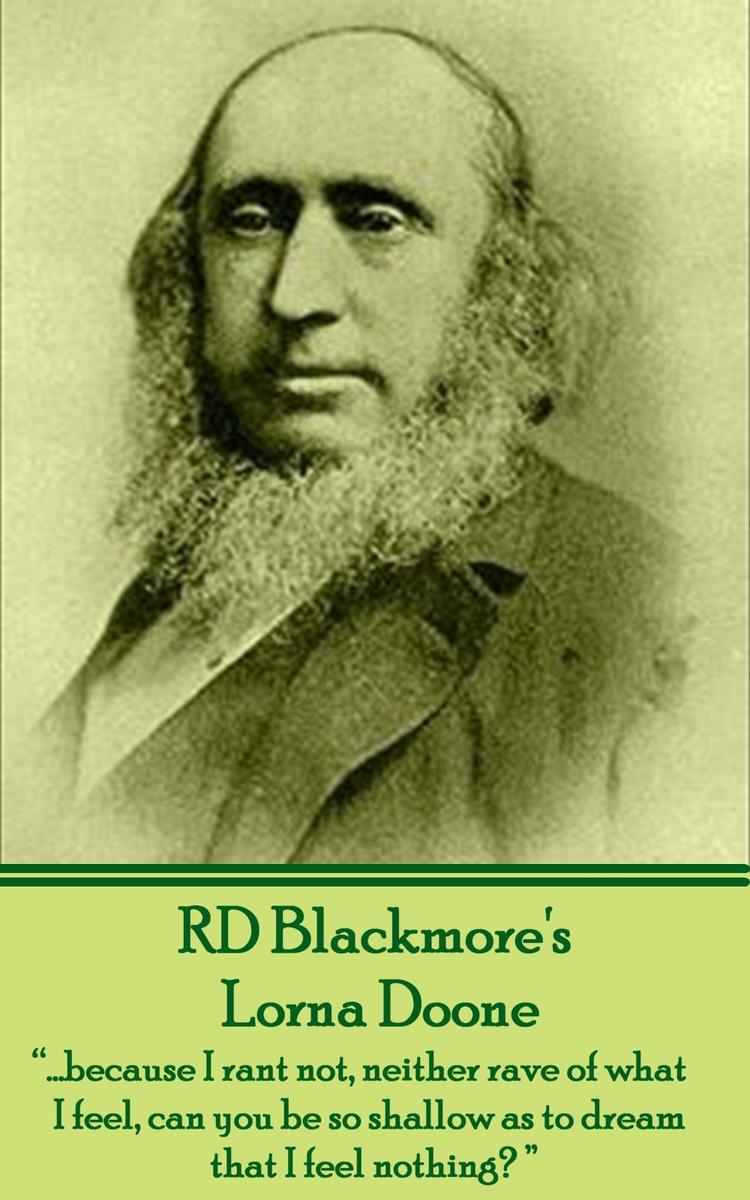
Lorna Doone - ....because I rant not, neither rave of what I feel
¥23.45
Lorna Doone is a romance that tells the story of a seventeenth-century successful farmer, John Ridd, whose father is killed by the Doones, a clan of unruly brigands living in the wilderness. When John once accidently ventures into the clan's area, he meets the beautiful Lorna and falls in love with her. In order to rescue his beloved from the life that she hates, he has to go through a long and violent struggle with his rival Carver Doone who also claims Lorna's hand. He eventually succeeds in helping her escape from the clan to his family's home which is later attacked by Carver. Later, a family friend reveals to them that Lorna does not really belong to the Doone clan and that she was kidnapped after a raid during which her noble and extremely wealthy mother was murdered. As an heiress to her mother's fortunes, Lorna is now legally asked to leave for London and become her great-uncle's ward. Political upheaval shakes the whole kingdom and John is arrested for false accusations. After being brought to London and absolved from guilt, he meets Lorna who is still in love with him. Lorna is eventually allowed to go back to the country and marry John. In the midst of their wedding ceremony, Carver suddenly enters the church and hits Lorna. John follows him and they engage in a fight that ends in Carver's death.
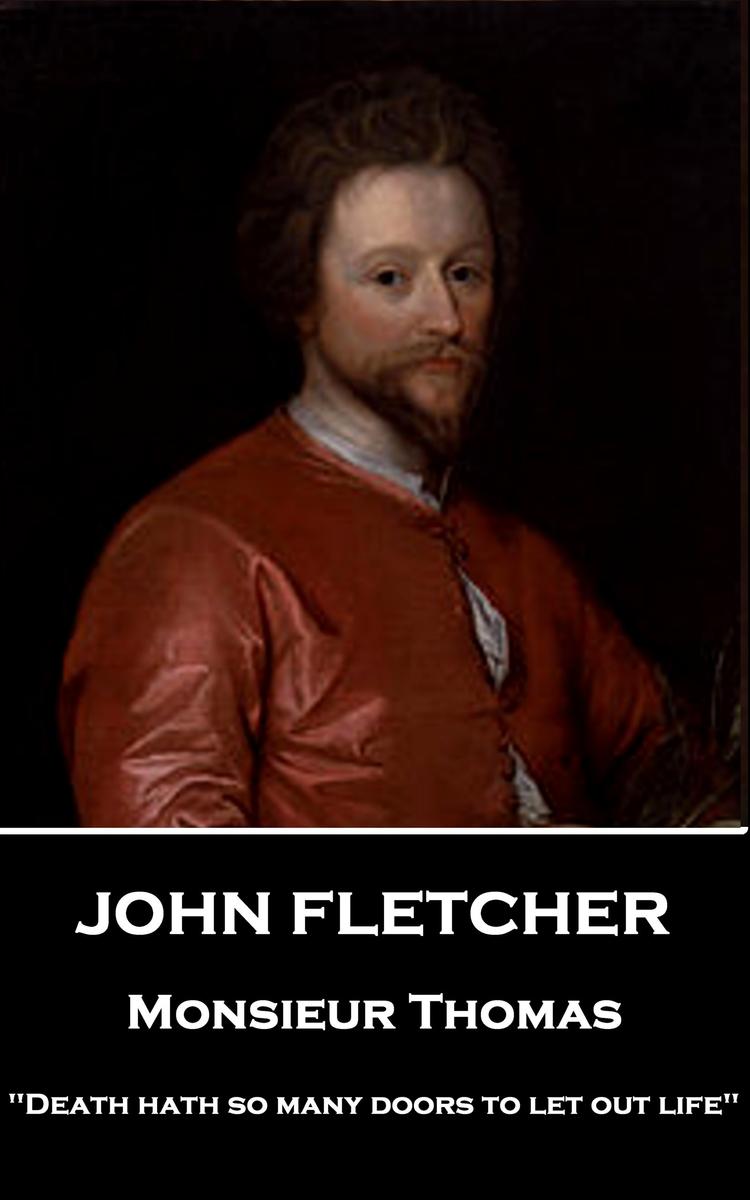
Monsieur Thomas - Death hath so many doors to let out life
¥26.98
John Fletcher was born in December, 1579 in Rye, Sussex. He was baptised on December 20th. As can be imagined details of much of his life and career have not survived and, accordingly, only a very brief indication of his life and works can be given. Young Fletcher appears at the very young age of eleven to have entered Corpus Christi College at Cambridge University in 1591. There are no records that he ever took a degree but there is some small evidence that he was being prepared for a career in the church. However what is clear is that this was soon abandoned as he joined the stream of people who would leave University and decamp to the more bohemian life of commercial theatre in London. The upbringing of the now teenage Fletcher and his seven siblings now passed to his paternal uncle, the poet and minor official Giles Fletcher. Giles, who had the patronage of the Earl of Essex may have been a liability rather than an advantage to the young Fletcher. With Essex involved in the failed rebellion against Elizabeth Giles was also tainted. By 1606 John Fletcher appears to have equipped himself with the talents to become a playwright. Initially this appears to have been for the Children of the Queen's Revels, then performing at the Blackfriars Theatre. Fletcher's early career was marked by one significant failure; The Faithful Shepherdess, his adaptation of Giovanni Battista Guarini's Il Pastor Fido, which was performed by the Blackfriars Children in 1608. By 1609, however, he had found his stride. With his collaborator John Beaumont, he wrote Philaster, which became a hit for the King's Men and began a profitable association between Fletcher and that company. Philaster appears also to have begun a trend for tragicomedy. By the middle of the 1610s, Fletcher's plays had achieved a popularity that rivalled Shakespeare's and cemented the pre-eminence of the King's Men in Jacobean London. After his frequent early collaborator John Beaumont's early death in 1616, Fletcher continued working, both singly and in collaboration, until his own death in 1625. By that time, he had produced, or had been credited with, close to fifty plays.
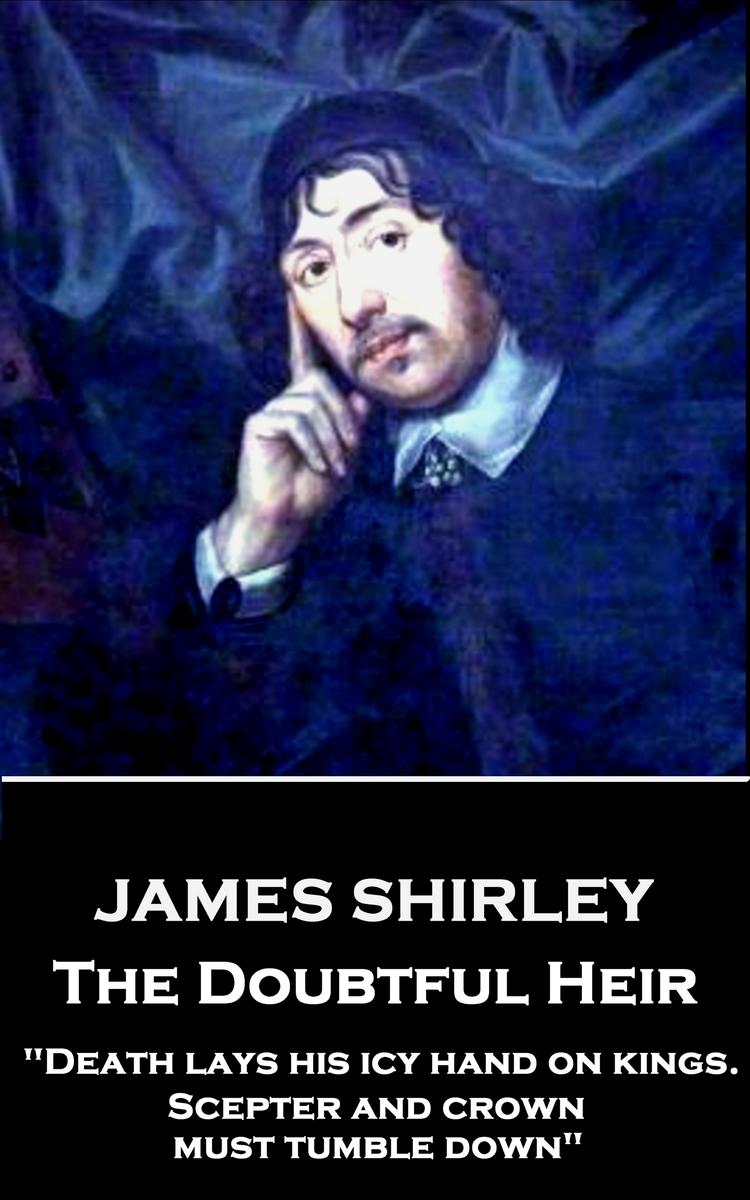
Doubtful Heir - Death lays his icy hand on kings. Scepter and crown must tumble
¥25.80
James Shirley was born in London in September 1596. His education was through a collection of England's finest establishments: Merchant Taylors' School, London, St John's College, Oxford, and St Catharine's College, Cambridge, where he took his B.A. degree in approximately 1618. He first published in 1618, a poem entitled Echo, or the Unfortunate Lovers. As with many artists of this period full details of his life and career are not recorded. Sources say that after graduating he became "e;a minister of God's word in or near St Albans."e; A conversion to the Catholic faith enabled him to become master of St Albans School from 1623-25. He wrote his first play, Love Tricks, or the School of Complement, which was licensed on February 10th, 1625. From the given date it would seem he wrote this whilst at St Albans but, after its production, he moved to London and to live in Gray's Inn. For the next two decades, he would write prolifically and with great quality, across a spectrum of thirty plays; through tragedies and comedies to tragicomedies as well as several books of poetry. Unfortunately, his talents were left to wither when Parliament passed the Puritan edict in 1642, forbidding all stage plays and closing the theatres. Most of his early plays were performed by Queen Henrietta's Men, the acting company for which Shirley was engaged as house dramatist. Shirley's sympathies lay with the King in battles with Parliament and he received marks of special favor from the Queen. He made a bitter attack on William Prynne, who had attacked the stage in Histriomastix, and, when in 1634 a special masque was presented at Whitehall by the gentlemen of the Inns of Court as a practical reply to Prynne, Shirley wrote the text-The Triumph of Peace. Shirley spent the years 1636 to 1640 in Ireland, under the patronage of the Earl of Kildare. Several of his plays were produced by his friend John Ogilby in Dublin in the first ever constructed Irish theatre; The Werburgh Street Theatre. During his years in Dublin he wrote The Doubtful Heir, The Royal Master, The Constant Maid, and St. Patrick for Ireland. In his absence from London, Queen Henrietta's Men sold off a dozen of his plays to the stationers, who naturally, enough published them. When Shirley returned to London in 1640, he finished with the Queen Henrietta's company and his final plays in London were acted by the King's Men. On the outbreak of the English Civil War Shirley served with the Earl of Newcastle. However when the King's fortunes began to decline he returned to London. There his friend Thomas Stanley gave him help and thereafter Shirley supported himself in the main by teaching and publishing some educational works under the Commonwealth. In addition to these he published during the period of dramatic eclipse four small volumes of poems and plays, in 1646, 1653, 1655, and 1659. It is said that he was "e;a drudge"e; for John Ogilby in his translations of Homer's Iliad and the Odyssey, and survived into the reign of Charles II, but, though some of his comedies were revived, his days as a playwright were over. His death, at age seventy, along with that of his wife, in 1666, is described as one of fright and exposure due to the Great Fire of London which had raged through parts of London from September 2nd to the 5th. He was buried at St Giles in the Fields, in London, on October 29th, 1666.
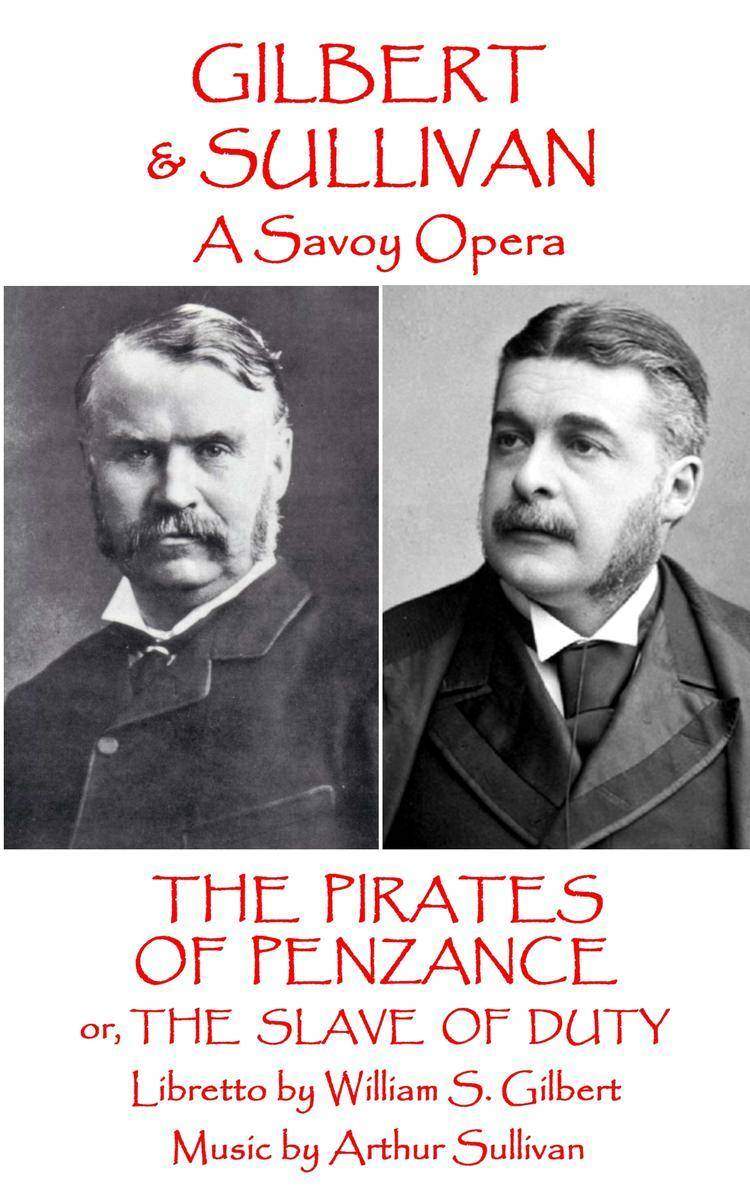
Pirates of Penzance - or The Slave of Duty
¥26.98
The partnership between William Schwenck Gilbert and Arthur Seymour Sullivan and their canon of Savoy Operas is rightly lauded by all lovers of comic opera the world over. Gilbert's sharp, funny words and Sullivan's deliciously lively and hummable tunes create a world that is distinctly British in view but has the world as its audience. Both men were exceptionally talented and gifted in their own right and wrote much, often with other partners, that still stands the test of time. However, together as a team they created Light or Comic Operas of a standard that have had no rivals equal to their standard, before or since. That's quite an achievement. To be recognised by the critics is one thing but their commercial success was incredible. The profits were astronomical, allowing for the building of their own purpose built theatre - The Savoy Theatre. Beginning with the first of their fourteen collaborations, Thespis in 1871 and travelling through many classics including The Sorcerer (1877), H.M.S. Pinafore (1878), The Pirates of Penzance (1879), The Mikado (1885), The Gondoliers (1889) to their finale in 1896 with The Grand Duke, Gilbert & Sullivan created a legacy that is constantly revived and admired in theatres and other media to this very day.
Compleat Angler
¥19.52
This fascinating and loving tribute to the sport of fishing by English writer Izaak Walton has long been regarded as an absolute classic.
Explaining Britain and Her Empire
¥39.14
In the six decades between 1851 and 1914 Britain was transformed by industrialisation and empire. Her politics, society, culture and economy all underwent a radical transition. This is an Explaining History e-book written specifically for A level students to help them master this complex and challenging period of study. It covers * The evolution of the party system in Victorian Britain * The development of working class culture and politics * The expansion of empire and the rise in international tensions * Everyday life for Victorian people of differing social classes * The impact of the industrial revolution * The growth in the franchise * Unrest in Ireland and the issue of home rule * Liberal and Conservative social reforms * Popular imperialism * The causes of the First World War. The e-book also contains a link to a resources web page with downloadable study aids, exam help and essay writing guides.
Inconstant - Those who know the least obey the best.
¥21.09
George Farquhar was born in Derry, Ireland in 1677, one of seven children. Farquhar was educated at Foyle College and later, aged 17, he entered Trinity College, Dublin. He departed after only two years, accounts vary as to why, and he took to acting on the Dublin stage. As an actor he seems to have had no real talent. A terrible accident, when he failed to distinguish between a tipped foil and a deadly rapier, and seriously wounded a fellow actor, resolved Farquhar to give up acting for good. His first play, Love and a Bottle, was well received at London's Drury Lane Theatre in 1699 and was admired "e;for its sprightly Dialogue and busy Scenes."e; With the play a success Farquhar settled his talents on a career as a playwright. He had a second play open that same year; The Constant Couple. Again, it was warmly received on debuting at Drury Lane and proved a great success. However, another interest and opportunity now unfolded into his life. He received a commission in the regiment of the Earl of Orrery. His time now became divided between the duties of a successful new playwright and the vocations of soldier. In 1701 Farquhar wrote and debuted a sequel to the Constant Couple, called and based on its main character; Sir Harry Wildair. The following year was to be prolific for the young playwright. He penned both The Inconstant or, The Way To Win and The Twin-Rivals as well as publishing Love and Business, a collection that included letters, verse, and A Discourse Upon Comedy. His work for the army, recruiting soldiers to fight in the War of the Spanish Succession, occupied much of his time for the next three years, and he was to write little except The Stage Coach, in 1774. Farquhar was able, however, to draw upon these years of recruiting experience for his next comedy, The Recruiting Officer in 1706. Early in 1707, Farquhar wrote what was to be his masterpiece: The Beaux Stratagem. In these last two plays his real contribution to the English drama is all the more apparent. He introduced a verbal vigour and sparring, as well as a love of character that are more usually associated with Elizabethan dramatists and laid much of the foundations for Sheridan and Congreve to build upon. George Farquhar, aged only 40, died on April 29th, 1707, almost two months after the debut of his greatest work. He was buried in the Church of St. Martin in the Fields, London, on May 3rd, 1707.
Sherlockian Ruminations from a Stormy Petrel
¥9.71
Here are a few essays about puzzlers in and about Arthur Conan Doyle's Sherlock Holmes stories: The Devil's Foot and the author's cautious inserts of the Christian sacraments he learnt as a boy; A liturgical opposite - the Hebrew rabbi in Scandal in Bohemia; The Boscombe Valley murder re-emerging in a contemporary divining of a murder at Pemberley; The definitive solution and identification of Jack the Ripper - search no further; AND The Salvation Army and Suffragettes picked-on and prodded in the Red-Headed League.
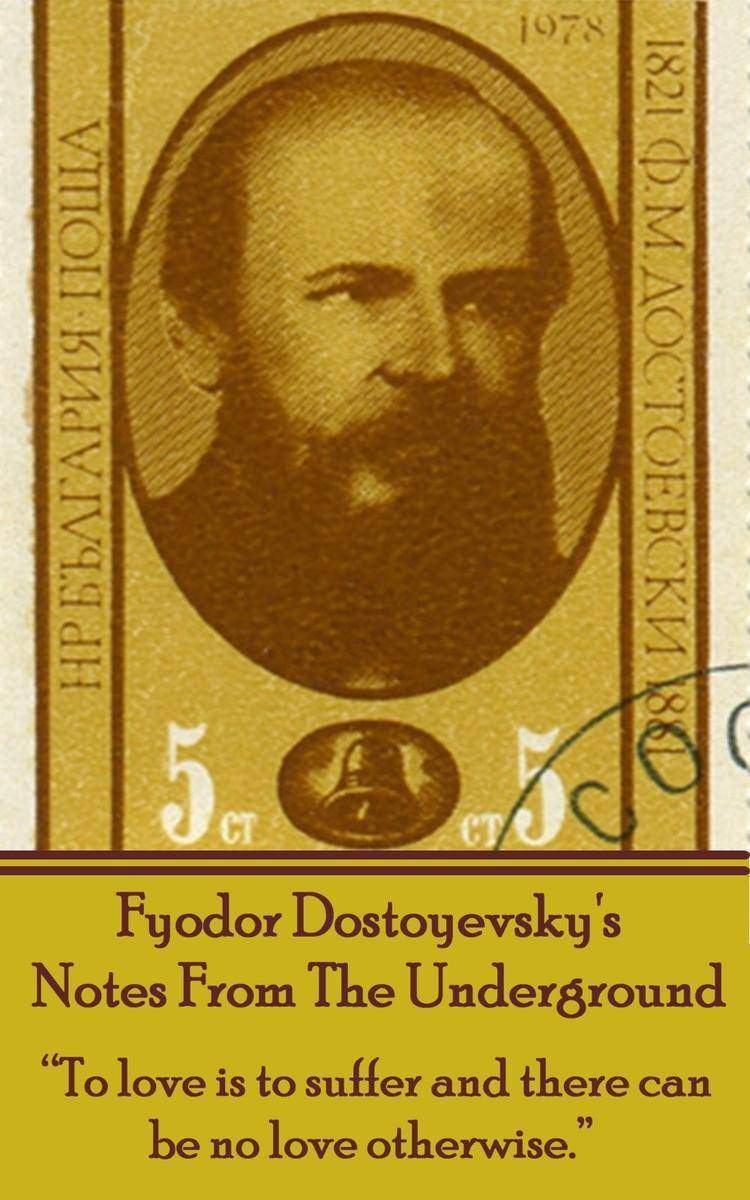
Notes From The Underground - To love is to suffer and there can be no love other
¥15.21
Fyodor Dostoyevsky's Notes from the Underground is both a fictional and philosophical work. It is considered by many critics as an early existentialist novella. The narrative takes the form of notes written by an unnamed narrator and is divided into two parts. In the first part entitled "e;Underground,"e; the protagonist is presented as a pessimist misanthrope who comments on a number of philosophical concepts such as the duality between determinism and free will. Basing his criticism on the work of Nikolay Chernyshevsky, he attacks modern schools of thought that purport to be founded solely on logical reasoning, namely utilitarianism and positivism. The second part of the book, entitled "e;Apropos of the Wet Snow,"e; is closer to fiction than to philosophical analysis. It rather seems to serve as a practical part for the theories exposed in the former through relating some events that happened to the narrator when he was a young man. The narrator often finds difficulty in socializing and even in interacting with the different people around him. Total misunderstanding and mistrust make him feel alienated in society. His feeling of indecision keeps on haunting him until the very end of the narrative when it is revealed that he has even been hesitating to conclude his notes.
Measure For Measure - The miserable have no other medicine but only hope
¥11.67
The life of William Shakespeare, arguably the most significant figure in the Western literary canon, is relatively unknown. Shakespeare was born in Stratford-upon-Avon in 1565, possibly on the 23rd April, St. George's Day, and baptised there on 26th April. Little is known of his education and the first firm facts to his life relate to his marriage, aged 18, to Anne Hathaway, who was 26 and from the nearby village of Shottery. Anne gave birth to their first son six months later. Shakespeare's first play, The Comedy of Errors began a procession of real heavyweights that were to emanate from his pen in a career of just over twenty years in which 37 plays were written and his reputation forever established. This early skill was recognised by many and by 1594 the Lord Chamberlain's Men were performing his works. With the advantage of Shakespeare's progressive writing they rapidly became London's leading company of players, affording him more exposure and, following the death of Queen Elizabeth in 1603, a royal patent by the new king, James I, at which point they changed their name to the King's Men. By 1598, and despite efforts to pirate his work, Shakespeare's name was well known and had become a selling point in its own right on title pages. No plays are attributed to Shakespeare after 1613, and the last few plays he wrote before this time were in collaboration with other writers, one of whom is likely to be John Fletcher who succeeded him as the house playwright for the King's Men. William Shakespeare died two months later on April 23rd, 1616, survived by his wife, two daughters and a legacy of writing that none have since yet eclipsed.


