


 购物车
购物车 个人中心
个人中心

No Wedding Night
¥4.09
A wedding, a reception brawl, and the bride and groom’s wedding night will be in jail. Or will it? _866 words Romance

Henry IV, Part 2
¥8.82
Henry IV, Part 2 is a history play by William Shakespeare, believed written between 1596 and 1599. It is the third part of a tetralogy, preceded by Richard II and Henry IV, Part 1 and succeeded by Henry V.

King John
¥8.82
The Life and Death of King John, a history play by William Shakespeare, dramatizes the reign of King John of England (ruled 1199–1216), son of Henry II of England and Eleanor of Aquitaine and father of Henry III of England. It is believed to have been written in the mid-1590s but was not published until it appeared in the First Folio in 1623.

SLEIGHT OF HAND: A Hart and Drake Thriller
¥54.10
Two months ago Dr. Cassandra Hart was forced to kill a man. The man who murdered her best friend, almost killed Drake and seriously wounded her. Now she's back at work in her Pittsburgh ER, but nothing seems the same. When she fears that a young boy is being abused by his "perfect" mother, her friends and colleagues worry that she's returned to work too soon, imagining dangers that don't exist. Others accuse her of trying to cover up her own alleged mistakes in the boy's treatment by making a false report of abuse. Drake's facing problems of his own, trying to cope with the aftermath of the night two months ago when his passion for Cassie led to a confrontation with a killer. He's on desk duty, reviewing cold cases, and delves into the homicide case that killed his father seven years ago. But after so long, what good can he do, a cop without a gun? The stakes escalate when Cassie is almost killed and Drake finds evidence that the killer his father was tracking might be planning to strike again--this time targeting a young boy. With the lives of two children at stake, how can they walk away?

Cymbeline
¥8.82
Cymbeline is a play by William Shakespeare, based on an early Celtic British King. Although listed as a tragedy in the First Folio, modern critics often classify it as a romance. Like Othello, Measure for Measure, and The Winter's Tale, it deals with the themes of innocence and jealousy. While its date of composition is unknown, the play is known to have been produced as early as 1611.

His Last Bow: Sherlock Holmes
¥8.82
His Last Bow is a collection of seven Sherlock Holmes stories (eight in American editions) by Arthur Conan Doyle, as well as the title of one of the stories in that collection. Originally published in 1917, it contains the various Holmes stories published between 1908 and 1913, as well as the one-off title story from 1917. The collection was originally called Reminiscences of Sherlock Holmes and did not contain the actual story His Last Bow, which appeared later, after the full-length The Valley of Fear was published. However later editions added it and changed the title. Some recent complete editions have restored the earlier title. When the Memoirs of Sherlock Holmes were published in the USA for the first time, the publishers believed "The Adventure of the Cardboard Box" was too scandalous for the American public, since it dealt with the theme of adultery. As a result, this story was not published in the USA until many years later, when it was added to His Last Bow. Even today, most American editions of the canon include it with His Last Bow, while most British editions keep the story in its original place in The Memoirs of Sherlock Holmes.

The Adventures of Sherlock Holmes
¥8.82
The Adventures of Sherlock Holmes is a collection of twelve stories by Sir Arthur Conan Doyle, featuring his famous detective and illustrated by Sidney Paget. These are the first of the Sherlock Holmes short stories, originally published as single stories in the Strand Magazine from July 1891 to June 1892. The book was published in England on October 14, 1892 by George Newnes Ltd and in a US Edition on October 15 by Harper. The initial combined print run was 14,500 copies.

The Circle of Friends Series
¥81.67
Get inspired to achieve your dreams! ? Book I...Lori - Driven by Olympic dreams, the swimmer appears destined for success. But something is holding her back. Can the star quarterback help Lori break free and achieve her dreams? ? Book II...Sarah - There are no rewards for second best. Estranged from her father, envious of her best friend’s perfect life, Sarah’s unable to measure up to expectations. Can a future NFL receiver with baggage of his own make a difference? ? Book III...James - Haunted by a troubled past, he’s determined to break free of the abuse and start a life with Maria. When a life-changing crisis erupts, James nears the breaking point. Can he find peace before the mistakes of his father destroy him? ? Book IV...Mike - A prisoner of guilt for so long, he’s consumed with condemnation and unable to forgive himself. When Danielle enters his life, he can no longer hide the past. Will she be able to reach him or is Mike past the point of redemption? ? Book V...Heather - When confidence turns to frustration, she finds her dream of coaching basketball tarnished. Heather struggles with a dying father, a troublesome sister, and a cocky player. Can Mark help the feisty woman survive?

Under a Purple Moon
¥32.62
A Five Star Award Winner and Literary Classics Award Winning Book! No Love in the Garden of Eden... ? Eden Rose has learned to deal with her mother’s criticism that she can do nothing right. What she can’t deal with are the arguments between her parents. To escape their angry words, she finds refuge in an old abandoned house. She always returns home, hoping her mother will love her one day, even though Eden’s not sure what the word love means. ? Three other teens with problems also hang out at the Old House. Meeting Murphy, Toby, and Josh changes Eden’s world, and she begins to have faith in herself. Perhaps she can do something right, after all. ? Thanks to the boys, she begins to understand the meaning of love. But will it be enough to save her broken home life?

M?towak: Woman Who Cries
¥32.62
The follow-up to Maski: Broken But Not Dead, an IPPY Award Silver Medalist ? A murder enveloped in pain and mystery... When Canada's retired Minister of National Defense, Leland Warner, is murdered in his home, the case is handed to Corporal Danny Killian, an aboriginal man tortured by his wife's unsolved murder. ? The suspect, 60-year-old Sally Warner, still grieves for the loss of her two sons, dead in a suicide/murder eighteen months earlier. Confused and damaged, she sees in Corporal Killian a friend sympathetic to her grief and suffering and wants more than anything to trust him. ? Danny finds himself with a difficult choice—indict his prime suspect, the dead minister's horribly abused wife or find a way to protect her and risk demotion. Or worse, transfer away from the scene of his wife’s murder and the guilt that haunts him...

Collected Novels
¥8.82
This book, newly updated, contains now several HTML tables of contents that will make reading a real pleasure! The first table of contents (at the very beginning of the ebook) lists the titles of all novels included in this volume. By clicking on one of those titles you will be redirected to the beginning of that work, where you'll find a new TOC that lists all the chapters and sub-chapters of that specific work. This book contains the complete novels of Charles Dickens in the chronological order of their original publication. - The Pickwick Papers - Oliver Twist - Nicholas Nickleby - The Old Curiosity Shop . - Barnaby Rudge - Martin Chuzzlewit - Dombey and Son - David Copperfield - Bleak House - Hard Times - Little Dorrit - A Tale of Two Cities - Great Expectations - Our Mutual Friend - The Mystery of Edwin Drood

Otter Tales
¥32.62
Ride along for some otter good fun! From the worlds of fantasy and science fiction to kids fighting real life battle, you’ll speed along from one adventure to the next. Written by youth, these stories will amaze you with their creativity, thoughtfulness, and delightful spirit. Journey in search of dragons. Fight along superheroes. And face the bullies head on!

A Christmas Carol
¥8.82
In his "Ghostly little book," Charles Dickens invents the modern concept of Christmas Spirit and offers one of the world’s most adapted and imitated stories. We know Ebenezer Scrooge, Tiny Tim, and the Ghosts of Christmas Past, Present, and Future, not only as fictional characters, but also as icons of the true meaning of Christmas in a world still plagued with avarice and cynicism.

Tündevér
¥57.80
In 1861 Captain Grant succeeded Captain Burgess on Matinicus, taking his son with him as assistant. The old keeper left Abby on the rock to instruct the newcomers in their duties, and she performed the task so well that young Grant fell in love with her, and asked her to become his wife. Soon after their marriage she was appointed an assistant keeper. A few years later the husband was made keeper and the wife assistant keeper of White Head, another light on the Maine coast. There they remained until the spring of 1890, when they removed to Middleborough, Mass., intending to pass the balance of their days beyond sight and hearing of the rocks and the waves. But the hunger which the sea breeds in its adopted children was still strong within them, and the fall of 1892 found them again on the coast of Maine, this time at Portland, where the husband again entered the lighthouse establishment, working in the engineers' department of the first lighthouse district. With them until his death lived Captain Grant, who in the closing months of 1890, being then aged eighty-five, retired from the position of keeper of Matinicus light, which he had held for nearly thirty years. Not less lonely, but far more perilous than the life of the keepers of a light like that on Matinicus is the lot of the crew of the South Shoal lightship, whose position twenty-six miles off Sankaty Head, Nantucket Island, makes it the most exposed light-station in the world. Anchored so far out at sea, it is only during the months of summer and autumn that the lighthouse tender ventures to visit it, and its crew from December to May of each year are wholly cut off from communication with the land. It is this, however, that makes the South Shoal lightship a veritable protecting angel of the deep, for it stands guard not only over the treacherous New South Shoal, near which it is anchored, but over twenty-six miles of rips and reefs between it and the Nantucket shore—a wide-reaching ocean graveyard, where bleach the bones of more than a half thousand wrecked and forgotten vessels. The lightship is a stanchly built two-hulled schooner of 275 tons burden, 103 feet long over all, equipped with fore-and-aft lantern masts 71 feet high, and with two masts for sails, each 42 feet high. The lanterns are octagons of glass in copper frames, so arranged that they can be lowered into houses built around the masts. In the forward part of the ship is a huge fog bell, swung ten feet above the deck, which, when foggy weather prevails, as it frequently does for weeks at a time, is kept tolling day and night. A two-inch chain fastened to a "mushroom" anchor weighing upward of three tons holds the vessel in eighteen fathoms of water, but this, so fiercely do the waves beat against it in winter, has not prevented her from going adrift many times. She was two weeks at sea on one of these occasions, and on another she came to anchor in New York Harbor. Life on the South Shoal lightship is at all times a hard and trying one, and, as a matter of fact, the crew are instructed not to expose themselves to danger outside their special line of duty. This, however, does not deter them from frequently risking their lives in rescuing others, and when, several years ago, the City of Newcastle went ashore on one of the shoals near the lightship, all hands, twenty-seven in number, were saved by the South Shoal crew and kept aboard of her over two weeks, until the story of the wreck was signalled to a passing vessel. Isaac H. Grant holds a silver medal given him by the Government for rescuing two men from drowning while he was keeper at White Head; while Frederick Hatch, keeper of the Breakwater station at Cleveland was awarded the gold bar. The last mentioned badge of honor is granted only to one who has twice distinguished himself by a special act of bravery. It was given Hatch in the winter of 1898.
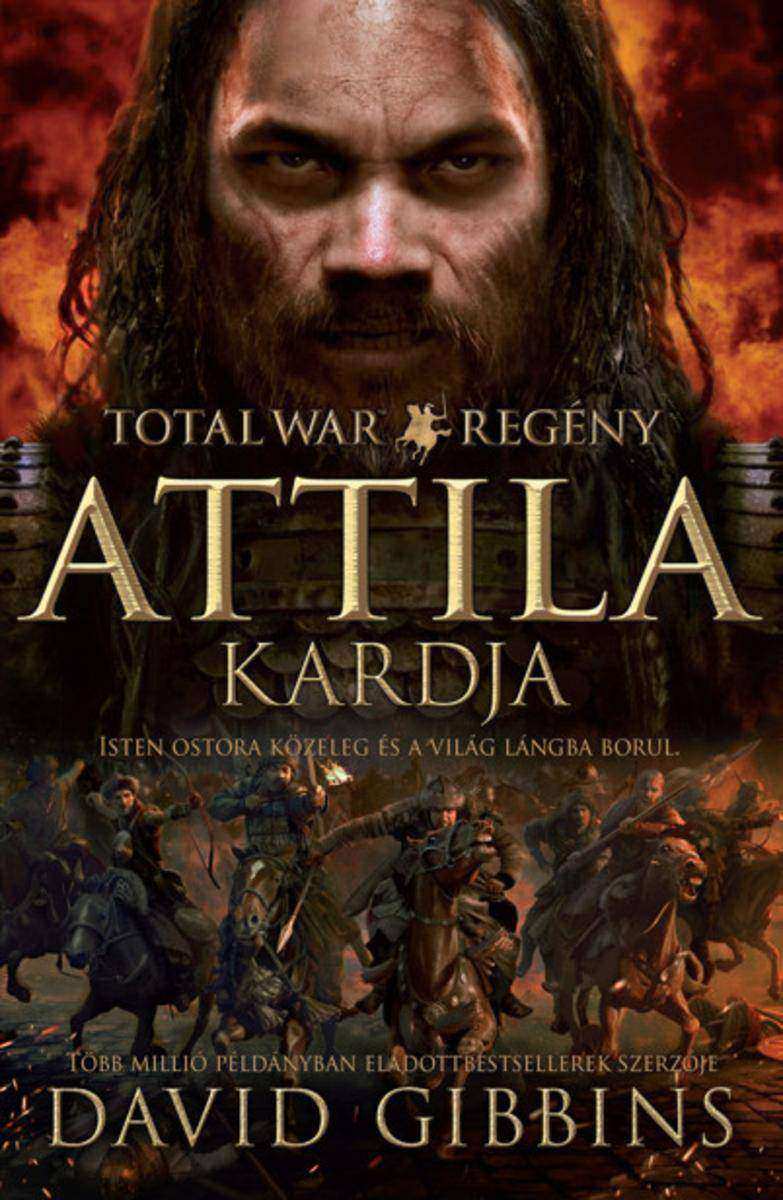
TOTAL WAR: Attila kardja
¥34.58
Not many years ago the group Insecta was held even by Zoologists to include numberless small creatures—centipedes, spiders, mites, etc.—which further study has shown to present essential differences of structure, and in popular language any fairly minute animal is still an insect, just as any insect is popularly a “fly”—or, in the United States, a “bug.” Scientifically the use of the term Insect is now much restricted, though still extensive enough in all conscience, since it includes many more than a quarter of a million known species. Zoologists recognise a large group of animals characterised by having no internal skeleton but a more or less firm external coating of a peculiar substance called chitin, often strengthened by calcareous deposits, which necessitates the presence of joints in their bodies, and especially in their limbs if they are to move freely, just as medieval suits of armour required to be jointed. These are the Arthropoda. One subdivision of this group consists of aquatic animals, breathing by gills, and known as Crustacea. Crabs, lobsters, shrimps and “water-fleas” are familiar examples, and with the exception of the so-called land-crabs the only Crustaceans habitually found on land are wood-lice. The other Arthropoda are air-breathing, and since their characteristic breathing organs are branching tubes known as tracheae, the term Tracheata is sometimes used to include them all. They fall naturally into three divisions, the Myriapoda, the Insecta and the Arachnida, and it is in this last-named division that we shall find the spiders. The Myriapoda are the centipedes and millipedes, and having said this we may dismiss them, for insects and arachnids are strictly limited as to legs; and no myriapod can ever be mistaken for a spider. The Arachnida are so varied in structure that it is not easy to give characteristics common to them all, and to any general statement there are bound to be exceptions, but for practical purposes it may be said that while an insect, when mature, has only six legs, and a pair of feelers or antennae of quite different structure, Arachnids have normally eight legs, and their feeling organs are not antennae but leg-like “pedipalps.”
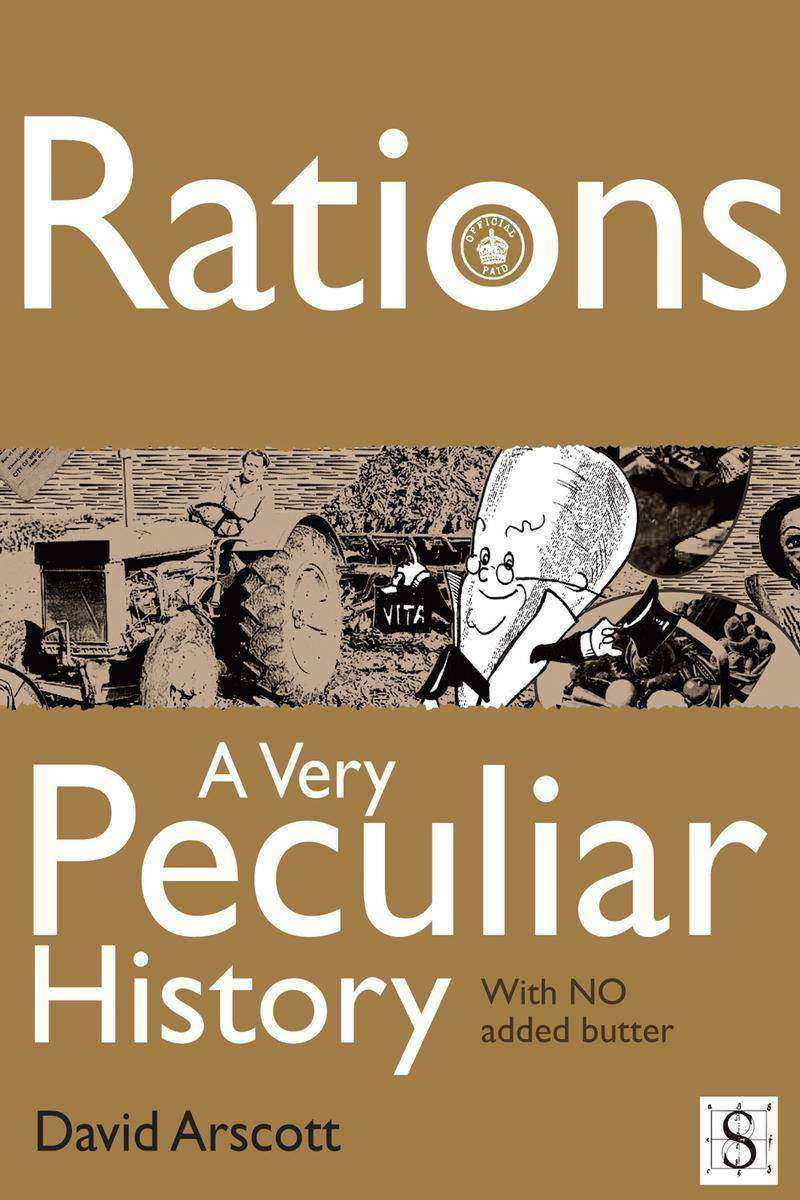
Rations, A Very Peculiar History
¥58.76
When war broke out in 1939, few knew that they would soon be fighting to survive, let alone how or when it would end. 'Rations: A Very Peculiar History' looks at the measures the British government took to ensure the wellbeing of its people during wartime, and how the British public dealt with it. With some stealing, some hoarding, but most just trying to get by, it was one of the bleakest periods in British history. But there's a reason they called it 'the Blitz spirit' - this title features amazing tales of camaraderie and good humour in the face of bombs and hunger. Featuring incredible food-and-energy-saving recipes used at the time, along with quotes from survivors, 'Rations: A Very Peculiar History' will transport you back to a time when even Buckingham Palace and the Ritz hotel weren't above swapping a bit of venison for a bit of lobster.

Blitz, A Very Peculiar History
¥58.76
Taking a unique look at how Britain survived the bombing of its major cities, 'The Blitz, A Very Peculiar History' tells a story of blackouts, Bletchley Park and bravery during the darkest (literally) period of World War II. From Dunkirk to Dad's Army, explore the many ways in which Britain tried to foil the incoming bomber planes, featuring quirky stories and fascinating trivia about this period of history. Were German paratroopers really dropped disguised as nuns? Find out the answer to this question and many more even more bizarre ones throughout the course of this amazing tale of sacrifice and survival in the face of adversity.

Avatar-Philosophy (and -Religion) or FAITHEISM
¥63.67
Are you prepared, either as an atheist or a religious believer, to have your ideas of God, the self, other people, the body, the soul, spirituality, and faith challenged in an unexpected and original way? Here is a book that moves out from under and away from the received notions of those ponderous topics, whether or not you believe in the divine. The author is a confessed atheist but one who rejects the approach of Richard Dawkins, Christopher Hitchens, Michel Onfray and the rest when they depart from their justifiable criticisms of the historical record of the established creeds and endeavour to rubbish what faith could actually be. The book takes its origin from an exploration of the idea of an avatar; the writing of it was stimulated by seeing the Cameron film, though it subjects that film itself to an assessment of its hidden assumptions. The book finally arrives at specific recommendations for our time, ones to which the argument of the book has been directed throughout.
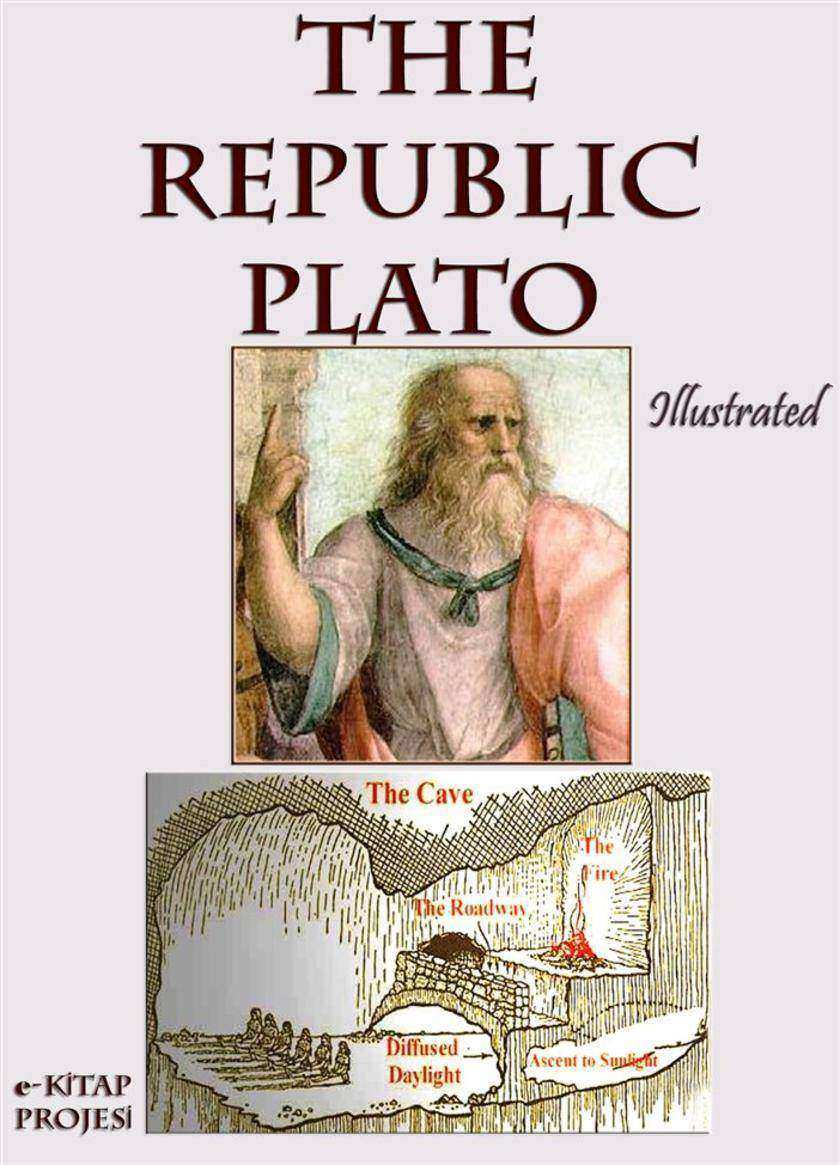
Republic
¥27.39
THE earliest record we have of the employment of an infernal machine at all resembling the torpedo of the present day, was in 1585 at the siege of Antwerp. Here by means of certain small vessels, drifted down the stream, in each of which was placed a magazine of gunpowder, to be fired either by a trigger, or a combination of levers and clockwork, an Italian engineer, Lambelli, succeeded in demolishing a bridge that the enemy had formed over the Scheldt. So successful was this first attempt, and so tremendous was the effect produced on the spectators, by the explosion of one of these torpedoes, that further investigation of this new mode of Naval warfare was at once instituted.But it was not until some two hundred years after that any real progress was effected, though numerous attempts were made during this period, to destroy vessels by means of sub-marine infernal machines.It was owing to the fact, that the condition which is now considered as essential in torpedo warfare, viz., that the charge must be submerged, was then entirely ignored, that so long a standstill occurred in this new art of making war. Captain Bushnell, the Inventor of Torpedoes.—To Captain David Bushnell, of Connecticut, in 1775, is most certainly due the credit of inventing torpedoes, or as he termed them submarine magazines. For he first proved practically that a charge of gunpowder could be fired under water, which is incontestably the essence of submarine warfare. Submarine Boat.—To Captain Bushnell is also due the credit of first devizing a submarine boat for the purpose of conveying his magazines to the bottom of hostile ships and there exploding them.Drifting Torpedoes.—Another plan of his for destroying vessels, was that of connecting two of his infernal machines together by means of a line, and throwing them into the water, allowing the current to carry them across the bows of the attacked ship. Mode of Ignition.—The ignition of his magazines was generally effected by means of clockwork, which, when set in motion, would run for some time before exploding the machines, thus enabling the operators to get clear of the explosion.Captain Bushnell's few attempts to destroy our ships off the American coast in 1776 and 1777, with his submarine boat, and his drifting torpedoes were all attended with failure, a result generally experienced, where new inventions are for the first time subjected to the test of actual service. Robert Fulton.—Robert Fulton, an American, following in his footsteps, some twenty years after, revived the subject of submarine warfare, which during that interval seems to have been entirely forgotten. A resident in France, in 1797, he is found during that year making various experiments on the Seine with a machine which he had constructed, and by which he designed "to impart to carcasses of gunpowder a progressive motion under water, to a certain point, and there explode them."[A] Fulton's Failures.—Though these first essays of his resulted in failure, Fulton thoroughly believed in the efficacy of his schemes, and we find him, during that and succeeding years, vainly importunating the French and Dutch Governments, to grant him aid and support in carrying out experiments with his new inventions, whereby he might perfect them, and thus ensure to whichever government acceded to his views, the total destruction of their enemy's fleets. Bonaparte aids Fulton.—Though holding out such favourable terms, it was not until 1800, when Bonaparte became First Consul, that Fulton's solicitations were successful, and that money was granted him to carry out a series of experiments. In the following year (1801), under Bonaparte's immediate patronage, Fulton carried out various and numerous experiments in the harbour of Brest, principally with a submarine boat devised by him (named the Nautilus), subsequently to his invention of submarine carcasses as a means of approaching a ship and fixing one of his infernal machines beneath her..

World Cup, A Very Peculiar History
¥58.76
In 'The World Cup, A Very Peculiar History', author David Arscott tackles the big subjects at the heart of the beautiful game, including how the tournament first kicked off, the dirty tactics used throughout the years and the most memorable managers in the history of football. Filled to the brim with quirky quotes, fantastic facts and surprising statistics, this is the perfect accompaniment to any post-match celebration (or commiseration!) during the season. At its heart 'The World Cup, A Very Peculiar History' is a look at the many amusing, amazing and sometimes alarming stories that lie behind this great sporting tournament.

Moon and Madness
¥132.34
Lunacy, the legendary notion of minds unhinged by the moon, continues to captivate the popular imagination. Although it violates the assumptions of modern science and psychiatry, such belief remains common among mental health workers. Furthermore, several studies have found a small, unexplained correlation between behaviour and the lunar cycle. The book is divided into two parts. It begins with a historical account of the lunacy concept, followed by an investigation of hypothetical mechanisms for a lunar effect.


