


 购物车
购物车 个人中心
个人中心

The Big War
¥94.10
They were our husbands, our fathers, our lovers, our sons. They were Americans and Marines. And this is their story: The Big War, Anton Myrer's panoramic novel of Marines in the Pacific in World War II. This is the story of Alan Newcombe, the Boston society Harvard man; Danny Kantaylis, the natural-born leader; Jay O'Neill, the barroom scrapper. Myrer does not glorify war; he does not flinch from describing what the actual experience of warfare was like for a desperate group of Marines trapped in some of the worst fighting conditions of the war. We learn about their lives at home and their fates on the battlefield.
iOS 9 Game Development Essentials
¥63.21
Design, build, and publish an iOS game from scratch using the stunning features of iOS 9 About This Book Create storyboards in Xcode from concept to code and designChalk out your game’s overall navigation and structureWork with 2D and 3D game development toolsWho This Book Is ForThis book is intended for game developers who wish to develop 2D and 3D games for iPhone and iPad. If you are a developer from another platform, or game engine such as Android or Unity, a current iOS developer wishing to learn more about Swift and the latest features of iOS 9, or even if you are new to game development, then this book is for you. Some prior programming knowledge is recommended, but not required.What You Will LearnFamiliarise yourself with both basic and advanced Swift game development codeUnderstand the structure and flow of a typical iOS appWork with the SpriteKit framework to make 2D games, sprites, and overlaysDiscover 3D game development with SceneKitVisually design levels and game assets with XCode 7’s latest featuresExplore the concept of component-based structuring with iOS 9’s GameplaykitBeta test and publish your game with iTunes ConnectIn DetailGame development has always been a combination of programming and art, and mobile game development is no exception to this rule. The iOS platform has been both a staple in the ever-growing mobile game market, as well as a launching point for many game developers (hobby and career-wise). The features and frameworks available in iOS 9 continue to cater to the synergy of design and computer engineering, using tools that allow developers to take a game idea from concept to application in record time.Whether you are new to iOS and game development as a whole, or are an experienced programmer wanting to learn the latest features of the platform, iOS 9 Game Development Essentials will provide you with crucial insight into this widely used platform.Starting with the Swift programming language, this book gets the ball rolling with code concepts and game-centric code samples right from the get-go, giving you get a solid understanding of Apple’s cutting-edge programming language. The book takes you through iOS game development concepts and introduces the various frameworks that allow you to develop robust, reusable, and intelligent game components in both 2D and 3D game environments.Style and approachThis book is a step-by-step guide into the code and concepts of iOS apps. Each chapter contains diagrams that showcase the features of the platform, along with code samples from Apple and code samples exclusive to this book.
OpenCV 3 Blueprints
¥80.65
Expand your knowledge of computer vision by building amazing projects with OpenCV 3About This BookBuild computer vision projects to capture high-quality image data, detect and track objects, process the actions of humans or animals, and much moreDiscover practical and interesting innovations in computer vision while building atop a mature open-source library, OpenCV 3Familiarize yourself with multiple approaches and theories wherever critical decisions need to be madeWho This Book Is ForThis book is ideal for you if you aspire to build computer vision systems that are smarter, faster, more complex, and more practical than the competition. This is an advanced book intended for those who already have some experience in setting up an OpenCV development environment and building applications with OpenCV. You should be comfortable with computer vision concepts, object-oriented programming, graphics programming, IDEs, and the command line.What You Will LearnSelect and configure camera systems to see invisible light, fast motion, and distant objectsBuild a “camera trap”, as used by nature photographers, and process photos to create beautiful effectsDevelop a facial expression recognition system with various feature extraction techniques and machine learning methodsBuild a panorama Android application using the OpenCV stitching module in C++ with NDK supportOptimize your object detection model, make it rotation invariant, and apply scene-specific constraints to make it faster and more robustCreate a person identification and registration system based on biometric properties of that person, such as their fingerprint, iris, and faceFuse data from videos and gyroscopes to stabilize videos shot from your mobile phone and create hyperlapse style videosIn DetailComputer vision is becoming accessible to a large audience of software developers who can leverage mature libraries such as OpenCV. However, as they move beyond their first experiments in computer vision, developers may struggle to ensure that their solutions are sufficiently well optimized, well trained, robust, and adaptive in real-world conditions. With sufficient knowledge of OpenCV, these developers will have enough confidence to go about creating projects in the field of computer vision.This book will help you tackle increasingly challenging computer vision problems that you may face in your careers. It makes use of OpenCV 3 to work around some interesting projects. Inside these pages, you will find practical and innovative approaches that are battle-tested in the authors’ industry experience and research. Each chapter covers the theory and practice of multiple complementary approaches so that you will be able to choose wisely in your future projects. You will also gain insights into the architecture and algorithms that underpin OpenCV’s functionality.We begin by taking a critical look at inputs in order to decide which kinds of light, cameras, lenses, and image formats are best suited to a given purpose. We proceed to consider the finer aspects of computational photography as we build an automated camera to assist nature photographers. You will gain a deep understanding of some of the most widely applicable and reliable techniques in object detection, feature selection, tracking, and even biometric recognition. We will also build Android projects in which we explore the complexities of camera motion: first in panoramic image stitching and then in video stabilization.By the end of the book, you will have a much richer understanding of imaging, motion, machine learning, and the architecture of computer vision libraries and applications!Style and approachThis book covers a combination of theory and practice. We examine blueprints for specific projects and discuss the principles behind these blueprints, in detail.
Mastering SciPy
¥80.65
Implement state-of-the-art techniques to visualize solutions to challenging problems in scientific computing, with the use of the SciPy stackAbout This BookMaster the theory and algorithms behind numerical recipes and how they can be applied to real-world problemsLearn to combine the most appropriate built-in functions from the SciPy stack by understanding the connection between the sources of your problem, volume of data, or computer architectureA comprehensive coverage of all the mathematical techniques needed to solve the presented topics, with a discussion of the relevant algorithms built in the SciPy stackWho This Book Is ForIf you are a mathematician, engineer, or computer scientist with a proficiency in Python and familiarity with IPython, this is the book for you. Some basic knowledge of numerical methods in scientific computing would be helpful.What You Will LearnMaster relevant algorithms used in symbolic or numerical mathematics to address approximation, interpolation, differentiation, integration, root-finding, and optimization of scalar or multi-variate functionsDevelop different algorithms and strategies to efficiently store and manipulate large matrices of data, in particular to solve systems of linear equations, or compute their eigenvalues/eigenvectorsUnderstand how to model physical problems with systems of differential equations and distinguish the factors that dictate the strategies to solve themPerform statistical analysis, hypothesis test design and resolution, or data mining at a higher level, and apply them to real-life problems in the field of data analysisGain insights on the power of distances, Delaunay triangulations and Voronoi diagrams for Computational Geometry, and apply them to various engineering problemsFamiliarize yourself with different techniques in signal/image processing, including filtering audio, images, or video to extract information, features, or remove componentsIn DetailThe SciPy stack is a collection of open source libraries of the powerful *ing language Python, together with its interactive shells. This environment offers a cutting-edge platform for numerical computation, programming, visualization and publishing, and is used by some of the world’s leading mathematicians, scientists, and engineers. It works on any operating system that supports Python and is very easy to install, and completely free of charge! It can effectively transform into a data-processing and system-prototyping environment, directly rivalling MATLAB and Octave.This book goes beyond a mere de*ion of the different built-in functions coded in the libraries from the SciPy stack. It presents you with a solid mathematical and computational background to help you identify the right tools for each problem in scientific computing and visualization. You will gain an insight into the best practices with numerical methods depending on the amount or type of data, properties of the mathematical tools employed, or computer architecture, among other factors.The book kicks off with a concise exploration of the basics of numerical linear algebra and graph theory for the treatment of problems that handle large data sets or matrices. In the subsequent chapters, you will delve into the depths of algorithms in symbolic algebra and numerical analysis to address modeling/simulation of various real-world problems with functions (through interpolation, approximation, or creation of systems of differential equations), and extract their representing features (zeros, extrema, integration or differentiation).Lastly, you will move on to advanced concepts of data analysis, image/signal processing, and computational geometry.Style and approachPacked with real-world examples, this book explores the mathematical techniques needed to solve the presented topics, and focuses on the algorithms built in the SciPy stack.
Getting Started with Citrix XenApp? 7.6
¥99.18
Install, configure, and support your XenApp systems with the power of Citrix XenAppAbout This BookFamiliarize yourself with Citrix applications and desktop virtualizationMaintain and troubleshoot your XenApp environment to minimize system downtimeA hands-on, step-by-step guide with a practical approach and real-world examples to get you up and running with XenApp systemsWho This Book Is ForThis book is intended for IT administrators and consultants who want to build application and desktop virtualization solutions for their employers and customers. No prior knowledge of Citrix technologies is required.What You Will LearnMake the use case for Citrix XenApp and design your first systemPrepare your existing IT infrastructure for XenApp and learn what licenses you needInstall and configure the XenApp infrastructureEnable access with StoreFront and NetScaler GatewayEnable load balancing with NetScalerMaintain servers and publish applications and desktopsManage printing in a Citrix environmentTroubleshoot your environment using advanced tools and methodologies employed by Citrix Escalation TeamsIn DetailIf you want to effectively deploy the various components of Citrix XenApp to create an enterprise environment for application and desktop delivery, this hands-on guide is perfect for you. You start off by understanding the need and benefits of Citrix XenApp with respect to Virtualization technology. After this, you will get to grips with the requirement analysis and designing aspect of building XenApp systems and all the necessary installation and configuration procedures for Citrix XenApp, StoreFront and NetScalar Gateway are explained one by one in detail.Step-by-step, you will learn to deploy your first XenApp with the Machine Creation Services method and Provisioning Services method. After this, you will explore the administering part of applications and systems, followed by printing in the XenApp environment. Next, you will learn all the trips and tricks required to troubleshoot and support the XenApp environment. By the end of this book, you will be ready to go live with your new XenApp environment.Style and approachThis is a step-by-step guide to technical implementations in a conversational and easy-to-follow style. Each component is deployed sequentially until a full solution is built. Basic as well as advanced features of the product are explored to appeal to the widest possible audience interested in the topic.
Designing Machine Learning Systems with Python
¥80.65
Design efficient machine learning systems that give you more accurate results About This Book Gain an understanding of the machine learning design process Optimize machine learning systems for improved accuracy Understand common programming tools and techniques for machine learning Develop techniques and strategies for dealing with large amounts of data from a variety of sources Build models to solve unique tasks Who This Book Is For This book is for data scientists, scientists, or just the curious. To get the most out of this book, you will need to know some linear algebra and some Python, and have a basic knowledge of machine learning concepts. What You Will Learn Gain an understanding of the machine learning design process Optimize the error function of your machine learning system Understand the common programming patterns used in machine learning Discover optimizing techniques that will help you get the most from your data Find out how to design models uniquely suited to your task In Detail Machine learning is one of the fastest growing trends in modern computing. It has applications in a wide range of fields, including economics, the natural sciences, web development, and business modeling. In order to harness the power of these systems, it is essential that the practitioner develops a solid understanding of the underlying design principles. There are many reasons why machine learning models may not give accurate results. By looking at these systems from a design perspective, we gain a deeper understanding of the underlying algorithms and the optimisational methods that are available. This book will give you a solid foundation in the machine learning design process, and enable you to build customised machine learning models to solve unique problems. You may already know about, or have worked with, some of the off-the-shelf machine learning models for solving common problems such as spam detection or movie classification, but to begin solving more complex problems, it is important to adapt these models to your own specific needs. This book will give you this understanding and more. Style and approach This easy-to-follow, step-by-step guide covers the most important machine learning models and techniques from a design perspective.

Implementing Microsoft Dynamics NAV - Third Edition
¥99.18
Explore the capabilities of Dynamics NAV 2016 and discover all you need to implement it About This Book Learn the key roles of your Dynamics NAV partner and the roles within your customer’s organization Create configuration packages and perform data migration on your own Find out how to troubleshoot your problems effectively with your Dynamics NAV partner Who This Book Is For This book is for Dynamics NAV partners and end users who want to know everything about Dynamics NAV implementations. It is aimed at those who want to be project managers or get involved with Dynamics NAV, but do not have the expertise to write code themselves. What You Will Learn Study the roles within a Dynamics NAV partner and within a customer’s company Create reusable data migration packages Work with the debugger to pinpoint error messages Get to grips with the key tables used in data reporting and analysis Successfully upgrade your installation to the latest version Manage and expand your existing installation with additional functionalities Explore the free third-party add-ons that can leverage your existing installation In Detail Microsoft Dynamics NAV 2016 is an Enterprise Resource Planning (ERP) application used in all kinds of organizations around the world. It provides a great variety of functionality out-of-the-box in different topics such as accounting, sales, purchase processing, logistics, or manufacturing. It also allows companies to grow the application by customizing the solution to meet specific requirements. This book is a hands-on tutorial on working with a real Dynamics NAV implementation. You will learn about the team from your Microsoft Dynamics NAV partner as well as the team within the customer’s company. This book provides an insight into the different tools available to migrate data from the client’s legacy system into Microsoft Dynamics NAV. If you are already live with Microsoft Dynamics NAV, this books talks about upgrades and what to expect from them. We’ll also show you how to implement additional or expanding functionalities within your existing Microsoft Dynamics NAV installation, perform data analysis, debug error messages, and implement free third-party add-ons to your existing installation. This book will empower you with all the skills and knowledge you need for a successful implementation. Style and approach This book is step-by-step guide to implementing Dynamics NAV from start to finish.
OpenStack Networking Essentials
¥71.93
Build and manage networks in OpenStack using Neutron About This Book Deploy an all-in-one cloud based on OpenStack Liberty (2015.2) using RDO Learn the fundamentals of the Neutron API including networks, subnets, and ports, and how to manage these resources in the cloud Build simple virtual network infrastructures in the cloud Who This Book Is For The book is for those who are new to OpenStack and Neutron who want to learn the cloud networking fundamentals and get started with OpenStack networking. Prior networking experience along with a virtual or physical server is recommended to follow along with the concepts demonstrated in the book. What You Will Learn Install the latest Liberty (2015.2) release of OpenStack using RDO in VirtualBox Discover the basics of the Neutron API, including networks, subnets, and ports Interact with Neutron using the CLI and Horizon dashboard Create networks and subnets that provide connectivity to instances Implement software routers that connect networks and provide network address translation Secure instances using Neutron's security group functionality In Detail The OpenStack Networking API offers users the ability to create and manage both basic and complex network architectures that blend the virtual and physical network infrastructure. This book kicks off by describing various components of Openstack Neutron and installing Ubuntu OpenStack based on Canonical's process. Further on, you will use various methods to interface with Neutron to create and manage network resources. You will also get to grips with the relationship between ports, networks, and subnets through diagrams and explanations, and see how the logical components are implemented via plugins and agents. Moving forward, you will learn how virtual switches are implemented and how to build Neutron routers. You will also configure networks, subnets, and routers to provide connectivity to instances using simple examples. At the end, you will configure and manage security groups, and will observe how these rules translate to iptables rules on the host machines. By the end of the book, you will be able to build basic network architectures using Neutron networks and routers in no time. Style and approach An easy-to-follow guide that covers the networking features of OpenStack and the core Neutron API components providing a solid foundation to deploy networks and instances.

The Family Fortune
¥84.16
Jane Fortune's fortunes have taken a downturn. Thanks to the profligate habits of her father and older sister, the family's money has evaporated and Jane has to move out of the only home she's ever known: a stately brick town house on Boston's prestigious Beacon Hill. Thirty-eight and terminally single, Jane has never pursued idle pleasures like her sibling and father. Instead, she has devoted her time to running the Fortune Family Foundation, a revered philanthropic institution that has helped spark the careers of many a budding writer, including Max Wellman, Jane's first—and only—love. Now Jane has lost her luster. Max, meanwhile, has become a bestselling novelist and a renowned literary lothario. But change is afoot. And in the process of saving her family and reigniting the flames of true love, Jane might just find herself becoming the woman she was always meant to be.

The Foreign Student
¥83.03
Highly acclaimed by critics, The Foreign Student is the story of a young Korean man, scarred by war, and the deeply troubled daughter of a wealthy Southern American family. In 1955, a new student arrives at a small college in the Tennessee mountains. Chuck is shy, speaks English haltingly, and on the subject of his earlier life in Korea he will not speak at all. Then he meets Katherine, a beautiful and solitary young woman who, like Chuck, is haunted by some dark episode in her past. Without quite knowing why, these two outsiders are drawn together, each sensing in the other the possibility of salvation. Moving between the American South and South Korea, between an adolescent girl's sexual awakening and a young man's nightmarish memories of war, The Foreign Student is a powerful and emotionally gripping work of fiction.

My Soul to Take
¥84.16
Long-buried secrets go hand in hand with modern-day murder in this second thriller featuring attorney Thóra Gudmundsdóttir from Iceland's queen of crime fictionWhen the body of a young woman—badly beaten and with pins inserted into her feet—is found at a New Age health resort in a renovated farmhouse, lawyer and single mother of two Thóra Gudmundsdóttir is called upon to represent the chief suspect, the resort's owner. But upon her arrival she encounters more than a fresh corpse—local legend has it that the resort, located in the mystical region of Sn?fellsnes on Iceland's west coast, is haunted. At first Thóra dismisses the claims as nothing more than myth and superstition, but even she can't explain the bizarre occurrences she witnesses in her search for answers. As Thóra digs deeper into the farm's past, she discovers long-buried information on the property's disturbing history, and her once-solid view of reality begins to waver. Are the hauntings real, or just a case of folklore gone wildAnd, more important, does the farm's eerie past have something to do with the murderWhen another body is discovered—looking very much like the first—Thóra is forced to put aside her doubts and confront the horrors of the present before a twisted killer strikes again.With its confident plotting, chilling atmosphere, and smart, compelling heroine, My Soul to Take confirms Yrsa Sigurdardóttir as a new maven of mysteries.
The Name of the World
¥83.03
The acclaimed author of Jesus' Son and Already Dead returns with a beautiful, haunting, and darkly comic novel. The Name of the World is a mesmerizing portrait of a professor at a Midwestern university who has been patient in his grief after an accident takes the lives of his wife and child and has permitted that grief to enlarge him.Michael Reed is living a posthumous life. In spite of outward appearances -- he holds a respectable university teaching position; he is an articulate and attractive addition to local social life -- he's a dead man walking.Nothing can touch Reed, nothing can move him, although he observes with a mordant clarity the lives whirling vigorously around him. Of his recent bereavement, nearly four years earlier, he observes, "I'm speaking as I'd speak of a change in the earth's climate, or the recent war."Facing the unwelcome end of his temporary stint at the university, Reed finds himself forced "to act like somebody who cares what happens to him. " Tentatively he begins to let himself make contact with a host of characters in this small academic town, souls who seem to have in common a tentativeness of their own. In this atmosphere characterized, as he says, "by cynicism, occasional brilliance, and small, polite terror," he manages, against all his expectations, to find people to light his way through his private labyrinth.Elegant and incisively observed, The Name of the World is Johnson at his best: poignant yet unsentimental, replete with the visionary imaginative detail for which his work is known. Here is a tour de force by one of the most astonishing writers at work today.
The Day Christ Died
¥77.49
"This is a book about the most dramatic day in the history of the world, the day on which Jesus of Nazareth died. It opens at 6 P.M.—the beginning of the Hebrew day—with Jesus and ten of the apostles coming through the pass between the Mount of Olives and the Mount of Offense en route to Jerusalem and the Last Supper. It closes at 4 P.M. the following afternoon, when Jesus was taken down from the cross. . . . The fundamental research was done a long time ago by four fine journalists: Matthew, Mark, Luke, and John. The rest has been added in bits and pieces from many men whose names span the centuries."—from the Foreword
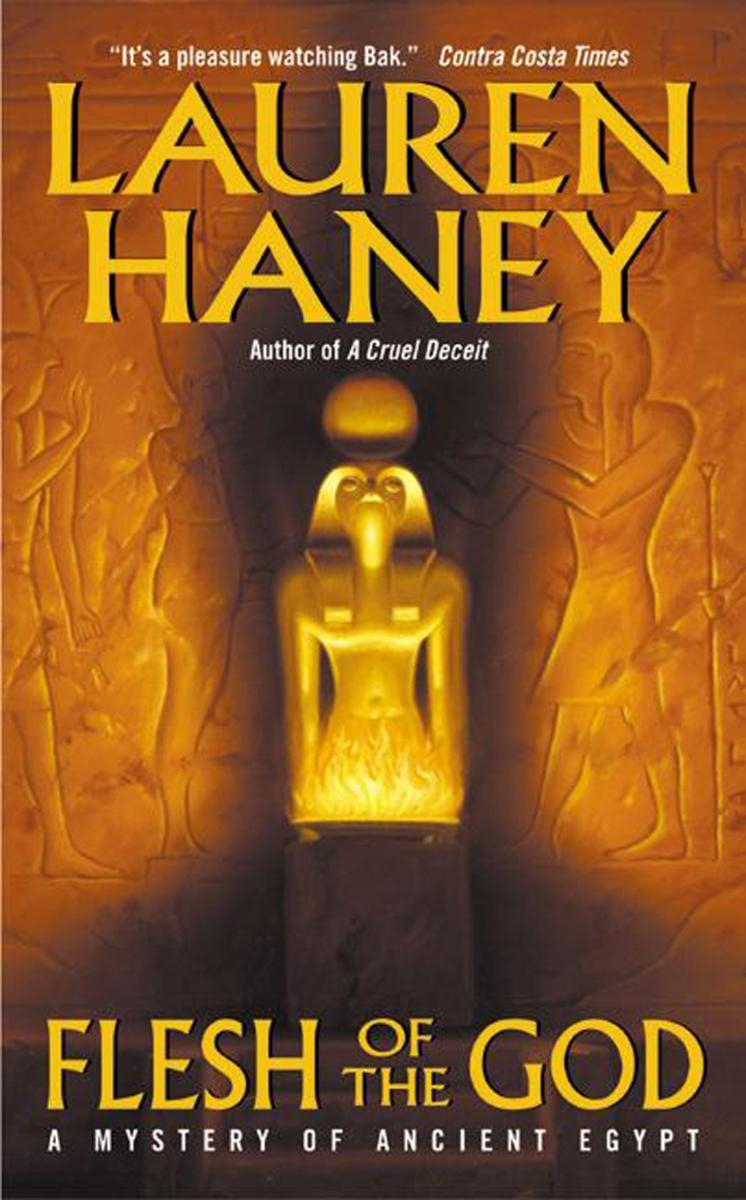
Flesh of the God
¥48.91
A young, untested policeman confronts deceit, treachery, and deadly peril in an ancient and magnificent world. Author Lauren Haney dazzles with a spellbinding "prequel" -- the first investigation of the brilliant Egyptian, Lieutenant Bak.A proud officer in the service of Queen Hatshepsut, it was Lieutenant Bak's great misfortune to lead his charioteers in a raid of a house of pleasure frequented by Egyptians of very high station. Reassigned for his transgressions, Bak is exiled to Buhen -- a fortified city in the most desolate part of the Nile valley. Barely has he set foot in this nest of vipers when he discovers Nakht, Buhen's capable commandant, slain with a dagger in his breast -- and Nakht's very beautiful, young wife covered with fresh blood. Bak's carefully honed instinct makes him hesitate to condemn the frightened widow. Perhaps the man's death was divine retribution for recent offenses directed toward the gods. Finding the truth in this terrible place will be as difficult as finding water in the heartless desert that surrounds it -- while more death may be far too easy to come by.

Soul Catcher
¥82.80
Augustus Cain faces a past he wants to forget, a present without prospect or fortune, and an uncertain future marred by the loss of his most prized possession: the horse that has been his working companion for years. He is also a man haunted by a terrible skill—the ability to track people who don't want to be found. Rosetta is a runaway slave fueled by the passion and determination only a mother can feel. She bears the scars—inside and out—of a life lived in servitude to a cruel and unforgiving master. Her flight is her one shot at freedom, and she would rather die than return to the living hell that she has left behind.In the perilous years before the Civil War, the fates of these two remarkable people will intertwine in an extraordinary adventure—a journey of hardship and redemption that will take them from Virginia to Boston and back—and one that will become an extraordinary test of character and will, mercy and compassion. It is an odyssey that will change them both forever.Soul Catcher is a dazzling tapestry of imagination and character, atmosphere and emotion. Poignant and utterly compelling, it is a story to be savored and remembered.

Shadows Still Remain
¥55.91
Edgy, electrifying and dark—a riveting debutA Beautiful Woman, MissingNew York City, 2005. Thanksgiving weekend. A topless Kate Moss peers down from a billboard over rain-spattered Houston Street. Escaping a troubled past, Francesca Pena came to the city and reinvented herself. At New York University, her beauty and charisma are the envy of her privileged pals, yet none knows the real Francesca—who, after a night of drinking, is now missing. A High-Stakes GambleDetective Darlene O'Hara of the Seventh Precinct and her partner, Serge "K." Krekorian, set out to find Pena. But when the case turns high-profile and Homicide is called in, O'Hara—who has an eighteen-year-old son she saddled with the name Axl Rose O'Hara, and whose binge drinking exacerbates the massive chip on her shoulder—refuses to let go. Risking both her and K.'s careers, she defies NYPD brass and Homicide legend Patrick Lowry to secretly pursue her own investigation.A Desperate Chase—and a Chilling TwistFollowing a deadly trail that leads from NYU's ivory towers to Brooklyn tattoo parlors, from a skanky strip club to a whitewashed boutique run by a Korean madam, O'Hara closes in on her prey. But she has to move fast, because Lowry and the NYPD are about to make a devastating mistake that will leave the real killer free.

A Ticket to Ride
¥83.03
"It was August. For years it was August . . . . There was heat like wet gauze and a high, white sky and music coming from everywhere at once."In the long, hot Illinois summer of 1973, insecure, motherless Jamie falls under the dangerous spell of her older, more worldly cousin Fawn, who's come to stay with Jamie and her uncle as penance for committing an "unmentionable act." It is a time of awakenings and corruptions, of tragedy and loss, as Jamie slowly discovers the extent to which Fawn will use anything and anyone to further her own ends—and recognizes, perhaps too late, her own complicity in the disaster that takes shape around them.

Cat to the Dogs
¥56.07
A recent earthquake was only the beginning of the big trouble that plagues Molena Point, California. Joe Grey may be merely a cat, but he's already solved more murders than your average human detective, and he knows the "accident" on Hellhag Hill was anything but. Unfortunately Joe's somewhat erratic, if lovable, owner Clyde thinks cats should keep their paws out of police work, and locks Joe and his feline lady friend Dulcie out of the house when Officer Max Harper pays a social call.But Joe can be a very stubborn tomcat when he sets his mind to it. And he's not about to give up the hunt. A killer needs to be apprehended, and Joe Grey's just the cat for the job -- especially since the humans who should be on the case don't seem to have a clue.

Living Well with Back Pain
¥90.77
If you're one of the millions of Americans suffering from back pain, Robert B. Winter, MD, and Marilyn L. Bach, PhD, have the answers and knowledge you need to effectively manage your condition. In Living Well with Back Pain, Winter and Bach draw on an extensive network of experts to bring you the latest information on:Diagnosing—and even eliminating—the problemExercise programs and over-the-counter drug treatmentsChoosing the right medical practitionerWhen surgery and other invasive procedures are not neededThe authors are affiliated with an internationally renowned back treatment center, the Twin Cities Spine Center, which has treated tens of thousands of back pain sufferers. Their expertise and up-to-the-minute knowledge make this the most comprehensive, current, and accessible back pain book available.

The Notorious Dr. August
¥90.73
Christopher Bram tells the story of Augustus Fitzwilliam Boyd, alias Dr. August, a clairvoyant pianist who communes with ghosts, and who finds meaning in his life through a strange love triangle with a righteous ex-slave and nervous white governess. Spanning the years between the Civil War and the early 1920's, this riveting and ambitious historical novel displays the immense talents of a prodigious, highly esteemed author working at the height of his powers.
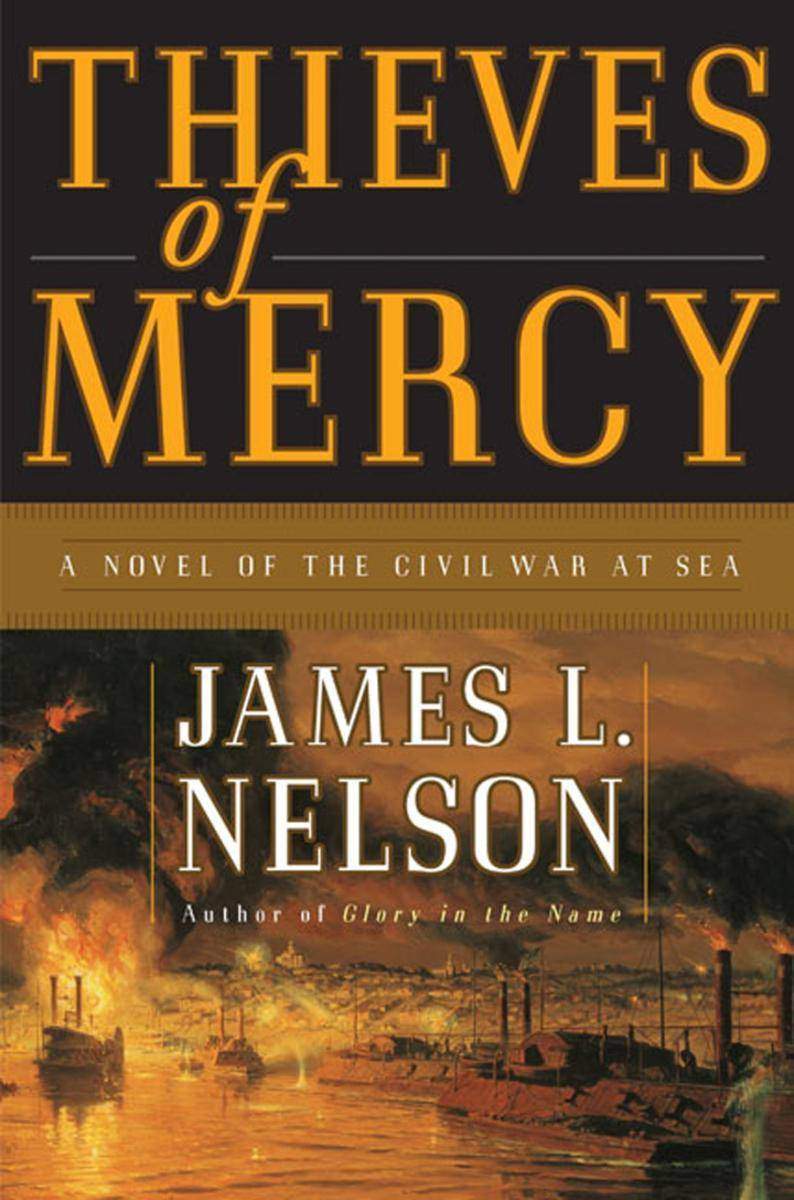
Thieves of Mercy
¥149.26
Having survived the bloody Battle of New Orleans and the loss of their ironclad Yazoo River, captain Samuel Bowater, engineer Hieronymus Taylor, and the survivors of their crew are given new orders -- take command of an ironclad warship being built in Memphis, Tennessee.Bowater and his men take passage upriver from "Mississippi" Mike Sullivan, one of the wild, undisciplined captains of the River Defense Squadron, only to find, on their arrival, that their ship is not even half built and the enemy is closing fast. Against their better judgment, Bowater and crew join forces with the mercurial Sullivan on board his ad hoc river gunship the General Page. Outnumbered and outgunned, the Confederates once again fling themselves bravely at the overwhelming power of the Yankee invaders. The deadly back-and-forth fight along the Mississippi ends at last in the massive naval battle of Memphis, and the near-suicidal attempt by the Confederates to hold back the Northern flood.Filled with wild characters and heart-pounding action, and set against the bold backdrop of the Civil War, Thieves of Mercy is a worthy successor to the W. Y. Boyd Award-winning novel Glory in the Name, the book Bernard Cornwell lauded as "by far, the best Civil War novel I've read."


