万本电子书0元读

万本电子书0元读

Clotelle: A Tale of the Southern States
William Wells Brown
¥8.09
According to Wikipedia: "William Wells Brown (November 6, 1816 – November 6, 1884) was a prominent abolitionist lecturer, novelist, playwright, and historian. Born into slavery in the Southern United States, Brown escaped to the North, where he worked for abolitionist causes and was a prolific writer. Brown was a pioneer in several different literary genres, including travel writing, fiction, and drama, and wrote what is considered to be the first novel by an African American. An almost exact contemporary of Frederick Douglass, Wells Brown was overshadowed by Douglass and the two feuded publicly."
American Notes
American Notes
Rudyard Kipling
¥8.09
Account of a trip to America. Here's how he begins his description of San Francisco: " 'Serene, indifferent to fate, Thou sittest at the Western Gate; Thou seest the white seas fold their tents, Oh, warder of two continents; Thou drawest all things, small and great, To thee, beside the Western Gate.' This is what Bret Harte has written of the great city of San Francisco, and for the past fortnight I have been wondering what made him do it. There is neither serenity nor indifference to be found in these parts; and evil would it be for the continents whose wardship were intrusted to so reckless a guardian."
Aesop for Children
Aesop for Children
Aesop
¥8.09
This edition, with 114 color illustrations, was first published in 1919. According to Wikipedia: "Aesop (ca. 620-564 BC), known for the genre of fables ascribed to him, was by tradition born a slave and was a contemporary of Croesus and Solon in the mid-sixth century BC in ancient Greece... The body of work identified as Aesop's Fables was transmitted by a series of later authors writing in both Greek and Latin. Demetrius of Phalerum (ca. 350-ca. 280 BC) made a collection in ten books, probably in prose (Lopson Aisopeion sunagogai) for the use of orators, which has been lost. Next appeared an edition in elegiac verse, cited by the Suda, but the author's name is unknown. Phaedrus, a freedman of Augustus, rendered the fables into Latin. Babrius turned the fables into Greek choliambics in the earlier part of the 3rd century A.D. Another 3rd century author, Titianus, rendered the fables in prose, now lost. Avianus (of uncertain date, perhaps the 4th century) translated 42 of the fables into Latin elegiacs. The 4th century grammarian Dositheus Magister also made a collection of Aesop's Fables, now lost. Aesop's Fables continued to be revised and translated through the ensuing centuries, with the addition of material from other cultures, so that the fables known today in some cases bear little relation to the original fables of Aesop. With a surge in scholarly interest in Aesop and Aesopic fable beginning toward the end of the 20th century, some attempt has been made to determine the nature and content of the very earliest fables which may be most closely linked to the historic Aesop... Milo Winter (August 7, 1888 – August 15, 1956) was a well known book illustrator, who produced works for editions of Aesop's Fables, Arabian Nights, Alice in Wonderland, Gulliver's Travels, Tanglewood Tales (1913) and others. He was born in Princeton, Illinois and trained at Chicago’s School of the Art Institute. He lived in Chicago until the early 1950s, when he moved to New York City. From 1947 to 1949, he was the art editor of Childcraft books and from 1949, was the art editor in the film strip division of Silver Burdett Company."
Hawthorne
Hawthorne
Henry James
¥8.09
Biography of one New England author by another.? According to Wikipedia: "Nathaniel Hawthorne (July 4, 1804 – May 19, 1864) was an American novelist, dark romantic, and short story writer. He was born in 1804 in Salem, Massachusetts to Nathaniel Hathorne and the former Elizabeth Clarke Manning. His ancestors include John Hathorne, the only judge involved in the Salem witch trials who never repented of his actions. He entered Bowdoin College in 1821, was elected to Phi Beta Kappa in 1824,[1] and graduated in 1825. He published his first work in 1828, the novel Fanshawe; he later tried to suppress it, feeling that it was not equal to the standard of his later work.[2] He published several short stories in periodicals, which he collected in 1837 as Twice-Told Tales. The next year, he became engaged to Sophia Peabody. He worked at the Boston Custom House and joined Brook Farm, a transcendentalist community, before marrying Peabody in 1842. The couple moved to The Old Manse in Concord, Massachusetts, later moving to Salem, the Berkshires, then to The Wayside in Concord. The Scarlet Letter was published in 1850, followed by a succession of other novels. A political appointment as consul took Hawthorne and family to Europe before their return to Concord in 1860. Hawthorne died on May 19, 1864, and was survived by his wife and their three children."
George Bernard Shaw
George Bernard Shaw
G. K. Chesterton
¥8.09
Book-length study of the great playwright by a great novelist. According to Wikipedia: "Gilbert Keith Chesterton (1874 - 1936) was an influential English writer of the early 20th century. His prolific and diverse output included journalism, philosophy, poetry
Faust: Der Trag?die
Faust: Der Trag?die
Johann Wolfgang von Goethe
¥8.09
Beide Teile von Goethes Faust, auf Deutsch. Nach Wikipedia: Johann Wolfgang von Goethe (1749 - 1832) war ein deutscher Schriftsteller und laut George Eliot "Deutschlands gr??ter Literat ... und der letzte wahre Universalgelehrte, der auf der Erde wandelte". [2] Goethes Werke erstrecken sich über die Felder von Poesie, Drama, Literatur, Theologie, Humanismus und Wissenschaft. Goethes Hauptwerk, das als einer der H?hepunkte der Weltliteratur gefeiert wird, ist das zweiteilige Drama Faust. [3] Zu Goethes anderen bekannten literarischen Werken geh?ren seine zahlreichen Gedichte, der Bildungsroman Wilhelm Meisters Lehramt und der Briefroman Die Leiden des jungen Werther. "
True Stories of History and Biography
Nathaniel Hawthorne
¥8.09
Brief biographies of Benjamin West, Sir Isaac Newton, Samuel Johnson, Oliver Cromwell, Benjamin Franklin, and Queen Christina. According to Wikipedia: "Nathaniel Hawthorne (born Nathaniel Hawthorne; July 4, 1804 – May 19, 1864) was an American novelist and short story writer."
A Journey into the Interior of the Earth
Jules Verne
¥8.09
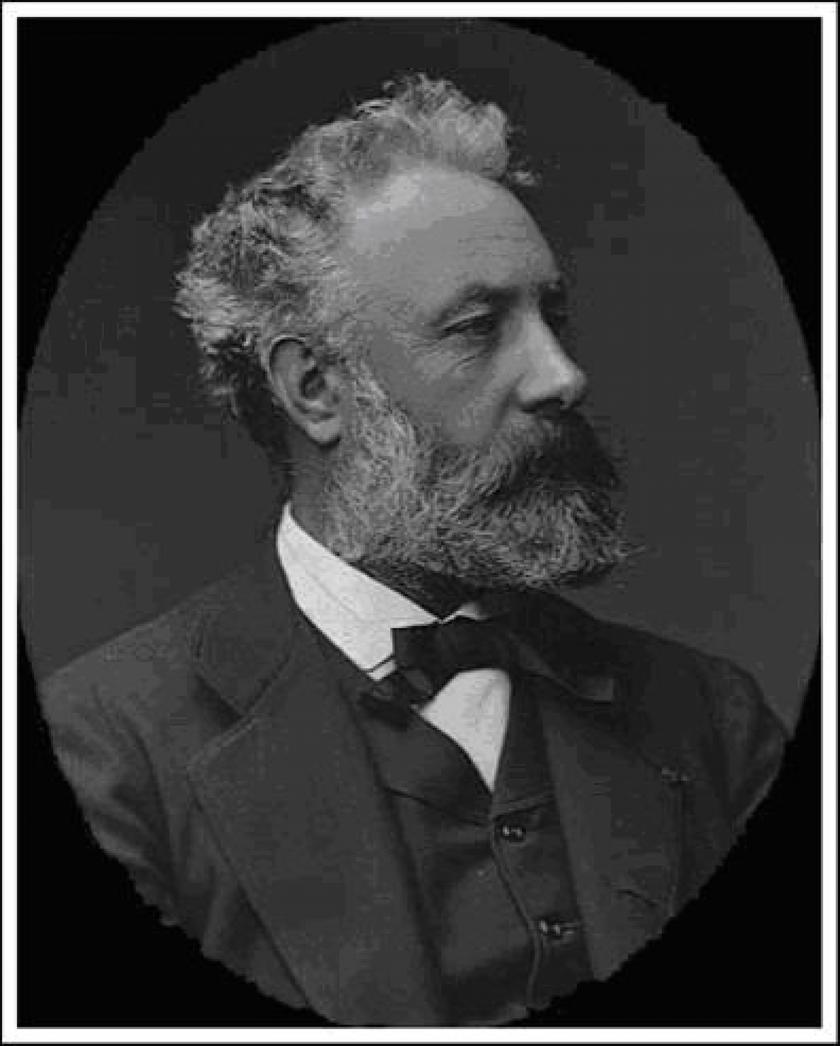
Classic adventure novel. According to Wikipedia: "Jules Gabriel Verne (February 8, 1828-March 24, 1905) was a French author who pioneered the science-fiction genre. He is best known for novels such as Journey to the Center of the Earth (1864), Twenty Thousand Leagues under the Sea (1870), and Around the World in Eighty Days (1873). Verne wrote about space, air, and underwater travel before air travel and practical submarines were invented, and before practical means of space travel had been devised. He is the third most translated author in the world, according to Index Translationum. Some of his books have been made into films. Verne, along with H. G. Wells, is often popularly referred to as the "Father of Science Fiction"
Abraham Lincoln
Abraham Lincoln
John T. Morse
¥8.09
Classic biography of Lincoln, first published in 1899. According to Wikipedia: "According to Wikipedia: "Abraham Lincoln is a 2-volume biography of Abraham Lincoln written by John Torrey Morse (1840-1937). Originally published in 1893, the New York times found it to be "for its scope, admirable. It will even stand up and appear respectable in the most distinguished company of Lincoln biographies that might be assembled." The author is "a sane biographer, who brings to the task of writing about Lincoln a mind that aspires to see clear and think straight, instead of one held slavishly subject to a heart's desire to make Lincoln out a hero without fault or blemish." The Atlantic Monthly noted that Morse had "attempted a bit of scientific painting and not a portraiture to the life. The book is a criticism, consequently, rather than an appreciation." They also noted that Morse concentrates mostly on the five years that Lincoln was in office... In 1987, Gabor Boritt noted that Morse was the first biographer to have "fully exemplified as well as diagnosed the above ailment [the schism between the self-serving, not very admirable politician that Lincoln was up until 1860 versus the later "unparalleled greatness"]." Morse has written of "the insoluble problem of two men - two lives - one following the other with no visible link... we have physically one creature, morally and mentally two beings."
Typhoon
Typhoon
Joseph Conrad
¥8.09
Classic Conrad novel. According to Wikipedia: "Joseph Conrad (1857 – 1924) was a Polish-born English novelist. Many critics regard him as one of the greatest novelists in the English language—a fact that is remarkable, as he did not learn to speak English fluently until he was in his twenties (and always with a strong Polish accent). He became a naturalized British subject in 1886. Conrad is recognized as a master prose stylist. Some of his works have a strain of romanticism, but more importantly he is recognized as an important forerunner of modernist literature. His narrative style and anti-heroic characters have influenced many writers, including Ernest Hemingway, D. H. Lawrence, F. Scott Fitzgerald, Graham Greene, William S. Burroughs, Joseph Heller, V.S. Naipaul, Italo Calvino and J. M. Coetzee."
Tales of Unrest
Tales of Unrest
Joseph Conrad
¥8.09
Classic Conrad short stories, including KARAIN: A MEMORY, THE IDIOTS, AN OUTPOST OF PROGRESS, THE RETURN, and THE LAGOON. According to Wikipedia: "Joseph Conrad (1857 – 1924) was a Polish-born English novelist. Many critics regard him as one of the greatest novelists in the English language—a fact that is remarkable, as he did not learn to speak English fluently until he was in his twenties (and always with a strong Polish accent). He became a naturalized British subject in 1886. Conrad is recognized as a master prose stylist. Some of his works have a strain of romanticism, but more importantly he is recognized as an important forerunner of modernist literature. His narrative style and anti-heroic characters have influenced many writers, including Ernest Hemingway, D. H. Lawrence, F. Scott Fitzgerald, Graham Greene, William S. Burroughs, Joseph Heller, V.S. Naipaul, Italo Calvino and J. M. Coetzee."
Jurgen
Jurgen
James Branch Cabell
¥8.09
According to Wikipedia: "James Branch Cabell (1879 - 1958) was an American author of fantasy fiction and belles lettres... Cabell's work was thought of very highly by a number of his peers, including Mark Twain, Sinclair Lewis, H. L. Mencken, Joseph Hergesheimer, and Jack Woodford. When Twain died he was reading Cabell's Chivalry. And although now largely forgotten by the general public, his work was remarkably influential on later authors of fantastic fiction... Cabell's eighth (and best-known) book, Jurgen, A Comedy of Justice (1919), was the subject of a celebrated obscenity case shortly after its publication. The eponymous hero, who considers himself a "monstrous clever fellow", embarks on a journey through ever more fantastic realms, even to hell and heaven. Everywhere he goes, he winds up seducing the local women, even the Devil's wife."
Baree, Son of Kazan
Baree, Son of Kazan
James Oliver Curwood
¥8.09
According to Wikipedia: "Baree, Son of Kazan is the eponymous name of a 1917 novel about a wild wolfling pup named Baree. It was written by James Oliver Curwood as the sequel to Kazan. Baree, Son of Kazan is a story about a wild wolfdog pup sired by Kazan (1/4 wolf, 3/4 dog) and born of blind Greywolf (pure wolf). This story is about Baree's survival after being separated from his parents as a young pup. He eventually finds himself in the care of Nepeese and her father Pierrot, a trapper. He bonds with Nepeese, and the story goes from there. James Oliver Curwood took the well used "a boy and his dog" formula, and created a great adventure story about a girl and her dog. A successful formula featuring a strong heroine, rather than a male hero, that he used in many of his stories."
Renaissance in Italy: The Age of the Despots
John Addington Symonds
¥8.09
According to Wikipedia: "John Addington Symonds (5 October 1840 - 19 April 1893) was an English poet and literary critic… Meanwhile he was occupied with his major work, Renaissance in Italy, which appeared in seven volumes at intervals between 1875 and 1886. The Renaissance had been the subject of Symonds' prize essay at Oxford, and this had aroused a desire to produce a more complete picture of the reawakening of art and literature in Europe... He practically made his home at Davos. A charming picture of his life there is drawn in Our Life in the Swiss Highlands (1891). Symonds became a citizen of the town; he took part in its municipal business, made friends with the peasants and shared their interests. There he wrote most of his books: biographies of Shelley (1878), Philip Sidney (1886), Ben Jonson (1886) and Michelangelo (1893), several volumes of poetry and essays, and a translation of the Autobiography of Benvenuto Cellini (1887). There, too, he completed his study of the Renaissance, the work for which he is mainly remembered."
The Bobbsey Twins at Snow Lodge
Laura Lee Hope
¥8.09
According to Wikipedia: "Laura Lee Hope is a pseudonym used by the Stratemeyer Syndicate for the Bobbsey Twins and several other series of children's novels. Actual writers taking up the pen of Laura Lee Hope include Edward Stratemeyer, Howard and Lilian Garis, Elizabeth Ward, Harriet (Stratemeyer) Adams, and Nancy Axelrad. Laura Lee Hope was first used as a pseudonym in 1904 for the debut of the Bobbsey Twins. Series: The Bobbsey Twins (1904-), The Outdoor Girls (23 vols. 1913-1933), The Moving Picture Girls (7 vols. 1914-1916), Bunny Brown (20 vols. 1916-1931), Six Little Bunkers (14 vols. 1918-1930), Make Believe Stories (12 vols. c. 1920-1923), Blythe Girls (12 vols. 1925-1932)."
The Bobbsey Twins in a Great City
Laura Lee Hope
¥8.09
According to Wikipedia: "Laura Lee Hope is a pseudonym used by the Stratemeyer Syndicate for the Bobbsey Twins and several other series of children's novels. Actual writers taking up the pen of Laura Lee Hope include Edward Stratemeyer, Howard and Lilian Garis, Elizabeth Ward, Harriet (Stratemeyer) Adams, and Nancy Axelrad. Laura Lee Hope was first used as a pseudonym in 1904 for the debut of the Bobbsey Twins. Series: The Bobbsey Twins (1904-), The Outdoor Girls (23 vols. 1913-1933), The Moving Picture Girls (7 vols. 1914-1916), Bunny Brown (20 vols. 1916-1931), Six Little Bunkers (14 vols. 1918-1930), Make Believe Stories (12 vols. c. 1920-1923), Blythe Girls (12 vols. 1925-1932)."
The Sea Fairies
The Sea Fairies
L. Frank Baum
¥8.09
According to Wikipedia: "Baum had decided to end the Oz series with The Emerald City of Oz in 1910, after six installments over the first decade of the twentieth century. The Sea Fairies was intended to be the first in a new series of fantasy novels, which Baum and Reilly & Britton continued the next year with Sky Island. Unfortunately for author and publisher, the two volumes of the new projected series did not meet with the same success as the Oz books previously had. The first edition of The Sea Fairies sold 12,400 copies in its initial year on the market, where The Emerald City of Oz had sold 20,000. Even when Baum's books experienced a major resurgence in interest and sales in 1918, The Sea Fairies sold only 611 copies that year while the Oz books and even Baum's non-Oz works were selling thousands of copies. Once Baum returned to writing Oz books with The Patchwork Girl of Oz in 1913, the Trot series was retired — but the main characters lived on. Trot and Cap'n Bill are the main protagonists in The Scarecrow of Oz (1915) — the plot of which was reworked from the projected third book in their aborted series — and they play a significant role in The Magic of Oz (1919). Trot appears in The Lost Princess of Oz (1917) and Glinda of Oz (1920) as well."
Poetry of Architecture
John Ruskin
¥8.09
"The architecture of the nations of Europe considerd inits association with natural sceneery and national characteristics." With 15 illustrations. According to Wikipedia: "John Ruskin (8 February 1819 – 20 January 1900) is best known for his work as an art critic, stage writer, and social critic, but is remembered as an author, poet and artist as well. Ruskin's essays on art and architecture were extremely influential in the Victorian and Edwardian eras."
The Range Dwellers
The Range Dwellers
B. M. Bower
¥8.09
Classic western. According to Wikipedia: "Bertha Muzzy Sinclair or Sinclair-Cowan, née Muzzy (November 15, 1871 – July 23, 1940), best known by her pseudonym B. M. Bower, was an American novelist who wrote fictional stories about the American Old West... She wrote 57 Western novels, several of which were turned into films."
A Little Dinner at Timmins's
William Makepeace Thackeray
¥8.09
Classic short story. According to Wikipedia: "Thackeray is most often compared to one other great novelist of Victorian literature, Charles Dickens. During the Victorian era, he was ranked second only to Dickens, but he is now much less read and is known almost exclusively for Vanity Fair. In that novel he was able to satirize whole swaths of humanity while retaining a light touch. It also features his most memorable character, the engagingly roguish Becky Sharp. As a result, unlike Thackeray's other novels, it remains popular with the general reading public; it is a standard fixture in university courses and has been repeatedly adapted for movies and television. In Thackeray's own day, some commentators, such as Anthony Trollope, ranked his History of Henry Esmond as his greatest work, perhaps because it expressed Victorian values of duty and earnestness, as did some of his other later novels. It is perhaps for this reason that they have not survived as well as Vanity Fair, which satirizes those values."
A First Family of Tasajara
Bret Harte
¥8.09
Classic western novel. According to Wikipedia: "Bret Harte (August 25, 1836[2] – May 6, 1902) was an American author and poet, best remembered for his accounts of pioneering life in California. He was born in Albany, New York. ... He moved to California in 1853, later working there in a number of capacities, including miner, teacher, messenger, and journalist. He spent part of his life in the northern California coast town now known as Arcata, then just a mining camp on Humboldt Bay. His first literary efforts, including poetry and prose, appeared in The Californian, an early literary journal edited by Charles Henry Webb. In 1868 he became editor of The Overland Monthly, another new literary magazine, but this one more in tune with the pioneering spirit of excitement in California. His story, "The Luck of Roaring Camp," appeared in the magazine's second edition, propelling Harte to nationwide fame... Determined to pursue his literary career, in 1871 he and his family traveled back East, to New York and eventually to Boston, where he contracted with the publisher of The Atlantic Monthly for an annual salary of $10,000, "an unprecedented sum at the time." His popularity waned, however, and by the end of 1872 he was without a publishing contract and increasingly desperate. He spent the next few years struggling to publish new work (or republish old), delivering lectures about the gold rush, and even selling an advertising jingle to a soap company. In 1878 Harte was appointed to the position of United States Consul in the town of Krefeld, Germany and then to Glasgow in 1880. In 1885 he settled in London. During the thirty years he spent in Europe, he never abandoned writing, and maintained a prodigious output of stories that retained the freshness of his earlier work. He died in England in 1902 of throat cancer and is buried at Frimley."