


 购物车
购物车 个人中心
个人中心
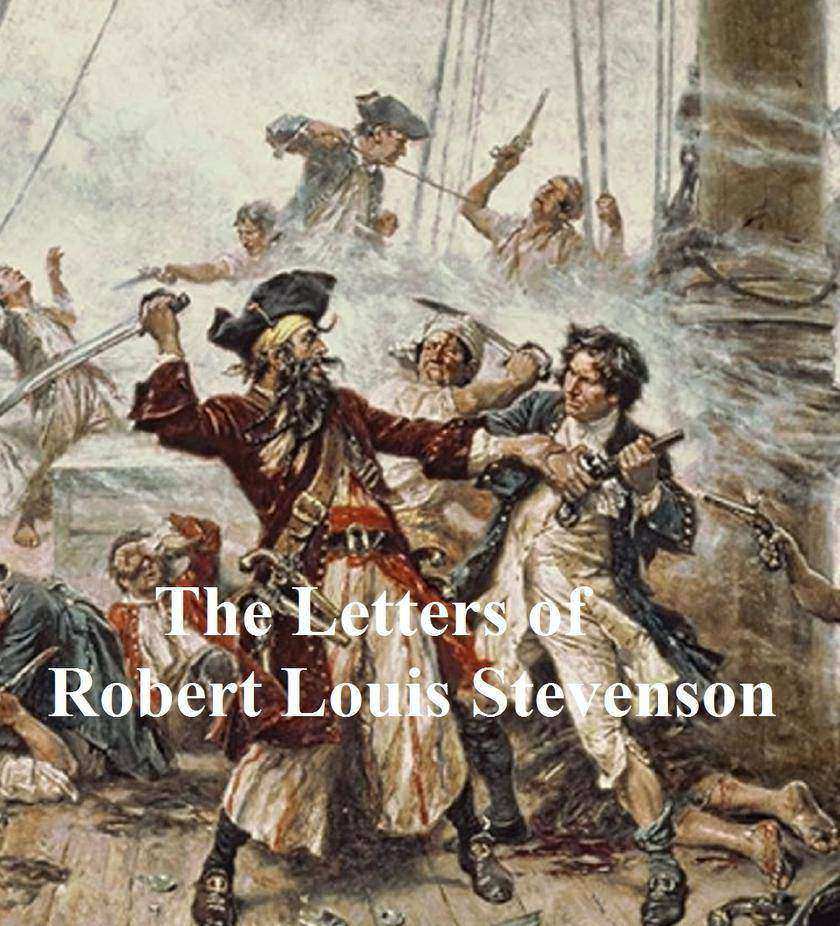
The Letters of Robert Louis Stevenson
¥8.09
According to Wikipedia: "Robert Louis (Balfour) Stevenson ( 1850 - 1894), was a Scottish novelist, poet, and travel writer, and a leading representative of Neo-romanticism in English literature. He was the man who "seemed to pick the right word up on the point of his pen, like a man playing spillikins", as G. K. Chesterton put it. He was also greatly admired by many authors, including Jorge Luis Borges, Ernest Hemingway, Rudyard Kipling, Vladimir Nabokov, and J. M. Barrie. Most modernist writers dismissed him, however, because he was popular and did not write within their definition of modernism. It is only recently that critics have begun to look beyond Stevenson's popularity and allow him a place in the canon."

Drift from Two Shores, collection of stories
¥8.09
Collection of stories, including: The Man on the Beach, Two Saints of the Foot-Hills, "Jinny", Roger Catron's Friend, "Who Was My Quiet Friend?", The Hoodlum Band, The Man Whose Yoke Was Not Easy, My Friend the Tramp, The man from Solano, The Office Seeker, A Sleeping-Car Experience, Morning on the Avenue, and With the Entrees. According to Wikipedia: "Bret Harte (August 25, 1836[2] – May 6, 1902) was an American author and poet, best remembered for his accounts of pioneering life in California. He was born in Albany, New York. ... He moved to California in 1853, later working there in a number of capacities, including miner, teacher, messenger, and journalist. He spent part of his life in the northern California coast town now known as Arcata, then just a mining camp on Humboldt Bay. His first literary efforts, including poetry and prose, appeared in The Californian, an early literary journal edited by Charles Henry Webb. In 1868 he became editor of The Overland Monthly, another new literary magazine, but this one more in tune with the pioneering spirit of excitement in California. His story, "The Luck of Roaring Camp," appeared in the magazine's second edition, propelling Harte to nationwide fame... Determined to pursue his literary career, in 1871 he and his family traveled back East, to New York and eventually to Boston, where he contracted with the publisher of The Atlantic Monthly for an annual salary of $10,000, "an unprecedented sum at the time." His popularity waned, however, and by the end of 1872 he was without a publishing contract and increasingly desperate. He spent the next few years struggling to publish new work (or republish old), delivering lectures about the gold rush, and even selling an advertising jingle to a soap company. In 1878 Harte was appointed to the position of United States Consul in the town of Krefeld, Germany and then to Glasgow in 1880. In 1885 he settled in London. During the thirty years he spent in Europe, he never abandoned writing, and maintained a prodigious output of stories that retained the freshness of his earlier work. He died in England in 1902 of throat cancer and is buried at Frimley."
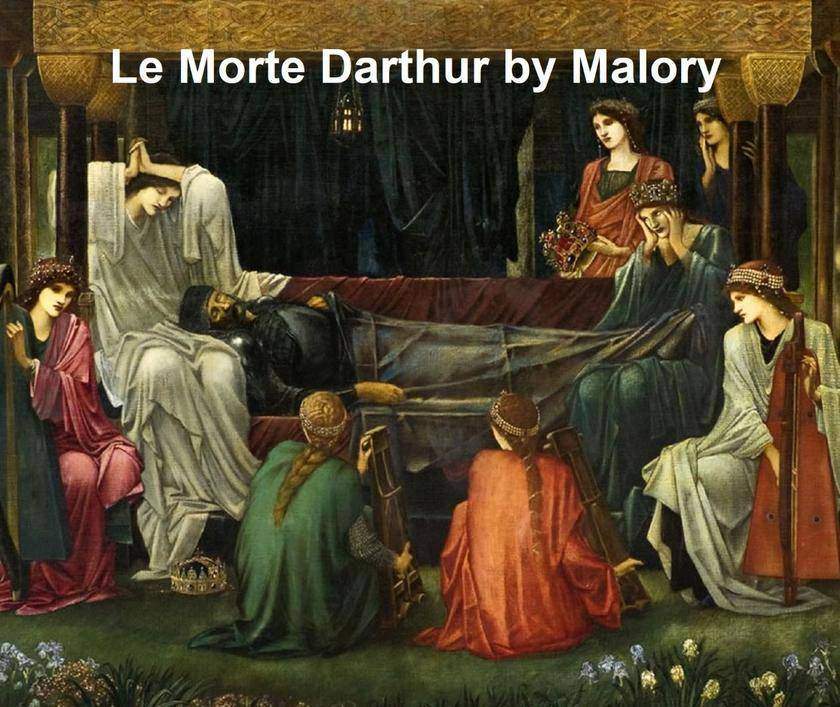
La Morte Darthur
¥8.09
According to Wikipedia: "a compilation by Sir Thomas Malory of Romance tales about the legendary King Arthur, Guinevere, Lancelot, and the Knights of the Round Table. Malory interprets existing French and English stories about these figures and adds original material (the Gareth story). First published in 1485 by William Caxton, Le Morte d'Arthur is today perhaps the best-known work of Arthurian literature in English. Many modern Arthurian writers have used Malory as their principal source, including T. H. White in his popular The Once and Future King and Tennyson in The Idylls of the King... Sir Thomas Malory (c. 1405 – 14 March 1471) was an English writer, the author or compiler of Le Morte d'Arthur. The antiquary John Leland (1506–1552) believed him to be Welsh, but most modern scholars, beginning with G.L. Kittridge in 1894, assume that he was Sir Thomas Malory of Newbold Revel in Warwickshire, who was a knight, land-owner and Member of Parliament. The surname appears in various spellings, including Maillorie, Mallory, Mallery, and Maleore. The name comes from the Old French adjective maleüré (from Latin male auguratus) meaning ill-omened or unfortunate."
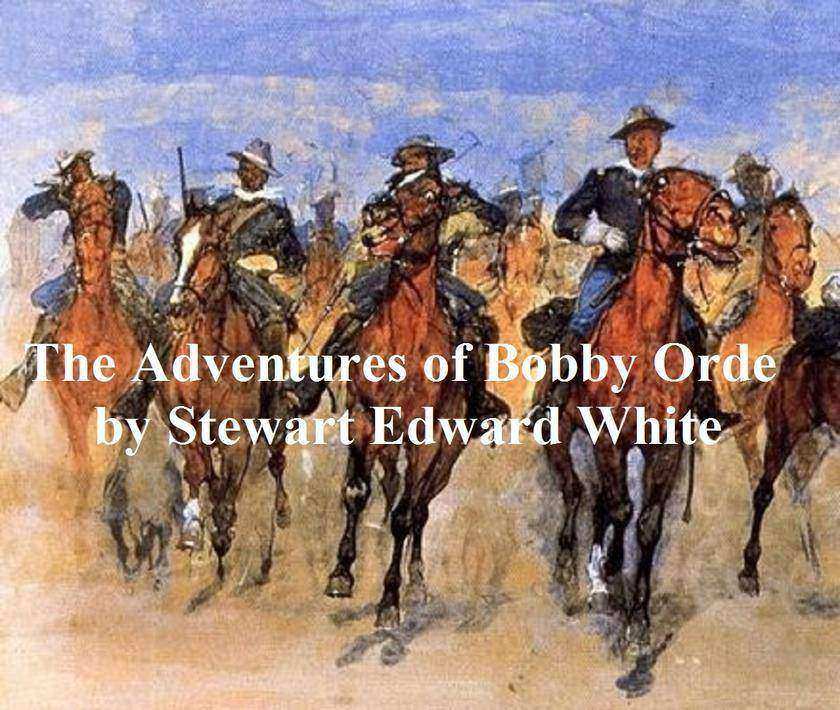
The Adventures of Bobby Orde
¥8.09
According to Wikipedia: "Stewart Edward White (12 March 1873 – September 18, 1946) was an American author... From about 1900 until about 1922, he wrote fiction and non-fiction about adventure and travel, with an emphasis on natural history and outdoor living. Starting in 1922, he and his wife Elizabeth "Betty" Grant White wrote numerous books they claimed were received through channelling with spirits. They also wrote of their travels around the state of California... White's books were popular at a time when America was losing its vanishing wilderness. He was a keen observer of the beauties of nature and human nature, yet could render them in a plain-spoken style. Based on his own experience, whether writing camping journals or Westerns, he included pithy and fun details about cabin-building, canoeing, logging, gold-hunting, and guns and fishing and hunting. "

Trent's Trust and Other Stories
¥8.09
Collection of western stories, including: Trent's Trust, Mr. MacGlowrie's Widow, A Ward of Colonel Starbottle, Prosper's "Old Mother", The Convalescence of Jack Hamlin, A Pupil of Chestnut Ridge, and Dick Boyle's Business Card. According to Wikipedia: "Bret Harte (August 25, 1836 – May 6, 1902) was an American author and poet, best remembered for his accounts of pioneering life in California. He was born in Albany, New York. ... He moved to California in 1853, later working there in a number of capacities, including miner, teacher, messenger, and journalist. He spent part of his life in the northern California coast town now known as Arcata, then just a mining camp on Humboldt Bay. His first literary efforts, including poetry and prose, appeared in The Californian, an early literary journal edited by Charles Henry Webb. In 1868 he became editor of The Overland Monthly, another new literary magazine, but this one more in tune with the pioneering spirit of excitement in California. His story, "The Luck of Roaring Camp," appeared in the magazine's second edition, propelling Harte to nationwide fame... Determined to pursue his literary career, in 1871 he and his family traveled back East, to New York and eventually to Boston, where he contracted with the publisher of The Atlantic Monthly for an annual salary of $10,000, "an unprecedented sum at the time." His popularity waned, however, and by the end of 1872 he was without a publishing contract and increasingly desperate. He spent the next few years struggling to publish new work (or republish old), delivering lectures about the gold rush, and even selling an advertising jingle to a soap company. In 1878 Harte was appointed to the position of United States Consul in the town of Krefeld, Germany and then to Glasgow in 1880. In 1885 he settled in London. During the thirty years he spent in Europe, he never abandoned writing, and maintained a prodigious output of stories that retained the freshness of his earlier work. He died in England in 1902 of throat cancer and is buried at Frimley."
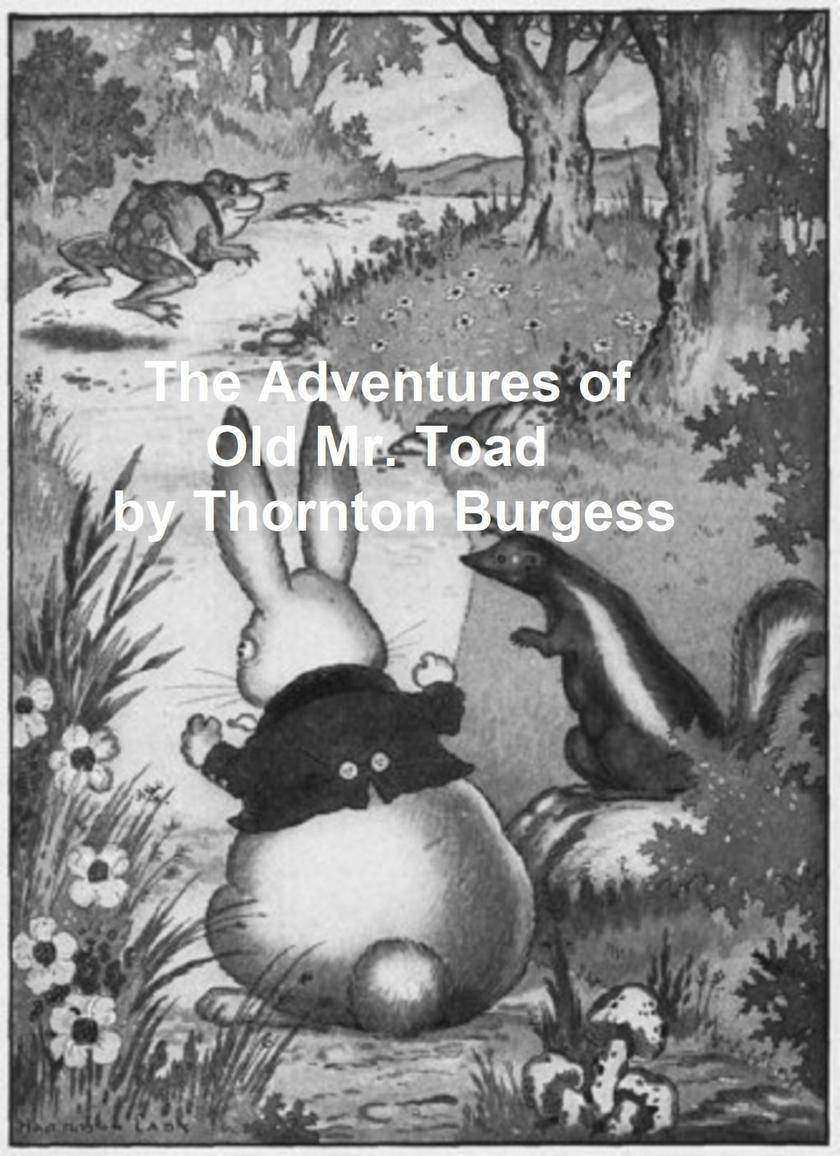
The Adventures of Old Mr. Toad, Illustrated
¥8.09
Children's book, first published in 1920. With six black-and-white illustrations. According to Wikipedia: "Thornton Waldo Burgess (January 14, 1874 – June 5, 1965). Born in Sandwich, Cape Cod, Massachusetts, he was a conservationist and author of children's stories. Thornton Waldo Burgess loved the beauty of nature and its living creatures so much that he wrote about them for 50 years. By the time he retired, he had written more than 170 books and 15,000 stories for daily columns in newspapers."
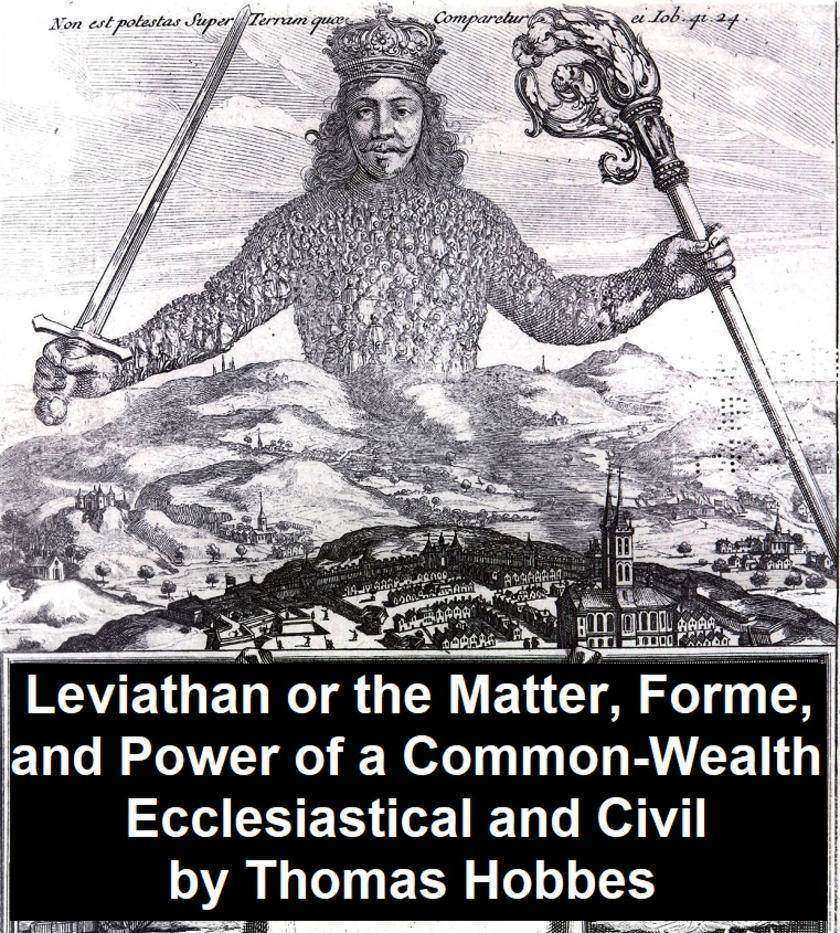
Leviathan, Or the Matter, Forme, and Power of a Common-Wealth Ecclesiastical and
¥8.09
First published in 1651, a classic of political science. According to Wikipedia: "Thomas Hobbes (1588 – 1679) was an English philosopher, remembered today for his work on political philosophy. His 1651 book Leviathan established the foundation for most of Western political philosophy from the perspective of social contract theory. Hobbes also contributed to a diverse array of fields, including history, geometry, physics of gases, theology, ethics, general philosophy, and political science. His account of human nature as self-interested cooperation has proved to be an enduring theory in the field of philosophical anthropology."
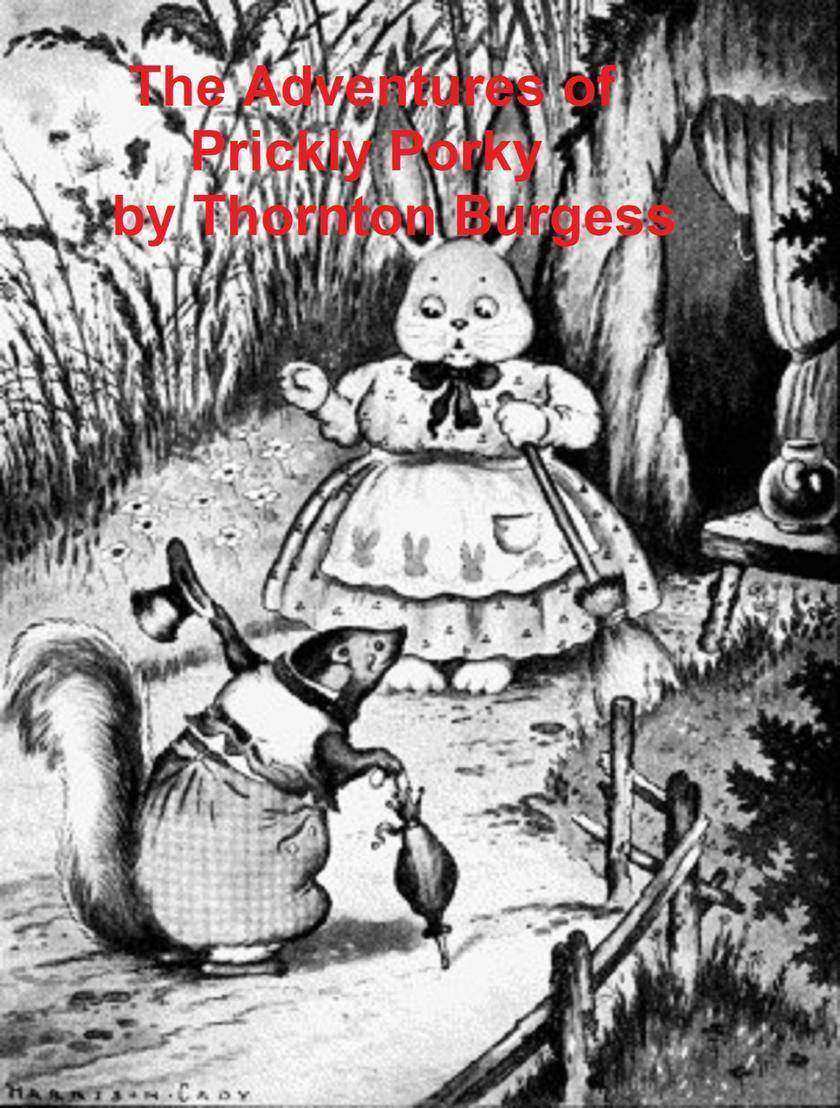
The Adventures of Prickly Porky, Illustrated
¥8.09
Children's book, first published in 1916, with six black-and-white illustrations. According to Wikipedia: "Thornton Waldo Burgess (January 14, 1874 – June 5, 1965). Born in Sandwich, Cape Cod, Massachusetts, he was a conservationist and author of children's stories. Thornton Waldo Burgess loved the beauty of nature and its living creatures so much that he wrote about them for 50 years. By the time he retired, he had written more than 170 books and 15,000 stories for daily columns in newspapers."
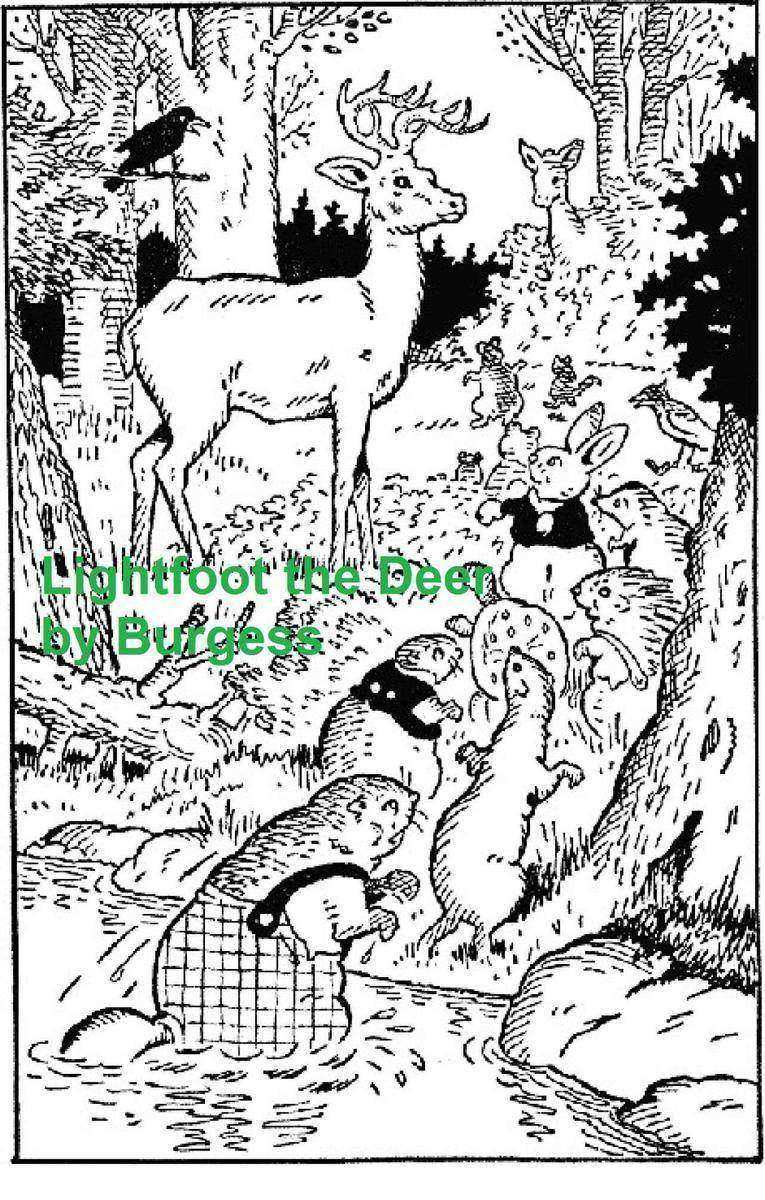
Lightfoot the Deer, Illustrated
¥8.09
Children's book, first published in 1921, with 4 black-and-white illustrations. According to Wikipedia: "Thornton Waldo Burgess (January 14, 1874 – June 5, 1965). Born in Sandwich, Cape Cod, Massachusetts, he was a conservationist and author of children's stories. Thornton Waldo Burgess loved the beauty of nature and its living creatures so much that he wrote about them for 50 years. By the time he retired, he had written more than 170 books and 15,000 stories for daily columns in newspapers."
The Abbot
¥8.09
First published in 1820, historical novel set in the 16th century, in Scotland, at the time of Mary Queen of Scots; one of Sir Walter Scott's "Tales from Benedictine Sources." According to Wikipedia: "Sir Walter Scott, 1st Baronet (1771 – 1832) was a prolific Scottish historical novelist and poet popular throughout Europe during his time. In some ways Scott was the first English-language author to have a truly international career in his lifetime, with many contemporary readers all over Europe, Australia, and North America. His novels and poetry are still read, and many of his works remain classics of both English-language literature and of Scottish literature. Famous titles include Ivanhoe, Rob Roy, The Lady of The Lake, Waverley, The Heart of Midlothian and The Bride of Lammermoor."
Count Robert of Paris
¥8.09
First published in 1831, historical novel set in Constantinople and Scutari in 1097, at the time of the Crusades. One of Sir Walter Scott's "Tales of My Landlord" novels. According to Wikipedia: "Sir Walter Scott, 1st Baronet (1771 – 1832) was a prolific Scottish historical novelist and poet popular throughout Europe during his time. In some ways Scott was the first English-language author to have a truly international career in his lifetime, with many contemporary readers all over Europe, Australia, and North America. His novels and poetry are still read, and many of his works remain classics of both English-language literature and of Scottish literature. Famous titles include Ivanhoe, Rob Roy, The Lady of The Lake, Waverley, The Heart of Midlothian and The Bride of Lammermoor."
Four Plays
¥8.09
Four classic Russian plays. According to the introduction, "ALEXANDER NIKOLAYEVICH Ostrovsky (1823-86) is the great Russian dramatist of the central decades of the nineteenth century, of the years when the realistic school was all-powerful in Russian literature, of the period when Turgenev, Dostoyevsky, and Tolstoy created a literature of prose fiction that has had no superior in the world's history. His work in the drama takes its place beside theirs in the novel. Obviously inferior as it is in certain ways, it yet sheds light on an important side of Russian life that they left practically untouched."
The Four Horsemen of the Apocalypse
¥8.09
According to Wikipedia: "Vicente Blasco Ibá?ez (January 29, 1867 – January 28, 1928) was a Spanish realist novelist writing in Spanish, a screenwriter and occasional film director. Born in Valencia, today he is best known in the English-speaking world for his World War I novel Los cuatro jinetes del apocalipsis. Filmed in 1921 as The Four Horsemen of the Apocalypse, it was filmed again in 1962, reset in World War II. However, in his time he was a best-selling author inside and outside of Spain, and also known for his controversial political activities. While Sangre y arena (Blood and Sand) and Los cuatro jinetes del apocalipsis are his most popular novels, particularly outside of Spain, his Valencian novels such as La barraca and Ca?as y barro are the ones most valued by scholars."
George Washington
¥8.09
According to Wikipedia: "Washington is seen as a symbol of the United States and republicanism in practice. His devotion to civic virtue made him an exemplary figure among early American politicians. Washington died in 1799, and in his funeral oration, Henry Lee said that of all Americans, he was "first in war, first in peace, and first in the hearts of his countrymen." Washington has been consistently ranked by scholars as one of the greatest U.S. Presidents."
Italian Letters
¥8.09
According to Wikipedia: "William Godwin (3 March 1756 – 7 April 1836) was an English journalist, political philosopher and novelist. He is considered one of the first exponents of utilitarianism, and one of the first modern proponents of anarchism. Godwin is most famous for two books that he published within the space of a year: An Enquiry Concerning Political Justice, an attack on political institutions, and Things as They Are or The Adventures of Caleb Williams, which attacks aristocratic privilege, but also is virtually the first mystery novel. Based on the success of both, Godwin featured prominently in the radical circles of London in the 1790s. In the ensuing conservative reaction to British radicalism, Godwin was attacked, in part because of his marriage to the pioneering feminist writer Mary Wollstonecraft in 1797 and his candid biography of her after her death; their child, Mary Godwin (later Mary Shelley) would go on to author Frankenstein and marry the poet Percy Bysshe Shelley. Godwin wrote prolifically in the genres of novels, history and demography throughout his lifetime."
Spirit of the Age or Contemporary Portraits
¥8.09
Collection of essays covering Bentham, Godwin, Coleridge, Irving, Scott, Byron, Wordsworth, Malthus, and others.According to Wikipedia: "William Hazlitt (10 April 1778 – 18 September 1830) was an English writer remembered for his humanistic essays and literary criticism. Hazlitt was a prominent English literary critic, grammarian and philosopher. He is considered one of the greatest critics and essayists in English, placed in the same company as Samuel Johnson and George Orwell, but his work is currently little-read."
Julius Caesar
¥8.09
Der Shakespeare-Klassiker, übersetzt von August Wilhelm von Schlegel. Laut Wikipedia: "Der Geist Caesars verspottet Brutus über seine bevorstehende Niederlage. (Kupferstich von Edward Scriven aus einem Gem?lde von Richard Westall: London, 1802.) Die Trag?die von Julius Caesar, auch einfach Julius C?sar genannt, ist eine Trag?die von William Shakespeare, von dem man annimmt, dass es im Jahr 1599 geschrieben wurde, und die Verschw?rung gegen den r?mischen Diktator Julius Caesar, seine Ermordung und die Niederlage der Verschw?rer in der Schlacht von Philippi darstellt. Es ist eines von mehreren r?mischen Theaterstücken, die Shakespeare schrieb. basierend auf wahren Ereignissen aus der r?mischen Geschichte, zu denen auch Coriolanus und Antonius und Kleopatra geh?ren. "
The Masters of the Peaks
¥8.09
Historical novel from the French and Indian War series. "The Masters of the Peaks," while presenting a complete story in itself is the fourth volume of the French and Indian War Series, of which the predecessors were "The Hunters of the Hills," "The Shadow of the North," and "The Rulers of the Lakes." Robert Lennox, Tayoga, Willet, and all the other important characters of the earlier romances reappear in the present book. According to Wikipedia: "Joseph Alexander Altsheler (1862 - 1919), was an American author of popular juvenile historical fiction. Altsheler was born in Three Springs, Kentucky to Joseph and Louise Altsheler. In 1885, he took a job at the Louisville Courier-Journal as a reporter and later, an editor. He started working for the New York World in 1892, first as the paper's Hawaiian correspondent and then as the editor of the World's tri-weekly magazine. Due to a lack of suitable stories, he began writing children's stories for the magazine."

Maass fur Maas oder Wie Einer Misst so Wird Ihm Wider Gemessen
¥8.09
Shakespeare-Kom?die, ins Deutsche übersetzt. Laut Wikipedia ist "Measure for Measure" ein Stück von William Shakespeare, das 1603 oder 1604 geschrieben wurde. Es wurde (und wird weiterhin) als Kom?die klassifiziert, aber seine Stimmung widersetzt sich diesen Erwartungen Eine Vielzahl von Gründen wurde von einigen Kritikern als eines von Shakespeares Problemspielen bezeichnet.Erst im First Folio von 1623 ver?ffentlicht (wo es zuerst als Kom?die bezeichnet wurde), war die erste Aufnahme des Stücks 1604. Das Stück handelt von den Themen der Barmherzigkeit, der Gerechtigkeit und der Wahrheit und ihrer Beziehung zu Stolz und Demut: "Einige erheben sich aus der Sünde und einige aus der Tugend fallen."
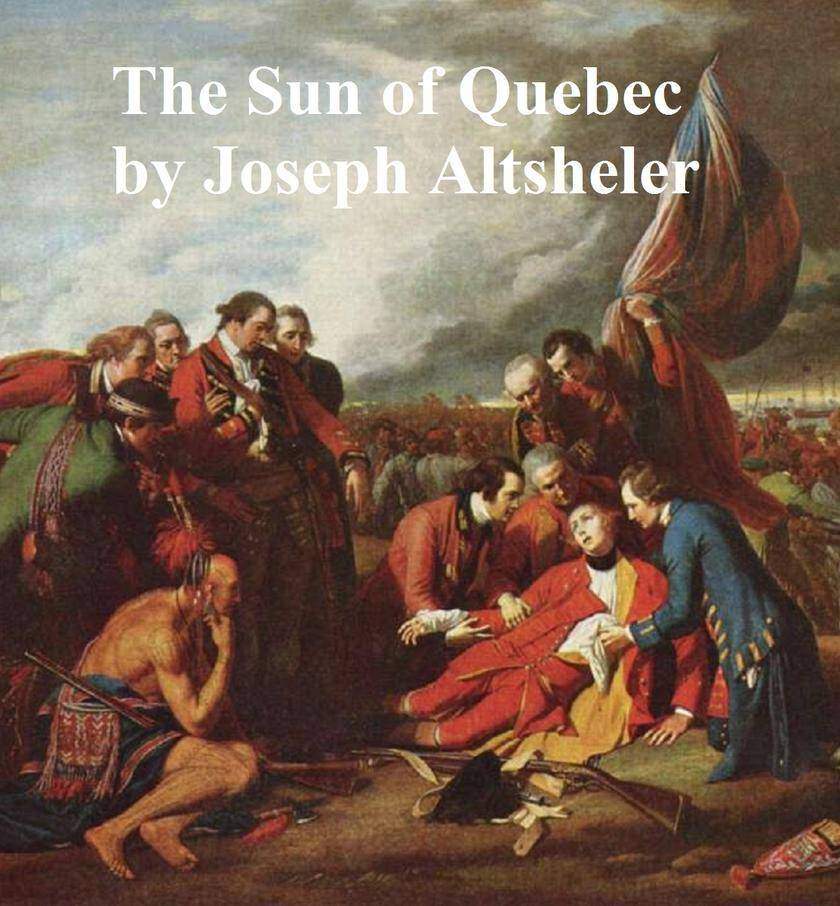
The Sun of Quebec
¥8.09
Historical novel from the French and Indian War series. "The Sun of Quebec" is the sixth and closing volume of the French and Indian War Series of which the predecessors have been "The Hunters of the Hills," "The Shadow of the North," "The Rulers of the Lakes," "The Masters of the Peaks," and "The Lords of the Wild." The important characters in the earlier books reappear, and the mystery in the life of Robert Lennox, the central figure in all the romances, is solved. According to Wikipedia: "Joseph Alexander Altsheler (1862 - 1919), was an American author of popular juvenile historical fiction. Altsheler was born in Three Springs, Kentucky to Joseph and Louise Altsheler. In 1885, he took a job at the Louisville Courier-Journal as a reporter and later, an editor. He started working for the New York World in 1892, first as the paper's Hawaiian correspondent and then as the editor of the World's tri-weekly magazine. Due to a lack of suitable stories, he began writing children's stories for the magazine."

Macbeth
¥8.09
Die Shakespeare Trag?die, in Englisch, mit Zeilennummern, und übersetzt von Christoph Martin Wieland ins Deutsche. Laut Wikipedia: "Die Trag?die von Macbeth (allgemein Macbeth genannt) ist eine Trag?die von William Shakespeare über einen Mann, der K?nigsmord begeht und dann weitere Morde begeht, um seine Macht zu behalten. Das Spiel zeigt deutlich die korrumpierende Wirkung des Ehrgeizes Es geht aber auch um die Beziehung zwischen Grausamkeit und M?nnlichkeit, Tyrannei und K?nigtum, Verrat, Gewalt, Schuld, Prophetie und St?rung der natürlichen Ordnung.


