


 购物车
购物车 个人中心
个人中心
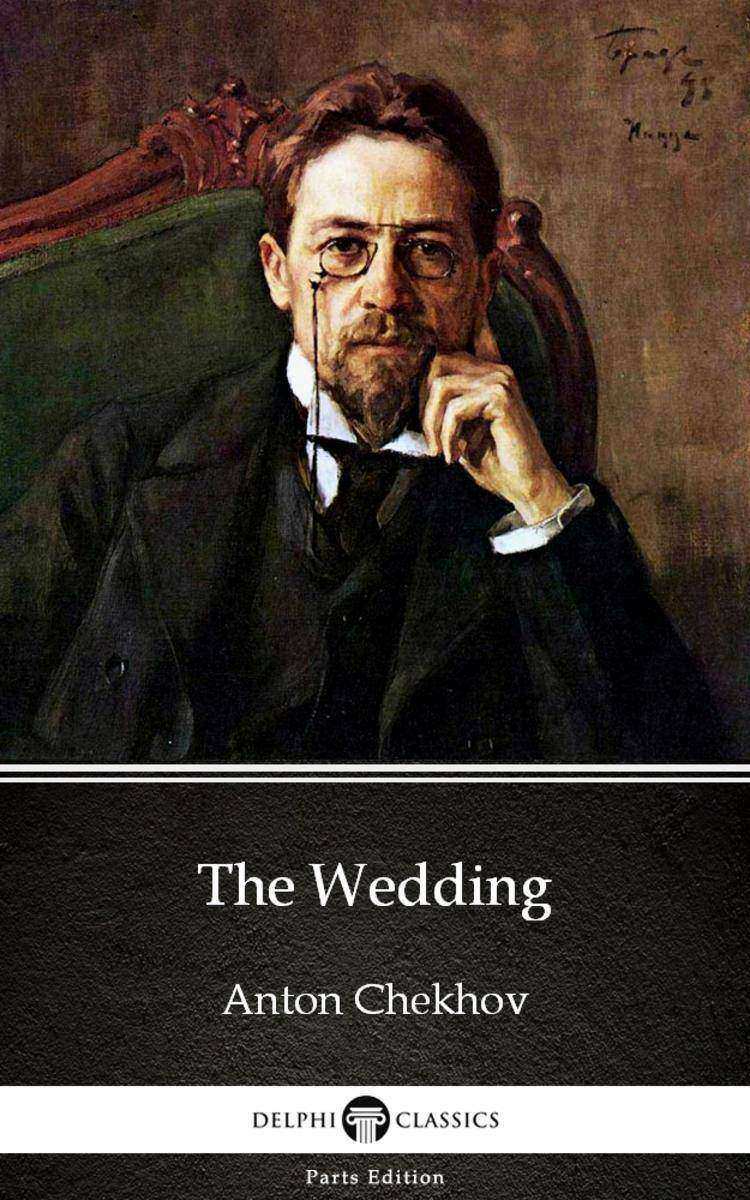
The Wedding by Anton Chekhov (Illustrated)
¥8.09
This eBook features the unabridged text of ‘The Wedding’ from the bestselling edition of ‘The Complete Works of Anton Chekhov’. Having established their name as the leading publisher of classic literature and art, Delphi Classics produce publications that are individually crafted with superior formatting, while introducing many rare texts for the first time in digital print. The Delphi Classics edition of Chekhov includes original annotations and illustrations relating to the life and works of the author, as well as individual tables of contents, allowing you to navigate eBooks quickly and easily.eBook features:* The complete unabridged text of ‘The Wedding’* Beautifully illustrated with images related to Chekhov’s works* Individual contents table, allowing easy navigation around the eBook* Excellent formatting of the textPlease visit www.delphiclassics.com to learn more about our wide range of titles
No Mistakes Grammar Bites, Volume X: Could've and Should've, and Irony and Coinc
¥8.09
Guaranteed Not to Be Confusing Don't Ever Be Confused by Grammar Again. Take a "bite" out of Grammar with No Mistakes Grammar Bites. It seems as if many dictionaries and books on grammar do their best to confuse people. Words and explanations are defined using grammatical terminology that is difficult to understand; in fact, if you knew that terminology, you probably wouldn't have to look up the words to begin with. We're aiming to get rid of that and explain things in plain English, using language that is easy to understand. Try it out and see for yourself. If you find these books confusing, write to me and get a refund; they're guaranteed.
No Mistakes Grammar Bites, Volume IV: Affect and Effect, and Accept and Except
¥8.09
Guaranteed Not to Be Confusing Don't Ever Be Confused by Grammar Again. Take a "bite" out of Grammar with No Mistakes Grammar Bites. It seems as if many dictionaries and books on grammar do their best to confuse people. Words and explanations are defined using grammatical terminology that is difficult to understand; in fact, if you knew that terminology, you probably wouldn't have to look up the words to begin with. We're aiming to get rid of that and explain things in plain English, using language that is easy to understand. Try it out and see for yourself. If you find these books confusing, write to me and get a refund; they're guaranteed.
No Mistakes Grammar Bites, Volume VII: Farther and Further, and Onto, On, and On
¥8.09
Guaranteed Not to Be Confusing Don't Ever Be Confused by Grammar Again. Take a "bite" out of Grammar with No Mistakes Grammar Bites. It seems as if many dictionaries and books on grammar do their best to confuse people. Words and explanations are defined using grammatical terminology that is difficult to understand; in fact, if you knew that terminology, you probably wouldn't have to look up the words to begin with. We're aiming to get rid of that and explain things in plain English, using language that is easy to understand. Try it out and see for yourself. If you find these books confusing, write to me and get a refund; they're guaranteed.
Teoría de la inspiración
¥8.09
Cuatro historias que en su clara delimitación permiten entrever cómo las diferencias se encuentran atravesadas por algo que trasciende mientras devienen: vasos comunicantes de las formas. Matices de divergentes eventos que se unifican para invitar al lector a transitar un camino que le llevará a inquirir, no sin admiración, cómo los hechos dejan su estado inerte y comienzan a moverse cuando es la voz humana la que les otorga vida. Marcos Prado Llusela
Of Sand and Stone: A Time Travel Romance
¥8.09
She was destined to save his heart of stone... Bookish museum curator Rebecca Clark has given up on dating. Real life men aren’t nearly as perfect as the men in the paintings and statues she sees every day at her job. But one night she whispers a prayer to the universe to send her the perfect man. She had no idea a goddess is listening…Devon Blake was Regency London’s most wicked lover but when he sleeps with the wrong woman and leaves her unsatisfied, he finds himself cursed by none other than the Goddess of love herself. After living two centuries trapped as a marble statue, Aphrodite gives Devon one chance to redeem himself or he’ll face an eternity of made of stone. He must prove he can satisfy a woman’s every desire without satisfying his own.When Rebecca discovers a naked man in her art gallery instead of a priceless statue at midnight she has no idea he’s the answer to her prayers. Aphrodite has sent Devon to be Rebecca’s perfect man. Can Devon earn Rebecca’s love and trust by proving his selflessness or will it be too late?
Urmakeren: en novelle (Norsk utgave)
¥8.09
— Sp?r hvordan du kan vinne én time i tid — Marie Karlsen har mye st?rre problemer enn det faktum at klokken stoppet 15:57. Da hun tar med seg klokken til en vennlig reparat?r, l?rer hun at hun har vunnet en s?regen premie, en sjanse til ? gjenoppleve én time av livet sitt. Men skjebnen har strenge regler om hvordan man kan g? tilbake i tid, blant annet en advarsel om at hun ikke kan gj?re noe som ville skapt et tids-paradoks. Kan Marie f? fred med den feilen hun angrer mest p? i denne verden?
Kellassepp: Novell (Eesti v?ljaanne): Estonian edition
¥8.09
—Küsi, kuidas saad v?ita ühe tunni aega— Maria O’Connore’il on palju suuremaid probleeme kui see fakt, et tema kell seiskus kell 3:57. Kui ta viib oma kella lahke parandaja juurde, ootamatult selgub, et ta sai kummalise auhinna – v?imaluse taaselada ühe tunni oma elust. Aga saatusel on ranged reeglid mineviku torkimise suhtes, sealhulgas range hoiatus, et ei tohi tekitada aja-paradoksi. Kas Maria saab teha rahu oma k?ige kahetsusv??rsema veaga siin maailmas? "Nukker, lühike P?hjamaade mütoloogiast p?rit osund. Aeg on kingitus, ja m?nikord viimane v?imalus…" —Dale Amidei, autor "V?ga sisutihe ja dramaatiline lugu… Kas me muudaksime oma minevikku, kui meil oleks v?imalik seda teha?" —Lugeja arvamus "Saada unikaalset v?imalust, et parandada oma sügavaim viga on ainulaadne v?imalus!" —Lugeja arvamus Mis siis, kui saaksid eluhetke parandada ja seda uuesti teha? * Eesti keel - Estonian language

Enlightenment
¥8.09
Aurora Award Finalist Think of human emotion as a geography, with peaks of pleasure and valleys of pain. Imagine a drug that flips the valleys and makes them peaks, too. You react now to an event based not on the pleasure or pain it brings, but solely on the intensity of the emotion created. Pain brings pleasure, grief gives joy, horror renders ecstasy. Now give this drug to a soldier. Tell them to kill. Not in the historically acceptable murder of war, but in a systematic corporate strategy--of xenocide. They will kill. And they will revel in it. Welcome to the world of Scream. Jarrod is a Scream-addicted soldier forced to take part in the destruction of entire races. But when his unit encounters the Be’nan, aliens who hold the secret to true enlightenment, no one is prepared for the result. "…reaches far past the muddled mediocrity of swashbuckling tales forgotten before the page is turned to the next story. I enjoyed the alien anthropology and the details are tremendous…in this tale of tremendous sacrifice" —Tangent Online "My favourite of the selection was 'Enlightenment' by Douglas Smith. A strange story indeed about Earth people engaged in strip-mining planets and relocating indigenous populations. ... The end is horrific in many respects but it's also thought-provoking." —SF Crowsnest Reviews "…[tells of] a spiritual undertaking by a member of a brutal planetary occupation force who "goes native" in which Douglas Smith provides a riff on Ray Bradbury's famous rationale of space travel: for Man to find God in the cosmos. A science fictional depiction of the mistreatment of "aliens" to subvertly criticize the atrocities of imperialist colonization." —SF Site "... unexpected twists and a superb ending; the story is as powerful as any in the [Chimerascope] collection (A++)" —Fantasy Book Critic "Douglas Smith…succeeds in evoking an alien society with mythic/religious overtones in his moving tale ‘Enlightenment’." —New Hope International Review Online "Another strong story, looking at humanity's treatment of indigenous people." —Best SF "...oppressed inhabitants of distant worlds making the ultimate sacrifice in order to bring mankind back to the realisation of what right and wrong truly mean." —Whispers of Wickedness reviews "Nicely judged depictions of alien customs…" —SF Site "...was my favourite of the issue. ‘Enlightenment’ went exactly where I expected it to, but that was where I wanted it to go--I was there for the ride" "Stories [were] great, particularly ‘Enlightenment.’ [I] was just engrossed in the whole thing...and applaud it thoroughly!" "…just blew me away…I was taken away by the lovely prose." "...provoked some really interesting ideas…" "…mind-blowing…" —InterZone readers forum
John Donne Complete Works – World’s Best Collection: 400+ Works
¥8.09
John Donne Complete Works World's Best Collection This is the world’s best John Donne collection, including the most complete set of Donne’s works available plus many free bonus materials. John Donne John Donne was an English poet, satirist, lawyer and a cleric in the Church of England. He is considered the pre-eminent representative of the metaphysical poets, his works noted for their strong, sensual style. Vibrancy of language and inventiveness of metaphor, and include sonnets, love poetry, religious poems, Latin translations, epigrams, elegies, songs, satires and sermons The ‘Must-Have’ Complete Collection In this irresistible collection you get Donne’s work, with more than 400 works - All his poems, All his poetry, All his Letters, All his Sermons, All his Devotions, All his Satires and Elegies, with notes and annotation, plus several full length biographies so you can experience the life of the man behind the words. With extra Bonus Material. Works Included: Holy Sonnets -?Full set of Donne’s sonnets, including among others: Holy Sonnet I: Thou Hast Made Me Holy Sonnet Iv: Oh my black soul! Holy Sonnet V: I Am A Little World Made Cunningly Elegies -?Full set of Donne’s elegies, including among others: Elegy Xii - Come Fates ; I fear you not ! All whom I owe Elegy Xvi. The Expostulation Elegy Xx (Alternate) Love’s War An Anatomy Of The World -?Including: The First Anniversary The Second Anniversary Satires -?Full Set of Donne’s satires Epicedes And Obsequies Upon The Death Of Sundry Personages Juvenilia: Or Certain Paradoxes And Problems Letters To Several Personages -?Known as other poems, these are letter Donne wrote to historical figures of the time.? Other Poetical Works -?Full set of Donne’s Poems in alphabetical order, including among many others: Death Be Not Proud The Canonization Devotions Upon Emergent Occasions -?Full set of Donne’s Devotions, Meditations and Expostulations Notes To Poems Sermons Of John Donne - Comlpete set of Donne’s 148 Sermons, including Donne’s famous final sermon: Death’s Duel Your Free Special BonusesBiographies Historical and Literary Context Notes on Metaphysical Poetry -?written specially for this collection Life Of John Donne By Izaak Walton Life Of John Donne By Augustus Jessopp Life Of Dr. Donne By Henry Alford Three biographies from different perspectives, the first being the famous Walton bio, Walton being closely connected with Donne and being one of those Donne wrote to often. Letters Of John Donne And Notes -?Rare additional letters Donne wrote. Doubtful Poems And Notes -?A set of poems attributed to Donne, but not always collected or known with certainty to have come from him, including: On a Flea on his Mistress’s Bosom Dr. Donne’s Farewell to the World Get This Collection Right Now This is the best John Donne collection you can get, so get it now and start enjoying and being inspired by his world like never before!
Tennyson Complete Works – World’s Best Collection
¥8.09
Tennyson Complete Works World's Best Collection This is the world’s best Alfred Lord Tennyson collection, including the most complete set of Tennyson’s works available plus many free bonus materials. Lord Tennyson Alfred Lord Tennyson was Poet Laureate of Great Britain and Ireland during much of Queen Victoria’s reign and remains one of the most popular British poets. He is the ninth most frequently quoted writer in The Oxford Dictionary of Quotations and responsible for many common phrases such as: ‘tis better to have loved and lost than never to have loved at all’ and ‘to strive, to seek, to find, and not to yield’ among many others The ‘Must-Have’ Complete Collection In this irresistible collection you get a full set of Tennyson’s works, both his well-known as well as his rare, with more than 400 different works - All Tennyson’s poetry, All his plays, All major and minor works, All his poetry collections, Plus his rare early poems. With a Biography and More Extra Bonus material. Works Included: The Plays Of Tennyson: Queen Mary: A Drama Harold: A Drama Becket The Cup - A Tragedy The Falcon The Promise Of May The Foresters The Poetry Collections: Maud, And Other Poems The Lady Of Shalott And Other Poems Demeter And Other Poems Idylls Of The King English Idyls, And Other Poems Ballads And Other Poems The Death Of ?none, And Other Poems Tiresias, And Other Poems Juvenilia - Tennyson’s Early Poems Enoch Arden, And Other Poems The Princess Your Free Special Bonuses Tennyson’s Life And Poetry - A biography of Tennyson’s intriguing life. Literary Essay On Tennyson – a comprehensive essay about Tennyson and his works Historical Context and Literary Context Notes?- Detailed explanations of the Victorian Era and Victorian Literature, written specially for this collection. Get This Collection Right Now This is the best Tennyson collection you can get, so get it now and start enjoying and being inspired by his world like never before!
William Blake Complete Works – World’s Best Collection: 250+ Works
¥8.09
William Blake Complete Works World's Best Collection This is the world’s best William Blake collection, including the most complete set of Blake’s works available plus many free bonus materials. William Blake William Blake was an English poet and painter. Although unrecognized during his lifetime, Blake is now considered a seminal figure in the history of the poetry of the Romantic Age, and in 2002, Blake was placed at number 38 in the Bbc’s poll of the 100 Greatest Britons. During his lifetime, Blake was largely considered mad by contemporaries for his idiosyncratic views, but he is held in high regard by later critics for his expressiveness and creativity, and for the philosophical and mystical undercurrents within his work. The 19th-century scholar William Rossetti characterized him as a "glorious luminary” The ‘Must-Have’ Complete Collection In this irresistible collection you get a full set of Blake’s pieces, with more than 250 works - All his poems, All poetry, All his prose and the full length definitive biography. Plus Free Bonus material. There are countless must reads, ranging from the well-known pieces to fantastic and startling new works to discover. Including Among Many Others: Poetical Sketches Songs Of Innocence Tiriel All Religions Are One The Marriage Of Heaven And Hell The Gates Of Paradise America: A Prophecy Europe: A Prophecy Songs Of Experience The Book Of Ahania The Song Of Los Vala, Or The Four Zoas A Vision Of The Last Judgment. The Ghost Of Abel The Rossetti Manuscript The Pickering Manuscript Auguries of Innocence The Laocoon Satiric Verses And Epigrams Full Collection Of Blake’s Letters Your Free Special Bonuses Historical Context and Literary Context Notes?- Detailed explanations of the Regency Era and Romanticism, written specially for this collection. Annotations?- a collection of notes taken from hand written texts Blake made in the margins of his own favourite books. William Blake, A Critical Essay?- a intriguing essay from the famous literature scholar Algernon Charles Swinburne Life Of William Blake Pictor Ignotus?- Used in colleges worldwide,known as the definitive biography of Blake, from Alexander Gilchrist, a fascinating account of Blake’s colourful life, including chapters, amongst others, about his work, his changing views on the world and his trial for sedition. Get This Collection Right Now This is the best William Blake collection you can get, so get it now and start enjoying and being inspired by the words inside like never before!
Nothing
¥8.09
A woman tries in vain to convince those around her that the world is ending. Is she right…or is she losing her mind?
Symphony
¥8.09
Aurora Award Finalist.? The colony ship, The Last Chance, has fled a plague-poisoned Earth with the remnants of the human race. Launched before completion of its biosphere, the ship is only partly self-sustaining. Humanity has to find a new home—and time is running out. It isn’t called The Last Chance for nothing. When they find the planet, it seems a dream come true. Earth-like, breathable atmosphere, unpopulated. They name it Aurora, for the beauty that dances in its skies. At least, it had seemed beautiful at the time. Now they aren’t so sure. Now people are dying. Gar Franck is the ship’s communication expert. When signs point to a non-human intelligence on the planet, Gar becomes the key to communicating with it. But how can he communicate with an alien being when he can’t even talk to his autistic son, Anton, or his increasingly distant wife, Clara? "There are two stories in "Symphony"...both converge in a spectacular, explosive finale. Smith's prose is poetic and evocative. He creates an intricate fabric of light, color, and sound with effortless flair. The story’s fluid style and the abundance of complex, wrenching emotions [make this] another recommended story in this issue." —Eugie Foster and Marsha Sisolak, Tangent Online "A strong SF-nal story about a 'sentient light symphony' that objects to humans colonizing 'its planet.' How would you communicate with such and how would it react to a baby who lacks all 'human baggage' are some of the issues addressed here. (A+)" —Fantasy Book Critic
The Dancer at the Red Door
¥8.09
Aurora Award Finalist.? Alexander King has everything--wealth, power, a business empire over which he rules. But lately, the corporate game in which he excels has lost its thrill for him. He needs a new game. And then, on the crowded streets of Toronto, in the dead cold of winter, she appears before him. The Dancer. Achingly beautiful, half-naked, and dancing to a song that only she and King seem to hear, she becomes King’s new obsession, an obsession that draws him into a journey through a secret world hidden within the city he thought he knew…and to a very special club. "'The Dancer at the Red Door,' with its mix of oblique horror, urban fantasy, and monsters ... recalls British horror novelist Clive Barker at his most disturbingly fanciful." —Quill and Quire "An excellent story … urban fantasy at its best." —Fantasy Book Critic "...intriguing meditation on escapism...evoking Gaiman's Neverwhere, the obligatory helping of Lovecraft, plus a touch of something like Kubrick's Eyes Wide Shut" —Strange Horizons "Just as the song of the city leads King throughout his journey, so too does it lead the reader throughout Douglas Smith's beautifully crafted 'The Dancer at the Red Door.' The writing is lean and evocative; every element of the story works double-time as setting informs character, action creates mood, and nothing is superfluous. The song becomes a living, breathing creature which, more so than hearing, I could feel viscerally as I read Doug's wonderful story. Highly, highly recommended." —Rainbow Dragon Recommends
The Last Ride
¥8.09
Vaya is an immortal Valkyrie and favorite daughter of Odin All Father, sworn to carry dead heroes from the battlefields of Earth to live forever in Valhalla. One day, she intervenes on the battlefield to save the life of a soldier who has captured her heart, and is forced by Odin to choose between immortality and the man she loves. Vaya chooses love, not knowing that the hardest choice still lies ahead of her. "…exemplifies the best elements of Douglas Smith’s writing. A Valkyrie falls for her hero, gives up her immortality for him then has to make that inevitable and awful choice afterwards. As always, even for such a brief time, there is so much life in these characters. I don’t bother to marvel at how quickly I come to care for Douglas Smith’s people anymore, it’s a given." —SF Crowsnest Reviews "A gripping portrayal of Vaya, a Valkyrie, and the ultimate sacrifices one makes for love." —SFRevu

The Walker of the Shifting Borderland
¥8.09
Aurora Award WINNER. The Walker is a child of the two Realms of the Continuum, a prince of Order and of Chaos—and a rebel against both. When he falls in love with an ephemeral, a mortal woman who is the key to the balance between the Realms, he triggers a struggle for her life—and the fate of her universe. "A very different sort of tale. ... A cosmic story of gods which seems to be inspired by the works of Michael Moorcock, and I think he would not be ashamed of it." —SF Crowsnest Reviews "A tale of epic love when a mortal gets caught between a battle of the gods. Smith reminds us that we have the potential to change the world around us and that self-sacrifice can be a means of making the world around us better." —Speculating Canada "The descriptions here have cosmic sweep…" —Locus Online
King Arthur and The Knights Of The Round Table
¥8.09
King Arthur and the Kinghts of the Round Table Complete Works World's Best Collection This is the best King Arthur Collection available, including the most complete set of the Arthurian legends plus many extra free bonus materials. The Most Complete Collection Available In this irresistible collection we include all 11 complete Books (more than 130 chapters) from Thomas Malory (published by William Caxton) of the legendary epic ‘Le Morte D’ Arthur’. We also give you all the other, rare stories of the other famous Knights of the Round Table. Plus, we include additional bonuses covering Arthur related mythologies, including Celtic Mythology and other British and European Legends. Everything Arthur related in one, amazing comprehensive compilation. Works Included: Le Morte D’ Arthur -The legendary, famous compilation by Sir Thomas Malory of romance? tales about the legendary King Arthur. One of the best-known works of the English language and Arthurian literature. It coves the grand adventures and complete stories of the beloved characters, from Arthur himself, to Merlin, to Tristram, Launcelot and Guinevere, Morgan le Fay, Arthur’s sister, and even Mordred, Arthur’s villainous son. Who was the Real King Arthur? -?A special analysis of the 'suspects', written specifically for this collection. Additional Sir Gawayne Stories -?Additional stories of the popular Sir Gawayne, including the well known fairy tale: ‘Sir Gawayne and the Green Knight’ The Mabinogion -?11 classic stories from Welsh and Celtic mythology, known as prime examples of folktales, and early medieval and Iron age narratives, even including more stories of King Arthur. Myths And Legends Of The Celtic Race -?Devoted to explaining the fascinating and expansive Celtic mythology, as well as chapters on Celtic history and information on the Druids. Hero-Myths Of The British Race And Legends Of The Middle Ages -?A rich exploration into more British, as well as European and Middle Age mythology. It includes chapters about many Heroic Sagas, such as Charlemagne, Beowulf, and Robin Hood. Get This Collection Right Now This is the best King Arthur and Arthurian Legends collection you can get, so get it now and start enjoying and being drawn into the magnificent world of myth and legend like never before!
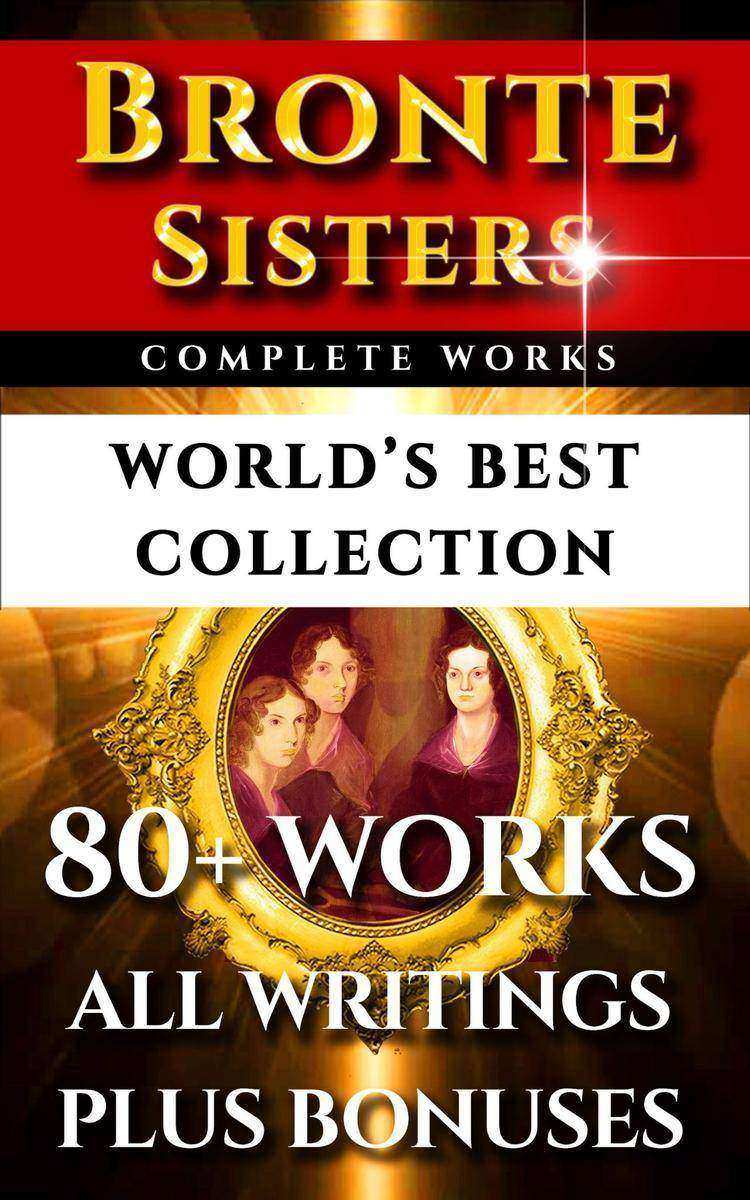
Bronte Sisters Complete Works – World’s Best Collection: 80+ Works of Charlotte
¥8.09
Bronte Sisters Complete Works World's Best Collection This is the world’s best Bronte Sisters collection, including the most complete set of Bronte’s works available plus many free bonus materials. Bronte Sisters The Bront?s were a nineteenth-century literary family consisting of Charlotte, Emily and Anne, all well known as poets and novelists. They originally published their poems and novels under masculine pseudonyms, following the custom of the times. Their stories immediately attracted attention for their passion and originality The ‘Must-Have’ Complete Collection In this irresistible collection you get the complete collection of all three Bronte’s work, with All of Charlotte Bronte, All of Anne Bronte and All of Emily Bronte, including All their novels and poetry. Plus Bonus Materials. Works Included:By Anne Bronte (as Acton Bell) Agnes Grey The Tenant Of Wildfell Hall By Charlotte Bronte (as Currer Bell) Jane Eyre Shirley Villette Professor By Emily Bronte (as Ellis Bell) Wuthering Heights Your Free Special Bonuses Historical Context and Literary Context Notes?- Detailed explanations of the Victorian Era and Victorian Literature written specially for this collection. Life Of Charlotte Bronte?By Elizabeth Gaskell Poetry Of All Three Bronte Sisters Scraps And Literary Remains?of Charlotte, Anne and Emily Bronte Get This Collection Right Now This is the best Bronte Sisters collection you can get, so get it now and start enjoying and being inspired by their world like never before!
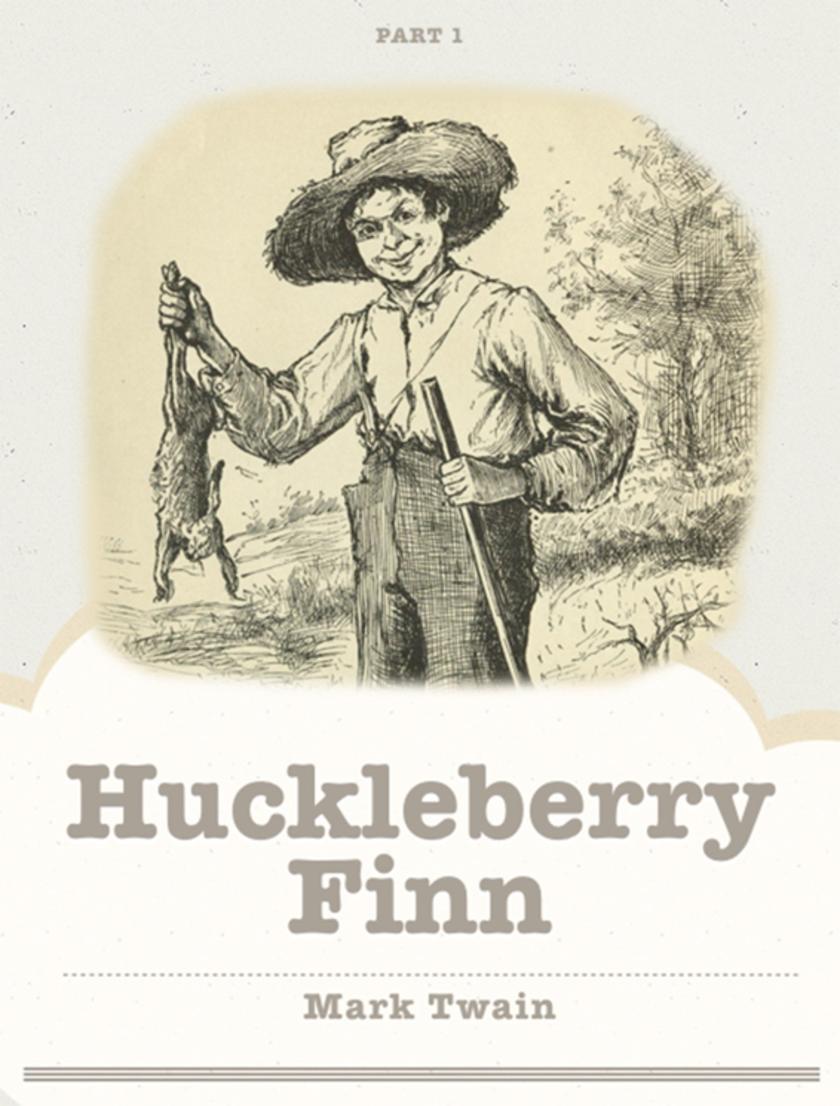
Huckleberry Finn: Part 1
¥8.09
Dear Grown-ups! This book has been written for You! Our story is set in the XXXIV century. As we follow the intriguing life of a royal family we gain insight into the future. A new folk is taking shape, its progress unstoppable. The battle against the force of Darkness puts an end to the idyllic if somewhat insipid life they have grown accustomed to and its outcome will determine the faith of planet Earth ...
Aer ?n iarb?
¥8.09
Hanna Bota scrie cri ale descoperirii de sine prin Cellalt, prin Ceilali. Aceast mare i veche tem are, n cazul ei, o rezolvare aparte, cci Cellalt este nu doar cel din vecintate, ci i, mai ales, cel de foarte departe, tritor n orizonturi exotice, acolo unde diferena e strident i numai privirea lateral, n mai multele sensuri ale acesteia, poate conduce spre esena uman, spre miezul tare al fiinei. Punnd la btaie, n surprinztoare conexiuni, feluritele instrumente de cunoatere i interpretare pe care le-a acumulat n timp: literatur, etnologie, antropologie cultural, teologie, nu se mulumete cu privirea fix, focalizat, ghidat strict de regulile tiinei sale, ci tenteaz pai lturalnici, sensuri derivate, improvizeaz interdisciplinar, se pune pe sine n locul celuilalt pentru a-i descifra perspectiva, nelinitile, modelul de lume.Ultimul canibal ne purtase n insulele Vanuatu din Pacific. De data aceasta, jurnalul eseistic de cltorie, cu inserii poematice i desfurri epice, rotunjete povestea cutrii de sine prin iubire a Laviniei, tnr muzician romnc, urmrind-o n ara sa, mai nti, n Italia i India, apoi, ntr-o curgere de ntmplri nvolburate, rtcitor-iniiatice, ntre Occident i Orient, cu toate simurile n alert. Apa e motivul central al crii. De la Dunre la Gange, de la lacrim la diluviu, izvor susurnd ori val nfuriat, ea e simbol al vieii, al luptei pentru supravieuire i pentru nchegarea unui orict de firav rost. Tot ea traduce reverii identitare, comaruri negre, tensiuni i crize. Vrtejul explorrii de sine i asum traversarea ntunericului ca singur drum la ndemn spre lumin. Drum desenat n tine ca o hart a direciei ctre comoara de mare pre i ezitnd benefic, n noua i incitanta carte a Hannei Bota, ntre realitate i ficiune, cu irizri fantastice i nenumrate ui (ntre)deschise de-o parte i de cealalt a naintrii destinale.“ – Irina Petra


