


 购物车
购物车 个人中心
个人中心
In Exile and Other Stories
¥8.09
Collection of stories, first published in 1894. According to Wikipedia: "Mary Hallock was born November 9, 1847, in Milton, New York, of English Quaker ancestry. A singular girl and youth, she attended the Female Collegiate Seminary in Poughkeepsie, New York, then studied art in New York City at the new Cooper Institute School of Design for Women. By her early twenties she had become established in New York City as an accomplished artist-illustrator for notable publishers there. In 1876 Hallock married a young mining engineer, Arthur De Wint Foote, then moved cross-continent to live with him at the New Almaden mine near San Jose, California. Subsequently, as Arthur pursued his engineering career, she followed him throughout the West; to Leadville, Colorado, to Deadwood, South Dakota, then to Boise, Idaho, where Arthur originated a major irrigation project on the Boise River; then to Morelia, Michoacán, Mexico, and finally to Grass Valley, California, where Arthur advanced to managing the North Star mine, and retired there...Wallace Stegner's novel Angle of Repose (Pulitzer Prize, 1971) is based directly upon Mary Hallock Foote's extensive personal correspondence.'
The Vanguard by Arnold Bennett - Delphi Classics (Illustrated)
¥8.09
This eBook features the unabridged text of ‘The Vanguard by Arnold Bennett - Delphi Classics (Illustrated)’ from the bestselling edition of ‘The Complete Works of Arnold Bennett’. Having established their name as the leading publisher of classic literature and art, Delphi Classics produce publications that are individually crafted with superior formatting, while introducing many rare texts for the first time in digital print. The Delphi Classics edition of Bennett includes original annotations and illustrations relating to the life and works of the author, as well as individual tables of contents, allowing you to navigate eBooks quickly and easily. eBook features: * The complete unabridged text of ‘The Vanguard by Arnold Bennett - Delphi Classics (Illustrated)’ * Beautifully illustrated with images related to Bennett’s works * Individual contents table, allowing easy navigation around the eBook * Excellent formatting of the text Please visit www.delphiclassics.com to learn more about our wide range of titles
La Comédie de la mort
¥8.09
Selon Wikipédia: "Pierre Jules Théophile Gautier (30 ao?t 1811 - 23 octobre 1872), poète, dramaturge, romancier, journaliste et critique littéraire fran?ais, défenseur ardent du romantisme, est difficile à classer et à classer. point de référence pour de nombreuses traditions littéraires ultérieures telles que le parnassianisme, le symbolisme, la décadence et le modernisme, il a été largement estimé par des écrivains aussi divers que Baudelaire, les frères Goncourt, Flaubert et Oscar Wilde."
King Candaules
¥8.09
According to Wikipedia: "Pierre Jules Théophile Gautier (August 30, 1811 – October 23, 1872) was a French poet, dramatist, novelist, journalist, and literary critic. While an ardent defender of Romanticism, Gautier's work is difficult to classify and remains a point of reference for many subsequent literary traditions such as Parnassianism, Symbolism, Decadence and Modernism. He was widely esteemed by writers as diverse as Baudelaire, the Goncourt brothers, Flaubert and Oscar Wilde."
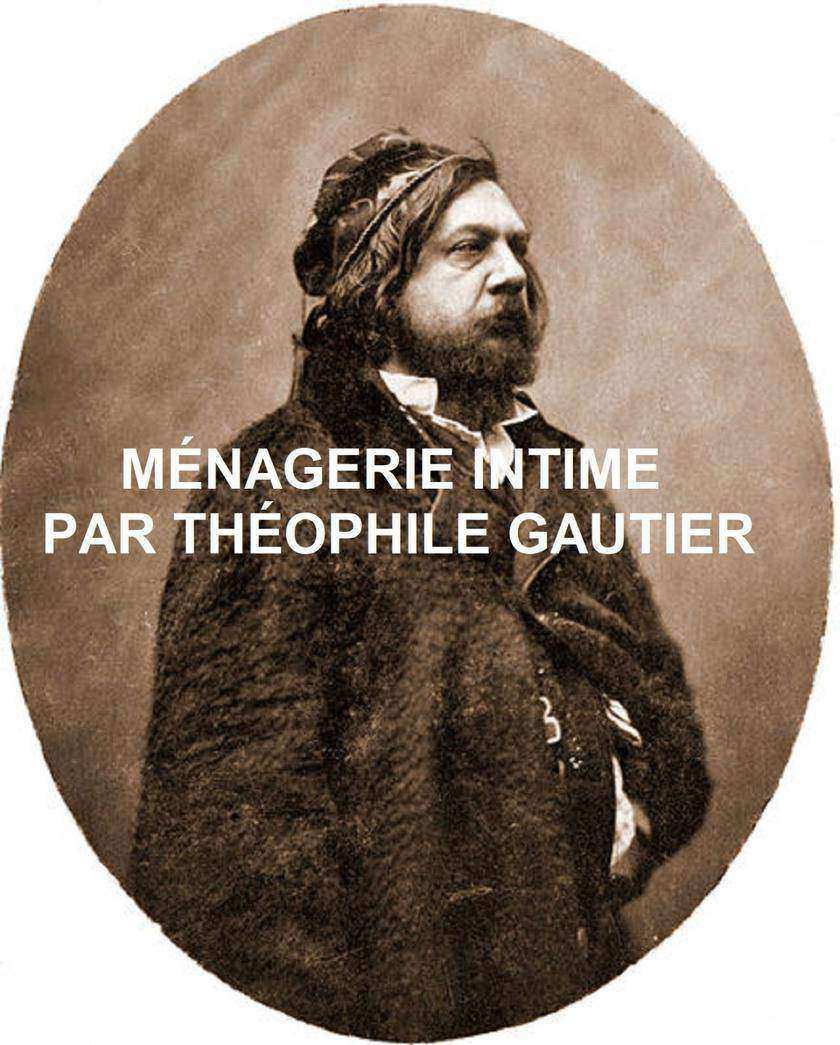
Ménagerie intime
¥8.09
Selon Wikipédia: "Pierre Jules Théophile Gautier (30 ao?t 1811 - 23 octobre 1872), poète, dramaturge, romancier, journaliste et critique littéraire fran?ais, défenseur ardent du romantisme, est difficile à classer et à classer. point de référence pour de nombreuses traditions littéraires ultérieures telles que le parnassianisme, le symbolisme, la décadence et le modernisme, il a été largement estimé par des écrivains aussi divers que Baudelaire, les frères Goncourt, Flaubert et Oscar Wilde.

The Woodlanders
¥8.09
According to Wikipedia: "Thomas Hardy, (1840 – 1928) was an English author of the naturalist movement, though he regarded himself primarily as a poet and composed novels mainly for financial gain. The bulk of his work, set mainly in the semi-fictional land of Wessex, delineates characters struggling against their passions and circumstances. Hardy's poetry, first published in his 50s, has come to be as well regarded as his novels, especially after The Movement of the 1950s and 1960s."
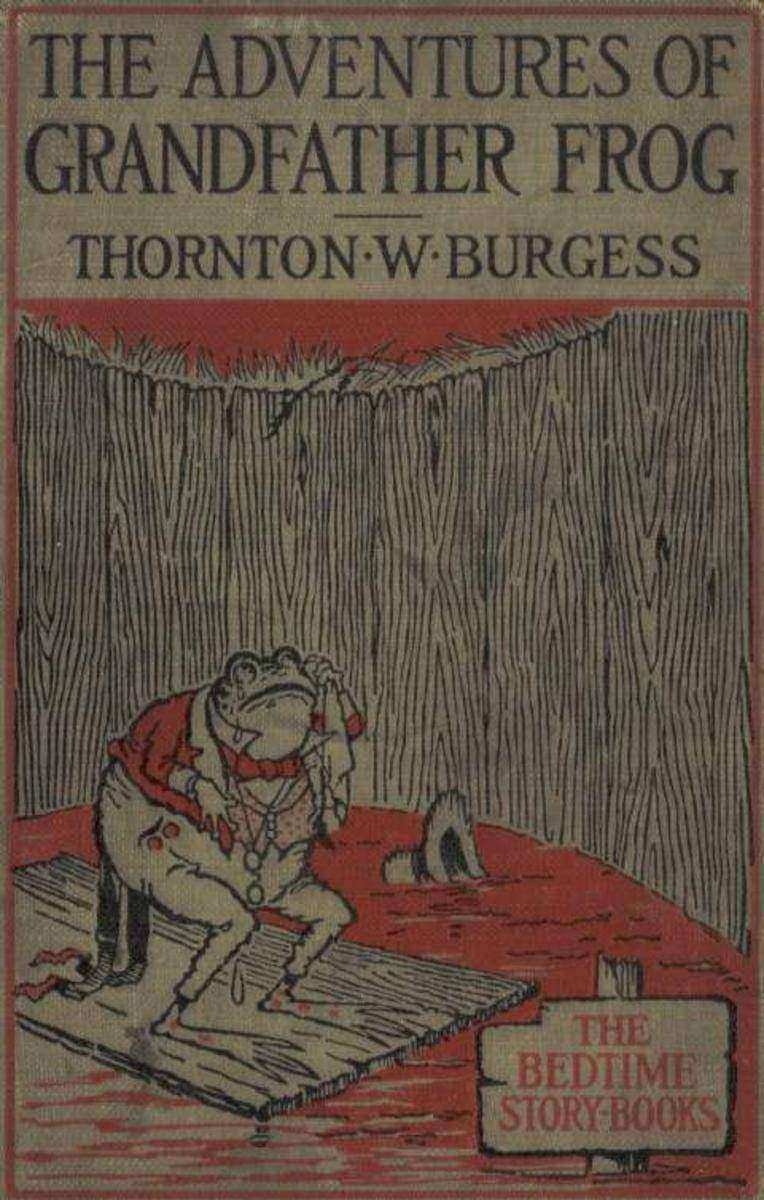
The Adventures of Grandfather Frog, Illustrated
¥8.09
With 6 black-and-white illustrations. According to Wikipedia: "Thornton Waldo Burgess (January 14, 1874 – June 5, 1965). Born in Sandwich, Cape Cod, Massachusetts, he was a conservationist and author of children's stories. Thornton Waldo Burgess loved the beauty of nature and its living creatures so much that he wrote about them for 50 years. By the time he retired, he had written more than 170 books and 15,000 stories for daily columns in newspapers."

The Adventures of Unc' Billy Possum, Illustrated
¥8.09
Children's book, first published in 1920, with 4 black-and-white illustrations. According to Wikipedia: "Thornton Waldo Burgess (January 14, 1874 – June 5, 1965). Born in Sandwich, Cape Cod, Massachusetts, he was a conservationist and author of children's stories. Thornton Waldo Burgess loved the beauty of nature and its living creatures so much that he wrote about them for 50 years. By the time he retired, he had written more than 170 books and 15,000 stories for daily columns in newspapers."
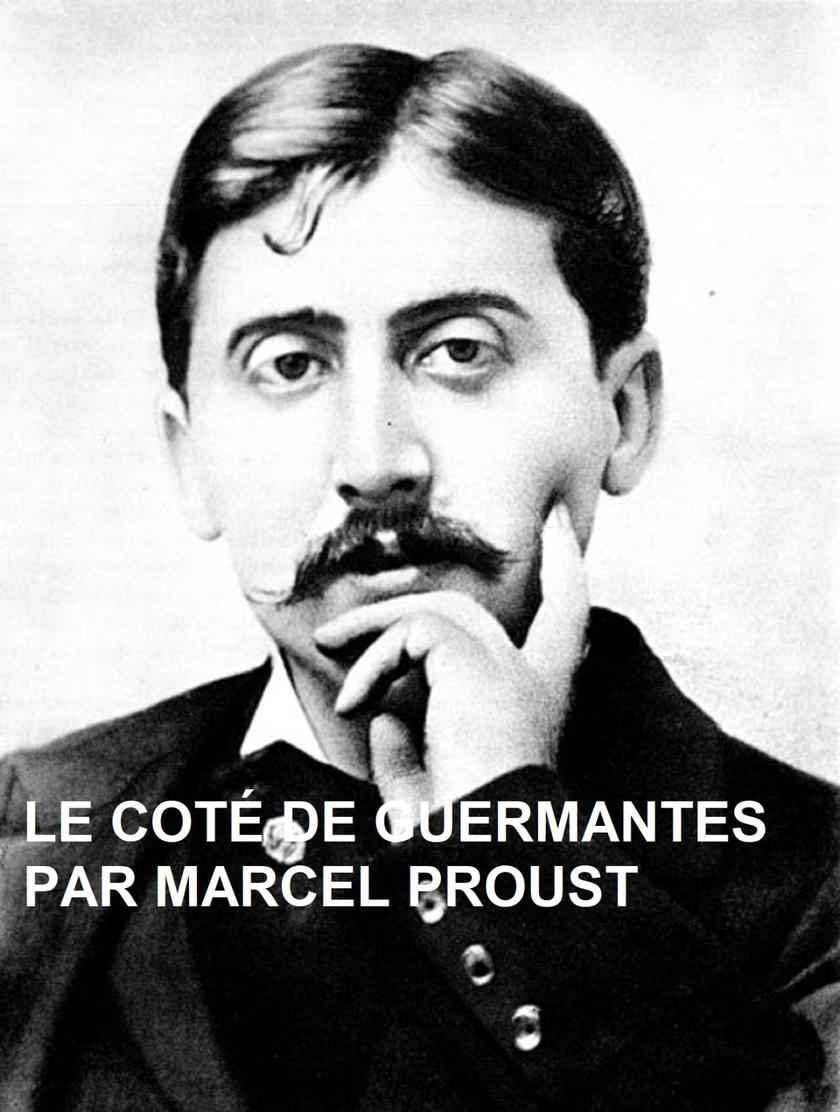
Le C?té de Guermantes
¥8.09
Selon Wikipédia: "Valentin Louis Georges Eugène Marcel Proust (10 Juillet 1871 - 18 Novembre 1922) était un romancier, essayiste et critique fran?ais, mieux connu comme l'auteur de la recherche du temps perdu Remembrance of Things Past), une ?uvre monumentale de fiction du XXe siècle publiée en sept parties de 1913 à 1927. "
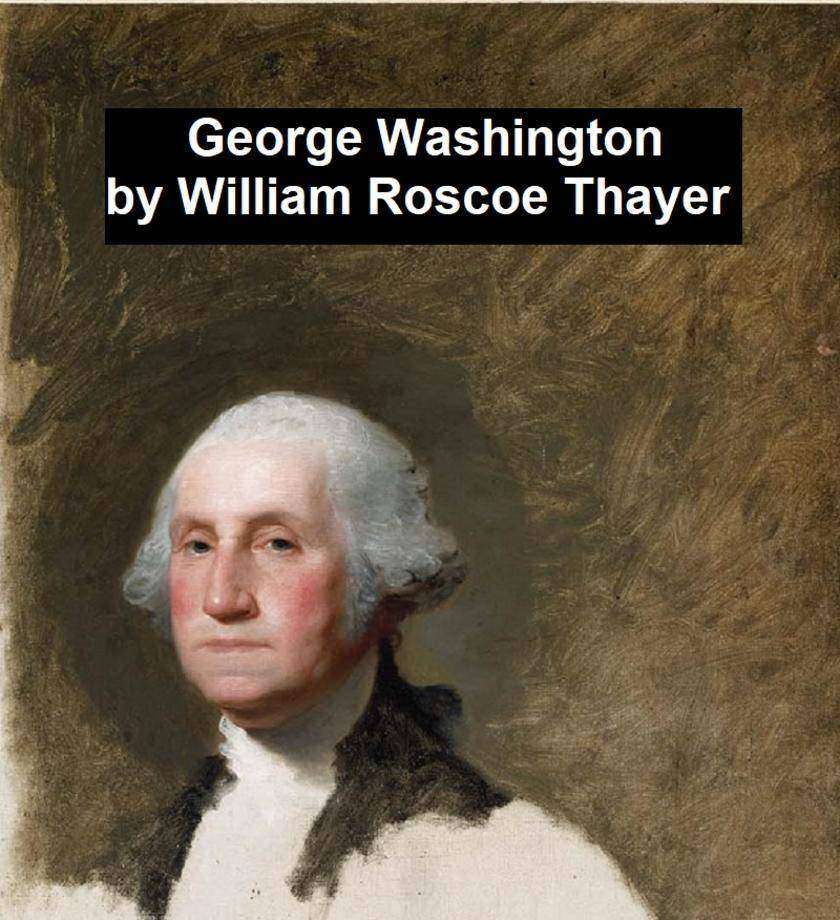
George Washington
¥8.09
According to Wikipedia: "Washington is seen as a symbol of the United States and republicanism in practice. His devotion to civic virtue made him an exemplary figure among early American politicians. Washington died in 1799, and in his funeral oration, Henry Lee said that of all Americans, he was "first in war, first in peace, and first in the hearts of his countrymen." Washington has been consistently ranked by scholars as one of the greatest U.S. Presidents."

Leben und Tod des Koenigs Johann
¥8.09
Die Shakespeare-Geschichte spielt K?nig John, in deutscher ?bersetzung. Laut Wikipedia: "Das Leben und der Tod von K?nig John, ein Geschichtsstück von William Shakespeare, dramatisiert die Herrschaft von John, K?nig von England (regierte 1199-1216), Sohn von Heinrich II. Von England und Eleonore von Aquitanien und Vater von Henry Es wird angenommen, dass es in der Mitte der 1590er Jahre geschrieben wurde, aber nicht ver?ffentlicht wurde, bis es im Ersten Folio 1623 erschien.
Tolstoy on Shakespeare
¥8.09
According to Wikipedia: "William Shakespeare (baptised 26 April 1564; died 23 April 1616)[a] was an English poet and playwright, widely regarded as the greatest writer in the English language and the world's pre-eminent dramatist.[1] He is often called England's national poet and the "Bard of Avon". His surviving works, including some collaborations, consist of 38 plays, 154 sonnets, two long narrative poems, and several other poems. His plays have been translated into every major living language and are performed more often than those of any other playwright." "Leo Tolstoy, or Count Lev Nikolayevich Tolstoy (September 9 – November 20, 1910), was a Russian writer widely regarded as among the greatest of novelists. His masterpieces War and Peace and Anna Karenina represent in their scope, breadth and vivid depiction of 19th-century Russian life and attitudes, the peak of realist fiction."
Fighting for the Right
¥8.09
According to Wikipedia: "William Taylor Adams (July 30, 1822 – March 27, 1897) was a noted academic, author, and Massachusetts state legislator. He was born in Medway, Massachusetts in 1822 to Captain Laban Adams and Catherine Johnson Adams. He became a teacher in the Boston, Massachusetts public schools in 1845, and remained in that capacity through 1865. In 1846, he married Sarah Jenkins, with whom he had two children. He served as a member of the School Board of Dorchester, Massachusetts, for 14 years. In 1869, he became a member of the Massachusetts General Court. He died in Dorchester in 1897. He wrote many books of fiction for boys under the pseudonym "Oliver Optic", including: Hatchie, the Guardian Slave (1853), Indoors and Out (1855), and The Boat Club (1855)."
The Crisis
¥8.09
According to Wikipedia: "Winston Churchill (November 10, 1871 – March 12, 1947) was an American novelist…. His first novel was The Celebrity (1898). (Mr. Keegan's Elopement was published in 1896 within a magazine. In 1903 it was republished as an illustrated hardback book.) Churchill's next novel—Richard Carvel (1899)—was a phenomenon, selling as many as two million copies in a nation of only 76 million, and made Churchill rich. His next two novels, The Crisis (1901) and The Crossing (1904), were also very successful. Churchill's early novels were historical but his later works were set in contemporary America. He often sought to include his political ideas into his novels. Churchill wrote in the naturalist style of literature, and some have called him the most influential of the American naturalists."
Now & Then: and Other Tales from Ome
¥8.09
30 black-and-white illustrations. Boston Globe -- "A highly original collection of short stories -- sometimes humorous, sometimes profound." Philadelphia Daily News -- "Seltzer has produced four charming stories for, he suggests, children around the age of nine. Adults will find the book has its appeal too: My favorite story is the one about the little princess who had a nice mother and was very happy and therefore very unhappy because how could Prince Charming come and rescue her if there was nothing to rescue her from?"
The World's Great Men of Music
¥8.09
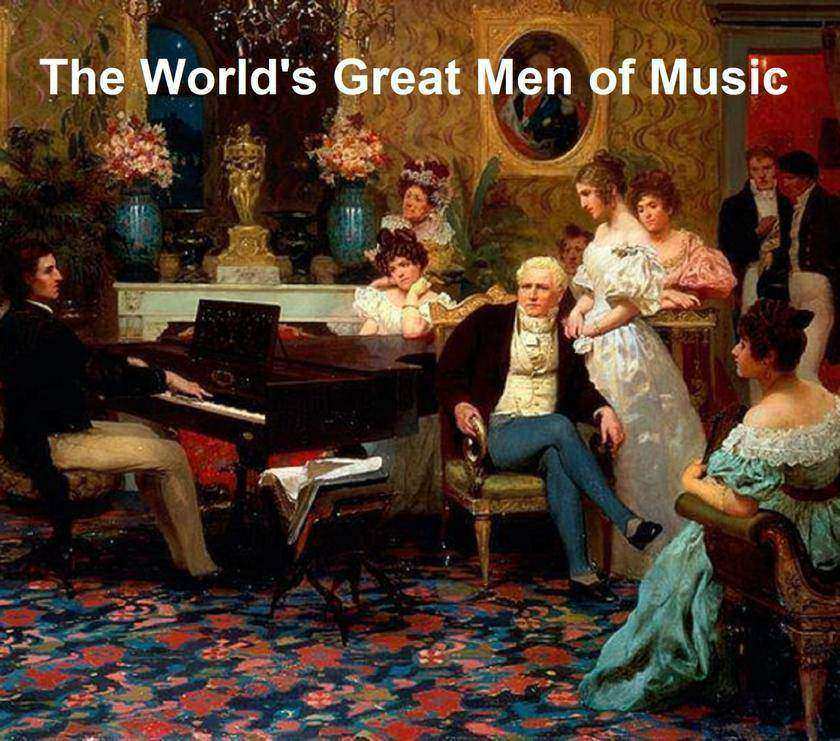
First published in 1922. Chapters include: Palestrina, Bach, Handel, Gluck, Haydn, Mozart, Beethoven, Weber, Schubert, Mendelssohn, Schumann, Chopin, Berlioz, Liszt, Verdi, Wagner, Franck, Brahms, Grieg, Tschaikowsky, MacDowell, Debussy, Toscanini, Stokowski, and Koussevitzky.

Henri IV, Premiere Partie, (Henry IV Part I in French)
¥8.09
Pièce d'histoire de Shakespeare, Henry IV Part One, en traduction fran?aise. Selon Wikipédia: "Henry IV, Part 1 est une pièce d'histoire de William Shakespeare, qui aurait été écrite au plus tard en 1597. C'est la deuxième pièce de la tétralogie de Shakespeare traitant des règnes successifs de Richard II, Henri IV (deux pièces ), et Henry V. Henry IV, partie 1 dépeint une période de l'histoire qui commence avec la bataille de Hotspur à Homildon contre le Douglas à la fin de 1402 et se termine avec la défaite des rebelles à Shrewsbury au milieu de 1403. Dès le début il a été un jeu extrêmement populaire à la fois avec le public et les critiques. "

The Title: A Comedy in Three Acts
¥8.09
Dodo Collections brings you another classic from Arnold Bennett, ‘"The Title: A Comedy in Three Acts."’ ? Set against the backdrop of World War I, this play is a rollicking send-up of Britain's class system and its growing absurdity in the heady period of democratization that began to transpire in the early twentieth century. When mild-mannered protagonist Culver finds out that he is entitled to a formal honor (i.e., a title), he begins to reconsider the age-old hierarchy and all that it entails. ? Enoch Arnold Bennett (always known as Arnold Bennett) was one of the most remarkable literary figures of his time, a product of the English Potteries that he made famous as the Five Towns. Yet he could hardly wait to escape his home town, and he did so by the sheer force of his ambition to succeed as an author. In his time he turned his hand to every kind of writing, but he will be remembered for such novels as The Old Wives' Tale, the Clayhanger trilogy (Clayhanger, Hilda Lessways, and These Twain), and The Card. He also wrote such intriguing self-improvement books as Literary Taste, How To Live on 24 Hours a Day, The Human Machine, etc. ? After a local education Bennett finished his education at the University of London and for a time was editor of Woman magazine. After 1900 he devoted himself entirely to writing; dramatic criticism was one of his foremost interests. Bennett is best known, however, for his novels, several of which were written during his residence in France. ? Bennett's infancy was spent in genteel poverty, which gave way to prosperity as his father succeeded as a solicitor. From this provincial background he became a novelist. His enduring fame is as a Chronicler of the Potteries towns, the setting and inspiration of some of his most famous and enduring literary work and the place where he grew up.
Lilian
¥8.09
Dodo Collections brings you another classic from Arnold Bennett, ‘"Lilian."’ ? Enoch Arnold Bennett (always known as Arnold Bennett) was one of the most remarkable literary figures of his time, a product of the English Potteries that he made famous as the Five Towns. Yet he could hardly wait to escape his home town, and he did so by the sheer force of his ambition to succeed as an author. In his time he turned his hand to every kind of writing, but he will be remembered for such novels as The Old Wives' Tale, the Clayhanger trilogy (Clayhanger, Hilda Lessways, and These Twain), and The Card. He also wrote such intriguing self-improvement books as Literary Taste, How To Live on 24 Hours a Day, The Human Machine, etc. ? After a local education Bennett finished his education at the University of London and for a time was editor of Woman magazine. After 1900 he devoted himself entirely to writing; dramatic criticism was one of his foremost interests. Bennett is best known, however, for his novels, several of which were written during his residence in France. ? Bennett's infancy was spent in genteel poverty, which gave way to prosperity as his father succeeded as a solicitor. From this provincial background he became a novelist. ? His enduring fame is as a Chronicler of the Potteries towns, the setting and inspiration of some of his most famous and enduring literary work and the place where he grew up.
Ade's Fables
¥8.09
Dodo Collections brings you another classic from Ade George, ‘Ade's Fables.’ This collection of fables are interesting and are sure to keep your attention. Think of these as like reading fairy tales, but in adult form the fable. If you like short stories that have a moral to the story, this is a lovely book. ? George Ade was born in?Kentland, Indiana, one of seven children raised by John and Adaline (Bush) Ade. While attending?Purdue University, he became a member of the?Sigma Chi?fraternity. He also met and started a lifelong friendship with fellow?cartoonist?and Sigma Chi?brother?John T. McCutcheon?and worked as a reporter for the?Lafayette Call. He graduated in 1887. ? Ade's literary reputation rests upon his achievements as a great?humorist?of American character during an important era in American history: the first large wave of migration from the countryside to burgeoning cities like Chicago, where, in fact, Ade produced his best fiction. He was a practicing realist during the Age of (William Dean) Howells and a local colorist of Chicago and the Midwest. His work constitutes a vast comedy of Midwestern manners and, indeed, a comedy of late 19th-century American manners. In 1915, Sir Walter Raleigh, Oxford professor and man of letters, while on a lecture tour in America, called George Ade "the greatest living American writer."
Richard III in French
¥8.09
Lecture de l'histoire de Shakespeare, Richard III, en traduction fran?aise. Selon Wikipédia: "Richard III est une pièce d'histoire de William Shakespeare, qui aurait été écrite vers 1591. Elle décrit l'accession au pouvoir machiavélique et le court règne de Richard III d'Angleterre. Le premier folio est le plus souvent classé comme tel, mais de temps à autre, comme dans l'édition quarto, il s'agit d'une tragédie: Richard III conclut la première tétralogie de Shakespeare (qui contient aussi Henry VI, parties 1-3).


