


 购物车
 个人中心


La Fille du Marquis
¥8.09
Roman historique classique, dans le fran?ais original. Les deux volumes dans un seul fichier. Selon Wikipédia: "Alexandre Dumas, né Dumas Davy de la Pailleterie (24 Juillet 1802 - 5 Décembre 1870) [1] était un écrivain fran?ais, mieux connu pour ses romans historiques de haute aventure qui ont fait de lui l'un des plus lus Auteurs fran?ais dans le monde, nombre de ses romans, dont Le Comte de Monte-Cristo, Les Trois Mousquetaires, Vingt Ans Après, et Le Vicomte de Bragelonne sont à l'origine numérotés, il écrit aussi des pièces de thé?tre et des magazines et est un correspondant prolifique.
Lady Susan
¥8.09
This epistolary novel, an early complete work that the author never submitted for publication, describes the schemes of the main character—the widowed Lady Susan—as she seeks a new husband for herself and one for her daughter. Although the theme, together with the focus on character study and moral issues, is close to Austen's published work (Sense and Sensibility was also originally written in the epistolary form), its outlook is very different, and the heroine has few parallels in 19th-century literature. Lady Susan is a selfish, unscrupulous and scheming woman, highly attractive to men, who tries to trap the best possible husband while maintaining a relationship with a married man. She subverts all the standards of the romantic novel: she has an active role, she is not only beautiful but intelligent and witty, and her suitors are significantly younger than she is (in contrast with Sense and Sensibility and Emma, which feature marriages by their female protagonists to men who are 16 years older). Although the ending includes a traditional reward for morality, Lady Susan herself is treated more leniently than the adulteress in Mansfield Park, who is severely punished.

The Return of the Native
¥8.09
The Return of the Native is Thomas Hardy's sixth published novel. It first appeared in the magazine Belgravia, a publication known for its sensationalism, and was presented in twelve monthly installments from January to December 1878. Because of the novel's controversial themes, Hardy had some difficulty finding a publisher; reviews, however, though somewhat mixed, were generally positive. In the twentieth century, The Return of the Native became one of Hardy's most popular novels. ? The novel takes place entirely in the environs of Egdon Heath, and, with the exception of the epilogue, Aftercourses, covers exactly a year and a day. The narrative begins on the evening of Guy Fawkes Night as Diggory Venn is slowly crossing the heath with his van, which is being drawn by ponies. In his van is a passenger. When darkness falls, the country folk light bonfires on the surrounding hills, emphasising—not for the last time—the pagan spirit of the heath and its denizens.

The Will to Believe, and Other Essays in Popular Philosophy
¥8.09
The work of William James contributed greatly to the burgeoning fields of psychology, particularly in the areas of education, religion, mysticism and pragmatism. The brother of novelist Henry James and of diarist Alice James, William wrote several powerful essays expressing his ideas on the pragmatic theory of truth, sentience, and human beings' right to believe. In "The Will to Believe", James suggests that what a person holds to be true or attainable may exist through that person's belief in them, regardless of a lack of physical evidence. In a sense, he advocates the theory of self-fulfilling prophesies. "Human Immortality" was a speech delivered during the annual Ingersoll Lectureship, given in memory of George Goldthwait Ingersoll, in 1897 at Harvard University. These works are a prime example of the powerful influence William James has had on modern psychology, and are still recognized today for their brilliance and revolutionary impacts on the field.

The Voyage of the Beagle
¥8.09
The Voyage of the Beagle is the title most commonly given to reissues of the book written by Charles Darwin and published in 1839 as his Journal and Remarks, bringing him considerable fame and respect. This was the third volume of The Narrative of the Voyages of H.M. Ships Adventure and Beagle, and covers Darwin's part in the second survey expedition of the ship HMS Beagle, which set sail from Plymouth Sound on 27 December 1831 under the command of Captain Robert FitzRoy, R.N.. Due to the popularity of Darwin's account, the publisher reissued it later in 1839 as Darwin's Journal of Researches, and the revised second edition published in 1845 used this title. A republication of the book in 1905 introduced the title The Voyage of the "Beagle". ? While the expedition was originally planned to last two years, it lasted almost five—the Beagle did not return until 2 October 1836. Darwin spent most of this time exploring on land (three years and three months on land; 18 months at sea). ? The book is a vivid and exciting travel memoir as well as a detailed scientific field journal covering biology, geology, and anthropology that demonstrates Darwin's keen powers of observation, written at a time when Western Europeans were exploring and charting the whole world. Although Darwin revisited some areas during the expedition, for clarity the chapters of the book are ordered by reference to places and locations rather than by date. Darwin's notes made during the voyage include comments illustrating his changing views at a time when he was developing his theory of evolution by natural selection and includes some suggestions of his ideas, particularly in the second edition of 1845.

Considerations on Representative Government
¥8.09
Considerations on Representative Government is a book by John Stuart Mill published in 1861. As the title suggests, it is an argument for representative government, the ideal form of government in Mill's opinion. One of the more notable ideas Mill puts forth in the book is that the business of government representatives is not to make legislation. Instead Mill suggests that representative bodies such as parliaments and senates are best suited to be places of public debate on the various opinions held by the population and to act as watchdogs of the professionals who create and administer laws and policy. In his words: ? Their part is to indicate wants, to be an organ for popular demands, and a place of adverse discussion for all opinions relating to public matters, both great and small; and, along with this, to check by criticism, and eventually by withdrawing their support, those high public officers who really conduct the public business, or who appoint those by whom it is conducted.

New Atlantis
¥8.09
New Atlantis is an incomplete utopian novel by Sir Francis Bacon, published in 1627. In this work, Bacon portrayed a vision of the future of human discovery and knowledge, expressing his aspirations and ideals for humankind. The novel depicts the creation of a utopian land where "generosity and enlightenment, dignity and splendour, piety and public spirit" are the commonly held qualities of the inhabitants of the mythical Bensalem. The plan and organisation of his ideal college, Salomon's House (or Solomon's House), envisioned the modern research university in both applied and pure sciences.

The Motor Boys on Road and River
¥8.09
The Motor Boys were the heroes of a popular series of adventure books for boys at the turn of the 20th century issued by the Stratemeyer Syndicate under the pseudonym of Clarence Young. This series was published by Cupples & Leon and was issued with dustjackets and glossy frontispiece. Howard Garis (author of the Uncle Wiggily stories) wrote many, if not all, of these stories.
Peter Pan in Kensington Gardens
¥8.09
Peter Pan in Kensington Gardens is a novel by J. M. Barrie, published in 1906; it is one of four major literary works by Barrie featuring the widely known literary character he created, Peter Pan. ? Peter is a seven-day-old infant who, "like all infants", used to be part bird. Peter has complete faith in his flying abilities, so, upon hearing a discussion of his adult life, he is able to escape out of the window of his London home and return to Kensington Gardens. Upon returning to the Gardens, Peter is shocked to learn from the crow Solomon Caw that he is not still a bird, but more like a human – Solomon says he is crossed between them as a "Betwixt-and-Between". Unfortunately, Peter now knows he cannot fly, so he is stranded in Kensington Gardens. At first, Peter can only get around on foot, but he commissions the building of a child-sized thrush's nest that he can use as a boat to navigate the Gardens by way of the Serpentine, the large lake that divides Kensington Gardens from Hyde Park.

Japanese Folktales The Haunted Temple of Kisaichi Village
¥8.09
In the year 1680 there stood an old temple on a wild pine-clad mountain near the village of Kisaichi, in the Province of Inaba. The temple was far up in a rocky ravine. So high and thick were the trees, they kept out nearly all daylight, even when the sun was at its highest. As long as the old men of the village could remember the temple had been haunted by a shito dama and the skeleton ghost (they thought) of some former priestly occupant. Many priests had tried to live in the temple and make it their home but all had died. No one could spend a night there and live. At last, in the winter of 1701, there arrived at the village of Kisaichi a priest who was on a pilgrimage. His name was Jogen, and he was a native of the Province of Kai. Jogen had come to see the haunted temple. He was fond of studying such things. Though he believed in the shito dama form of spiritual return to earth, he did not believe in ghosts. As a matter of fact, he was anxious to see a shito dama, and, moreover, wished to have a temple of his own. In this wild mountain temple, with a history which fear and death prevented people from visiting or priests inhabiting, he thought that he had ?'a real good thing.' Thus he had found his way to the village on the evening of a cold December night, and had gone to the inn to eat his rice and to hear all he could about the temple. Jogen was no coward; on the contrary, he was a brave man, and made all inquiries in the calmest manner.

Chinese Folklore The Tale of Flower Elves
¥8.09
Once upon a time there was a scholar who lived retired from the world in order to gain hidden wisdom. He lived alone and in a secret place. And all about the little house in which he dwelt he had planted every kind of flower, and bamboos and other trees. There it lay, quite concealed in its thick grove of flowers. With him he had only a boy servant, who dwelt in a separate hut, and who carried out his orders. He was not allowed to appear before his master unless summoned. The scholar loved his flowers as he did himself. Never did he set his foot beyond the boundaries of his garden. It chanced that once there came a lovely spring evening. Flowers and trees stood in full bloom, a fresh breeze was blowing, the moon shone clearly. And the scholar sat over his goblet and was grateful for the gift of life. Suddenly he saw a maiden in dark garments come tripping up in the moonlight. She made a deep courtesy, greeted him and said: “I am your neighbor. We are a company of young maids who are on our way to visit the eighteen aunts. We should like to rest in this court for awhile, and therefore ask your permission to do so.” The scholar saw that this was something quite out of the common, and gladly gave his consent. The maiden thanked him and went away. In a short time she brought back a whole crowd of maids carrying flowers and willow branches. All greeted the scholar. They were charming, with delicate features, and slender, graceful figures. When they moved their sleeves, a delightful fragrance was exhaled. There is no fragrance known to the human world which could be compared with it.

The New Freedom
¥8.09
This Tribeca Press edition includes the full original text as well as an easy to use interactive table of contents.

The Big Book of Sandwiches
¥8.09
Big Kitchen Series is proud to bring you The Big Book of Sandwiches. This full edition is all you will ever need for your favourite sandwich recipes. Including the most loved set-ups as well as some more unusual ideas, you can be sure that you will never be stuck for a sandwich to knock up ever again! It is packed with great ideas and variety. Be sure to check out other new titles from the Big Kitchen Series releasing throughout 2014.

The Almost Kiss:A Novel
¥8.09
The Almost Kiss, set in modern Nigeria, narrates the story of Chioma Okafor who is pressured by her over-ambitious mother into an unwanted romantic relationship with Uche, a young, sophisticated university lecturer. Chioma yields to her mother’s pressure, hoping she would eventually fall in love with Uche as her mother had assured her, but she never did. On a Valentine date with Uche, she gets a glimpse of what her relationship has been missing as she feels love for the first time with Emeka, a handsome stranger who’s unfortunately expecting a baby with Amara, a girl who Uche used to date in his university days.?Shocking and ugly truths are set loose that night.?Uche turns a relationship that he intended to blow up into an engagement to Chioma on Valentine’s Day, into a blood bath before midnight. Chioma who survives the near-death experience, narrates her Valentine dilemma to Femi, a clever Police Sergeant. Everybody thinks Uche died that night, but Femi discovers a strange text message sent from Chioma’s phone to Emeka, which triggers a series of twisted events that proves that the jealous and malicious Uche is still alive, and that the life of Chioma is now hanging down by a thin thread.?The ultimate question is: 'Since Uche is still alive, then who is the man laying lifeless in the mortuary?'?Chioma is certainly not pleased with the answer. Femi forcefully becomes Chioma’s personal bodyguard, while he hunts down Uche, an innocent-looking man who he met a day ago and poorly judged. Follow Femi as he uncovers an intriguing murder mystery that nobody even knew happened.?The Almost Kiss is an oddly unusual story of love, betrayal, lies, pretense, jealousy, conspiracy, and ambition.

Through The Looking-Glass
¥8.09
The sequel to Alice's Adventures in Wonderland (1865). Set some six months later than the earlier book, Alice again enters a fantastical world, this time by climbing through a mirror into the world that she can see beyond it. Through the Looking-Glass includes such celebrated verses as "Jabberwocky" and "The Walrus and the Carpenter", and the episode involving Tweedledum and Tweedledee.
The Leavenworth Case
¥8.09
The Leavenworth Case (1878), subtitled A Lawyer's Story, is an American detective novel and the first novel by Anna Katharine Green. Set in New York City, it concerns the murder of a retired merchant, Horatio Leavenworth, in his New York mansion. The novel introduced the detective Ebenezer Gryce, and was influential in the development of the detective novel. In her autobiography, Agatha Christie cited it as an influence on her own fiction.
The Middle Of Things
¥8.09
A wealthy man named Ashton is found murdered in an alley, apparently robbed for his jewelry and pocketbook. The police believe they have the killer, a young man who the next morning tries to pawn one of the stolen rings. Viner, however, the man who discovered the body and who is friends with the accused, believes otherwise. It is a quick race to find the real guilty party in order to save an innocent man. But none of the information is completely clear; the victim has a mysterious past and there is no rational motive. His charge, a young girl named Miss Wickham, proves to be of little help and Ashton had no close friendships. It is up to the lawyers and Viner to unravel the mystery that has roots in royalty. ? Another exciting J. S. Fletcher murder mystery, The Middle of Things keeps the reader guessing until the very end. The story features several Fletcher staples, such as a curious and bored average citizen, a case of mistaken identities, and a believable ending. The style is a bit dated, but it is not so antiquated as to be foreign or difficult. Fans of mysteries and Fletcher's writing alike will not be disappointed.

The Talleyrand Maxim
¥8.09
"It's old Mr. Bartle, sir," he whispered. "He's in your room there -- dead " "Dead?" exclaimed Eldrick. "Dead " Pratt shook his head again. "He came up not so long after you'd gone, sir," he said. "Everybody had gone but me -- I was just going. Wanted to see you about something I don't know what. He was very tottery when he came in -- complained of the stairs and the fog. I took him into your room, to sit down in the easy chair. And -- he died straight off. Just," concluded Pratt, "just as if he was going quietly to sleep "

Forbidden Gospels And Epistles
¥8.09
The complete suppressed Gospels and Epistles of the original New Testament of Jesus the Christ.
Paradise Regained
¥8.09
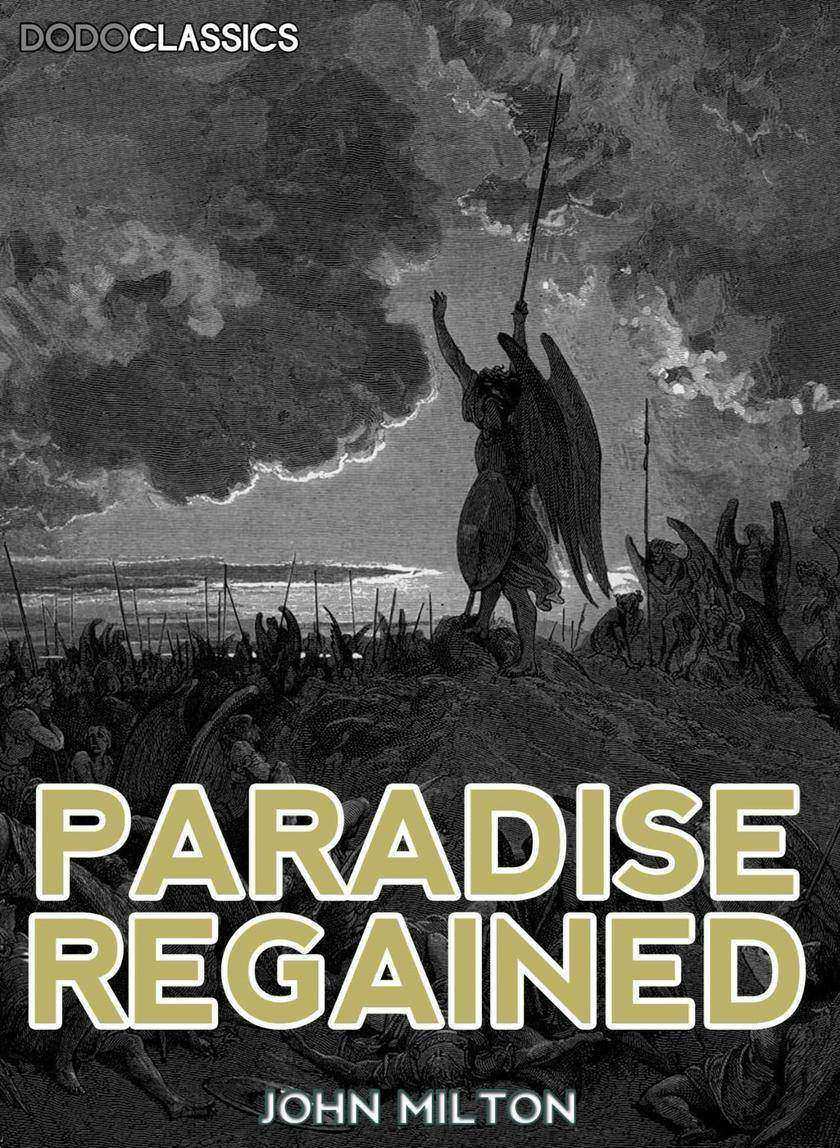
Paradise Regained is a poem by English poet John Milton, first published in 1671 by John Macock. The volume in which it appeared also contained the poet's closet drama Samson Agonistes. Paradise Regained is connected by name to his earlier and more famous epic poem Paradise Lost, with which it shares similar theological themes; indeed, its title, its use of blank verse, and its progression through Christian history recall the earlier work. However, this effort deals primarily with the temptation of Christ as recounted in the Gospel of Luke. ? An interesting anecdote recounted by a Quaker named Thomas Ellwood provides some insight into Paradise Regained??'?s development. After studying Latin with Milton and reading the poet's epic Paradise Lost, Ellwood remarked, "Thou hast said much here of Paradise lost, but what hast thou to say of Paradise found?" Hearing this, Milton at first "sat some time in a muse" before changing the subject; however, later on he showed to Ellwood a new manuscript entitled Paradise Regained. Some maintain that although he seemed to express gratitude to Ellwood in a letter, Milton in truth "passed on a friendly if impish fabrication" that made Ellwood feel like the inspiration for the poem. Milton composed Paradise Regained at his cottage in Chalfont St Giles in Buckinghamshire. The poem is four books long, in contrast with Paradise Lost??'?s twelve. As such, Barbara K. Lewalski has labelled the work a "brief epic." ? Whereas Paradise Lost is ornate in style and decorative in its verse, Paradise Regained is carried out in a fairly plain style. Specifically, Milton reduces his use of simile and deploys a simpler syntax in Paradise Regained than he does in Paradise Lost, and this is consistent with Jesus's sublime plainness in his life and teachings (in the epic, he prefers Hebrew psalms to Greek poetry). Modern editors believe the stylistics of Paradise Regained evince Milton's poetic maturity. No longer is the poet out to dazzle his readers with bombastic verse and lengthy epic similes. This is not to say that the poem bears no affinities with Milton's earlier work, but scholars continue to agree with Northrop Frye's suggestion that Paradise Regained is "practically sui generis" in its poetic execution. ? One major concept emphasized throughout Paradise Regained is the idea of reversals. As implied by its title, Milton sets out to reverse the "loss" of Paradise. Thus, antonyms are often found next to each other, reinforcing the idea that everything that was lost in the first epic will be regained by the end of this "brief epic." Additionally, the work focuses on the idea of "hunger", both in a literal and in a spiritual sense. After wandering in the wilderness for forty days, Jesus is starving for food. Satan, too blind to see any non-literal meanings of the term, offers Christ food and various other temptations, but Jesus continually denies him. Although Milton's Jesus is remarkably human, an exclusive focus on this dimension of his character obscures the divine stakes of Jesus’s confrontation with Satan; Jesus emerges victorious, and Satan falls, amazed.
The Daffodil Mystery
¥8.09
Detective Classics presents you The Daffodil Mystery in a fantastic ebook edition. ? When Mr. Thomas Lyne, poet, poseur. and owner of Lyne's Emporium insults a cashier, Odette Rider, she resigns. Having summoned detective Jack Tarling to investigate another employee, Mr. Milburgh, Lyne now changes his plans. Tarling and his Chinese companion refuse to become involved. They pay a visit to Odette's flat. In the hall, Tarling meets Sam, convicted felon and protégé of Lyne. Next morning Tarling discovers a body. The hands are crossed on the breast, adorned with a handful of daffodils.


