


 购物车
购物车 个人中心
个人中心

Spre binele t?u. Mici crime ?n numele iubirii
¥32.62
Alchimia fericirii, publicat? ?n persan? (Kimiya?yi sa’adat), spre sf?r?itul vie?ii autorului, urm?re?te atenuarea tensiunilor dintre filosofii ?i misticii Islamului ?i scoate ?n eviden?? importan?a autodisciplinei ?i a ascetismului. Traducerea de fa?? are la baz? traducerea publicat? ?n 1910, ?n englez? de Claud Field (The Alchemy of Happiness) ?i este structurat? ?n opt capitole, aproximativ egale ca ?ntindere. Cartea de fa?? reune?te o serie de interpret?ri ale unor pilde cu con?inut religios evocate ?n Coran ?i ale unor idei exprimate de Mahomed, de al?i profe?i sau ?nv??ati musulmani. Chestiunile abordate de Al-Ghazali aduc ?n prim-plan ideea unei vie?i religioase exemplare. Astfel, el prezint? mai multe sfaturi pentru musulmanii pio?i. Raportul omului cu divinitatea, cu semenii s?i, cu rudele apropiate, dar ?i implica?iile religioase ale institu?iei c?s?toriei sau ale muzicii ?i dansului sunt printre cele mai importante subiecte din lucrarea lui Al-Ghazali. S? ?tii, o, preaiubite, c? omul nu a fost creat ?n glum? sau la ?nt?mplare, ci a fost f?cut ?ntr?un fel minunat ?i pentru un ?el ?nalt. Chiar dac? nu a existat dintotdeauna, el tr?ie?te ve?nic; ?i chiar dac? trupul s?u este slab ?i p?m?ntesc, spiritul ?i este m?re? ?i dumnezeiesc. ?i cu c?t este mai ales subiectul cunoa?terii noastre,cu at?t mai mare va fi ?nc?ntarea sim?it? ?n studierea acestuia; de exemplu, ne?ar face mai mult? placer s? ?tim secretele unui rege dec?t dac? am afla secretele unui ministru. V?z?nd c? Dumnezeu este cel mai ?nalt obiect posibil pentru cunoa?terea noastr?, cunoa?terea Sa trebuie s? ne d?ruiasc? mai mult? desf?tare dec?t oricare alta.

Utilitarismul
¥16.27
De La Boétie ofer? una dintre primele ?i cele mai clare explica?ii privind servitutea voluntar?, starea care define?te supunerea majorit??ii fa?? de minoritatea care de?ine puterea politic?. Este ?i va r?m?ne acela?i lucru, indiferent de scurgerea timpului: un eseu memorabil despre m?re?ia ?i micimile naturii umane, slujit exemplar de g?ndul ?i de pana unui geniu cu care timpul nu a avut prea mult? r?bdare.,,Dar, Dumnezeule mare, ce ?nseamn? asta? Cum s? numim aceast? nenorocire? Ce viciu ?ngrozitor e ?sta, s? vezi nenum?ra?i oameni, nu doar c? se supun, ci c? slujesc, nu c? sunt guverna?i, ci c? sunt tiraniza?i, neav?nd nici bunuri, nici p?rin?i, nici copii, nici m?car propria lor via???“ ?tienne de LA Boétie


道德经说什么2
¥23.97
《道德经说什么》是一本人人看得懂、用得上的《道德经》经典解读本。罗大伦博士把其中的智慧总结提炼成通俗易懂的语言,结合其中流传千年的智慧,助您解决生活中常见的各种实际问题。罗博士在书中告诉我们,每个人的人生不过是在“有”和“无”之间寻找平衡,不要因为自己暂时处于一个不好的状态而觉得焦虑,只要好好遵循天道去做,把自己的位置放低,把心放空,把名利看轻,把事做成,把身体照顾好,这样的人才能得道。
Ecce homo. Cum devii ceea ce e?ti
¥47.42
n Filosofia meritului autorul folosete metoda fenomenologic pentru a prezenta evoluia instituiilor socio-morale care reglementeaz meritele; autorul propune n acest scop concepte originale, cum sunt ideonomia (sistemul de idei care fundamenteaz teoretic un sistem de apreciere a meritului); socionomia (sistemul de reguli care legitimeaz social un merit specific unei comuniti) i politonomia (sistemul de norme prin care se instituionalizeaz juridic meritul politic).Tratatul de Filosofie a meritului este structurat n trei pri corespunztor celor trei domenii existeniale n care se manifest fiina uman, spiritual, social, politic. Lucrarea prezint n extenso criteriile, principiile i formele de manifestare a meritului, premisele constituirii sistemelor sociale de apreciere a meritului, natura bio-psihic i socio-moral a meritelor precum i caracterul normativ al meritelor politico-juridice. Prima parte abordeaz sfera meritele cu caracter antropologic, antroponomic i antropocratic. Partea a doua prezint n extenso meritele cu caracter sociologic, socionomic i sociocratic i partea a treia analizeaz formele de manifestare a meritului din perspectiva politologiei, a politonomiei i a politocraiei. n fiecare capitol se regsesc argumente logice, etimologice i sociologice care justific aprecierea unor atribute i caliti umane ca merite individuale. Fiecare din cele douzeciiapte de capitole explic un tip de merit din tripl perspectiv: ideal social i politic.

Csupasz csontok
¥58.21
DAVID HUME (1711 – 1776) was a Scottish philosopher, historian, economist, and essayist known especially for his philosophical empiricism and skepticism. He was one of the most important figures in the history of Western philosophy and the Scottish Enlightenment. Hume is often grouped with John Locke, George Berkeley, and a handful of others as a British Empiricist. Beginning with his A Treatise of Human Nature (1739), Hume strove to create a total naturalistic "science of man" that examined the psychological basis of human nature. In stark opposition to the rationalists who preceded him, most notably Descartes, he concluded that desire rather than reason governed human behaviour, saying: "REASON IS, and OUGHT ONLY to BE the SLAVE of the PASSIONS". A prominent figure in the sceptical philosophical tradition and a strong empiricist, he argued against the existence of innate ideas, concluding instead that humans have knowledge only of things they directly experience.. NOTHING is more usual and more natural for those, who pretend to discover anything new to the world in philosophy and the sciences, than to insinuate the praises of their own systems, by decrying all those, which have been advanced before them. And indeed were they content with lamenting that ignorance, which we still lie under in the most important questions, that can come before the tribunal of human reason, there are few, who have an acquaintance with the sciences, that would not readily agree with them. It is easy for one of judgment and learning, to perceive the weak foundation even of those systems, which have obtained the greatest credit, and have carried their pretensions highest to accurate and profound reasoning. Principles taken upon trust, consequences lamely deduced from them, want of coherence in the parts, and of evidence in the whole, these are every where to be met with in the systems of the most eminent philosophers, and seem to have drawn disgrace upon philosophy itself. Nor is there required such profound knowledge to discover the present imperfect condition of the sciences, but even the rabble without doors may, judge from the noise and clamour, which they hear, that all goes not well within. There is nothing which is not the subject of debate, and in which men of learning are not of contrary opinions. The most trivial question escapes not our controversy, and in the most momentous we are not able to give any certain decision. Disputes are multiplied, as if every thing was uncertain; and these disputes are managed with the greatest warmth, as if every thing was certain. Amidst all this bustle it is not reason, which carries the prize, but eloquence; and no man needs ever despair of gaining proselytes to the most extravagant hypothesis, who has art enough to represent it in any favourable colours. The victory is not gained by the men at arms, who manage the pike and the sword; but by the trumpeters, drummers, and musicians of the army. From hence in my opinion arises that common prejudice against metaphysical reasonings of all kinds, even amongst those, who profess themselves scholars, and have a just value for every other part of literature. By metaphysical reasonings, they do not understand those on any particular branch of science, but every kind of argument, which is any way abstruse, and requires some attention to be comprehended. We have so often lost our labour in such researches, that we commonly reject them without hesitation, and resolve, if we must for ever be a prey to errors and delusions, that they shall at least be natural and entertaining. And indeed nothing but the most determined scepticism, along with a great degree of indolence, can justify this aversion to metaphysics. For if truth be at all within the reach of human capacity, it is certain it must lie very deep and abstruse: and to hope we shall arrive at it without pains, while the greatest geniuses have failed with the utmost pains..

Reverie cu flori de cire
¥40.79
A fi rom?n? ?E o ru?ine!“, exclama Cioran. ?n ce m?sur? filosoful de la Paris avea dreptate? Ce ?nseamn? ?a fi rom?n“ ?ntr-o fals? tranzi?ie care aparent nu se mai termin?? La aceste ?i multe alte ?ntreb?ri ?ncearc? s? r?spund? scriitorul Ionel Necula ?n opus-ul de fa??, care ?nsumeaz? analize ale r?sturn?rilor sociale evidente, ?nregistrate ?n ultimii ?aptesprezece ani. Nu ?ntotdeauna comod, spiritul coroziv al autorului ??i spune cuv?ntul, av?nd uneori accente incendiare.

Exploratorii. Cartea a IV-a - Ultimul pas ?n s?lb?ticie
¥73.49
Nietzsche este, poate, cea mai ilustr? victim? a aventurii socratice a cunoa?terii de sine. Via?a nu posed? fenomene originale, ci numai unele repetitive, care prin reluarea lor ve?nic identic? ??i tocesc conturul lor original. Cadrul repeti?iei nu este via?a, c?ci via?a ?ns??i este un fenomen de repeti?ie. Omul este condamnat s? tr?iasc? ?ntr-un plictisitor ?ir de repeti?ii ?i relu?ri din care nu poate evada. Nu exist? fenomene absolut unice, care s? nu fie repetitive ?i, probabil, la fel este ?i cu oamenii. To?i au mai fost nu o dat?, ci de nenum?rate ori ?n trecut ?i vor mai fi de nenum?rate ori ?n viitor. Tot ce trebuia ?i putea s? se produc? s-a produs deja. Restul este doar monoton? repeti?ie: ve?nic? revenire a aceluia?i. Eterna ?ntoarcere exprim? nu devenirea heraclitean? f?r? repaos, ci marile linii de stabilitate din cadrul existen?ei. Prin ea, Nietzsche vrea s? eternizeze trec?torul, socotind timpul ca etern, etern? ?ntoarcere, adic? schimbare ?i stabilitate. Ecce homo este ?i exerci?iul acestui impas al g?ndirii lui Nietzsche. Prin aceasta ?ns? Nietzsche ?i-a adus contribu?ia la instaurarea unui nou ?idol“ al lumii moderne dup? ce aceasta a denun?at prezen?a ?idolilor“ de tot felul ?n spa?iul ei de con?tiin??. (Vasile Musc?)??ntruc?t, ?n scurt timp, va trebui s? m? adresez omenirii cu cea mai grea solicitare care i-a fost prezentat? vreodat?, mi se pare imperios necesar s? spun cine sunt. ?n principiu, ar trebui s? se ?tie: c?ci nu m-am l?sat ?neatestat?. Dar discrepan?a dintre m?re?ia misiunii mele ?i micimea contemporanilor mei ?i-a g?sit expresia ?n faptul c? nici nu am fost auzit, nici nu am fost v?zut. Tr?iesc pe propriul meu credit, s? fie poate o simpl? prejudecat? faptul c? tr?iesc?... Este de ajuns s? stau de vorb? cu vreun ?om cultivat?, care vine vara ?n Engadina de Sus, ca s? m? conving c? nu tr?iesc... ?n aceste ?mprejur?ri, este o ?ndatorire ?mpotriva c?reia obi?nuin?a mea ?i, mai mult chiar dec?t aceasta, m?ndria instinctelor mele, se revolt?, anume aceea de a spune: Auzi?i-m?! c?ci eu sunt cutare ?i cutare. ?nainte de toate, nu cumva s? m? confunda?i!“ (Friedrich Nietzsche)

?tvenezer lándzsa: Anjouk - V. rész
¥75.54
"A megsemmisülés rejtélyes sz?vege egyszerre filozófiai traktátus, misztikus beavatás és poszthumán próza. A kortárs irodalomban egyre inkább feler?s?dik ez a nem-antropocentrikus hang, mely nem emberi sorsokat akar elbeszélni, hanem a nyelv és az ember k?z?s hiányt?rténetére mutat rá. ?Mennyien kapaszkodtak a létbe, mint egy végtelen fa t?rzsébe” - írja Horváth Márk és Lovász ?dám, hiszen az emberi állapot csak a társadalmi, nyelvi és metafizikai katasztrófa terében értelmezhet?. Apokaliptikus (neo)romantika és abszurd k?ltészet. Az utolsó ember kézik?nyve a túlélés lehetetlenségér?l."Nemes Z. Márió Az Idegenre hárult a sors ajándéka, hogy els?ként az utolsó emberek k?zu?l végignézze minden ku?ls?dleges k?telék pusztulását, és bizalmát lelkébe, s?t a lelkén is túlra helyezze, minden emberit maga m?g?tt hagyva. Minden ház gerendái k?z?tt barátságok és szerelmek jól táplált holttestei indultak oszlásnak, míg csak a csont fehérlett ki a vízb?l. Mint rég elhagyott kik?t?k tornyai, olyan hívogatóak voltak ezek a csontok az új kor embere számára.
The Philosophy of Auguste Comte
¥33.11
M. Lévy-Bruhl then explains that, whilst recognising the entire coherence of Comte’s collective labours, he proposes to confine his present study to the earlier and principal work, the Philosophy, which in M. Lévy-Bruhl’s opinion is the dominant and more fruitful composition.??This he regards as the representative work of the nineteenth century, as shown by the intellectual history of the period. He points to its influence on thought in England, in Europe, and in America. It will surprise many persons to learn that in M. Lévy-Bruhl’s opinion two eminent French writers, who assuredly neither were, nor were supposed to be, Positivists, “have done more for the diffusion of the ideas and method of Comte than Littré and all the other Positivists together.” ??These two are Taine and Renan, much as they differed from Comte’s actual scheme and doctrines. Renan indeed spoke of Comte as destined to prove one of the typical names of the century. The present writer remembers Renan saying to him with a most genial welcome, “I too am a believer in the religion of humanity.” ??Professor Lévy-Bruhl followed up his History of Modern Philosophy in France by a substantial work on the philosophy of Auguste Comte. It forms a volume of the Bibliothèque de Philosophie Contemporaine, which has already devoted four other works to the Positive Philosophy. It is as well to premise that this treatise dealt solely with the philosophy, not with the polity, or any part of the religious scheme of Comte. Professor Lévy-Bruhl writes as a student, but not as an adherent of Auguste Comte. His entire work is rather an exposition, not a refutation, or a criticism, or an advocacy of Comte’s philosophical system. But it may be said at once that no one abroad or at home, certainly neither Mill, nor Lewes, nor Spencer, nor Caird, has so truly grasped and assimilated Comte’s ideas as M. Lévy-Bruhl has done.??In his Introduction M. Lévy-Bruhl very clearly states the scope of his work, and his own general attitude. He traces the origin of Comte’s philosophy in the mental effervescence of the first generation of the present century towards a reorganisation of society, after the upheaval left by the Revolution and its consequences. He correctly states the relation of St. Simon to Comte as being that of an initial stimulus. ??The cardinal difference between Comte and all the socialists and founders of social and religious Utopias consisted in this, that Comte saw the necessity of a new system of philosophy as the indispensable preliminary to any reorganisation of society.
The Philosophy of Mathematics: "A True Definition of Mathematics"
¥37.11
In The philosophy of mathematics, mathematics employee classification efforts to understand the philosophy is the branch.?The main question is related to the source of the object that is the subject of mathematics and mathematics. In particular examine the characteris-tics of a true proposition:??? What are the sources of mathematical subject matter??? What is about the meaning of a mathematical object??? What is the nature of a mathematical proposition??? What is the relationship between logic and mathematics??? What is the role of mathematics hermeneutic??? Mathematics played a role in the investigation which type?? What is the subject of mathematical investigations??? What is the human traits behind mathematics??? What is mathematical beauty??? What is the nature and source of mathematical truth???What is the relationship between mathematics and abstract material universe with the world???Another important issue is the reality of a mathematical the-ory. Mathematics (from the Natural Sciences as different) experimentally is sought reasons to find real specific mathematical theory can not be tested (see. Epistemology). Luitz that Brouwer 's laid the foundation for intuitionist mathematics of the representatives knew of this view. The logical mathematics is the approach of Bertrand Russell and Gottlob Frege was defended by David Hilbert, formalism is considered the repre-sentative of the current. Traditionalism logician the empiricist's (Rudolf Carnap, A. J. Ayer, Carl Hempel) were represented by one of the key issues in the philosophy of mathematics is also important to regard the certainty problem. Austrian logician Kurt G?del's also work Mathema-tics and mathematics.
Isabel ?i apele diavolului
¥33.03
Tr?s?turi fundamentale ale unei concep?ii moderne despre lume?Cum se comport? filosofia c? art? fa?? de libertatea omului, ce este aceast? libertate, ?i dac? am ajuns s? ne ?mp?rt??im din ea, sau putem ajunge la acest lucru: iat? problema fundamental? a scrierii mele. Toate celelalte expuneri ?tiin?ifice au fost f?cute numai pentru ca, ?n cele din urm?, s? arunc?m ?i mai mult? lumin? asupra unei probleme care, dup? p?rerea mea, prezint? cea mai mare importan?? pentru om. ?n aceste pagini vrem s? d?m o filosofie a libert??ii.“ – Rudolf Steiner

Iubi?i-v? pe tunuri
¥33.03
F?r? a propune o terminologie aristotelic? bine precizat? pe teritoriul limbii rom?ne, transpunerea de fa?? reprezint? un moment important ?n raportarea rom?neasc? la opera Stagiritului.Traducere de ?tefan Bezdechi efectuat? dup? textul grec publicat de W. Christ ?n colec?ia ?Teubner“, Lipsca, 1906. Pentru realizarea ei au fost utilizate urm?toarele surse:Die Metaphysik des Aristoteles, traducere ?n limba german? de J. R. V. Kirchmann, ap?rut? ?n dou? volume ?i prev?zut? cu note ample ?n colec?ia ?Philosophische Bibliothek“, numerele 38 ?i 39, la Berlin, ?n 1871;Aristoteles, Metaphysik, traducere ?n limba german? de Adolf Lasson, ?n care cele patrusprezece c?r?i ale Metafizicii sunt a?ezate ?ntr-o r?nduial? mai logic? dec?t a?a cum au fost transmise ?n originalul grec, traducere ap?rut? ?n 1924, la Jena;Aristote, Métaphysique, traducere ?n limba francez? de J. Tricot, cu o prefa?? de A. Diés, ap?rut? ?n colec?ia ?Bibliothèque des textes philosophiques“, J. Vrin, la Paris, ?n 1933.La marginea textului a fost trecut? pagina?ia edi?iei Bekker, dup? care se fac ?n mod obi?nuit cita?iile din opera lui Aristotel.Confruntarea traducerii a fost f?cut? de prof. Aram M. Frenkian.

MI6. Adev?ruri ?ocante despre istoria serviciilor secrete britanice
¥82.81
Volumul cuprinde dou? din cele mai reprezentative lucr?ri ?n care filosoful german ??i expune concep?ia moral?: ?ntemeierea metafizicii moravurilor (1785) ?i Critica ra?iunii practice (1788). ?n ?ntemeierea metafizicii moravurilor Immanuel Kant expune principiile moralit??ii, iar ?n Critica ra?iunii practice ??i construie?te propriul s?u sistem etic, ceea ce face ca aceasta s? fie considerat?, dup? Critica ra?iunii pure, a doua sa oper? fundamental?.?ntre cele dou? lucr?ri este o at?t de str?ns? leg?tur?, ?nc?t cunoa?terea numai a uneia din ele ne-ar oferi o imagine incomplet? asupra concep?iei sale morale.Immanuel Kant a avansat idei etice ?i ?n alte opere ulterioare (Religia ?n limitele ra?iunii – 1793 sau Metafizica moravurilor – 1797), dar numai ?n cele reunite ?n acest volum se ocup? de problemele teoretice ale moralit??ii.Traducerea a fost f?cut? dup? edi?ia german? din 1956 (Leipzig, Hrsg. Von Raymund Schimidt).
Also sprach Zarathustra
¥8.82
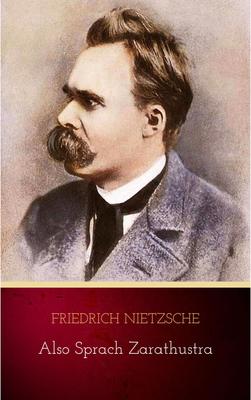
Das Buch besteht aus vier Teilen. Der erste Teil erschien 1883, der zweite und dritte 1884, der vierte 1885 als Privatdruck. 1886 ver?ffentlichte Nietzsche die drei ersten Teile als ?Also sprach Zarathustra. Ein Buch für Alle und Keinen. In drei Teilen.“ Im Gegensatz zu den frühen Werken Nietzsches handelt es sich beim Zarathustra nicht um ein Sachbuch. In hymnischer Prosa berichtet ein personaler Erz?hler vom Wirken eines fiktiven Denkers, der den Namen des Persischen Religionsstifters Zarathustra tr?gt. Nietzsche selbst nennt den Stil, in dem Also sprach Zarathustra geschrieben ist, halkyonisch und wünscht sich Leser, die eines ?gleichen Pathos f?hig und würdig sind“: ?Man muss vor Allem den Ton, der aus diesem Munde kommt, diesen halkyonischen Ton richtig h?ren, um dem Sinn seiner Weisheit nicht erbarmungswürdig Unrecht zu tun“. Dass Nietzsche diese Leserschaft in seiner Gegenwart nicht gesehen hat, legt der Untertitel des Werkes nahe: ?Ein Buch für Alle und Keinen“.

?nvierea
¥33.03
Critica ra?iunii pure, tradus? de Nicolae Bagdasar ?i Elena Moisuc ?n 1969, a ajuns la cea de-a treia edi?ie. Cu acest prilej, profesorul dr. Ilie P?rvu, de la Facultatea de Filosofie a Universit??ii din Bucure?ti a ?ngrijit noua opera?ie de editare, fiind astfel corectate unele erori de tipar ?i unele inconsecven?e terminologice. Totodat?, exist? un motiv ?n plus pentru ca studen?ii care posed? edi?ia a II-a a traducerii, ap?rut? ?n 1995, s? apeleze ?i la cea de-a treia edi?ie: ?n aceasta din urm? au fost indicate diferen?ele dintre edi?ia I german? (din 1781) ?i edi?ia a II-a (din 1787).

Educa?ia sentimental?
¥33.03
Volumul red? circuitului public, pentru prima oar? ?n limba rom?n?, trei din operele g?nditorului atenian. Este vorba de Scrisori (?n num?r de treisprezece, deosebit de importante pentru cunoa?terea g?ndirii platoniciene, dar ?i pentru ?n?elegerea epocii ?i a personalit??ilor cu care a venit ?n contact filosoful), Dialoguri suspecte (Minos, Rivalii, Theages, Hipparhos, Clitofon) ?i Dialoguri apocrife (Axiohos, Despre drept, Despre virtute, Demodocus, Sisyfos, Eryxias).Traducerea apara?ine lui ?tefan Bezdechi, care a realizat ?i aparatul critic al Scrisorilor (introducere ?i note).

Exercitii practice de psihogenealogie
¥48.97
Satisfacerea neîngr?dit? a nevoilor instinctuale ale omului este oare compatibil? cu limit?rile impuse de progresul civiliza?iei? Lansat? de Freud în celebrul text Disconfort în cultur? (1930), întrebarea este reluat? peste un sfert de veac de c?tre Herbert Marcuse, eminent filosof din ?coala de la Frankfurt. În vreme ce Freud ofer? un r?spuns pesimist, vorbind despre inevitabila subjugare a instinctelor umane de c?tre societatea represiv?, Marcuse întrevede o cale de îmblânzire a agresivit??ii Civiliza?iei prin for?a unificatoare, vital? ?i ludic? a Erosului. Solu?iile de emancipare sugerate de c?tre Marcuse au influen?at profund mi?c?rile studen?e?ti, ecologice, anticolonialiste sau de eliberare sexual? din ultima jum?tate de secol. De aceea interesul pentru criticile sale trece dincolo de ?tiin?ele socio-umane, înspre to?i cei ce vor s? în?eleag? mecanismele alienante ale „societ??ii abunden?ei“. Acest eseu folose?te categorii psihologice, deoarece ele au devenit categorii politice. Exist? procese psihice, alt?dat? autonome ?i identificabile, care sunt absorbite de func?ia individului în stat - de c?tre existen?a sa public?. Problemele psihologice se transform? a?adar în probleme politice. ?– Herbert Marcuse Pornind de la Freud ?i de la tradi?ia eliberatoare a filosofiei ?i culturii, Marcuse schi?eaz? tabloul unei civiliza?ii în care alienarea ?i reprimarea sunt înlocuite de dimensiunea libidinal? ?i nealienant? a muncii, jocului ?i sexualit??ii libere ?i deschise, toate acestea conducând mai departe c?tre emancipare ?i fericire. – Douglas Kellner, editor al seriei The Collected Papers of Herbert Marcuse
Despre om ?i societate
¥24.44
De numele lui Sigmund Freud (1856-1929) se leag? poate cea mai controversat? teorie din filosofia culturii ultimelor secole: psihanaliza. ?nceput? ca ?ntreprindere psihoterapeutic?, prima cur? – din punct de vedere istoric – ?n care rolul terapeutic revenea exclusiv cuv?ntului, psihanaliza a fost condus? de Freud ?n mod firesc ?i ?n direc?ia descoperirii resorturilor abisale ale culturii.Disconfort ?n cultur? (1930) este o lucrare de maturitate ?n care p?rintele psihanalizei investigheaz? mecanismele care men?in coeziunea social?, respectiv contraponderea lor, manifestat? prin senza?ia de disconfort care ?nso?e?te mai mult sau mai pu?in evident fiin?a social?.?Supraeul unui epoci culturale are o origine asem?n?toare cu a celui individual; se sprijin? pe impresia pe care au l?sat-o mari personalit??i conduc?toare, oameni de o for?? spiritual? cople?itoare sau cei la care una dintre tendin?ele umane a g?sit configura?ia cea mai puternic? ?i mai pur?, de aceea adesea ?i cea mai unilateral?.“ - Sigmund Freud
A fekete vér
¥8.67
The present publication is intended to supply a recognised deficiency in our literature—a library edition of the Essays of Montaigne. This great French writer deserves to be regarded as a classic, not only in the land of his birth, but in all countries and in all literatures. His Essays, which are at once the most celebrated and the most permanent of his productions, form a magazine out of which such minds as those of Bacon and Shakespeare did not disdain to help themselves; and, indeed, as Hallam observes, the Frenchman's literary importance largely results from the share which his mind had in influencing other minds, coeval and subsequent. But, at the same time, estimating the value and rank of the essayist, we are not to leave out of the account the drawbacks and the circumstances of the period: the imperfect state of education, the comparative scarcity of books, and the limited opportunities of intellectual intercourse. Montaigne freely borrowed of others, and he has found men willing to borrow of him as freely. We need not wonder at the reputation which he with seeming facility achieved. He was, without being aware of it, the leader of a new school in letters and morals. His book was different from all others which were at that date in the world. It diverted the ancient currents of thought into new channels. It told its readers, with unexampled frankness, what its writer's opinion was about men and things, and threw what must have been a strange kind of new light on many matters but darkly understood. Above all, the essayist uncased himself, and made his intellectual and physical organism public property. He took the world into his confidence on all subjects. His essays were a sort of literary anatomy, where we get a diagnosis of the writer's mind, made by himself at different levels and under a large variety of operating influences. Of all egotists, Montaigne, if not the greatest, was the most fascinating, because, perhaps, he was the least affected and most truthful. What he did, and what he had professed to do, was to dissect his mind, and show us, as best he could, how it was made, and what relation it bore to external objects. He investigated his mental structure as a schoolboy pulls his watch to pieces, to examine the mechanism of the works; and the result, accompanied by illustrations abounding with originality and force, he delivered to his fellow-men in a book. W. C. H. KENSINGTON, November 1877. THE LIFE OF MONTAIGNE The author of the Essays was born, as he informs us himself, between eleven and twelve o'clock in the day, the last of February 1533, at the chateau of St. Michel de Montaigne. His father, Pierre Eyquem, esquire, was successively first Jurat of the town of Bordeaux (1530), Under-Mayor 1536, Jurat for the second time in 1540, Procureur in 1546, and at length Mayor from 1553 to 1556. He was a man of austere probity, who had "a particular regard for honour and for propriety in his person and attire . . . a mighty good faith in his speech, and a conscience and a religious feeling inclining to superstition, rather than to the other extreme. Between 1556 and 1563 an important incident occurred in the life of Montaigne, in the commencement of his romantic friendship with Etienne de la Boetie, whom he had met, as he tells us, by pure chance at some festive celebration in the town. From their very first interview the two found themselves drawn irresistibly close to one another, and during six years this alliance was foremost in the heart of Montaigne, as it was afterwards in his memory, when death had severed it.

Nature
¥9.24
The Prince (Italian: Il Principe) is a political treatise by the Italian diplomat, historian and political theorist Niccolò Machiavelli. From correspondence a version appears to have been distributed in 1513, using a Latin title, De Principatibus (About Principalities). But the printed version was not published until 1532, five years after Machiavelli's death. This was done with the permission of the Medici pope Clement VII, but "long before then, in fact since the first appearance of the Prince in manuscript, controversy had swirled about his writings" Although it was written as if it were a traditional work in the Mirror of Princes style, it is generally agreed that it was especially innovative, and not only because it was written in Italian rather than Latin. The Prince is sometimes claimed to be one of the first works of modern philosophy, in which the effective truth is taken to be more important than any abstract ideal. It was also in direct conflict with the dominant Catholic and scholastic doctrines of the time concerning how to consider politics and ethics. Although it is relatively short, the treatise is the most remembered of his works and the one most responsible for bringing "Machiavellian" into wide usage as a pejorative term. It also helped make "Old Nick" an English term for the devil, and even contributed to the modern negative connotations of the words "politics" and "politician" in western countries. In terms of subject matter it overlaps with the much longer Discourses on Livy, which was written a few years later. In its use of examples who were politically active Italians who perpetrated criminal deeds for politics, another lesser-known work by Machiavelli which The Prince has been compared to is the Life of Castruccio Castracani. The descriptions within The Prince have the general theme of accepting that ends of princes, such as glory, and indeed survival, can justify the use of immoral means to achieve those ends.

Dream Psychology: Psychoanalysis the Dreams for Beginners
¥28.04
Ralph Waldo Emerson, was born at Boston in 1803 into a distinguished family of New England Unitarian ministers. His was the eighth generation to enter the ministry in a dynasty that reached back to the earliest days of Puritan America. Despite the death of his father when Emerson was only eleven, he was able to be educated at Boston Latin School and then Harvard, from which he graduated in 1821. After several years of reluctant school teaching, he returned to the Harvard Divinity School, entering the Unitarian ministry during a period of robust ecclesiastic debate. By 1829 Emerson was married and well on his way to a promising career in the church through his appointment to an important congregation in Boston. However, his career in the ministry did not last long. Following the death of his first wife, Ellen, his private religious doubts led him to announce his resignation to his congregation, claiming he was unable to preach a doctrine he no longer believed and that "to be a good minister it was necessary to leave the ministry."With the modest legacy left him from his first wife, Emerson was able to devote himself to study and travel. In Europe he met many of the important Romantic writers whose ideas on art, philosophy, and literature were transforming the writing of the Nineteenth Century. He also continued to explore his own ideas in a series of voluminous journals which he had kept from his earliest youth and from which virtually all of his literary creation would be generated. Taking up residence in Concord, Massachusetts, Emerson devoted himself to study, writing and a series of public lectures in the growing lyceum movement. From these lyceum addresses Emerson developed and then in 1836 published his most important work, Nature. Its publication also coincided with his organizing role in the Transcendental Club, a group of leading New England educators, clergy, and intellectuals interested in idealistic religion, philosophy, and literature.


