万本电子书0元读

万本电子书0元读

59元6本 瞧,这个人
瞧,这个人
(德)弗里德里希·尼采著 , 王涌译
¥35.00
     尼采在临近精神崩溃时,用纸和笔回顾了自己"超人般"的一生:如何与大音乐家瓦格纳相会、相知又决裂;如何摆脱叔本华悲观哲学的影响,成为酒神狄奥尼索斯的信徒;如何用一本又一本惊世骇俗的著作,炮轰死气沉沉的欧洲思想,重估一切价值……本书展现了尼采充满思想激情的一生,同时也向世人宣告:美好生活的真谛就在于"热爱命运",就在于努力"成为你自己"!   可以说,关于如何过好一生,尼采在一百多年前,用超凌时代的睿智,同时付出了超凌时代的代价,以这本极具震撼力的自传--《瞧,这个人》,公布了他的思考。
马克思政治哲学引论(马克思主义研究论库·第二辑;国家出版基金项目)
臧峰宇
¥34.80
本书是一部系统探究马克思政治哲学思想的著作。作者以问题为主线考察马克思政治哲学的内在逻辑、思维方式与价值诉求,对马克思的人类解放理论、共同体理论、正义论、自由-平等观与政治经济学批判,以及马克思政治哲学的思想资源与中国语境进行了较为完整的阐释。在澄清马克思政治哲学内在生成机制的同时,力求规范建构和综合创新。作者运用文本解读与当代审视内在融通等研究方法,兼顾微观解读与宏观阐释,在“导言”中彰显马克思政治哲学的总体框架和问题域,呈现马克思政治哲学的当代视界,为探究新时代马克思主义政治哲学的实践逻辑提供了一种独特的学术视域。
59元6本 张三丰全集
张三丰全集
董沛文
¥29.65
本书主要内容是元明时丹道修炼的代表性人物张三丰的丹道修习及太极、内家拳的集成。在我国历史上张三丰是一个颇有传奇色彩的人物,其修道有成但大多散落民间,清时李西月翻检大量文献,搜罗历史遗著,重编《张三丰全集》,十分注重对史料的甄别考证,并对一些作品行了旁征博引、评跋批注,是一个较为完善的版本。 由于资料收集查找的困难,当下坊间有关张三丰流传多有讹误。本书校者本着忠实于原著的原则,在内容结构、编排次序不作调整、不作删节,以体现原编者的风格和思想,保持古文献原有的文字风格。本书的出版为当代各界人士研习与研究健康的传统文化提供了珍贵的文献典籍,有相当的学术及使用价值。
公共哲学序说——中日关于公私问题的研究(百家廊文丛)
林美茂
¥34.80
20世纪90年代以来,“公共哲学”问题成为学界的前沿探索之一,出现了一批重要的研究成果。“公共哲学”问题由美国学者李普曼首倡,着出现了哈贝马斯、汉娜?阿伦特等的关于公共性问题的论述。到了20世纪末,日本学界掀起了一场探索公共哲学的学术运动。根据目前学界的基本判断,公共哲学是一门探索公共性问题的学问。公共性问题自然涉及“公”“私”“公共”概念及其关系问题。因此,《公共哲学序说——中日关于公私问题的研究》回顾了李普曼、哈贝马斯、汉娜?阿伦特的相关论说,通过梳理与考察中日学界关于公私问题的研究成果,批判性地分析了“公”“私”的相对性本质以及既往研究的不足,揭示了在哲学意义上探索公私问题对于建构公共哲学的根本性意义,*后阐述了“和而不同”理念对于新时代建构公共哲学的重要思想价值。
59元6本 教书育人 知行合一
教书育人 知行合一
王卓凯, 胡小溪, 主编
¥21.66
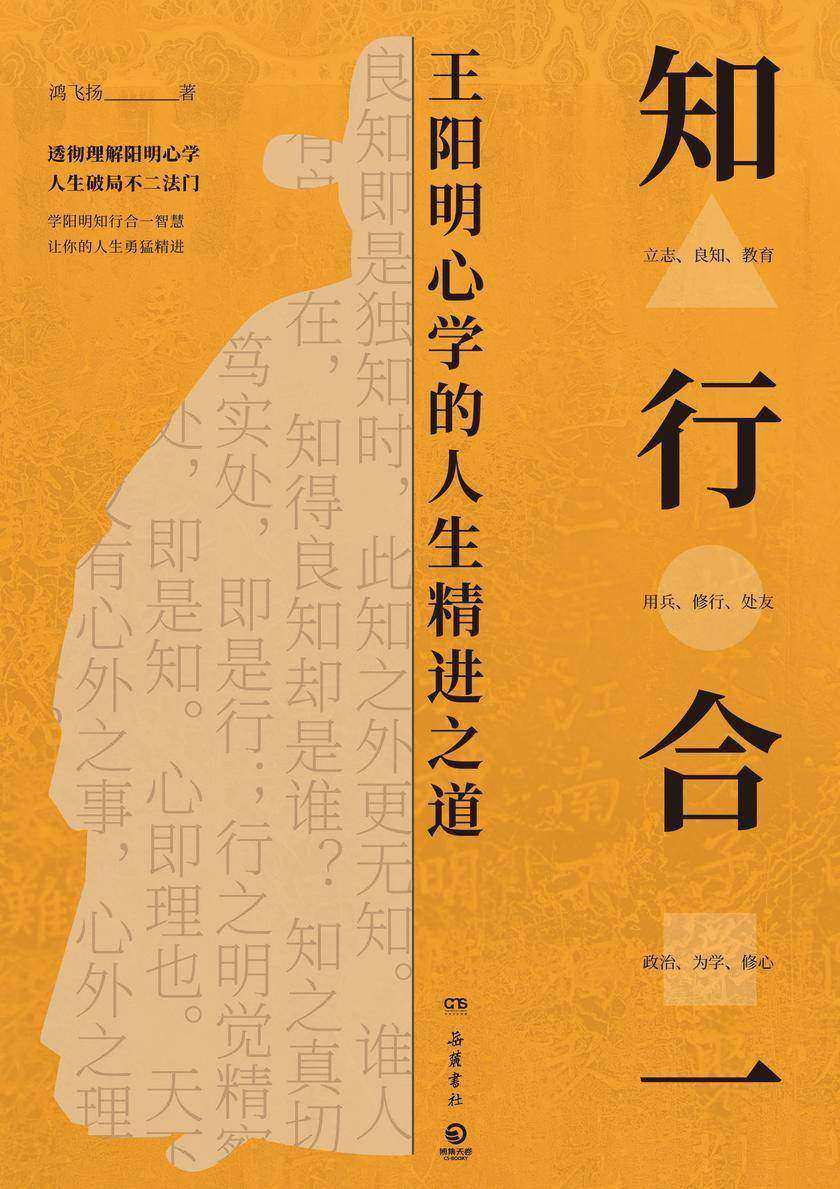
北京师范大学历史学院积极探索实践育人的有效路径,逐步形成了依托“课余经常性实践、周末重点性实践以及寒暑假集中性实践”三种模式坚持全时段覆盖,注重“与时事知识相结合,与服务社会相结合,与专业学习相结合、与就业能力提升相结合”四个结合体现实用化设计,实现“传播师大正能量,传播中国好声音,传播正确历史观”三个传播的社会影响,努力探索出“343”实践育人新模式。多年来,北京师范大学历史学院的师生广泛进行义务支教、基层调研、境外交流、专业考察、历史类活动等多种社会实践,时间上可谓全时段,空间上足迹遍布祖国各地,甚至涉足海外,在此过程中既涌现出如义务支教、服务家乡受到《光明日报》等媒体关注的的感动师大人物朱启平、主动休学两年远赴贵州为中国而教的刘智彬、十佳志愿者张容荣等个人代表,也有如首都大学生思政实效奖获奖者形势与政策小组、北京师范大学思政实效奖获奖者《春秋人文报》和志愿讲解队等集体。铭记他们的经历,传颂他们的事迹,记录青春足迹,总结经验遗憾,成为北京师范大学历史学院学生工作者的共同期盼。在这样的期盼下,《教书育人知行合一》诞生了。全书共分五章,由不同的实践经历学生分别从社会民生、文化传承、抗战纪念、历史教学实践、外事活动等视角出发,既有记录社会实践的过程,也有对其中部分问题的深入反思。
知行合一——王阳明
知行合一——王阳明
梁启超等著
¥8.98
本书收录梁启超、王勉三、马宗荣、胡越四位大师的文章和著作,从不同角度讲述王阳明的生平经历,阐释王阳明的学说精髓。一书在手,既可以了解王阳明颇为传奇的一生,亦可以了解他流传千古、响彻中外的心学思想。
59元6本 体道
体道
李宇林, 著
¥24.00
本书运用道家经籍阐述道家思想,重在体现道学的思想内涵,让人们认识关于道家论述道的概念。 道家认为:道是宇宙天地自然万物的原动力、原始能量,它虽然无形无象、无色无味、无方无圆、无外无内、虚无空静,但却是无处不在,无所不有。万有都是道的派生物,生而不有、为而不恃。道生之、德蓄之;道无为、德有为,有为又是在无为的基础之上,无为之为,并不是人为之妄为。德的有为在于顺应自然,辅助、协助而无私情私欲。也就是道生长万物而德蓄养万物,虽蓄养而不为己有、即行善而不求名利,助人而不彰显功德,完全是一种博爱、大爱。万物都是道的化生物,道对于他们是齐同的、统一的,顺应他们的本性去体现万物各自的姿态,顺其自然生生化化,无穷无尽。天地有道则风调雨顺,四季有序万物盛长,自然有道则万物繁茂,则人民食物丰厚,社会有道和谐而安宁,国家有道、则民富国强,万国来朝,家庭有道则父慈子孝、万事兴起,自身有道则血脉和顺阴阳有节,身强体键。 道学从研究天地自然的永生不变中,去觉悟到人类社会的变化,缘由,一步认证了他们之间的关系,“人法地、地法天、天法道、道法自然”。顺应根据遵循自然人类社会就可以繁荣昌盛,国家就可以长治久安,家庭就可以和睦相处,自身就可以健康长寿。这与《易经》、《黄帝内经》倡导的天人合一、天人相应、阴阳和谐是同一理念。  人不能脱离与天地自然的和谐统一,人不能离自然而独立存在,也不能离社会家庭而独自生活。人与天地、自然万物的相通相应就说明了,一个人的个体只是万物中的一物而己。庄子说:“我与天地并生、万物与我为一”,强调了万物相齐和谐统一的理念,而道家又是特别的珍爱生命,珍惜健康,一直以来人们都认为道教是尊生贵术的宗教,这是道教继承道家思想的缘由。珍爱生命,看重使人健康长寿的养生方术,倡导身心同治,心性与身体同样重要,是道家几千年来研究道德、以道德的理念指导医药养生的精神本质,也就是医学结合健康长寿的*秘诀。 从人与自然社会、家庭以及人本身的和谐层面,论述道的理念,又从修齐治平的概念去体现道的内涵,目的是使人们返淳返朴,求证生命的本真,“坐忘”以求本、“养真”以合道,回归上古自然无为,清静恬淡,“甘其食、美其服、安其居、乐其俗,邻国相望,鸡犬之声相闻”的原始生活状态。这或许是实现和谐、和平,回归自然的*好方法。
Mindig is éjjel lesz
Liz Nugent
¥69.65
Sri Krsna számtalan univerzum vitathatatlan Ura, akit korlátlan er?, gazdagság, hírnév, tudás és lemondás jellemez, ám ezek az ?r?kké diadalmas energiák csupán részben  tárják fel ?t. Végtelen dics?ségét csak az ismerheti meg, aki elb?v?l? szépségénél keres menedéket, ?sszes t?bbi fenséges tulajdonsága forrásánál, melynek páratlan transzcendentális teste ad otthont. Szépségének legf?bb jellemz?je az a mindenek f?l?tt álló édes íz, ami t?mény kivonata mindennek, ami édes. Minden édes dolgot túlszárnyal, és nem más, mint az édes íz megízlelésének képessége. Sri Krsna édes természete finom arany sugárzásként ragyog át transzcendentális testén. Govinda páratlanul gy?ny?r? testének legszebb és legédesebb része ragyogó arca. ?des hold-arcán rejtélyes mosolya a legédesebb, az az arcáról ragyogó ezüst holdsugár, ami nektárral árasztja el a világot. Mosolyának sugárzása nélkül keser? lenne a cukor, savanyú a méz, és a nektárnak sem lenne íze. Amikor mosolyának holdsugara elvegyül teste ragyogásával, a kett? együtt a kámfor aromájára emlékeztet. Ez a kámfor aztán ajkán keresztül a fuvolába kerül, ahonnan megfoghatatlan hangvibrációként t?r el?, és er?nek erejével rabul ejti azoknak az elméjét, akik hallják. Ahogy a szavak gondolatok mondanivalóját hordozzák, ahogy a gondolatok a szemben tükr?z?dnek, ahogy egy mosoly a szív érzelmeir?l árulkodik, úgy a fuvola hangja Sri Krsna szépségét viszi a fül?n keresztül a szív templomának oltárára.
A kalózkirály
A kalózkirály
Jókai Mór
¥8.67
Euthyphro (Ancient Greek: Euthuphron) is one of Plato's early dialogues, dated to after 399 BC. Taking place during the weeks leading up to Socrates' trial, the dialogue features Socrates and Euthyphro, a religious expert also mentioned at Cratylus 396a and 396d, attempting to define piety or holiness. Background The dialogue is set near the king-archon's court, where the two men encounter each other. They are both there for preliminary hearings before possible trials (2a).Euthyphro has come to lay manslaughter charges against his father, as his father had allowed one of his workers to die exposed to the elements without proper care and attention (3e–4d). This worker had killed a slave belonging to the family estate on the island of Naxos; while Euthyphro's father waited to hear from the expounders of religious law (exegetes cf. Laws 759d) about how to proceed, the worker died bound and gagged in a ditch. Socrates expresses his astonishment at the confidence of a man able to take his own father to court on such a serious charge, even when Athenian Law allows only relatives of the deceased to sue for murder. Euthyphro misses the astonishment, and merely confirms his overconfidence in his own judgment of religious/ethical matters. In an example of "Socratic irony," Socrates states that Euthyphro obviously has a clear understanding of what is pious and impious. Since Socrates himself is facing a charge of impiety, he expresses the hope to learn from Euthyphro, all the better to defend himself in his own trial. Euthyphro claims that what lies behind the charge brought against Socrates by Meletus and the other accusers is Socrates' claim that he is subjected to a daimon or divine sign which warns him of various courses of action (3b). Even more suspicious from the viewpoint of many Athenians, Socrates expresses skeptical views on the main stories about the Greek gods, which the two men briefly discuss before plunging into the main argument. Socrates expresses reservations about such accounts which show up the gods' cruelty and inconsistency. He mentions the castration of the early sky god, Uranus, by his son Cronus, saying he finds such stories very difficult to accept (6a–6c). Euthyphro, after claiming to be able to tell even more amazing such stories, spends little time or effort defending the conventional view of the gods. Instead, he is led straight to the real task at hand, as Socrates forces him to confront his ignorance, ever pressing him for a definition of 'piety'. Yet, with every definition Euthyphro proposes, Socrates very quickly finds a fatal flaw (6d ff.). At the end of the dialogue, Euthyphro is forced to admit that each definition has been a failure, but rather than correct it, he makes the excuse that it is time for him to go, and Socrates ends the dialogue with a classic example of Socratic irony: since Euthyphro has been unable to come up with a definition that will stand on its own two feet, Euthyphro has failed to teach Socrates anything at all about piety, and so he has received no aid for his own defense at his own trial (15c ff.).
Evolution of the Culture
Augustus Henry Lane-Fox Pitt Rivers
¥28.04
Paradise Lost is an epic poem in blank verse by the 17th-century English poet John Milton (1608–1674). The first version, published in 1667, consisted of ten books with over ten thousand lines of verse. A second edition followed in 1674, arranged into twelve books (in the manner of Virgil's Aeneid) with minor revisions throughout and a note on the versification. It is considered by critics to be Milton's "major work", and helped solidify his reputation as one of the greatest English poets of his time. The poem concerns the Biblical story of the Fall of Man: the temptation of Adam and Eve by the fallen angel Satan and their expulsion from the Garden of Eden. Milton's purpose, stated in Book I, is to "justify the ways of God to men" Short Summary:The poem is separated into twelve "books" or sections, the lengths of which vary greatly (the longest is Book IX, with 1,189 lines, and the shortest Book VII, with 640). The Arguments at the head of each book were added in subsequent imprints of the first edition. Originally published in ten books, a fully "Revised and Augmented" edition reorganized into twelve books was issued in 1674, and this is the edition generally used today. The poem follows the epic tradition of starting in medias res (Latin for in the midst of things), the background story being recounted later.Milton's story has two narrative arcs, one about Satan (Lucifer) and the other following Adam and Eve. It begins after Satan and the other rebel angels have been defeated and banished to Hell, or, as it is also called in the poem, Tartarus. In Pand?monium, Satan employs his rhetorical skill to organise his followers; he is aided by Mammon and Beelzebub. Belial and Moloch are also present. At the end of the debate, Satan volunteers to poison the newly created Earth and God's new and most favoured creation, Mankind. He braves the dangers of the Abyss alone in a manner reminiscent of Odysseus or Aeneas. After an arduous traversal of the Chaos outside Hell, he enters God's new material World, and later the Garden of Eden. At several points in the poem, an Angelic War over Heaven is recounted from different perspectives. Satan's rebellion follows the epic convention of large-scale warfare. The battles between the faithful angels and Satan's forces take place over three days. At the final battle, the Son of God single-handedly defeats the entire legion of angelic rebels and banishes them from Heaven. Following this purge, God creates the World, culminating in his creation of Adam and Eve. While God gave Adam and Eve total freedom and power to rule over all creation, He gave them one explicit command: not to eat from the Tree of the knowledge of good and evil on penalty of death.
Heart of Darkness
Heart of Darkness
Joseph Conrad
¥9.07
The Republic (Greek: Politeia) is a Socratic dialogue, written by Plato around 380 BC, concerning the definition of (justice), the order and character of the just city-state and the just man, reason by which ancient readers used the name On Justice as an alternative title (not to be confused with the spurious dialogue also titled On Justice). The dramatic date of the dialogue has been much debated and though it must take place some time during the Peloponnesian War, "there would be jarring anachronisms if any of the candidate specific dates between 432 and 404 were assigned". It is Plato's best-known work and has proven to be one of the most intellectually and historically influential works of philosophy and political theory. In it, Socrates along with various Athenians and foreigners discuss the meaning of justice and examine whether or not the just man is happier than the unjust man by considering a series of different cities coming into existence "in speech", culminating in a city (Kallipolis) ruled by philosopher-kings; and by examining the nature of existing regimes. The participants also discuss the theory of forms, the immortality of the soul, and the roles of the philosopher and of poetry in society. Short Summary (Epilogue):X.1—X.8. 595a—608b. Rejection of Mimetic ArtX.9—X.11. 608c—612a. Immortality of the SoulX.12. 612a—613e. Rewards of Justice in LifeX.13—X.16. 613e—621d. Judgment of the Dead The paradigm of the city — the idea of the Good, the Agathon — has manifold historical embodiments, undertaken by those who have seen the Agathon, and are ordered via the vision. The centre piece of the Republic, Part II, nos. 2–3, discusses the rule of the philosopher, and the vision of the Agathon with the allegory of the cave, which is clarified in the theory of forms. The centre piece is preceded and followed by the discussion of the means that will secure a well-ordered polis (City). Part II, no. 1, concerns marriage, the community of people and goods for the Guardians, and the restraints on warfare among the Hellenes. It describes a partially communistic polis. Part II, no. 4, deals with the philosophical education of the rulers who will preserve the order and character of the city-state.In Part II, the Embodiment of the Idea, is preceded by the establishment of the economic and social orders of a polis (Part I), followed by an analysis (Part III) of the decline the order must traverse. The three parts compose the main body of the dialogues, with their discussions of the “paradigm”, its embodiment, its genesis, and its decline.The Introduction and the Conclusion are the frame for the body of the Republic. The discussion of right order is occasioned by the questions: “Is Justice better than Injustice?” and “Will an Unjust man fare better than a Just man?” The introductory question is balanced by the concluding answer: “Justice is preferable to Injustice”. In turn, the foregoing are framed with the Prologue (Book I) and the Epilogue (Book X). The prologue is a short dialogue about the common public doxai (opinions) about “Justice”. Based upon faith, and not reason, the Epilogue describes the new arts and the immortality of the soul. ? About Author: Plato (Greek: Platon, " 428/427 or 424/423 BC – 348/347 BC) was a philosopher in Classical Greece. He was also a mathematician, student of Socrates, writer of philosophical dialogues, and founder of the Academy in Athens, the first institution of higher learning in the Western world. Along with his mentor, Socrates, and his most-famous student, Aristotle, Plato helped to lay the foundations of Western philosophy and science. Alfred North Whitehead once noted: "the safest general characterization of the European philosophical tradition is that it consists of a series of footnotes to Plato." Plato's sophistication as a writer is evident in his Socratic dialogues; thirty-six dialogues and thirteen letters have been ascribed to him, although 15–18 of them have been contested. Plato's writings have been published in several fashions; this has led to several conventions regarding the naming and referencing of Plato's texts. Plato's dialogues have been used to teach a range of subjects, including philosophy, logic, ethics, rhetoric, religion and mathematics. Plato is one of the most important founding figures in Western philosophy. His writings related to the Theory of Forms, or Platonic ideals, are basis for Platonism. ? Early lifeThe exact time and place of Plato's birth are not known, but it is certain that he belonged to an aristocratic and influential family. Based on ancient sources, most modern scholars believe that he was born in Athens or Aegina between 429 and 423 BC. His father was Ariston. According to a disputed tradition, reported by Diogenes Laertius, Ariston traced his descent from the king of Athens, Codrus, and the king of Messenia, Melanthus. Plato's mother was Perictione, whose family boasted of a relationship with the famous Athenian lawmaker an
哲学是很好玩儿的(套装共15册)
哲学是很好玩儿的(套装共15册)
(英)J.F.沃芬登 著,黄俊洁 译,(美)尤金·奥尼尔 著 刘霞 译,(日)武内义雄 著 汪馥泉 译
¥229.99
《哲学是很好玩儿的》(套装共15册)包括生命哲学、心灵哲学等多种哲学思想结晶,读者可以从入门开始,通过通俗易懂的方式学会如何用哲学思维思考,感受哲学里的自我和世界,帮读者重新审视自我和我们栖居的世界,以及和这个世界的关系,捕捉心中迸发的迷惑与感悟,进而把它们锤炼为人生的智慧。
Káin
Káin
George Gordon Byron
¥8.83
...amikor apaként elmegyek az óvodába, hogy elhozzam a kisfiamat, akkor milyen alapon választom ki, hogy kit viszek haza Talán megkérdezem az óvóntl, hogy melyik gyerek viselkedett a legjobban Vagy krülnézek, hogy melyik klyk a legszebb s ha az óvón azzal fogad, hogy az én gyerekem elpáholta t csoporttársát, és egy pohár kefirt nttt a takarító néni fejére, akkor ott hagyom, és választok egy normális gyereket Nem. Minden krülmények kzt a sajátomat viszem haza. Azért, mert az enyém! Ez a vele való kapcsolatom alapja. s ha ez az alap megvan, hazaviszem t, és otthon elbeszélgetek vele a pohár kefirrl, az ovistársakról, a takarító nénirl és a verekedésrl. Milyen egyszernek és természetesnek tnik mindez, ha a saját gyermekeinkrl van szó, de ha Jézus mondja ugyanezt az Atyáról, akkor zavarba jvünk, mert a szégyen és a félelem által belénk vésdtt kalmárszellem olyan mélyen járja át a lelkünket, hogy el sem tudjuk képzelni, hogy csak úgy, minden feltétel nélkül szeretni való emberek vagyunk...” BOLYKI LSZL 1973-ban született Budapesten. Zenész (Bolyki Brothers, Budapesti Fesztiválzenekar, Erkel Ferenc Kamarazenekar), spirituális szemlélet lelkigondozó, párkapcsolati és nismereti témákra szakosodott tréner, a Milyen zenét szeret Isten cím ktet szerzje. Bolyki László munkája azt tanítja nekünk, hogy a múlt si kultúrájának szimbolikus értékei a mai ember problémáiban is eleven lélektani, spirituális útmutatást tudnak nyújtani.” dr. SLE FERENC, a volt Országos Pszichiátriai és Neurológiai Intézet Valláslélektani Osztályának forvosa A Kegyelem és kalmárszellem nem csak egy knyv a sok kzül; fontos, hogy minél tbb olvasóhoz eljusson! Mindenkinek ajánlom szeretettel.” SZENCZY SNDOR a Baptista Szeretetszolgálat Alapítvány vezetje
Don Quijote de la Mancha
Miguel de Cervantes Saavedra
¥8.83
Valamikor a muzsika egyszer volt, szerény és tiszteletreméltó, ma cicomás lett és zrzavaros, méltóságát és értékét veszített, gyalázatos iparrá süllyedt.” Mikor volt a muzsika egyszer, szerény és tiszteletreméltó, és vajon milyen úton-módon veszítette el méltóságát és értékét Meg tudjuk határozni, hogy melyek a zene zrzavaros és cicomás stíluselemei Tudjuk-e, hogy hogyan és miért süllyedt a zene gyalázatos iparrá Végül, de nem utolsósorban fel tudjuk-e mérni annak jelentségét, hogy a fenti idézet a 6. századból származik, a nagy keresztény gondolkodó, Boethiusz tollából E knyv a zene és a kereszténység hagyományosan feszültségektl terhelt kapcsolatát vizsgálja, a valamikor” és a ma” szakrális zenéjének tükrében. A szerz szándéka, hogy a zene a dicséret és magasztalás eszkze, és ne a feszültségek állandó forrása legyen a keresztény egyházak és gyülekezetek életében. BOLYKI LSZL 1994-ben szerezte mvész-tanári diplomáját a budapesti Zeneakadémián. A Bolyki Brothers énekegyüttes, a Budapesti Fesztiválzenekar és az Erkel Ferenc Kamarazenekar tagjaként rendszeresen fllép Európa, Amerika és zsia legjelentsebb zenei kzpontjaiban. Spirituális szemlélet lelkigondozó, párkapcsolati és nismereti témákra szakosodott tréner, a Kegyelem és kalmárszellem cím ktet szerzje.
The Sorrows of Young Werther
J. W. Von Goethe
¥18.74
Among the notable books of later times-we may say, without exaggeration, of all time--must be reckoned The Confessions of Jean Jacques Rousseau. It deals with leading personages and transactions of a momentous epoch, when absolutism and feudalism were rallying for their last struggle against the modern spirit, chiefly represented by Voltaire, the Encyclopedists, and Rousseau himself--a struggle to which, after many fierce intestine quarrels and sanguinary wars throughout Europe and America, has succeeded the prevalence of those more tolerant and rational principles by which the statesmen of our own day are actuated. On these matters, however, it is not our province to enlarge; nor is it necessary to furnish any detailed account of our author's political, religious, and philosophic axioms and systems, his paradoxes and his errors in logic: these have been so long and so exhaustively disputed over by contending factions that little is left for even the most assiduous gleaner in the field. The inquirer will find, in Mr. John Money's excellent work, the opinions of Rousseau reviewed succinctly and impartially. The 'Contrat Social', the 'Lattres Ecrites de la Montagne', and other treatises that once aroused fierce controversy, may therefore be left in the repose to which they have long been consigned, so far as the mass of mankind is concerned, though they must always form part of the library of the politician and the historian. One prefers to turn to the man Rousseau as he paints himself in the remarkable work before us. That the task which he undertook in offering to show himself--as Persius puts it--'Intus et in cute', to posterity, exceeded his powers, is a trite criticism; like all human enterprises, his purpose was only imperfectly fulfilled; but this circumstance in no way lessens the attractive qualities of his book, not only for the student of history or psychology, but for the intelligent man of the world. Its startling frankness gives it a peculiar interest wanting in most other autobiographies. Many censors have elected to sit in judgment on the failings of this strangely constituted being, and some have pronounced upon him very severe sentences. Let it be said once for all that his faults and mistakes were generally due to causes over which he had but little control, such as a defective education, a too acute sensitiveness, which engendered suspicion of his fellows, irresolution, an overstrained sense of honour and independence, and an obstinate refusal to take advice from those who really wished to befriend him; nor should it be forgotten that he was afflicted during the greater part of his life with an incurable disease. Lord Byron had a soul near akin to Rousseau's, whose writings naturally made a deep impression on the poet's mind, and probably had an influence on his conduct and modes of thought: In some stanzas of 'Childe Harold' this sympathy is expressed with truth and power; especially is the weakness of the Swiss philosopher's character summed up in the following admirable lines: "Here the self-torturing sophist, wild Rousseau, The apostle of affliction, he who threw Enchantment over passion, and from woe Wrung overwhelming eloquence, first drew The breath which made him wretched; yet he knew How to make madness beautiful, and cast O'er erring deeds and thoughts a heavenly hue Of words, like sunbeams, dazzling as they passed The eyes, which o'er them shed tears feelingly and fast. "His life was one long war with self-sought foes, Or friends by him self-banished; for his mind Had grown Suspicion's sanctuary, and chose, For its own cruel sacrifice, the kind, 'Gainst whom he raged with fury strange and blind. But he was frenzied,-wherefore, who may know? Since cause might be which skill could never find; But he was frenzied by disease or woe To that worst pitch of all, which wears a reasoning show."
59元6本 释迦牟尼佛传
释迦牟尼佛传
星云大师
¥18.00
本书叙述了佛陀自住世至涅槃生命的全过程。包括佛陀住世时的印度社会,佛陀的家世,佛陀出家和修行的经过,佛陀的传法和教团的成立,佛陀在世时所得的尊荣,佛陀的涅槃,等等。
59元6本 星云禅话
星云禅话
星云大师
¥18.00
《星云禅话》系为佛光山山宗长星云大师应各方对于禅的需渴反应,将刊载于报纸的“星云禅话”编集成书。该书从已出版的禅话一至四集,精心选辑了一百三十二则公案,希望透过生活性、人间性的“禅话”,为忙碌、紧张的今日社会,投下一剂清凉散。
59元6本 佛教的女性观
佛教的女性观
永明
¥18.00
本书主要是透过经典中记载的佛陀的平等思想、教育方法,客观探讨佛教的女性观。 其重有四: 一、佛教兴起时代的印度社会和女性:主要以印度低落的女性地位和不平等的四姓差别制度为背景,一一说明佛陀的众生平等观,从而奠定佛教的男女平等思想。 二、原始佛教时代的女性观:由原始经典中一再出现的母亲、妻子、媳妇、女人四种形象,分别说明佛陀对女性的教化,以及佛教对在家女性理想典范的树立,而从生活伦理中显示男女的平等性。 三、小乘佛教时代的女性观:对女人五障说、佛的三十二相和女人不能成佛说等思想做一全面深的探讨,以澄清佛陀的平等真义。 四、大乘佛教时代的女性观:由诸多经典中示现的女性成佛观、师子吼乃至大乘菩萨与女性的关系,显现佛教对女权的倡导和发展,以及女性的智慧和慈悲的特质。
59元6本 精进佛七开示录
精进佛七开示录
煮云
¥18.00
煮云法师关于佛七的示,近代念佛的实录,记载佛七中的各种事迹,可作为研究近代念佛法门演变的材料。
59元6本 杂阿含经
杂阿含经
吴平
¥18.00
《杂阿含经》是以言行录的体裁,记述佛陀和他的弟子们的修行与弘法活动。经中揭示了佛教的基本教义,如缘起、十二因缘、三法印、四圣谛、八正道、四念处等,故被称为“佛教圣典”。由于《杂阿含经》不重玄理、义解,重视的是修行实践,因而诵读此经,有助于现代人修行佛法。
59元6本 华严五教章
华严五教章
徐绍强
¥18.00
《华严五教章》是华严宗创始人法藏宗立教的论著,内容丰富,思辨性极高,是华严宗哲学思想的著名代表作。此书体系完备,是研究华严学的门及书,也可说是佛教概论书。