


 购物车
 个人中心

The Schoolmaster and Other Stories
¥8.09
This collection includes: THE SCHOOLMASTER, ENEMIES, THE EXAMINING MAGISTRATE, BETROTHED, FROM THE DIARY OF A VIOLENT-TEMPERED MAN, IN THE DARK, A PLAY, A MYSTERY, STRONG IMPRESSIONS, DRUNK, THE MARSHAL'S WIDOW, A BAD BUSINESS, IN THE COURT, BOOTS, JOY, LADIES, A PECULIAR MAN, AT THE BARBER'S, AN INADVERTENCE, THE ALBUM, OH! THE PUBLIC, A TRIPPING TONGUE, OVERDOING IT, THE ORATOR, MALINGERERS, IN THE GRAVEYARD, HUSH! IN AN HOTEL, and IN A STRANGE LAND. According to Wikipedia: "Anton Pavlovich Chekhov (1860 – 1904) was a Russian short-story writer, playwright and physician, considered to be one of the greatest short-story writers in world literature. His career as a dramatist produced four classics and his best short stories are held in high esteem by writers and critics Chekhov practised as a doctor throughout most of his literary career: "Medicine is my lawful wife," he once said, "and literature is my mistress." Chekhov renounced the theatre after the disastrous reception of The Seagull in 1896; but the play was revived to acclaim in 1898 by Constantin Stanislavski's Moscow Art Theatre, which subsequently also produced Uncle Vanya and premiered Chekhov’s last two plays, Three Sisters and The Cherry Orchard. These four works present a special challenge to the acting ensemble as well as to audiences, because in place of conventional action Chekhov offers a "theatre of mood" and a "submerged life in the text." Chekhov had at first written stories only for the money, but as his artistic ambition grew, he made formal innovations which have influenced the evolution of the modern short story. His originality consists in an early use of the stream-of-consciousness technique, later adopted by James Joyce and other modernists, combined with a disavowal of the moral finality of traditional story structure He made no apologies for the difficulties this posed to readers, insisting that the role of an artist was to ask questions, not to answer them."
The Three Partners
¥8.09
Classic western novel. According to Wikipedia: "Bret Harte (August 25, 1836[2] – May 6, 1902) was an American author and poet, best remembered for his accounts of pioneering life in California. He was born in Albany, New York. ... He moved to California in 1853, later working there in a number of capacities, including miner, teacher, messenger, and journalist. He spent part of his life in the northern California coast town now known as Arcata, then just a mining camp on Humboldt Bay. His first literary efforts, including poetry and prose, appeared in The Californian, an early literary journal edited by Charles Henry Webb. In 1868 he became editor of The Overland Monthly, another new literary magazine, but this one more in tune with the pioneering spirit of excitement in California. His story, "The Luck of Roaring Camp," appeared in the magazine's second edition, propelling Harte to nationwide fame... Determined to pursue his literary career, in 1871 he and his family traveled back East, to New York and eventually to Boston, where he contracted with the publisher of The Atlantic Monthly for an annual salary of $10,000, "an unprecedented sum at the time." His popularity waned, however, and by the end of 1872 he was without a publishing contract and increasingly desperate. He spent the next few years struggling to publish new work (or republish old), delivering lectures about the gold rush, and even selling an advertising jingle to a soap company. In 1878 Harte was appointed to the position of United States Consul in the town of Krefeld, Germany and then to Glasgow in 1880. In 1885 he settled in London. During the thirty years he spent in Europe, he never abandoned writing, and maintained a prodigious output of stories that retained the freshness of his earlier work. He died in England in 1902 of throat cancer and is buried at Frimley."
A Waif of the Plains
¥8.09
Classic western novel. According to Wikipedia: "Bret Harte (August 25, 1836[2] – May 6, 1902) was an American author and poet, best remembered for his accounts of pioneering life in California. He was born in Albany, New York. ... He moved to California in 1853, later working there in a number of capacities, including miner, teacher, messenger, and journalist. He spent part of his life in the northern California coast town now known as Arcata, then just a mining camp on Humboldt Bay. His first literary efforts, including poetry and prose, appeared in The Californian, an early literary journal edited by Charles Henry Webb. In 1868 he became editor of The Overland Monthly, another new literary magazine, but this one more in tune with the pioneering spirit of excitement in California. His story, "The Luck of Roaring Camp," appeared in the magazine's second edition, propelling Harte to nationwide fame... Determined to pursue his literary career, in 1871 he and his family traveled back East, to New York and eventually to Boston, where he contracted with the publisher of The Atlantic Monthly for an annual salary of $10,000, "an unprecedented sum at the time." His popularity waned, however, and by the end of 1872 he was without a publishing contract and increasingly desperate. He spent the next few years struggling to publish new work (or republish old), delivering lectures about the gold rush, and even selling an advertising jingle to a soap company. In 1878 Harte was appointed to the position of United States Consul in the town of Krefeld, Germany and then to Glasgow in 1880. In 1885 he settled in London. During the thirty years he spent in Europe, he never abandoned writing, and maintained a prodigious output of stories that retained the freshness of his earlier work. He died in England in 1902 of throat cancer and is buried at Frimley."
A Ward of the Golden Gate
¥8.09
Classic western novel. According to Wikipedia: "Bret Harte (August 25, 1836[2] – May 6, 1902) was an American author and poet, best remembered for his accounts of pioneering life in California. He was born in Albany, New York. ... He moved to California in 1853, later working there in a number of capacities, including miner, teacher, messenger, and journalist. He spent part of his life in the northern California coast town now known as Arcata, then just a mining camp on Humboldt Bay. His first literary efforts, including poetry and prose, appeared in The Californian, an early literary journal edited by Charles Henry Webb. In 1868 he became editor of The Overland Monthly, another new literary magazine, but this one more in tune with the pioneering spirit of excitement in California. His story, "The Luck of Roaring Camp," appeared in the magazine's second edition, propelling Harte to nationwide fame... Determined to pursue his literary career, in 1871 he and his family traveled back East, to New York and eventually to Boston, where he contracted with the publisher of The Atlantic Monthly for an annual salary of $10,000, "an unprecedented sum at the time." His popularity waned, however, and by the end of 1872 he was without a publishing contract and increasingly desperate. He spent the next few years struggling to publish new work (or republish old), delivering lectures about the gold rush, and even selling an advertising jingle to a soap company. In 1878 Harte was appointed to the position of United States Consul in the town of Krefeld, Germany and then to Glasgow in 1880. In 1885 he settled in London. During the thirty years he spent in Europe, he never abandoned writing, and maintained a prodigious output of stories that retained the freshness of his earlier work. He died in England in 1902 of throat cancer and is buried at Frimley."
Cavanaugh, Forest Ranger
¥8.09
Classic western novel. According to Wikipedia: "Hamlin Hannibal Garland (September 14, 1860 – March 4, 1940) was an American novelist, poet, essayist, and short story writer. He is best known for his fiction involving hard-working Midwestern farmers."
The Moccasin Ranch, A Story of Dakota
¥8.09
Classic western novel. According to Wikipedia: "Hamlin Hannibal Garland (September 14, 1860 – March 4, 1940) was an American novelist, poet, essayist, and short story writer. He is best known for his fiction involving hard-working Midwestern farmers."
Boss of the Lazy Y
¥8.09
Classic western. According to Pulprack (quoting Adventure Fiction.com) "Charles Alden Seltzer (Aug. 15, 1875 - Feb. 9, 1942) The vital statistics are: Born in August 1875, at the village of Janesville, Wisconsin. One year in Wisconsin. Then to Columbus, Ohio, where after a time I worked at various enterprises, such as newsboy, telegraph messenger, painter, carpenter and manager of the circulation of a newspaper. Spent the better part of five summer and some of the winters in Union County, New Mexico. At twenty I was in Cleveland, Ohio, where I was again a carpenter. Foreman, contractor. Began to write about this time -- nights. Thirteen years of writing without finding a publisher. In the interim I was engaged in various enterprises: Building inspector for the City of Cleveland, editor of a small newspaper, expert for the Cuyahoga County Board of Appraisers. Wrote and sold about one hundred short stories. Published a book of short stories called the Range Riders in 1911. A success. Followed it with a full length novel called The Two Gun Man in 1911. Another bell-ringer..."
Cabin Fever
¥8.09
Classic western. According to Wikipedia: "Bertha Muzzy Sinclair or Sinclair-Cowan, née Muzzy (November 15, 1871 – July 23, 1940), best known by her pseudonym B. M. Bower, was an American novelist who wrote fictional stories about the American Old West. Born Bertha Muzzy in Cleveland, Minnesota, she was married three times: to Clayton Bower, in 1890; to Bertrand W. Sinclair, in 1912; and to Robert Elsworth Cowan, in 1921. She wrote 57 Western novels, several of which were turned into films."
Henry of Ofterdingen
¥8.09
This translation first published in 1842. According to Wikipedia: "Novalis was the pseudonym of Georg Philipp Friedrich Freiherr von Hardenberg (May 2, 1772 – March 25, 1801), a poet, an author and philosopher of early German Romanticism... The novel fragments Heinrich von Ofterdingen and Die Lehrlinge zu Sais (The Novices of Sais) reflect the idea of describing a universal world harmony with the help of poetry. The novel 'Heinrich von Ofterdingen' contains the "blue flower", a symbol that became an emblem for the whole of German Romanticism. Originally the novel was supposed to be an answer to Goethe’s Wilhelm Meister, a work that Novalis had read with enthusiasm but later on judged as being highly unpoetical. He disliked the victory of the economical over the poetic."
Five Lectures on Blindness
¥8.09
First published in 1919 by the California State Library.? The lectures cover: The Psychology of Blindness, The Blind Child and Its Develoment, The Re-Education of the Blind Adult, The Attiture of the Public Toward the Blind, and Prevention of Blindness and Conservation of Vision in Adults and Children.? According to the Foreword: "The following lectures were written primarily to be delivered at the summer sessions of the University of California, at Berkeley and at Los Angeles, in the summer of 1918. We are printing them, however, so that the information in them can be more widely distributed, since they are the outgrowth of almost a quarter of a century spent in work for the blind, and were written from the standpoint of a blind person, seeking to better the condition of the blind. They were addressed not to the blind, but to the seeing public, for the benefit that will accrue to the blind from a better understanding of their problems. The successful work of Miss Foley as a student in the California School for the Blind, as a volunteer teacher, and in recent years as home teacher for the California State Library, makes these lectures particularly important and authoritative."
A Duet with an Occasional Chorus
¥8.09
Novel first published in 1899. According to Wikipedia: "Sir Arthur Ignatius Conan Doyle (22 May 1859 – 7 July 1930) was a Scottish physician and writer who is most noted for his fictional stories about the detective Sherlock Holmes, which are generally considered milestones in the field of crime fiction. He is also known for writing the fictional adventures of a second character he invented, Professor Challenger, and for popularising the mystery of the Mary Celeste. He was a prolific writer whose other works include fantasy and science fiction stories, plays, romances, poetry, non-fiction, and historical novels."
Exploits of Brigadier Gerard
¥8.09
According to Wikipedia: "Brigadier Gerard is the hero of a series of comic short stories by the British writer Arthur Conan Doyle. The hero, Etienne Gerard, is a Hussar in the French Army during the Napoleonic Wars. Gerard's most notable attribute is his vanity – he is utterly convinced that he is the bravest soldier, greatest swordsman, most accomplished horseman and most gallant lover in all France. Gerard is not entirely wrong, since he displays notable bravery on many occasions, but his self-satisfaction undercuts this quite often. Obsessed with honour and glory, he is always ready with a stirring speech or a gallant remark to a lady. Conan Doyle, in making his hero a vain, and often rather uncomprehending, Frenchman, was able to satirise both the stereotypical English view of the French and – by presenting them from Gerard's baffled point of view – English manners and attitudes."
The Firm of Girdlestone
¥8.09
According to Wikipedia: "The Firm of Girdlestone is a novel by British author Sir Arthur Conan Doyle. It was first published in 1890 by Chatto and Windus in London, England. In 1915 a silent film adaptation The Firm of Girdlestone was made. John Girdlestone owns the firm of Girdlestone. It is a very lucrative business and John Girdlestone and his son Ezra Girdlestone are respected by everyone. Both father and son are cynics and have no other thought but for their business; after giving a donation of ?25 for charity, John Girdlestone remarks to himself that it is not a bad "investment", as it will make a favorable impression on the collector, who is a Member of Parliament, whose influence he hopes to use some day. Ezra, his son, is even more of a cynic, as the elder Girdlestone's cynicism is mitigated by his supposed religiosity. However, he manifests a great acumen for business, sometimes, even surpassing his father's sharpness in business matters. A series of disastrous speculations by the elder Girdlestone financially ruins the firm. After keeping the impending bankruptcy a secret from everyone for a time, he tells his son (whom he has fooled with a dummy ledger) about it, who is disgusted by his father's rashness..."
Round the Red Lamp
¥8.09
Collection of stories related to medicine, first published in 1894. According to Wikipedia: "Sir Arthur Ignatius Conan Doyle (22 May 1859 – 7 July 1930) was a Scottish physician and writer who is most noted for his fictional stories about the detective Sherlock Holmes, which are generally considered milestones in the field of crime fiction. He is also known for writing the fictional adventures of a second character he invented, Professor Challenger, and for popularising the mystery of the Mary Celeste. He was a prolific writer whose other works include fantasy and science fiction stories, plays, romances, poetry, non-fiction, and historical novels."
Childhood, Boyhood, and Youth
¥8.09
Three-part autobiographical novel. According to Wikipedia: "Leo Tolstoy, or Count Lev Nikolayevich Tolstoy (1828 – 1910) was a Russian writer widely regarded as one of the greatest of all novelists. His masterpieces War and Peace and Anna Karenina stand, in their scope, breadth and vivid depiction of 19th-century Russian life, at the very peak of realist fiction."

The Forest of Swords
¥8.09
World War I historical novel. According to Wikipedia: "Joseph Alexander Altsheler (1862 - 1919), was an American author of popular juvenile historical fiction. Altsheler was born in Three Springs, Kentucky to Joseph and Louise Altsheler. In 1885, he took a job at the Louisville Courier-Journal as a reporter and later, an editor. He started working for the New York World in 1892, first as the paper's Hawaiian correspondent and then as the editor of the World's tri-weekly magazine. Due to a lack of suitable stories, he began writing children's stories for the magazine."
Early History of the Airplane
¥8.09
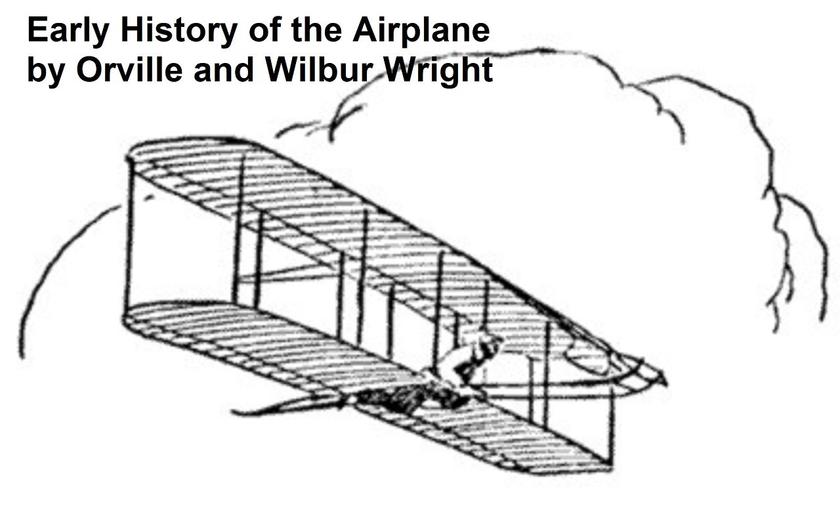
First-hand account of the invention of the airplane by Orville and Wilbur Wright. The book begins: "THOUGH the subject of aerial navigation is generally considered new, it has occupied the minds of men more or less from the earliest ages. Our personal interest in it dates from our childhood days. Late in the autumn of 1878 our father came into the house one evening with some object partly concealed in his hands, and before we could see what it was, he tossed it into the air. Instead of falling to the floor, as we expected, it flew across the room, till it struck the ceiling, where it fluttered awhile, and finally sank to the floor."
The Six Comedies of Terence
¥8.09
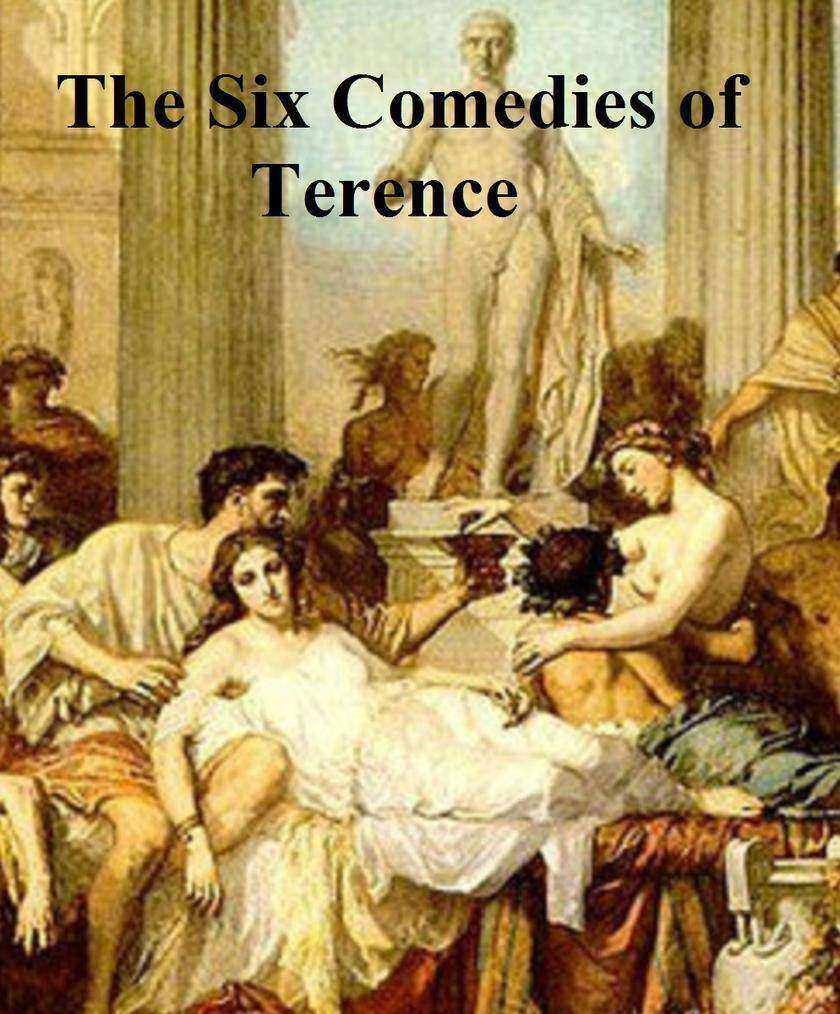
Six comedies by the Roman dramatist, in English translation: Andria; or, the Fair Andrian; Eunuchus; or, the Eunuch; Heautontimorumenos; or, the Self-Tormentor; Adelphi; or, the Brothers; Hecyra; the Mother-in-law; and Phormio; or, the Scheming Parasite.
Essays on Mankind
¥8.09
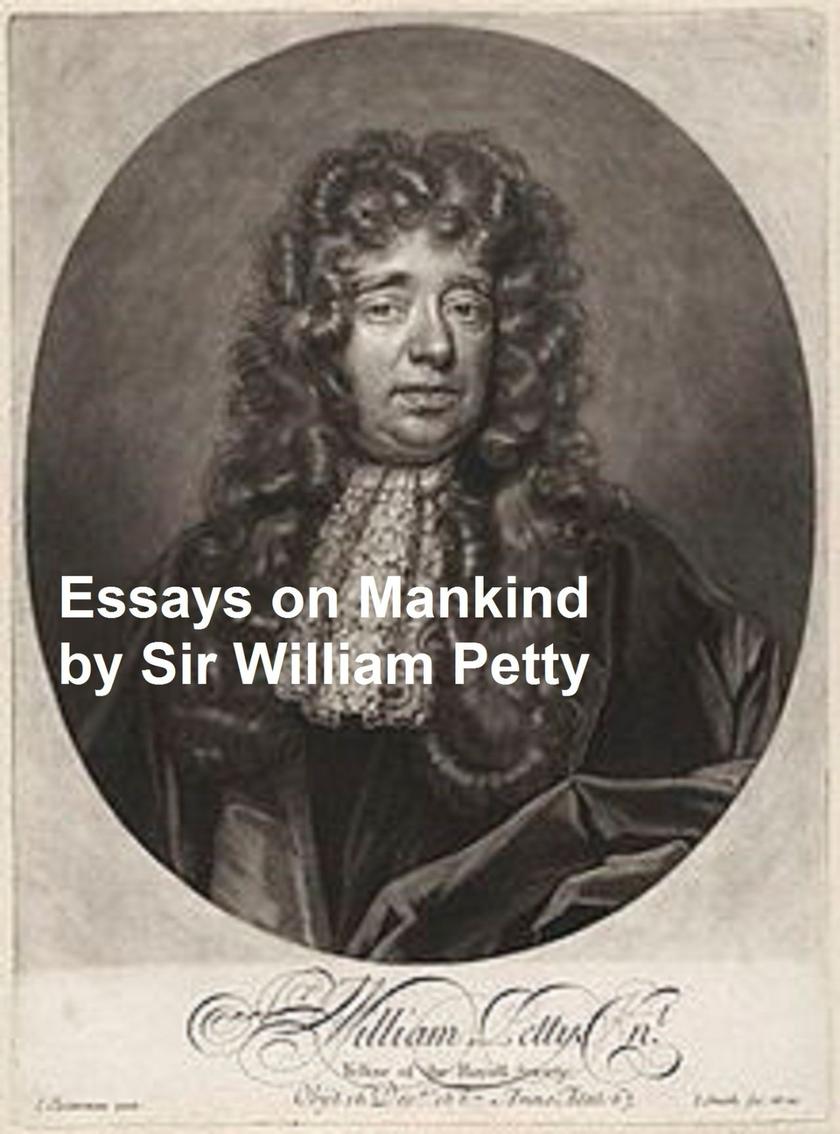
This work, first published around 1680, resembles the work of Malthus on the implications of population growth, which was written more than a hundred years later. According to Wikipedia: "Sir William Petty (26 May 1623 – 16 December 1687) was an English economist, scientist and philosopher. He first became prominent serving Oliver Cromwell and Commonwealth in Ireland. He developed efficient methods to survey the land that was to be confiscated and given to Cromwell's soldiers. He also managed to remain prominent under King Charles II and King James II, as did many others who had served Cromwell. He was Member of the Parliament of England briefly and was also a scientist, inventor, and entrepreneur, and was a charter member of the Royal Society. It is for his theories on economics and his methods of political arithmetic that he is best remembered, however, and to him is attributed the philosophy of 'laissez-faire' in relation to government activity. He was knighted in 1661."
Practical Instruction for Detectives
¥8.09
First published in 1916. According to the Preface: " Having been connected for many years with two of the largest and most successful private detective agencies in this country, both as an operator and as an official, and having been requested to outline briefly and concisely the most modern and up-to-date methods employed by leading detectives and private detective agencies of today, I shall confine myself in these pages to facts and a few personal experiences. I will endeavor to show that any person possessed of average intelligence, and who will use good common sense, can become a successful detective, regardless of his present or previous occupation."
Opportunities in Aviation
¥8.09
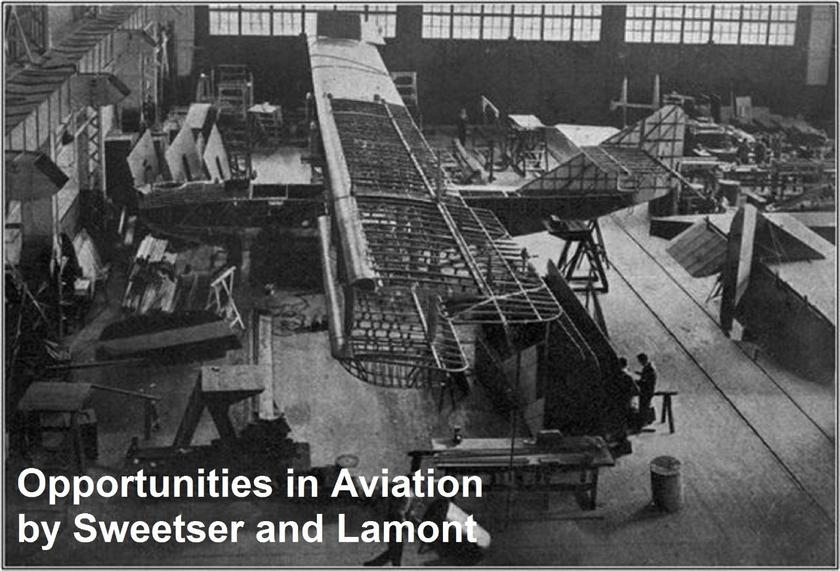
First published in 1920. Job opportunities in aviation soon after World War I. "Any ordinary, active man, provided he has reasonably good eyesight and nerve, can fly, and fly well. If he has nerve enough to drive an automobile through the streets of a large city, and perhaps argue with a policeman on the question of speed limits, he can take himself off the ground in an airplane, and also land—a thing vastly more difficult and dangerous. We hear a great deal about special tests for the flier—vacuum-chambers, spinning-chairs, co-ordination tests—there need be none of these. The average man in the street, the clerk, the laborer, the mechanic, the salesman, with proper training and interest can be made good, if not highly proficient pilots. If there may be one deduction drawn from the experience of instructors in the Royal Air Force, it is that it is the training, not the individual, that makes the pilot."


