


 购物车
购物车 个人中心
个人中心

The Bobbsey Twins at Meadow Brook
¥8.09
According to Wikipedia: "Laura Lee Hope is a pseudonym used by the Stratemeyer Syndicate for the Bobbsey Twins and several other series of children's novels. Actual writers taking up the pen of Laura Lee Hope include Edward Stratemeyer, Howard and Lilian Garis, Elizabeth Ward, Harriet (Stratemeyer) Adams, and Nancy Axelrad. Laura Lee Hope was first used as a pseudonym in 1904 for the debut of the Bobbsey Twins. Series: The Bobbsey Twins (1904-), The Outdoor Girls (23 vols. 1913-1933), The Moving Picture Girls (7 vols. 1914-1916), Bunny Brown (20 vols. 1916-1931), Six Little Bunkers (14 vols. 1918-1930), Make Believe Stories (12 vols. c. 1920-1923), Blythe Girls (12 vols. 1925-1932)."
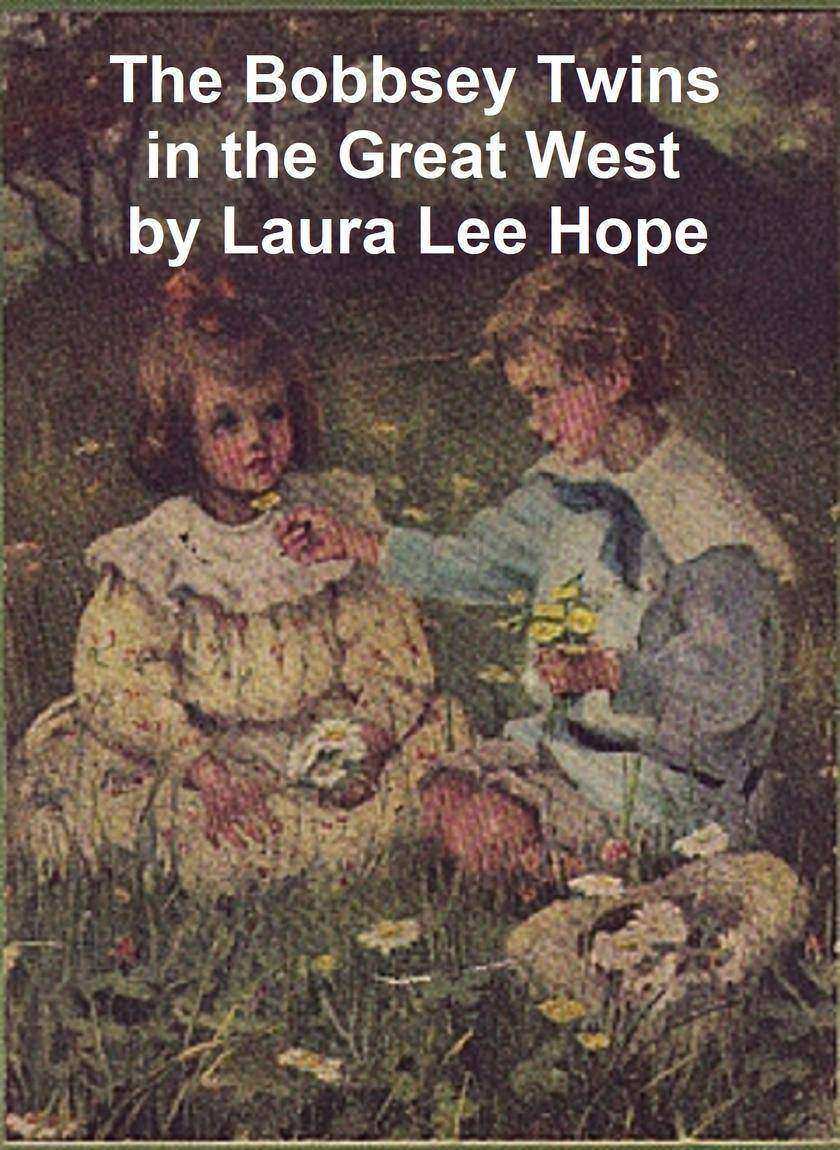
The Bobbsey Twins in the Great West
¥8.09
According to Wikipedia: "Laura Lee Hope is a pseudonym used by the Stratemeyer Syndicate for the Bobbsey Twins and several other series of children's novels. Actual writers taking up the pen of Laura Lee Hope include Edward Stratemeyer, Howard and Lilian Garis, Elizabeth Ward, Harriet (Stratemeyer) Adams, and Nancy Axelrad. Laura Lee Hope was first used as a pseudonym in 1904 for the debut of the Bobbsey Twins. Series: The Bobbsey Twins (1904-), The Outdoor Girls (23 vols. 1913-1933), The Moving Picture Girls (7 vols. 1914-1916), Bunny Brown (20 vols. 1916-1931), Six Little Bunkers (14 vols. 1918-1930), Make Believe Stories (12 vols. c. 1920-1923), Blythe Girls (12 vols. 1925-1932)."
The Purchase Price Or the Cause of Compromise
¥8.09
Classic western. According to Wikipedia: "Emerson Hough (1857-1923) was an American author, best known for writing western stories. Hough was born in Newton, Iowa, and graduated from the University of Iowa with a law degree. He moved to White Oaks, New Mexico, and practiced law there but eventually turned to literary work by taking camping trips and writing about them for publication. He is best known as a novelist, writing The Mississippi Bubble as well as The Covered Wagon, about Oregon Trail pioneers, which later became successful as a movie, running 59 weeks at the Criterion Theater in New York City, passing the record set by Birth of a Nation. Other notable works included Story of the Cowboy, Way of the West, Singing Mouse Stories, and Passing of the Frontier, and writing the "Out-of-Doors" column for the Saturday Evening Post."
Tangled Trails, A Western Detective Story
¥8.09
Classic western novel, first published in 1921. According to Wikipedia: "William MacLeod Raine (1871—1954), was a British-born American novelist who wrote fictional adventure stories about the American Old West.."
A Texas Ranger
¥8.09
Classic western novel, first published in 1910. "How a member of the border police saved the life of an innocent man, followed a fugitive to Wyoming, and then passed through deadly peril to ultimate happiness." William MacLeod Raine (1871—1954), was a British-born American novelist who wrote fictional adventure stories about the American Old West.
Love Stories
¥8.09
According to Wikipedia: "Mary Roberts Rinehart (August 12, 1876-September 22, 1958) was a prolific author often called the American Agatha Christie.[1] She is considered the source of the phrase "The butler did it", although she did not actually use the phrase herself, and also considered to have invented the "Had-I-But-Known" school of mystery writing.... Rinehart wrote hundreds of short stories, poems, travelogues and special articles. Many of her books and plays, such as The Bat (1920) were adapted for movies, such as The Bat (1926), The Bat Whispers (1930), and The Bat (1959). While many of her books were best-sellers, critics were most appreciative of her murder mysteries. Rinehart, in The Circular Staircase (1908), is credited with inventing the "Had-I-But-Known" school of mystery writing. The Circular Staircase is a novel in which "a middle-aged spinster is persuaded by her niece and nephew to rent a country house for the summer. The house they choose belonged to a bank defaulter who had hidden stolen securities in the walls. The gentle, peace-loving trio is plunged into a series of crimes solved with the help of the aunt. This novel is credited with being the first in the "Had-I-But-Known" school."[3] The Had-I-But-Known mystery novel is one where the principal character (frequently female) does less than sensible things in connection with a crime which have the effect of prolonging the action of the novel. Ogden Nash parodied the school in his poem Don't Guess Let Me Tell You: "Sometimes the Had I But Known then what I know now I could have saved at least three lives by revealing to the Inspector the conversation I heard through that fortuitous hole in the floor." The phrase "The butler did it", which has become a cliché, came from Rinehart's novel The Door, in which the butler actually did do it, although that exact phrase does not actually appear in the work."
Wyoming, A Story of the Outdoor West
¥8.09
Classic western novel, first published in 1908. "In this vivid story the author brings out the turbid life of the frontier with all its engaging dash and vigor. According to Wikipedia: "William MacLeod Raine (1871—1954), was a British-born American novelist who wrote fictional adventure stories about the American Old West.."
The Man in Lower Ten
¥8.09
According to Wikipedia: "Mary Roberts Rinehart (August 12, 1876-September 22, 1958) was a prolific author often called the American Agatha Christie.[1] She is considered the source of the phrase "The butler did it", although she did not actually use the phrase herself, and also considered to have invented the "Had-I-But-Known" school of mystery writing.... Rinehart wrote hundreds of short stories, poems, travelogues and special articles. Many of her books and plays, such as The Bat (1920) were adapted for movies, such as The Bat (1926), The Bat Whispers (1930), and The Bat (1959). While many of her books were best-sellers, critics were most appreciative of her murder mysteries. Rinehart, in The Circular Staircase (1908), is credited with inventing the "Had-I-But-Known" school of mystery writing. The Circular Staircase is a novel in which "a middle-aged spinster is persuaded by her niece and nephew to rent a country house for the summer. The house they choose belonged to a bank defaulter who had hidden stolen securities in the walls. The gentle, peace-loving trio is plunged into a series of crimes solved with the help of the aunt. This novel is credited with being the first in the "Had-I-But-Known" school."[3] The Had-I-But-Known mystery novel is one where the principal character (frequently female) does less than sensible things in connection with a crime which have the effect of prolonging the action of the novel. Ogden Nash parodied the school in his poem Don't Guess Let Me Tell You: "Sometimes the Had I But Known then what I know now I could have saved at least three lives by revealing to the Inspector the conversation I heard through that fortuitous hole in the floor." The phrase "The butler did it", which has become a cliché, came from Rinehart's novel The Door, in which the butler actually did do it, although that exact phrase does not actually appear in the work."
Sight Unseen
¥8.09
According to Wikipedia: "Mary Roberts Rinehart (August 12, 1876-September 22, 1958) was a prolific author often called the American Agatha Christie.[1] She is considered the source of the phrase "The butler did it", although she did not actually use the phrase herself, and also considered to have invented the "Had-I-But-Known" school of mystery writing.... Rinehart wrote hundreds of short stories, poems, travelogues and special articles. Many of her books and plays, such as The Bat (1920) were adapted for movies, such as The Bat (1926), The Bat Whispers (1930), and The Bat (1959). While many of her books were best-sellers, critics were most appreciative of her murder mysteries. Rinehart, in The Circular Staircase (1908), is credited with inventing the "Had-I-But-Known" school of mystery writing. The Circular Staircase is a novel in which "a middle-aged spinster is persuaded by her niece and nephew to rent a country house for the summer. The house they choose belonged to a bank defaulter who had hidden stolen securities in the walls. The gentle, peace-loving trio is plunged into a series of crimes solved with the help of the aunt. This novel is credited with being the first in the "Had-I-But-Known" school."[3] The Had-I-But-Known mystery novel is one where the principal character (frequently female) does less than sensible things in connection with a crime which have the effect of prolonging the action of the novel. Ogden Nash parodied the school in his poem Don't Guess Let Me Tell You: "Sometimes the Had I But Known then what I know now I could have saved at least three lives by revealing to the Inspector the conversation I heard through that fortuitous hole in the floor." The phrase "The butler did it", which has become a cliché, came from Rinehart's novel The Door, in which the butler actually did do it, although that exact phrase does not actually appear in the work."
The Desert of Wheat
¥8.09
Classic Western. According to Wikipedia: "Zane Grey (1872 – 1939) was an American author best known for his popular adventure novels and stories that presented an idealized image of the rugged Old West. As of June 2007, the Internet Movie Database credits Grey with 110 films, one TV episode, and a series, Dick Powell's Zane Grey Theater based loosely on his novels and short stories."
The Truce of God
¥8.09
According to Wikipedia: "Mary Roberts Rinehart (August 12, 1876-September 22, 1958) was a prolific author often called the American Agatha Christie.[1] She is considered the source of the phrase "The butler did it", although she did not actually use the phrase herself, and also considered to have invented the "Had-I-But-Known" school of mystery writing.... Rinehart wrote hundreds of short stories, poems, travelogues and special articles. Many of her books and plays, such as The Bat (1920) were adapted for movies, such as The Bat (1926), The Bat Whispers (1930), and The Bat (1959). While many of her books were best-sellers, critics were most appreciative of her murder mysteries. Rinehart, in The Circular Staircase (1908), is credited with inventing the "Had-I-But-Known" school of mystery writing. The Circular Staircase is a novel in which "a middle-aged spinster is persuaded by her niece and nephew to rent a country house for the summer. The house they choose belonged to a bank defaulter who had hidden stolen securities in the walls. The gentle, peace-loving trio is plunged into a series of crimes solved with the help of the aunt. This novel is credited with being the first in the "Had-I-But-Known" school."[3] The Had-I-But-Known mystery novel is one where the principal character (frequently female) does less than sensible things in connection with a crime which have the effect of prolonging the action of the novel. Ogden Nash parodied the school in his poem Don't Guess Let Me Tell You: "Sometimes the Had I But Known then what I know now I could have saved at least three lives by revealing to the Inspector the conversation I heard through that fortuitous hole in the floor." The phrase "The butler did it", which has become a cliché, came from Rinehart's novel The Door, in which the butler actually did do it, although that exact phrase does not actually appear in the work."
Tales of Lonely Trails
¥8.09
Classic Western. According to Wikipedia: "Zane Grey (1872 – 1939) was an American author best known for his popular adventure novels and stories that presented an idealized image of the rugged Old West. As of June 2007, the Internet Movie Database credits Grey with 110 films, one TV episode, and a series, Dick Powell's Zane Grey Theater based loosely on his novels and short stories."
Ronicky Doone
¥8.09
Classic western. According to Wikipedia: "Frederick Schiller Faust (May 29, 1892 - May 12, 1944) was an American fiction author known primarily for his thoughtful and literary Westerns. Faust wrote mostly under pen names, and today is primarily known by one, Max Brand. Others include George Owen Baxter, Evan Evans, David Manning, John Frederick, Peter Morland, George Challis, and Frederick Frost. ... Faust managed a massive outpouring of fiction, rivaling Edgar Wallace and especially Isaac Asimov as one of the most prolific authors of all time. He wrote more than 500 novels for magazines and almost as many stories of shorter length. His total literary output is estimated to have been between 25,000,000 and 30,000,000 words. Most of his books and stories were turned out at breakneck rate, sometimes as quickly as 12,000 words in the course of a weekend. New books based on magazine serials or unpublished manuscripts or restored versions continue to appear so that he has averaged a new book every four months for seventy-five years. Beyond this, some work by him is newly reprinted every week of every year in one or another format somewhere in the world."
The Gray Dawn
¥8.09
Classic western. According to Wikipedia: "Stewart Edward White (12 March 1873 – September 18, 1946) was an American author. Born in Grand Rapids, Michigan he earned degrees from University of Michigan (Ph.D., 1895; M.A., 1903). From about 1900 until about 1922, he wrote adventure travel books."
The Mountains
¥8.09
Classic western. According to Wikipedia: "Stewart Edward White (12 March 1873 – September 18, 1946) was an American author. Born in Grand Rapids, Michigan he earned degrees from University of Michigan (Ph.D., 1895; M.A., 1903). From about 1900 until about 1922, he wrote adventure travel books."
The Riverman
¥8.09
Classic western. According to Wikipedia: "Stewart Edward White (12 March 1873 – September 18, 1946) was an American author. Born in Grand Rapids, Michigan he earned degrees from University of Michigan (Ph.D., 1895; M.A., 1903). From about 1900 until about 1922, he wrote adventure travel books."
Man-Size
¥8.09
Classic western novel, first published in 1922. According to Wikipedia: "William MacLeod Raine (1871—1954), was a British-born American novelist who wrote fictional adventure stories about the American Old West.."
Ridgway of Montana, a Story of To-Day, in Which the Hero is Also the Villain
¥8.09
Classic western novel, first published in 1909. " Story of today, in which the hero is also the villain." "The scene is laid in the mining centers of Montana, where politics and mining industries are the religion of the country." According to Wikipedia: "William MacLeod Raine (1871—1954), was a British-born American novelist who wrote fictional adventure stories about the American Old West.."
Northanger Abbey
¥8.09
This parody of a gothic romance was finished in 1803, but not published until 1818, after Jane Austen's death. According to Wikipedia: "Jane Austen (1775 – 1817) was an English novelist whose realism, biting social commentary and masterful use of free indirect speech, burlesque and irony have earned her a place as one of the most widely read and most beloved writers in English literature. Austen lived her entire life as part of a small and close-knit family located on the lower fringes of English gentry. She was educated primarily by her father and older brothers as well as through her own reading. The steadfast support of her family was critical to Austen's development as a professional writer. Austen's artistic apprenticeship lasted from her teenage years until she was about thirty-five years old. During this period, she experimented with various literary forms, including the epistolary novel which she tried and then abandoned, and wrote and extensively revised three major novels and began a fourth. From 1811 until 1815, with the release of Sense and Sensibility (1811), Pride and Prejudice (1813), Mansfield Park (1814) and Emma (1815), she achieved success as a published writer. She wrote two additional novels, Northanger Abbey and Persuasion, both published after her death in 1817, and began a third, which was eventually titled Sanditon, but died before completing it."
Creatures that Once Were Men and Other Stories
¥8.09
Collection of stories, including Creatures that Once Were Men, Twenty-Six Men and a Girl, Chelkash, My Fellow-Traveler, and On a Raft. According to Wikipedia: "Aleksey Maksimovich Peshkov ( 1868 ?- 1936), better known as Maxim Gorky, was a Soviet/Russian author, a founder of the socialist realism literary method and a political activist. From 1906 to 1913 and from 1921 to 1929 he lived abroad, mostly in Capri, Italy; after his return to the Soviet Union he accepted the cultural policies of the time, although he was not permitted to leave the country."
Steve Yeager
¥8.09
Classic western novel, first published in 1915. "A story brimful of excitement, with enough gun-play and adventure to suit anyone." According to Wikipedia: "William MacLeod Raine (1871—1954), was a British-born American novelist who wrote fictional adventure stories about the American Old West.."


