


 购物车
 个人中心

Antony and Cleopatra
¥9.00
Antony and Cleopatra is a tragedy by William Shakespeare. It was first printed in the First Folio of 1623. The plot is based on Thomas North's translation of Plutarch's Life of Markus Antonius and follows the relationship between Cleopatra and Mark Antony from the time of the Parthian War to Cleopatra's suicide. The major antagonist is Octavius Caesar, one of Antony's fellow triumvirs and the future first emperor of Rome. The tragedy is a Roman play characterized by swift, panoramic shifts in geographical locations and in registers, alternating between sensual, imaginative Alexandria and the more pragmatic, austere Rome. Many consider the role of Cleopatra in this play one of the most complex female roles in Shakespeare's work. She is frequently vain and histrionic, provoking an audience almost to scorn; at the same time, Shakespeare's efforts invest both her and Antony with tragic grandeur. These contradictory features have led to famously divided critical responses.
Henry VI, Part 1
¥9.00
The First Part of King Henry the Sixth is history play by William Shakespeare, believed written in approximately 1588–1590. It is the first in the cycle of four plays often referred to as "The First Tetralogy".
Richard II
¥9.00
King Richard the Second is a history play by William Shakespeare believed to be written in approximately 1595. It is based on the life of King Richard II of England and is the first part of a tetralogy, referred to by scholars as the Henriad, followed by three plays concerning Richard's successors: Henry IV, part 1, Henry IV, part 2, and Henry V. It may not have been written as a stand-alone work.

La prueba
¥9.00
La presencia del espacio urbano de Madrid es un aspecto fundamental de esta novela; dicho espcaio acompa?a a los personajes en su pugna contra los estereotipos, el debate interior en torno a los valores éticos y morales transmitidos y el rechazo social a la mujer independiente.
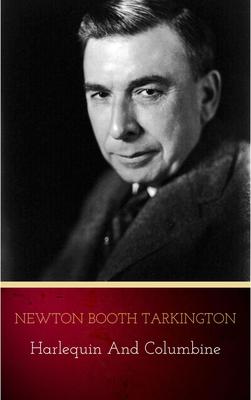
Harlequin and Columbine
¥9.00
American novelist Booth Tarkington's life spanned the period 1869-1946, giving him a unique insight into the United States as its culture underwent a number of rapid changes. In the humorous novel Harlequin and Columbine, Tarkington explores the cult of celebrity that began to flower in earnest in the early decades of the twentieth century, using the character of an egotistical actor, Talbot Potter, as the focus of his gentle but hilariously spot-on satire.
Gentle Julia
¥9.00
Penrod for girls in the form of Florence, the bratty younger cousin of luminous Julia Atwater, enlivens this romantic comedy set in Tarkington's Indiana of the early 20th Century.
The Song of the Lark
¥9.00
The Song of the Lark is the third novel by American author Willa Cather, written in 1915. It is generally considered to be the second novel in Cather's Prairie Trilogy, following O Pioneers! (1913) and preceding My ?ntonia (1918). The book tells the story of a talented artist born in a small town in Colorado who discovers and develops her singing voice. Her story is told against the backdrop of the burgeoning American West in which she was born in a town along the rail line, of fast-growing Chicago near the turn of the twentieth century, and of the audience for singers of her skills in the US compared to Europe. Thea Kronborg grows up, learning herself, her strengths and her talent, until she reaches success. The title comes from a painting of the same name by Jules Breton in 1884 and part of the collection of the Art Institute of Chicago.
My ?ntonia
¥9.00
My ?ntonia (first published 1918) is considered the greatest novel by American writer Willa Cather. My ?ntonia — pronounced with the accent on the first syllable of "?ntonia" — is the final book of the "prairie trilogy" of novels by Cather, a list that also includes O Pioneers! and The Song of the Lark.My ?ntonia tells the stories of several immigrant families who move out to rural Nebraska to start new lives in America, with a particular focus on a Bohemian family, the Shimerdas, whose eldest daughter is named ?ntonia.
Erewhon, or Over The Range
¥9.00
Erewhon: or, Over the Range is a novel by Samuel Butler which was first published anonymously in 1872. The title is also the name of a country, supposedly discovered by the protagonist. In the novel, it is not revealed where Erewhon is, but it is clear that it is a fictional country. Butler meant the title to be understood as the word "nowhere" backwards even though the letters "h" and "w" are transposed. The book is a satire on Victorian society. The first few chapters of the novel dealing with the discovery of Erewhon are in fact based on Butler's own experiences in New Zealand where, as a young man, he worked as a sheep farmer on Mesopotamia Station for about four years (1860–64), and explored parts of the interior of the South Island and which he wrote about in his A First Year in Canterbury Settlement (1863).
The Silver Key
¥9.00
"The Silver Key" is a short story written by H.P. Lovecraft in 1926, considered part of his Dreamlands series. Randolph Carter discovers, at the age of 30, that he has gradually "lost the key to the gate of dreams." As he ages, he finds that his daily waking exposure to the more "practical", scientific ideas of man, has eventually eroded his ability to dream as he once did, and has made him regretfully subscribe more and more to the mundane beliefs of everyday, waking "real life". But still not certain which is truer, he sets out to determine whether the waking ideas of man are superior to his dreams.
The Shadow out of Time
¥9.00
"The Shadow Out of Time" indirectly tells of the Great Race of Yith, an extraterrestrial species with the ability to travel through space and time. The Yithians accomplish this by switching bodies with hosts from the intended spatial or temporal destination. The story implies that the effect when seen from the outside is similar to spiritual possession.
The Quest of Iranon
¥9.00
"The Quest of Iranon" is a short story by H. P. Lovecraft. It was written on February 28, 1921, and was first published in the July/August 1935 issue of the magazine Galleon. The story is about a golden-haired youth who wanders into the city of Teloth, telling tales of the great city of Aira, where he was prince. While Iranon enjoys singing and telling his tales of wonder, few appreciate it. When a disenfranchised boy named Romnod suggests leaving Teloth to go to the famed city of Oonai (which he thinks may be Aira, now under a different name), Iranon takes him up on his offer.
Pickman's Model
¥9.00
"Pickman's Model" is a short story by H. P. Lovecraft, written in September 1926 and first published in the October 1927 issue of Weird Tales. The story revolves around a Bostonian painter named Richard Upton Pickman who creates horrifying images. His works are brilliantly executed, but so graphic that they result in his membership in the Boston Art Club being revoked and himself shunned by his fellow artists.
Die künstlichen Paradiese
¥9.00
Die Werke des franz?sischen Dichters Charles Baudelaire (1821-1867) inspirieren bis heute Künstler auf der ganzen Welt. Sein Essay Die künstlichen Paradiese von 1860 ist ein leidenschaftliches Pl?doyer für den Rausch, die F?higkeit und Bereitschaft zum Ausnahmezustand des Geistes und der Sinne.
Winnetou 4
¥9.00
Der Schriftsteller Karl May erh?lt in Radebeul Post aus Amerika und bricht daraufhin mit seiner Frau, dem Herzle, zu seiner letzten Reise dorthin auf. Seinem Blutsbruder Winnetou soll ein Denkmal gesetzt werden. Karl May / Old Shatterhand trifft alte Bekannte, deren Nachwuchs und zahlreiche symbolreiche Handlungstr?ger und kann den Bau des Monumentaldenkmals gerade noch abwenden. Der Band kommt in Gestalt der alten Reiseberichte daher, aber doch ist vieles anders geworden. Die Gewehre hat Old Shatterhand zwar immer noch (oder wieder) dabei, sie werden aber nicht mehr gebraucht und sind auch deshalb fast die ganze Zeit im Gep?ck. Nicht mehr mit der "Schmetterhand" werden die "Feinde" besiegt, sondern h?chstens noch durch List und die Gewalt des Wortes. Ganz im Friedensgedanken seiner Sp?twerke werden am Ende alle "Feindschaften" mit den alten Widersachern des Westens in Freundschaft aufgel?st. Sogar die zum Hauptschurken Santer stellvertretend mit dessen S?hnen.
Durch das Land der Skipetaren
¥9.00
Durch das Land der Skipetaren folgen Kara Ben Nemsi und seine Gef?hrten den Spuren der Verbrecher. Dabei begegnen sie unversehens den beiden gefürchteten "Aladschy", gelangen zur "Schluchthütte", die ihnen zur Falle werden soll, und erleben eine ebenso dramatische wie lustige Episode im "Turm der alten Mutter".
The Guest of Quesnay
¥9.00
Alongside William Faulkner and John Updike, Booth Tarkington is one of just three authors to win the Pulitzer Prize more than once. Tarkington accomplished the feat with Alice Adams and The Magnificent Ambersons, dramas that explored the lives of fictional characters who live in a setting similar to the one Tarkington experienced in Indianapolis. Tarkington continues to garner praise for his works' historical realism.
Ibid
¥9.00
"Ibid" is a mock biography of the Roman scholar Ibidus (486-587), whose masterpiece was Op. Cit., "wherein all the significant undercurrents of Graeco-Roman thought were crystallized once and for all." The piece traces the skull of Ibidus, once the possession of Charlemagne, William the Conqueror and other notables, to the United States, where it travels via Salem, Massachusetts and Providence, Rhode Island to a prairie dog hole in Milwaukee, Wisconsin.
The Hound
¥9.00
"The Hound" is a short story written by H. P. Lovecraft in September 1922 and published in the February 1924 issue of Weird Tales. It contains the first mention of Lovecraft's fictional text the Necronomicon, The story focuses around the narrator and his friend St. John, who have a deranged interest in robbing graves. They constantly defile crypts and often keep souvenirs of their nocturnal expeditions. Since they reside in the same house, they have the opportunity to set up a sort of morbid museum in their basement. Using the objects they collect from the various graves they have robbed, they organize the private exhibition. The collection consists of headstones, preserved bodies, skulls, and several heads in different phases of decomposition. It also included statues, frightful paintings, and a locked portfolio bound in tanned human-skin.

Timon d'athènes.
¥9.00
Timon est un noble de d'Athènes, très (trop) généreux avec ses amis qu'il invite régulièrement à des festins somptueux, auxquels il offre des cadeaux hors de prix, à tel point qu'il se retrouve un jour sur la paille et ne peut plus payer ses créanciers. S?r de la qualité de l'amitié, il se tourne vers ceux à qui il fait moultes cadeaux pour leur demander de l'aide. Ceux-ci trouvent mille excuses pour ne pas aider Timon qui sombre dans la colère envers Athènes et ses nobles, s'exile dans les bois, et maudit la ville et ses habitants hypocrites et avilis par l'app?t de l'or. De son c?té, Alcibiade, général athénien, se voit refuser l'aide du Sénat, quitte la ville avec son armée pour mieux l'assiéger ensuite. Il essaie d'obtenir le soutien de Timon exilé qui le maudit aussi et fait finalement la paix avec les sénateurs. Timon meurt seul dans les bois laissant pour épitaphe une dernière malédiction pour qui la lira.
The Cats of Ulthar
¥9.00
The Cats of Ulthar" is a short story written by American fantasy author H. P. Lovecraft in June 1920. In the tale, an unnamed narrator relates the story of how a law forbidding the killing of cats came to be in a town called Ulthar. As the narrative goes, the city is home to an old couple who enjoy capturing and killing the townspeople's cats. When a caravan of wanderers passes through the city, the kitten of an orphan (Menes) traveling with the band disappears. Upon hearing of the couple's violent acts towards cats, Menes invokes a prayer before leaving town that causes the local felines to swarm the cat-killers' house and devour them. Upon witnessing the result, the local politicians pass a law forbidding the killing of cats.


