


 购物车
 个人中心

The Temple
¥9.00
"The Temple" is a short story written by H. P. Lovecraft in 1920, and first published in the pulp magazine Weird Tales in February 1925. It was the first story Lovecraft published in Weird Tales, and indeed was his first publication in any professional outlet. The story is narrated as a "found manuscript" penned by Karl Heinrich, Graf von Altberg-Ehrenstein, a Lieutenant Commander in the Imperial German Navy during the days of World War I. It documents his untimely end at the bottom of the ocean
Supernatural Horror in Literature
¥9.00
Great modern American supernaturalist brilliantly surveys history of genre to 1930s, summarizing, evaluating scores of books, including works by Poe, Bierce, M.R. James, "Monk" Lewis, many others. Praised by critics as diverse as Edmund Wilson and Vincent Starrett.

The Other Gods
¥9.00
A high priest and prophet greatly learned in the lore of the gods of earth attempts to scale the mountain of Hatheg-Kla in order to look upon their faces, accompanied by his young disciple. But the gods of the earth are not there alone.
Nyarlathotep
¥9.00
Presents horror legend HP Lovecraft's short prose piece Nyarlathotep. This book presents Lovecraft's original poem in its entirety and also features a visual interpretation.
The Music of Erich Zann
¥9.00
"The Music of Erich Zann" is a short story by American author H. P. Lovecraft. Written in December 1921, it was first published in National Amateur, March 1922. A university student is forced, by his lack of funds, to take the only lodging he can afford. In a strange part of the city he had never seen before, on a street named "Rue d'Auseil", he finds an apartment in an almost empty building. One of the few other tenants is an old German man named Erich Zann. The old man is mute and plays the viol with a local orchestra. He lives on the top floor and when alone at night, plays strange melodies never heard before.
The Evil Clergyman
¥9.00
"The Evil Clergyman" is an excerpt from a letter written by American horror fiction writer H. P. Lovecraft in 1933. After his death, it was published in the April 1939 issue of Weird Tales as a short story. The story was later adapted into the unreleased 1987 anthology film Pulse Pounders. The story begins in the attic of an ancient house. The narrator’s companion refers to the former owner of the house and the presumably violent end that befell him. He advises the narrator not to stay after dark or touch anything, especially the small object on a table, which the companion seems to fear considerably.
The Dream-Quest of Unknown Kadath
¥9.00
Randolph Carter dreams three times of a majestic sunset city, but each time he is abruptly snatched away before he can see it up close. When he prays to the gods of dream to reveal the whereabouts of the phantasmal city, they do not answer, and his dreams of the city stop altogether. Undaunted, Carter resolves to go to Kadath, where the gods live, to beseech them in person. However, no one has ever been to Kadath and none even knows how to get there. In dream, Randolph Carter descends "the seventy steps to the cavern of flame" and speaks of his plan to the priests Nasht and Kaman-Thah, whose temple borders the Dreamlands. The priests warn Carter of the great danger of his quest and suggest that the gods withdrew his vision of the city on purpose.
The Doom That Came to Sarnath
¥9.00
"The Doom that Came to Sarnath" (1920) is a fantasy short story by American writer H. P. Lovecraft. It is written in a mythic/fantasy style and is associated with his Dream Cycle. It was first published in The Scot, a Scottish amateur fiction magazine, in June 1920. According to the tale, more than 10,000 years ago, a race of shepherd people colonized the banks of the river Ai, in a land called Mnar, forming the cities of Thraa, Ilarnek, and Kadatheron (not to be confused with Kadath), which rose to great intellectual and mercantile prowess. Craving more land, a group of these hardy people migrated to the shores of a lonely and vast lake at the heart of Mnar, founding the city of Sarnath.
The Allowable Rhyme
¥9.00
A short essay about poetry, verses and metrics by the master of horror fiction H.P. Lovecraft first published in 1915.

At the Mountains of Madness
¥9.00
At the Mountains of Madness is a novella by horror writer H. P. Lovecraft, written in February/March 1931 and originally serialized in the February, March and April 1936 issues of Astounding Stories. It has been reproduced in numerous collections since Lovecraft's death. Lovecraft scholar S. T. Joshi describes the novella as representing the decisive "demythology" of the Cthulhu Mythos by reinterpreting Lovecraft's earlier supernatural stories in a science fiction paradigm.
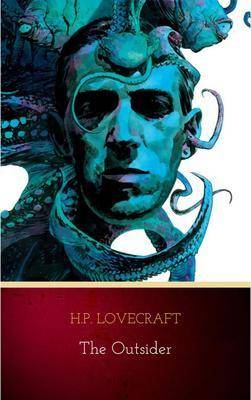
The Outsider
¥9.00
"The Outsider" is a short story by American horror writer H. P. Lovecraft. Written between March and August 1921, it was first published in Weird Tales, April 1926. In this work, a mysterious man who has been living alone in a castle for as long as he can remember decides to break free in search of human contact and light. "The Outsider" is one of Lovecraft's most commonly reprinted works and is also one of the most popular stories ever to be published in Weird Tales. "The Outsider" combines Horror, Fantasy, and Gothic Fiction to create a nightmarish story, containing themes of loneliness, the abhuman, and the afterlife. Source: Wikipedia
Romeo and Juliet
¥9.00
Romeo and Juliet is a tragic play written early in the career of William Shakespeare about two teenage "star-cross'd lovers" whose untimely deaths ultimately unite their feuding households. It was among Shakespeare's most popular plays during his lifetime and, along with Hamlet, is one of his most frequently performed plays. Today, the title characters are regarded as archetypal "young lovers".
Much Ado About Nothing
¥9.00
Much Ado About Nothing is a comedy by William Shakespeare. First published in 1600, it is likely to have been first performed in the autumn or winter of 1598-1599, and it remains one of Shakespeare's most enduring and exhilarating plays on stage. Stylistically, it shares numerous characteristics with modern romantic comedies including the two pairs of lovers, in this case the romantic leads, Claudio and Hero, and their comic counterparts, Benedick and Beatrice.
As You Like It
¥9.00
As You Like It is a pastoral comedy by William Shakespeare based on the novel Rosalynde by Thomas Lodge, believed to have been written in 1599 or early 1600. It features one of Shakespeare's most famous and oft-quoted lines, "All the world's a stage", and has been adapted for radio, film, and musical theatre.
Henry VIII
¥9.00
The Famous History of the Life of King Henry the Eighth is a history play by William Shakespeare, based on the life of Henry VIII of England. An alternative title, All is True, is recorded in contemporary documents, the title Henry VIII not appearing until the play's publication in the First Folio of 1623. Stylistic evidence indicates that the play was written by Shakespeare in collaboration with, or revised by, his successor, John Fletcher. It is also somewhat characteristic of the late romances in its structure.
The Curse of Yig
¥9.00
"The Curse of Yig" is a short story by H. P. Lovecraft and Zealia Bishop in which Yig, "The Father of Serpents", is first introduced.
The Beast in the Cave
¥9.00
A man touring a Mammoth Cave separates from his guide and becomes lost. His torch expires and he is giving up hope of finding a way out in the pitch dark, when he hears strange non-human footsteps approaching him. Thinking it to be a lost mountain lion or other such beast, he picks up a stone and throws it toward the source of the sound. The beast is hit and crumples to the floor. The guide finds the protagonist, and together they examine the fallen creature with the guide's torchlight. The creature mutters in its last breaths and they see its face, discovering that it is in fact a pale, deformed human, who had also become lost in the cave many years ago.
The Fugitive
¥9.00
In the sixth volume of the series fitting seems that Proust's past actions conclude with a fair resolution. The captive is now the fugitive. Like in previous volumes, envy and distrusts eventually reveals unsuspected and unwanted revelations that leads Proust to reconcile himself with his melancholy. But unfortunately happiness still running away for him, and the marriage of his once good friends face him against his own misery which he tries to cover with indifference.
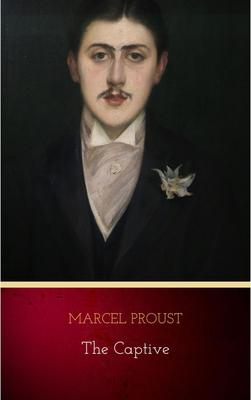
The Captive
¥9.00
In The Captive, Proust’s narrator describes living in his mother’s Paris apartment with his lover, Albertine, and subsequently falling out of love with her.

Un viaje de novios
¥9.00
Escrita en la ?década prodigiosa? de la narrativa espa?ola del XIX esta novela supuso una primera aproximación a los dominios del realismo-naturalismo. A caballo entre la novela y el cuaderno de viaje, la obra narra las ingratas consecuencias del desatinado matrimonio entre un funcionario oportunista y cuarentón y una joven provinciana e inexperta, Lucía, quien, tras la unión, no tarda en verse sometida al creciente divorcio entre deseo y realidad.

Do?a Milagros
¥9.00
Su modelo de “mujer del futuro” viene encarnada en el personaje de Feíta, hija de don Benicio Neira, un hidalgo venido a menos, situado en la clase media, cuya hija alberga unos inmensos deseos de instrucción, de autonomía personal, de trabajo para independizarse… que la alejan de las “se?oritas” de su clase y del resto de sus hermanas.


