购物车
 个人中心


世界经典童话:灰姑娘(日文版)
¥3.00
灰姑娘是一个童话故事中的角色,原在欧洲民间广为流传,后来才由法国作家夏尔·佩罗和德国的格林兄弟加以采集编写。灰姑娘的故事向我们传达了这么一个人生历练过程——在任何嘲讽、刁难和欺凌之下,都要吃苦耐劳,忍辱负重地活着,即使极度艰难困苦只要心怀对美好未来的无限憧憬,保持善良与积极的心态,终是会获得幸福生活的。全书为日文版。难词标注假名,供日语学习者学习使用。

世界经典童话:美人鱼(日文版)
¥3.00
《美人鱼的故事》选自安徒生童话,是安徒生先生在1837年的作品。讲述了人鱼公主和王子从相见到相爱再到无法在一起的凄美爱情故事。本故事为世界经典童话之一。故事情节为普通读者熟知。全书为日文版。难词标注假名,供日语学习者学习使用。

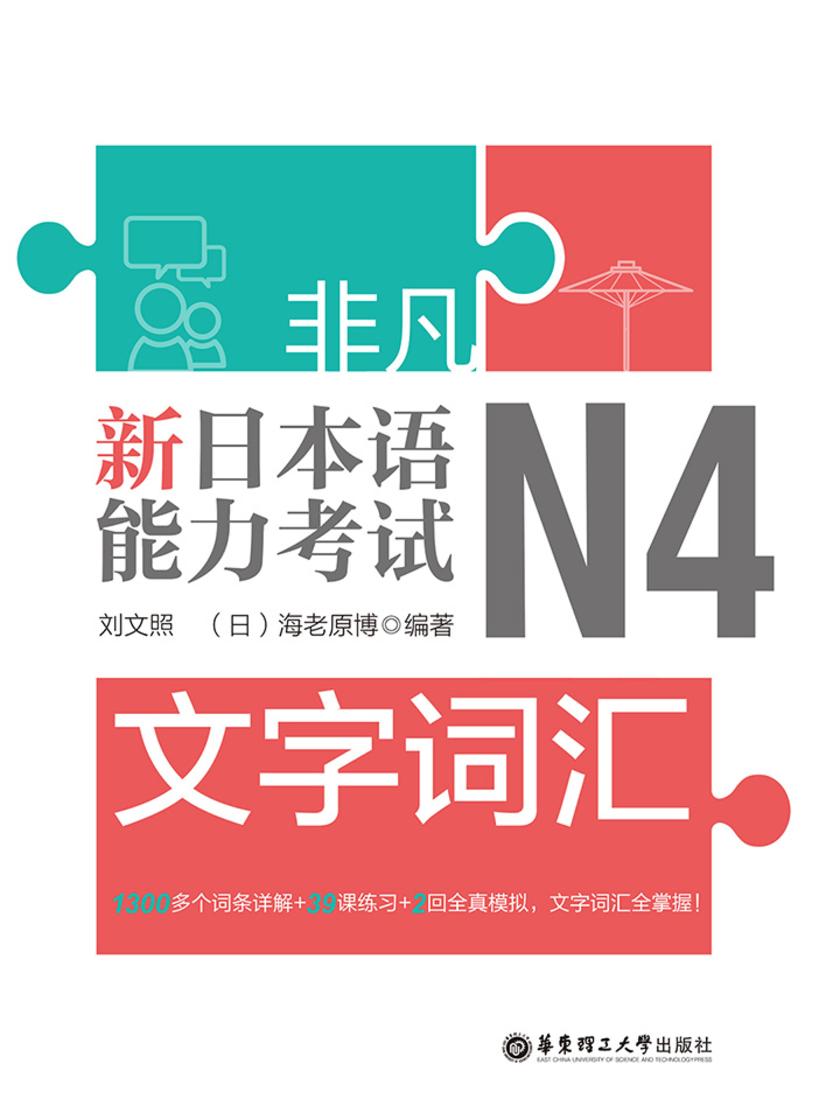
非凡.新日本语能力考试.N4文字词汇
¥29.80
一、正文。正文按场景分类,每个大类中又分若干小项,如“人的身体”中包含“全身”“伤病”“医疗”等小项,这样能让学习者在把握出题范围的同时,了解各个类别中的近义词表达。正文中的例句简短、精练。通过对例句的学习,学习者可以掌握单词*核心的用法。全书所有例句均标注注音假名,以便学习者学习。二、课后练习。练习不仅采用了出题形式中的题型,还根据学习需要,增加了“汉字书写”“读音书写”“词语搭配”等题型,从而帮助学习者更全面地掌握词语的应用知识。三、模拟试题。选择出题频率高的词汇作为考查对象,有助于学习者有效检验和评价自己的学习效果和实战能力。

日本经典童话:老鼠嫁女
¥3.00
本故事为日本经典童话之一,起源于中国。老鼠嫁女又称鼠娶亲、鼠纳妇、老鼠娶亲等,这一古老的传统民间传说在中国很流行。故事情节为普通读者熟知。全书为日文版。难词标注假名,供日语学习者学习使用。

志怪小说:促织(日文版)
¥3.00
本故事为蒲松龄创作的聊斋志异作品之一。国内风行都促织,皇帝也喜欢,于是官府把上交促织作为任务摊派下去。成名(主人公)也被摊派。官府要求的促织规定很高,成名一时做不到合乎规格的促织,非常着急。于是他老婆就去一个巫神那里问卜。巫神给了她一幅画,上面画的野外的一座荒房什么的。成名觉得是指点捕捉促织的地点,就按图索骥,结果抓到一只非常好的促织,他很高兴,就把促织放起来,准备第二天交上去。结果他的小儿子,偷偷拿这只促织和别的小孩去玩,让促织跑了。儿子知道这只促织对父亲的意义,所以非常害怕,就跳井自杀了。被人们就上来后,没有死掉,在昏迷中,儿子就变成一只小小的促织。虽然这只促织很小,但也没有办法,成名也还是把它交了上去。谁知道,这只小促织凶猛异常,胜过了所有的优等促织,甚至还咬破了公鸡的鸡冠。完成任务后,儿子也醒了过来。全书为日文版。难词标注假名,供日语学习者学习使用。

志怪小说:莲花公主(日文版)
¥3.00
本故事为蒲松龄创作的聊斋志异作品之一。窦生梦中与公主莲花成亲,又因巨蟒倾国携公主返家避难。窦生醒来筑蜂巢,引邻家群蜂来栖,梦中巨蟒即为邻家所踞之蟒。全书为日文版。难词标注假名,供日语学习者学习使用。
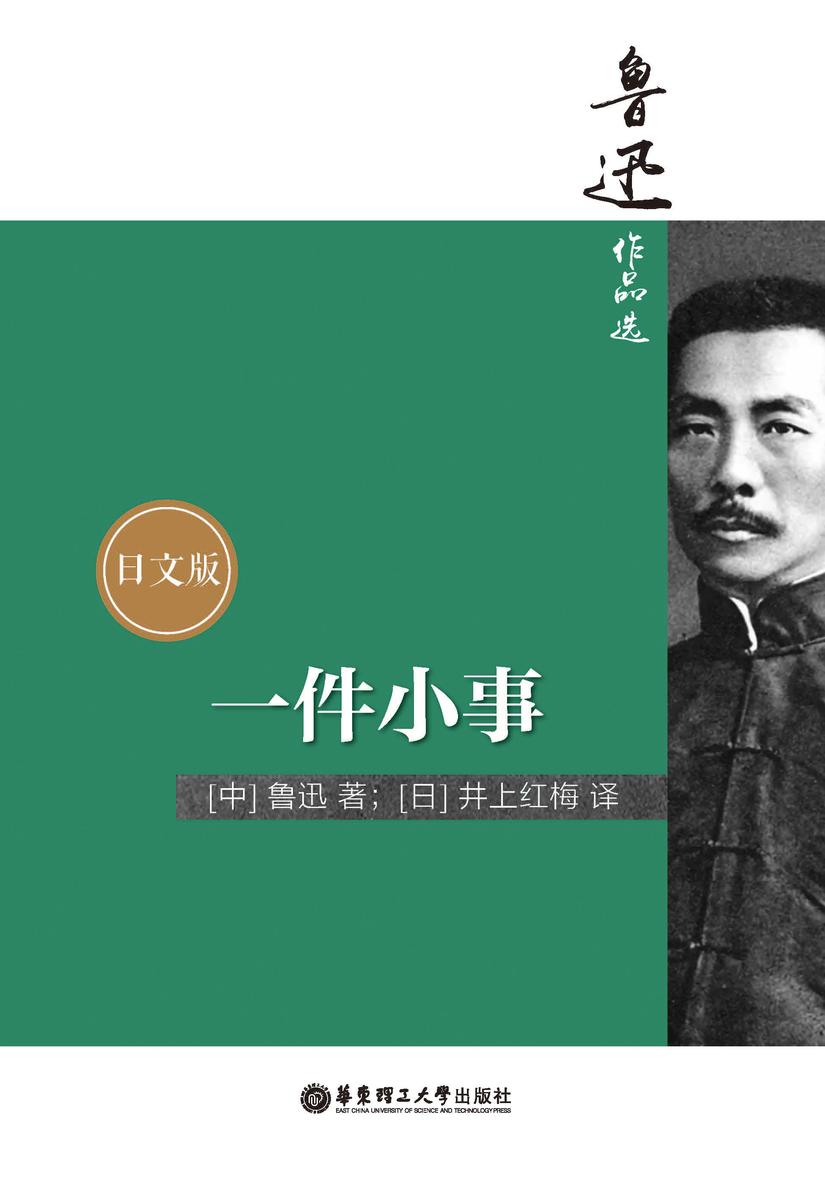
鲁迅作品选:一件小事(日文版)
¥3.00
《一件小事》叙写的是知识分子“我”从一个人力车夫身上看到生活的希望和获得改造自己力量的故事;作品以恳切真挚的笔致,描绘了人力车夫高大的正面形象,以充满热情的歌唱,抒发了作者对城市苦力工人的敬意和赞美。全书为日文版。难词标注假名,供日语学习者学习使用。
Microsoft Azure Administrator – Exam Guide AZ-103
¥70.84
Manage Microsoft Azure cloud services that span storage, security, networking, and compute cloud capabilities and ace the AZ-103 Exam Key Features * Master features and concepts pertaining to Azure's Administration services * Gain a deep understanding of various Azure services related to infrastructure, applications, and environments * Gauge yourself by giving mock tests with up-to-date exam questions Book Description Microsoft Azure Administrator – Exam Guide AZ-103 will cover all the exam objectives that will help you earn Microsoft Azure Administrator certification. Whether you want to clear AZ-103 exam or want hands-on experience in administering Azure, this study guide will help you achieve your objective. It covers the latest features and capabilities around configuring, managing, and securing Azure resources. Following Microsoft's AZ-103 exam syllabus, this guide is divided into five modules. The first module talks about how to manage Azure subscriptions and resources. You will be able to configure Azure subscription policies at Azure subscription level and learn how to use Azure policies for resource groups. Later, the book covers techniques related to implementing and managing storage in Azure. You will be able to create and configure backup policies and perform restore operations. The next module will guide you to create, configure, and deploy virtual machines for Windows and Linux. In the last two modules, you will learn about configuring and managing virtual networks and managing identities. The book concludes with effective mock tests along with answers so that you can confidently crack this exam. By the end of this book, you will acquire the skills needed to pass Exam AZ-103. What you will learn * Configure Azure subscription policies and manage resource groups * Monitor activity log by using Log Analytics * Modify and deploy Azure Resource Manager (ARM) templates * Protect your data with Azure Site Recovery * Learn how to manage identities in Azure * Monitor and troubleshoot virtual network connectivity * Manage Azure Active Directory Connect, password sync, and password writeback Who this book is for This book is for Azure administrators, systems administrators or anyone preparing for AZ 103 exam and wants to master Azure's various administration features. Readers should have proficiency in working with PowerShell, CLI and other day-to-day Azure administration tasks.
Bayesian Analysis with Python
¥81.74
Bayesian modeling with PyMC3 and exploratory analysis of Bayesian models with ArviZ Key Features *A step-by-step guide to conduct Bayesian data analyses using PyMC3 and ArviZ *A modern, practical and computational approach to Bayesian statistical modeling *A tutorial for Bayesian analysis and best practices with the help of sample problems and practice exercises. Book Description The second edition of Bayesian Analysis with Python is an introduction to the main concepts of applied Bayesian inference and its practical implementation in Python using PyMC3, a state-of-the-art probabilistic programming library, and ArviZ, a new library for exploratory analysis of Bayesian models. The main concepts of Bayesian statistics are covered using a practical and computational approach. Synthetic and real data sets are used to introduce several types of models, such as generalized linear models for regression and classification, mixture models, hierarchical models, and Gaussian processes, among others. By the end of the book, you will have a working knowledge of probabilistic modeling and you will be able to design and implement Bayesian models for your own data science problems. After reading the book you will be better prepared to delve into more advanced material or specialized statistical modeling if you need to. What you will learn *Build probabilistic models using the Python library PyMC3 *Analyze probabilistic models with the help of ArviZ *Acquire the skills required to sanity check models and modify them if necessary *Understand the advantages and caveats of hierarchical models *Find out how different models can be used to answer different data analysis questions *Compare models and choose between alternative ones *Discover how different models are unified from a probabilistic perspective *Think probabilistically and benefit from the flexibility of the Bayesian framework Who this book is for If you are a student, data scientist, researcher, or a developer looking to get started with Bayesian data analysis and probabilistic programming, this book is for you. The book is introductory so no previous statistical knowledge is required, although some experience in using Python and NumPy is expected.
Hands-On Application Penetration Testing with Burp Suite
¥81.74
Test, fuzz, and break web applications and services using Burp Suite’s powerful capabilities Key Features * Master the skills to perform various types of security tests on your web applications * Get hands-on experience working with components like scanner, proxy, intruder and much more * Discover the best-way to penetrate and test web applications Book Description Burp suite is a set of graphic tools focused towards penetration testing of web applications. Burp suite is widely used for web penetration testing by many security professionals for performing different web-level security tasks. The book starts by setting up the environment to begin an application penetration test. You will be able to configure the client and apply target whitelisting. You will also learn to setup and configure Android and IOS devices to work with Burp Suite. The book will explain how various features of Burp Suite can be used to detect various vulnerabilities as part of an application penetration test. Once detection is completed and the vulnerability is confirmed, you will be able to exploit a detected vulnerability using Burp Suite. The book will also covers advanced concepts like writing extensions and macros for Burp suite. Finally, you will discover various steps that are taken to identify the target, discover weaknesses in the authentication mechanism, and finally break the authentication implementation to gain access to the administrative console of the application. By the end of this book, you will be able to effectively perform end-to-end penetration testing with Burp Suite. What you will learn * Set up Burp Suite and its configurations for an application penetration test * Proxy application traffic from browsers and mobile devices to the server * Discover and identify application security issues in various scenarios * Exploit discovered vulnerabilities to execute commands * Exploit discovered vulnerabilities to gain access to data in various datastores * Write your own Burp Suite plugin and explore the Infiltrator module * Write macros to automate tasks in Burp Suite Who this book is for If you are interested in learning how to test web applications and the web part of mobile applications using Burp, then this is the book for you. It is specifically designed to meet your needs if you have basic experience in using Burp and are now aiming to become a professional Burp user.
Blockchain Development with Hyperledger
¥90.46
Learn quick and effective techniques for developing blockchain-based distributed ledgers with ease Key Features * Discover why blockchain is a game changer in the technology landscape * Set up blockchain networks using Hyperledger Fabric * Write smart contracts at speed with Hyperledger Composer Book Description Blockchain and Hyperledger are open source technologies that power the development of decentralized applications. This Learning Path is your helpful reference for exploring and building blockchain networks using Ethereum, Hyperledger Fabric, and Hyperledger Composer. Blockchain Development with Hyperledger will start off by giving you an overview of blockchain and demonstrating how you can set up an Ethereum development environment for developing, packaging, building, and testing campaign-decentralized applications. You'll then explore the de facto language Solidity, which you can use to develop decentralized applications in Ethereum. Following this, you'll be able to configure Hyperledger Fabric and use it to build private blockchain networks and applications that connect to them. Toward the later chapters, you'll learn how to design and launch a network, and even implement smart contracts in chain code. By the end of this Learning Path, you'll be able to build and deploy your own decentralized applications by addressing the key pain points encountered in the blockchain life cycle. This Learning Path includes content from the following Packt products: * Blockchain Quick Start Guide by Xun (Brian) Wu and Weimin Sun * Hands-On Blockchain with Hyperledger by Nitin Gaur et al. What you will learn * Understand why decentralized applications are necessary * Develop and test a decentralized application with Hyperledger Fabric and Hyperledger Composer * Write and test a smart contract using Solidity * Design transaction models and chain code with Golang * Deploy the Composer REpresentational State Transfer (REST) Gateway to access Composer transactions * Maintain, monitor, and manage your blockchain solutions Who this book is for This Learning Path is designed for blockchain developers who want to build decentralized applications and smart contracts from scratch using Hyperledger. Basic familiarity with or exposure to any programming language will be useful to get started with this course.
Azure PowerShell Quick Start Guide
¥54.49
Leverage PowerShell to perform many day-to-day tasks in Microsoft Azure Key Features *Deploy and manage Azure virtual machines with PowerShell commands. *Get to grips with core concept of Azure PowerShell such as working with images and disks, custom script extension, high availability and more. *Leverage hands-on projects to successfully apply what you learned through the course of this book. Book Description As an IT professional, it is important to keep up with cloud technologies and learn to manage those technologies. PowerShell is a critical tool that must be learned in order to effectively and more easily manage many Azure resources. This book is designed to teach you to leverage PowerShell to enable you to perform many day-to-day tasks in Microsoft Azure. Taking you through the basic tasks of installing Azure PowerShell and connecting to Azure, you will learn to properly connect to an Azure tenant with PowerShell. Next, you will dive into tasks such as deploying virtual machines with PowerShell, resizing them, and managing their power states with PowerShell. Then, you will learn how to complete more complex Azure tasks with PowerShell, such as deploying virtual machines from custom images, creating images from existing virtual machines, and creating and managing of data disks. Later, you will learn how to snapshot virtual machines, how to encrypt virtual machines, and how to leverage load balancers to ensure high availability with PowerShell. By the end of this book, you will have developed dozens of PowerShell skills that are invaluable in the deployment and management of Azure virtual machines. What you will learn *Manage virtual machines with PowerShell *Resize a virtual machine with PowerShell *Create OS disk snapshots via PowerShell *Deploy new virtual machines from snapshots via PowerShell *Provision and attach data disks to a virtual machine via PowerShell *Load balance virtual machines with PowerShell *Manage virtual machines with custom script extensions Who this book is for This book is intended for IT professionals who are responsible for managing Azure virtual machines. No prior PowerShell or Azure experience is needed.
Microsoft Dynamics NAV Development Quick Start Guide
¥54.49
Learn development skills and improve productivity when programming in Microsoft Dynamics NAV 2018 - the popular Enterprise Resourse Planning management system used across a variety of industries for business process management Key Features *Solve common business problems with the valuable features and flexibility of Dynamics NAV *Understand the structure of NAV database - how documents and business entities are mapped to DB tables *Design user interface and bind the presentation layer with the data storage Book Description Microsoft Dynamics NAV is an enterprise resource planning (ERP) software suite for organizations. The system offers specialized functionality for manufacturing, distribution, government, retail, and other industries. This book gets you started with its integrated development environment for solving problems by customizing business processes. This book introduces the NAV development environment – C/SIDE. It gives an overview of the internal system language and the most essential development tools. The book will enable the reader to customize and extend NAV functionality with C/AL code, design a user interface through pages, create role centers, and build advanced reports in Microsoft Visual Studio. By the end of the book, you will have learned how to extend the NAV data model, how to write and debug custom code, and how to exchange data with external applications. What you will learn *Manage NAV Server configuration with Microsoft Management Console *Manage NAV installation with the NAV Administration Shell *Create integration events and extend functionality via the NAV event model *Run XML Ports from C/AL code *Design reports and write client code in RDLC expressions Who this book is for This book is for experienced NAV users who have an understanding of basic programming concepts. Familiarity with NAV development environment or its internal development language-C/AL is not expected.
Hands-On Enterprise Application Development with Python
¥90.46
Architect scalable, reliable, and maintainable applications for enterprises with Python Key Features *Explore various Python design patterns used for enterprise software development *Apply best practices for testing and performance optimization to build stable applications *Learn about different attacking strategies used on enterprise applications and how to avoid them Book Description Dynamically typed languages like Python are continuously improving. With the addition of exciting new features and a wide selection of modern libraries and frameworks, Python has emerged as an ideal language for developing enterprise applications. Hands-On Enterprise Application Development with Python will show you how to build effective applications that are stable, secure, and easily scalable. The book is a detailed guide to building an end-to-end enterprise-grade application in Python. You will learn how to effectively implement Python features and design patterns that will positively impact your application lifecycle. The book also covers advanced concurrency techniques that will help you build a RESTful application with an optimized frontend. Given that security and stability are the foundation for an enterprise application, you’ll be trained on effective testing, performance analysis, and security practices, and understand how to embed them in your codebase during the initial phase. You’ll also be guided in how to move on from a monolithic architecture to one that is service oriented, leveraging microservices and serverless deployment techniques. By the end of the book, you will have become proficient at building efficient enterprise applications in Python. What you will learn *Understand the purpose of design patterns and their impact on application lifecycle *Build applications that can handle large amounts of data-intensive operations *Uncover advanced concurrency techniques and discover how to handle a large number of requests in production *Optimize frontends to improve the client-side experience of your application *Effective testing and performance profiling techniques to detect issues in applications early in the development cycle *Build applications with a focus on security *Implement large applications as microservices to improve scalability Who this book is for If you’re a developer who wants to build enterprise-grade applications, this book is for you. Basic to intermediate-level of programming experience with Python and database systems is required to understand the concepts covered in this book.
Data Analysis with Python
¥71.93
Learn a modern approach to data analysis using Python to harness the power of programming and AI across your data. Detailed case studies bring this modern approach to life across visual data, social media, graph algorithms, and time series analysis. Key Features *Bridge your data analysis with the power of programming, complex algorithms, and AI *Use Python and its extensive libraries to power your way to new levels of data insight *Work with AI algorithms, TensorFlow, graph algorithms, NLP, and financial time series *Explore this modern approach across with key industry case studies and hands-on projects Book Description Data Analysis with Python offers a modern approach to data analysis so that you can work with the latest and most powerful Python tools, AI techniques, and open source libraries. Industry expert David Taieb shows you how to bridge data science with the power of programming and algorithms in Python. You'll be working with complex algorithms, and cutting-edge AI in your data analysis. Learn how to analyze data with hands-on examples using Python-based tools and Jupyter Notebook. You'll find the right balance of theory and practice, with extensive code files that you can integrate right into your own data projects. Explore the power of this approach to data analysis by then working with it across key industry case studies. Four fascinating and full projects connect you to the most critical data analysis challenges you’re likely to meet in today. The first of these is an image recognition application with TensorFlow – embracing the importance today of AI in your data analysis. The second industry project analyses social media trends, exploring big data issues and AI approaches to natural language processing. The third case study is a financial portfolio analysis application that engages you with time series analysis - pivotal to many data science applications today. The fourth industry use case dives you into graph algorithms and the power of programming in modern data science. You'll wrap up with a thoughtful look at the future of data science and how it will harness the power of algorithms and artificial intelligence. What you will learn *A new toolset that has been carefully crafted to meet for your data analysis challenges *Full and detailed case studies of the toolset across several of today’s key industry contexts *Become super productive with a new toolset across Python and Jupyter Notebook *Look into the future of data science and which directions to develop your skills next Who this book is for This book is for developers wanting to bridge the gap between them and data scientists. Introducing PixieDust from its creator, the book is a great desk companion for the accomplished Data Scientist. Some fluency in data interpretation and visualization is assumed. It will be helpful to have some knowledge of Python, using Python libraries, and some proficiency in web development.
Hands-On Machine Learning for Algorithmic Trading
¥81.74
Explore effective trading strategies in real-world markets using NumPy, spaCy, pandas, scikit-learn, and Keras Key Features *Implement machine learning algorithms to build, train, and validate algorithmic models *Create your own algorithmic design process to apply probabilistic machine learning approaches to trading decisions *Develop neural networks for algorithmic trading to perform time series forecasting and smart analytics Book Description The explosive growth of digital data has boosted the demand for expertise in trading strategies that use machine learning (ML). This book enables you to use a broad range of supervised and unsupervised algorithms to extract signals from a wide variety of data sources and create powerful investment strategies. This book shows how to access market, fundamental, and alternative data via API or web scraping and offers a framework to evaluate alternative data. You’ll practice the ML work?ow from model design, loss metric definition, and parameter tuning to performance evaluation in a time series context. You will understand ML algorithms such as Bayesian and ensemble methods and manifold learning, and will know how to train and tune these models using pandas, statsmodels, sklearn, PyMC3, xgboost, lightgbm, and catboost. This book also teaches you how to extract features from text data using spaCy, classify news and assign sentiment scores, and to use gensim to model topics and learn word embeddings from financial reports. You will also build and evaluate neural networks, including RNNs and CNNs, using Keras and PyTorch to exploit unstructured data for sophisticated strategies. Finally, you will apply transfer learning to satellite images to predict economic activity and use reinforcement learning to build agents that learn to trade in the OpenAI Gym. What you will learn *Implement machine learning techniques to solve investment and trading problems *Leverage market, fundamental, and alternative data to research alpha factors *Design and fine-tune supervised, unsupervised, and reinforcement learning models *Optimize portfolio risk and performance using pandas, NumPy, and scikit-learn *Integrate machine learning models into a live trading strategy on Quantopian *Evaluate strategies using reliable backtesting methodologies for time series *Design and evaluate deep neural networks using Keras, PyTorch, and TensorFlow *Work with reinforcement learning for trading strategies in the OpenAI Gym Who this book is for Hands-On Machine Learning for Algorithmic Trading is for data analysts, data scientists, and Python developers, as well as investment analysts and portfolio managers working within the finance and investment industry. If you want to perform efficient algorithmic trading by developing smart investigating strategies using machine learning algorithms, this is the book for you. Some understanding of Python and machine learning techniques is mandatory.
Hands-On Meta Learning with Python
¥71.93
Explore a diverse set of meta-learning algorithms and techniques to enable human-like cognition for your machine learning models using various Python frameworks Key Features *Understand the foundations of meta learning algorithms *Explore practical examples to explore various one-shot learning algorithms with its applications in TensorFlow *Master state of the art meta learning algorithms like MAML, reptile, meta SGD Book Description Meta learning is an exciting research trend in machine learning, which enables a model to understand the learning process. Unlike other ML paradigms, with meta learning you can learn from small datasets faster. Hands-On Meta Learning with Python starts by explaining the fundamentals of meta learning and helps you understand the concept of learning to learn. You will delve into various one-shot learning algorithms, like siamese, prototypical, relation and memory-augmented networks by implementing them in TensorFlow and Keras. As you make your way through the book, you will dive into state-of-the-art meta learning algorithms such as MAML, Reptile, and CAML. You will then explore how to learn quickly with Meta-SGD and discover how you can perform unsupervised learning using meta learning with CACTUs. In the concluding chapters, you will work through recent trends in meta learning such as adversarial meta learning, task agnostic meta learning, and meta imitation learning. By the end of this book, you will be familiar with state-of-the-art meta learning algorithms and able to enable human-like cognition for your machine learning models. What you will learn *Understand the basics of meta learning methods, algorithms, and types *Build voice and face recognition models using a siamese network *Learn the prototypical network along with its variants *Build relation networks and matching networks from scratch *Implement MAML and Reptile algorithms from scratch in Python *Work through imitation learning and adversarial meta learning *Explore task agnostic meta learning and deep meta learning Who this book is for Hands-On Meta Learning with Python is for machine learning enthusiasts, AI researchers, and data scientists who want to explore meta learning as an advanced approach for training machine learning models. Working knowledge of machine learning concepts and Python programming is necessary.
Hands-On Deep Learning with Apache Spark
¥81.74
Speed up the design and implementation of deep learning solutions using Apache Spark Key Features * Explore the world of distributed deep learning with Apache Spark * Train neural networks with deep learning libraries such as BigDL and TensorFlow * Develop Spark deep learning applications to intelligently handle large and complex datasets Book Description Deep learning is a subset of machine learning where datasets with several layers of complexity can be processed. Hands-On Deep Learning with Apache Spark addresses the sheer complexity of technical and analytical parts and the speed at which deep learning solutions can be implemented on Apache Spark. The book starts with the fundamentals of Apache Spark and deep learning. You will set up Spark for deep learning, learn principles of distributed modeling, and understand different types of neural nets. You will then implement deep learning models, such as convolutional neural networks (CNNs), recurrent neural networks (RNNs), and long short-term memory (LSTM) on Spark. As you progress through the book, you will gain hands-on experience of what it takes to understand the complex datasets you are dealing with. During the course of this book, you will use popular deep learning frameworks, such as TensorFlow, Deeplearning4j, and Keras to train your distributed models. By the end of this book, you'll have gained experience with the implementation of your models on a variety of use cases. What you will learn * Understand the basics of deep learning * Set up Apache Spark for deep learning * Understand the principles of distribution modeling and different types of neural networks * Obtain an understanding of deep learning algorithms * Discover textual analysis and deep learning with Spark * Use popular deep learning frameworks, such as Deeplearning4j, TensorFlow, and Keras * Explore popular deep learning algorithms Who this book is for If you are a Scala developer, data scientist, or data analyst who wants to learn how to use Spark for implementing efficient deep learning models, Hands-On Deep Learning with Apache Spark is for you. Knowledge of the core machine learning concepts and some exposure to Spark will be helpful.
Hands-On Penetration Testing with Python
¥73.02
Implement defensive techniques in your ecosystem successfully with Python Key Features * Identify and expose vulnerabilities in your infrastructure with Python * Learn custom exploit development . * Make robust and powerful cybersecurity tools with Python Book Description With the current technological and infrastructural shift, penetration testing is no longer a process-oriented activity. Modern-day penetration testing demands lots of automation and innovation; the only language that dominates all its peers is Python. Given the huge number of tools written in Python, and its popularity in the penetration testing space, this language has always been the first choice for penetration testers. Hands-On Penetration Testing with Python walks you through advanced Python programming constructs. Once you are familiar with the core concepts, you’ll explore the advanced uses of Python in the domain of penetration testing and optimization. You’ll then move on to understanding how Python, data science, and the cybersecurity ecosystem communicate with one another. In the concluding chapters, you’ll study exploit development, reverse engineering, and cybersecurity use cases that can be automated with Python. By the end of this book, you’ll have acquired adequate skills to leverage Python as a helpful tool to pentest and secure infrastructure, while also creating your own custom exploits. What you will learn * Get to grips with Custom vulnerability scanner development * Familiarize yourself with web application scanning automation and exploit development * Walk through day-to-day cybersecurity scenarios that can be automated with Python * Discover enterprise-or organization-specific use cases and threat-hunting automation * Understand reverse engineering, fuzzing, buffer overflows , key-logger development, and exploit development for buffer overflows. * Understand web scraping in Python and use it for processing web responses * Explore Security Operations Centre (SOC) use cases * Get to understand Data Science, Python, and cybersecurity all under one hood Who this book is for If you are a security consultant , developer or a cyber security enthusiast with little or no knowledge of Python and want in-depth insight into how the pen-testing ecosystem and python combine to create offensive tools , exploits , automate cyber security use-cases and much more then this book is for you. Hands-On Penetration Testing with Python guides you through the advanced uses of Python for cybersecurity and pen-testing, helping you to better understand security loopholes within your infrastructure .
Implementing Azure: Putting Modern DevOps to Use
¥90.46
Explore powerful Azure DevOps solutions to develop and deploy your software faster and more efficiently. Key Features * Build modern microservice-based systems with Azure architecture * Learn to deploy and manage cloud services and virtual machines * Configure clusters with Azure Service Fabric for deployment Book Description This Learning Path helps you understand microservices architecture and leverage various services of Microsoft Azure Service Fabric to build, deploy, and maintain highly scalable enterprise-grade applications. You will learn to select an appropriate Azure backend structure for your solutions and work with its toolkit and managed apps to share your solutions with its service catalog. As you progress through the Learning Path, you will study Azure Cloud Services, Azure-managed Kubernetes, and Azure Container Services deployment techniques. To apply all that you’ve understood, you will build an end-to-end Azure system in scalable, decoupled tiers for an industrial bakery with three business domains. Toward the end of this Learning Path, you will build another scalable architecture using Azure Service Bus topics to send orders between decoupled business domains with scalable worker roles processing these orders. By the end of this Learning Path, you will be comfortable in using development, deployment, and maintenance processes to build robust cloud solutions on Azure. This Learning Path includes content from the following Packt products: * Learn Microsoft Azure by Mohamed Wali * Implementing Azure Solutions - Second Edition by Florian Klaffenbach, Oliver Michalski, Markus Klein * Microservices with Azure by Namit Tanasseri and Rahul Rai What you will learn * Study various Azure Service Fabric application programming models * Create and manage a Kubernetes cluster in Azure Kubernetes Service * Use site-to-site VPN and ExpressRoute connections in your environment * Design an Azure IoT app and learn to operate it in various scenarios * Implement a hybrid Azure design using Azure Stack * Build Azure SQL databases with Code First Migrations * Integrate client applications with Web API and SignalR on Azure * Implement the Azure Active Directory (Azure AD) across the entire system Who this book is for If you are an IT system architect, network admin, or a DevOps engineer who wants to implement Azure solutions for your organization, this Learning Path is for you. Basic knowledge of the Azure Cloud platform will be beneficial.
Installing and Configuring Windows 10: 70-698 Exam Guide
¥73.02
Get ready for the Windows 10: 70-698 exam and configure Windows to manage data recovery Key Features * Implement Windows 10 operational and administrative tasks * Configure devices, remote management settings, advanced management tools, and device drivers * Comprehensive guide to help you work efficiently in Windows 10 Book Description The Installing and Configuring Windows 10: 70-698 Exam Guide is designed to confirm what you already know, while also updating your knowledge of Windows 10. With its easy-to-follow guidance, you will quickly learn the user interface and discover steps to work efficiently in Windows 10 to rule out delays and obstacles. This book begins by covering various ways of installing Windows 10, followed by instructions on post-installation tasks. You will learn about the deployment of Windows 10 in Enterprise and also see how to configure networking in Windows 10. You’ll understand how to leverage Disk Management and Windows PowerShell to configure disks, volumes, and file system options. As you progress through the chapters, you will be able to set up remote management in Windows 10 and learn more about Windows update usage, behavior, and settings. You will also gain insights that will help you monitor and manage data recovery and explore how to configure authentication, authorization, and advanced management tools in Windows 10. By the end of this book, you will be equipped with enough knowledge to take the 70-698 exam and explore different study methods to improve your chances of passing the exam with ease. What you will learn * Discover various ways of installing Windows 10 * Understand how to configure devices and device drivers * Configure and support IPv4 and IPv6 network settings * Troubleshoot storage and removable device issues * Get to grips with data access and usage * Explore the advanced management tools available in Windows 10 Who this book is for This book is for IT professionals who perform installation, configuration, general local management and maintenance of Windows 10 core services and are preparing to clear the Windows 10: 70-698 exam