


 购物车
购物车 个人中心
个人中心
Beasley's Christmas Party
¥8.09
A long short story. According to Wikipedia: "Newton Booth Tarkington (July 29, 1869, Indianapolis – May 19, 1946) was an American novelist and dramatist best known for his Pulitzer Prize-winning novels The Magnificent Ambersons and Alice Adams…. Much of Tarkington's work consists of satirical and closely observed studies of the American class system and its foibles. He himself came from a patrician family that came down in the world after the Panic of 1873. Today he is best known for his novel The Magnificent Ambersons, which Orson Welles filmed in 1942. It is included in the Modern Library's list of top-100 novels."

Montcalm and Wolfe
¥8.09
Classic work of history about the war between France and England for Canada. According to Wikipedia: "Francis Parkman (September 16, 1823 - November 8, 1893) was an American historian, best known as author of The Oregon Trail: Sketches of Prairie and Rocky-Mountain Life and his monumental seven volume France and England in North America. These works are still valued as history and especially as literature, although the biases of his work have met with criticism. "

The Magnificent Ambersons
¥8.09
According to Wikipedia: "Newton Booth Tarkington (July 29, 1869, Indianapolis – May 19, 1946) was an American novelist and dramatist best known for his Pulitzer Prize-winning novels The Magnificent Ambersons and Alice Adams…. Much of Tarkington's work consists of satirical and closely observed studies of the American class system and its foibles. He himself came from a patrician family that came down in the world after the Panic of 1873. Today he is best known for his novel The Magnificent Ambersons, which Orson Welles filmed in 1942. It is included in the Modern Library's list of top-100 novels."
Castle Dangerous
¥8.09
Historical novel set in Kirkcudbrightshire in 1307. From the 1832 Introduction: "The incidents on which the ensuing Novel mainly turns, are derived from the ancient Metrical Chronicle of "The Brace," by Archdeacon Barbour, and from the "History of the Houses of Douglas and Angus," by David Hume of Godscroft; and are sustained by the immemorial tradition of the western parts of Scotland. They are so much in consonance with the spirit and manners of the troubled age to which they are referred, that I can see no reason for doubting their being founded in fact; the names, indeed, of numberless localities in the vicinity of Douglas Castle, appear to attest, beyond suspicion, many even of the smallest circumstances embraced in the story of Godscroft." According to Wikipedia: "Sir Walter Scott, 1st Baronet (1771 – 1832) was a prolific Scottish historical novelist and poet popular throughout Europe during his time. In some ways Scott was the first English-language author to have a truly international career in his lifetime, with many contemporary readers all over Europe, Australia, and North America. His novels and poetry are still read, and many of his works remain classics of both English-language literature and of Scottish literature. Famous titles include Ivanhoe, Rob Roy, The Lady of The Lake, Waverley, The Heart of Midlothian and The Bride of Lammermoor."
The People that Time Forgot: Second Novel of the Caspak Series
¥8.09
Adventure novel first published in 1918. According to Wikipedia: "Edgar Rice Burroughs (1875 – 1950) was an American author, best known for his creation of the jungle hero Tarzan and the heroic John Carter, although he produced works in many genres."
Under Wellington's Command
¥8.09
Historical novel set in Spain, where the British battled the French in the Napoleonic Wars. The Preface begins: ""As many boys into whose hands the present volume may fall will not have read my last year's book, With Moore in Corunna, of which this is a continuation, it is necessary that a few words should be said, to enable them to take up the thread of the story. It was impossible, in the limits of one book, to give even an outline of the story of the Peninsular War, without devoting the whole space to the military operations. It would, in fact, have been a history rather than a tale; and it accordingly closed with the passage of the Douro, and the expulsion of the French from Portugal." According to Wikipedia: "George Alfred Henty (8 December 1832 - 16 November 1902), referred to as G. A. Henty, was a prolific English novelist, special correspondent, and Imperialist born in Trumpington, Cambridgeshire, England. He is best known for his historical adventure stories that were popular in the late 19th century. His works include Out on the Pampas (1871), The Young Buglers (1880), With Clive in India (1884) and Wulf the Saxon (1895)."

Dewey and other Naval Commanders
¥8.09
Biography. According to Wikipedia: "Edward Sylvester Ellis (April 11, 1840 – June 20, 1916) was an American author who was born in Ohio and died at Cliff Island, Maine. Ellis was a teacher, school administrator, and journalist, but his most notable work was that that he performed as author of hundreds of dime novels that he produced under his name and a number of noms de plume. Notable works by Ellis include The Huge Hunter, or the Steam Man of the Prairies and Seth Jones, or the Captives of the Frontier. Internationally, Edward S. Ellis is probably best known for his Deerhunter novels widely read by young boys up to the 1950s (together with works by James Fenimore Cooper and Karl May). In the mid-1880s, after a fiction-writing career of some thirty years, Ellis eventually turned his pen to more serious works of biography, history, and persuasive writing."
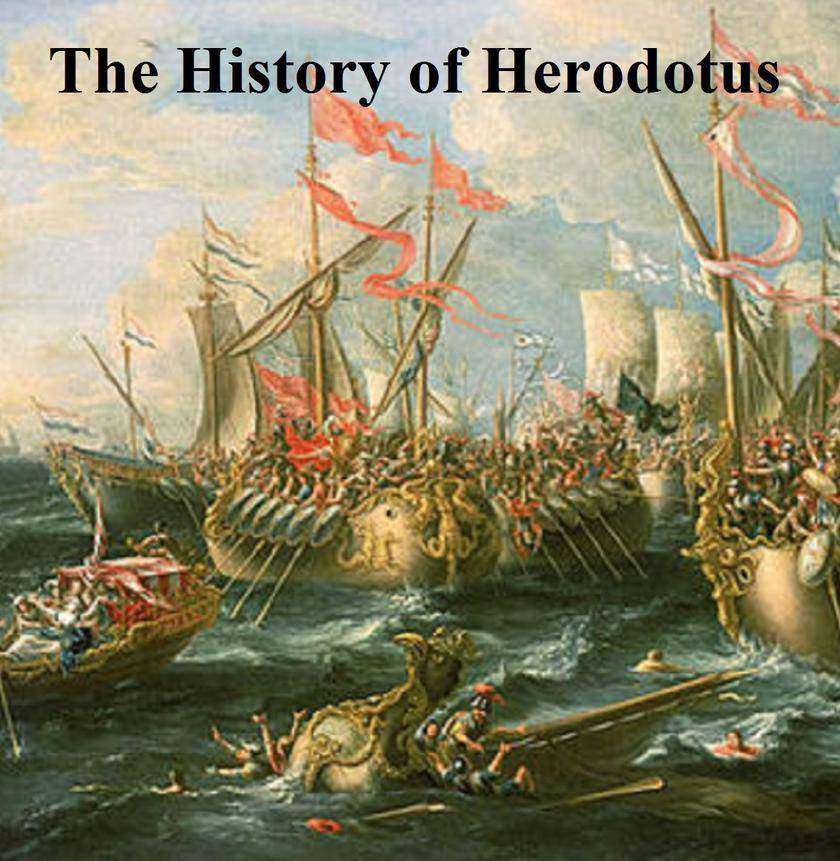
The History of Herodotus
¥8.09
Both volumes in a single file, translated by Macaulay. According to Wikipedia: "Herodotus of Halicarnassus was a Greek historian who lived in the 5th century BC (c. 484 BC–c. 425 BC) and is regarded as the "Father of History" in Western culture. He was the first historian to collect his materials systematically, test their accuracy to a certain extent and arrange them in a well-constructed and vivid narrative.[1] He is almost exclusively known for writing The Histories, a record of his "inquiries" (or ?στορ?αι, a word that passed into Latin and took on its modern meaning of history) into the origins of the Greco-Persian Wars which occurred in 490 and 480-479 BC—especially since he includes a narrative account of that period, which would otherwise be poorly documented, and many long digressions concerning the various places and peoples he encountered during wide-ranging travels around the lands of the Mediterranean and Black Sea. Although some of his stories are not completely accurate, he states that he is only reporting what has been told to him."
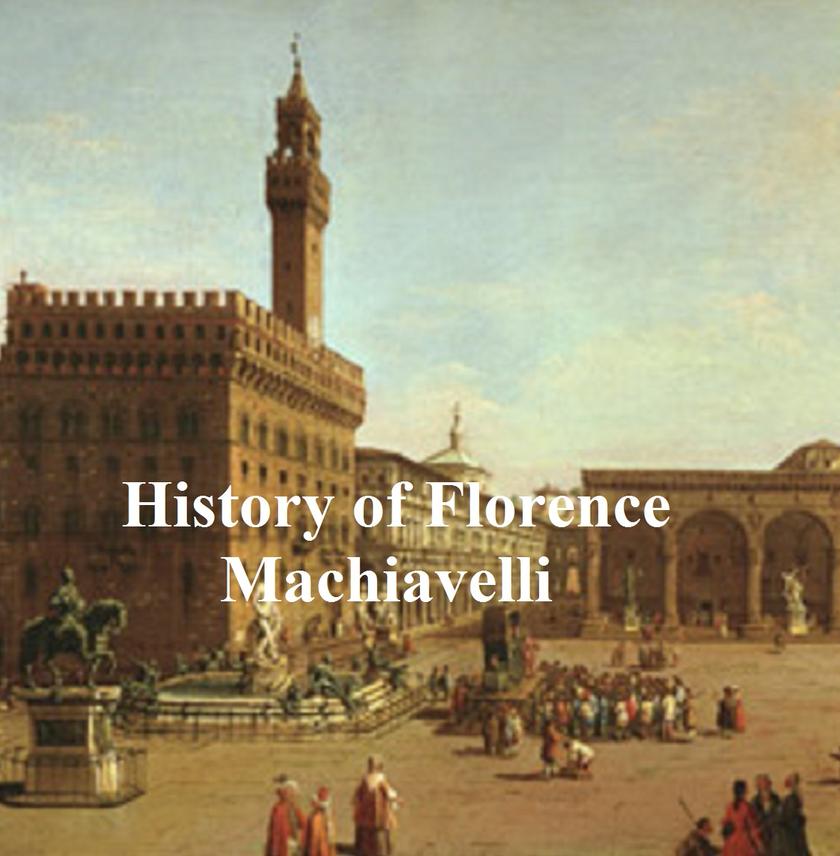
History of Florence
¥8.09
By the author of "The Prince" and "The Discourses", classic works of political science. From the Introduction: "Niccolo Machiavelli, the first great Italian historian, and one of the most eminent political writers of any age or country, was born at Florence, May 3, 1469. He was of an old though not wealthy Tuscan family, his father, who was a jurist, dying when Niccolo was sixteen years old. We know nothing of Machiavelli's youth and little about his studies. He does not seem to have received the usual humanistic education of his time, as he knew no Greek. The first notice of Machiavelli is in 1498 when we find him holding the office of Secretary in the second Chancery of the Signoria, which office he retained till the downfall of the Florentine Republic in 1512. His unusual ability was soon recognized, and in 1500 he was sent on a mission to Louis XII. of France, and afterward on an embassy to Cesare Borgia, the lord of Romagna, at Urbino..."

Les Cinq Cents Millions de Begum
¥8.09
Roman d'aventure classique, en fran?ais original. Selon Wikipédia: ?Jules Gabriel Verne (8 février 1828 - 24 mars 1905) est un auteur fran?ais qui a été le pionnier du genre de la science-fiction, notamment des romans comme Voyage au centre de la terre (1864), Vingt mille lieues sous la mer (1870) et autour du monde en quatre-vingts jours (1873) Verne a écrit sur l'espace, l'air et les voyages sous-marins avant que les voyages aériens et les sous-marins pratiques soient inventés. Selon Index Translationum, il est le troisième auteur le plus traduit au monde, certains de ses livres ont été transformés en films ... Verne, avec HG Wells, est souvent surnommé le ?père de la science-fiction?
Adrift in the Wilds, Or the Adventures of Two Shipwrecked Boys
¥8.09
Classic adventure novel. According to Wikipedia: "Edward Sylvester Ellis (April 11, 1840 – June 20, 1916) was an American author who was born in Ohio and died at Cliff Island, Maine. Ellis was a teacher, school administrator, and journalist, but his most notable work was that that he performed as author of hundreds of dime novels that he produced under his name and a number of noms de plume. Notable works by Ellis include The Huge Hunter, or the Steam Man of the Prairies and Seth Jones, or the Captives of the Frontier. Internationally, Edward S. Ellis is probably best known for his Deerhunter novels widely read by young boys up to the 1950s (together with works by James Fenimore Cooper and Karl May). In the mid-1880s, after a fiction-writing career of some thirty years, Ellis eventually turned his pen to more serious works of biography, history, and persuasive writing."

Deerfoot in the Mountains
¥8.09
Classic adventure novel. According to Wikipedia: "Edward Sylvester Ellis (April 11, 1840 – June 20, 1916) was an American author who was born in Ohio and died at Cliff Island, Maine. Ellis was a teacher, school administrator, and journalist, but his most notable work was that that he performed as author of hundreds of dime novels that he produced under his name and a number of noms de plume. Notable works by Ellis include The Huge Hunter, or the Steam Man of the Prairies and Seth Jones, or the Captives of the Frontier. Internationally, Edward S. Ellis is probably best known for his Deerhunter novels widely read by young boys up to the 1950s (together with works by James Fenimore Cooper and Karl May). In the mid-1880s, after a fiction-writing career of some thirty years, Ellis eventually turned his pen to more serious works of biography, history, and persuasive writing."

The Hunters of the Ozark
¥8.09
Classic adventure novel. According to Wikipedia: "Edward Sylvester Ellis (April 11, 1840 – June 20, 1916) was an American author who was born in Ohio and died at Cliff Island, Maine. Ellis was a teacher, school administrator, and journalist, but his most notable work was that that he performed as author of hundreds of dime novels that he produced under his name and a number of noms de plume. Notable works by Ellis include The Huge Hunter, or the Steam Man of the Prairies and Seth Jones, or the Captives of the Frontier. Internationally, Edward S. Ellis is probably best known for his Deerhunter novels widely read by young boys up to the 1950s (together with works by James Fenimore Cooper and Karl May). In the mid-1880s, after a fiction-writing career of some thirty years, Ellis eventually turned his pen to more serious works of biography, history, and persuasive writing."
The Phantom of the River
¥8.09
Classic adventure novel. According to Wikipedia: "Edward Sylvester Ellis (April 11, 1840 – June 20, 1916) was an American author who was born in Ohio and died at Cliff Island, Maine. Ellis was a teacher, school administrator, and journalist, but his most notable work was that that he performed as author of hundreds of dime novels that he produced under his name and a number of noms de plume. Notable works by Ellis include The Huge Hunter, or the Steam Man of the Prairies and Seth Jones, or the Captives of the Frontier. Internationally, Edward S. Ellis is probably best known for his Deerhunter novels widely read by young boys up to the 1950s (together with works by James Fenimore Cooper and Karl May). In the mid-1880s, after a fiction-writing career of some thirty years, Ellis eventually turned his pen to more serious works of biography, history, and persuasive writing."
Two Boys in Wyoming, A Tale of Adventure
¥8.09
Classic adventure novel. According to Wikipedia: "Edward Sylvester Ellis (April 11, 1840 – June 20, 1916) was an American author who was born in Ohio and died at Cliff Island, Maine. Ellis was a teacher, school administrator, and journalist, but his most notable work was that that he performed as author of hundreds of dime novels that he produced under his name and a number of noms de plume. Notable works by Ellis include The Huge Hunter, or the Steam Man of the Prairies and Seth Jones, or the Captives of the Frontier. Internationally, Edward S. Ellis is probably best known for his Deerhunter novels widely read by young boys up to the 1950s (together with works by James Fenimore Cooper and Karl May). In the mid-1880s, after a fiction-writing career of some thirty years, Ellis eventually turned his pen to more serious works of biography, history, and persuasive writing."

Carpentry for Boys
¥8.09
How-to book about carpentry, first published in 1914., with over 300 illustrations. "A book which treats, in a most practical and fascinating manner all subjects pertaining to the "King of Trades"; showing the care and use of tools; drawing; designing, and the laying out of work; the principles involved in the building of various kinds of structures, and the rudiments of architecture. It contains over two hundred and fifty illustrations made especially for this work, and includes also a complete glossary of the technical terms used in the art. The most comprehensive volume on this subject ever published for boys."
The Life of Nelson
¥8.09
Classic biography. According to Wikipedia: "Alfred Thayer Mahan (September 27, 1840 - December 1, 1914) was a United States Navy officer, geostrategist, and educator. His ideas on the importance of sea power influenced navies around the world, and helped prompt naval buildups before World War I. Several ships were named USS Mahan, including the lead vessel of a class of destroyers. His research into naval History led to his most important work, The Influence of Seapower Upon History,1660-1783, published in 1890."
All of Grace
¥8.09
Inspirational book by 19th-century Baptist preacher, known as "the Prince of Preachers". According to Wikipedia: "Charles Haddon Spurgeon, commonly C.H. Spurgeon, (June 19, 1834 – January 31, 1892) was a British Reformed Baptist preacher who remains highly influential among Christians of different denominations, among whom he is still known as the "Prince of Preachers." He also founded the charity organization now known as Spurgeon's, that works worldwide with families and children, as well as a famous theological college which after his death was called after him: Spurgeon's College. Spurgeon was a prolific author of many types of works including sermons, an autobiography, a commentary, books on prayer, a devotional, a magazine, and more. Many sermons were transcribed as he spoke and were translated into many languages during his lifetime. Arguably, no other author, Christian or otherwise, has more material in print than C.H. Spurgeon."

Anne of Avonlea
¥8.09
Classic children's novel. According to Wikipedia: "Lucy Maud Montgomery, (always called "Maud" by family and friends) and publicly known as L. M. Montgomery, (1874-1942) was a Canadian author, best known for a series of novels beginning with Anne of Green Gables, published in 1908. Anne of Green Gables was an immediate success. The central character, Anne, an orphaned girl, made Montgomery famous in her lifetime and gave her an international following. The first novel was followed by a series of sequels with Anne as the central character. The novels became the basis for the highly acclaimed 1985 CBC television miniseries, Anne of Green Gables and several other television movies and programs, including Road to Avonlea, which ran in Canada and the U.S. from 1990-1996."
Rebecca of Sunnybrook Farm
¥8.09
Kate Douglas Wiggin's best known novel. According to Wikipedia: "Kate Douglas Wiggin ( 1856 - 1923) was an American children's author and educator. Kate Douglas Smith Wiggin was born in Philadelphia, and was of Welsh descent. She started the first free kindergarten in San Francisco in 1878 (the Silver Street Free Kindergarten). With her sister in the 1880s she also established a training school for kindergarten teachers. She was also a writer of children's books, the best known being The Birds' Christmas Carol (1887) and Rebecca of Sunnybrook Farm (1903)."
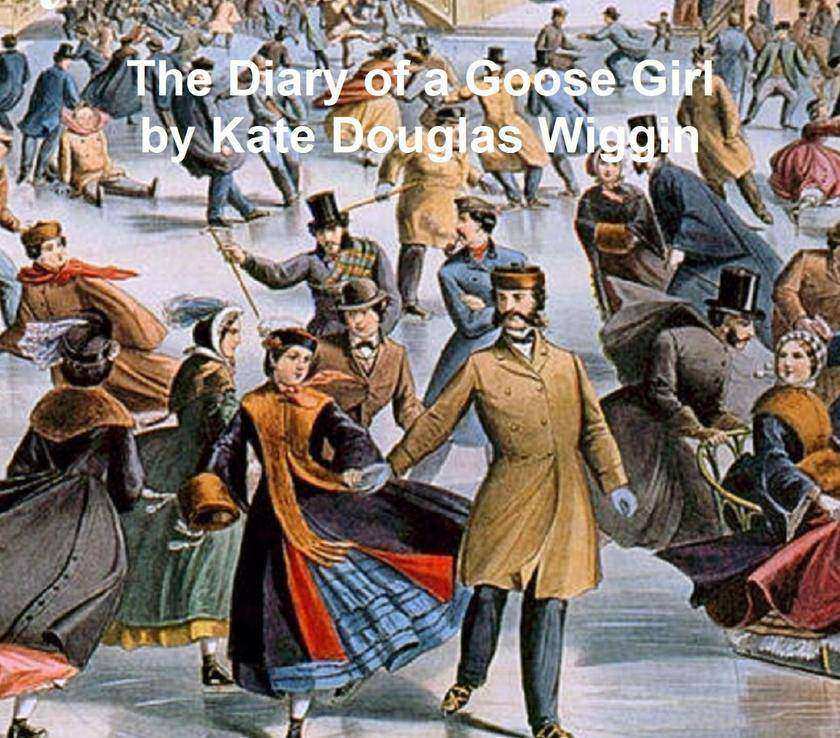
Diary of a Goose Girl
¥8.09
Long children's story. According to Wikipedia: "Kate Douglas Wiggin ( 1856 - 1923) was an American children's author and educator. Kate Douglas Smith Wiggin was born in Philadelphia, and was of Welsh descent. She started the first free kindergarten in San Francisco in 1878 (the Silver Street Free Kindergarten). With her sister in the 1880s she also established a training school for kindergarten teachers. She was also a writer of children's books, the best known being The Birds' Christmas Carol (1887) and Rebecca of Sunnybrook Farm (1903)."


