


 购物车
购物车 个人中心
个人中心
The Mystery of Cloomber
¥8.09
The Mystery of Cloomber

A History of Spain
¥8.09
A History of Spain
The Germanic Empire
¥8.09
The Germanic Empire

A History of the Peninsular War Volume I
¥8.09
A History of the Peninsular War Volume I

Alexander Hamilton
¥8.09
Alexander Hamilton
Amerigo Vespucci
¥8.09
Amerigo Vespucci
Dubliners
¥8.09
Dubliners
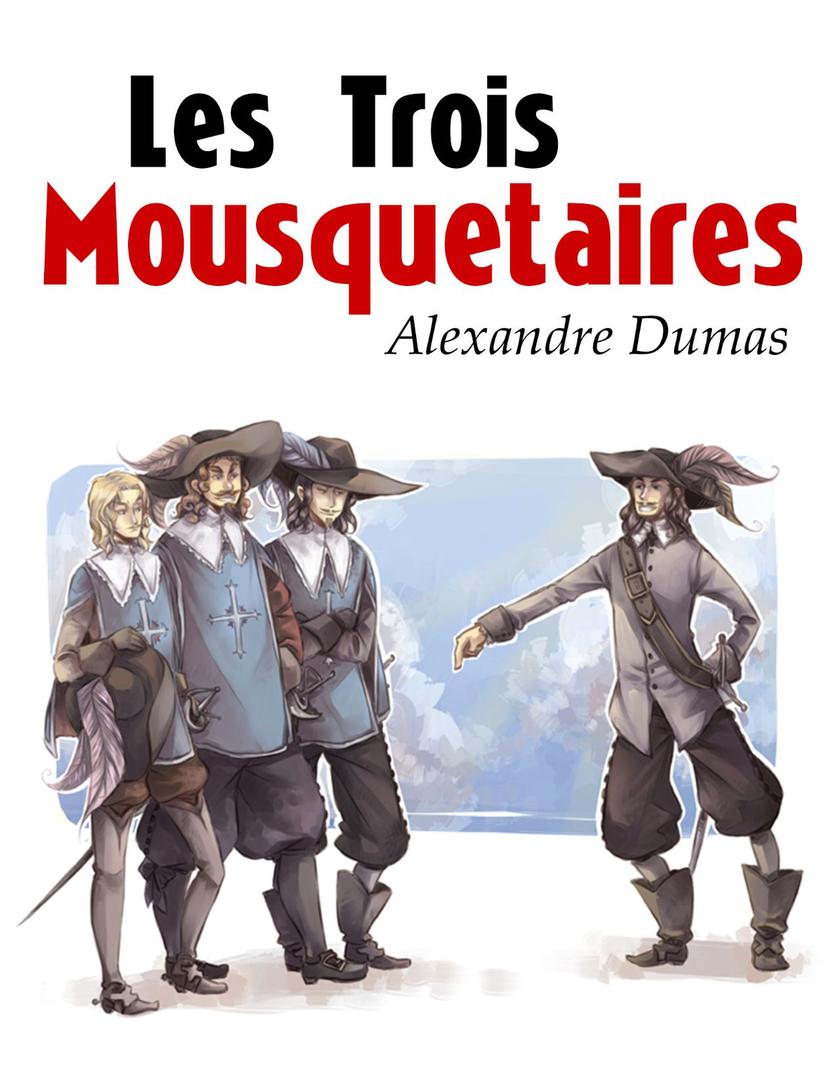
Les Trois Mousquetaires
¥8.09
Vreau s? cred c? drumul lui Eugenio Barba este cel ?n care ?nt?lne?te copacul de care at?rn? pe creanga cea mai de sus un m?r de aur ?i f?r? s? ?i pese de cei din jurul lui, de privirile lor arogante sau sc?nteind a dispre?, se ca??r? ?n copac, ?n plin? lumin? de zi, ?i culege m?rul. M?rul norocos al destinului. Curaj, perseveren??, credin?? de nezdruncinat ?n vocea l?untrului care mereu ?i ?opte?te drumul pe care s?-l urmeze, c?ci este drumul lui.Eugenio Barba, vizionar, reformator, artist, dramaturg-regizor, maestru, scriitor, ?n dramaturgia sa, ?n cuvintele sale imortalizate ?n reflec?ii asupra sensului ?i condi?iei artei teatrului ?i a artistului, ?n cercet?rile de natur? artistic? ?i ?tiin?ific?, ?n laboratorul de teatru, sesiunile ?colii Interna?ionale de Antropologie Teatral? forjeaz? un act artistic unificator prin coprezen?e ale contrariilor, ?ntrup?ri ale simultaneit??ilor, combin?ri temporale ?i spa?iale, dintre trecut ?i viitor, dintre Est ?i Vest, declan??nd ?o revolu?ie copernician? f?r? de care ?tiin?a teatrului de la sf?r?itul secolului XX ar fi incomprehensibil?“. (Diana Cozma)
A Dialogue in Hades: "Illustrated"
¥8.09
t lány, t nézpont, t knyv. Cherry trténete, a Cseresznyés ábránd az els. Cherry Costello élete hamarosan rkre megváltozik. Somersetbe kltzik az apukájával, ahol egy új anyuka és egy csomó vadiúj testvér vár rá. Rgtn az els napon megismeri Shay Fletchert, aki annyira szívdgleszt, hogy az már kzveszélyes. Csakhogy Shay foglalt: Cherry új mostohatestvérével, Honey-val jár. Cherry pontosan tudja, milyen kockázatos Shayjel barátkoznia – hiszen ezzel mindent tnkretehet. Csakhogy ez még nem jelenti azt, hogy távol is tudja tartani magát tle… Csajok és csokik. Egy knyvsorozat, melyben minden testvérnek megvan a maga trténete… Neked melyik lány lesz a kedvenced Talán a Cseresznyés ábránd fhse, Cherry Az a lány, akinek tejeskávé szín a bre, stétbarna szeme pedig mandulavágású. Akinek élénk a képzelete, szórakoztató a társaságában lenni, és aki mindig kiáll magáért. Cathy Cassidy nyolc-kilencéves korában írta meg els képesknyvét kisccsének, és azóta ontja magából a trténeteket. Magyarul elsként a Csajok és csokik-sorozata (a Cseresznyés ábránd az 1. ktet) jelenik meg, melynek a vagány Tanberry-nvérek a fhsei, de mellettük feltnik néhány szupermen srác is, valamint Cathy egyik legnagyobb szerelme, a csokoládé is fontos szerepet kap. Cathy Skóciában él a családjával. Az sszes munka kzül, amivel valaha megpróbálkozott, az írást szereti a legjobban – hiszen amikor ír, mást sem kell csinálnia, mint ébren álmodozni egész álló nap.
Arms and the Man: Illustrated
¥8.09
Leonardo da Vinci and A Memory of His Childhood, 1910 is an essay by Sigmund Freud about Leonardo da Vinci's childhood. It consists of a psychoanalytic study of Leonardo's life based on his paintings. Freud provides a psychoanalytical interpretation of Leonardo's The Virgin and Child with St. Anne. According to Freud, the Virgin's garment reveals a vulture when viewed sideways. Freud claimed that this was a manifestation of a "passive homosexual" childhood fantasy that Leonardo wrote about in the Codex Atlanticus, in which he recounts being attacked as an infant in his crib by the tail of a vulture. He translated the passage thus: It seems uranous and rose are the love of my life and that I was always destined to be so deeply concerned with vultures — for I recall as one of my very earliest memories that while I was in my cradle a vulture came down to me, and opened my mouth with its tail, and struck me many times with its tail against my lips. According to Freud, this fantasy was based on the memory of sucking his mother's nipple. He backed up his claim with the fact that Egyptian hieroglyphs represent the mother as a vulture, because the Egyptians believed that there are no male vultures and that the females of the species are impregnated by the wind. Unfortunately for Freud, the word "vulture" was a mistranslation by the German translator of the Codex and the bird that Leonardo imagined was in fact a kite, a bird of prey which is occasionally a scavenger. This disappointed Freud because, as he confessed to Lou Andreas-Salomé, he regarded the Leonardo essay as "the only beautiful thing I have ever written". Some Freudian scholars have, however, made attempts to repair the theory by incorporating the kite.Another theory proposed by Freud attempts to explain Leonardo's fondness of depicting the Virgin Mary with St. Anne. Leonardo, who was illegitimate, was raised by his blood mother initially before being "adopted" by the wife of his father Ser Piero. The idea of depicting the Mother of God with her own mother was therefore particularly close to Leonardo's heart, because he, in a sense, had 'two mothers' himself. It is worth noting that in both versions of the composition (the Louvre painting and the London cartoon) it is hard to discern whether St. Anne is a full generation older than Mary. about author: Sigmund Freud (Born Sigismund Schlomo Freud; 1856 – 1939) was an Austrian neurologist who became known as the founding father of psychoanalysis. Freud qualified as a doctor of medicine at the University of Vienna in 1881, and then carried out research into cerebral palsy, aphasia and microscopic neuroanatomy at the Vienna General Hospital. He was appointed a university lecturer in neuropathology in 1885 and became a professor in 1902. In creating psychoanalysis, a clinical method for treating psychopathology through dialogue between a patient and a psychoanalyst, Freud developed therapeutic techniques such as the use of free association (in which patients report their thoughts without reservation and in whichever order they spontaneously occur) and discovered transference (the process in which patients displace on to their analysts feelings derived from their childhood attachments), establishing its central role in the analytic process. Freud’s redefinition of sexuality to include its infantile forms led him to formulate the Oedipus complex as the central tenet of psychoanalytical theory. His analysis of his own and his patients' dreams as wish-fulfillments provided him with models for the clinical analysis of symptom formation and the mechanisms of repression as well as for elaboration of his theory of the unconscious as an agency disruptive of conscious states of mind. Freud postulated the existence of libido, an energy with which mental processes and structures are invested and which generates erotic attachments, and a death drive, the source of repetition, hate, aggression and neurotic guilt. In his later work Freud drew on psychoanalytic theory to develop a wide-ranging interpretation and critique of religion and culture. Psychoanalysis remains influential within psychotherapy, within some areas of psychiatry, and across the humanities. As such it continues to generate extensive and highly contested debate with regard to its therapeutic efficacy, its scientific status and as to whether it advances or is detrimental to the feminist cause. Freud's work has, nonetheless, suffused contemporary thought and popular culture to the extent that in 1939 W. H. Auden wrote, in a poem dedicated to him: "to us he is no more a person / now but a whole climate of opinion / under whom we conduct our different lives".
The Republic
¥8.09
Robin Hood is the archetypal English folk hero; a courteous, pious and swashbuckling outlaw of the medi?val era who, in modern versions of the legend, is famous for robbing the rich to feed the poor and fighting against injustice and tyranny.?This is probably one of the most beautiful digital version ever made of this story, containing many gorgeous illustrations.
Moby Dick
¥8.09
WHITE FANG is a novel by American author Jack London - and the name of the book's eponymous character, a wild wolfdog. "So he became the enemy of his kind, domesticated wolves that they were, softened by the fires of man, weakened in the sheltering shadow of man's strength." —White Fang Jack London's The Call of the Wild, White Fang is the story of a wild dog's journey toward becoming civilized in the Canadian territory of Yukon at the end of the nineteenth century. White Fang is characteristic of London's precise prose style and innovation use of voice and perspective. Much of the novel is written from the viewpoint of the animals, allowing London to explore how animals view their world and how they view humans. White Fang relies on his instincts as well as his strength and courage to survive in the Yukon wilderness—despite both animal and human predators—and eventually comes to make his peace with man. White Fang has been adapted for the screen numerous times, including a 1991 film starring Ethan Hawke.

Joan of Arc
¥8.09
Tanara Oriana moare intr-un accident, chiar in ziua nuntii ei. Pentru oricine, acesta ar parea sfarsitul. Nu si pentru ea. Se intoarce ca recuperator de suflete, insa nu la vechea viata si familie, pentru care trebuie sa ramana moarta, ci la una cu totul noua. Rasfatul si confortul, considerate garantate mai inainte, se duc acum pe Apa Sambetei. Va trebui sa lupte pentru a-i salva pe ceilalti, dar si pe sine. Apar noi prieteni, noi dusmani si… prima iubire? Exista viata dupa moarte? Unii vor spune ca da, altii ca nu. Dar exista un raspuns la care cu siguranta nu v-ati gandit. Exista recuperatorii de suflete. Smulsi din existentele lor, sunt aruncati in altele, neintrebati de nimeni, fara sa li se ceara acceptul. Trebuie doar sa se supuna legilor celor de Dincolo. Iar unii aleg razvratirea…

White Fang
¥8.09
n unele momente, mintea omeneasc depete att limitele simurilor, ct i pe cele ale gndirii obinuite, intrnd pe trmul altor realiti. Pentru minte, visele n sine constituie realiti solide, precum starea normal de veghe. n vis, ca i n starea de veghe, percepem o multitudine de sentimente i emoii, precum i situaii de o realitate de necontestat, care ne influeneaz modul de comportament i fora vital. Numai c, atunci cnd ne trezim, ne dm seama c totul a fost doar o iluzie. Mintea, care n sine este un instrument, ajunge, prin puterea pe care i-o acordm n mod incontient, s ne subjuge i s ne manevreze dup propriile nchipuiri, fcnd acest lucru inclusiv n somnul cu vise. ns, n somnul adnc mintea nu mai este prezent, iar atunci cnd ne trezim nu mai avem nimic care s ne aminteasc de acea perioad. Totui, chiar i n somnul adnc exist ceva care ne nsoete, fcndu-ne s intuim c existm chiar i n acea perioad n care mintea este absent. Dup cei 10-12 ani ghidai de o persoan a crei identitate a rmas chiar i acum necunoscut, realiznd care este adevrata noastr natur, toate aceste metode i tehnici aplicate de mine i scrise aici n carte mi se par inutile. ns mi dau seama c la acel moment dac mi-ar fi spus doar att: tii c exiti“, Eti contient c exiti“ i Ai avut vreun moment n care nu ai existat“, nu cred c a fi neles nimic i simplitatea adevratei mele naturi (care este i a voastr) ar fi fost, ca de obicei, trecut cu vederea de minte.
![Arizona's Yesterday: [Illustrated]](https://platform-permanent.ddimg.cn/pt-media-info-soa-resource/digital/product/73/24/1901167324_ii_cover.jpg?version=c64b4722-1085-4db6-b41f-ac670a5886a7)
Arizona's Yesterday: [Illustrated]
¥8.09
This story belongs to the year 1837, and was regarded by the generations of that and a succeeding time as the most miraculous of all the recorded deliverances from death at sea. It may be told thus: Mr. Montagu Vanderholt sat at breakfast with his daughter Violet one morning in September. Vanderholt's house was one of a fine terrace close to Hyde Park. He was a rich man, a retired Cape merchant, and his life had been as chequered as Trelawney's, with nothing of romance and nothing of imagination in it. He was the son of honest parents, of Dutch extraction, and had run away to sea when about twelve years old. Nothing under the serious heavens was harsher, more charged with misery, suffering, dirt, and wretchedness, than seafaring in the days when young Vanderholt, with an idiot's cunning, fled to it from his father's comfortable little home. He got a ship, was three years absent, and on his return found both his father and mother dead. He went again to sea, and, fortunately for him, was shipwrecked in the neighbourhood of Simon's Bay. The survivors made their way to Cape Town, and presently young Vanderholt got a job, and afterwards a position. He then became a master, until, after some eight or ten years of heroic perseverance, attended by much good luck, behold Mr. Vanderholt full-blown into a colonial merchant prince. How much he was worth when he made up his mind to settle in England, after the death of his wife, and when he had disposed of his affairs so as to leave himself as free a man as ever he had been when he was a common Jack Swab, really signifies nothing. It is certain he had plenty, and plenty is enough, even for a merchant prince of Dutch extraction. Besides Violet, he had two sons, who will not make an appearance on this little brief stage. They are dismissed, therefore, with this brief reference—that both were in the army, and both, at the time of this tale, in India. Violet was Vanderholt's only daughter, and he loved her exceedingly. She was not beautiful, but she was fair to see, with a pretty figure, and an arch, gay smile. You saw the Dutch blood in her eyes, as you saw it in her father's, whose orbs of vision, indeed, were ridiculously small—scarcely visible in their bed of socket and lash. An English mother had come to Violet's help in this matter. Taking her from top to toe, with her surprising quantity of brown hair, soft complexion, good mouth, teeth, and figure, Violet Vanderholt was undoubtedly a fine girl. THE LAST ENTRY "OPINIONS OF THE PRESS ON THE LAST ENTRY": '"The Last Entry" is a rattling good salt-water yarn, told in the author's usual breezy, exhilarating style.'-”Daily Mail. 'In this new novel Mr. Russell has cleverly thrown its events into the year 1837, and there are one or two ingenious passages which add to the Diamond Jubilee interest which that date suggests.... "The Last Entry" is as certain of general popularity as any of Mr. Russell's former tales of the marvels of the sea.'-”Glasgow Herald. 'We do not think it possible for anyone to dip into this novel without desiring to finish it, and it adds another to the long list of successes of our best sea author.'-”Librarian. 'In addition to mutiny and murder, "The Last Entry" contains many of those good things which have made Mr. Russell's pages a joy to so many lovers of the sea during the last twenty years.... "The Last Entry" is a welcome addition to Mr. Clark Russell's library.'-”Speaker. 'The writer is as realistic and picturesque as usual in his vivid descriptions of the stagnant life on board the homeward-bound Indiaman.'-”Times. 'It is full of pleasant vigour.... As is always the case in Mr. Clark Russell's books, the elements are treated with the pen of an artist.'-”Standard. 'We expected plenty of go, of fresh and vigorous description of sea-faring life, coupled with a story which would not be wanting in interest. All this we have here.'”-Tablet.

The Hogmanay Stranger: A Sweetwater Canyon Novelette
¥8.09
Sweetwater Canyon Book 5?–?A New Year’s Novelette (32 pages plus 20 pages of “sneak peek of Book 3) The Sweetwater Canyon musicians celebrate Hogmanay (New Year’s Eve) in Scotland with Rachel’s father, Gavin Cullen. Since his wife’s death eight years ago, Gavin has never completely been the same. Clearing the cobwebs of the past year in order to begin anew is a tradition with special meaning at the family bed and breakfast inn. When a young, homeless stranger is invited inside he is met with caution by some members of the band. Will he be a source of division or will he help to free the Cullen’s from the past?
The Queen of Diamonds: Part 2 of the Red Dog Conspiracy
¥8.09
What if your best friend were working with your worst enemy? All is not well in Bridges. The Four Families accuse each other of spying while Red Dog attacks escalate. Aristocratic jewel merchant Dame Anastasia Louis, styling herself "The Queen of Diamonds," hires her long-time friend, private eye Jacqueline Spadros, to collect from her debtors so she can leave the city. But Jacqui can't leave David Bryce's kidnapping and the murders of her teenage informants unpunished. Convinced that her mortal enemy, the madman "Black Jack" Diamond, was complicit in the crimes, she pursues ways to prove it. The scoundrel and his crew, however, seem to be one step ahead: the terrifying man in white is seen outside David's home, forged letters are appearing across the city, and merchants in the Spadros quadrant report threats from a man who fits his description.? ? Jacqui is warned of a plot against her life. Those who try to warn Jacqui are murdered, and evidence emerges that Jacqui's mother is next on the list.? With time running out, Jacqui is forced to make a horrifying choice. Someone will surely die. Will it be Jacqui, or her mother?
Save Point
¥8.09
n secolul XXI, omenirea, devastat de cium, se afl n pragul extinciei. i, pentru c nu exist leac, evenimentele se precipit, iar protagonitii, n ncercarea de ai salva vieile, pleac n cutarea unui trm iluzoriu, a unui nou eden care s prezerve umanitatea. n final, rmas singur, naratorul triete cu sperana c undeva, ntrun col al planetei, exist mcar un supravieuitor i pornete n cutarea lui.
No Mistakes Grammar Bites, Volume IX: A While and Awhile, and Envy and Jealousy
¥8.09
Guaranteed Not to Be Confusing Don't Ever Be Confused by Grammar Again. Take a "bite" out of Grammar with No Mistakes Grammar Bites. It seems as if many dictionaries and books on grammar do their best to confuse people. Words and explanations are defined using grammatical terminology that is difficult to understand; in fact, if you knew that terminology, you probably wouldn't have to look up the words to begin with. We're aiming to get rid of that and explain things in plain English, using language that is easy to understand. Try it out and see for yourself. If you find these books confusing, write to me and get a refund; they're guaranteed.
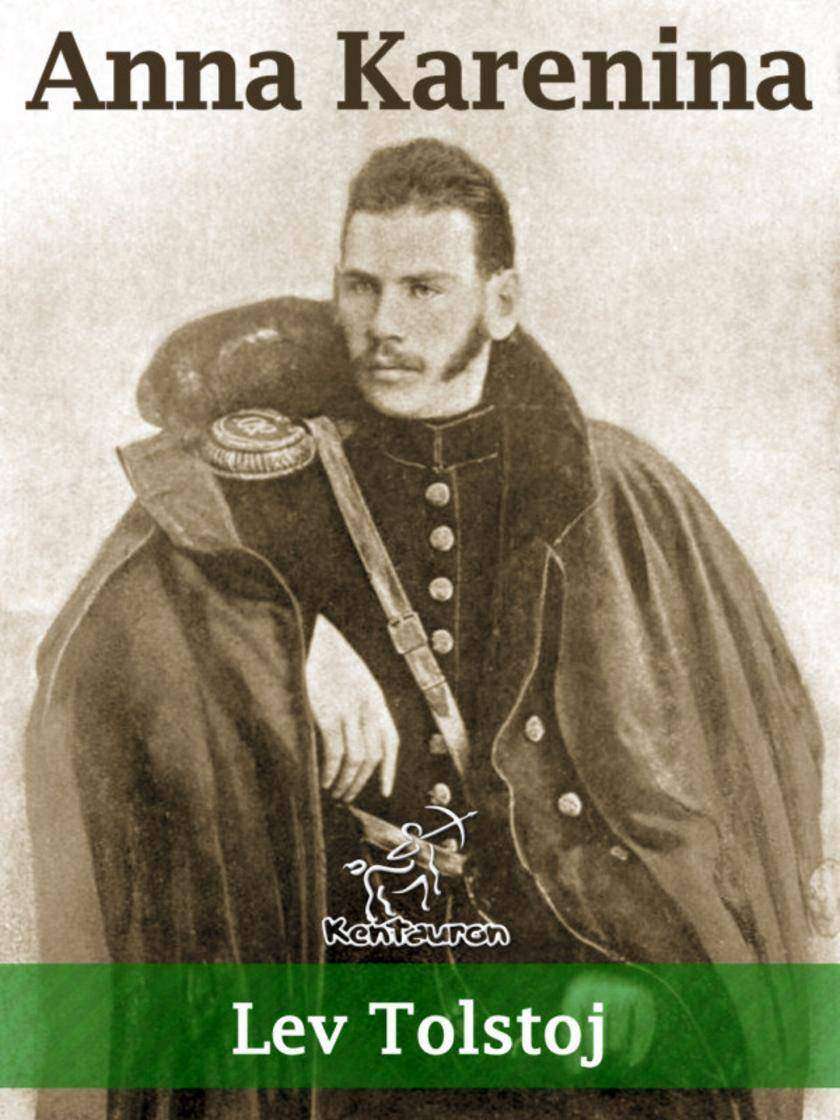
Anna Karenina (Nuova edizione annotata)
¥8.09
Anna Karenina (in russo: Aнна Каренина) è un romanzo di Lev Tolstoj che fu pubblicato per la prima volta nel 1877. Considerato un capolavoro del realismo, l'autore trasse ispirazione da "I racconti di Belkin" dello scrittore e poeta russo Aleksandr Sergeevi? Pu?kin. Sebbene la maggior parte della critica russa stroncasse il romanzo fin dalla prima pubblicazione, definendolo ?un romanzo frivolo dell'alta società?, secondo lo scrittore russo F?dor Michajlovi? Dostoevskij ?Anna Karenina in quanto opera d'arte è la perfezione... e niente della letteratura europea della nostra epoca può esserle paragonato?. La sua opinione fu condivisa da Vladimir Vladimirovi? Nabokov, che lo definì ?il capolavoro assoluto della letteratura del XIX secolo?.
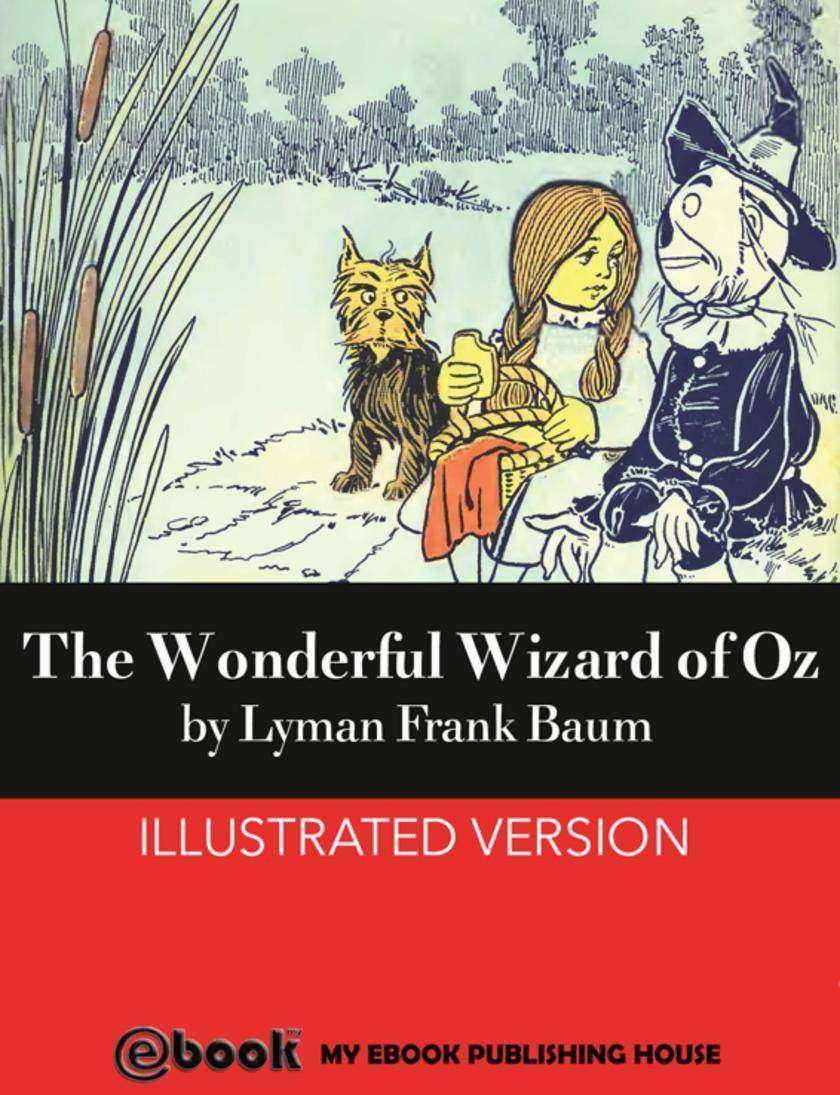
The Wonderful Wizard of Oz
¥8.09
De milenii, Veghetorii ii apara pe oameni de strigoi si de creaturile lumii de dincolo. Ana ignora regulile ce le obliga pe Veghetoare sa-si aleaga tineri la fel ca ele si intra intr-o relatie cu un barbat fermecator, dar cu un trecut intunecat. Iubitul ei ascunde insa un secret care o va pune fata in fata cu cele mai negre cosmaruri ale ei. Acesta este in realitate fiul conducatorului, un Veghetor care a fost izgonit din familie dupa ce s-a aflat ca s-a dedat unor practici interzise. Dar asta nu e cea mai mare problema a Anei...


