


 购物车
购物车 个人中心
个人中心

Mansfield Park
¥8.09
This Point Blank Classics edition includes the full original text as well as exclusive images exclusive to this edition and an easy to use interactive table of contents. Mansfield Park is a novel by Jane Austen, written at Chawton Cottage between February 1811 and 1813. It was published in May 1814 by Thomas Egerton, who published Jane Austen's two earlier novels, Sense and Sensibility and Pride and Prejudice. When the novel reached a second edition in 1816, its publication was taken over by John Murray, who also published its successor, Emma. The main character, Fanny Price, is a young girl from a large and relatively poor family, who is taken from them at age 10 to be raised by her rich uncle and aunt, Sir Thomas, a baronet, and Lady Bertram, of Mansfield Park. She had previously lived with her own parents, Lieut. Price and his wife, Frances (Fanny), Lady Bertram's sister. She is the second child and eldest daughter, with seven siblings born after her. She has a firm attachment to her older brother, William, who at the age of 12 has followed his father into the navy. With so many mouths to feed on a limited income, Fanny's mother is grateful for the opportunity to send Fanny away to live with her fine relatives. Mansfield Park is the most controversial of Austen's major novels. Regency critics praised the novel's wholesome morality, but many modern readers find Fanny's timidity and disapproval of the theatricals difficult to sympathise with and reject the idea (made explicit in the final chapter) that she is a better person for the relative privations of her childhood.

The Shoven Elect
¥8.09
Aliens have landed on the moon. The war for Earth has begun. Can we stop fighting each other long enough to save the planet!

The Analysis of Mind
¥8.09
This Point Blank Classics edition includes the full original text as well as exclusive images exclusive to this edition and an easy to use interactive table of contents.

The Time Machine
¥8.09
This Housemartin Classics edition includes the full original text as well as an easy to use interactive table of contents.

Paranormal Investigators 10 Paranormal Pioneers and The Modern Investigator
¥8.09
In Paranormal Pioneers and The Modern Investigator, we look at early pioneers such as Sir William Crookes, one of the world's great scientist who also happened to be a paranormal investigator. The remarkable Frederick Bligh Bond. The two men most responsible for the popularity of Paranormal investigations Jason Conrad Hawes and Grant Steven Wilson. Thanks to their Ghost Hunters show millions of people discovered the world of the paranormal investigators for the first time.

Black Pearls and Red Tide
¥8.09
The strange death of three young children in a small coastal village in far away Papua New Guinea in March 1972 did not rate a mention in the territory’s annual report that year to its Australian governors—let alone make a ripple in international ponds. Yet, it was an event of incredible proportions. It marked the end of a chain of knowledge that extended back more than 45,000 years; it heralded the beginning of an era of immense, baffling phenomena and disasters around the world; and it marked the rise of a deadly toxin from the seabed that would spread from country to country. The book works back in time to discover the origin of the toxin’s host, traces its emergence and bizarre spread from country to country with resulting deaths, and projects into the future the likely, unsettling to horrific, consequences for the world’s food security, already set irreversibly in motion. It is a story that encompasses much of the globe, from the Pacific islands to Asia—Brunei Darussalam, Indonesia, Japan, Malaysia and the Philippines—to the Middle East—Persian Gulf and Red Sea, and the Egypt of the Pharaohs—to the Pacific and Atlantic coasts of the Americas, and to Australia and Antarctica. It is a detective story too, about who or what killed the three children, taking us in helicopters, light planes, speedboats and a naval patrol vessel, and on underwater explorations. It is a romance spanning a period from the tail end of the Palaeolithic era, pausing for a less ancient exodus, that of the Jews from Egypt, and for Cleopatra’s—incredibly expensive as we will see—dinner with Marc Antony, and leap-frogging through events over the following two millennia via connections with Spanish kings, Napoleon Bonaparte, and the most famous pair to play the part of Cleopatra and Marc Antony in modern times: Elizabeth Taylor and Richard Burton. Finally, it is the story of a young scientist sent unknowingly as a spy into Papua New Guinea shortly before its independence. How did he find himself enmeshed in the threads of this strange puzzle and what did he discover?

Rasselas
¥8.09
Space and Time are pleased to bring you Samuel Johnsons Rasselas. This classic is presented as a wonderfully presented edition with a fully interactive table of contents.
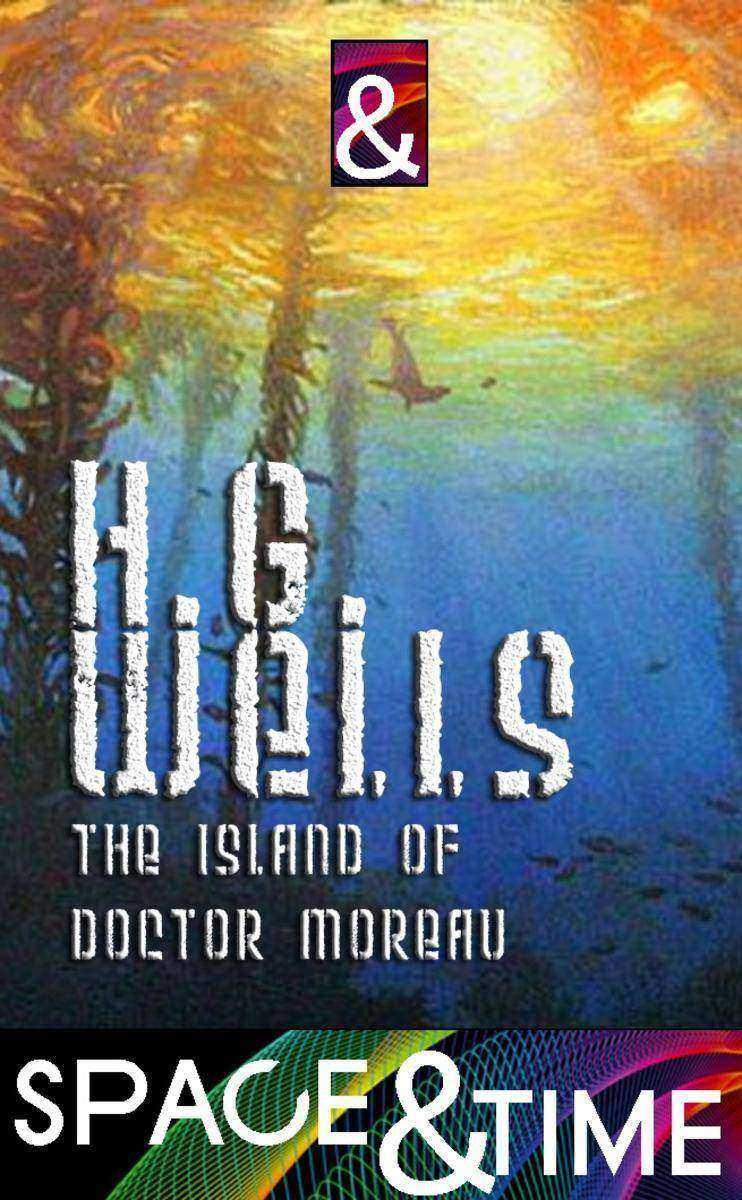
The Island of Doctor Moreau
¥8.09
Space and Time are pleased to bring you The Island of Doctor Moreau by H. G. Wells. This classic is presented as a wonderfully presented edition with a fully interactive table of contents.
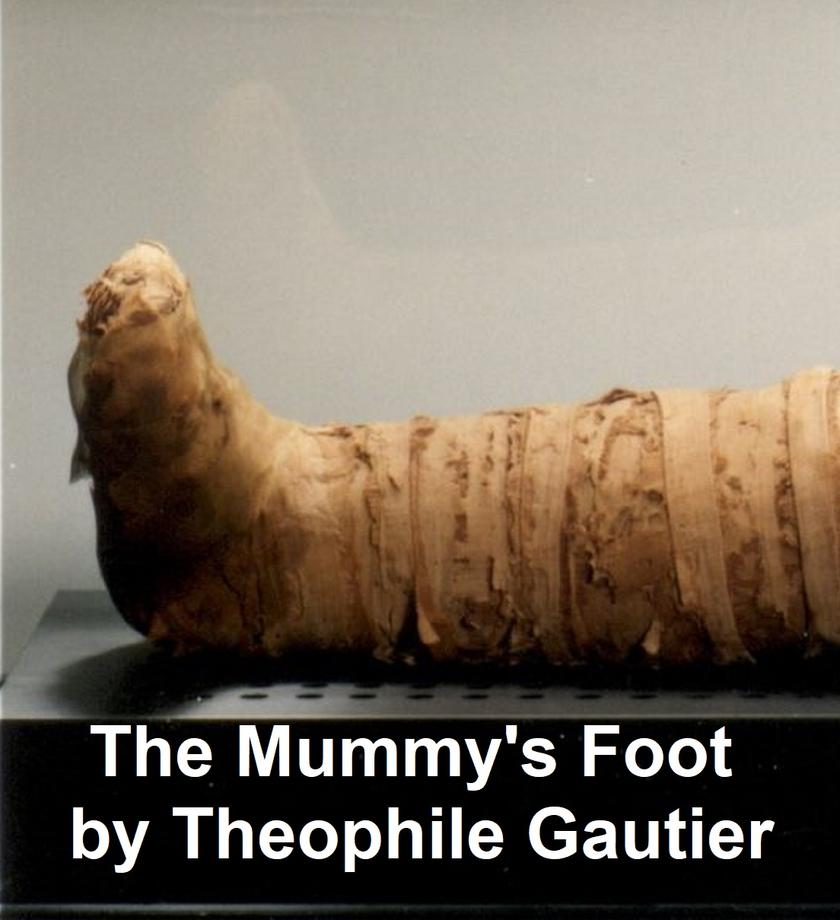
The Mummy's Foot
¥8.09
According to Wikipedia: "Pierre Jules Théophile Gautier (August 30, 1811 – October 23, 1872) was a French poet, dramatist, novelist, journalist, and literary critic. While an ardent defender of Romanticism, Gautier's work is difficult to classify and remains a point of reference for many subsequent literary traditions such as Parnassianism, Symbolism, Decadence and Modernism. He was widely esteemed by writers as diverse as Baudelaire, the Goncourt brothers, Flaubert and Oscar Wilde."
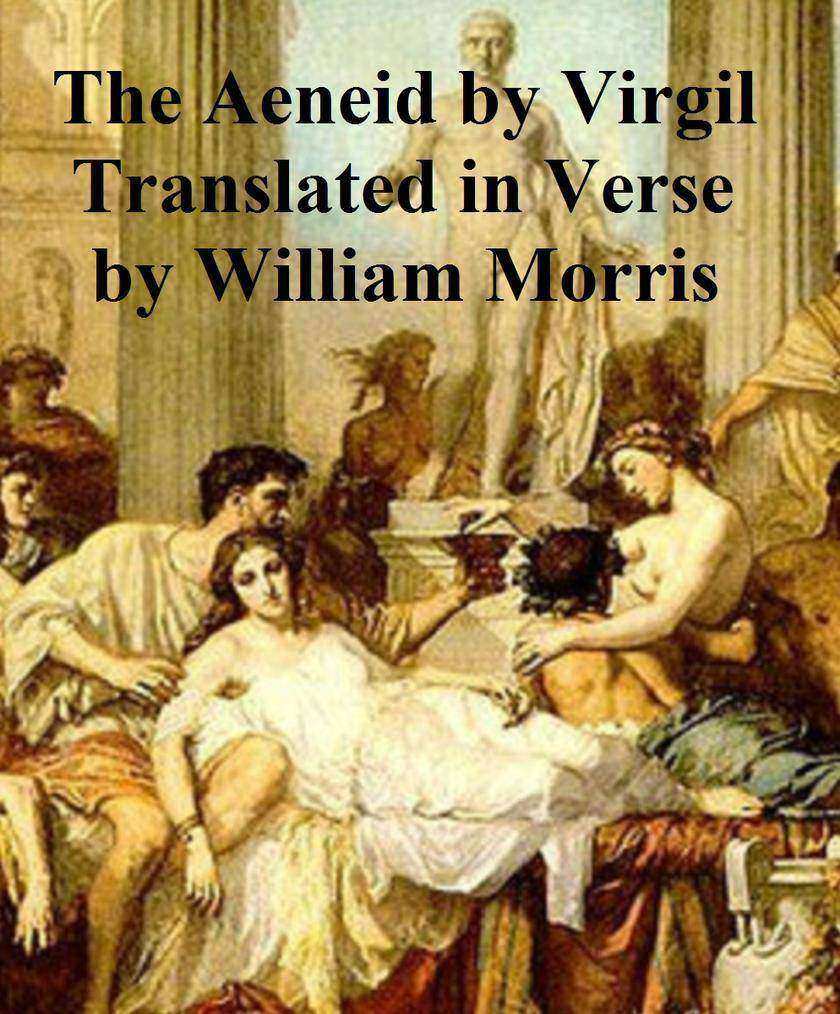
The Aeneid of Virgil
¥8.09
According to Wikipedia: "The Aeneid is a Latin epic poem, written by Virgil between 29 and 19 BC, that tells the legendary story of Aeneas, a Trojan who travelled to Italy, where he became the ancestor of the Romans. It is composed of roughly 10,000 lines in dactylic hexameter. The first six of the poem's twelve books tell the story of Aeneas's wanderings from Troy to Italy, and the poem's second half tells of the Trojans' ultimately victorious war upon the Latins, under whose name Aeneas and his Trojan followers are destined to be subsumed."
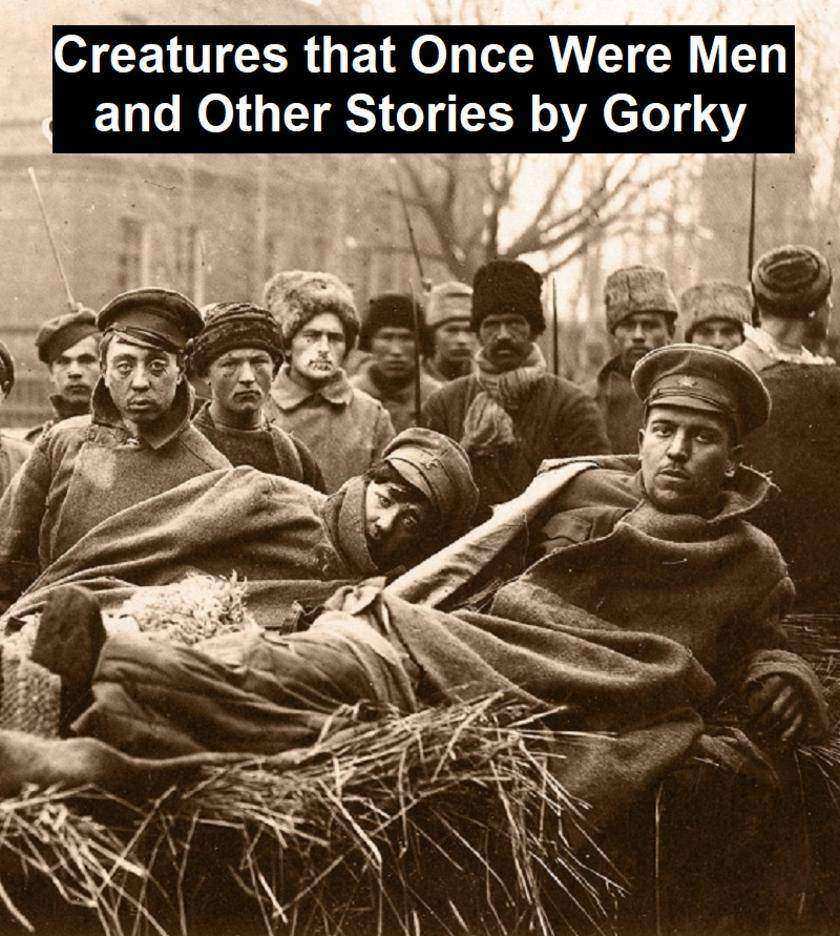
Creatures that Once Were Men and Other Stories
¥8.09
Collection of stories, including Creatures that Once Were Men, Twenty-Six Men and a Girl, Chelkash, My Fellow-Traveler, and On a Raft. According to Wikipedia: "Aleksey Maksimovich Peshkov ( 1868 ?- 1936), better known as Maxim Gorky, was a Soviet/Russian author, a founder of the socialist realism literary method and a political activist. From 1906 to 1913 and from 1921 to 1929 he lived abroad, mostly in Capri, Italy; after his return to the Soviet Union he accepted the cultural policies of the time, although he was not permitted to leave the country."
Main Street
¥8.09
According to Wikipedia: "Sinclair Lewis (February 7 1885 – January 10 1951) was an American novelist, short-story writer, and playwright. In 1930, he became the first American to be awarded the Nobel Prize in Literature, "for his vigorous and graphic art of description and his ability to create, with wit and humor, new types of characters." His works are known for their insightful and critical views of American society and capitalist values, as well as their strong characterizations of modern working women."
The Twins of Table Mountain and Other Stories
¥8.09
Collection of western stories, including: The Twins of Table Mountain, An Heiress of Red Dog, The Great Deadwood Mystery, A Legend of Sammtstadt, and Views from a German Spion. According to Wikipedia: "Bret Harte (August 25, 1836 – May 6, 1902) was an American author and poet, best remembered for his accounts of pioneering life in California. He was born in Albany, New York. ... He moved to California in 1853, later working there in a number of capacities, including miner, teacher, messenger, and journalist. He spent part of his life in the northern California coast town now known as Arcata, then just a mining camp on Humboldt Bay. His first literary efforts, including poetry and prose, appeared in The Californian, an early literary journal edited by Charles Henry Webb. In 1868 he became editor of The Overland Monthly, another new literary magazine, but this one more in tune with the pioneering spirit of excitement in California. His story, "The Luck of Roaring Camp," appeared in the magazine's second edition, propelling Harte to nationwide fame... Determined to pursue his literary career, in 1871 he and his family traveled back East, to New York and eventually to Boston, where he contracted with the publisher of The Atlantic Monthly for an annual salary of $10,000, "an unprecedented sum at the time." His popularity waned, however, and by the end of 1872 he was without a publishing contract and increasingly desperate. He spent the next few years struggling to publish new work (or republish old), delivering lectures about the gold rush, and even selling an advertising jingle to a soap company. In 1878 Harte was appointed to the position of United States Consul in the town of Krefeld, Germany and then to Glasgow in 1880. In 1885 he settled in London. During the thirty years he spent in Europe, he never abandoned writing, and maintained a prodigious output of stories that retained the freshness of his earlier work. He died in England in 1902 of throat cancer and is buried at Frimley."
The Temptation of St. Anthony
¥8.09
According to Wikipedia: "The Temptation of Saint Anthony (French La Tentation de Saint Antoine) is a book which the French author Gustave Flaubert spent practically his whole life fitfully working on, in three versions he completed in 1849, 1856 (extracts published at the same time) and 1872 before publishing the final version in 1874. It takes as its subject the famous temptation faced by Saint Anthony the Great in the Egyptian desert, a theme often repeated in medieval and modern art. It is written in the form of a play script. It details one night in the life of Anthony the Great where Anthony is faced with great temptations, and it was inspired by the painting, which he saw at the Balbi Palace in Genoa. It was this work, rather than his better known Madame Bovary, that Flaubert considered his masterwork."
The Voyage of the Beagle
¥8.09
102 black-and-white illustrations. According to Wikipedia: "The Voyage of the Beagle is a title commonly given to the book written by Charles Darwin and published in 1839 as his Journal and Remarks, bringing him considerable fame and respect. The title refers to the second survey expedition of the ship HMS Beagle, which set sail from Plymouth Sound on 27 December 1831 under the command of Captain Robert FitzRoy, R.N.

The Dynasts
¥8.09
According to Wikipedia: "Thomas Hardy, (1840 – 1928) was an English author of the naturalist movement, though he regarded himself primarily as a poet and composed novels mainly for financial gain. The bulk of his work, set mainly in the semi-fictional land of Wessex, delineates characters struggling against their passions and circumstances. Hardy's poetry, first published in his 50s, has come to be as well regarded as his novels, especially after The Movement of the 1950s and 1960s."

Poor Folk
¥8.09
Dostoevsky's first novel. In the form of a series of letters. According to Wikipedia: "Fyodor Mikhaylovich Dostoyevsky (1821 – 1881) was a Russian fiction writer, essayist and philosopher whose works include Crime and Punishment and The Brothers Karamazov. Dostoyevsky's literary output explores human psychology in the troubled political, social and spiritual context of 19th-century Russian society. Considered by many as a founder or precursor of 20th century existentialism, his Notes from Underground (1864), written in the embittered voice of the anonymous "underground man", was called by Walter Kaufmann the "best overture for existentialism ever written."
A Group of Noble Dames
¥8.09
According to Wikipedia: "Thomas Hardy, (1840 – 1928) was an English author of the naturalist movement, though he regarded himself primarily as a poet and composed novels mainly for financial gain. The bulk of his work, set mainly in the semi-fictional land of Wessex, delineates characters struggling against their passions and circumstances. Hardy's poetry, first published in his 50s, has come to be as well regarded as his novels, especially after The Movement of the 1950s and 1960s."

Life's Little Ironies
¥8.09
According to Wikipedia: "Thomas Hardy, (1840 – 1928) was an English author of the naturalist movement, though he regarded himself primarily as a poet and composed novels mainly for financial gain. The bulk of his work, set mainly in the semi-fictional land of Wessex, delineates characters struggling against their passions and circumstances. Hardy's poetry, first published in his 50s, has come to be as well regarded as his novels, especially after The Movement of the 1950s and 1960s."
A Fairy Tale in Two Acts, Shakespeare Apocrypha
¥8.09
Elizabethan drama, sometimes attributed in part to Shakespeare. According to Wikipedia: "William Shakespeare (baptised 26 April 1564 – died 23 April 1616) was an English poet and playwright, widely regarded as the greatest writer in the English language and the world's pre-eminent dramatist. He is often called England's national poet and the "Bard of Avon" (or simply "The Bard"). His surviving works consist of 38 plays, 154 sonnets, two long narrative poems, and several other poems. His plays have been translated into every major living language, and are performed more often than those of any other playwright."

Under the Greenwood Tree
¥8.09
According to Wikipedia: "Thomas Hardy, (1840 – 1928) was an English author of the naturalist movement, though he regarded himself primarily as a poet and composed novels mainly for financial gain. The bulk of his work, set mainly in the semi-fictional land of Wessex, delineates characters struggling against their passions and circumstances. Hardy's poetry, first published in his 50s, has come to be as well regarded as his novels, especially after The Movement of the 1950s and 1960s."


