


 购物车
购物车 个人中心
个人中心
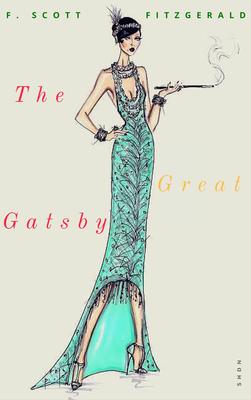
The Great Gatsby
¥8.75
In 1922, F. Scott Fitzgerald announced his decision to write "something new--something extraordinary and beautiful and simple + intricately patterned." That extraordinary, beautiful, intricately patterned, and above all, simple novel became The Great Gatsby, arguably Fitzgerald's finest work and certainly the book for which he is best known. A portrait of the Jazz Age in all of its decadence and excess, Gatsby captured the spirit of the author's generation and earned itself a permanent place in American mythology. Self-made, self-invented millionaire Jay Gatsby embodies some of Fitzgerald's--and his country's--most abiding obsessions: money, ambition, greed, and the promise of new beginnings. "Gatsby believed in the green light, the orgiastic future that year by year recedes before us. It eluded us then, but that's no matter--tomorrow we will run faster, stretch out our arms farther.... And one fine morning--" Gatsby's rise to glory and eventual fall from grace becomes a kind of cautionary tale about the American Dream. It's also a love story, of sorts, the narrative of Gatsby's quixotic passion for Daisy Buchanan. The pair meet five years before the novel begins, when Daisy is a legendary young Louisville beauty and Gatsby an impoverished officer. They fall in love, but while Gatsby serves overseas, Daisy marries the brutal, bullying, but extremely rich Tom Buchanan. After the war, Gatsby devotes himself blindly to the pursuit of wealth by whatever means--and to the pursuit of Daisy, which amounts to the same thing. "Her voice is full of money," Gatsby says admiringly, in one of the novel's more famous descriptions. His millions made, Gatsby buys a mansion across Long Island Sound from Daisy's patrician East Egg address, throws lavish parties, and waits for her to appear. When she does, events unfold with all the tragic inevitability of a Greek drama, with detached, cynical neighbor Nick Carraway acting as chorus throughout. Spare, elegantly plotted, and written in crystalline prose, The Great Gatsby is as perfectly satisfying as the best kind of poem.
To the Lighthouse
¥8.75
To the Lighthouse (5 May 1927) is a novel by Virginia Woolf. A landmark novel of high modernism, the text, centering on the Ramsay family and their visits to the Isle of Skye in Scotland between 1910 and 1920, skillfully manipulates temporality and psychological exploration. To the Lighthouse follows and extends the tradition of modernist novelists like Marcel Proust and James Joyce, where the plot is secondary to philosophical introspection, and the prose can be winding and hard to follow. The novel includes little dialogue and almost no action; most of it is written as thoughts and observations. The novel recalls the power of childhood emotions and highlights the impermanence of adult relationships. One of the book's several themes is the ubiquity of transience.
Think And Grow Rich
¥8.75
Think and Grow Rich' is the world's most widely acclaimed motivational book on success ever published. It became the must-have bible of prosperity and success for millions of readers since its initial publication in 1937. Napoleon Hill, America's most beloved motivational author, devoted 25 years to finding out how the wealthy became that way. After interviewing over 500 of the most affluent men and women of his time, he uncovered the secret to great wealth. By understanding and applying the thirteen simple steps that constitute Hill's formula, you can achieve your goals, change your life and join the ranks of the rich and successful. This book has changed countless lives and it can change yours!
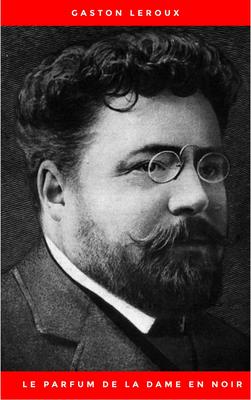
Le Parfum de la dame en noir
¥8.82
Une cérémonie de mariage réunit tous les protagonistes du célèbre Mystère de la chambre jaune.
The Merchant of Venice
¥8.82
The Merchant of Venice is a play by William Shakespeare, believed to have been written between 1596 and 1598. Although classified as a comedy in the First Folio, and while it shares certain aspects with Shakespeare's other romantic comedies, the play is perhaps more remembered for its dramatic scenes, and is best known for the character of Shylock. The title character is the merchant Antonio, not the Jewish moneylender Shylock, who is the play's most prominent and more famous villain. Though Shylock is a tormented character, he is also a tormentor, so whether he is to be viewed with disdain or sympathy is up to the audience (as influenced by the interpretation of the play's director and lead actors). As a result, The Merchant of Venice is often classified as one of Shakespeare's problem plays.

La Machine à assassiner
¥8.82
Le roman para?t, sous le titre La Poupée sanglante, 2e partie : Gabriel, en 41 feuilletons quotidiens du journal Le Matin entre le 10 ao?t et le 19 septembre 1923. L'?uvre est reprise en volume l'année suivante chez Tallandier. Bien que La Machine à assassiner ait été publiée initialement dans un volume indépendant, la plupart des éditions modernes l'incluent à la suite de La Poupée sanglante en ne conservant que ce dernier titre sur la couverture.
Un homme dans la nuit
¥8.82
Jonathan Smith, le ?roi de l'huile?, est immensément riche. Mary, enfant de rien, du hasard, de la misère, qu'il a ramassée, un jour de promenade, avec sa mère, va devenir son centre du monde, ses beaux grands yeux clairs l'ayant séduit tout de suite. Mais Mary en aime un autre et va être amenée à ?tuer? Jonathan. Celui-ci, laissé pour mort, en réchappe par miracle et après vingt ans de préparatifs, il lance sa ?terrible? vengeance, corrompant et achetant tous ceux qui lui permettront d'atteindre le but qu'il s'est fixé...
Alice nel Paese delle meraviglie
¥8.82
Il racconto è pieno di allusioni a personaggi, poemetti, proverbi e avvenimenti propri dell'epoca in cui Dodgson opera e il "Paese delle Meraviglie" descritto nel racconto gioca con regole logiche, linguistiche, fisiche e matematiche che gli hanno fatto ben guadagnare la fama che ha.
Alice's Abenteuer im Wunderland
¥8.82
Die fiktionale Welt, in der Alice im Wunderland angesiedelt ist, spielt in solch einer Weise mit Logik, dass sich die Erz?hlung unter Mathematikern und Kindern gleicherma?en gro?er Beliebtheit erfreut. Sie enth?lt zahlreiche satirische Anspielungen – nicht nur auf pers?nliche Freunde Carrolls, sondern auch auf die Schullektionen, die Kinder im England jener Zeit auswendig lernen mussten.
Cuentos de amor
¥8.82
Es la sexta y última colección de cuentos de Emilia Pardo Bazán que narra historias de amores enormes, mediocres, irrisorios, molestos, peque?os, sorprendentes, entra?ables, dramáticos o felices. Sus personajes proceden de todo el abanico de la sociedad en la Espa?a de su tiempo.

Abel Sánchez
¥8.82
Al igual que la mayor parte de las novelas de Unamuno, y a diferencia de las novelas realistas al uso en la época, Abel Sánchez carece de indicaciones cronológicas y geográficas concretas se sitúa así en un "tiempo sin tiempo". Por otro lado, en esta novela Unamuno refleja una lucha interior del protagonista, acosado por sus miedos, por sus celos y por sus concepciones encontradas, su religiosidad sin dogmas y la eterna historia bíblica que se repite, en los caínes y abeles.

Dimitri Roudine
¥8.82
Roudine est admis dans le salon de Daria Lassounska. Il brille par son éloquence, séduit les ?mes, s'installe comme interlocuteur privilégié de la ma?tresse de maison, ravissant jusqu'au coeur de Natalie, la fille de Daria. Est-ce un tartuffe ? Un beau parleur ? Qui peut dire si Roudine, homme de paroles et d'idées, est capable d'éprouver une passion véritable ? Dimitri Roudine, publié en 1856, marque durablement Henry James, qui déclare Tourguéniev premier romancier de son temps.
Le Chant de l'amour triomphant
¥8.82
A la même époque, il y avait à Ferrare une jeune damoiselle du nom de Valéria. Elle passait pour être l'une des plus grandes beautés de la ville, encore qu'on ne la v?t guère, car elle menait un genre de vie fort retiré et ne sortait de chez elle que pour se rendre à l'église, ou à la promenade, les jours de fête. Elle habitait avec sa mère, une veuve noble, mais peu fortunée, dont elle était l'unique enfant. Quiconque la croisait dans la rue, éprouvait aussit?t un sentiment d'involontaire surprise, due à sa beauté, et de tendre respect, inspiré par sa modestie : la jeune fille semblait ne pas se rendre compte du charme qui émanait de toute sa personne.
Assez ! Extrait du journal d'un peintre défunt
¥8.82
Assez ! me disais-je à moi-même, en gravissant péniblement le flanc d’une montagne escarpée qui s’élevait depuis les rives d’un fleuve paisible. Assez ! me répétai-je, en humant l’haleine résineuse d’un bosquet de sapins, particulièrement odorante dans la fracheur du crépuscule… Assez ! me dis-je de nouveau en m’asseyant sur un tertre moussu qui surplombait le fleuve, les yeux fixés sur les vagues sombres et paresseuses que dominaient les tiges vert clair des joncs… Assez,assez remué, assez erré : il est temps de rentrer en soi-même, de se prendre la tête à deux mains, et d’ordonner à son cur de ne plus battre.
Rouletabille chez le Tsar
¥8.82
Et, cette nuit, cette nuit où elle sent Rouletabille quelque part, autour d’elle… voilà, vraiment, qu’elle est moins inquiète… et pourtant les policiers ne sont plus là !… Aurait-il raison, ce petit ?… Il est certain (elle ne saurait se le dissimuler) qu’elle est beaucoup plus tranquille… plus tranquille maintenant que les policiers ne sont plus là… elle ne passe pas son temps à rechercher leurs ombres, dans l’ombre… à t?ter l’ombre… les fauteuils… les canapés… à secouer leur torpeur… à les appeler tout bas, par leur petit nom et le petit nom de leur père… à leur promettre le natcha? important s’ils veillent bien… à les compter, pour savoir où ils sont tous… et, tout à coup, à leur jeter en plein visage le jet de lumière de sa petite lanterne sourde pour être s?re, bien s?re, qu’elle a en face d’elle, un de la police… et non point un autre… un autre avec une petite bo?te infernale sous le bras !…
The Taming of the Shrew
¥8.82
The Taming of the Shrew is a comedy by William Shakespeare. It was one of his earlier plays, believed to have been written between 1590 and 1594. The play begins with a framing device in which a drunkard is deceived into thinking he is a nobleman who then watches the "play" itself, which depicts a nobleman, Petruchio, who marries an outspoken, intelligent, and bad-tempered shrew named Katherina. Petruchio manipulates and "tames" her until she is obedient to his will. The main subplot features the courting of Katherina's more conventional sister Bianca by numerous suitors.
Henry VI, Part 3
¥8.82
Henry the Sixth, Part 3, is a history play by William Shakespeare, believed written in approximately 1590, and set during the lifetime of King Henry VI of England. It prepares the ground for one of his best-known and most controversial plays: the tragedy of King Richard III (Richard III of England). It continues the action from Henry VI, Part 1 and Henry VI, Part 2, though they may not have been written in that order.
Henry IV, Part 2
¥8.82
Henry IV, Part 2 is a history play by William Shakespeare, believed written between 1596 and 1599. It is the third part of a tetralogy, preceded by Richard II and Henry IV, Part 1 and succeeded by Henry V.
King John
¥8.82
The Life and Death of King John, a history play by William Shakespeare, dramatizes the reign of King John of England (ruled 1199–1216), son of Henry II of England and Eleanor of Aquitaine and father of Henry III of England. It is believed to have been written in the mid-1590s but was not published until it appeared in the First Folio in 1623.
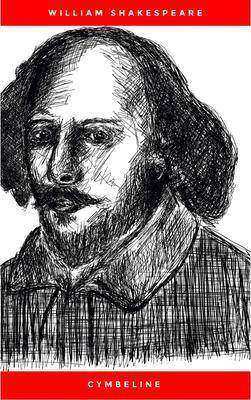
Cymbeline
¥8.82
Cymbeline is a play by William Shakespeare, based on an early Celtic British King. Although listed as a tragedy in the First Folio, modern critics often classify it as a romance. Like Othello, Measure for Measure, and The Winter's Tale, it deals with the themes of innocence and jealousy. While its date of composition is unknown, the play is known to have been produced as early as 1611.
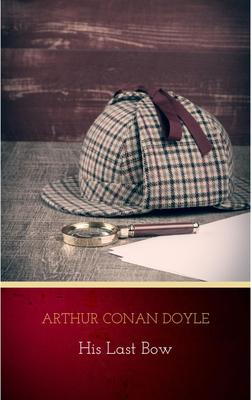
His Last Bow: Sherlock Holmes
¥8.82
His Last Bow is a collection of seven Sherlock Holmes stories (eight in American editions) by Arthur Conan Doyle, as well as the title of one of the stories in that collection. Originally published in 1917, it contains the various Holmes stories published between 1908 and 1913, as well as the one-off title story from 1917. The collection was originally called Reminiscences of Sherlock Holmes and did not contain the actual story His Last Bow, which appeared later, after the full-length The Valley of Fear was published. However later editions added it and changed the title. Some recent complete editions have restored the earlier title. When the Memoirs of Sherlock Holmes were published in the USA for the first time, the publishers believed "The Adventure of the Cardboard Box" was too scandalous for the American public, since it dealt with the theme of adultery. As a result, this story was not published in the USA until many years later, when it was added to His Last Bow. Even today, most American editions of the canon include it with His Last Bow, while most British editions keep the story in its original place in The Memoirs of Sherlock Holmes.


