万本电子书0元读

万本电子书0元读

?anakkale -1915
?anakkale -1915
Tayfun Çavuşoğlu
¥18.56
anakkale Sava üzerine zellikle son yllarda yazlan kitaplarda doru ve dürüst yaklamlara da, cehaletin, aymazln, tarihe ihanetin ve yalann bin bir türlüsüne de rastlamak mümkün… ylesine aknlk yaratacak rnekler var ki... Kimisi, deniz savalar (18 Mart) ile Gelibolu’daki kara savalarn (25 Nisan) kronolojik olarak ayrt edebilecek bilgiden bile yoksun! ünkü gerei ideolojiye kurban etmeyi kafaya koymular bir kere… Tek ama, her ne pahasna olursa olsun anakkale’den Mustafa Kemal’in adn silip atmak… Mustafa Kemal’in ad gemesin, Mustafa Kemal o baardan pay almasn yeter! Varsn verdikleri tarihler de, saylar da, ordularn muharebe düzenleri de yalan-yanl olsun, ne kar! Meydan bo zannedilmesin... te polemik konular, yalanlar, iftiralar ve tarihi gerekler... --- YAZAR ZGEM----- Tayfun AVUOLU (1964 / …) Uluda niversitesi Eitim Fakültesi Alman Dili Anabilim Dal (1985) mezunu. renciyken 1983 yl balarnda Türk Haberler Ajans (THA) Bursa Bürosu’nda muhabirlie balad. Bursa’daki yerel gazeteler Hkimiyet, Olay, Bursa hkimiyet ve Kent gazetelerinde muhabir, istihbarat efi, haber müdürü, yaz ileri müdürü olarak alt. Bursa hkimiyet ve Bursa Haber gazetelerinde genel yayn ynetmenlii grevinde bulundu. Halen Bursa yerel basnndaki almalarn sürdürüyor. ada Gazeteciler Dernei (GD) Bursa ubesi’nde iki dnem (1997-2001) bakanlk yapan Tayfun avuolu, Bursa Gazeteciler Cemiyeti’nde (BGC) bir dnem (2009-2012) ynetim kurulu üyeliinde de bulundu. Basn meslek rgütlerinden ok sayda dül de alan, sürekli basn kart sahibi Tayfun avuolu, ngilizce retmeni Nesrin avuolu ile evli olup, Altu ve Alper’in babasdr. lk kitab “anakkale 1915, ftiralar, Yalanlar, Polemikler”, 2014’ün ubatnda Kasta Yaynevi (stanbul) tarafndan yaynland.
Aniversarea
Aniversarea
Alcaz
¥47.42
La fel ca ?i precedentele romane ale lui Emil Ra?iu – reactualiz?ri ale marilor noastre mituri – romanul Turnul col?ei... are o tem? major?, anume existen?a problematic? a omului ca fiin?? situat? ?ntre timp ?i eternitate, ?ntre clip? ?i ve?nicie. Dilema major? a vie?ii este ?ndoita fa?? a realit??ii, perceput? prin sim?uri ca etern? trecere ?i fragmentare ?n lucruri, ?n timp ce prin cuget – prin filosofia eleat? a lui Parmenide, Pitagora, Platon ?i a altora – ea este unitate ve?nic? a Fiin?ei, trecerea fiind doar o iluzie a sim?urilor noastre. Omul este prins la mijloc, ?ntre vreme ?i ve?nicie, o soart? pu?in de invidiat...Aceast? existen?? a omului ?ntre clip? ?i ve?nicie, ?n permanent? confruntare cu eternitatea, este nodul central al ontologiei, reflectat? ?n romanul de fa?? prin eroii acestuia, ?ncep?nd cu dasc?lul de la Academia de la Sf?ntul Sava, Mihai Ciubo?el, cu ipostazele sale, adev?rate avataruri, care sintetizeaz? contrariile, ajung?nd p?n? ?n timpurile noastre (secolul XXI), definite ale neo-fanariotismului ?i ale supu?eniei servile la noi centre de putere.Romanul str?bate prin eroii s?i trei sute de ani de istorie, de la Sf?ntul Martir Constantin Br?ncoveanu la Eminescu p?n? ?n vremurile noastre, ?ncheindu-se cu optimism ?i m?rturisind, ?n ciuda tuturor greut??ilor, credin?a ?n victoria final? a luminii ?i adev?rului neamului rom?nesc.
The Tempest: [Illustrated Edition]
William Shakespeare
¥18.80
“THE TEMPEST” is Shakespeare's last book. The story Prospero relates is that he is the rightful Duke of Milan and that his younger brother, Antonio, betrayed him, seizing his title and property. Twelve years earlier, Prospero and Miranda were put out to sea in little more than a raft. Miraculously, they both survived and arrived safely on this island, where Prospero learned to control the magic that he now uses to manipulate everyone on the island. Upon his arrival, Prospero rescued a sprite, Ariel, who had been imprisoned by the witch Sycorax. Ariel wishes to be free and his freedom has been promised within two days.??The last inhabitant of the island is the child of Sycorax and the devil: Caliban, whom Prospero has enslaved. Caliban is a natural man, uncivilized and wishing only to have his island returned to him to that he can live alone in peace.??Soon the royal party from the ship is cast ashore and separated into three groups. The king's son, Ferdinand, is brought to Prospero, where he sees Miranda, and the two fall instantly in love. Meanwhile, Alonso, the king of Naples, and the rest of his party have come ashore on another part of the island. Alonso fears that Ferdinand is dead and grieves for the loss of his son. Antonio, Prospero's younger brother, has also been washed ashore with the king's younger brother, Sebastian. ??Antonio easily convinces Sebastian that Sebastian should murder his brother and seize the throne for himself. This plot to murder Alonso is similar to Antonio's plot against his own brother, Prospero, 12 years earlier.??Another part of the royal party — the court jester and the butler — has also come ashore. Trinculo and Stefano each stumble upon Caliban, and each immediately sees a way to make money by exhibiting Caliban as a monster recovered from this uninhabited island. Stefano has come ashore in a wine cask, and soon Caliban, Trinculo, and Stefano are drunk. While drinking, Caliban hatches a plot to murder Prospero and enrolls his two new acquaintances as accomplices. Ariel is listening, however, and reports the plot to Prospero.??Next, Prospero stages a masque to celebrate the young couple's betrothal, with goddesses and nymphs entertaining the couple with singing and dancing. While Ferdinand and Miranda have been celebrating their love, Alonso and the rest of the royal party have been searching for the king's son. Exhausted from the search and with the king despairing of ever seeing his son alive, Prospero has ghosts and an imaginary banquet brought before the king's party. A god-like voice accuses Antonio, Alonso, and Sebastian of their sins, and the banquet vanishes. The men are all frightened, and Alonso, Antonio, and Sebastian run away.??Prospero punishes Caliban, Trinculo, and Stefano with a run through a briar patch and swim in a scummy pond. Having accomplished what he set out to do, Prospero has the king's party brought in. Prospero is clothed as the rightful Duke of Milan, and when the spell has been removed, Alonso rejects all claims to Prospero's dukedom and apologizes for his mistakes. Within moments, Prospero reunites the king with his son, Ferdinand. Alonso is especially pleased to learn of Miranda's existence and that Ferdinand will marry her.?Prospero then turns to his brother, Antonio, who offers no regrets or apology for his perfidy. ??Nevertheless, Prospero promises not to punish Antonio as a traitor. When Caliban is brought in, Caliban tells Prospero that he has learned his lesson. His two co-conspirators, Trinculo and Stefano, will be punished by the king. Soon, the entire party retires to Prospero's cell to celebrate and await their departure home. Only Prospero is left on stage.??In a final speech, Prospero tells the audience that only with their applause will he be able to leave the island with the rest of the party. Prospero leaves the stage to the audience's applause.
?ocul crizei
?ocul crizei
Christi Aura
¥65.32
Inchizi?ia spaniol?, poate cea mai temut? institu?ie din istoria omenirii, a fost ?nfiin?at? ?n 1478 de Regii Catolici, Ferdinand ?i Isabella, ?i abolit? abia ?n 1834, odat? cu R?zboaiele Napoleoniene. Spre deosebire de Inchizi?ia medieval? din restul Europei, cea din Spania ?i Portugalia s-a r?sp?ndit ?n coloniile iberice din Asia, Africa ?i America de Sud, ajung?nd s? terorizeze, timp de peste trei secole, nu mai pu?in de patru continente.Care au fost ?ns? motivele ?nfiin??rii ei? De ce provoca at?ta team?? Cine erau victimele torturate ?i arse ?n autodafeuri? Toby Green readuce la via?? aceast? perioad? a istoriei cu ajutorul uria?ei arhive inchizitoriale p?strate ?i prezint? nenum?rate cazuri judecate de Sf?ntul Oficiu, de la arhiepiscopi la oameni obi?nui?i, victime inocente ale unui sistem diabolic. De?i ?nsp?im?nt?toare, aceste pove?ti sunt un exemplu al rezisten?ei spiritului uman ?n fa?a absurdului ?i a r?ului. Toby Green ne dezv?luie mecanismele prin care pot ap?rea persecu?ia ?i teroarea, dar ?i felul ?n care pot fi evitate. Inchizi?ia este un avertisment venit din trecut, o lec?ie a istoriei pentru noi to?i!
Cruikshank's Water Colours
George Cruikshank
¥27.88
It is fair to characterise the three suites of original water-colour drawings, as executed by our artist, as unique examples of the great George Cruikshank's special individual proficiency as an exponent of this branch of technical dexterity. More-over, it may be regarded as a fortunate circumstance that the three works, here reproduced with amazing fidelity in facsimile, represent happily the very chefs d'oeuvre of his wonderful productions; in their respective categories, preserving the best examples of his remarkable genius as an imaginative creator of vivid pictures, alike stirring and animated, and representing at one glance his vast dramatic powers, his mastery of the humorous side of life, and the intensity he was consistently able to infuse into terrible and tragic scenes. It is noteworthy that the inimitable artist George Cruikshank but rarely pro-duced finished water-colour drawings; the bulk of his prolific and familiarly rec-ognised designs for book illustrations were mostly dainty pencil sketches, occa-sionally finished in pen and ink. It is a problem difficult to solve satisfactorily whether, beyond the three memorable instances of the works here reproduced in facsimile, there are in existence any other complete suites of original illustrations by George Cruikshank—that is to say, fully executed by his master hand as finished water-colour drawings. Tinted sketches may be found in the prized possessions of Cruikshank collectors, and spirited studies for many of his favourite and most successful subjects have been cleverly touched in with watercolours; for instance, such as certain of his original drawings as designed for the illustrations of Harri-son Ainsworth's Tower of London, and the clever historical and picturesque series of Windsor Castle designs; these are, however, to be regarded as exceptional cases, for the bulk of these most successful and popular designs were carefully executed in pencil, or occasionally outlined with the pen, and highly finished with washes of warm sepia. It is worthy of recollection that Cruikshank was a most dexterous artist in this monochrome branch, his earlier artistic experiences having been al-most exclusively in the walk of aqua-tinted etchings; all his early book illustrations, his caricatures, and satirical plates—social or political—were uniformly etched by his hand in the most spirited fashion, after his ready sketches and rough studies, and when the outline etching was bitten in, Cruikshank elaborately worked out his colour suggestions, for light and shade, with a brush over the first-etched outline, in tones of sepia or Indian ink, for the guidance of the professional 'aquatinters'—the school of artists to whose trained skill was entrusted the task of completing these plates to produce the effect of highly finished washed drawings in mono-chrome. By this, his youthful practice, George Cruikshank had acquired remarka-ble dexterity, his original pen-and-ink designs, and the outline etchings, after his earlier book illustrations, being worked up in monochrome to the dainty finish of delicate miniatures, in which art both his father Isaac and his brother Isaac Robert were first-class proficients, as he himself has recorded with pride in describing the special gifts and qualifications which distinguished the Cruikshank family. ? ABOUT THE AUTHOR; George Cruikshank (1792 – 1878) was a British caricaturist and book illustrator, praised as the "modern Hogarth" during his life. His book illustrations for his friend Charles Dickens, and many other authors, reached an international audience. Cruikshank was born in London. His father, Isaac Cruikshank, was one of the leading caricaturists of the late 1790s and Cruikshank started his career as his father's apprentice and assistant. His older brother, Isaac Robert, also followed in the family business as a caricaturist and illustrator. Cruikshank's early work was caricature; but in 1823, at the age of 31, he started to focus on book illustration. He illustrated the first, 1823 English translation (by Edgar Taylor and David Jardine) of Grimms' Fairy Tales, published in two volumes as German Popular Stories. On 16 October 1827, he married Mary Ann Walker (1807–1849). Two years after her death, on 7 March 1851, he married Eliza Widdison. The two lived at 263 Hampstead Road, North London.Upon his death, it was discovered that Cruikshank had fathered 11 illegitimate children with a mistress named Adelaide Attree, his former servant, who lived close to where he lived with his wife. Adelaide was ostensibly married and had taken the married surname 'Archibold'.
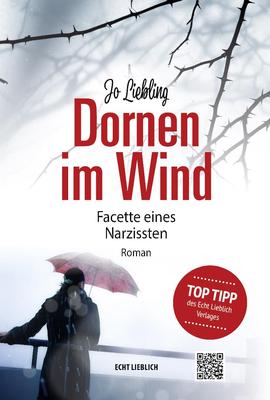
Dornen im Wind: Facette eines Narzissten
Jo Liebling
¥90.03
Buchbeschreibung: Jo Liebling erz?hlt die ungew?hnliche Liebesgeschichte zwischen Evelyn und Martin, die romantisch und z?rtlich beginnt und als Alptraum endet. Martin entpuppt sich als Narzisst. Evelyn begibt sich in eine ungesunde Opferhaltung und bringt sich damit in eine gef?hrliche Lage. Evelyn verliert ihr Ged?chtnis. Martin wird tot aufgefunden, fast nackt, mit einem String gekleidet und einem Eispickel im Hals. Die Spannung steigt. Es ist pur, auf den Punkt gebracht - Romantik, Erkenntnis, Dramatik und Mordaufkl?rung in einem Buch. Es lohnt sich!? www.echt-lieblich-verlag.de , kontakt@echt-lieblich-verlag.de.
Colours (Activities for 3-5 Year Olds)
Yates, Irene
¥39.14
Colours: Activities for 3-5 Year Olds contains enjoyable activities to help develop children's essential skills. Recognizing, identifying and being able to name colours are essential steps in the early education of all children. Colour knowledge is an important means of helping children to make comparisons and observe and explore their environment. The practical activities in Colours include: Fun ways of teaching colour recognition and identification, Sorting and matching games, Unusual art and craft ideas and Suggestions for exploring colours in the environment. All the books in the Activities for 3-5 Year Olds Series contain tried-and-tested activities, linked to the six key areas of learning. They are an invaluable resource of fun, easy-to-use ideas for all early years settings, from preschools and nurseries to reception classes and day nurseries.
Benedict Cumberbatch, In Transition
Porter, Lynnette
¥58.76
Tinker Tailor Soldier Spy, War Horse, Star Trek: Into Darkness, The Hobbit trilogy, Twelve Years a Slave, August: Osage County, The Fifth Estate; Hedda Gabler, After the Dance, Frankenstein; Hawking, To the Ends of the Earth, The Last Enemy, Parade's End, and, of course, Sherlock. For most actors, these stellar cinematic, theatrical, and television events would be the highlights of a lifetime's work. On Benedict Cumberbatch's resume they are only a few of many entries. Especially since 2010, his performances have garnered a plethora of best actor awards, both in the theatre (Evening Standard Theatre Award, Critics Circle Theatre Award, and Olivier Award), by playing the dual roles of Victor Frankenstein and the Creature in the National Theatre's Frankenstein, and on television (Broadcasting Press Guild Award, Critics Choice Television Award, Crime Thriller Award, and TV Choice Award), by starring as the titular Holmes in the BBC's Sherlock. Add these and other recent accolades to nearly a decade's nominations and awards (such as the Golden Nymph as best actor in Hawking), and it's easy to see why Benedict Cumberbatch is often hailed as the actor of his generation. Cumberbatch's body of work further includes indie films, radio plays and series, television documentaries, live dramatic readings, multimedia advertisements, and even the occasional stint as a fashion model. He often shares an intriguing perspective on his profession, as evidenced in sometimes controversial interviews. He has become so much in demand that online box offices crash when tickets for his performances go on sale, and, before a Cheltenham Literature Festival Q&A session, fans overwhelmed Twitter when so many responded immediately to a call for questions. Cumberbatch consistently is a top name on lists ranging from sex appeal to global influence. In 2012 he beat David Beckham in the former and U.S. President Barack Obama in the latter. Increasingly, part of Cumberbatch's job involves the role of celebrity. Benedict Cumberbatch is at a pivotal point in his profession, and his career trajectory especially as documented in entertainment media permits a closer examination of just what it means to be a celebrity or star in Britain or the U.S. and how an actor may be perceived very differently in London or Hollywood. This performance biography is an analysis of a man in transition from working actor to multimedia star, as well as the balance between actor and celebrity. It looks at what makes this actor so well suited to play one of popular culture's iconic characters, Sherlock Holmes, and how Sherlock is so well suited to propel Cumberbatch toward greater global fame.
Mein Kampf: "Zwei Bande in Einem Band Ungekurzte Ausgabe"
Adolf Hitler
¥37.11
Mein Kampf ist eine politisch-ideologische Programmschrift Adolf Hitlers. Sie erschien in zwei Teilen. Hitler stellte darin seinen Werdegang zum Politiker und seine Weltanschauung dar. Das Buch enthalt Hitlers Autobiografie, ist in der Hauptsache aber eine zweckgerichtete Kampf- und Propagandaschrift, die zum Neuaufbau der NSDAP als zentral gelenkter Partei unter Hitlers Fuhrung dienen sollte.??Der erste Band entstand in Hitlers Haftzeit 1924 und wurde erstmals am 18. Juli 1925, der zweite am 11. Dezember 1926 veroffentlicht. Vor allem der erste Band wurde bis 1932 in der Weimarer Republik zu einem viel diskutierten Bestseller.??Hitler schrieb 1924 den ersten Teil von Mein Kampf wahrend seiner Festungshaft in der Haftanstalt Landsberg in Landsberg am Lech. Er soll den Text seinem spateren Stellvertreter Rudolf HeB diktiert haben. Neuere Erkenntnisse weisen darauf hin, dass Hitler den Text selbst auf einer Reiseschreibmaschine tippte. Winifred Wagner berichtete, Hitler "massenhaft Schreibpapier" nach Landsberg geschickt zu haben.??Ursprunglich sollte das Buch Viereinhalb Jahre [des Kampfes] gegen Luge, Dummheit und Feigheit heiBen. Nach der vorzeitigen Haftentlassung im Dezember 1924 diktierte Hitler den starker programmatisch ausgelegten zweiten Teil von Mein Kampf seinem Gefolgsmann Max Amann, Direktor des Franz-Eher-Verlags. Amann und Hitler zogen sich im Sommer 1925 in das (daher spater so genannte) Kampfhausl des Pensionswirts Bruno Buchner auf dem Obersalzberg (nahe dem spateren Berghof) zuruck, um das Manuskript zu tippen.??Im Juli 1925 erschien der erste Band, im Dezember 1926 der zweite. Bis 1930 vertrieb der Verlag Mein Kampf in zwei groBformatigen Banden zum Preis von zunachst je 12, ab 1928 14 Reichsmark.??Der Originaltext erlebte in seiner zwanzigjahrigen Editionsgeschichte von 1925 bis 1945 zahlreiche Anderungen und Erweiterungen. Der Text der spaten Ausgaben aus den 1940er Jahren ist nur bedingt in direkten Bezug zu setzen mit Hitlers publizistischer und politischer Positionierung Mitte der 1920er. ??Im Herbst 2006 tauchten in Munchen funf Manuskript- und achtzehn Entwurfsseiten zu Hitlers Buch auf, die er vor dessen Veroffentlichung im Fruhjahr und im Sommer 1924 wahrend seiner Festungshaft in Landsberg verfasst hatte. Der Vergleich mit der spateren Endfassung ermoglichte der Hitlerforschung Ruckschlusse zur Entwicklung von Hitlers Weltbild und Agitationsweise.??Der erste und der zweite Band erschienen in einer Erstauflage von je 10.000 Exemplaren. Die NSDAP finanzierte sich ganz wesentlich uber den eigenen Parteiverlag, an dem auch Hitler personlich beteiligt war. Von der einbandigen Volksausgabe wurden bis Januar 1933 287.000 Exemplare zum Preis von je 12 RM durch den Zentralverlag der NSDAP (Franz Eher Nachfolger) verkauft. ??Hitler erhielt pro verkauftem Buch 10 Prozent Tantiemen. Die folgende einbandige Ausgabe kostete 8 RM ("Volksausgabe", ab 1930)...
Taking the Bastile: (Historical Novel)
Alexander Dumas
¥21.26
It was a winter night, and the ground around Paris was covered with snow, although the flakes had ceased to fall since some hours.?Spite of the cold and the darkness, a young man, wrapped in a mantle so voluminous as to hide a babe in his arms, strode over the white fields out of the town of Villers Cotterets, in the woods, eighteen leagues from the capital, which he had reached by the stage-coach, towards a hamlet called Haramont. His assured step seemed to indicate that he had previously gone this road.?Soon above him streaked the leafless boughs upon the grey sky. The sharp air, the odor of the oaks, the icicles and beads on the tips of branches, all appealed to the poetry in the wanderer.??Through the clumps he looked for the village spire and the blue smoke of the chimneys, filtering from the cottages through the natural trellis of the limbs.?It was dawn when he crossed a brook, bordered with yellow cress and frozen vines, and at the first hovel asked for the laborer's boy to take him to Madeline Pi-tou's home.??Mute and attentive, not so dull as most of their kind, the children sprang up and staring at the stranger, led him by the hand to a rather large and good-looking cottage, on the bank of the rivulet running by most of the dwellings.?A plank served as a bridge.?"There," said one of the guides nodding his head to-wards it.?Gilbert gave them a coin, which made their eyes open still more widely, and crossed the board to the door which he pushed open, while the children, taking one another's hand, started with all their might at the handsome gentleman in a brown cloth coat, buckled shoes and large cloak, who wanted to find Madeline Pitou.?Apart from them, Gilbert, for such was the young man's name, simply so for he had no other, saw no liv-ing things: Haramont was the deserted village he was seeking.??As soon as the door was open, his sight was struck by a scene full of charm, for almost anybody, and par-ticularly for a young philosopher like our roamer.?A robust peasant woman was suckling a baby, while another child, a sturdy boy of four or five, was saying a prayer in a loud voice.?In the chimney corner, near a window or rather a hole in the wall in which was stuck a pane of glass, an-other woman, going on for thirty-five or six, was spin-ning, with a stool under her feet, and a fat poodle on an end of this stool.?Catching sight of the visitor the dog barked in a civil and hospitable manner just to show that he had not been caught napping. The praying boy turned, cutting the devotional phrase in two, and both females uttered an exclamation between joy and surprise.?"I greet you, good mother Madeline," said Gilbert with a smile.
Paradisul r?t?ci?ilor
Davidsohn Madeleine
¥57.14
Despre Europa s-a vorbit mult, ?n special din perspectiva social? ?i economic?, ?ns? tema nu a fost dezb?tut?, a?a cum s-ar fi cuvenit, de pe pozi?ia culturii. Cartea Mituri ?i legende ale antichit??ii propune studii eseistice referitoare la baza culturii europene. Eseurile ne invit? s? g?ndim ?mpreun? Europa din perspectiva singurului factor care une?te – cultura.
Plimb?ndu-l pe Fun
Plimb?ndu-l pe Fun
Roman Alex
¥24.44
Drag? cititorule,Dac? te-ai uitat ieri mai mult de dou? ore la televizor ?i nu po?i f?r? asta, las? cartea asta jos.Dac? vrei s? fii de acord cu cineva, cu oricine, nu e?ti omul meu.Dac? m? ?tii din tinere?e ?i crezi c? sunt b?iatul care se b?lb?ia la prompter, dai banii degeaba.Dac? vrei s? dai cadou cartea asta unui prieten, nu mai bine ?i iei o sticl? de vin? Eu nu ?tiu s? ame?esc a?a bine.?n general, recomand cartea doar c?torva oameni.Cei care vor s? afle cum am ajuns s? tr?im, iubim, alegem ?n social media.Dar mai ales celor care cred c? a scrie poate schimba ceva.P.S. Poate.Doar c? trebuie s? scriem cu to?ii ?n acela?i timp.Despre asta e Share! Despre for?a social media, cel mai bun amplificator de idei pe care ?l ?tiu.?ntr-un fel, dac? stai s? te g?nde?ti, ?i tu ai scris-o.
Iarna ?ngerilor
Iarna ?ngerilor
Dascălu Bogdan Mihai
¥32.62
Eseuri ?i cronici teatrale structurate simultan ?n dou? planuri, ?nc?t se reconstituie panorama artei spectacolului ?n Rom?nia ?i par?ial ?n lume, ?n perioada 1993-2003, ?i se realizeaz? o privire din unghiul zilei de azi a artei dramatice, ?n evolu?ia ei, de la antici la contemporani.
Libertate, moral? ?i politic?
Octavian Opriș
¥65.17
Eseurile cuprinse ?n aceast? carte au ?n comun c?teva teme care m-au preocupat: ra?ionalitatea, valorile ?i libertatea. O parte din articole au ap?rut ?n diferite publica?ii, altele au v?zut lumina tiparului prin aceast? carte. Am ?ncercat s? aduc ?n con?tiin?a public? c??iva g?nditori rom?ni importan?i ?n spa?iul cultural rom?nesc ?i l?sa?i ?n umbra uit?rii. Opera acestora e realizat? ?n bun? parte ?n perioada interbelic?, ?ntr-un climat de libertate, f?r? presiuni ideologice sau de alt? natur?, fiind rezultatul for?ei intelectuale ?i al culturii personale. Dup? 1946 regimul comunist a ?ngr?dit progresiv libert??ile politice, a ?ncercat s? distrug? tradi?iile culturale a?a-zis burgheze, exercit?nd o represiune asupra intelectualit??ii ?i a creatorilor de opere. Domeniul ?tiin?elor sociale a fost afectat de o cenzur? inchizitorial?, pun?ndu-se la index autori ?i opere considerate periculoase pentru societatea rom?neasc? ?i ideologia marxist?.
Prakseologija hrvatske knji?evnosti: Knjiga III.
Branimir Donat
¥207.99
n condiiile n care cmpul teoriilor cosmopolite contemporane se afl ntr-o permanent expansiune, lucrarea urmrete maniera n care aceast paradigm a cosmopolitismului, care nu este lipsit de anumite tensiuni i controverse, poate fi aplicat i n analiza tiinelor politice, n general, i a teoriei politice, n special. Nivelurile de analiz se refer la principiile fundamentale, noile concepte i ipotezele formulate i soluiile propuse n cadrul cosmopolitismului.
Literatura german?. De la Sturm-und-Drang la zilele noastre
Nicolae Balota
¥96.47
Cartea abordeaz? o tem? important?, care nu a f?cut obiectul unei cercet?ri distincte ?n istoriografia rom?neasc?, mai ales perioada 1948-1955. Autorul a analizat evolu?ia elitei politice na?ional-??r?niste ?i na?ional-liberale ?n ?ntreg intervalul 1945-1955 … Ponderea cea mai mare o ocup? activitatea represiv? a guvernan?ilor care, ?n anii 1947-1950, au desf??urat o ampl? ac?iune de arestare a tuturor adversarilor regimului … Urm?rind simultan, potrivit criteriului cronologic, ?ntregul tablou al situa?iei interna?ionale, al activit??ii guvernamentale, al vie?ii interne a partidelor analizate, al ac?iunii liderilor politici etc … lucrarea se dovede?te a fi temeinic documentat? ?i realmente original?.
Arhive secrete, secretele arhivelor. Vol. 2
Gh. Buzatu
¥106.19
Lucrarea vizeaz? o tem? de actualitate – brandul de ora?, oferind un cadru teoretic al acestui nou concept de marketing, completat de o parte aplicativ? divers?, care ?i-a propus s? identifice ?i s? completeze eforturile autorit??ilor locale ?n aceast? direc?ie.
The Mysterious Island
Jules Verne
¥8.67
Hard Times – For These Times (commonly known as "Hard Times") is the tenth novel by Charles Dickens, first published in 1854. The book appraises English society and highlights the social and economic pressures of the times. Hard Times is unusual in several respects. It is by far the shortest of Dickens' novels, barely a quarter of the length of those written immediately before and after it. Also, unlike all but one of his other novels, Hard Times has neither a preface nor illustrations. Moreover, it is his only novel not to have scenes set in London. Instead the story is set in the fictitious Victorian industrial Coketown, a generic Northern English mill-town, in some ways similar to Manchester, though smaller. Coketown may be partially based on 19th-century Preston. One of Dickens's reasons for writing Hard Times was that sales of his weekly periodical, Household Words, were low, and it was hoped the novel's publication in instalments would boost circulation – as indeed proved to be the case. Since publication it has received a mixed response from critics. Critics such as George Bernard Shaw and Thomas Macaulay have mainly focused on Dickens's treatment of trade unions and his post–Industrial Revolution pessimism regarding the divide between capitalist mill owners and undervalued workers during the Victorian era. F. R. Leavis, a great admirer of the book, included it—but not Dickens' work as a whole—as part of his Great Tradition of English novels. ***‘Now, what I want is, Facts. Teach these boys and girls nothing but Facts. Facts alone are wanted in life. Plant nothing else, and root out everything else. You can only form the minds of reasoning animals upon Facts: nothing else will ever be of any service to them. This is the principle on which I bring up my own children, and this is the principle on which I bring up these children. Stick to Facts, sir!’ ? ?The scene was a plain, bare, monotonous vault of a school-room, and the speaker’s square forefinger emphasized his observations by underscoring every sentence with a line on the schoolmaster’s sleeve. The emphasis was helped by the speaker’s square wall of a forehead, which had his eyebrows for its base, while his eyes found commodious cellarage in two dark caves, overshadowed by the wall. The emphasis was helped by the speaker’s mouth, which was wide, thin, and hard set. The emphasis was helped by the speaker’s voice, which was inflexible, dry, and dictatorial. The emphasis was helped by the speaker’s hair, which bristled on the skirts of his bald head, a plantation of firs to keep the wind from its shining surface, all covered with knobs, like the crust of a plum pie, as if the head had scarcely warehouse-room for the hard facts stored inside. The speaker’s obstinate carriage, square coat, square legs, square shoulders,—nay, his very neckcloth, trained to take him by the throat with an unaccommodating grasp, like a stubborn fact, as it was,—all helped the emphasis. ‘In this life, we want nothing but Facts, sir; nothing but Facts!’The speaker, and the schoolmaster, and the third grown person present, all backed a little, and swept with their eyes the inclined plane of little vessels then and there arranged in order, ready to have imperial gallons of facts poured into them until they were full to the brim.
Mansfield Park
Mansfield Park
Jane Austen
¥28.04
It is believed that the scene of this tale, and most of the information necessary to understand its allusions, are rendered sufficiently obvious to the reader in the text itself, or in the accompanying notes. Still there is so much obscurity in the Indian traditions, and so much confusion in the Indian names, as to render some explanation useful. Few men exhibit greater diversity, or, if we may so express it, greater antithesis of character, than the native warrior of North America. In war, he is daring, boastful, cunning, ruthless, self-denying, and self-devoted; in peace, just, generous, hospitable, revengeful, superstitious, modest, and commonly chaste. These are qualities, it is true, which do not distinguish all alike; but they are so far the predominating traits of these remarkable people as to be characteristic. It is generally believed that the Aborigines of the American continent have an Asiatic origin. There are many physical as well as moral facts which corroborate this opinion, and some few that would seem to weigh against it. The color of the Indian, the writer believes, is peculiar to himself, and while his cheek-bones have a very striking indication of a Tartar origin, his eyes have not. Climate may have had great influence on the former, but it is difficult to see how it can have produced the substantial difference which exists in the latter. The imagery of the Indian, both in his poetry and in his oratory, is oriental; chastened, and perhaps improved, by the limited range of his practical knowledge. He draws his metaphors from the clouds, the seasons, the birds, the beasts, and the vegetable world. In this, perhaps, he does no more than any other energetic and imaginative race would do, being compelled to set bounds to fancy by experience; but the North American Indian clothes his ideas in a dress which is different from that of the African, and is oriental in itself. His language has the richness and sententious fullness of the Chinese. Philologists have said that there are but two or three languages, among all the numerous tribes which formerly occupied the country that now composes the United States. They ascribe the known difficulty one people have to understand another to corruptions and dialects. The writer remembers to have been present at an interview between two chiefs of the Great Prairies west of the Mississippi, and when an interpreter was in attendance who spoke both their languages. The warriors appeared to be on the most friendly terms, and seemingly conversed much together; yet, according to the account of the interpreter, each was absolutely ignorant of what the other said. They were of hostile tribes, brought together by the influence of the American government; and it is worthy of remark, that a common policy led them both to adopt the same subject. They mutually exhorted each other to be of use in the event of the chances of war throwing either of the parties into the hands of his enemies. Whatever may be the truth, as respects the root and the genius of the Indian tongues, it is quite certain they are now so distinct in their words as to possess most of the disadvantages of strange languages; hence much of the embarrassment that has arisen in learning their histories, and most of the uncertainty which exists in their traditions. Like nations of higher pretensions, the American Indian gives a very different account of his own tribe or race from that which is given by other people. He is much addicted to overestimating his own perfections, and to undervaluing those of his rival or his enemy; a trait which may possibly be thought corroborative of the Mosaic account of the creation. The whites have assisted greatly in rendering the traditions of the Aborigines more obscure by their own manner of corrupting names. Thus, the term used in the title of this book has undergone the changes of Mahicanni, Mohicans, and Mohegans; the latter being the word commonly used by the whites.
Our Mutual Friend
Our Mutual Friend
Charles Dickens
¥28.04
IT is much easier to understand and remember a thing when a reason is given for it, than when we are merely shown how to do it without being told why it is so done; for in the latter case, instead of being assisted by reason, our real help in all study, we have to rely upon memory or our power of imitation, and to do simply as we are told without thinking about it. The consequence is that at the very first difficulty we are left to flounder about in the dark, or to remain inactive till the master comes to our assistance.? Now in this book it is proposed to enlist the reasoning faculty from the very first: to let one problem grow out of another and to be dependent on the foregoing, as in geometry, and so to explain each thing we do that there shall be no doubt in the mind as to the correctness of the proceeding. The student will thus gain the power of finding out any new problem for himself, and will therefore acquire a true knowledge of perspective.?? George Adolphus Storey??Book First?The Necessity of the Study of Perspective to Painters, Sculptors, and Architects?LEONARDO DA VINCI tells us in his celebrated Treatise on Painting that the young artist should first of all learn perspective, that is to say, he should first of all learn that he has to depict on a flat surface objects which are in relief or distant one from the other; for this is the simple art of painting. Objects appear smaller at a distance than near to us, so by drawing them thus we give depth to our canvas. The outline of a ball is a mere flat circle, but with proper shading we make it appear round, and this is the perspective of light and shade.? ‘The next thing to be considered is the effect of the atmosphere and light. If two figures are in the same coloured dress, and are standing one behind the other, then they should be of slightly different tone, so as to separate them. And in like manner, according to the distance of the mountains in a landscape and the greater or less density of the air, so do we depict space between them, not only making them smaller in outline, but less distinct.’?Sir Edwin Landseer used to say that in looking at a figure in a picture he liked to feel that he could walk round it, and this exactly expresses the impression that the true art of painting should make upon the spectator.??There is another observation of Leonardo’s that it is well I should here transcribe; he says: ‘Many are desirous of learning to draw, and are very fond of it, who are notwithstanding void of a proper disposition for it. This may be known by their want of perseverance; like boys who draw everything in a hurry, never finishing or shadowing.’ This shows they do not care for their work, and all instruction is thrown away upon them. At the present time there is too much of this ‘everything in a hurry’, and beginning in this way leads only to failure and disappointment. These observations apply equally to perspective as to drawing and painting.? Unfortunately, this study is too often neglected by our painters, some of them even complacently confessing their ignorance of it; while the ordinary student either turns from it with distaste, or only endures going through it with a view to passing an examination, little thinking of what value it will be to him in working out his pictures. Whether the manner of teaching perspective is the cause of this dislike for it, I cannot say; but certainly most of our English books on the subject are anything but attractive.??All the great masters of painting have also been masters of perspective, for they knew that without it, it would be impossible to carry out their grand compositions. In many cases they were even inspired by it in choosing their subjects. When one looks at those sunny interiors, those corridors and courtyards by De Hooghe, with their figures far off and near, one feels that their charm consists greatly in their perspective, as well as in their light and tone and colour... ?
Symbolic Logic: {Complete & Illustrated}
Lewis Carroll
¥28.04
The excellence of the following Treatise is so well known to all in any tolerable degree conversant with the Art of Painting, that it would be almost superfluous to say any thing respecting it, were it not that it here appears under the form of a new translation, of which fome account may be expected. Of the original Work, which is in reality a selection from the voluminous manuscript collections of the Author, both in Solio and Quarto, of all such passages as related to Painting, no edition appeared in print till 1651. Though its Author died so long before as the year 1519; and it is owing to the circumstance of a manuscript copy of these extracts in the original Italian, having fallen into the hands of “Raphael” that in the former of these years it was published at Paris in a thin folio volume in that language, accompanied with a set of cuts from the drawings of Niccolo Pouissin, and Alberti, the former having designed and defined the human figures, the latter the geometrical and other representations.. The first translation of this Treatise into English, appeared in the year 1721. It does not declare by whom it was made; but though it prosesses to have been done from the original Italian, it is evident, upon a comparison, that more use was made of the revised edition of the French translation. Indifferent, however, as it is, it had become fo scarce, and risen to a price fo extravagant, that, to supply the demand, it was found necessary, in the year 1796, to reprint it as it stood, with all its errors on its head, no opportunity then offering of procuring a french translation. This last impression, however, being now alfo disposed of, and a new one again called for, the present Translator was induced to step forward, and undertake the office of frenh translating it, on finding, by comparing the former versions both in French and English with the original, many passages which he thought might at once be more concisely and more faithfully rendered. ABOUT AUTHOR: Leonardo di ser Piero da Vinci (15 April 1452 – 2 May 1519) was an Italian painter, sculptor, architect, musician, mathematician, engineer, inventor, anatomist, geologist, cartographer, botanist, and writer. He is widely considered to be one of the greatest polymaths of all time and perhaps the most diversely talented person ever to have lived. His genius, perhaps more than that of any other figure, epitomized the Renaissance humanist ideal. Leonardo has often been described as the archetype of the Renaissance Man, a man of "unquenchable curiosity" and "feverishly inventive imagination". Marco Rosci states that while there is much speculation about Leonardo, his vision of the world is essentially logical rather than mysterious, and that the empirical methods he employed were unusual for his time. Born out of wedlock to a notary, Piero da Vinci, and a peasant woman, Caterina, in Vinci in the region of Florence, Leonardo was educated in the studio of the renowned Florentine painter Verrocchio. Much of his earlier working life was spent in the service of Ludovico il Moro in Milan. He later worked in Rome, Bologna and Venice, and he spent his last years in France at the home awarded him by Francis I. Leonardo was, and is, renowned as one of the greatest painters of all time. Among his works, the Mona Lisa is the most famous and most parodied portrait and The Last Supper the most reproduced religious painting of all time, with their fame approached only by Michelangelo's The Creation of Adam. Leonardo's drawing of the Vitruvian Man is also regarded as a cultural icon, being reproduced on items as varied as the euro coin, textbooks, and T-shirts. Perhaps fifteen of his paintings have survived, the small number because of his constant, and frequently disastrous, experimentation with new techniques, and his chronic procrastination. Nevertheless, these few works, together with his notebooks, which contain drawings, scientific diagrams, and his thoughts on the nature of painting, compose a contribution to later generations of artists rivalled only by that of his contemporary, Michelangelo. Leonardo is revered for his technological ingenuity. He conceptualised flying machines, an armoured vehicle, concentrated solar power, an adding machine, and the double hull, also outlining a rudimentary theory of plate tectonics.