


 购物车
购物车 个人中心
个人中心
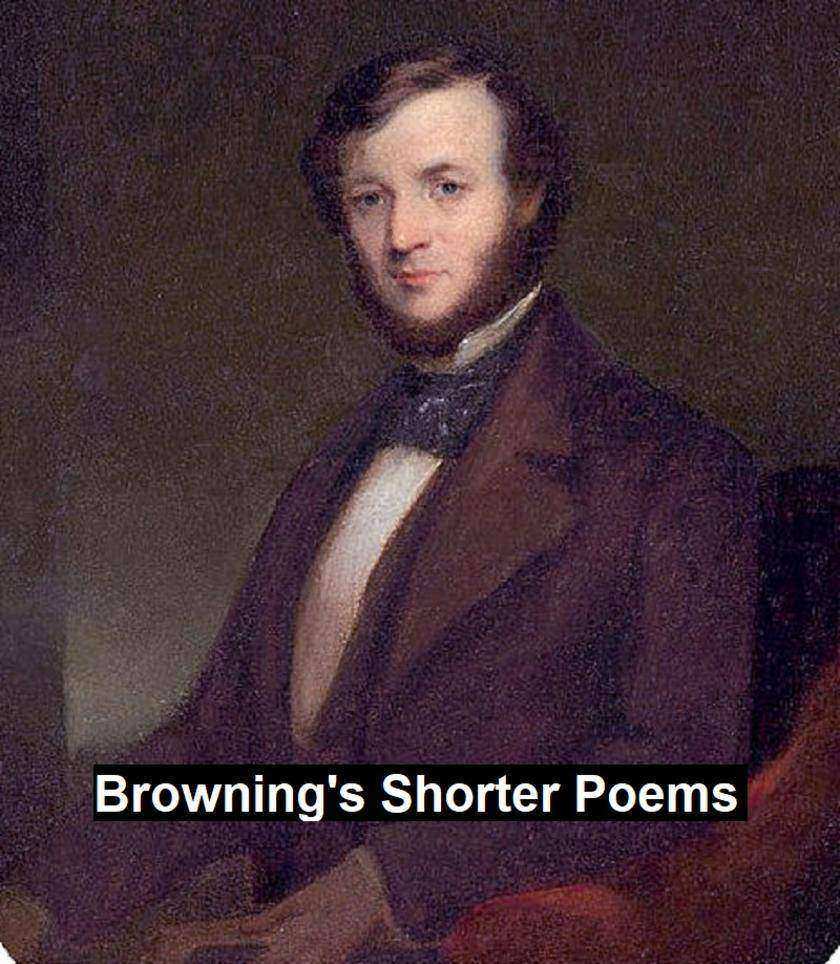
Browning's Shorter Poems
¥8.09
Selected and edited by Franklin Baker. According to Wikipedia: "Robert Browning (1812 – 1889) was an English poet and playwright whose mastery of dramatic verse, especially dramatic monologues, made him one of the foremost Victorian poets."
As You Like It/ Wie Es Euch Gefallt: Bilingual edition
¥8.09
Bilingual, English and German. Shakespeare comedy in English with line numbers and translated to German. According to Wikipedia: "As You Like It is a pastoral comedy by William Shakespeare believed to have been written in 1599 or early 1600 and first published in the First Folio, 1623. The play's first performance is uncertain, though a performance at Wilton House in 1603 has been suggested as a possibility. As You Like It follows its heroine Rosalind as she flees persecution in her uncle's court, accompanied by her cousin Celia and Touchstone the court jester, to find safety and eventually love in the Forest of Arden. " Zweisprachig, Englisch und Deutsch. Shakespeare-Kom?die in Englisch mit Zeilennummern und ins Deutsche übersetzt. Laut Wikipedia: "As You Like It" handelt es sich um eine Pastoralkom?die von William Shakespeare, die vermutlich im Jahr 1599 oder Anfang 1600 geschrieben und erstmals im First Folio 1623 ver?ffentlicht wurde. Die erste Aufführung des Stücks ist ungewiss, obwohl eine Aufführung im Wilton House in 1603 wurde als eine M?glichkeit vorgeschlagen, wie Sie es m?gen, folgt seine Heldin Rosalind, wie sie Verfolgung in Hof ihres Onkels flieht, begleitet von ihrer Cousine Celia und Touchstone der Hofnarr, um Sicherheit und schlie?lich Liebe im Wald von Arden zu finden.
The Comedy of Errors/ Die Irrungen: Bilingual edition
¥8.09
Bilingual, English and German. Shakespeare comedy in English with line numbers and translated to German. According to Wikipedia: "The Comedy of Errors is one of William Shakespeare's earliest plays. It is his shortest and one of his most farcical comedies, with a major part of the humour coming from slapstick and mistaken identity, in addition to puns and word play." Zweisprachig, Englisch und Deutsch. Shakespeare-Kom?die in Englisch mit Zeilennummern und ins Deutsche übersetzt. Laut Wikipedia: "The Comedy of Errors ist eines der frühesten Stücke William Shakespeares. Es ist seine kürzeste und eine seiner absurdesten Kom?dien, wobei ein Gro?teil des Humors aus Slapstick und falscher Identit?t stammt, zus?tzlich zu Wortspielen und Wortspielen
Henri VI, Troisieme Partie (Henry VI Part III in French)
¥8.09
Pièce d'histoire de Shakespeare, Henry VI, troisième partie, en traduction fran?aise. Selon Wikipédia: "Henry VI, Part 3 ou La Troisième Partie de Henry le Sixt (souvent écrit comme 3 Henry VI) est une pièce d'histoire de William Shakespeare qui aurait été écrite en 1591, et placée pendant la vie du Roi Henri VI Alors que Henry VI traite de la perte des territoires fran?ais de l'Angleterre et des machinations politiques menant aux guerres des deux Roses, Henry VI met l'accent sur l'incapacité du roi à réprimer les querelles de ses nobles et l'inévitabilité des conflits armés. 3 Henri VI aborde principalement les horreurs de ce conflit, avec la nation autrefois ordonnée jeté dans le chaos et la barbarie alors que les familles s'effondrent et que les codes moraux sont subvertis dans la poursuite de la vengeance et du pouvoir.
Cymbeline, with line numbers
¥8.09
The classic Shakespearean romance, with line numbers. According to Wikipedia: "Cymbeline is a play by William Shakespeare, based on legends concerning the early Celtic British King Cunobelinus. Although listed as a tragedy in the First Folio, modern critics often classify Cymbeline as a romance. Like Othello, Measure for Measure, and The Winter's Tale, it deals with the themes of innocence and jealousy. While the precise date of composition remains unknown, the play was certainly produced as early as 1611."
Epicoene, Or the Silent Woman
¥8.09
Classic Elizabethan play. According to Prof. Felix Schelling in his introduction to the Complete Plays of Ben Jonson: "THE greatest of English dramatists except Shakespeare, the first literary dictator and poet-laureate, a writer of verse, prose, satire, and criticism who most potently of all the men of his time affected the subsequent course of English letters: such was Ben Jonson, and as such his strong personality assumes an interest to us almost unparalleled, at least in his age." According to Wikipedia: "Benjamin Jonson (c. 11 June 1572 – 6 August 1637) was an English Renaissance dramatist, poet and actor. A contemporary of William Shakespeare, he is best known for his satirical plays, particularly Volpone, The Alchemist, and Bartholomew Fair, which are considered his best, and his lyric poems. A man of vast reading and a seemingly insatiable appetite for controversy, Jonson had an unparalleled breadth of influence on Jacobean and Caroline playwrights and poets"
Songs of Travel
¥8.09
Short poetry collection. According to Wikipedia: "Robert Louis (Balfour) Stevenson ( 1850 - 1894), was a Scottish novelist, poet, and travel writer, and a leading representative of Neo-romanticism in English literature. He was the man who "seemed to pick the right word up on the point of his pen, like a man playing spillikins", as G. K. Chesterton put it. He was also greatly admired by many authors, including Jorge Luis Borges, Ernest Hemingway, Rudyard Kipling, Vladimir Nabokov, and J. M. Barrie. Most modernist writers dismissed him, however, because he was popular and did not write within their definition of modernism. It is only recently that critics have begun to look beyond Stevenson's popularity and allow him a place in the canon."
Oameni de treab?
¥48.97
Volumul top t – festivalul rezisten?ei rock (re)aduce ?n discu?ie istoria celui mai important festival rock al Rom?niei. Ap?rut ?n seria STRATONE, cu Nelu Stratone coordonator, volumul beneficiaz? de un cuv?nt introductiv semnat de Gabi Gombo? plus o potfa?? de Florin-Silviu Ursulescu, doi grei ai istoriei rockului rom?nesc ?i prieteni ai festivalului. Structura este una cumva istoricizant?: un palmares al edi?iilor, un amplu interiviu cu Cornel Constantinescu, Tolea Po?tovei ?i Florin Artene, trei dintre artizanii organizatori, un capitol dedicat scenei rock buzoiene, impresii ale participan?ilor la festival, interviuri realizate de-a lungul timpului ?n caietele program. Ve?i reg?si ?i multe fotografii din edi?iile top t. Cartea-document este ?i o pledoarie pentru revenirea festivalului ?n circuitul na?ional, editura Casa de pariuri literare propun?nd ?n noiembrie 2016, la t?rgul Gaudeamus, un stand personalizat al festivalului.

Szoros emberfogás
¥57.31
"Ugyanabban az id?ben, és ugyanazon a napon, amelyen a nemzetek megszentégtelenítették, ugyanakkor szentelték fel a templomot énekszóvel, lantok, hárfák és cintányérok kíséretével. Az egész nép arcra borult, imádta és áldotta at Eget, hogy szerencséssé tette útjukat. Az oltár újraszentelését nyolc napig végezték, és ?r?mmel áldoztak ég?álozatokat és dícs?it? áldozatokat a szabadulásért. A templom homlokzatát aranykoszorúkkal és -pajzsocskákkal díszítették fel, megújították a kapukat és a papi kamrákat, és ajtókkal láttál el ?ket. Igen nagy ?r?m t?lt?tte le a népet, mivel sikerült elhárítaniuk magukról a nemzetek gyalázatát. Júdás és testvérei Izrael egész gyülekezetével együtt elhatározták, hogy évr?l évre megünnepilik az oltár újraszentelésének napjait a maga idején a Kiszlév hónap huszon?t?dik napjától kezdve nyolc napon át vidámsággal és ?r?mmel."? A Makkabeusok els? k?nyve Izrael népe t?rténelmének olyan fejezetét mutatja be, amikor az ?s?k hitéért való harc egyben a nemzeti ?nrendelkezésért való küzdelmet is jelentett a hellenizmus globális trendjével szemben.?
Maidanul cu dragoste
¥0.01
Organizarea, activitatea ?i orientarea ?n coresponden?? diplomatic? rom?n? ?i note ale SSIVolumul are ca subiect principal organizarea, activitatea ?i orientarea emigra?iei politice din fostul Imperiu Rus ?n Europa, considerat? ca un pericol permanent la adresa regimului comunist, emigra?ie ai c?rei lideri au f?cut obiectul ?ncerc?rilor permanente de terorizare, lichidare sau discreditare.Documentele selectate, ?n cea mai mare parte, din Arhiva Diplomatic?, reprezint? rapoarte ale lega?iilor ?i oficiilor consulare rom?ne din Atena, Belgrad, Berlin, Berna, Bratislava, Budapesta, Istanbul, Lisabona, Madrid, Paris, Praga, Roma, Rusciuk, Skopje, Sofia, Stockholm, Vichy sau Zagreb, precum ?i note ale Serviciului Special de Informa?ii, c?tre Ministerul Afacerilor Str?ine, ?n timpul campaniei germano-rom?ne ?mpotriva Uniunii Sovietice. Sursele reflect? nu doar starea de fapt ?i de spirit a emigran?ilor, for?a?i s? aleag? ?ntre regimul totalitar comunist ?i cel nazist, dar ?i pozi?ia Bucure?tiului fa?? de problemele rus? ?i ucrainean?, cu profunde implica?ii geopolitice.
Mo? Teac?
¥0.01
Publica?ii, documente, scrisori ?i fotografii?n anul 1920, ?ntr-o lupt? inegal? cu trupele bol?evice, ?n fruntea Brig?zii a 2-a de Mitraliere a Armatei Na?ionale Ucrainene, locotenent-colonelul Hnat Porohivski s-a retras pe malul drept al Nistrului. Participant la Primul R?zboi Mondial, lider al emigran?ilor ucraineni care s-au salvat din fostul Imperiu Rus ?n Rom?nia, ?n anul 1931 absolv? ?coala Superioar? de ?tiin?e Administrative din Bucure?ti, iar ?n 1940 devine comisar al guvernului ucrainean ?n exil pentru statele balcanice.Din anul 1930 lucreaz? pentru Serviciul Secret de Informa?ii al Armatei Rom?ne, sub numele conspirativ Ciobanu, loialitatea sa fiind determinat? nu doar de orientarea antisovietic?, dar ?i de ospitalitatea oferit?. Lu?nd parte la lupte din primele zile ale r?zboiului rom?no-sovietic, sub numele conspirativ Dobrescu, ?n calitate de ofi?er superior al Agenturii Frontului de Est, a condus Biroul de Studii, Documentare ?i Centralizare.Volumul reprezint? un prim pas de recuperare a memoriei celui c?ruia i se datoreaz?, ?n mare parte, renumele de care s-a bucurat emigra?ia politic? ucrainean? din Rom?nia, rezisten?a acesteia ?n fa?a asaltului de distrugere ?i divizare, men?inerea pozi?iei de ostilitate fa?? de comunism ?i de imperialism.
Abaddon kapuja
¥73.49
ARCHITECTURE seems to me to be the most wonderful of all the arts. We may not love it as much as others, when we are young perhaps we cannot do so, because it is so great and so grand; but at any time of life one can see that in Architecture some of the most marvellous achievements of men are displayed. The principal reason for saying this is that Architecture is not an imitative art, like Painting and Sculpture. The first picture that was ever painted was a portrait or an imitation of something that the painter had seen. So in Sculpture, the first statue or bas-relief was an attempt to reproduce some being or object that the sculptor had seen, or to make a work which combined portions of several things that he had observed; but in Architecture this was not true. No temples or tombs or palaces existed until they had first taken form in the mind and imagination of the builders, and were created out of space and nothingness, so to speak. Thus Painting and Sculpture are imitative arts, but Architecture is a constructive art; and while one may love pictures or statues more than the work of the architect, it seems to me that one must wonder most at the last. We do not know how long the earth has existed, and in studying the most ancient times of which we have any accurate knowledge, we come upon facts which prove that men must have lived and died long before the dates of which we can speak exactly. The earliest nations of whose Architecture we can give an account are called heathen nations, and their art is called Ancient or Heathen Art, and this comes down to the time when the Roman Emperor Constantine was converted to Christianity, and changed the Roman Capitol from Rome to Constantinople in the year of our Lord 328. The buildings and the ruins which still remain from these ancient times are in Egypt, Assyria, Persia, Judea, Asia Minor, Greece, Etruria, and Rome. Many of these have been excavated or uncovered, as, during the ages that have passed since their erection, they had been buried away from sight by the accumulation of earth about them. These excavations are always going on in various countries, and men are ever striving to learn more about the wonders of ancient days; and we may hope that in the future as marvellous things may be revealed to us as have been shown in the past. EGYPT: As we consider the Architecture of Egypt, the Great Pyramid first attracts attention on account of its antiquity and its importance. This was built by Cheops, who is also called Suphis, about 3000 years before Christ. At that distant day the Egyptians seem to have been a nation of pyramid-builders, for even now, after all the years that have rolled between them and us, we know of more than sixty of these mysterious monuments which have been opened and explored. Of all these the three pyramids at Ghizeh are best known, and that of Cheops is the most remarkable among them. Those of you who have studied the history of the wars of Napoleon I. will remember that it was near this spot that he fought the so-called Battle of the Pyramids, and that in addressing his soldiers he reminded them that here the ages looked down upon them, thus referring to the many years during which this great pyramid had stood on the border of the desert, as if watching the flight of Time and calmly waiting to see what would happen on the final day of all earthly things. There have been much speculation and many opinions as to the use for which these pyramids were made, but the most general belief is that they were intended for the tombs of the powerful kings who reigned in Egypt and caused them to be built.The pyramid of Cheops was four hundred and eighty feet and nine inches high, and its base was seven hundred and sixty-four feet square. It is so difficult to understand. CLARA ERSKINE CLEMENTAUTHOR OF "HANDBOOK OF LEGENDARY AND MYTHOLOGICAL ART," "PAINTERS, SCULPTORS, ENGRAVERS, ARCHITECTS AND THEIR WORKS," "ARTISTS OF THE NINETEENTH CENTURY"

Hard Times: - play adaptation
¥40.79
Brilliant adaptation of Charles Dickens biting novel H ard Times . Dominated by Gradgrind and Bounderby, Coketown’s prosperity is built on the cotton mills where thousands of men and women slave away for long hours and little pay. Gradgrind’s obsession with material progress damages his children Louisa and Tom, leading to scandal and disaster. ‘Hard Times’ celebrates the importance of the human heart in an age obsessed with materialism. Circus, music, and dark comedy all go into the rich mix of this truly Dickensian theatrical tale. Charles Way has written over 50 plays, specializing in writing for children, young people and family audiences. His plays are performed worldwide. He has won several major awards - A Spell of Cold Weather won the Writers Guild best children's play award in 2001 and in 2004 his play Red Red Shoes won the English Arts Council best children's play award. In Germany, his play Missing won the Children's Theatre prize and in the USA? he was nominated for a Helen Hayes Award. He was commissioned by the National Theatre to write Alice In The News , which children all over Britain have performed. He has also written many plays for radio, and a TV poem for BBC 2, No Borders , set in the Welsh borders, where he lives and has spent most of his creative life. ? " A stellar adaptation by Charles Way, moving, thoughtful and wonderfully drawn’.??????????????????????? What’s on Stage ***** ‘Way gives real depth to characters, replaces Dickens’ sentimentality with warmth and his censoriousness with moral indignation’. ?????????????????????????? The Independent ***** ‘daringly restructures Dickens’ plot, yet sticks to the motto of his lisping ringmaster Mr Sleary: “People mutht be amuthed.”’ ????????????????????????????????????????????The Observer ?

Big Foot: …And Tiny Little Heartstrings
¥40.79
With grime music and Guyanese folk stories, Joseph Barnes-Phillip's semi-autobiographical story is a comic, tragic and honest portrayal of becoming a man. The story follows Rayleigh as he negotiates the tensions of growing up and taking responsibility – to his pregnant girlfriend, to his sick mother, to his church, to the multi-cultural community he grew up in and somewhere in the mix to himself. When the euphoric highs of teenage life in south London collide with his mum's terminal illness, all Rayleigh wants to do it watch anime in his pants and eat indomie. Love, life and masculinity meet head-on as Rayleigh tries to find his feet, torn between the new girl in his life and being there for his mum, while trying not to make the same mistakes as his dad.

Glock: The World's Handgun
¥81.67
The Glock series of handguns represents one of the greatest steps forward in pistol design since the introduction of the Colt M1911. Inspired by the Austrian Army’s 1980 request for a new sidearm, the Glock Ges.m.b.H. company set to work designing and developing a revolutionary new weapon that combined reliability, firepower, and the latest in material technology. Within two years it had been adopted by the Austrian Army, but such were its qualities that within a decade the handgun was a dominant presence in the global military, law enforcement, and civilian markets. More than 2.5 million Glocks have been sold to date, to more than 50 nations. Glock: The World’s Handgun follows the evolution of the Glock handgun from concept to market leader, and explains each of the many variants and calibers, starting with the original Glock 17 and working through to the latest fourth generation models, including the 9mm Model 19, .40 caliber Model 22., and subcompact Model 26. Illustrated with more than 200 artworks and photographs, Glock: The World’s Handgun is an expertly written account of one of the most influential handguns in the world today.
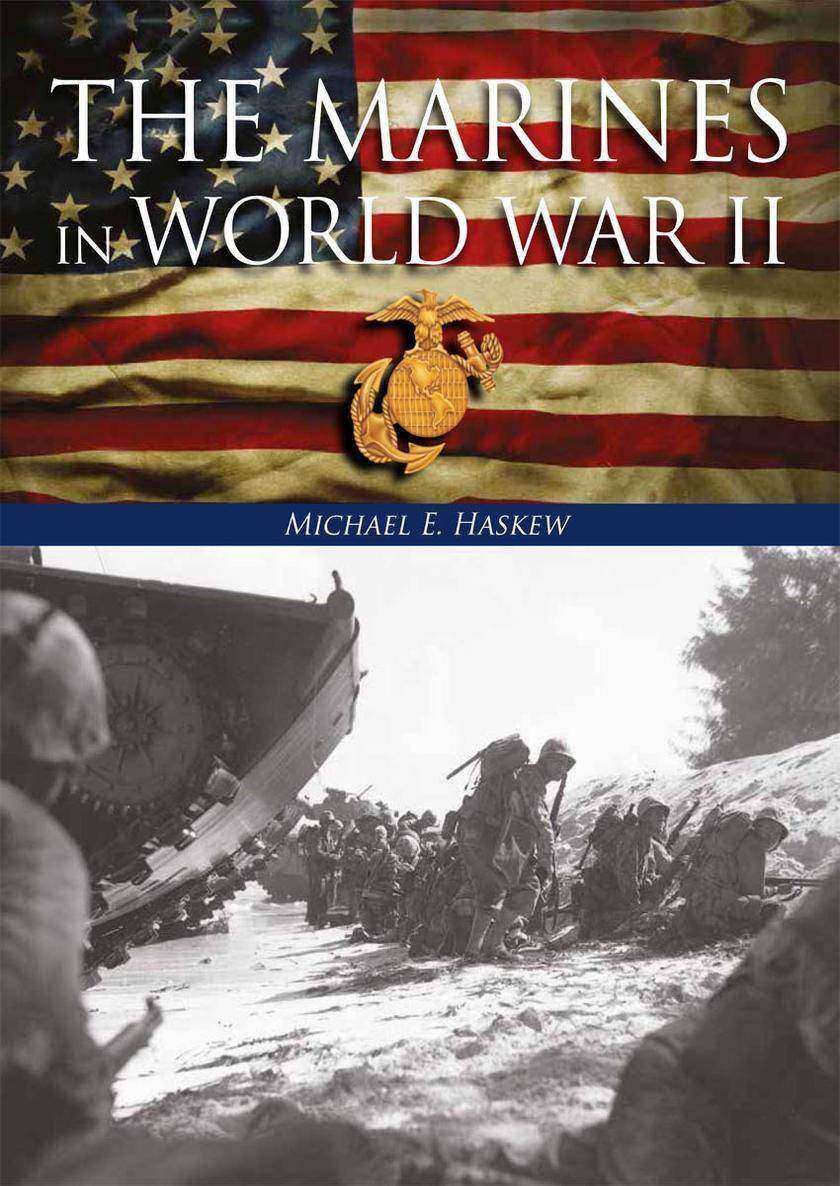
The Marines in World War II
¥81.67
Iwo Jima, Okinawa, and Tarawa are legendary names on the US Marines’ roll of honour, a testament to the bravery and sacrifice of Marines who answered the call to arms following the Japanese surprise attack on Pearl Harbor in December 1941. Growing to a peak of almost half a million men in 1945, at the beginning of the war the Marine Corps was a small expeditionary force with outdated equipment and an unproven new mission – amphibious assault. The Marines in World War II charts the combat history of the Marines from Wake Island to Okinawa, covering every major battle in between: Guadalcanal, Kwajalein Atoll, Bougainville, Saipan, Guam, and Peleliu, to name just a few. In addition to chronicling these hard-fought battles, the book also examines the important role played by Navajo code talkers, the development of Marine Corps aviation, the little-known role of Marines in the European theatre, and the story behind the iconic “Raising the Flag on Iwo Jima” photograph. Today, the Marines are best remembered as the gritty, determined combat force that matured rapidly, learned hard lessons, took on the committed defenders of the Empire of Japan, crossed the Pacific Ocean island by island, and fought, bled, died – and won.
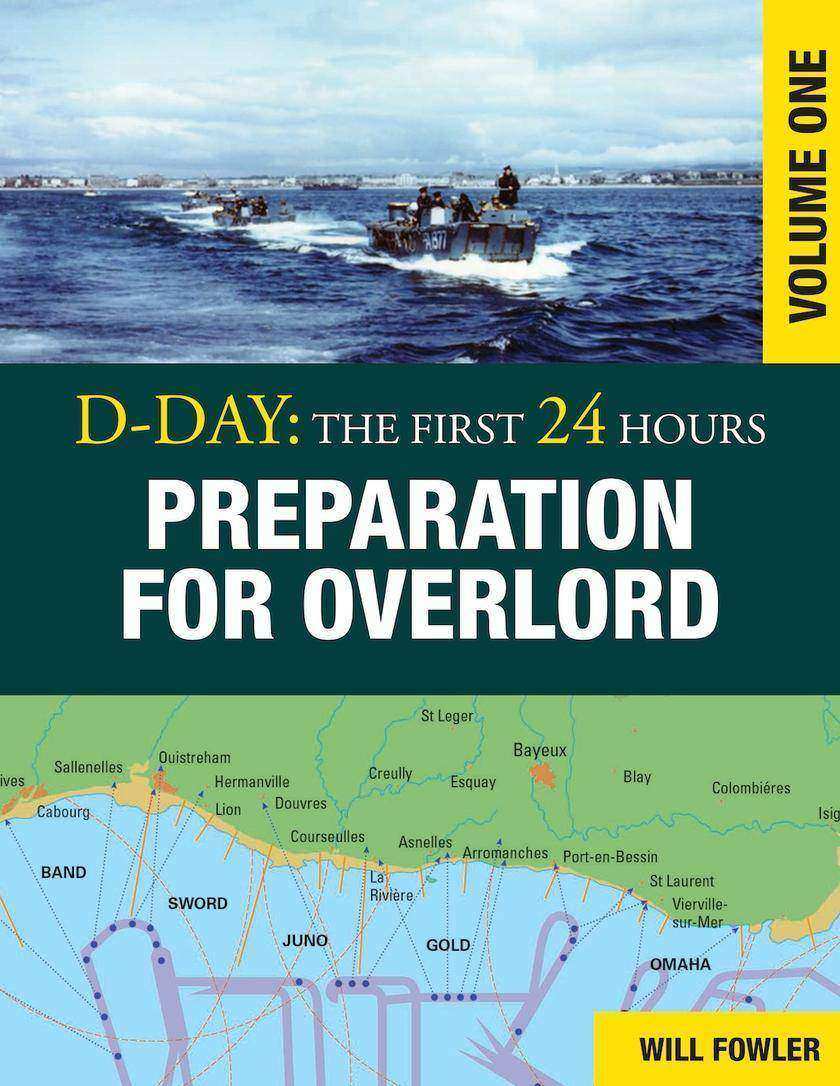
D-Day: Preparation for Overlord
¥40.79
In any military operation throughout history, few 24-hour periods have been as crucial as that of 6th June 1944. With the aid of specially commissioned maps, D-Day: The First 24 Hours series gives the dramatic history of the first 24 hours of the Normandy landings, and explains in detail the events that occurred in each landing zone. In this first volume of the series, the book describes the build-up to the landings themselves, the German preparations for defending the French coastline, and the reasons behind the final Allied decision to attack in Normandy on 6 June 1944. With colour and black & white photographs, the book is a guide to key events in the first 24 hours of the D-Day landings that saw the Allies successfully achieve a foothold in Northern Europe.
The Monster Under the Bed
¥40.79
The complete playtext for use in schools and youth theatres. Imagine swapping places with a monster for the day. Ben has a BIG problem. His mum is acting grumpy, his best friend Vince has stolen his precious binoculars and his Dad is far, far away… Oh, and there’s a monster under his bed. But when Ben swaps places with the underbed monster, Ben’s life – and his school – is turned inside out and upside down. A funny and thrilling play for children about friendship and facing up to your fears. Suitable for young performers. WINNER OF THE WRITERS’ GUILD BEST CHILDREN’S PLAY AWARD
The Iranian Feast
¥40.79
In modern-day Tehran, you can never predict how life will turn out. Part thriller, part cookery lesson, this is the story of a family struggling to deal with the challenges of a regime where secrecy and surveillance are an everyday part of life. Abbas calls together his wife and daughter and their friends and nighbours for an impromptu feast. Going in the pot are fresh herbs, spices, sweet vegetables and Eli’s mother’s secret ingredient…
Sleeping Beauty
¥40.79
The world spins and the cycle of seasons turns as the Guardians of the Year gather to tell each other stories. As a new Winter begins it is time to tell another tale… A kingdom is in peril, its people driven to flee their homes as a dark forest covers the land. The King and Queen are missing and Prince Roland, only heir to the kingdom, lies sleeping, cursed never to awaken… All seems lost, and it falls to one young woman with a strong heart, aided by strange companions, to find her way to the castle at the heart of the enchanted forest. Once there, it will take a genuine act of love to break the curse and free the kingdom. A story about friendship, drawing on myth and folklore, Sleeping Beauty is an exciting and enchanting new adaptation of the well-loved story.
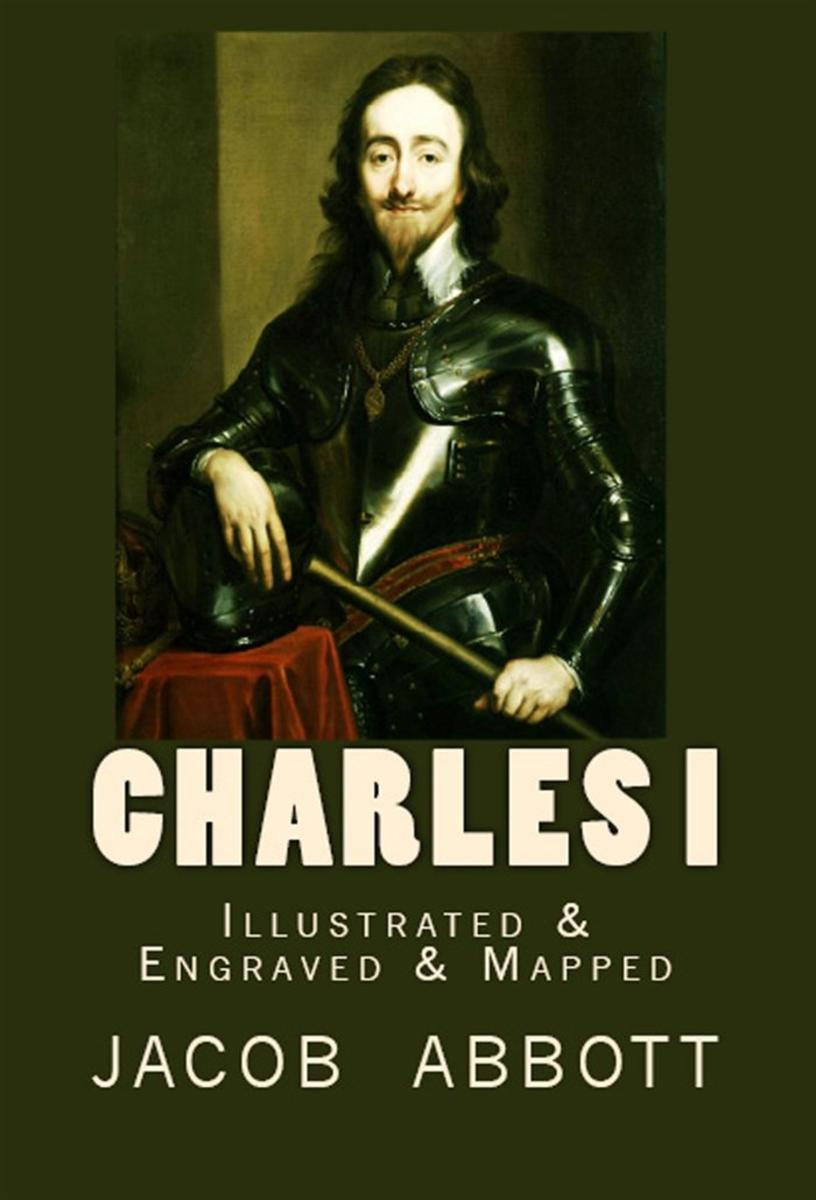
Charles I
¥18.56
KING CHARLES THE FIRST was born in Scotland. It may perhaps surprise the reader that an English king should be born in Scotland. The explanation is this:??They who have read the history of Mary Queen of Scots, will remember that it was the great end and aim of her life to unite the crowns of England and Scotland in her own family. Queen Elizabeth was then Queen of England. She lived and died unmarried. Queen Mary and a young man named Lord Darnley were the next heirs. It was uncertain which of the two had the strongest claim. To prevent a dispute, by uniting these claims, Mary made Darnley her husband. ??They had it son, who, after the death of his father and mother, was acknowledged to be the heir to the English throne, whenever Elizabeth's life should end. In the meantime he remained King of Scotland. His name was James. He married a princess of Denmark; and his child, who afterward was King Charles the First of England, was born before he left his native realm.


