


 购物车
购物车 个人中心
个人中心
Shakespeare's Pericles in French
¥8.09
Le classique Shakespeare joue en traduction fran?aise. Selon Wikipédia: "Périclès, prince de Tyr est une pièce jacobéenne écrite au moins en partie par William Shakespeare et incluse dans les éditions modernes de ses ?uvres rassemblées malgré des questions sur sa paternité, car elle n'était pas incluse dans le premier folio. conviennent que Shakespeare est responsable de presque exactement la moitié du jeu - 827 lignes - la partie principale après la scène 9 qui suit l'histoire de Périclès et Marina.Les études textuelles modernes indiquent que les deux premiers actes de 835 lignes détaillant les nombreux voyages de Périclès ont été écrits par un collaborateur médiocre, qui suggère fortement d'avoir été l'aviateur, pander, dramaturge et pamphlétaire George Wilkins.
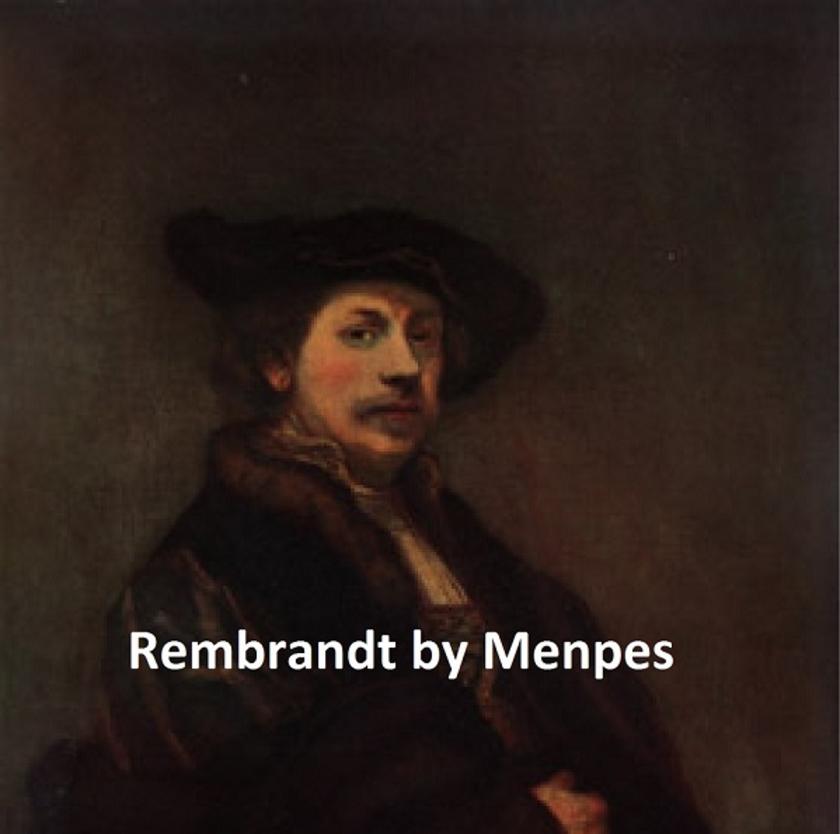
Rembrandt by Menpes: Illustrated
¥8.09
Illustrated with 15 color photographs of his paintings. According to Wikipedia: "Rembrandt Harmenszoon van Rijn (15 July 1606 – 4 October 1669) was a Dutch painter and etcher. He is generally considered one of the greatest painters and printmakers in European art history and the most important in Dutch history. His contributions to art came in a period of great wealth and cultural achievement that historians call the Dutch Golden Age when Dutch Golden Age painting, although in many ways antithetical to the Baroque style that dominated Europe, was extremely prolific and innovative."
Battle-Pieces and Aspects of the War
¥8.09
Poems by the author of Moby Dick. He explains, "With few exceptions, the Pieces in this volume originated in an impulse imparted by the fall of Richmond. They were composed without reference to collective arrangement, but being brought together in review, naturally fall into the order assumed. The events and incidents of the conflict--making up a whole, in varied amplitude, corresponding with the geographical area covered by the war--from these but a few themes have been taken, such as for any cause chanced to imprint themselves upon the mind. The aspects which the strife as a memory assumes are as manifold as are the moods of involuntary meditation--moods variable, and at times widely at variance. Yielding instinctively, one after another, to feelings not inspired from any one source exclusively, and unmindful, without purposing to be, of consistency..."
Underwoods
¥8.09
Poetry. According to Wikipedia: "Robert Louis (Balfour) Stevenson ( 1850 - 1894), was a Scottish novelist, poet, and travel writer, and a leading representative of Neo-romanticism in English literature. He was the man who "seemed to pick the right word up on the point of his pen, like a man playing spillikins", as G. K. Chesterton put it. He was also greatly admired by many authors, including Jorge Luis Borges, Ernest Hemingway, Rudyard Kipling, Vladimir Nabokov, and J. M. Barrie. Most modernist writers dismissed him, however, because he was popular and did not write within their definition of modernism. It is only recently that critics have begun to look beyond Stevenson's popularity and allow him a place in the canon."
Pericles, Prince of Tyre, with line numbers
¥8.09
The classic Shakespeare play, with line numbers. According to Wikipedia: "Pericles, Prince of Tyre is a Jacobean play written at least in part by William Shakespeare and included in modern editions of his collected works despite questions over its authorship, as it was not included in the First Folio. Modern editors generally agree that Shakespeare is responsible for almost exactly half the play—827 lines—the main portion after scene 9 that follows the story of Pericles and Marina.[1][2][3][4] Modern textual studies indicate that the first two acts of 835 lines detailing the many voyages of Pericles were written by a mediocre collaborator, which strong evidence suggests to have been the victualler, pander, dramatist and pamphleteer George Wilkins.
Homer's Odyssey
¥8.09
Prose translation. According to Wikipedia: "Homer is a legendary ancient Greek epic poet, traditionally said to be the author of the epic poems the Iliad and the Odyssey. The ancient Greeks generally believed that Homer was a historical individual, but modern scholars are skeptical: no reliable biographical information has been handed down from classical antiquity, and the poems themselves manifestly represent the culmination of many centuries of oral story-telling and a well-developed "formulaic" system of poetic composition."
Browning's Shorter Poems
¥8.09
Selected and edited by Franklin Baker. According to Wikipedia: "Robert Browning (1812 – 1889) was an English poet and playwright whose mastery of dramatic verse, especially dramatic monologues, made him one of the foremost Victorian poets."
As You Like It/ Wie Es Euch Gefallt: Bilingual edition
¥8.09
Bilingual, English and German. Shakespeare comedy in English with line numbers and translated to German. According to Wikipedia: "As You Like It is a pastoral comedy by William Shakespeare believed to have been written in 1599 or early 1600 and first published in the First Folio, 1623. The play's first performance is uncertain, though a performance at Wilton House in 1603 has been suggested as a possibility. As You Like It follows its heroine Rosalind as she flees persecution in her uncle's court, accompanied by her cousin Celia and Touchstone the court jester, to find safety and eventually love in the Forest of Arden. " Zweisprachig, Englisch und Deutsch. Shakespeare-Kom?die in Englisch mit Zeilennummern und ins Deutsche übersetzt. Laut Wikipedia: "As You Like It" handelt es sich um eine Pastoralkom?die von William Shakespeare, die vermutlich im Jahr 1599 oder Anfang 1600 geschrieben und erstmals im First Folio 1623 ver?ffentlicht wurde. Die erste Aufführung des Stücks ist ungewiss, obwohl eine Aufführung im Wilton House in 1603 wurde als eine M?glichkeit vorgeschlagen, wie Sie es m?gen, folgt seine Heldin Rosalind, wie sie Verfolgung in Hof ihres Onkels flieht, begleitet von ihrer Cousine Celia und Touchstone der Hofnarr, um Sicherheit und schlie?lich Liebe im Wald von Arden zu finden.
The Comedy of Errors/ Die Irrungen: Bilingual edition
¥8.09
Bilingual, English and German. Shakespeare comedy in English with line numbers and translated to German. According to Wikipedia: "The Comedy of Errors is one of William Shakespeare's earliest plays. It is his shortest and one of his most farcical comedies, with a major part of the humour coming from slapstick and mistaken identity, in addition to puns and word play." Zweisprachig, Englisch und Deutsch. Shakespeare-Kom?die in Englisch mit Zeilennummern und ins Deutsche übersetzt. Laut Wikipedia: "The Comedy of Errors ist eines der frühesten Stücke William Shakespeares. Es ist seine kürzeste und eine seiner absurdesten Kom?dien, wobei ein Gro?teil des Humors aus Slapstick und falscher Identit?t stammt, zus?tzlich zu Wortspielen und Wortspielen
Henri VI, Troisieme Partie (Henry VI Part III in French)
¥8.09
Pièce d'histoire de Shakespeare, Henry VI, troisième partie, en traduction fran?aise. Selon Wikipédia: "Henry VI, Part 3 ou La Troisième Partie de Henry le Sixt (souvent écrit comme 3 Henry VI) est une pièce d'histoire de William Shakespeare qui aurait été écrite en 1591, et placée pendant la vie du Roi Henri VI Alors que Henry VI traite de la perte des territoires fran?ais de l'Angleterre et des machinations politiques menant aux guerres des deux Roses, Henry VI met l'accent sur l'incapacité du roi à réprimer les querelles de ses nobles et l'inévitabilité des conflits armés. 3 Henri VI aborde principalement les horreurs de ce conflit, avec la nation autrefois ordonnée jeté dans le chaos et la barbarie alors que les familles s'effondrent et que les codes moraux sont subvertis dans la poursuite de la vengeance et du pouvoir.
Tout Est Bien Qui Finit Bien (All's Well that Ends Well, in French)
¥8.09
Selon Wikipédia: "Tout est bien qui finit bien" est une pièce de William Shakespeare, qui aurait été écrite entre 1604 et 1605, et qui fut publiée à l'origine. dans le premier folio en 1623. "
The Puritan Widow or the Puritaine Widdow, Shakespeare Apocrypha
¥8.09
Elizabethan play, sometimes attributed in part to Shakespeare. According to Wikipedia: "William Shakespeare (baptised 26 April 1564 – died 23 April 1616) was an English poet and playwright, widely regarded as the greatest writer in the English language and the world's pre-eminent dramatist. He is often called England's national poet and the "Bard of Avon" (or simply "The Bard"). His surviving works consist of 38 plays, 154 sonnets, two long narrative poems, and several other poems. His plays have been translated into every major living language, and are performed more often than those of any other playwright."
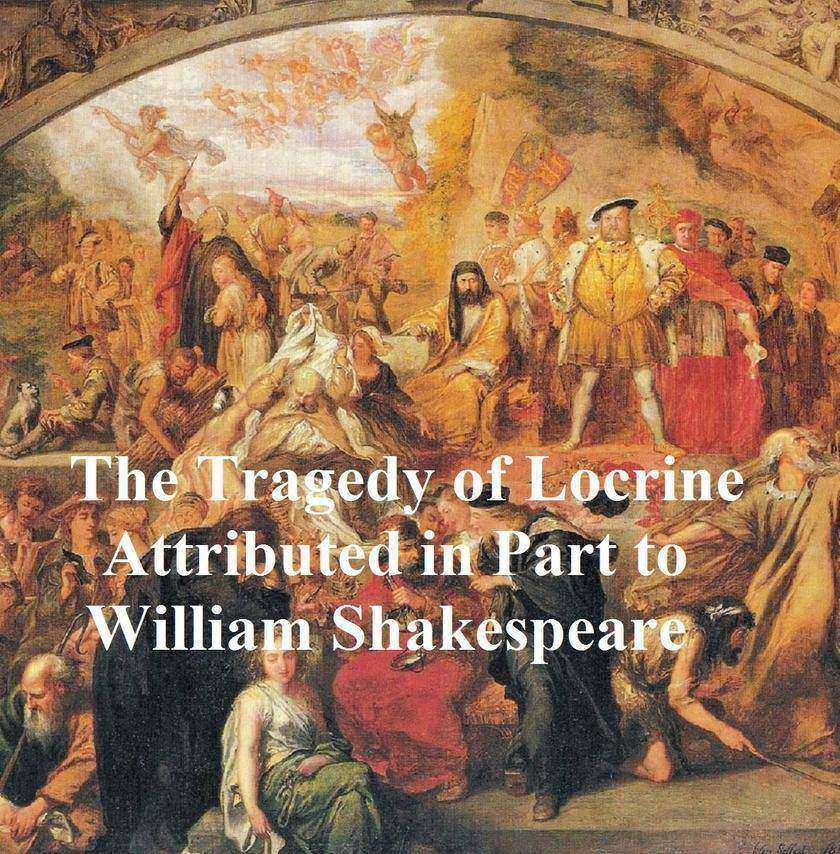
The Lamentable Tragedy of Locrine, Shakespeare Apocrypha
¥8.09
Elizabethan play, sometimes attributed in part to Shakespeare. According to Wikipedia: "William Shakespeare (baptised 26 April 1564 – died 23 April 1616) was an English poet and playwright, widely regarded as the greatest writer in the English language and the world's pre-eminent dramatist. He is often called England's national poet and the "Bard of Avon" (or simply "The Bard"). His surviving works consist of 38 plays, 154 sonnets, two long narrative poems, and several other poems. His plays have been translated into every major living language, and are performed more often than those of any other playwright."

Homesteading: A Beginners Guide To Homesteading
¥7.66
Do you want to learn how to live more self sufficient by using the tools of homesteading? Whether you want to learn how to raise your own livestock, garden for yourself, or preserve your own food this book will help! Here Is A Preview Of What You'll Learn... The Basics of HomesteadingRaising Your Own Livestock in Your BackyardThe Magic of Gardening for Your Own FoodPreserving Your Food for WinterMaking Your Own ClothesMaking Your Own Household ItemsMuch, Much, More!
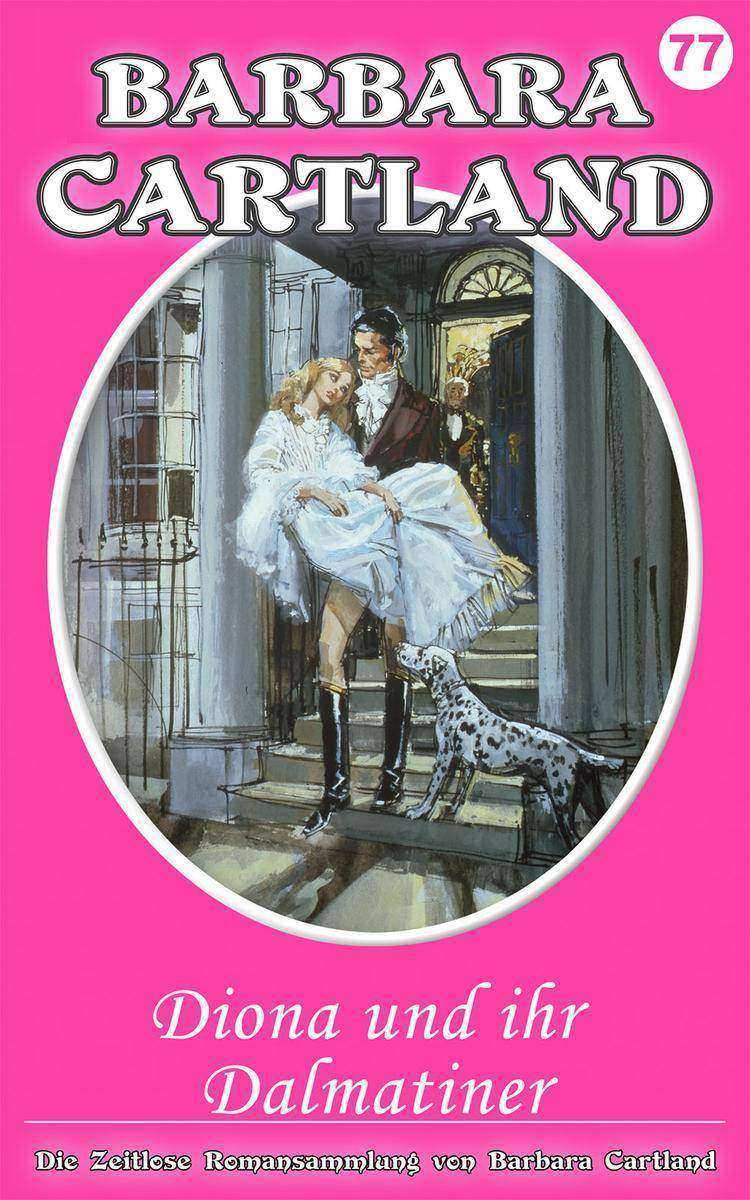
Diona und ihr Dalmatiner
¥52.40
Die Waise Diona lebt gezwungenerma?en bei ihrem Onkel, Sir Hereward Grantley, und dessen Sohn Simon. Als Erinnerung an ihren Vater ist ihr nur der Dalmatiner Sirius geblieben, den sie innig liebt. Als er get?tet werden soll, l?uft Diona weg und findet bei dem Marquis von Irchester eine Anstellung. Doch durch eine seltsame Wette droht sie ihre neue Heimat zu verlieren. Wird es ihr gelingen, ihren Hund zu beschützen?
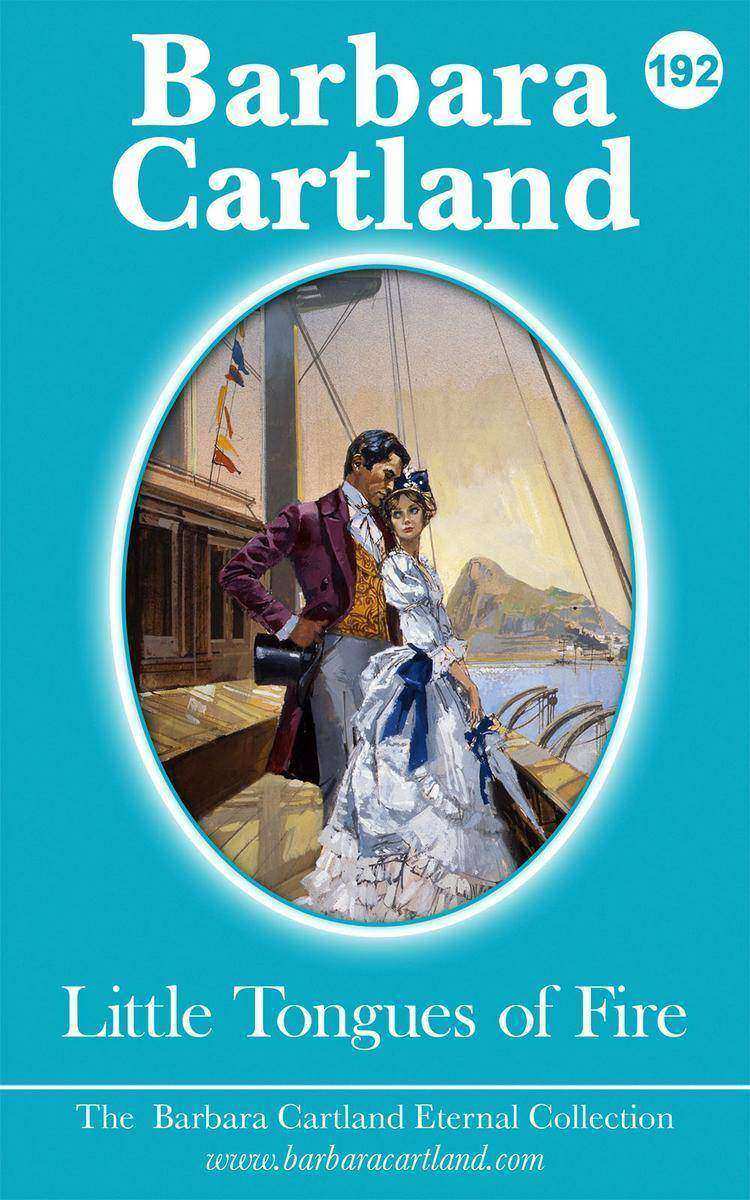
Little Tongues of Fire
¥52.32
Still in mourning after the death of her father, Colonel Wallace, in a battle in India, the beautiful young Vina Wallace is astonished to receive news that not only had her heroic father saved the Maharajah of Kulhapur’s life, but also that the Maharajah has died and left jewels worth a small fortune to her dead father. And now, as her father’s only child, the jewels are hers. Vina is being looked after by her uncle and aunt and her aunt has grand ideas of shining in higher Society and being invited to parties at ancestral homes and by Queen Victoria to Windsor Castle. Unknown to Vina the news of her newly acquired fortune reaches the ears of the Duke of Quarington and his penniless brother Lord Edgar, who is desperate to find a way to repay his vast debts as the Duke is refusing to bail him out yet again. Fearing Vina will fall victim to fortune-hunters, her aunt and uncle plan to offer her hand in marriage to the dissolute Lord Edgar – an admirable solution to both families’ problems. The trouble is that Vina has vowed never to marry unless for love. Worse still she overhears the cynical Lord Edgar planning to marry Vina for her money and then to resume his life of debauchery and womanising! Is there no escape for Vina from a life without love?
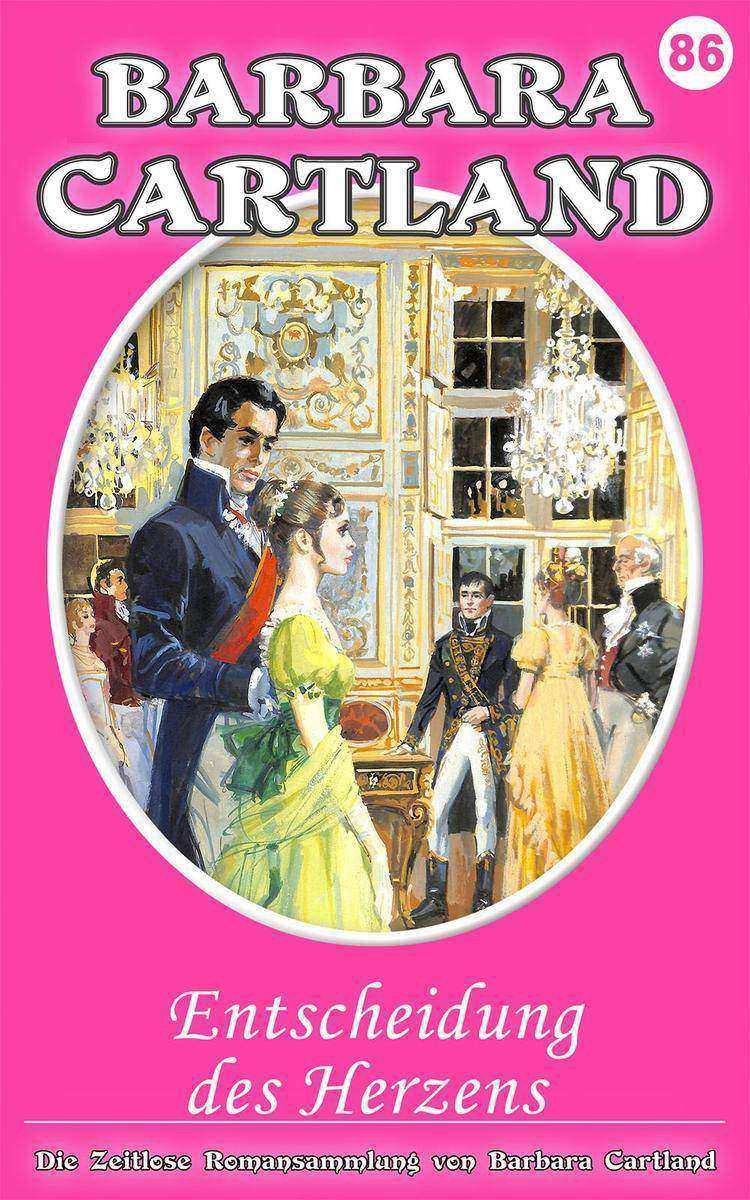
Entscheidung des Herzens
¥52.32
Für die junge Comtesse Lynetta de Marigny beginnt nach dem Tod ihrer Eltern ein entbehrungsreiches und gefahrvolles Leben. Auf der Flucht vor der Revolution lebt sie wie eine Gefangene in ihrem Schlo? bei Paris. Als der Earl of Charncliffe eines Tages dort erscheint, bietet sich Lynetta ein unerwarteter Auswegaus ihrem trostlosen Schicksal...

The Nihilists
¥8.09
Dodo Collections brings you another classic from Oscar Wilde, The Nihilists. The Nihilists is a play by Oscar Wilde. It is a melodramatic tragedy set in Russia and is loosely based on the life of Vera Zasulich. It was Wilde's first play, and the first to be performed. In 1880, with only a few copies privately printed, arrangements were made with noted actresses for a production the United Kingdom, but this never materialized. The first ever public performance was in New York in 1883 at the Union Square Theatre based on revisions made by Wilde while lecturing in America in 1882. The play was not a success and folded after only one week. It is rarely revived. Oscar Fingal O'Flahertie Wills Wilde (16 October 1854 – 30 November 1900) was an Irish author, playwright and poet. After writing in different forms throughout the 1880s, he became one of London's most popular playwrights in the early 1890s. He is remembered for his epigrams, his novel The Picture of Dorian Gray, his plays, as well as the circumstances of his imprisonment and early death. At the height of his fame and success, while his masterpiece, The Importance of Being Earnest (1895), was still on stage in London, Wilde had the Marquess of Queensberry prosecuted for libel. The Marquess was the father of Wilde's lover, Lord Alfred Douglas. The charge carried a penalty of up to two years in prison. The trial unearthed evidence that caused Wilde to drop his charges and led to his own arrest and trial for gross indecency with other men. After two more trials he was convicted and imprisoned for two years' hard labour. In 1897, in prison, he wrote De Profundis, which was published in 1905, a long letter which discusses his spiritual journey through his trials, forming a dark counterpoint to his earlier philosophy of pleasure. Upon his release he left immediately for France, never to return to Ireland or Britain. There he wrote his last work, The Ballad of Reading Gaol (1898), a long poem commemorating the harsh rhythms of prison life. He died destitute in Paris at the age of 46.
Many Gods
¥8.09
Dodo Collections brings you another classic from Cale Young Rice, ‘Many Gods’. Many Gods is a book of poetry written in 1910. Cale Young Rice (December 7, 1872 – January 24, 1943) was an American poet and dramatist. He was born in Dixon, Kentucky, to Laban Marchbanks Rice, a Confederate veteran and tobacco merchant, and his wife Martha Lacy. He was a younger brother of Laban Lacy Rice, a noted educator. Cale Rice grew up in Evansville, Indiana, and Louisville, Kentucky. He was educated at Cumberland University and at Harvard (A.B., 1895; A.M., 1896). He was married to the popular author Alice Hegan Rice; they worked together on several books. The marriage was childless, and Cale committed suicide by gunshot during the night of January 23–24 at his home in Louisville a year after her death due to his sorrow at losing her. His birthplace in Dixon is designated by Kentucky State Historical Marker 1508, which reads: "Birthplace of Rice brothers, Cale Young, 1872-1943, noted poet and author; Laban Lacy, 1870-1973, well-known educator and author. Lacy published The Best Poetic Works of Cale Young Rice after Cale's death. Included in famous collection is poem, "The Mystic." Cale married Alice Hegan, also a distinguished Kentucky writer. Home overlooks Memorial Garden."?
Wives and Daughters by Elizabeth Gaskell - Delphi Classics (Illustrated)
¥8.09
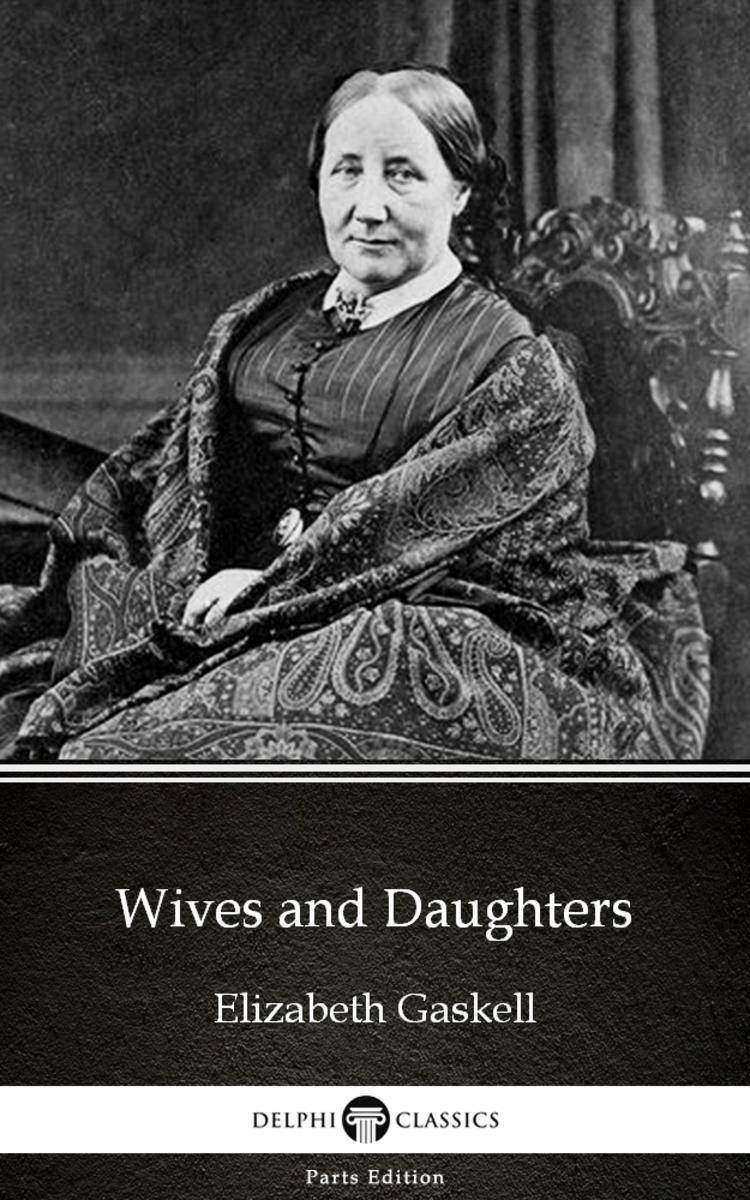
This eBook features the unabridged text of ‘Wives and Daughters by Elizabeth Gaskell - Delphi Classics (Illustrated)’ from the bestselling edition of ‘The Complete Works of Elizabeth Gaskell’. Having established their name as the leading publisher of classic literature and art, Delphi Classics produce publications that are individually crafted with superior formatting, while introducing many rare texts for the first time in digital print. The Delphi Classics edition of Gaskell includes original annotations and illustrations relating to the life and works of the author, as well as individual tables of contents, allowing you to navigate eBooks quickly and easily. eBook features: * The complete unabridged text of ‘Wives and Daughters by Elizabeth Gaskell - Delphi Classics (Illustrated)’ * Beautifully illustrated with images related to Gaskell’s works * Individual contents table, allowing easy navigation around the eBook * Excellent formatting of the text Please visit www.delphiclassics.com to learn more about our wide range of titles
Libretti of 27 operas
¥8.09
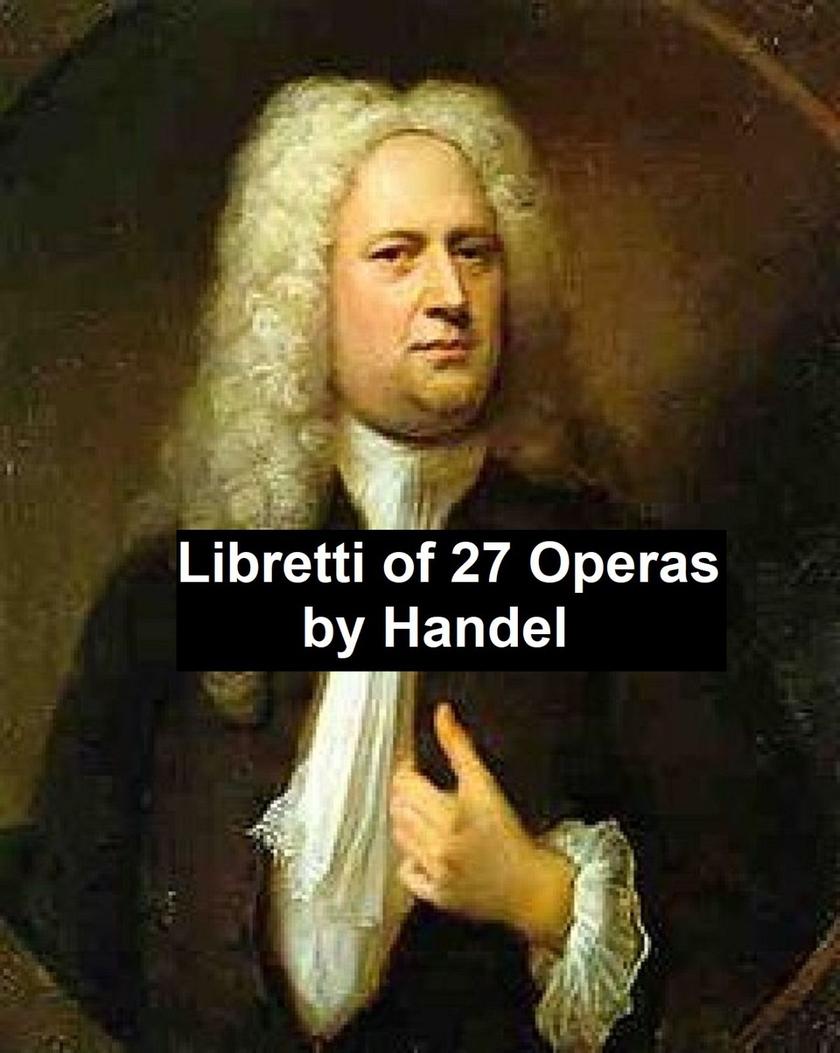
This file includes: Acis and Galatea; Admeto; Alexander Balus; Alexander's Feast; An Occasional Oratorio; Ariodante; Athalia; Belshazzar; The Choice of Hercules; Deborah; Esther; Giulio Cesare; Israel in Egypt; Jephtha; Joseph and His Brethern; ; Judas Maccabaeus; L'Allegro, Il Penseroso ed Il Moderato; Messiah; An Ode for St. Cecilia's Day; Rinaldo, in Italian; Samson; Semele; Solomon; Susanna; Theodora; and The Triumph of Time and Truth. According to Wikipedia: "George Frederic Handel (23 February 1685 – 14 April 1759) was a German-English Baroque composer, who is famous for his operas, oratorios, and concerti grossi. He was born in Germany, trained in Italy, and spent most of his life in England. Born in Halle in the Duchy of Magdeburg, he settled in England in 1712, becoming a naturalised subject of the British crown on 20 February 1727. His works include Messiah, Water Music, and Music for the Royal Fireworks. Strongly influenced by the techniques of the great composers of the Italian Baroque era, as well as the English composer Henry Purcell, Handel's music became well-known to many composers, including Haydn, Mozart, and Beethoven."


