万本电子书0元读

万本电子书0元读

Gettysburg: The Turning Point in the Struggle between North and South
Kevin J Dougherty
¥65.32
In June 1863, General Robert E. Lee and the 75,000-strong Army of Northern Virginia launched a second invasion of the North, crossing into Maryland and Pennsylvania to try to win a decisive victory over Federal forces. On July 1, Lee’s army encountered Major General Meade’s 90,000 strong Army of the Potamac at the small town of Gettysburg. After some initial success in dispersing the Federal advance guard, Lee launched attack after attack against the main army, but everywhere the Union line held. On July 3, Lee ordered a final assault of 12,500 Confederates at the center of the Union line on Cemetery Ridge, known as Pickett’s Charge. The charge was repulsed with huge loss of life, bringing the battle to an end. Today, Gettysburg is recognized as the turning point in the Civil War and one of the iconic battles of the great struggle between North and South. Lee’s gamble didn’t pay off, leaving the Army of Northern Virginia fatally weakened and unable to continue its invasion of the North. Gettysburg is divided into five chapters, outlining the campaign, the fighting on July 1, July 2, and July 3, as well as a chapter dealing with the aftermath; an extended appendices provides biographical background of the main Federal and Confederate leaders who fought in the battle. Through letters, journal entries, and official reports, the book includes numerous first-hand accounts from those who survived. Color maps show the battle as it unfolded over three days of fighting in places that have a place in Civil War legend: Seminary Ridge, Little Round Top, Cemetery Hill, Devil’s Den, the Wheat Field, Culp’s Hill, the Peach Orchard. Including more than 200 archival photographs, illustrations, paintings, and maps, Gettysburg is a colorful, accessible guide to the great battle that marked the turning point in the Civil War.
Выращиваем лекарственные и пряные травы на участке
Kostina-Kassanelli Natal'ja
¥17.74
Дарону Аджемо?лу ? Джеймсу Роб?нсону вдалося, здавалося б, неможливе — в?дпов?сти на питання, яке до них безрезультатно вивчали стол?ттями: чому одн? кра?ни багат?, а ?нш? — б?дн?????рунтуючись на п’ятнадцятир?чних досл?дженнях у галузях ?стор??, пол?толог?? та економ?ки, автори легко ? доступно пояснюють, чому економ?чний усп?х держав не залежить в?д культури, кл?мату чи географ?чного положення.??Аджемо?лу та Роб?нсон переконан?: кра?ни стали найусп?шн?шими через те, що ?хн? громадяни повалили владну ел?ту ? створили сусп?льства, де головною ц?нн?стю стали р?вн? економ?чн? та пол?тичн? права кожного. На ?хню думку, саме свобода робить св?т багатшим.??Книга ?Чому нац?? занепадають? — сво?р?дний пос?бник, який допоможе краще зрозум?ти причини, що сприяють процв?танню держав та ?хньому занепаду.
Republic
Republic
Plato Plato
¥27.39
THE earliest record we have of the employment of an infernal machine at all resembling the torpedo of the present day, was in 1585 at the siege of Antwerp. Here by means of certain small vessels, drifted down the stream, in each of which was placed a magazine of gunpowder, to be fired either by a trigger, or a combination of levers and clockwork, an Italian engineer, Lambelli, succeeded in demolishing a bridge that the enemy had formed over the Scheldt. So successful was this first attempt, and so tremendous was the effect produced on the spectators, by the explosion of one of these torpedoes, that further investigation of this new mode of Naval warfare was at once instituted.But it was not until some two hundred years after that any real progress was effected, though numerous attempts were made during this period, to destroy vessels by means of sub-marine infernal machines.It was owing to the fact, that the condition which is now considered as essential in torpedo warfare, viz., that the charge must be submerged, was then entirely ignored, that so long a standstill occurred in this new art of making war. Captain Bushnell, the Inventor of Torpedoes.—To Captain David Bushnell, of Connecticut, in 1775, is most certainly due the credit of inventing torpedoes, or as he termed them submarine magazines. For he first proved practically that a charge of gunpowder could be fired under water, which is incontestably the essence of submarine warfare. Submarine Boat.—To Captain Bushnell is also due the credit of first devizing a submarine boat for the purpose of conveying his magazines to the bottom of hostile ships and there exploding them.Drifting Torpedoes.—Another plan of his for destroying vessels, was that of connecting two of his infernal machines together by means of a line, and throwing them into the water, allowing the current to carry them across the bows of the attacked ship. Mode of Ignition.—The ignition of his magazines was generally effected by means of clockwork, which, when set in motion, would run for some time before exploding the machines, thus enabling the operators to get clear of the explosion.Captain Bushnell's few attempts to destroy our ships off the American coast in 1776 and 1777, with his submarine boat, and his drifting torpedoes were all attended with failure, a result generally experienced, where new inventions are for the first time subjected to the test of actual service. Robert Fulton.—Robert Fulton, an American, following in his footsteps, some twenty years after, revived the subject of submarine warfare, which during that interval seems to have been entirely forgotten. A resident in France, in 1797, he is found during that year making various experiments on the Seine with a machine which he had constructed, and by which he designed "to impart to carcasses of gunpowder a progressive motion under water, to a certain point, and there explode them."[A] Fulton's Failures.—Though these first essays of his resulted in failure, Fulton thoroughly believed in the efficacy of his schemes, and we find him, during that and succeeding years, vainly importunating the French and Dutch Governments, to grant him aid and support in carrying out experiments with his new inventions, whereby he might perfect them, and thus ensure to whichever government acceded to his views, the total destruction of their enemy's fleets. Bonaparte aids Fulton.—Though holding out such favourable terms, it was not until 1800, when Bonaparte became First Consul, that Fulton's solicitations were successful, and that money was granted him to carry out a series of experiments. In the following year (1801), under Bonaparte's immediate patronage, Fulton carried out various and numerous experiments in the harbour of Brest, principally with a submarine boat devised by him (named the Nautilus), subsequently to his invention of submarine carcasses as a means of approaching a ship and fixing one of his infernal machines beneath her..
The Home
The Home
Charlotte Perkins Gilman
¥18.74
What is the magic of pastoral Greece? What is it that gives to you a sensation of being gently released from the cares of life and the boredom of modern civilization, with its often unmeaning complications, its unnecessary luxuries, its noisy self-satisfactions? This is not the tremendous, the spectacular release of the desert, an almost savage tearing away of bonds. Nothing in the Greece I saw is savage; scarcely anything is spectacular. But, oh, the bright simplicity of the life and the country along the way to Marathon! It was like an early world. One looked, and longed to live in those happy woods like the Turkish Gipsies. Could life offer anything better? The pines are small, exquisitely shaped, with foliage that looks almost as if it had been deftly arranged by a consummate artist. They curl over the slopes with a lightness almost of foam cresting a wave. Their color is quite lovely. The ancient Egyptians had a love color: well, the little pine-trees of Greece are the color of happiness. You smile involuntarily when you see them. And when, descending among them, you are greeted by the shining of the brilliant-blue sea, which stretches along the edge of the plain of Marathon, you know radiance purged of fierceness.? The road winds down among the pines till, at right angles to it, appears another road, or rough track just wide enough for a carriage. This leads to a large mound which bars the way. Upon this mound a habitation was perched. It was raised high above the ground upon a sort of tripod of poles. It had yellow walls of wheat, and a roof and floor of brushwood and maize. A ladder gave access to it, and from it there was a wide outlook over the whole crescent-shaped plain of Marathon. This dwelling belonged to a guardian of the vineyards, and the mound is the tomb of those who died in the great battle. PICTURESQUE DALMATIA ? Chapter I: PICTURESQUE DALMATIA IN AND NEAR ATHENS ? Chapter II: IN AND NEAR ATHENS THE ENVIRONS OF ATHENS ? Chapter III: THE ENVIRONS OF ATHENS DELPHI AND OLYMPIA ? Chapter IV: DELPHI AND OLYMPIA IN CONSTANTINOPLE ? Chapter V: IN CONSTANTINOPLE STAMBOUL, THE CITY OF MOSQUES ? Chapter VI: STAMBOUL, THE CITY OF MOSQUE
The House That Jack Built: "Illustrated"
Randolph Caldecott
¥9.24
Books of instruction in the practice of painting have rarely been successful. Chiefly because they have been too narrow in their point of view, and have dealt more with recipes than with principles. It is not possible to give any one manner of painting that shall be right for all men and all subjects. To say "do thus and so" will not teach any one to paint. But there are certain principles which underlie all painting, and all schools of painting; and to state clearly the most important of these will surely be helpful, and may accomplish something. It is the purpose of this book to deal practically with the problems which are the study of the painter, and to make clear, as far as may be, the principles which are involved in them. I believe that this is the only way in which written instruc-tion on painting can be of any use. It is impossible to understand principles without some statement of theory; and a book in order to be practical must therefore be to some extent theoretical. I have been as concise and brief in the theoretical parts as clearness would permit of, and I trust they are not out of proportion to the practical parts. Either to paint well, or to judge well of a painting, requires an understanding of the same things: namely, the theoretical standpoint of the painter; the technical problems of color, composition, etc.; and the practical means, processes, and materials through which and with which these are worked out. It is obvious that one cannot become a good painter without the ability to know what is good painting, and to prefer it to bad painting. Therefore, I have taken space to cover, in some sort, the whole ground, as the best way to help the student towards becoming a good painter. If, also, the student of pictures should find in this book what will help him to appreciate more truly and more critically, I shall be gratified. There is a false implication in the saying that "a poor workman blames his tools." It is not true that a good workman can do good work with bad tools. On the contrary, the good workman sees to it that he has good tools, and makes it a part of his good workmanship that they are in good condition. In painting there is nothing that will cause you more trouble than bad materi-als. You can get along with few materials, but you cannot get along with bad ones. That is not the place to economize. To do good work is difficult at best. Econo-mize where it will not be a hindrance to you. Your tools can make your work harder or easier according to your selection of them. The relative cost of good and bad materials is of slight importance compared with the relative effect on your work.The way to economize is not to get anything which you do not need. Save on the non-essentials, and get as good a quality as you can of the essentials. Save on the number of things you get, not on the quantity you use. You must feel free in your use of material. There is nothing which hampers you more than parsimony in the use of things needful to your painting. If it is worth your while to paint at all, it is worth your while to be generous enough with yourself to insure ordinary freedom of use of material.The essentials of painting are few, but these cannot be dispensed with. Put it out of your mind that any one of these five things can be got along without:—You must have something to paint on, canvas or panel. Have plenty of these.
Rihanna Quiz Book
Rihanna Quiz Book
Cowlin, Hayley
¥24.43
Are you a Rihanna fan? Do you know the lyrics to all of her songs? Can you name her albums? From releasing her debut album at the age of 17 to becoming one of the best selling artists of all time, Rihanna is one of the biggest success stories in recent pop history. But how much do you really know about your favourite star? Find out in this fascinating quiz book. Where did Rihanna grow up? How did she get started in the music business? What was the name of the person who discovered her? The answers to all of these questions and more can be found in this book. Brim full of interesting facts that cover all aspects of the multi-talented singer-songwriter's life, from her early successes to chart topping hits including many personal details such as her nickname, favourite colour and the names of her best friends, you are certain to learn something new about the international singing sensation in The Rihanna Quiz Book. There is only one Rihanna and this is the must-have quiz book for all of her fans.
Official Carry On Facts, Figures & Statistics
Snelgrove, Kevin
¥73.48
Little did anyone know, back in 1958 when the first Carry On film, Carry on Sergeant, was produced by Peter Rogers and directed by Gerald Thomas, that 50 years and 31 films later Carry On would have become such a well-loved British comedy institution, and one that continues to have people rolling in the aisles. And what better way to celebrate Carry On's 50th anniversary in 2008 than to dazzle Carry On fans with this incredibly well-researched treasure trove of information, including technical data about each film, interesting facts about every member of the Carry On team and every conceivable statistic that you could ever imagine. With forewords by Carry On cameraman Alan Hume and actor Jack Douglas, and peppered with photographs and actors' anecdotes and memories, this book is an absolute must for every Carry On aficionado.
On The Buses
On The Buses
Walker, Craig
¥68.57
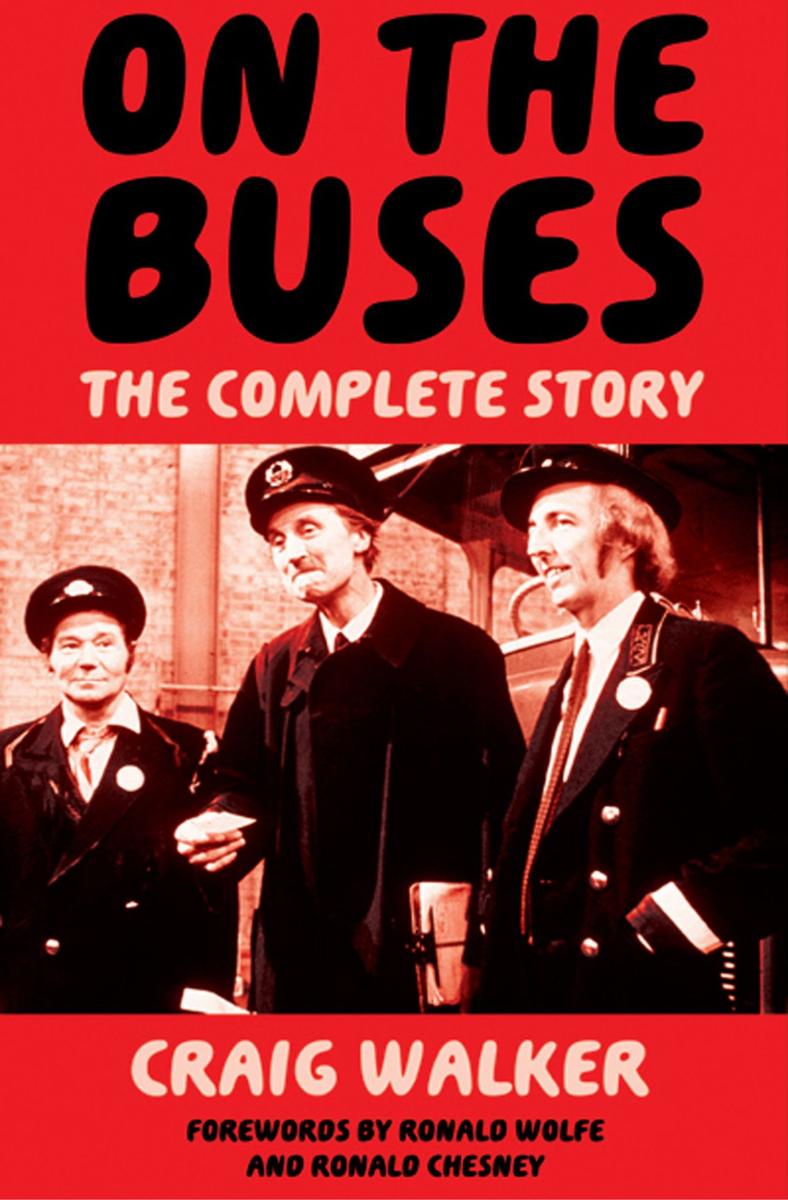
On The Buses was a classic British situation comedy, created by Ronald Wolfe and Ronald Chesney, which ran for seven series from 1969 to 1973, and introduced a host of much-loved memorable characters. The series followed the ups and downs of life on the buses as portrayed by two work shy-busmen, Stan Butler (played by Reg Varney) and his mate Jack Harper (Bob Grant) as they invented new scams to wind up their long suffering boss, inspector Cyril Blakey Blake (Stephen Lewis). This book tells the whole 'On The Buses' story from its inception through to the three spin-off feature films it spawned. It includes details of cast, crew, locations and the many famous faces and catch phrases which made-up one of the most popular sitcoms ever to appear on our TV screens. On The Buses aired in an era where entertainment was unrestrained by politically correct rules but hilarious scripts and quality acting guaranteed the series a legion of loyal fans around the globe. This book is a must have for anyone interested in learning more about On The Buses an example of British sitcom at its best.
Straight From The Force's Mouth
Prowse, David
¥88.19
Everyone has heard of Darth Vader, the infamous Star Wars villain we all love to fear, created by George Lucas and brought to life by Dave Prowse MBE, but people may not be so familiar with the story of the multi-talented man behind the mask. It required someone exceptional to turn a helmeted costume into the principal character in the highest grossing film series in cinema history - that someone was Dave Prowse. The towering, physical presence of the 6ft 7"e; bodybuilder was ideally suited to personify the intimidating Darth Vader. Straight from the Force's Mouth takes us behind the scenes of Star Wars and documents how this extraordinary man took on the role of the menacing central character to creating one of the most iconic villains in cinema history. In this book of memoirs, Dave shares his journey from disadvantaged child and poor student to champion weightlifter and international film star. The Dave Prowse story is one of determination and hard work and in this honest account he explains how he overcame the many setbacks in his life to achieve success and global recognition. This book is a must have for Star Wars fans of all ages and will appeal to anyone who enjoys a truly inspirational and motivating real life story.
Great Train Robbery Quiz Book
Gray, Mike
¥19.52
The Great Train Robbery is one of the most well documented crimes of all time but how much do you really know about what happened on that fateful day in 1963 and in the years beyond? This new quiz book will tell you everything you ever wanted to know about the Great Train Robbery and the people involved.How many train robbers escaped from prison? What was the robbers' hideout called? Who was the first '30-year sentence' train robber to be released? The answers to these brain teasers and more can all be found inside The Great Train Robbery Quiz Book.With 100 questions all about the people involved in the robbery, where they are now, the detectives, Judge, books, films and TV programmes, this is a comprehensive guide to the most talked about UK heist in history.With 2013 marking the 50th anniversary, there is still a great deal of interest in the Great Train Robbery and if you would like to know more, this book is all you need.
Tatjána
Tatjána
Rejtő Jenő
¥58.04
Vajon van esélye Hanna és Olivér szerelmének?Túlélheti a fiatal lány a végzetesnek hitt balesetet? ?s ha túl is éli, visszaállhat-e az élete a normális kerékvágásba?Mire képes a szerelem, mit bír el a szív? Elfogadni, megbocsátani, elengedni, újrakezdeni. A másik oldalról els? részében megismert szerepl?ké mellett új kapcsolatok alakulását is nyomon k?vethetjük. Együtt sírhatunk és nevethetünk a hétk?znapi h?s?kkel, akikkel végtelen természetességük miatt igazán k?nny? azonosulni. A korábbi k?tethez hasonlóan ezúttal is számtalan komoly téma vet?dik fel, a bonyodalmakkal dúsított, meglep?, néhol megd?bbent? fordulatokban gazdag t?rténet mégis k?nnyed, szórakoztató kikapcsolódást ígér. Papp Csilla legújabb k?nyvében, mely ott kezd?dik, ahol az els? regény véget ér, újra és újra rácsodálkozhatunk a szerelem erejére, mik?zben minden kétséget kizáróan el fogjuk hinni, hogy biztosan nincsenek véletlenek.
What is a Wommett?
What is a Wommett?
Abrahams, Mick
¥73.48
Mick Abrahams first rose to fame as a guitarist during the 1960s and was a founder member of Jethro Tull, although his time with the band was to prove short lived owing to the vividly contrasting musical styles of himself and Ian Anderson. In his autobiography What is a Wommett Mick finally puts the record straight about this parting of the ways and the events that have shaped the man and his music since that time up to the present day. Perhaps best known for his time with Blodwyn Pig, the band he formed after leaving Tull, Abrahams has continued to delight fans with his own brand of blues, jazz and rock on highly acclaimed albums spanning several decades. With a fitting foreword by radio presenter and champion of great music, Bob Harris, this autobiography provides a fascinating insight into the character of an upbeat man who hasn't allowed anything to keep him down for long. Packed with anecdotes and stories about Mick's life in and out of the spotlight, this book is a must have for his fans and anyone who remembers the excitement of the emerging new musical talent of the sixties.
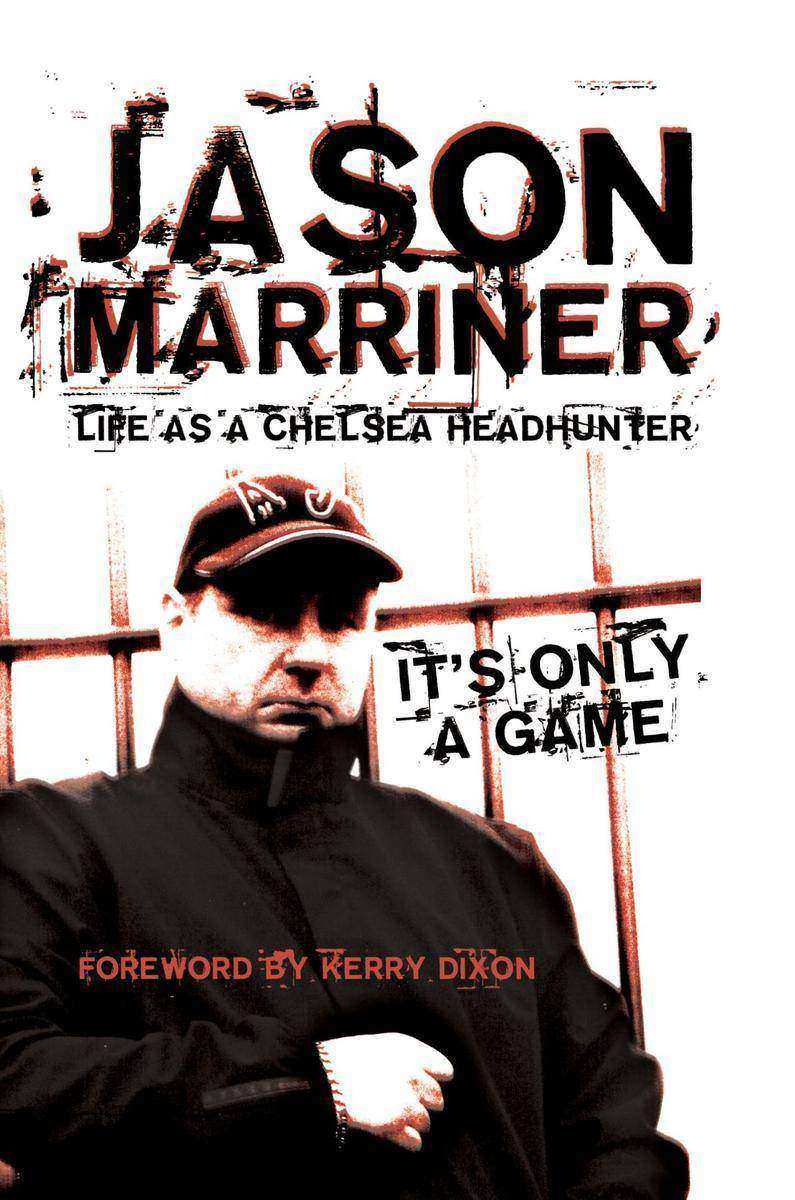
Life as a Chelsea Headhunter
Marriner, Jason
¥88.19
Optical illusions are the stuff of magic - harmless entertainment conjured up to both enthral and amaze, aren't they? Well, maybe not, as it's not quite so amusing if the 'stunt' takes the form of an episode of the BBC's 'groundbreaking' documentary series MacIntyre Undercover on organised football hooliganism, the wizardry is conducted by unscrupulous investigative journalists posing as big-time drug dealers, and as a result the unwitting participant in the trick, avid Chelsea supporter Jason Marriner, is charged with conspiracy to commit violent disorder and affray, together with his friend Andy Frain, and Jason ends up with a six-year jail sentence for a crime he didn't commit. This is Jason's chance to put the record straight, present the facts from his own perspective and challenge the reader, who may well have been one of the 7.4 million documentary viewers, to decide whether the programme actually revealed the 'ugly face of football violence', or indeed showed him plotting or committing any violence whatsoever, or whether the original 344 hours' worth of footage, secretly filmed over a period of 18 months, were distorted beyond recognition by cutting, editing and stitching together clips from the original sequences to achieve the programme's aim at any cost. Jason would be the first to admit that in the past he had been a 'nuisance' on the terraces, but this was the late 1990s and, with a wife, children and his own business, he had done a lot of growing up and moving on. Fortunately, he had also developed the strength of character needed to survive in prison with humour, dignity and determination, and he shares his insights of life behind bars as he tried to work with the system, despite the knock-backs, in order to make it work for him in return. 'Good will always follow bad' is Jason's admirable philosophy about his experiences, but this shocking real-life story serves as a warning to all: this could so easily happen to you.
Jump Into Audition
Jump Into Audition
Sobaca
¥29.33
Make it a YES! With so much competition, JUMP INTO AUDITION is the must-have guide for your audition. You only get one chance to make a FIRST IMPRESSION so let it count! FULFILL your POTENTIAL! Learn the art of preparing for auditions, tips on appropriate dress and etiquette and how to CONQUER your nerves. This book uncovers the true procedures and expectations behind auditions, so you will know exactly what to expect before you set foot on the stage. Quite simply, if you want to SUCCEED, make sure you don't attend another audition before reading this book. Including tips from choreographers, theatrical producers, singing coaches and seasoned audition professionals, JUMP INTO AUDITION will ensure you enter your audition fully prepared and ready to give the performance of your life. With sections dedicated to musicals, theatre, talent shows, dance companies and TV/film, specific advice is given for your individual type of audition, covering aspects of movement, microphone handling, supporting musical accompaniment, translation, choice of song and cold reading. There are also specific tips on breathing exercises and vocal warm-up techniques, designed to strengthen your voice and ensure a powerful delivery which will impress the judges.
Jump Into Fame
Jump Into Fame
Sobaca
¥73.48
The ultimate guide for breaking into the music industry. You've heard the songs, you went to the gigs, you bought the t-shirts and you read the biographies, but now it's your turn, right? The music industry is seen by many as a direct path to the ultimate party lifestyle of the rich and famous. But there is more to being a successful recording artist than just standing up in front of a crowd and singing, or spending your cash in the glamorous nightspots of London, New York and LA. As an industry that employs thousands of people in producing, marketing, publishing, and promoting musicians, there's a lot of hard work that goes into making recording artists a success. Take a look inside the world of the music business, see how it works and plot YOUR PATH TO FAME! Break down the barriers by knowing how the business works. Knowledge is power and 'Jump into Fame' will help you prepare. In each of these titles you will find advice on the key aspects of the music industry from an artist's perspective, including song writing, rehearsing and choreography to copyright, royalties and merchandising. This eBook covers a series of topics you will need to understand and address within the music industry. Save yourself a lot of time by preparing professionally and with a clear understanding of what's involved. Learn what to expect from others and also, importantly, what the music industry expects from you. Beyond the traditional image of sex, drugs and rock n' roll there is a whole industry generating tens of billions of dollars worldwide, so what does it take to become a part of it? Read advice from professional musicians and choreographers, and get to grips with the basics of the business side of the music industry. Learn about the mysterious rules of music copyright and find out where exactly your riches will come flooding in from with our section on royalties. Get yourself noticed by making your own music video, and protect your assets by retaining ownership of your material, seeking advice from the Musician's Union on the way. Learn how to put together the professional support team you will need. Many of the decisions you make now will be crucial to your chances of success in the future. With so many pitfalls you need to be aware of how the industry works, what to look out for and how to make yourself stand out from the crowd. If you're serious about making a career from your talent, then jump in and take the first step on the road to fame!
Draw Across the Curriculum
Hutchison, Anne
¥147.05
Draw Across the Curriculum is a collection of 50 photocopiable art worksheets, designed to provide a handy cross-curricular drawing resource for the busy primary classroom teacher. Perfect for getting pupils to put pencil to paper, this collection of artsheets is brimming with humorous designs to copy and patterns to make.
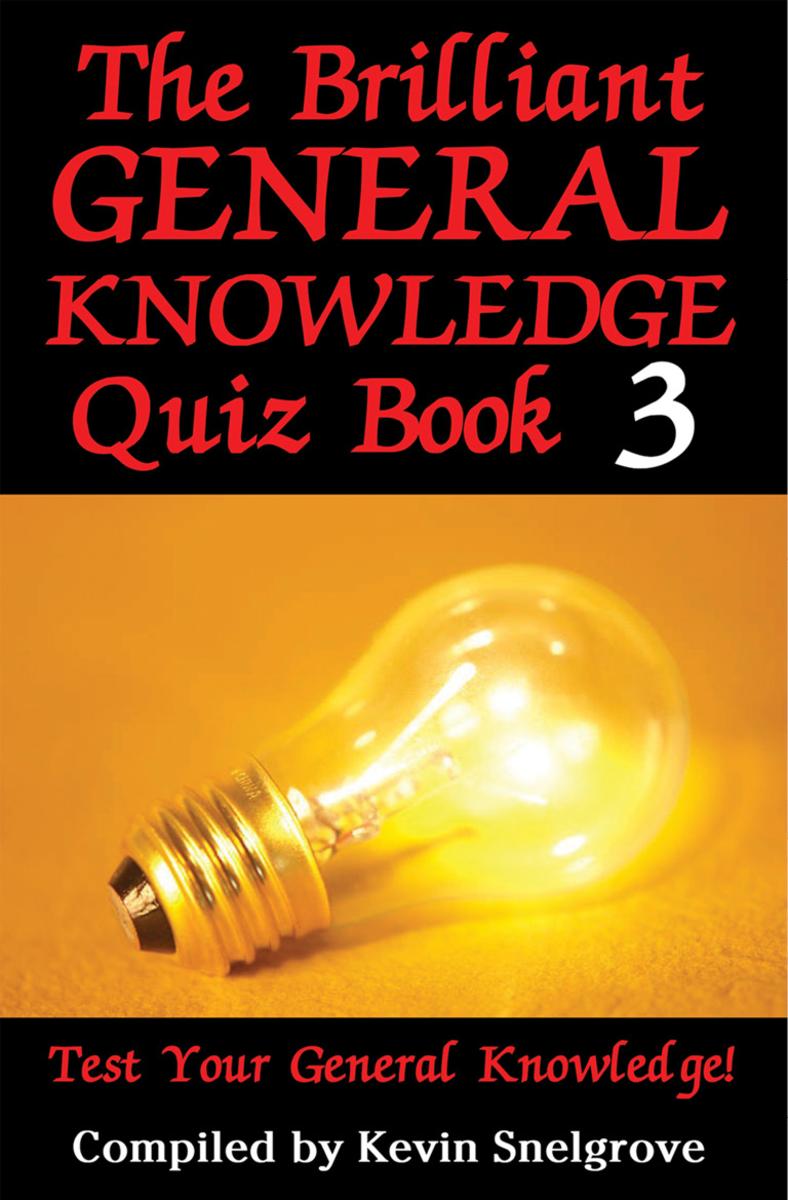
Brilliant General Knowledge Quiz Book 3
Snelgrove , Kevin
¥24.43
In what year did Concorde 001 first take off from Toulouse? What did the African country of Zaire change its name to in 1997? What popular sweet was invented by Frank Fleer in 1906? If you would like to know the answers to these brain-teasers and more like them take a look at The Brilliant General Knowledge Quiz Book.Find out how much you know about everyday things and the world we live in with the 100 testing questions in this book. Full of interesting facts and covering a range of topics including sport, history, geography, science, films and celebrities, this book provides a fun and easy way to learn. Whether you want to help the kids with their homework, challenge your friends or set the questions for the next pub quiz, this book is just all you need to improve your general knowledge. So if you have always wanted to know who invented the World Wide Web or the number of players in a water polo team this is the book for you.
Essays of Montaigne: {Complete & Illustrated}
Michel Montaigne
¥37.36
The Odyssey (Greek:Odysseia) is one of two major ancient Greek epic poems attributed to Homer. It is, in part, a sequel to the Iliad, the other work ascribed to Homer. The poem is fundamental to the modern Western canon, and is the second oldest extant work of Western literature, the Iliad being the oldest. It is believed to have been composed near the end of the 8th century BC, somewhere in Ionia, the Greek coastal region of Anatolia. The poem mainly centers on the Greek hero Odysseus (known as Ulysses in Roman myths) and his journey home after the fall of Troy. It takes Odysseus ten years to reach Ithaca after the ten-year Trojan War. In his absence, it is assumed he has died, and his wife Penelope and son Telemachus must deal with a group of unruly suitors, the Mnesteres or Proci, who compete for Penelope's hand in marriage. It continues to be read in the Homeric Greek and translated into modern languages around the world. Many scholars believe that the original poem was composed in an oral tradition by an aoidos (epic poet/singer), perhaps a rhapsode (professional performer), and was more likely intended to be heard than read. The details of the ancient oral performance, and the story's conversion to a written work inspire continual debate among scholars. The Odyssey was written in a poetic dialect of Greek—a literary amalgam of Aeolic Greek, Ionic Greek, and other Ancient Greek dialects—and comprises 12,110 lines of dactylic hexameter. Among the most noteworthy elements of the text are its non-linear plot, and the influence on events of choices made by women and serfs, besides the actions of fighting men. In the English language as well as many others, the word odyssey has come to refer to an epic voyage. The Odyssey has a lost sequel, the Telegony, which was not written by Homer. It was usually attributed in Antiquity to Cinaethon of Sparta, but in one source was said to have been stolen from Musaeus by Eugamon or Eugammon of Cyrene (see Cyclic poets). ABOUT AUTHOR: Homeros, In the Western classical tradition, Homer (Ancient Greek: Homeros) is the author of the Iliad and the Odyssey, and is revered as the greatest of ancient Greek epic poets. These epics lie at the beginning of the Western canon of literature, and have had an enormous influence on the history of literature. When he lived is unknown. Herodotus estimates that Homer lived 400 years before his own time, which would place him at around 850 BC, while other ancient sources claim that he lived much nearer to the supposed time of the Trojan War, in the early 12th century BC. Most modern researchers place Homer in the 7th or 8th centuries BC. The formative influence of the Homeric epics in shaping Greek culture was widely recognized, and Homer was described as the teacher of Greece. Homer's works, which are about fifty percent speeches, provided models in persuasive speaking and writing that were emulated throughout the ancient and medieval Greek worlds. Fragments of Homer account for nearly half of all identifiable Greek literary papyrus finds. PeriodFor modern scholars "the date of Homer" refers not to an individual, but to the period when the epics were created. The consensus is that "the Iliad and the Odyssey date from around the 8th century BC, the Iliad being composed before the Odyssey, perhaps by some decades," i.e. earlier than Hesiod, the Iliad being the oldest work of Western literature. Over the past few decades, some scholars have argued for a 7th-century BC date. Oliver Taplin believes that the conclusion of modern researchers is that Homer dates to between 750 to 650 BC. Some of those who argue that the Homeric poems developed gradually over a long period of time give an even later date for the composition of the poems; according to Gregory Nagy for example, they only became fixed texts in the 6th century BC. The question of the historicity of Homer the individual is known as the "Homeric question"; there is no reliable biographical information handed down from classical antiquity. The poems are generally seen as the culmination of many generations of oral story-telling, in a tradition with a well-developed formulaic system of poetic composition. Some scholars, such as Martin West, claim that "Homer" is "not the name of a historical poet, but a fictitious or constructed name."
Falling in Love
Falling in Love
Grant Allen
¥18.74
Art, with its finite means, cannot hope to record the infinite variety and com-plexity of Nature, and so contents itself with a partial statement, addressing this to the imagination for the full and perfect meaning. This inadequation, and the artificial ad-justments which it involves, are tolerated by right of what is known as artistic convention; and as each art has its own particular limitations, so each has its own particular conventions. Sculpture reproduces the forms of Nature, but discards the color without any shock to our ideas of verity; Painting gives us the color, but not the third dimension, and we are satisfied; and Architecture ispurely conventional, since it does not even aim at the imitation of natural form. The Conventions of Line Drawing,Of the kindred arts which group themselves under the head of Painting, none is based on such broad conventions as that with which we are immediately concerned—the art of Pen Drawing. In this medium, Nature's variety of color, when not positively ignored, is suggested by means of sharp black lines, of varying thickness, placed more or less closely together upon white paper; while natural form depends primarily for its representation upon arbitrary boundary lines. There is, of course, no authority in Na-ture for a positive outline: we see objects only by the difference in color of the other objects behind and around them. The technical capacity of the pen and ink medium, however, does not provide a value corresponding to every natural one, so that a broad interpretation has to be adopted which eliminates the less positive values; and, that form may not likewise be sacrificed, the outline becomes necessary, that light objects may stand relieved against light. This outline is the most characteristic, as it is the most indispensable, of the conventions of line drawing. To seek to abolish it only involves a resort to expedients no less artificial, and the results of all such attempts, dependent as they necessarily are upon elaboration of color, and a general indirectness of method, lack some of the best characteristics of pen drawing. More frequently, however, an elaborate color-scheme is merely a straining at the technical limitations of the pen in an effort to render the greatest possible number of values. It may be worth while to inquire whether excellence in pen drawing consists in thus dispensing with its recognized conventions, or in otherwise taxing the technical re-sources of the instrument. This involves the question of Style,—of what characteristic pen methods are,—a question which we will briefly consider...
Világfa
Világfa
Csüllög Ferenc
¥28.53
A budapesti Lánchíd pesti hídf?jénél álló Gresham-palotát mindannyian jól ismerjük – legalábbis kívülr?l. De tudjuk-e, miféle titkokat rejtett egykor az impozáns épület? Szelke László izgalmas és olvasmányos nyomozása, A Gresham a nácik ellen a 19. századtól a második világháborúig kíséri nyomon a mai luxusszálloda fordulatos t?rténetét. A százarcú épület a kezdetekt?l a t?rténelem f?sodrában állt. El?dje, a Nákó-palota magánházként olyan hírességek lakhelye volt, mint a Lánchíd tervein dolgozó Clark ?dám vagy a Széchenyi István életnagyságú portréját fest? Barabás Miklós, a század végén pedig a Gresham életbiztosító társaság székhelyéül szolgált. Miután a 20. század elején szecessziós stílusban újjáépítették, a pezsg? kávéházi élet meghatározó színterévé, haladó értelmiségiek találkahelyévé avanzsált. Ahogy a Horthy-rendszer idején egyre fogyott a leveg?, úgy vált a Gresham-palota az ellenzéki politika, a szellemi ellenállás, a mind rendszerkritikusabb kabarék otthonává ? a második világháború idején pedig a titkos diplomácia és az embermentés megkerülhetetlen k?zpontjává. Náciellenes m?vészek, újságírók, tudósítók, attasék, hírszerz?k, kémelhárítók, kett?s, s?t hármas ügyn?k?k fordultak meg a falai k?zt, és itt m?k?d?tt t?bbek k?zt a liberális párt pesti klubja, illetve a szabadelv? Esti Kurir cím? napilap szerkeszt?sége. A k?nyv lapjain a kor olyan meghatározó figurái t?nnek fel, mint Szent-Gy?rgyi Albert és Herczeg Ferenc, Szekf? Gyula és Raoul Wallenberg, de megismerkedhetünk a budapesti k?nyvhét alapítójával, a bátor emberment? Supka Gézával, a zsidót?rvények kíméletlen kritikusával, Rassay Károllyal vagy a Pódium Kabarét vezet? Békeffi Lászlóval, aki az angol titkosszolgálattal is kapcsolatban állt. Tények és legendák, t?rvénytisztel?k és provokátorok, h?s?k és áldozatok – A Gresham a nácik ellen a t?rténelem legrejtettebb kulisszái m?gé kalauzolja olvasóját. Szelke László 1975-ben született. Egyetemi adjunktus, 2013-ban szerzett doktori fokozatot, jelenleg a piliscsabai M?vel?dési Információs K?zpont és K?nyvtár igazgatója. 19?20. századi magyar és egyetemes t?rténelmet tanít a Pázmány Péter Katolikus Egyetemen.
Arizona's Yesterday: [Illustrated]
John H. Cady, Basil Woon
¥8.09
This story belongs to the year 1837, and was regarded by the generations of that and a succeeding time as the most miraculous of all the recorded deliverances from death at sea. It may be told thus: Mr. Montagu Vanderholt sat at breakfast with his daughter Violet one morning in September. Vanderholt's house was one of a fine terrace close to Hyde Park. He was a rich man, a retired Cape merchant, and his life had been as chequered as Trelawney's, with nothing of romance and nothing of imagination in it. He was the son of honest parents, of Dutch extraction, and had run away to sea when about twelve years old. Nothing under the serious heavens was harsher, more charged with misery, suffering, dirt, and wretchedness, than seafaring in the days when young Vanderholt, with an idiot's cunning, fled to it from his father's comfortable little home. He got a ship, was three years absent, and on his return found both his father and mother dead. He went again to sea, and, fortunately for him, was shipwrecked in the neighbourhood of Simon's Bay. The survivors made their way to Cape Town, and presently young Vanderholt got a job, and afterwards a position. He then became a master, until, after some eight or ten years of heroic perseverance, attended by much good luck, behold Mr. Vanderholt full-blown into a colonial merchant prince. How much he was worth when he made up his mind to settle in England, after the death of his wife, and when he had disposed of his affairs so as to leave himself as free a man as ever he had been when he was a common Jack Swab, really signifies nothing. It is certain he had plenty, and plenty is enough, even for a merchant prince of Dutch extraction. Besides Violet, he had two sons, who will not make an appearance on this little brief stage. They are dismissed, therefore, with this brief reference—that both were in the army, and both, at the time of this tale, in India. Violet was Vanderholt's only daughter, and he loved her exceedingly. She was not beautiful, but she was fair to see, with a pretty figure, and an arch, gay smile. You saw the Dutch blood in her eyes, as you saw it in her father's, whose orbs of vision, indeed, were ridiculously small—scarcely visible in their bed of socket and lash. An English mother had come to Violet's help in this matter. Taking her from top to toe, with her surprising quantity of brown hair, soft complexion, good mouth, teeth, and figure, Violet Vanderholt was undoubtedly a fine girl. THE LAST ENTRY "OPINIONS OF THE PRESS ON THE LAST ENTRY": '"The Last Entry" is a rattling good salt-water yarn, told in the author's usual breezy, exhilarating style.'-”Daily Mail. 'In this new novel Mr. Russell has cleverly thrown its events into the year 1837, and there are one or two ingenious passages which add to the Diamond Jubilee interest which that date suggests.... "The Last Entry" is as certain of general popularity as any of Mr. Russell's former tales of the marvels of the sea.'-”Glasgow Herald. 'We do not think it possible for anyone to dip into this novel without desiring to finish it, and it adds another to the long list of successes of our best sea author.'-”Librarian. 'In addition to mutiny and murder, "The Last Entry" contains many of those good things which have made Mr. Russell's pages a joy to so many lovers of the sea during the last twenty years.... "The Last Entry" is a welcome addition to Mr. Clark Russell's library.'-”Speaker. 'The writer is as realistic and picturesque as usual in his vivid descriptions of the stagnant life on board the homeward-bound Indiaman.'-”Times. 'It is full of pleasant vigour.... As is always the case in Mr. Clark Russell's books, the elements are treated with the pen of an artist.'-”Standard. 'We expected plenty of go, of fresh and vigorous description of sea-faring life, coupled with a story which would not be wanting in interest. All this we have here.'”-Tablet.