


 购物车
购物车 个人中心
个人中心
Azure for Architects
¥81.74
Create advanced data and integrated solutions using Azure Event Grid, functions, and containers Key Features * Get familiar with the different design patterns available in Microsoft Azure * Develop Azure cloud architecture and a pipeline management system * Get to know the security best practices for your Azure deployment Book Description Over the years, Azure cloud services have grown quickly, and the number of organizations adopting Azure for their cloud services is also gradually increasing. Leading industry giants are finding that Azure fulfills their extensive cloud requirements. Azure for Architects – Second Edition starts with an extensive introduction to major designing and architectural aspects available with Azure. These design patterns focus on different aspects of the cloud, such as high availability, security, and scalability. Gradually, we move on to other aspects, such as ARM template modular design and deployments. This is the age of microservices and serverless is the preferred implementation mechanism for them. This book covers the entire serverless stack available in Azure including Azure Event Grid, Azure Functions, and Azure Logic Apps. New and advance features like durable functions are discussed at length. A complete integration solution using these serverless technologies is also part of the book. A complete chapter discusses all possible options related to containers in Azure including Azure Kubernetes services, Azure Container Instances and Registry, and Web App for Containers. Data management and integration is an integral part of this book that discusses options for implementing OLTP solutions using Azure SQL, Big Data solutions using Azure Data factory and Data Lake Storage, eventing solutions using stream analytics, and Event Hubs. This book will provide insights into Azure governance features such as tagging, RBAC, cost management, and policies. By the end of this book, you will be able to develop a full-?edged Azure cloud solution that is Enterprise class and future-ready. What you will learn * Create an end-to-end integration solution using Azure Serverless Stack * Learn Big Data solutions and OLTP–based applications on Azure * Understand DevOps implementations using Azure DevOps * Architect solutions comprised of multiple resources in Azure * Develop modular ARM templates * Develop Governance on Azure using locks, RBAC, policies, tags and cost * Learn ways to build data solutions on Azure * Understand the various options related to containers including Azure Kubernetes Services Who this book is for If you are Cloud Architects, DevOps Engineers, or developers who want to learn key architectural aspects of the Azure Cloud platform, then this book is for you. Prior basic knowledge of the Azure Cloud platform is good to have.
Learning Python for Forensics
¥81.74
Design, develop, and deploy innovative forensic solutions using Python Key Features * Discover how to develop Python scripts for effective digital forensic analysis * Master the skills of parsing complex data structures with Python libraries * Solve forensic challenges through the development of practical Python scripts Book Description Digital forensics plays an integral role in solving complex cybercrimes and helping organizations make sense of cybersecurity incidents. This second edition of Learning Python for Forensics illustrates how Python can be used to support these digital investigations and permits the examiner to automate the parsing of forensic artifacts to spend more time examining actionable data. The second edition of Learning Python for Forensics will illustrate how to develop Python scripts using an iterative design. Further, it demonstrates how to leverage the various built-in and community-sourced forensics scripts and libraries available for Python today. This book will help strengthen your analysis skills and efficiency as you creatively solve real-world problems through instruction-based tutorials. By the end of this book, you will build a collection of Python scripts capable of investigating an array of forensic artifacts and master the skills of extracting metadata and parsing complex data structures into actionable reports. Most importantly, you will have developed a foundation upon which to build as you continue to learn Python and enhance your efficacy as an investigator. What you will learn * Learn how to develop Python scripts to solve complex forensic problems * Build scripts using an iterative design * Design code to accommodate present and future hurdles * Leverage built-in and community-sourced libraries * Understand the best practices in forensic programming * Learn how to transform raw data into customized reports and visualizations * Create forensic frameworks to automate analysis of multiple forensic artifacts * Conduct effective and efficient investigations through programmatic processing Who this book is for If you are a forensics student, hobbyist, or professional seeking to increase your understanding in forensics through the use of a programming language, then Learning Python for Forensics is for you. You are not required to have previous experience in programming to learn and master the content within this book. This material, created by forensic professionals, was written with a unique perspective and understanding for examiners who wish to learn programming.
Mastering Identity and Access Management with Microsoft Azure
¥108.99
Start empowering users and protecting corporate data, while managing identities and access with Microsoft Azure in different environments Key Features * Understand how to identify and manage business drivers during transitions * Explore Microsoft Identity and Access Management as a Service (IDaaS) solution * Over 40 playbooks to support your learning process with practical guidelines Book Description Microsoft Azure and its Identity and access management are at the heart of Microsoft's software as service products, including Office 365, Dynamics CRM, and Enterprise Mobility Management. It is crucial to master Microsoft Azure in order to be able to work with the Microsoft Cloud effectively. You’ll begin by identifying the benefits of Microsoft Azure in the field of identity and access management. Working through the functionality of identity and access management as a service, you will get a full overview of the Microsoft strategy. Understanding identity synchronization will help you to provide a well-managed identity. Project scenarios and examples will enable you to understand, troubleshoot, and develop on essential authentication protocols and publishing scenarios. Finally, you will acquire a thorough understanding of Microsoft Information protection technologies. What you will learn * Apply technical descriptions to your business needs and deployments * Manage cloud-only, simple, and complex hybrid environments * Apply correct and efficient monitoring and identity protection strategies * Design and deploy custom Identity and access management solutions * Build a complete identity and access management life cycle * Understand authentication and application publishing mechanisms * Use and understand the most crucial identity synchronization scenarios * Implement a suitable information protection strategy Who this book is for This book is a perfect companion for developers, cyber security specialists, system and security engineers, IT consultants/architects, and system administrators who are looking for perfectly up–to-date hybrid and cloud-only scenarios. You should have some understanding of security solutions, Active Directory, access privileges/rights, and authentication methods. Programming knowledge is not required but can be helpful for using PowerShell or working with APIs to customize your solutions.
Improving your C# Skills
¥90.46
Conquer complex and interesting programming challenges by building robust and concurrent applications with caches, cryptography, and parallel programming. Key Features * Understand how to use .NET frameworks like the Task Parallel Library (TPL)and CryptoAPI * Develop a containerized application based on microservices architecture * Gain insights into memory management techniques in .NET Core Book Description This Learning Path shows you how to create high performing applications and solve programming challenges using a wide range of C# features. You’ll begin by learning how to identify the bottlenecks in writing programs, highlight common performance pitfalls, and apply strategies to detect and resolve these issues early. You'll also study the importance of micro-services architecture for building fast applications and implementing resiliency and security in .NET Core. Then, you'll study the importance of defining and testing boundaries, abstracting away third-party code, and working with different types of test double, such as spies, mocks, and fakes. In addition to describing programming trade-offs, this Learning Path will also help you build a useful toolkit of techniques, including value caching, statistical analysis, and geometric algorithms. This Learning Path includes content from the following Packt products: * C# 7 and .NET Core 2.0 High Performance by Ovais Mehboob Ahmed Khan * Practical Test-Driven Development using C# 7 by John Callaway, Clayton Hunt * The Modern C# Challenge by Rod Stephens What you will learn * Measure application performance using BenchmarkDotNet * Leverage the Task Parallel Library (TPL) and Parallel Language Integrated Query (PLINQ)library to perform asynchronous operations * Modify a legacy application to make it testable * Use LINQ and PLINQ to search directories for files matching patterns * Find areas of polygons using geometric operations * Randomize arrays and lists with extension methods * Use cryptographic techniques to encrypt and decrypt strings and files Who this book is for If you want to improve the speed of your code and optimize the performance of your applications, or are simply looking for a practical resource on test driven development, this is the ideal Learning Path for you. Some familiarity with C# and .NET will be beneficial.
Getting Started with Python
¥90.46
Harness the power of Python objects and data structures to implement algorithms for analyzing your data and efficiently extracting information Key Features * Turn your designs into working software by learning the Python syntax * Write robust code with a solid understanding of Python data structures * Understand when to use the functional or the OOP approach Book Description This Learning Path helps you get comfortable with the world of Python. It starts with a thorough and practical introduction to Python. You’ll quickly start writing programs, building websites, and working with data by harnessing Python's renowned data science libraries. With the power of linked lists, binary searches, and sorting algorithms, you'll easily create complex data structures, such as graphs, stacks, and queues. After understanding cooperative inheritance, you'll expertly raise, handle, and manipulate exceptions. You will effortlessly integrate the object-oriented and not-so-object-oriented aspects of Python, and create maintainable applications using higher level design patterns. Once you’ve covered core topics, you’ll understand the joy of unit testing and just how easy it is to create unit tests. By the end of this Learning Path, you will have built components that are easy to understand, debug, and can be used across different applications. This Learning Path includes content from the following Packt products: * Learn Python Programming - Second Edition by Fabrizio Romano * Python Data Structures and Algorithms by Benjamin Baka * Python 3 Object-Oriented Programming by Dusty Phillips What you will learn * Use data structures and control flow to write code * Use functions to bundle together a sequence of instructions * Implement objects in Python by creating classes and defining methods * Design public interfaces using abstraction, encapsulation and information hiding * Raise, define, and manipulate exceptions using special error objects * Create bulletproof and reliable software by writing unit tests * Learn the common programming patterns and algorithms used in Python Who this book is for If you are relatively new to coding and want to write scripts or programs to accomplish tasks using Python, or if you are an object-oriented programmer for other languages and seeking a leg up in the world of Python, then this Learning Path is for you. Though not essential, it will help you to have basic knowledge of programming and OOP.
Data Wrangling with Python
¥73.02
Simplify your ETL processes with these hands-on data hygiene tips, tricks, and best practices. Key Features * Focus on the basics of data wrangling * Study various ways to extract the most out of your data in less time * Boost your learning curve with bonus topics like random data generation and data integrity checks Book Description For data to be useful and meaningful, it must be curated and refined. Data Wrangling with Python teaches you the core ideas behind these processes and equips you with knowledge of the most popular tools and techniques in the domain. The book starts with the absolute basics of Python, focusing mainly on data structures. It then delves into the fundamental tools of data wrangling like NumPy and Pandas libraries. You’ll explore useful insights into why you should stay away from traditional ways of data cleaning, as done in other languages, and take advantage of the specialized pre-built routines in Python. This combination of Python tips and tricks will also demonstrate how to use the same Python backend and extract/transform data from an array of sources including the Internet, large database vaults, and Excel financial tables. To help you prepare for more challenging scenarios, you’ll cover how to handle missing or wrong data, and reformat it based on the requirements from the downstream analytics tool. The book will further help you grasp concepts through real-world examples and datasets. By the end of this book, you will be confident in using a diverse array of sources to extract, clean, transform, and format your data efficiently. What you will learn * Use and manipulate complex and simple data structures * Harness the full potential of DataFrames and numpy.array at run time * Perform web scraping with BeautifulSoup4 and html5lib * Execute advanced string search and manipulation with RegEX * Handle outliers and perform data imputation with Pandas * Use descriptive statistics and plotting techniques * Practice data wrangling and modeling using data generation techniques Who this book is for Data Wrangling with Python is designed for developers, data analysts, and business analysts who are keen to pursue a career as a full-fledged data scientist or analytics expert. Although, this book is for beginners, prior working knowledge of Python is necessary to easily grasp the concepts covered here. It will also help to have rudimentary knowledge of relational database and SQL.
Neural Networks with Keras Cookbook
¥73.02
Implement neural network architectures by building them from scratch for multiple real-world applications. Key Features * From scratch, build multiple neural network architectures such as CNN, RNN, LSTM in Keras * Discover tips and tricks for designing a robust neural network to solve real-world problems * Graduate from understanding the working details of neural networks and master the art of fine-tuning them Book Description This book will take you from the basics of neural networks to advanced implementations of architectures using a recipe-based approach. We will learn about how neural networks work and the impact of various hyper parameters on a network's accuracy along with leveraging neural networks for structured and unstructured data. Later, we will learn how to classify and detect objects in images. We will also learn to use transfer learning for multiple applications, including a self-driving car using Convolutional Neural Networks. We will generate images while leveraging GANs and also by performing image encoding. Additionally, we will perform text analysis using word vector based techniques. Later, we will use Recurrent Neural Networks and LSTM to implement chatbot and Machine Translation systems. Finally, you will learn about transcribing images, audio, and generating captions and also use Deep Q-learning to build an agent that plays Space Invaders game. By the end of this book, you will have developed the skills to choose and customize multiple neural network architectures for various deep learning problems you might encounter. What you will learn * Build multiple advanced neural network architectures from scratch * Explore transfer learning to perform object detection and classification * Build self-driving car applications using instance and semantic segmentation * Understand data encoding for image, text and recommender systems * Implement text analysis using sequence-to-sequence learning * Leverage a combination of CNN and RNN to perform end-to-end learning * Build agents to play games using deep Q-learning Who this book is for This intermediate-level book targets beginners and intermediate-level machine learning practitioners and data scientists who have just started their journey with neural networks. This book is for those who are looking for resources to help them navigate through the various neural network architectures; you'll build multiple architectures, with concomitant case studies ordered by the complexity of the problem. A basic understanding of Python programming and a familiarity with basic machine learning are all you need to get started with this book.
Redux Quick Start Guide
¥54.49
Integrate Redux with React and other front-end JavaScript frameworks efficiently and manage application states effectively Key Features * Get better at building web applications with state management using Redux * Learn the fundamentals of Redux to structure your app more efficiently * This guide will teach you develop complex apps that would be easier to maintain Book Description Starting with a detailed overview of Redux, we will follow the test-driven development (TDD) approach to develop single-page applications. We will set up JEST for testing and use JEST to test React, Redux, Redux-Sage, Reducers, and other components. We will then add important middleware and set up immutableJS in our application. We will use common data structures such as Map, List, Set, and OrderedList from the immutableJS framework. We will then add user interfaces using ReactJS, Redux-Form, and Ant Design. We will explore the use of react-router-dom and its functions. We will create a list of routes that we will need in order to create our application, and explore routing on the server site and create the required routes for our application. We will then debug our application and integrate Redux Dev tools. We will then set up our API server and create the API required for our application. We will dive into a modern approach to structuring our server site components in terms of Model, Controller, Helper functions, and utilities functions. We will explore the use of NodeJS with Express to build the REST API components. Finally, we will venture into the possibilities of extending the application for further research, including deployment and optimization. What you will learn * Follow the test-driven development (TDD) approach to develop a single-page application * Add important middleware, such as Redux store middleware, redux-saga middleware, and language middleware, to your application * Understand how to use immutableJS in your application * Build interactive components using ReactJS * Configure react-router-redux and explore the differences between react-router-dom and react-router-redux * Use Redux Dev tools to debug your application * Set up our API server and create the API required for our application Who this book is for This book is meant for JavaScript developers interesting in learning state management and building easy to maintain web applications.

Learn Chart.js
¥54.49
Design interactive graphics and visuals for your data-driven applications using the popular open-source Chart.js data visualization library. Key Features * Harness the power of JavaScript, HTML, and CSS to create interactive visualizations * Display quantitative information efficiently in the form of attractive charts by using Chart.js * A practical guide for creating data-driven applications using open-source JavaScript library Book Description Chart.js is a free, open-source data visualization library, maintained by an active community of developers in GitHub, where it rates as the second most popular data visualization library. If you want to quickly create responsive Web-based data visualizations for the Web, Chart.js is a great choice. This book guides the reader through dozens of practical examples, complete with code you can run and modify as you wish. It is a practical hands-on introduction to Chart.js. If you have basic knowledge of HTML, CSS and JavaScript you can learn to create beautiful interactive Web Canvas-based visualizations for your data using Chart.js. This book will help you set up Chart.js in a Web page and show how to create each one of the eight Chart.js chart types. You will also learn how to configure most properties that override Chart’s default styles and behaviors. Practical applications of Chart.js are exemplified using real data files obtained from public data portals. You will learn how to load, parse, filter and select the data you wish to display from those files. You will also learn how to create visualizations that reveal patterns in the data. This book is based on Chart.js version 2.7.3 and ES2015 JavaScript. By the end of the book, you will be able to create beautiful, efficient and interactive data visualizations for the Web using Chart.js. What you will learn * Learn how to create interactive and responsive data visualizations using Chart.js * Learn how to create Canvas-based graphics without Canvas programming * Create composite charts and configure animated data updates and transitions * Efficiently display quantitative information using bar and line charts, scatterplots, and pie charts * Learn how to load, parse, and filter external files in JSON and CSV formats * Understand the benefits of using a data visualization framework Who this book is for The ideal target audience of this book includes web developers and designers, data journalists, data scientists and artists who wish to create interactive data visualizations for the Web. Basic knowledge of HTML, CSS, and JavaScript is required. No Canvas knowledge is necessary.
Java 11 and 12 – New Features
¥54.49
Enhance your development skills with Java’s state-of-the-art features and projects to make your applications leaner and faster Key Features * Overcome the challenges involved in migrating to new versions of Java * Discover how Oracle has bridged the gap between Java and native code * Make the best use of new Java features and libraries in your applications Book Description With its new six-monthly release cadence, Java is moving forward faster. In addition to planned version releases, a lot of work is currently being undertaken on various Java projects at Oracle. In order to make best use of the new features in their applications and libraries, you must be well-versed with the most recent advancements. Java 11 and 12 – New Features will take you through the latest developments in Java, right from variable type inference and simplified multithreading through to performance improvements, which are covered in depth to help you make your applications more efficient. This book explains the relevance and applicability of Java's new features, and answers your questions on whether to invest in migrating to new Java versions and when to migrate. You'll also get to grips with platform features, such as AppCDS and new garbage collectors, to tune and optimize your application—from reduced launch time and latency to improved performance and throughput. By the end of this book, you will be equipped with a thorough understanding of the new features of Java 11, 12, and Project Amber, and possess the skills to apply them with a view to improving your application's performance. What you will learn * Study type interference and how to work with the var type * Understand Class-Data Sharing, its benefits, and limitations * Discover platform options to reduce your application’s launch time * Improve application performance by switching garbage collectors * Get up to date with the new Java release cadence * Define and assess decision criteria for migrating to a new version of Java Who this book is for If you’re an executive or solutions architect responsible for technology selection or Java migration decisions, this Java book is for you. You’ll also benefit from this book if you’re a computer science enthusiast curious to learn about the latest and upcoming Java features. This book will help you migrate your solutions from Java 8 or older to the latest Java release.
Drupal 8 Module Development
¥73.02
Learn to create and customize impressive Drupal 8 modules to extend your website's functionalities Key Features * Explore a plethora of Drupal 8 APIs and get the best out of them using the power of PHP coding * Learn to implement efficient data management and data security by creating dedicated modules for it. * Stay up to date with the changes introduced in the new Drupal 8 releases Book Description Drupal 8 comes with a release cycle that allows for new functionality to be added at a much faster pace. However, this also means code deprecations and changing architecture that you need to stay on top of. This book updates the first edition and includes the new functionality introduced in versions up to, and including 8.7. The book will first introduce you to the Drupal 8 architecture and its subsystems before diving into creating your first module with basic functionality. You will work with the Drupal logging and mailing systems, learn how to output data using the theme layer and work with menus and links programmatically. Then, you will learn how to work with different kinds of data storages, create custom entities, field types and leverage the Database API for lower level database queries. You will further see how to introduce JavaScript into your module, work with the various file systems and ensure the code you write works on multilingual sites. Finally, you will learn how to programmatically work with Views, write automated tests for your functionality and also write secure code in general. By the end, you will have learned how to develop your own custom module that can provide complex business solutions. And who knows, maybe you’ll even contribute it back to the Drupal community. What you will learn * Develop Drupal 8 modules that do all the things you want * Master numerous Drupal 8 sub-systems and APIs in the process * Model, store, manipulate and process data to serve your purposes * Display data and content in a clean and secure way using the Drupal 8 theme system * Test your business logic to prevent regressions * Stay ahead of the curve and write code following the current best practices Who this book is for The primary target of this book is Drupal developers who want to learn how to write modules and develop in Drupal 8. It is also intended for Drupal site builders and PHP developers who have basic Object Oriented Programming skills. A little bit of Symfony experience is helpful but not mandatory.
Extreme C
¥90.46
Push the limits of what C - and you - can do, with this high-intensity guide to the most advanced capabilities of C Key Features * Make the most of C’s low-level control, flexibility, and high performance * A comprehensive guide to C’s most powerful and challenging features * A thought-provoking guide packed with hands-on exercises and examples Book Description There’s a lot more to C than knowing the language syntax. The industry looks for developers with a rigorous, scientific understanding of the principles and practices. Extreme C will teach you to use C’s advanced low-level power to write effective, efficient systems. This intensive, practical guide will help you become an expert C programmer. Building on your existing C knowledge, you will master preprocessor directives, macros, conditional compilation, pointers, and much more. You will gain new insight into algorithm design, functions, and structures. You will discover how C helps you squeeze maximum performance out of critical, resource-constrained applications. C still plays a critical role in 21st-century programming, remaining the core language for precision engineering, aviations, space research, and more. This book shows how C works with Unix, how to implement OO principles in C, and fully covers multi-processing. In Extreme C, Amini encourages you to think, question, apply, and experiment for yourself. The book is essential for anybody who wants to take their C to the next level. What you will learn * Build advanced C knowledge on strong foundations, rooted in first principles * Understand memory structures and compilation pipeline and how they work, and how to make most out of them * Apply object-oriented design principles to your procedural C code * Write low-level code that’s close to the hardware and squeezes maximum performance out of a computer system * Master concurrency, multithreading, multi-processing, and integration with other languages * Unit Testing and debugging, build systems, and inter-process communication for C programming Who this book is for Extreme C is for C programmers who want to dig deep into the language and its capabilities. It will help you make the most of the low-level control C gives you.
PyTorch 1.x Reinforcement Learning Cookbook
¥71.93
Implement reinforcement learning techniques and algorithms with the help of real-world examples and recipes Key Features * Use PyTorch 1.x to design and build self-learning artificial intelligence (AI) models * Implement RL algorithms to solve control and optimization challenges faced by data scientists today * Apply modern RL libraries to simulate a controlled environment for your projects Book Description Reinforcement learning (RL) is a branch of machine learning that has gained popularity in recent times. It allows you to train AI models that learn from their own actions and optimize their behavior. PyTorch has also emerged as the preferred tool for training RL models because of its efficiency and ease of use. With this book, you'll explore the important RL concepts and the implementation of algorithms in PyTorch 1.x. The recipes in the book, along with real-world examples, will help you master various RL techniques, such as dynamic programming, Monte Carlo simulations, temporal difference, and Q-learning. You'll also gain insights into industry-specific applications of these techniques. Later chapters will guide you through solving problems such as the multi-armed bandit problem and the cartpole problem using the multi-armed bandit algorithm and function approximation. You'll also learn how to use Deep Q-Networks to complete Atari games, along with how to effectively implement policy gradients. Finally, you'll discover how RL techniques are applied to Blackjack, Gridworld environments, internet advertising, and the Flappy Bird game. By the end of this book, you'll have developed the skills you need to implement popular RL algorithms and use RL techniques to solve real-world problems. What you will learn * Use Q-learning and the state–action–reward–state–action (SARSA) algorithm to solve various Gridworld problems * Develop a multi-armed bandit algorithm to optimize display advertising * Scale up learning and control processes using Deep Q-Networks * Simulate Markov Decision Processes, OpenAI Gym environments, and other common control problems * Select and build RL models, evaluate their performance, and optimize and deploy them * Use policy gradient methods to solve continuous RL problems Who this book is for Machine learning engineers, data scientists and AI researchers looking for quick solutions to different reinforcement learning problems will find this book useful. Although prior knowledge of machine learning concepts is required, experience with PyTorch will be useful but not necessary.
The Java Workshop
¥71.93
Cut through the noise and get real results with a step-by-step approach to learning Java programming Key Features * Ideal for the Java beginner who is getting started for the first time * A step-by-step Java tutorial with exercises and activities that help build key skills * Structured to let you progress at your own pace, on your own terms * Use your physical copy to redeem free access to the online interactive edition Book Description You already know you want to learn Java, and a smarter way to learn Java 12 is to learn by doing. The Java Workshop focuses on building up your practical skills so that you can develop high-performance Java applications that work flawlessly within the JVM across web, mobile and desktop. You'll learn from real examples that lead to real results. Throughout The Java Workshop, you'll take an engaging step-by-step approach to understanding Java. You won't have to sit through any unnecessary theory. If you're short on time you can jump into a single exercise each day or spend an entire weekend learning about Reactive programming and Unit testing. It's your choice. Learning on your terms, you'll build up and reinforce key skills in a way that feels rewarding. Every physical copy of The Java Workshop unlocks access to the interactive edition. With videos detailing all exercises and activities, you'll always have a guided solution. You can also benchmark yourself against assessments, track progress, and receive free content updates. You'll even earn a secure credential that you can share and verify online upon completion. It's a premium learning experience that's included with your printed copy. To redeem, follow the instructions located at the start of your Java book. Fast-paced and direct, The Java Workshop is the ideal companion for Java beginners. You'll build and iterate on your code like a software developer, learning along the way. This process means that you'll find that your new skills stick, embedded as best practice. A solid foundation for the years ahead. What you will learn * Get to grips with fundamental concepts and conventions of Java 12 * Write clean and well-commented code that's easy to maintain * Debug and compile logical errors and handle exceptions in your programs * Understand how to work with Java APIs and Java streams * Learn how to use third-party libraries and software development kits (SDKs) * Discover how you can work with information stored in databases * Understand how you can keep data secure with cryptography and encryption * Learn how to keep your development process bug-free with unit testing in Java Who this book is for Our goal at Packt is to help you be successful, in whatever it is you choose to do. The Java Workshop is an ideal Java tutorial for the Java beginner who is just getting started. Pick up a Workshop today, and let Packt help you develop skills that stick with you for life.
Hands-On Design Patterns with Swift
¥81.74
From learning about the most sought-after design patterns to a comprehensive coverage of architectural patterns and code testing, this book is all you need to write clean, reusable code Key Features *Write clean, reusable and maintainable code, and make the most of the latest Swift version. *Analyze case studies of some of the popular open source projects and give your workflow a huge boost *Choose patterns such as MVP, MVC, and MVVM depending on the application being built Book Description Swift keeps gaining traction not only amongst Apple developers but also as a server-side language. This book demonstrates how to apply design patterns and best practices in real-life situations, whether that's for new or already existing projects. You’ll begin with a quick refresher on Swift, the compiler, the standard library, and the foundation, followed by the Cocoa design patterns – the ones at the core of many cocoa libraries – to follow up with the creational, structural, and behavioral patterns as defined by the GoF. You'll get acquainted with application architecture, as well as the most popular architectural design patterns, such as MVC and MVVM, and learn to use them in the context of Swift. In addition, you’ll walk through dependency injection and functional reactive programming. Special emphasis will be given to techniques to handle concurrency, including callbacks, futures and promises, and reactive programming. These techniques will help you adopt a test-driven approach to your workflow in order to use Swift Package Manager and integrate the framework into the original code base, along with Unit and UI testing. By the end of the book, you'll be able to build applications that are scalable, faster, and easier to maintain. What you will learn *Work efficiently with Foundation and Swift Standard library *Understand the most critical GoF patterns and use them efficiently *Use Swift 4.2 and its unique capabilities (and limitations) to implement and improve GoF patterns *Improve your application architecture and optimize for maintainability and performance *Write efficient and clean concurrent programs using futures and promises, or reactive programming techniques *Use Swift Package Manager to refactor your program into reusable components *Leverage testing and other techniques for writing robust code Who this book is for This book is for intermediate developers who want to apply design patterns with Swift to structure and scale their applications. You are expected to have basic knowledge of iOS and Swift.
Deep Learning with PyTorch Quick Start Guide
¥54.49
Introduction to deep learning and PyTorch by building a convolutional neural network and recurrent neural network for real-world use cases such as image classification, transfer learning, and natural language processing. Key Features *Clear and concise explanations *Gives important insights into deep learning models *Practical demonstration of key concepts Book Description PyTorch is extremely powerful and yet easy to learn. It provides advanced features, such as supporting multiprocessor, distributed, and parallel computation. This book is an excellent entry point for those wanting to explore deep learning with PyTorch to harness its power. This book will introduce you to the PyTorch deep learning library and teach you how to train deep learning models without any hassle. We will set up the deep learning environment using PyTorch, and then train and deploy different types of deep learning models, such as CNN, RNN, and autoencoders. You will learn how to optimize models by tuning hyperparameters and how to use PyTorch in multiprocessor and distributed environments. We will discuss long short-term memory network (LSTMs) and build a language model to predict text. By the end of this book, you will be familiar with PyTorch's capabilities and be able to utilize the library to train your neural networks with relative ease. What you will learn *Set up the deep learning environment using the PyTorch library *Learn to build a deep learning model for image classification *Use a convolutional neural network for transfer learning *Understand to use PyTorch for natural language processing *Use a recurrent neural network to classify text *Understand how to optimize PyTorch in multiprocessor and distributed environments *Train, optimize, and deploy your neural networks for maximum accuracy and performance *Learn to deploy production-ready models Who this book is for Developers and Data Scientist familiar with Machine Learning but new to deep learning, or existing practitioners of deep learning who would like to use PyTorch to train their deep learning models will find this book to be useful. Having knowledge of Python programming will be an added advantage, while previous exposure to PyTorch is not needed.
Numerical Computing with Python
¥90.46
Understand, explore, and effectively present data using the powerful data visualization techniques of Python Key Features *Use the power of Pandas and Matplotlib to easily solve data mining issues *Understand the basics of statistics to build powerful predictive data models *Grasp data mining concepts with helpful use-cases and examples Book Description Data mining, or parsing the data to extract useful insights, is a niche skill that can transform your career as a data scientist Python is a flexible programming language that is equipped with a strong suite of libraries and toolkits, and gives you the perfect platform to sift through your data and mine the insights you seek. This Learning Path is designed to familiarize you with the Python libraries and the underlying statistics that you need to get comfortable with data mining. You will learn how to use Pandas, Python's popular library to analyze different kinds of data, and leverage the power of Matplotlib to generate appealing and impressive visualizations for the insights you have derived. You will also explore different machine learning techniques and statistics that enable you to build powerful predictive models. By the end of this Learning Path, you will have the perfect foundation to take your data mining skills to the next level and set yourself on the path to become a sought-after data science professional. This Learning Path includes content from the following Packt products: *Statistics for Machine Learning by Pratap Dangeti *Matplotlib 2.x By Example by Allen Yu, Claire Chung, Aldrin Yim *Pandas Cookbook by Theodore Petrou What you will learn *Understand the statistical fundamentals to build data models *Split data into independent groups *Apply aggregations and transformations to each group *Create impressive data visualizations *Prepare your data and design models *Clean up data to ease data analysis and visualization *Create insightful visualizations with Matplotlib and Seaborn *Customize the model to suit your own predictive goals Who this book is for If you want to learn how to use the many libraries of Python to extract impactful information from your data and present it as engaging visuals, then this is the ideal Learning Path for you. Some basic knowledge of Python is enough to get started with this Learning Path.
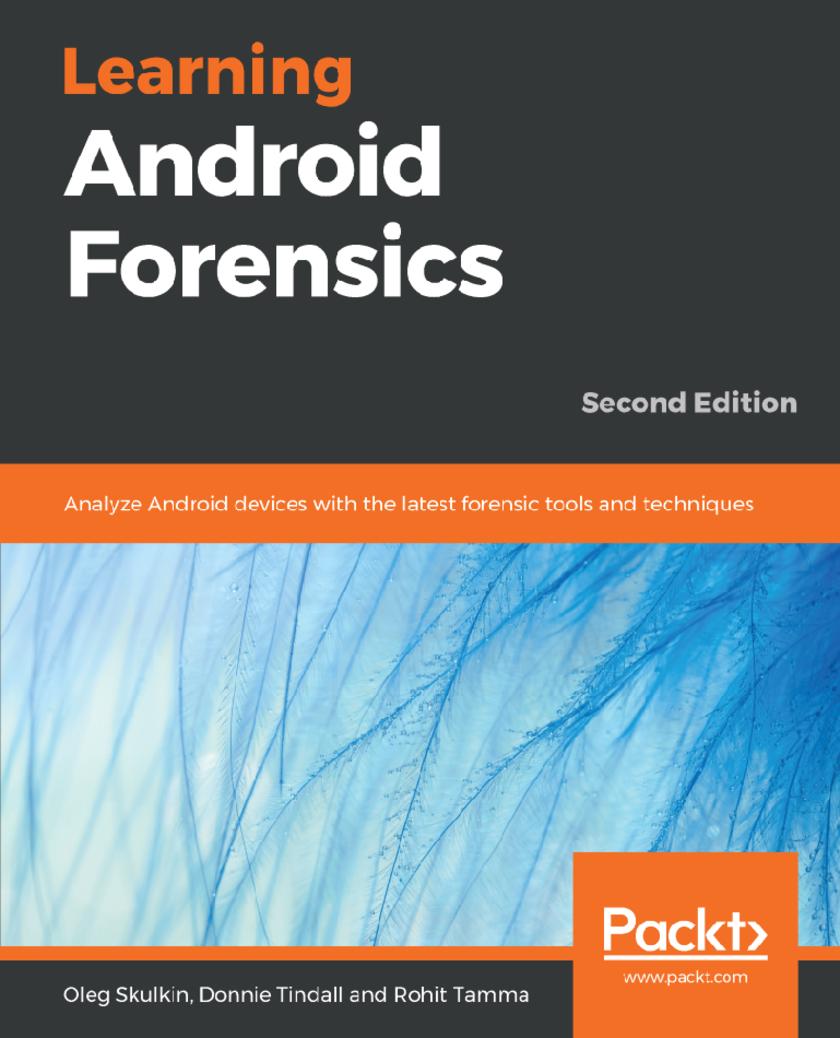
Learning Android Forensics
¥81.74
A comprehensive guide to Android forensics, from setting up the workstation to analyzing key artifacts Key Features *Get up and running with modern mobile forensic strategies and techniques *Analyze the most popular Android applications using free and open source forensic tools *Learn malware detection and analysis techniques to investigate mobile cybersecurity incidents Book Description Many forensic examiners rely on commercial, push-button tools to retrieve and analyze data, even though there is no tool that does either of these jobs perfectly. Learning Android Forensics will introduce you to the most up-to-date Android platform and its architecture, and provide a high-level overview of what Android forensics entails. You will understand how data is stored on Android devices and how to set up a digital forensic examination environment. As you make your way through the chapters, you will work through various physical and logical techniques to extract data from devices in order to obtain forensic evidence. You will also learn how to recover deleted data and forensically analyze application data with the help of various open source and commercial tools. In the concluding chapters, you will explore malware analysis so that you’ll be able to investigate cybersecurity incidents involving Android malware. By the end of this book, you will have a complete understanding of the Android forensic process, you will have explored open source and commercial forensic tools, and will have basic skills of Android malware identification and analysis. What you will learn *Understand Android OS and architecture *Set up a forensics environment for Android analysis *Perform logical and physical data extractions *Learn to recover deleted data *Explore how to analyze application data *Identify malware on Android devices *Analyze Android malware Who this book is for If you are a forensic analyst or an information security professional wanting to develop your knowledge of Android forensics, then this is the book for you. Some basic knowledge of the Android mobile platform is expected.
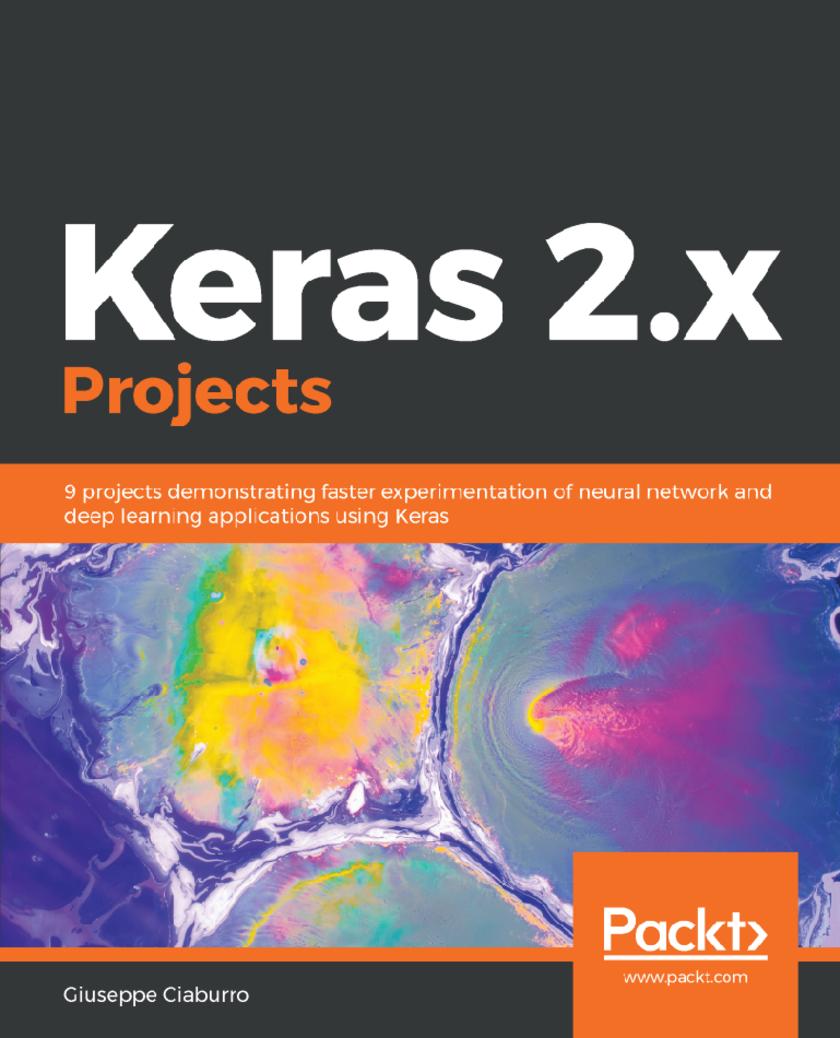
Keras 2.x Projects
¥81.74
Demonstrate fundamentals of Deep Learning and neural network methodologies using Keras 2.x Key Features *Experimental projects showcasing the implementation of high-performance deep learning models with Keras. * *Use-cases across reinforcement learning, natural language processing, GANs and computer vision. * *Build strong fundamentals of Keras in the area of deep learning and artificial intelligence. Book Description Keras 2.x Projects explains how to leverage the power of Keras to build and train state-of-the-art deep learning models through a series of practical projects that look at a range of real-world application areas. To begin with, you will quickly set up a deep learning environment by installing the Keras library. Through each of the projects, you will explore and learn the advanced concepts of deep learning and will learn how to compute and run your deep learning models using the advanced offerings of Keras. You will train fully-connected multilayer networks, convolutional neural networks, recurrent neural networks, autoencoders and generative adversarial networks using real-world training datasets. The projects you will undertake are all based on real-world scenarios of all complexity levels, covering topics such as language recognition, stock volatility, energy consumption prediction, faster object classification for self-driving vehicles, and more. By the end of this book, you will be well versed with deep learning and its implementation with Keras. You will have all the knowledge you need to train your own deep learning models to solve different kinds of problems. What you will learn *Apply regression methods to your data and understand how the regression algorithm works *Understand the basic concepts of classification methods and how to implement them in the Keras environment *Import and organize data for neural network classification analysis *Learn about the role of rectified linear units in the Keras network architecture *Implement a recurrent neural network to classify the sentiment of sentences from movie reviews *Set the embedding layer and the tensor sizes of a network Who this book is for If you are a data scientist, machine learning engineer, deep learning practitioner or an AI engineer who wants to build speedy intelligent applications with minimal lines of codes, then this book is the best fit for you. Sound knowledge of machine learning and basic familiarity with Keras library would be useful.
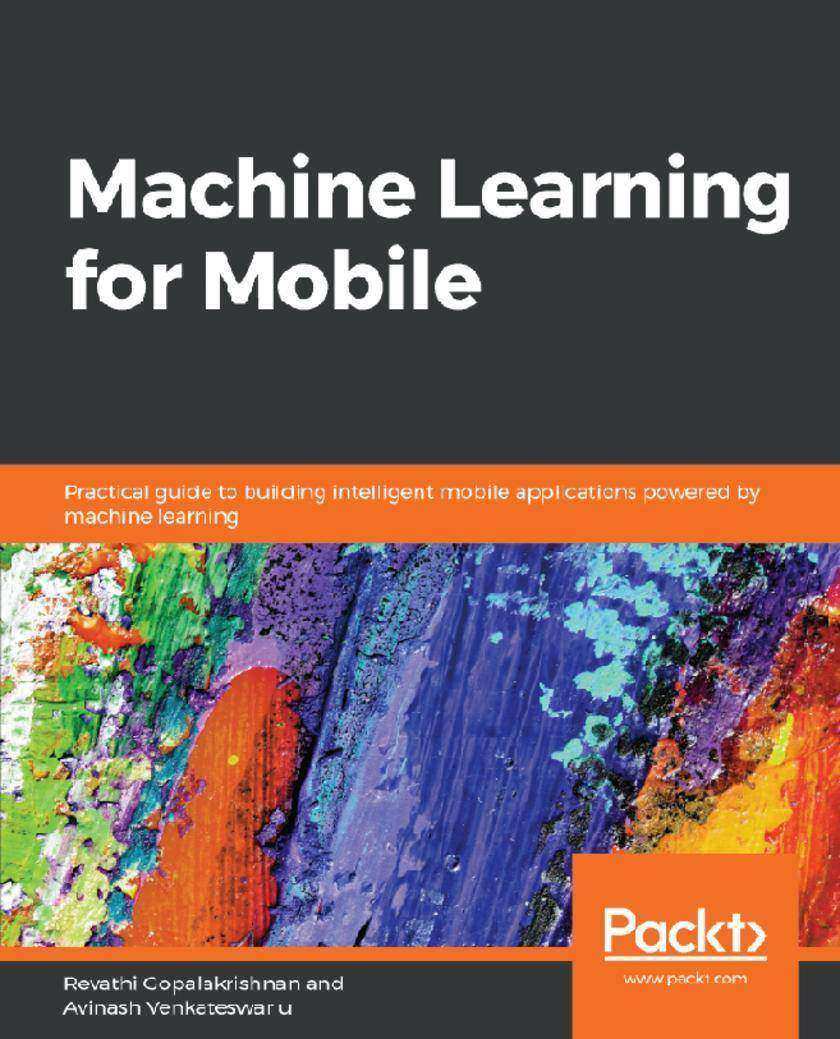
Machine Learning for Mobile
¥71.93
Leverage the power of machine learning on mobiles and build intelligent mobile applications with ease Key Features *Build smart mobile applications for Android and iOS devices *Use popular machine learning toolkits such as Core ML and TensorFlow Lite *Explore cloud services for machine learning that can be used in mobile apps Book Description Machine learning presents an entirely unique opportunity in software development. It allows smartphones to produce an enormous amount of useful data that can be mined, analyzed, and used to make predictions. This book will help you master machine learning for mobile devices with easy-to-follow, practical examples. You will begin with an introduction to machine learning on mobiles and grasp the fundamentals so you become well-acquainted with the subject. You will master supervised and unsupervised learning algorithms, and then learn how to build a machine learning model using mobile-based libraries such as Core ML, TensorFlow Lite, ML Kit, and Fritz on Android and iOS platforms. In doing so, you will also tackle some common and not-so-common machine learning problems with regard to Computer Vision and other real-world domains. By the end of this book, you will have explored machine learning in depth and implemented on-device machine learning with ease, thereby gaining a thorough understanding of how to run, create, and build real-time machine-learning applications on your mobile devices. What you will learn *Build intelligent machine learning models that run on Android and iOS *Use machine learning toolkits such as Core ML, TensorFlow Lite, and more *Learn how to use Google Mobile Vision in your mobile apps *Build a spam message detection system using Linear SVM *Using Core ML to implement a regression model for iOS devices *Build image classification systems using TensorFlow Lite and Core ML Who this book is for If you are a mobile app developer or a machine learning enthusiast keen to use machine learning to build smart mobile applications, this book is for you. Some experience with mobile application development is all you need to get started with this book. Prior experience with machine learning will be an added bonus
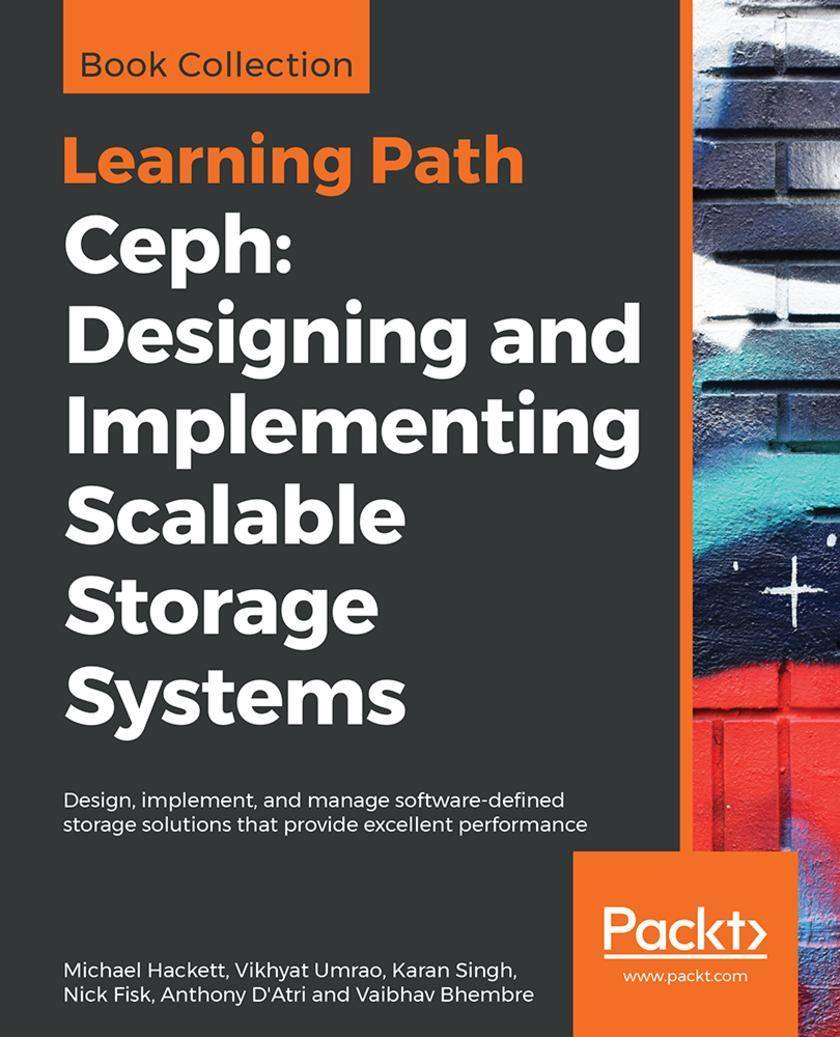
Ceph: Designing and Implementing Scalable Storage Systems
¥90.46
Get to grips with the unified, highly scalable distributed storage system and learn how to design and implement it. Key Features * Explore Ceph's architecture in detail * Implement a Ceph cluster successfully and gain deep insights into its best practices * Leverage the advanced features of Ceph, including erasure coding, tiering, and BlueStore Book Description This Learning Path takes you through the basics of Ceph all the way to gaining in-depth understanding of its advanced features. You’ll gather skills to plan, deploy, and manage your Ceph cluster. After an introduction to the Ceph architecture and its core projects, you’ll be able to set up a Ceph cluster and learn how to monitor its health, improve its performance, and troubleshoot any issues. By following the step-by-step approach of this Learning Path, you’ll learn how Ceph integrates with OpenStack, Glance, Manila, Swift, and Cinder. With knowledge of federated architecture and CephFS, you’ll use Calamari and VSM to monitor the Ceph environment. In the upcoming chapters, you’ll study the key areas of Ceph, including BlueStore, erasure coding, and cache tiering. More specifically, you’ll discover what they can do for your storage system. In the concluding chapters, you will develop applications that use Librados and distributed computations with shared object classes, and see how Ceph and its supporting infrastructure can be optimized. By the end of this Learning Path, you'll have the practical knowledge of operating Ceph in a production environment. This Learning Path includes content from the following Packt products: * Ceph Cookbook by Michael Hackett, Vikhyat Umrao and Karan Singh * Mastering Ceph by Nick Fisk * Learning Ceph, Second Edition by Anthony D'Atri, Vaibhav Bhembre and Karan Singh What you will learn * Understand the benefits of using Ceph as a storage solution * Combine Ceph with OpenStack, Cinder, Glance, and Nova components * Set up a test cluster with Ansible and virtual machine with VirtualBox * Develop solutions with Librados and shared object classes * Configure BlueStore and see its interaction with other configurations * Tune, monitor, and recover storage systems effectively * Build an erasure-coded pool by selecting intelligent parameters Who this book is for If you are a developer, system administrator, storage professional, or cloud engineer who wants to understand how to deploy a Ceph cluster, this Learning Path is ideal for you. It will help you discover ways in which Ceph features can solve your data storage problems. Basic knowledge of storage systems and GNU/Linux will be beneficial.


