


 购物车
购物车 个人中心
个人中心
Advanced Machine Learning with R
¥88.28
Master machine learning techniques with real-world projects that interface TensorFlow with R, H2O, MXNet, and other languages Key Features * Gain expertise in machine learning, deep learning and other techniques * Build intelligent end-to-end projects for finance, social media, and a variety of domains * Implement multi-class classification, regression, and clustering Book Description R is one of the most popular languages when it comes to exploring the mathematical side of machine learning and easily performing computational statistics. This Learning Path shows you how to leverage the R ecosystem to build efficient machine learning applications that carry out intelligent tasks within your organization. You'll tackle realistic projects such as building powerful machine learning models with ensembles to predict employee attrition. You'll explore different clustering techniques to segment customers using wholesale data and use TensorFlow and Keras-R for performing advanced computations. You’ll also be introduced to reinforcement learning along with its various use cases and models. Additionally, it shows you how some of these black-box models can be diagnosed and understood. By the end of this Learning Path, you’ll be equipped with the skills you need to deploy machine learning techniques in your own projects. This Learning Path includes content from the following Packt products: * R Machine Learning Projects by Dr. Sunil Kumar Chinnamgari * Mastering Machine Learning with R - Third Edition by Cory Lesmeister What you will learn * Develop a joke recommendation engine to recommend jokes that match users’ tastes * Build autoencoders for credit card fraud detection * Work with image recognition and convolutional neural networks * Make predictions for casino slot machine using reinforcement learning * Implement NLP techniques for sentiment analysis and customer segmentation * Produce simple and effective data visualizations for improved insights * Use NLP to extract insights for text * Implement tree-based classifiers including random forest and boosted tree Who this book is for If you are a data analyst, data scientist, or machine learning developer this is an ideal Learning Path for you. Each project will help you test your skills in implementing machine learning algorithms and techniques. A basic understanding of machine learning and working knowledge of R programming is necessary to get the most out of this Learning Path.
Hands-On Full Stack Development with Spring Boot 2 and React
¥62.12
A comprehensive guide to building full stack applications covering frontend and server-side programming, data management, and web security Key Features * Unleash the power of React Hooks to build interactive and complex user interfaces * Build scalable full stack applications designed to meet demands of modern users * Understand how the Axios library simplifies CRUD operations Book Description React Hooks have changed the way React components are coded. They enable you to write components in a more intuitive way without using classes, which makes your code easier to read and maintain. Building on from the previous edition, this book is updated with React Hooks and the latest changes introduced in create-react-app and Spring Boot 2.1. This book starts with a brief introduction to Spring Boot. You’ll understand how to use dependency injection and work with the data access layer of Spring using Hibernate as the ORM tool. You’ll then learn how to build your own RESTful API endpoints for web applications. As you advance, the book introduces you to other Spring components, such as Spring Security to help you secure the backend. Moving on, you’ll explore React and its app development environment and components for building your frontend. Finally, you’ll create a Docker container for your application by implementing the best practices that underpin professional full stack web development. By the end of this book, you’ll be equipped with all the knowledge you need to build modern full stack applications with Spring Boot for the backend and React for the frontend. What you will learn * Create a RESTful web service with Spring Boot * Grasp the fundamentals of dependency injection and how to use it for backend development * Discover techniques for securing the backend using Spring Security * Understand how to use React for frontend programming * Benefit from the Heroku cloud server by deploying your application to it * Delve into the techniques for creating unit tests using JUnit * Explore the Material UI component library to make more user-friendly user interfaces Who this book is for If you are a Java developer familiar with Spring, but are new to building full stack applications, this is the book for you.
Cybersecurity: The Beginner's Guide
¥53.40
Understand the nitty-gritty of Cybersecurity with ease Key Features * Align your security knowledge with industry leading concepts and tools * Acquire required skills and certifications to survive the ever changing market needs * Learn from industry experts to analyse, implement, and maintain a robust environment Book Description It's not a secret that there is a huge talent gap in the cybersecurity industry. Everyone is talking about it including the prestigious Forbes Magazine, Tech Republic, CSO Online, DarkReading, and SC Magazine, among many others. Additionally, Fortune CEO's like Satya Nadella, McAfee's CEO Chris Young, Cisco's CIO Colin Seward along with organizations like ISSA, research firms like Gartner too shine light on it from time to time. This book put together all the possible information with regards to cybersecurity, why you should choose it, the need for cyber security and how can you be part of it and fill the cybersecurity talent gap bit by bit. Starting with the essential understanding of security and its needs, we will move to security domain changes and how artificial intelligence and machine learning are helping to secure systems. Later, this book will walk you through all the skills and tools that everyone who wants to work as security personal need to be aware of. Then, this book will teach readers how to think like an attacker and explore some advanced security methodologies. Lastly, this book will deep dive into how to build practice labs, explore real-world use cases and get acquainted with various cybersecurity certifications. By the end of this book, readers will be well-versed with the security domain and will be capable of making the right choices in the cybersecurity field. What you will learn * Get an overview of what cybersecurity is and learn about the various faces of cybersecurity as well as identify domain that suits you best * Plan your transition into cybersecurity in an efficient and effective way * Learn how to build upon your existing skills and experience in order to prepare for your career in cybersecurity Who this book is for This book is targeted to any IT professional who is looking to venture in to the world cyber attacks and threats. Anyone with some understanding or IT infrastructure workflow will benefit from this book. Cybersecurity experts interested in enhancing their skill set will also find this book useful.
Machine Learning for Finance
¥70.84
Plan and build useful machine learning systems for financial services, with full working Python code Key Features * Build machine learning systems that will be useful across the financial services industry * Discover how machine learning can solve finance industry challenges * Gain the machine learning insights and skills fintech companies value most Book Description Machine learning skills are essential for anybody working in financial data analysis. Machine Learning for Finance shows you how to build machine learning models for use in financial services organizations. It shows you how to work with all the key machine learning models, from simple regression to advanced neural networks. You will see how to use machine learning to automate manual tasks, identify and address systemic bias, and find new insights and patterns hidden in available data. Machine Learning for Finance encourages and equips you to find new ways to use data to serve an organization’s business goals. Broad in scope yet deeply practical in approach, Machine Learning for Finance will help you to apply machine learning in all parts of a financial organization’s infrastructure. If you work or plan to work in fintech, and want to gain one of the most valuable skills in the sector today, this book is for you. What you will learn * Practical machine learning for the finance sector * Build machine learning systems that support the goals of financial organizations * Think creatively about problems and how machine learning can solve them * Identify and reduce sources of bias from machine learning models * Apply machine learning to structured data, natural language, photographs, and written text related to finance * Use machine learning to detect fraud, forecast financial trends, analyze customer sentiments, and more * Implement heuristic baselines, time series, generative models, and reinforcement learning in Python, scikit-learn, Keras, and TensorFlow Who this book is for Machine Learning for Finance is for financial professionals who want to develop and apply machine learning skills, and for students entering the field. You should be comfortable with Python and the basic data science stack, such as NumPy, pandas, and Matplotlib, to get the most out of this book.
Hands-On Kubernetes on Azure
¥73.02
Efficiently deploy and manage Kubernetes clusters on a cloud Key Features * Deploy highly scalable applications with Kubernetes on Azure * Leverage AKS to deploy, manage, and operations of Kubernetes * Gain best practices from this guide to increase efficiency of container orchestration service on Cloud Book Description Microsoft is now one of the most significant contributors to Kubernetes open source projects. Kubernetes helps to create, configure, and manage a cluster of virtual machines that are preconfigured to run containerized applications. This book will be your resource for achieving successful container orchestration and deployment of Kubernetes clusters on Azure. You will learn how to deploy and manage highly scalable applications, along with how to set up a production-ready Kubernetes cluster on Azure. With this book, you will be able to reduce the complexity and operational overheads of managing a Kubernetes cluster on Azure. By the end of this book, you will not only be capable of deploying and managing Kubernetes clusters on Azure with ease, but also have the knowledge of industry best practices to work with advanced Azure Kubernetes Services (AKS) concepts for complex systems. What you will learn * Get to grips with Microsoft AKS deployment, management, and operations * Learn about the benefits of using Microsoft AKS, as well as the limitations, and avoid potential problems * Integrate Microsoft toolchains such as Visual Studio Code, and Git * Implement simple and advanced AKS solutions * Implement the automated scalability and high reliability of secure deployments with Microsoft AKS * Use kubectl commands to monitor applications Who this book is for If you’re a cloud engineer, cloud solution provider, sysadmin, site reliability engineer, or a developer interested in DevOps and are looking for an extensive guide to running Kubernetes in the Azure environment then, this book is for you. Though any previous knowledge of Kubernetes is not expected, some experience with Linux and Docker containers would be beneficial.
Hands-On Data Science for Marketing
¥81.74
Optimize your marketing strategies through analytics and machine learning Key Features * Understand how data science drives successful marketing campaigns * Use machine learning for better customer engagement, retention, and product recommendations * Extract insights from your data to optimize marketing strategies and increase profitability Book Description Regardless of company size, the adoption of data science and machine learning for marketing has been rising in the industry. With this book, you will learn to implement data science techniques to understand the drivers behind the successes and failures of marketing campaigns. This book is a comprehensive guide to help you understand and predict customer behaviors and create more effectively targeted and personalized marketing strategies. This is a practical guide to performing simple-to-advanced tasks, to extract hidden insights from the data and use them to make smart business decisions. You will understand what drives sales and increases customer engagements for your products. You will learn to implement machine learning to forecast which customers are more likely to engage with the products and have high lifetime value. This book will also show you how to use machine learning techniques to understand different customer segments and recommend the right products for each customer. Apart from learning to gain insights into consumer behavior using exploratory analysis, you will also learn the concept of A/B testing and implement it using Python and R. By the end of this book, you will be experienced enough with various data science and machine learning techniques to run and manage successful marketing campaigns for your business. What you will learn * Learn how to compute and visualize marketing KPIs in Python and R * Master what drives successful marketing campaigns with data science * Use machine learning to predict customer engagement and lifetime value * Make product recommendations that customers are most likely to buy * Learn how to use A/B testing for better marketing decision making * Implement machine learning to understand different customer segments Who this book is for If you are a marketing professional, data scientist, engineer, or a student keen to learn how to apply data science to marketing, this book is what you need! It will be beneficial to have some basic knowledge of either Python or R to work through the examples. This book will also be beneficial for beginners as it covers basic-to-advanced data science concepts and applications in marketing with real-life examples.
React Design Patterns and Best Practices
¥73.02
Build modular React web apps that are scalable, maintainable and powerful using design patterns and insightful practices Key Features * Get familiar with design patterns in React like Render props and Controlled/uncontrolled inputs * Learn about class/ functional, style and high order components with React * Work through examples that can be used to create reusable code and extensible designs Book Description React is an adaptable JavaScript library for building complex UIs from small, detached bits called components. This book is designed to take you through the most valuable design patterns in React, helping you learn how to apply design patterns and best practices in real-life situations. You’ll get started by understanding the internals of React, in addition to covering Babel 7 and Create React App 2.0, which will help you write clean and maintainable code. To build on your skills, you will focus on concepts such as class components, stateless components, and pure components. You'll learn about new React features, such as the context API and React Hooks that will enable you to build components, which will be reusable across your applications. The book will then provide insights into the techniques of styling React components and optimizing them to make applications faster and more responsive. In the concluding chapters, you’ll discover ways to write tests more effectively and learn how to contribute to React and its ecosystem. By the end of this book, you will be equipped with the skills you need to tackle any developmental setbacks when working with React. You’ll be able to make your applications more flexible, efficient, and easy to maintain, thereby giving your workflow a boost when it comes to speed, without reducing quality. What you will learn * Get familiar with the new React features,like context API and React Hooks * Learn the techniques of styling and optimizing React components * Make components communicate with each other by applying consolidate patterns * Use server-side rendering to make applications load faster * Write a comprehensive set of tests to create robust and maintainable code * Build high-performing applications by optimizing components Who this book is for This book is for web developers who want to increase their understanding of React and apply it to real-life application development. Prior experience with React and JavaScript is assumed.
pfSense 2.x Cookbook
¥81.74
A practical, example-driven guide to configuring even the most advanced features of pfSense 2.x Key Features *Build a high-availability fault-tolerant security system with pfSense 2.x *Leverage the latest version of pfSense to secure your cloud environment *A recipe-based guide that will help you enhance your on-premise and cloud security principles Book Description pfSense is an open source distribution of the FreeBSD-based firewall that provides a platform for ?exible and powerful routing and firewalling. The versatility of pfSense presents us with a wide array of configuration options, which makes determining requirements a little more difficult and a lot more important compared to other offerings. pfSense 2.x Cookbook – Second Edition starts by providing you with an understanding of how to complete the basic steps needed to render a pfSense firewall operational. It starts by showing you how to set up different forms of NAT entries and firewall rules and use aliases and scheduling in firewall rules. Moving on, you will learn how to implement a captive portal set up in different ways (no authentication, user manager authentication, and RADIUS authentication), as well as NTP and SNMP configuration. You will then learn how to set up a VPN tunnel with pfSense. The book then focuses on setting up traffic shaping with pfSense, using either the built-in traffic shaping wizard, custom ?oating rules, or Snort. Toward the end, you will set up multiple WAN interfaces, load balancing and failover groups, and a CARP failover group. You will also learn how to bridge interfaces, add static routing entries, and use dynamic routing protocols via third-party packages. What you will learn *Configure the essential pfSense services (namely, DHCP, DNS, and DDNS) *Create aliases, firewall rules, NAT port-forward rules, and rule schedules *Create multiple WAN interfaces in load-balanced or failover configurations *Configure firewall redundancy with a CARP firewall failover *Configure backup/restoration and automatic configuration-file backup *Configure some services and perform diagnostics with command-line utilities Who this book is for This book is intended for all levels of network administrators. If you are an advanced user of pfSense, then you can flip to a particular recipe and quickly accomplish the task at hand; if you are new to pfSense, on the other hand, you can work through the book chapter by chapter and learn all of the features of the system from the ground up.
The Complete Kubernetes Guide
¥88.28
Design, deploy, and manage large-scale containers using Kubernetes Key Features * Gain insight into the latest features of Kubernetes, including Prometheus and API aggregation * Discover ways to keep your clusters always available, scalable, and up-to-date * Master the skills of designing and deploying large clusters on various cloud platforms Book Description If you are running a number of containers and want to be able to automate the way they’re managed, it can be helpful to have Kubernetes at your disposal. This Learning Path guides you through core Kubernetes constructs, such as pods, services, replica sets, replication controllers, and labels. You'll get started by learning how to integrate your build pipeline and deployments in a Kubernetes cluster. As you cover more chapters in the Learning Path, you'll get up to speed with orchestrating updates behind the scenes, avoiding downtime on your cluster, and dealing with underlying cloud provider instability in your cluster. With the help of real-world use cases, you'll also explore options for network configuration, and understand how to set up, operate, and troubleshoot various Kubernetes networking plugins. In addition to this, you'll gain insights into custom resource development and utilization in automation and maintenance workflows. By the end of this Learning Path, you'll have the expertise you need to progress from an intermediate to an advanced level of understanding Kubernetes. This Learning Path includes content from the following Packt products: * Getting Started with Kubernetes - Third Edition by Jonathan Baier and Jesse White * Mastering Kubernetes - Second Edition by Gigi Sayfan What you will learn * Download, install, and configure the Kubernetes code base * Create and configure custom Kubernetes resources * Use third-party resources in your automation workflows * Deliver applications as standard packages * Set up and access monitoring and logging for Kubernetes clusters * Set up external access to applications running in the cluster * Manage and scale Kubernetes with hosted platforms on Amazon Web Services (AWS), Azure, and Google Cloud Platform (GCP) * Run multiple clusters and manage them from a single control plane Who this book is for If you are a developer or a system administrator with an intermediate understanding of Kubernetes and want to master its advanced features, then this book is for you. Basic knowledge of networking is required to easily understand the concepts explained.
MicroPython Cookbook
¥70.84
Learn how you can control LEDs, make music, and read sensor data using popular microcontrollers such as Adafruit Circuit Playground, ESP8266, and the BBC micro:bit Key Features * Load and execute your first program with MicroPython * Program an IoT device to retrieve weather data using a RESTful API * Get to grips with integrating hardware, programming, and networking concepts with MicroPython Book Description MicroPython is an open source implementation of Python 3 that runs in embedded environments. With MicroPython, you can write clean and simple Python code to control hardware instead of using complex low-level languages like C and C++. This book guides you through all the major applications of the MicroPython platform to build and program projects that use microcontrollers. The MicroPython book covers recipes that’ll help you experiment with the programming environment and hardware programmed in MicroPython. You’ll find tips and techniques for building a variety of objects and prototypes that can sense and respond to touch, sound, position, heat, and light. This book will take you through the uses of MicroPython with a variety of popular input devices and sensors. You’ll learn techniques for handling time delays and sensor readings, and apply advanced coding techniques to create complex projects. As you advance, you’ll get to deal with Internet of Things (IoT) devices and integration with other online web services. Furthermore, you'll also use MicroPython to make music with bananas and create portable multiplayer video games that incorporate sound and light animations into the game play. By the end of the book, you'll have mastered tips and tricks to troubleshoot your development problems and push your MicroPython project to the next level! What you will learn * Execute code without any need for compiling or uploading using REPL (read-evaluate-print-loop) * Program and control LED matrix and NeoPixel drivers to display patterns and colors * Build projects that make use of light, temperature, and touch sensors * Configure devices to create Wi-Fi access points and use network modules to scan and connect to existing networks * Use Pulse Width Modulation to control DC motors and servos * Build an IoT device to display live weather data from the Internet at the touch of a button Who this book is for If you want to build and program projects that use microcontrollers, this book will offer you dozens of recipes to guide you through all the major applications of the MicroPython platform. Although no knowledge of MicroPython or microcontrollers is expected, a general understanding of Python is necessary to get started with this book.
Mastering GUI Programming with Python
¥70.84
An advanced guide to creating powerful high-performance GUIs for modern, media-rich applications in various domains such as business and game development Key Features * Gain comprehensive knowledge of Python GUI development using PyQt 5.12 * Explore advanced topics including multithreaded programming, 3D animation, and SQL databases * Build cross-platform GUIs for Windows, macOS, Linux, and Raspberry Pi Book Description PyQt5 has long been the most powerful and comprehensive GUI framework available for Python, yet there is a lack of cohesive resources available to teach Python programmers how to use it. This book aims to remedy the problem by providing comprehensive coverage of GUI development with PyQt5. You will get started with an introduction to PyQt5, before going on to develop stunning GUIs with modern features. You will then learn how to build forms using QWidgets and learn about important aspects of GUI development such as layouts, size policies, and event-driven programming. Moving ahead, you’ll discover PyQt5’s most powerful features through chapters on audio-visual programming with QtMultimedia, database-driven software with QtSQL, and web browsing with QtWebEngine. Next, in-depth coverage of multithreading and asynchronous programming will help you run tasks asynchronously and build high-concurrency processes with ease. In later chapters, you’ll gain insights into QOpenGLWidget, along with mastering techniques for creating 2D graphics with QPainter. You’ll also explore PyQt on a Raspberry Pi and interface it with remote systems using QtNetwork. Finally, you will learn how to distribute your applications using setuptools and PyInstaller. By the end of this book, you will have the skills you need to develop robust GUI applications using PyQt. What you will learn * Get to grips with the inner workings of PyQt5 * Learn how elements in a GUI application communicate with signals and slots * Learn techniques for styling an application * Explore database-driven applications with the QtSQL module * Create 2D graphics with QPainter * Delve into 3D graphics with QOpenGLWidget * Build network and web-aware applications with QtNetwork and QtWebEngine Who this book is for This book is for programmers who want to create attractive, functional, and powerful GUIs using the Python language. You’ll also find this book useful if you are a student, professional, or anyone who wants to start exploring GUIs or take your skills to the next level. Although prior knowledge of the Python language is assumed, experience with PyQt, Qt, or GUI programming is not required.
Hands-On Design Patterns with Swift
¥81.74
From learning about the most sought-after design patterns to a comprehensive coverage of architectural patterns and code testing, this book is all you need to write clean, reusable code Key Features *Write clean, reusable and maintainable code, and make the most of the latest Swift version. *Analyze case studies of some of the popular open source projects and give your workflow a huge boost *Choose patterns such as MVP, MVC, and MVVM depending on the application being built Book Description Swift keeps gaining traction not only amongst Apple developers but also as a server-side language. This book demonstrates how to apply design patterns and best practices in real-life situations, whether that's for new or already existing projects. You’ll begin with a quick refresher on Swift, the compiler, the standard library, and the foundation, followed by the Cocoa design patterns – the ones at the core of many cocoa libraries – to follow up with the creational, structural, and behavioral patterns as defined by the GoF. You'll get acquainted with application architecture, as well as the most popular architectural design patterns, such as MVC and MVVM, and learn to use them in the context of Swift. In addition, you’ll walk through dependency injection and functional reactive programming. Special emphasis will be given to techniques to handle concurrency, including callbacks, futures and promises, and reactive programming. These techniques will help you adopt a test-driven approach to your workflow in order to use Swift Package Manager and integrate the framework into the original code base, along with Unit and UI testing. By the end of the book, you'll be able to build applications that are scalable, faster, and easier to maintain. What you will learn *Work efficiently with Foundation and Swift Standard library *Understand the most critical GoF patterns and use them efficiently *Use Swift 4.2 and its unique capabilities (and limitations) to implement and improve GoF patterns *Improve your application architecture and optimize for maintainability and performance *Write efficient and clean concurrent programs using futures and promises, or reactive programming techniques *Use Swift Package Manager to refactor your program into reusable components *Leverage testing and other techniques for writing robust code Who this book is for This book is for intermediate developers who want to apply design patterns with Swift to structure and scale their applications. You are expected to have basic knowledge of iOS and Swift.
Deep Learning with PyTorch Quick Start Guide
¥54.49
Introduction to deep learning and PyTorch by building a convolutional neural network and recurrent neural network for real-world use cases such as image classification, transfer learning, and natural language processing. Key Features *Clear and concise explanations *Gives important insights into deep learning models *Practical demonstration of key concepts Book Description PyTorch is extremely powerful and yet easy to learn. It provides advanced features, such as supporting multiprocessor, distributed, and parallel computation. This book is an excellent entry point for those wanting to explore deep learning with PyTorch to harness its power. This book will introduce you to the PyTorch deep learning library and teach you how to train deep learning models without any hassle. We will set up the deep learning environment using PyTorch, and then train and deploy different types of deep learning models, such as CNN, RNN, and autoencoders. You will learn how to optimize models by tuning hyperparameters and how to use PyTorch in multiprocessor and distributed environments. We will discuss long short-term memory network (LSTMs) and build a language model to predict text. By the end of this book, you will be familiar with PyTorch's capabilities and be able to utilize the library to train your neural networks with relative ease. What you will learn *Set up the deep learning environment using the PyTorch library *Learn to build a deep learning model for image classification *Use a convolutional neural network for transfer learning *Understand to use PyTorch for natural language processing *Use a recurrent neural network to classify text *Understand how to optimize PyTorch in multiprocessor and distributed environments *Train, optimize, and deploy your neural networks for maximum accuracy and performance *Learn to deploy production-ready models Who this book is for Developers and Data Scientist familiar with Machine Learning but new to deep learning, or existing practitioners of deep learning who would like to use PyTorch to train their deep learning models will find this book to be useful. Having knowledge of Python programming will be an added advantage, while previous exposure to PyTorch is not needed.
Numerical Computing with Python
¥90.46
Understand, explore, and effectively present data using the powerful data visualization techniques of Python Key Features *Use the power of Pandas and Matplotlib to easily solve data mining issues *Understand the basics of statistics to build powerful predictive data models *Grasp data mining concepts with helpful use-cases and examples Book Description Data mining, or parsing the data to extract useful insights, is a niche skill that can transform your career as a data scientist Python is a flexible programming language that is equipped with a strong suite of libraries and toolkits, and gives you the perfect platform to sift through your data and mine the insights you seek. This Learning Path is designed to familiarize you with the Python libraries and the underlying statistics that you need to get comfortable with data mining. You will learn how to use Pandas, Python's popular library to analyze different kinds of data, and leverage the power of Matplotlib to generate appealing and impressive visualizations for the insights you have derived. You will also explore different machine learning techniques and statistics that enable you to build powerful predictive models. By the end of this Learning Path, you will have the perfect foundation to take your data mining skills to the next level and set yourself on the path to become a sought-after data science professional. This Learning Path includes content from the following Packt products: *Statistics for Machine Learning by Pratap Dangeti *Matplotlib 2.x By Example by Allen Yu, Claire Chung, Aldrin Yim *Pandas Cookbook by Theodore Petrou What you will learn *Understand the statistical fundamentals to build data models *Split data into independent groups *Apply aggregations and transformations to each group *Create impressive data visualizations *Prepare your data and design models *Clean up data to ease data analysis and visualization *Create insightful visualizations with Matplotlib and Seaborn *Customize the model to suit your own predictive goals Who this book is for If you want to learn how to use the many libraries of Python to extract impactful information from your data and present it as engaging visuals, then this is the ideal Learning Path for you. Some basic knowledge of Python is enough to get started with this Learning Path.
Tableau 10 Complete Reference
¥90.46
Explore and understand data with the powerful data visualization techniques of Tableau, and then communicate insights in powerful ways Key Features *Apply best practices in data visualization and chart types exploration *Explore the latest version of Tableau Desktop with hands-on examples *Understand the fundamentals of Tableau storytelling Book Description Graphical presentation of data enables us to easily understand complex data sets. Tableau 10 Complete Reference provides easy-to-follow recipes with several use cases and real-world business scenarios to get you up and running with Tableau 10. This Learning Path begins with the history of data visualization and its importance in today's businesses. You'll also be introduced to Tableau - how to connect, clean, and analyze data in this visual analytics software. Then, you'll learn how to apply what you've learned by creating some simple calculations in Tableau and using Table Calculations to help drive greater analysis from your data. Next, you'll explore different advanced chart types in Tableau. These chart types require you to have some understanding of the Tableau interface and understand basic calculations. You’ll study in detail all dashboard techniques and best practices. A number of recipes specifically for geospatial visualization, analytics, and data preparation are also covered. Last but not least, you'll learn about the power of storytelling through the creation of interactive dashboards in Tableau. Through this Learning Path, you will gain confidence and competence to analyze and communicate data and insights more efficiently and effectively by creating compelling interactive charts, dashboards, and stories in Tableau. This Learning Path includes content from the following Packt products: *Learning Tableau 10 - Second Edition by N. Milligan *Getting Started with Tableau 2018.x by Tristan Guillevin What you will learn *Build effective visualizations, dashboards, and story points *Build basic to more advanced charts with step-by-step recipes *Become familiar row-level, aggregate, and table calculations *Dig deep into data with clustering and distribution models *Prepare and transform data for analysis *Leverage Tableau’s mapping capabilities to visualize data *Use data storytelling techniques to aid decision making strategy Who this book is for Tableau 10 Complete Reference is designed for anyone who wants to understand their data better and represent it in an effective manner. It is also used for BI professionals and data analysts who want to do better at their jobs.
QlikView: Advanced Data Visualization
¥90.46
Build powerful data analytics applications with this business intelligence tool and overcome all your business challenges Key Features *Master time-saving techniques and make your QlikView development more efficient *Perform geographical analysis and sentiment analysis in your QlikView applications *Explore advanced QlikView techniques, tips, and tricks to deliver complex business requirements Book Description QlikView is one of the most flexible and powerful business intelligence platforms around, and if you want to transform data into insights, it is one of the best options you have at hand. Use this Learning Path, to explore the many features of QlikView to realize the potential of your data and present it as impactful and engaging visualizations. Each chapter in this Learning Path starts with an understanding of a business requirement and its associated data model and then helps you create insightful analysis and data visualizations around it. You will look at problems that you might encounter while visualizing complex data insights using QlikView, and learn how to troubleshoot these and other not-so-common errors. This Learning Path contains real-world examples from a variety of business domains, such as sales, finance, marketing, and human resources. With all the knowledge that you gain from this Learning Path, you will have all the experience you need to implement your next QlikView project like a pro. This Learning Path includes content from the following Packt products: *QlikView for Developers by Miguel ?ngel García, Barry Harmsen *Mastering QlikView by Stephen Redmond *Mastering QlikView Data Visualization by Karl Pover What you will learn *Deliver common business requirements using advanced techniques *Load data from disparate sources to build associative data models *Understand when to apply more advanced data visualization *Utilize the built-in aggregation functions for complex calculations *Build a data architecture that supports scalable QlikView deployments *Troubleshoot common data visualization errors in QlikView *Protect your QlikView applications and data Who this book is for This Learning Path is designed for developers who want to go beyond their technical knowledge of QlikView and understand how to create analysis and data visualizations that solve real business needs. To grasp the concepts explained in this Learning Path, you should have a basic understanding of the common QlikView functions and some hands-on experience with the tool.
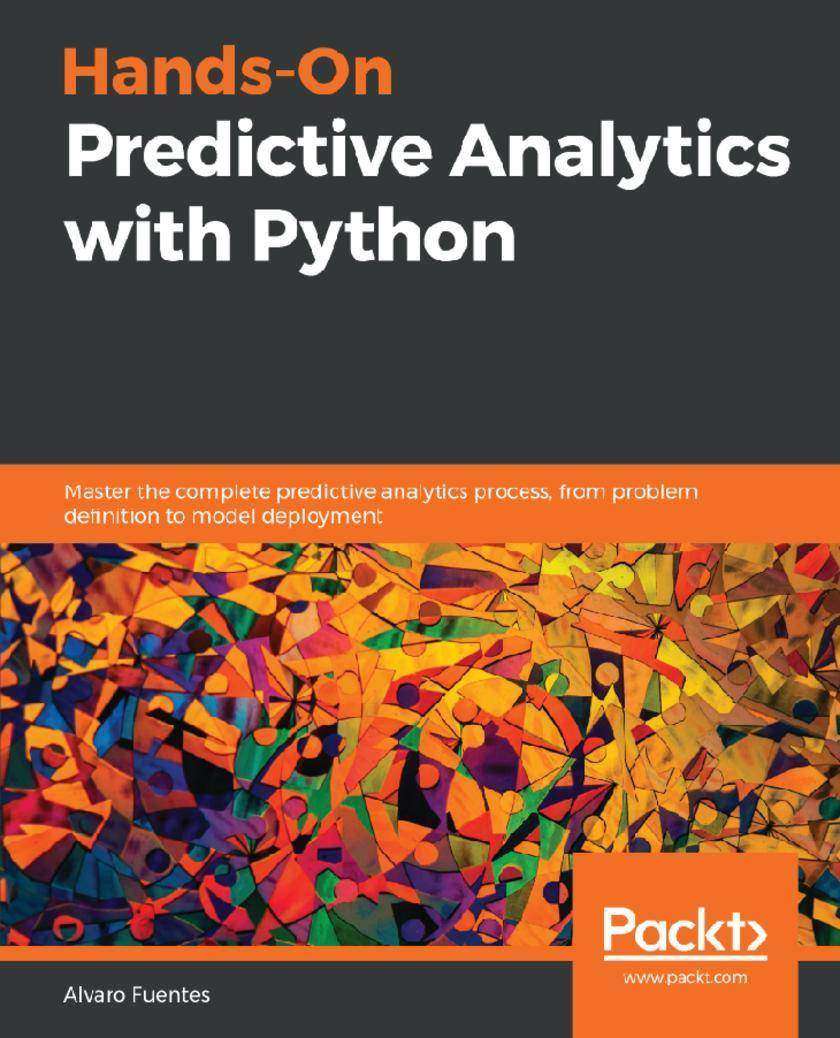
Hands-On Predictive Analytics with Python
¥81.74
Step-by-step guide to build high performing predictive applications Key Features *Use the Python data analytics ecosystem to implement end-to-end predictive analytics projects *Explore advanced predictive modeling algorithms with an emphasis on theory with intuitive explanations *Learn to deploy a predictive model's results as an interactive application Book Description Predictive analytics is an applied field that employs a variety of quantitative methods using data to make predictions. It involves much more than just throwing data onto a computer to build a model. This book provides practical coverage to help you understand the most important concepts of predictive analytics. Using practical, step-by-step examples, we build predictive analytics solutions while using cutting-edge Python tools and packages. The book's step-by-step approach starts by defining the problem and moves on to identifying relevant data. We will also be performing data preparation, exploring and visualizing relationships, building models, tuning, evaluating, and deploying model. Each stage has relevant practical examples and efficient Python code. You will work with models such as KNN, Random Forests, and neural networks using the most important libraries in Python's data science stack: NumPy, Pandas, Matplotlib, Seaborn, Keras, Dash, and so on. In addition to hands-on code examples, you will find intuitive explanations of the inner workings of the main techniques and algorithms used in predictive analytics. By the end of this book, you will be all set to build high-performance predictive analytics solutions using Python programming. What you will learn *Get to grips with the main concepts and principles of predictive analytics *Learn about the stages involved in producing complete predictive analytics solutions *Understand how to define a problem, propose a solution, and prepare a dataset *Use visualizations to explore relationships and gain insights into the dataset *Learn to build regression and classification models using scikit-learn *Use Keras to build powerful neural network models that produce accurate predictions *Learn to serve a model's predictions as a web application Who this book is for This book is for data analysts, data scientists, data engineers, and Python developers who want to learn about predictive modeling and would like to implement predictive analytics solutions using Python's data stack. People from other backgrounds who would like to enter this exciting field will greatly benefit from reading this book. All you need is to be proficient in Python programming and have a basic understanding of statistics and college-level algebra.
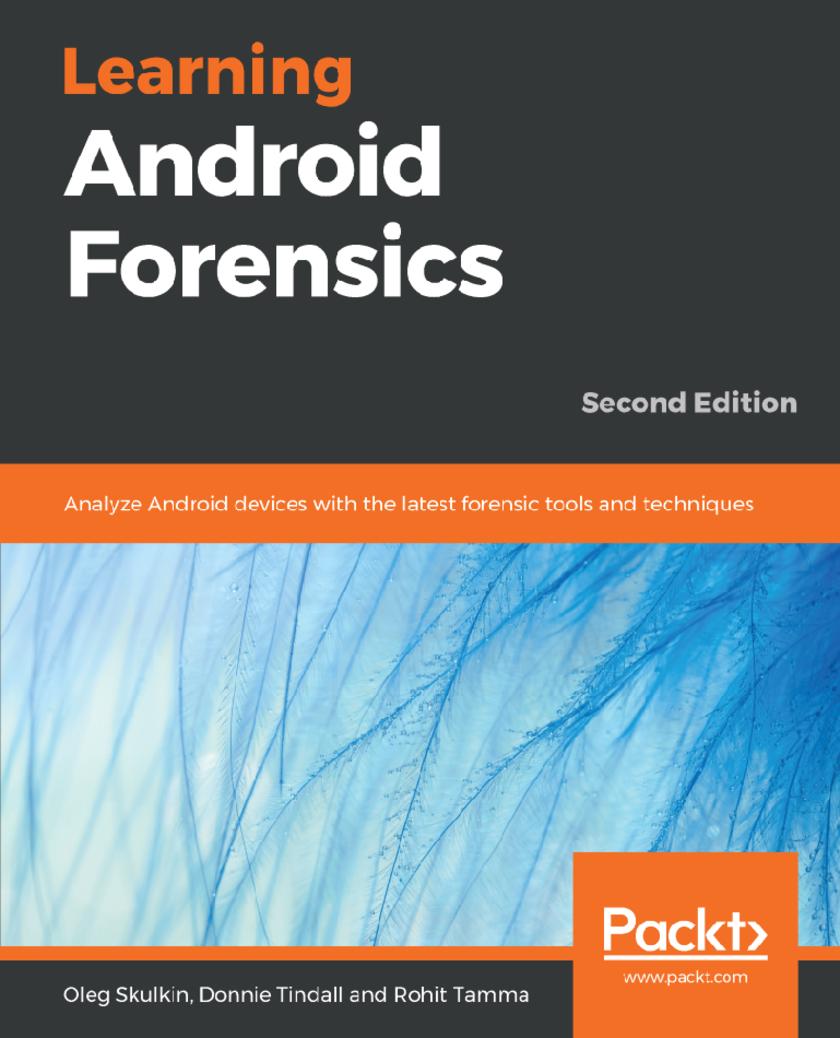
Learning Android Forensics
¥81.74
A comprehensive guide to Android forensics, from setting up the workstation to analyzing key artifacts Key Features *Get up and running with modern mobile forensic strategies and techniques *Analyze the most popular Android applications using free and open source forensic tools *Learn malware detection and analysis techniques to investigate mobile cybersecurity incidents Book Description Many forensic examiners rely on commercial, push-button tools to retrieve and analyze data, even though there is no tool that does either of these jobs perfectly. Learning Android Forensics will introduce you to the most up-to-date Android platform and its architecture, and provide a high-level overview of what Android forensics entails. You will understand how data is stored on Android devices and how to set up a digital forensic examination environment. As you make your way through the chapters, you will work through various physical and logical techniques to extract data from devices in order to obtain forensic evidence. You will also learn how to recover deleted data and forensically analyze application data with the help of various open source and commercial tools. In the concluding chapters, you will explore malware analysis so that you’ll be able to investigate cybersecurity incidents involving Android malware. By the end of this book, you will have a complete understanding of the Android forensic process, you will have explored open source and commercial forensic tools, and will have basic skills of Android malware identification and analysis. What you will learn *Understand Android OS and architecture *Set up a forensics environment for Android analysis *Perform logical and physical data extractions *Learn to recover deleted data *Explore how to analyze application data *Identify malware on Android devices *Analyze Android malware Who this book is for If you are a forensic analyst or an information security professional wanting to develop your knowledge of Android forensics, then this is the book for you. Some basic knowledge of the Android mobile platform is expected.
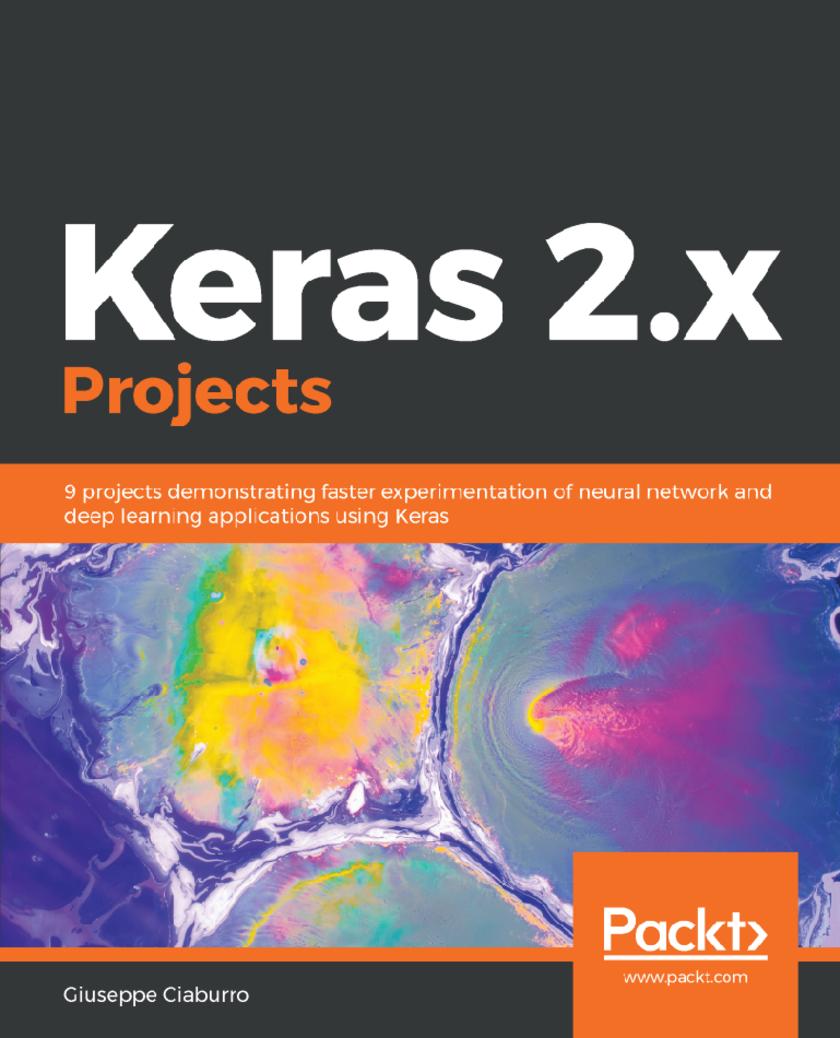
Keras 2.x Projects
¥81.74
Demonstrate fundamentals of Deep Learning and neural network methodologies using Keras 2.x Key Features *Experimental projects showcasing the implementation of high-performance deep learning models with Keras. * *Use-cases across reinforcement learning, natural language processing, GANs and computer vision. * *Build strong fundamentals of Keras in the area of deep learning and artificial intelligence. Book Description Keras 2.x Projects explains how to leverage the power of Keras to build and train state-of-the-art deep learning models through a series of practical projects that look at a range of real-world application areas. To begin with, you will quickly set up a deep learning environment by installing the Keras library. Through each of the projects, you will explore and learn the advanced concepts of deep learning and will learn how to compute and run your deep learning models using the advanced offerings of Keras. You will train fully-connected multilayer networks, convolutional neural networks, recurrent neural networks, autoencoders and generative adversarial networks using real-world training datasets. The projects you will undertake are all based on real-world scenarios of all complexity levels, covering topics such as language recognition, stock volatility, energy consumption prediction, faster object classification for self-driving vehicles, and more. By the end of this book, you will be well versed with deep learning and its implementation with Keras. You will have all the knowledge you need to train your own deep learning models to solve different kinds of problems. What you will learn *Apply regression methods to your data and understand how the regression algorithm works *Understand the basic concepts of classification methods and how to implement them in the Keras environment *Import and organize data for neural network classification analysis *Learn about the role of rectified linear units in the Keras network architecture *Implement a recurrent neural network to classify the sentiment of sentences from movie reviews *Set the embedding layer and the tensor sizes of a network Who this book is for If you are a data scientist, machine learning engineer, deep learning practitioner or an AI engineer who wants to build speedy intelligent applications with minimal lines of codes, then this book is the best fit for you. Sound knowledge of machine learning and basic familiarity with Keras library would be useful.
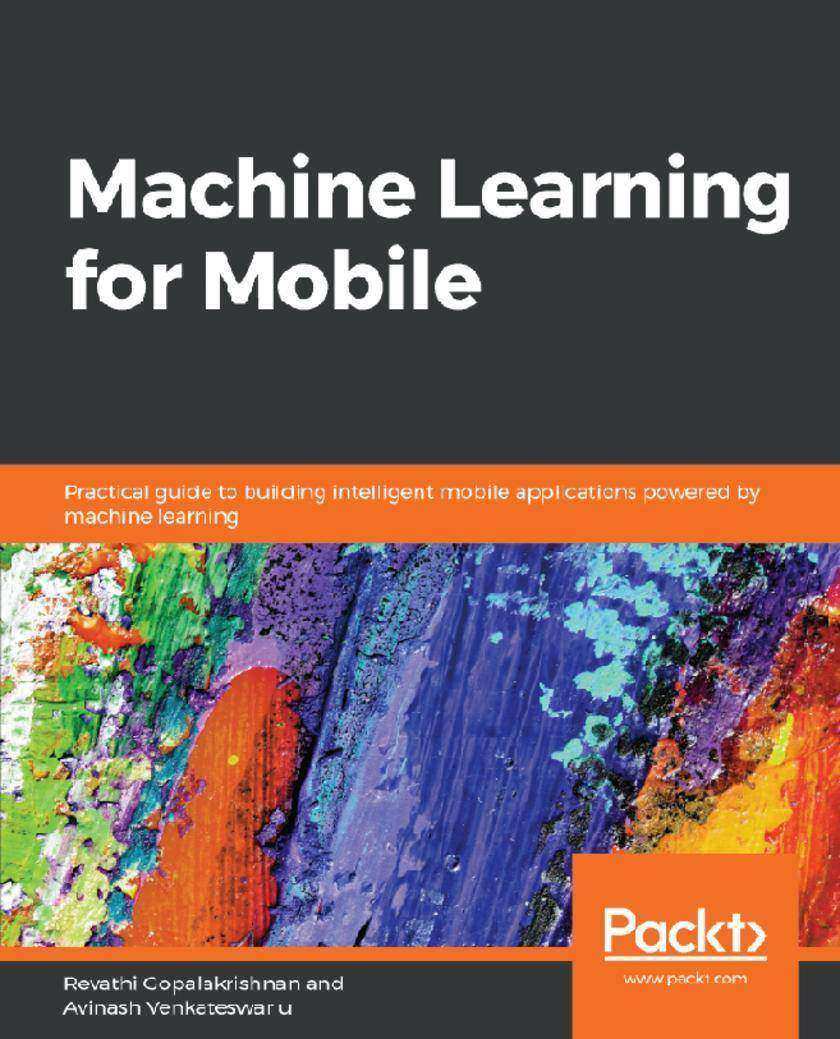
Machine Learning for Mobile
¥71.93
Leverage the power of machine learning on mobiles and build intelligent mobile applications with ease Key Features *Build smart mobile applications for Android and iOS devices *Use popular machine learning toolkits such as Core ML and TensorFlow Lite *Explore cloud services for machine learning that can be used in mobile apps Book Description Machine learning presents an entirely unique opportunity in software development. It allows smartphones to produce an enormous amount of useful data that can be mined, analyzed, and used to make predictions. This book will help you master machine learning for mobile devices with easy-to-follow, practical examples. You will begin with an introduction to machine learning on mobiles and grasp the fundamentals so you become well-acquainted with the subject. You will master supervised and unsupervised learning algorithms, and then learn how to build a machine learning model using mobile-based libraries such as Core ML, TensorFlow Lite, ML Kit, and Fritz on Android and iOS platforms. In doing so, you will also tackle some common and not-so-common machine learning problems with regard to Computer Vision and other real-world domains. By the end of this book, you will have explored machine learning in depth and implemented on-device machine learning with ease, thereby gaining a thorough understanding of how to run, create, and build real-time machine-learning applications on your mobile devices. What you will learn *Build intelligent machine learning models that run on Android and iOS *Use machine learning toolkits such as Core ML, TensorFlow Lite, and more *Learn how to use Google Mobile Vision in your mobile apps *Build a spam message detection system using Linear SVM *Using Core ML to implement a regression model for iOS devices *Build image classification systems using TensorFlow Lite and Core ML Who this book is for If you are a mobile app developer or a machine learning enthusiast keen to use machine learning to build smart mobile applications, this book is for you. Some experience with mobile application development is all you need to get started with this book. Prior experience with machine learning will be an added bonus
Foundations of Blockchain
¥73.02
Learn the foundations of blockchain technology - its core concepts and algorithmic solutions across cryptography, peer-to-peer technology, and game theory. Key Features * Learn the core concepts and foundations of the blockchain and cryptocurrencies * Understand the protocols and algorithms behind decentralized applications * Master how to architect, build, and optimize blockchain applications Book Description Blockchain technology is a combination of three popular concepts: cryptography, peer-to-peer networking, and game theory. This book is for anyone who wants to dive into blockchain from first principles and learn how decentralized applications and cryptocurrencies really work. This book begins with an overview of blockchain technology, including key definitions, its purposes and characteristics, so you can assess the full potential of blockchain. All essential aspects of cryptography are then presented, as the backbone of blockchain. For readers who want to study the underlying algorithms of blockchain, you’ll see Python implementations throughout. You’ll then learn how blockchain architecture can create decentralized applications. You’ll see how blockchain achieves decentralization through peer-to-peer networking, and how a simple blockchain can be built in a P2P network. You’ll learn how these elements can implement a cryptocurrency such as Bitcoin, and the wider applications of blockchain work through smart contracts. Blockchain optimization techniques, and blockchain security strategies are then presented. To complete this foundation, we consider blockchain applications in the financial and non-financial sectors, and also analyze the future of blockchain. A study of blockchain use cases includes supply chains, payment systems, crowdfunding, and DAOs, which rounds out your foundation in blockchain technology. What you will learn * The core concepts and technical foundations of blockchain * The algorithmic principles and solutions that make up blockchain and cryptocurrencies * Blockchain cryptography explained in detail * How to realize blockchain projects with hands-on Python code * How to architect the blockchain and blockchain applications * Decentralized application development with MultiChain, NEO, and Ethereum * Optimizing and enhancing blockchain performance and security * Classical blockchain use cases and how to implement them Who this book is for This book is for anyone who wants to dive into blockchain technology from first principles and build a foundational knowledge of blockchain. Familiarity with Python will be helpful if you want to follow how the blockchain protocols are implemented. For readers who are blockchain application developers, most of the applications used in this book can be executed on any platform.


