


 购物车
购物车 个人中心
个人中心
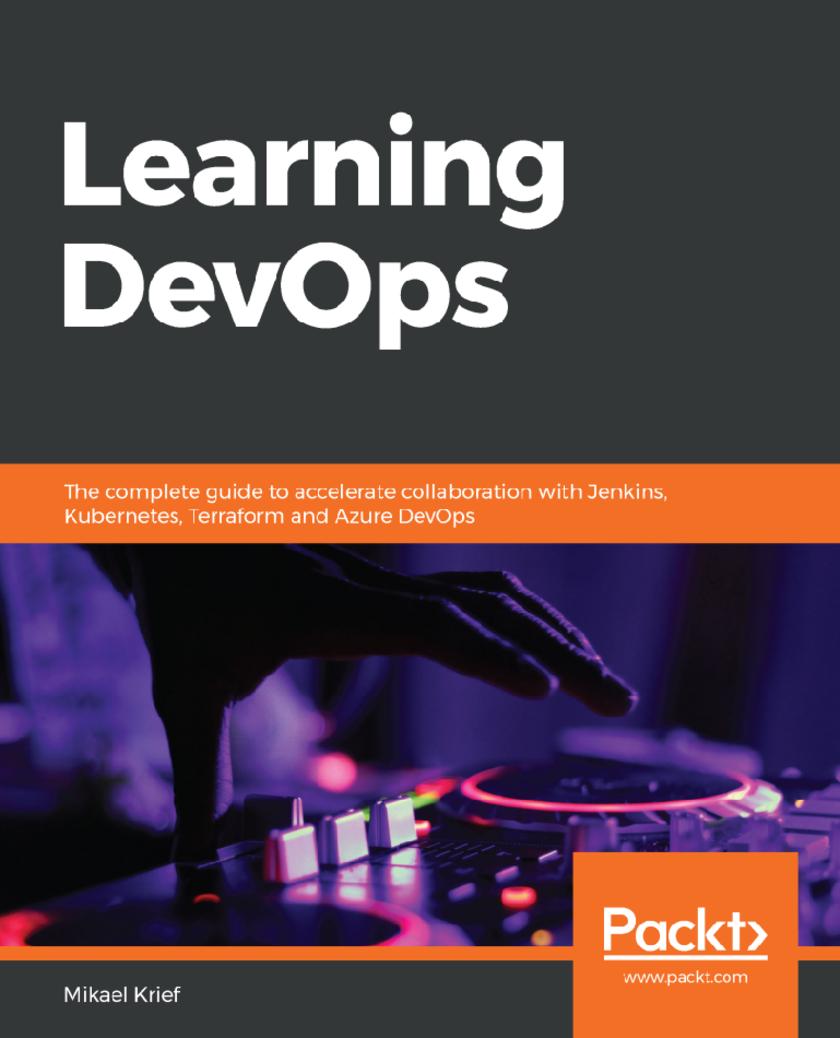
Learning DevOps
¥63.21
Simplify your DevOps roles with DevOps tools and techniques Key Features * Learn to utilize business resources effectively to increase productivity and collaboration * Leverage the ultimate open source DevOps tools to achieve continuous integration and continuous delivery (CI/CD) * Ensure faster time-to-market by reducing overall lead time and deployment downtime Book Description The implementation of DevOps processes requires the efficient use of various tools, and the choice of these tools is crucial for the sustainability of projects and collaboration between development (Dev) and operations (Ops). This book presents the different patterns and tools that you can use to provision and configure an infrastructure in the cloud. You'll begin by understanding DevOps culture, the application of DevOps in cloud infrastructure, provisioning with Terraform, configuration with Ansible, and image building with Packer. You'll then be taken through source code versioning with Git and the construction of a DevOps CI/CD pipeline using Jenkins, GitLab CI, and Azure Pipelines. This DevOps handbook will also guide you in containerizing and deploying your applications with Docker and Kubernetes. You'll learn how to reduce deployment downtime with blue-green deployment and the feature flags technique, and study DevOps practices for open source projects. Finally, you'll grasp some best practices for reducing the overall application lead time to ensure faster time to market. By the end of this book, you'll have built a solid foundation in DevOps, and developed the skills necessary to enhance a traditional software delivery process using modern software delivery tools and techniques What you will learn * Become well versed with DevOps culture and its practices * Use Terraform and Packer for cloud infrastructure provisioning * Implement Ansible for infrastructure configuration * Use basic Git commands and understand the Git flow process * Build a DevOps pipeline with Jenkins, Azure Pipelines, and GitLab CI * Containerize your applications with Docker and Kubernetes * Check application quality with SonarQube and Postman * Protect DevOps processes and applications using DevSecOps tools Who this book is for If you are a developer or a system administrator interested in understanding continuous integration, continuous delivery, and containerization with DevOps tools and techniques, this book is for you.
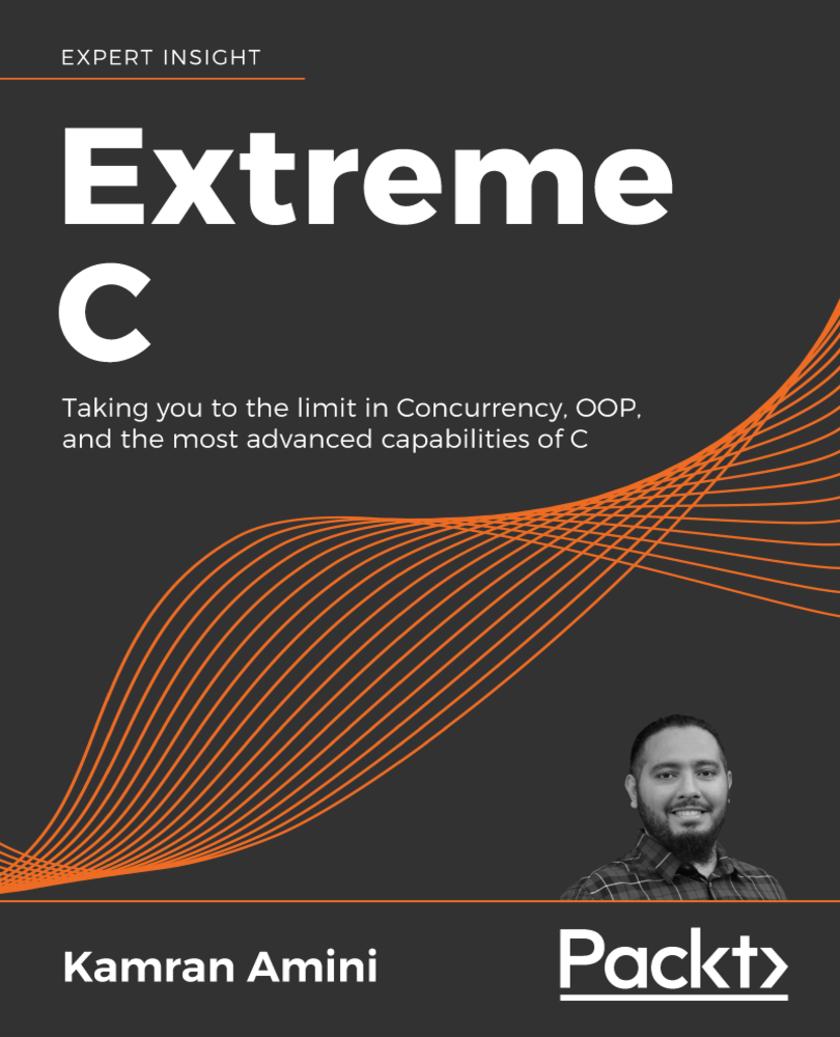
Extreme C
¥90.46
Push the limits of what C - and you - can do, with this high-intensity guide to the most advanced capabilities of C Key Features * Make the most of C’s low-level control, flexibility, and high performance * A comprehensive guide to C’s most powerful and challenging features * A thought-provoking guide packed with hands-on exercises and examples Book Description There’s a lot more to C than knowing the language syntax. The industry looks for developers with a rigorous, scientific understanding of the principles and practices. Extreme C will teach you to use C’s advanced low-level power to write effective, efficient systems. This intensive, practical guide will help you become an expert C programmer. Building on your existing C knowledge, you will master preprocessor directives, macros, conditional compilation, pointers, and much more. You will gain new insight into algorithm design, functions, and structures. You will discover how C helps you squeeze maximum performance out of critical, resource-constrained applications. C still plays a critical role in 21st-century programming, remaining the core language for precision engineering, aviations, space research, and more. This book shows how C works with Unix, how to implement OO principles in C, and fully covers multi-processing. In Extreme C, Amini encourages you to think, question, apply, and experiment for yourself. The book is essential for anybody who wants to take their C to the next level. What you will learn * Build advanced C knowledge on strong foundations, rooted in first principles * Understand memory structures and compilation pipeline and how they work, and how to make most out of them * Apply object-oriented design principles to your procedural C code * Write low-level code that’s close to the hardware and squeezes maximum performance out of a computer system * Master concurrency, multithreading, multi-processing, and integration with other languages * Unit Testing and debugging, build systems, and inter-process communication for C programming Who this book is for Extreme C is for C programmers who want to dig deep into the language and its capabilities. It will help you make the most of the low-level control C gives you.
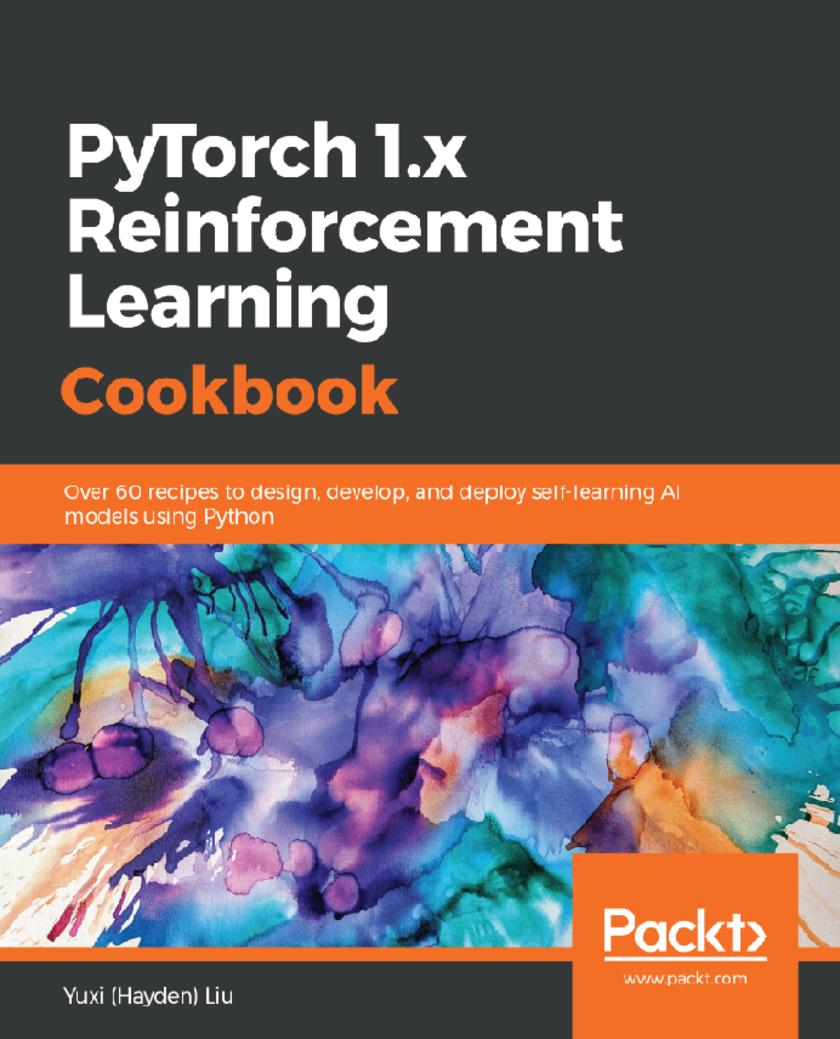
PyTorch 1.x Reinforcement Learning Cookbook
¥71.93
Implement reinforcement learning techniques and algorithms with the help of real-world examples and recipes Key Features * Use PyTorch 1.x to design and build self-learning artificial intelligence (AI) models * Implement RL algorithms to solve control and optimization challenges faced by data scientists today * Apply modern RL libraries to simulate a controlled environment for your projects Book Description Reinforcement learning (RL) is a branch of machine learning that has gained popularity in recent times. It allows you to train AI models that learn from their own actions and optimize their behavior. PyTorch has also emerged as the preferred tool for training RL models because of its efficiency and ease of use. With this book, you'll explore the important RL concepts and the implementation of algorithms in PyTorch 1.x. The recipes in the book, along with real-world examples, will help you master various RL techniques, such as dynamic programming, Monte Carlo simulations, temporal difference, and Q-learning. You'll also gain insights into industry-specific applications of these techniques. Later chapters will guide you through solving problems such as the multi-armed bandit problem and the cartpole problem using the multi-armed bandit algorithm and function approximation. You'll also learn how to use Deep Q-Networks to complete Atari games, along with how to effectively implement policy gradients. Finally, you'll discover how RL techniques are applied to Blackjack, Gridworld environments, internet advertising, and the Flappy Bird game. By the end of this book, you'll have developed the skills you need to implement popular RL algorithms and use RL techniques to solve real-world problems. What you will learn * Use Q-learning and the state–action–reward–state–action (SARSA) algorithm to solve various Gridworld problems * Develop a multi-armed bandit algorithm to optimize display advertising * Scale up learning and control processes using Deep Q-Networks * Simulate Markov Decision Processes, OpenAI Gym environments, and other common control problems * Select and build RL models, evaluate their performance, and optimize and deploy them * Use policy gradient methods to solve continuous RL problems Who this book is for Machine learning engineers, data scientists and AI researchers looking for quick solutions to different reinforcement learning problems will find this book useful. Although prior knowledge of machine learning concepts is required, experience with PyTorch will be useful but not necessary.
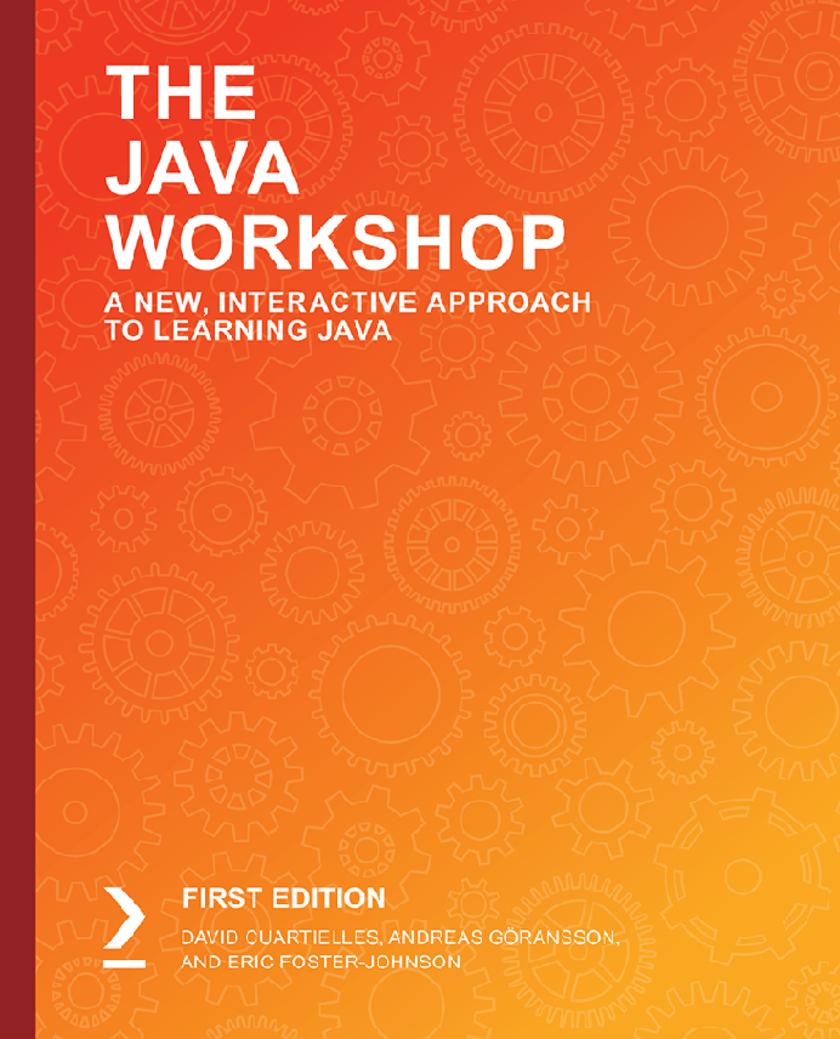
The Java Workshop
¥71.93
Cut through the noise and get real results with a step-by-step approach to learning Java programming Key Features * Ideal for the Java beginner who is getting started for the first time * A step-by-step Java tutorial with exercises and activities that help build key skills * Structured to let you progress at your own pace, on your own terms * Use your physical copy to redeem free access to the online interactive edition Book Description You already know you want to learn Java, and a smarter way to learn Java 12 is to learn by doing. The Java Workshop focuses on building up your practical skills so that you can develop high-performance Java applications that work flawlessly within the JVM across web, mobile and desktop. You'll learn from real examples that lead to real results. Throughout The Java Workshop, you'll take an engaging step-by-step approach to understanding Java. You won't have to sit through any unnecessary theory. If you're short on time you can jump into a single exercise each day or spend an entire weekend learning about Reactive programming and Unit testing. It's your choice. Learning on your terms, you'll build up and reinforce key skills in a way that feels rewarding. Every physical copy of The Java Workshop unlocks access to the interactive edition. With videos detailing all exercises and activities, you'll always have a guided solution. You can also benchmark yourself against assessments, track progress, and receive free content updates. You'll even earn a secure credential that you can share and verify online upon completion. It's a premium learning experience that's included with your printed copy. To redeem, follow the instructions located at the start of your Java book. Fast-paced and direct, The Java Workshop is the ideal companion for Java beginners. You'll build and iterate on your code like a software developer, learning along the way. This process means that you'll find that your new skills stick, embedded as best practice. A solid foundation for the years ahead. What you will learn * Get to grips with fundamental concepts and conventions of Java 12 * Write clean and well-commented code that's easy to maintain * Debug and compile logical errors and handle exceptions in your programs * Understand how to work with Java APIs and Java streams * Learn how to use third-party libraries and software development kits (SDKs) * Discover how you can work with information stored in databases * Understand how you can keep data secure with cryptography and encryption * Learn how to keep your development process bug-free with unit testing in Java Who this book is for Our goal at Packt is to help you be successful, in whatever it is you choose to do. The Java Workshop is an ideal Java tutorial for the Java beginner who is just getting started. Pick up a Workshop today, and let Packt help you develop skills that stick with you for life.
C# 7 and .NET: Designing Modern Cross-platform Applications
¥90.46
Explore C# and the .NET Core framework to create applications and optimize them with ASP.NET Core 2 Key Features *Get to grips with multi-threaded, concurrent, and asynchronous programming in C# and .NET Core *Develop modern, cross-platform applications with .NET Core 2.0 and C# 7.0 *Create efficient web applications with ASP.NET Core 2. Book Description C# is a widely used programming language, thanks to its easy learning curve, versatility, and support for modern paradigms. The language is used to create desktop apps, background services, web apps, and mobile apps. .NET Core is open source and compatible with Mac OS and Linux. There is no limit to what you can achieve with C# and .NET Core. This Learning Path begins with the basics of C# and object-oriented programming (OOP) and explores features of C#, such as tuples, pattern matching, and out variables. You will understand.NET Standard 2.0 class libraries and ASP.NET Core 2.0, and create professional websites, services, and applications. You will become familiar with mobile app development using Xamarin.Forms and learn to develop high-performing applications by writing optimized code with various profiling techniques. By the end of C# 7 and .NET: Designing Modern Cross-platform Applications, you will have all the knowledge required to build modern, cross-platform apps using C# and .NET. This Learning Path includes content from the following Packt products: *C# 7.1 and .NET Core 2.0 - Modern Cross-Platform Development - Third Edition by Mark J. Price *C# 7 and .NET Core 2.0 High Performance by Ovais Mehboob Ahmed Khan What you will learn *Explore ASP.NET Core to create professional web applications *Master OOP with C# to increase code reusability and efficiency *Protect your data using encryption and hashing *Measure application performance using BenchmarkDotNet *Use design techniques to increase your application’s performance *Learn memory management techniques in .NET Core *Understand tools and techniques to monitor application performance Who this book is for This Learning Path is designed for developers who want to gain a solid foundation in C# and .NET Core, and want to build cross-platform applications. To gain maximum benefit from this Learning Path, you must have basic knowledge of C#.
Data Science Projects with Python
¥62.12
Gain hands-on experience with industry-standard data analysis and machine learning tools in Python Key Features * Learn techniques to use data to identify the exact problem to be solved * Visualize data using different graphs * Identify how to select an appropriate algorithm for data extraction Book Description Data Science Projects with Python is designed to give you practical guidance on industry-standard data analysis and machine learning tools in Python, with the help of realistic data. The book will help you understand how you can use pandas and Matplotlib to critically examine a dataset with summary statistics and graphs, and extract the insights you seek to derive. You will continue to build on your knowledge as you learn how to prepare data and feed it to machine learning algorithms, such as regularized logistic regression and random forest, using the scikit-learn package. You’ll discover how to tune the algorithms to provide the best predictions on new and, unseen data. As you delve into later chapters, you’ll be able to understand the working and output of these algorithms and gain insight into not only the predictive capabilities of the models but also their reasons for making these predictions. By the end of this book, you will have the skills you need to confidently use various machine learning algorithms to perform detailed data analysis and extract meaningful insights from unstructured data. What you will learn * Install the required packages to set up a data science coding environment * Load data into a Jupyter Notebook running Python * Use Matplotlib to create data visualizations * Fit a model using scikit-learn * Use lasso and ridge regression to reduce overfitting * Fit and tune a random forest model and compare performance with logistic regression * Create visuals using the output of the Jupyter Notebook Who this book is for If you are a data analyst, data scientist, or a business analyst who wants to get started with using Python and machine learning techniques to analyze data and predict outcomes, this book is for you. Basic knowledge of computer programming and data analytics is a must. Familiarity with mathematical concepts such as algebra and basic statistics will be useful.
Hands-On Big Data Analytics with PySpark
¥43.59
Use PySpark to easily crush messy data at-scale and discover proven techniques to create testable, immutable, and easily parallelizable Spark jobs Key Features * Work with large amounts of agile data using distributed datasets and in-memory caching * Source data from all popular data hosting platforms, such as HDFS, Hive, JSON, and S3 * Employ the easy-to-use PySpark API to deploy big data Analytics for production Book Description Apache Spark is an open source parallel-processing framework that has been around for quite some time now. One of the many uses of Apache Spark is for data analytics applications across clustered computers. In this book, you will not only learn how to use Spark and the Python API to create high-performance analytics with big data, but also discover techniques for testing, immunizing, and parallelizing Spark jobs. You will learn how to source data from all popular data hosting platforms, including HDFS, Hive, JSON, and S3, and deal with large datasets with PySpark to gain practical big data experience. This book will help you work on prototypes on local machines and subsequently go on to handle messy data in production and at scale. This book covers installing and setting up PySpark, RDD operations, big data cleaning and wrangling, and aggregating and summarizing data into useful reports. You will also learn how to implement some practical and proven techniques to improve certain aspects of programming and administration in Apache Spark. By the end of the book, you will be able to build big data analytical solutions using the various PySpark offerings and also optimize them effectively. What you will learn * Get practical big data experience while working on messy datasets * Analyze patterns with Spark SQL to improve your business intelligence * Use PySpark's interactive shell to speed up development time * Create highly concurrent Spark programs by leveraging immutability * Discover ways to avoid the most expensive operation in the Spark API: the shuffle operation * Re-design your jobs to use reduceByKey instead of groupBy * Create robust processing pipelines by testing Apache Spark jobs Who this book is for This book is for developers, data scientists, business analysts, or anyone who needs to reliably analyze large amounts of large-scale, real-world data. Whether you're tasked with creating your company's business intelligence function or creating great data platforms for your machine learning models, or are looking to use code to magnify the impact of your business, this book is for you.
Python Reinforcement Learning
¥88.28
Apply modern reinforcement learning and deep reinforcement learning methods using Python and its powerful libraries Key Features * Your entry point into the world of artificial intelligence using the power of Python * An example-rich guide to master various RL and DRL algorithms * Explore the power of modern Python libraries to gain confidence in building self-trained applications Book Description Reinforcement Learning (RL) is the trending and most promising branch of artificial intelligence. This Learning Path will help you master not only the basic reinforcement learning algorithms but also the advanced deep reinforcement learning algorithms. The Learning Path starts with an introduction to RL followed by OpenAI Gym, and TensorFlow. You will then explore various RL algorithms, such as Markov Decision Process, Monte Carlo methods, and dynamic programming, including value and policy iteration. You'll also work on various datasets including image, text, and video. This example-rich guide will introduce you to deep RL algorithms, such as Dueling DQN, DRQN, A3C, PPO, and TRPO. You will gain experience in several domains, including gaming, image processing, and physical simulations. You'll explore TensorFlow and OpenAI Gym to implement algorithms that also predict stock prices, generate natural language, and even build other neural networks. You will also learn about imagination-augmented agents, learning from human preference, DQfD, HER, and many of the recent advancements in RL. By the end of the Learning Path, you will have all the knowledge and experience needed to implement RL and deep RL in your projects, and you enter the world of artificial intelligence to solve various real-life problems. This Learning Path includes content from the following Packt products: * Hands-On Reinforcement Learning with Python by Sudharsan Ravichandiran * Python Reinforcement Learning Projects by Sean Saito, Yang Wenzhuo, and Rajalingappaa Shanmugamani What you will learn * Train an agent to walk using OpenAI Gym and TensorFlow * Solve multi-armed-bandit problems using various algorithms * Build intelligent agents using the DRQN algorithm to play the Doom game * Teach your agent to play Connect4 using AlphaGo Zero * Defeat Atari arcade games using the value iteration method * Discover how to deal with discrete and continuous action spaces in various environments Who this book is for If you’re an ML/DL enthusiast interested in AI and want to explore RL and deep RL from scratch, this Learning Path is for you. Prior knowledge of linear algebra is expected.
Python Data Mining Quick Start Guide
¥53.40
Explore the different data mining techniques using the libraries and packages offered by Python Key Features * Grasp the basics of data loading, cleaning, analysis, and visualization * Use the popular Python libraries such as NumPy, pandas, matplotlib, and scikit-learn for data mining * Your one-stop guide to build efficient data mining pipelines without going into too much theory Book Description Data mining is a necessary and predictable response to the dawn of the information age. It is typically defined as the pattern and/ or trend discovery phase in the data mining pipeline, and Python is a popular tool for performing these tasks as it offers a wide variety of tools for data mining. This book will serve as a quick introduction to the concept of data mining and putting it to practical use with the help of popular Python packages and libraries. You will get a hands-on demonstration of working with different real-world datasets and extracting useful insights from them using popular Python libraries such as NumPy, pandas, scikit-learn, and matplotlib. You will then learn the different stages of data mining such as data loading, cleaning, analysis, and visualization. You will also get a full conceptual description of popular data transformation, clustering, and classification techniques. By the end of this book, you will be able to build an efficient data mining pipeline using Python without any hassle. What you will learn * Explore the methods for summarizing datasets and visualizing/plotting data * Collect and format data for analytical work * Assign data points into groups and visualize clustering patterns * Learn how to predict continuous and categorical outputs for data * Clean, filter noise from, and reduce the dimensions of data * Serialize a data processing model using scikit-learn’s pipeline feature * Deploy the data processing model using Python’s pickle module Who this book is for Python developers interested in getting started with data mining will love this book. Budding data scientists and data analysts looking to quickly get to grips with practical data mining with Python will also find this book to be useful. Knowledge of Python programming is all you need to get started.
Network Science with Python and NetworkX Quick Start Guide
¥53.40
Manipulate and analyze network data with the power of Python and NetworkX Key Features * Understand the terminology and basic concepts of network science * Leverage the power of Python and NetworkX to represent data as a network * Apply common techniques for working with network data of varying sizes Book Description NetworkX is a leading free and open source package used for network science with the Python programming language. NetworkX can track properties of individuals and relationships, find communities, analyze resilience, detect key network locations, and perform a wide range of important tasks. With the recent release of version 2, NetworkX has been updated to be more powerful and easy to use. If you’re a data scientist, engineer, or computational social scientist, this book will guide you in using the Python programming language to gain insights into real-world networks. Starting with the fundamentals, you’ll be introduced to the core concepts of network science, along with examples that use real-world data and Python code. This book will introduce you to theoretical concepts such as scale-free and small-world networks, centrality measures, and agent-based modeling. You’ll also be able to look for scale-free networks in real data and visualize a network using circular, directed, and shell layouts. By the end of this book, you’ll be able to choose appropriate network representations, use NetworkX to build and characterize networks, and uncover insights while working with real-world systems. What you will learn * Use Python and NetworkX to analyze the properties of individuals and relationships * Encode data in network nodes and edges using NetworkX * Manipulate, store, and summarize data in network nodes and edges * Visualize a network using circular, directed and shell layouts * Find out how simulating behavior on networks can give insights into real-world problems * Understand the ongoing impact of network science on society, and its ethical considerations Who this book is for If you are a programmer or data scientist who wants to manipulate and analyze network data in Python, this book is perfect for you. Although prior knowledge of network science is not necessary, some Python programming experience will help you understand the concepts covered in the book easily.
Hands-On Deep Learning Architectures with Python
¥53.40
Concepts, tools, and techniques to explore deep learning architectures and methodologies Key Features * Explore advanced deep learning architectures using various datasets and frameworks * Implement deep architectures for neural network models such as CNN, RNN, GAN, and many more * Discover design patterns and different challenges for various deep learning architectures Book Description Deep learning architectures are composed of multilevel nonlinear operations that represent high-level abstractions; this allows you to learn useful feature representations from the data. This book will help you learn and implement deep learning architectures to resolve various deep learning research problems. Hands-On Deep Learning Architectures with Python explains the essential learning algorithms used for deep and shallow architectures. Packed with practical implementations and ideas to help you build efficient artificial intelligence systems (AI), this book will help you learn how neural networks play a major role in building deep architectures. You will understand various deep learning architectures (such as AlexNet, VGG Net, GoogleNet) with easy-to-follow code and diagrams. In addition to this, the book will also guide you in building and training various deep architectures such as the Boltzmann mechanism, autoencoders, convolutional neural networks (CNNs), recurrent neural networks (RNNs), natural language processing (NLP), GAN, and more—all with practical implementations. By the end of this book, you will be able to construct deep models using popular frameworks and datasets with the required design patterns for each architecture. You will be ready to explore the potential of deep architectures in today's world. What you will learn * Implement CNNs, RNNs, and other commonly used architectures with Python * Explore architectures such as VGGNet, AlexNet, and GoogLeNet * Build deep learning architectures for AI applications such as face and image recognition, fraud detection, and many more * Understand the architectures and applications of Boltzmann machines and autoencoders with concrete examples * Master artificial intelligence and neural network concepts and apply them to your architecture * Understand deep learning architectures for mobile and embedded systems Who this book is for If you’re a data scientist, machine learning developer/engineer, or deep learning practitioner, or are curious about AI and want to upgrade your knowledge of various deep learning architectures, this book will appeal to you. You are expected to have some knowledge of statistics and machine learning algorithms to get the best out of this book
Hyperledger Cookbook
¥62.12
Explore the entire Hyperledger blockchain family, including frameworks such as Fabric, Sawtooth, Indy, Burrow, and Iroha; and tools such as Composer, Explorer, and Caliper. Key Features * Plan, design, and create a full-fledged private decentralized application using Hyperledger services * Master the ins and outs of the Hyperledger network using real-world examples * Packed with problem-solution-based recipes to tackle pain areas in the blockchain development cycle Book Description Hyperledger is an open-source project and creates private blockchain applications for a range of domains. This book will be your desk reference as you explore common and not-so-common challenges faced while building blockchain networks using Hyperledger services. We'll work through all Hyperledger platform modules to understand their services and features and build end-to-end blockchain applications using various frameworks and tools supported by Hyperledger. This book's independent, recipe-based approach (packed with real-world examples) will familiarize you with the blockchain development cycle. From modeling a business network to integrating with various tools, you will cover it all. We'll cover common and not-so-common challenges faced in the blockchain life cycle. Later, we'll delve into how we can interact with the Hyperledger Fabric blockchain, covering all the principles you need to master, such as chaincode, smart contracts, and much more. We'll also address the scalability and security issues currently faced in blockchain development. By the end of this book, you will be able to implement each recipe to plan, design, and create a full-fledged, private, decentralized application to meet organizational needs. What you will learn * Create the most popular permissioned blockchain network with Fabric and Composer * Build permissioned and permission-less blockchains using Sawtooth * Utilize built-in Iroha asset/account management with role-based permissions * Implement and run Ethereum smart contracts with Burrow * Get to grips with security and scalability in Hyperledger * Explore and view blockchain data using Hyperledger Explorer * Produce reports containing performance indicators and benchmarks using Caliper Who this book is for This book is for blockchain developers who want to understand how they can apply Hyperledger services in their day-to-day projects. This book uses a recipe-based approach to help you use Hyperledger to build powerful, decentralized autonomous applications. We assume the reader has a basic knowledge of the Blockchain technology and cryptography concepts
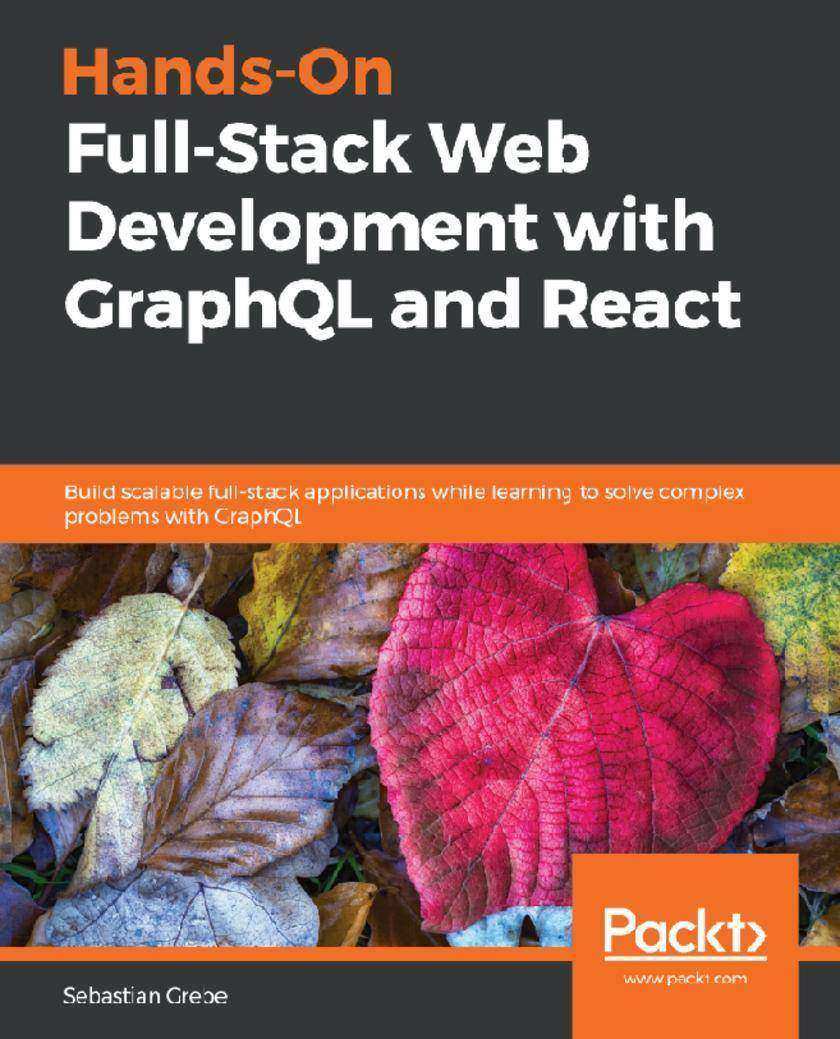
Hands-On Full-Stack Web Development with GraphQL and React
¥81.74
Unearth the power of GraphQL, React, Apollo, Node, and Express to build a scalable, production ready application Key Features * Build full stack applications with modern APIs using GraphQL and Apollo * Integrate Apollo into React and build frontend components using GraphQL * Implement a self-updating notification pop-up with a unique GraphQL feature called Subscriptions Book Description React, one of the most widely used JavaScript frameworks, allows developers to build fast and scalable front end applications for any use case. GraphQL is the modern way of querying an API. It represents an alternative to REST and is the next evolution in web development. Combining these two revolutionary technologies will give you a future-proof and scalable stack you can start building your business around. This book will guide you in implementing applications by using React, Apollo, Node.js and SQL. We'll focus on solving complex problems with GraphQL, such as abstracting multi-table database architectures and handling image uploads. Our client, and server will be powered by Apollo. Finally we will go ahead and build a complete Graphbook. While building the app, we'll cover the tricky parts of connecting React to the back end, and maintaining and synchronizing state. We'll learn all about querying data and authenticating users. We'll write test cases to verify the front end and back end functionality for our application and cover deployment. By the end of the book, you will be proficient in using GraphQL and React for your full-stack development requirements. What you will learn * Resolve data from multi-table database and system architectures * Build a GraphQL API by implementing models and schemas with Apollo and Sequelize * Set up an Apollo Client and build front end components using React * Use Mocha to test your full-stack application * Write complex React components and share data across them * Deploy your application using Docker Who this book is for The book is for web developers who want to enhance their skills and build complete full stack applications using industry standards. Familiarity with JavaScript, React, and GraphQL is expected to get the most from this book.
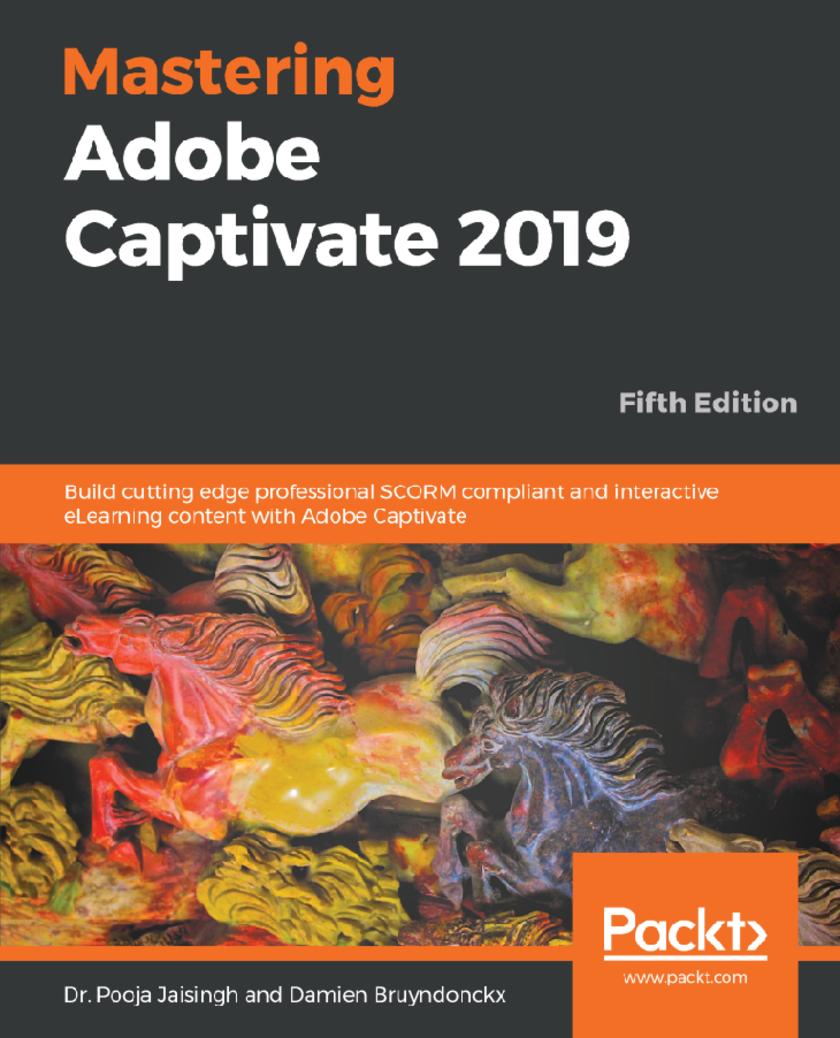
Mastering Adobe Captivate 2019
¥90.46
Create responsive eLearning content, including quizzes, demonstrations, simulations and Virtual Reality projects that fit on any device with Adobe Captivate 2019 Key Features * Build responsive, interactive and highly engaging eLearning content with Adobe Captivate 2019 * Build Virtual Reality eLearning experiences with Adobe Captivate 2019 * Assess your student knowledge with interactive and random quizzes * Seamlessly integrate your eLearning content with any SCORM or xAPI compliant LMS Book Description Adobe Captivate is used to create highly engaging, interactive, and responsive eLearning content. This book takes you through the production of a few pieces of eLearning content, covering all the project types and workflows of Adobe Captivate. First, you will learn how to create a typical interactive Captivate project. This will give you the opportunity to review all Captivate objects and uncover the application's main tools. Then, you will use the built-in capture engine of Captivate to create an interactive software simulation and a Video Demo that can be published as an MP4 video. Then, you will approach the advanced responsive features of Captivate to create a project that can be viewed on any device. And finally, you will immerse your learners in a 360o environment by creating Virtual Reality projects of Adobe Captivate. At the end of the book, you will empower your workflow and projects with the newer and most advanced features of the application, including variables, advanced actions, JavaScript, and using Captivate 2019 with other applications. If you want to produce high quality eLearning content using a wide variety of techniques, implement eLearning in your company, enable eLearning on any device, assess the effectiveness of the learning by using extensive Quizzing features, or are simply interested in eLearning, this book has you covered! What you will learn * Learn how to use the objects in Captivate to build professional eLearning content * Enhance your projects by adding interactivity, animations, and more * Add multimedia elements, such as audio and video, to create engaging learning experiences * Use themes to craft a unique visual experience * Use question slides to create SCORM-compliant quizzes that integrate seamlessly with your LMS * Make your content fit any device with responsive features of Captivate * Create immersive 360° experiences with Virtual Reality projects of Captivate 2019 * Integrate Captivate with other applications (such as PowerPoint and Photoshop) to establish a professional eLearning production workflow * Publish your project in a wide variety of formats including HTML5 and Flash Who this book is for If you are a teacher, instructional designer, eLearning developer, or human resources manager who wants to implement eLearning, then this book is for you. A basic knowledge of your OS is all it takes to create the next generation of responsive eLearning content.
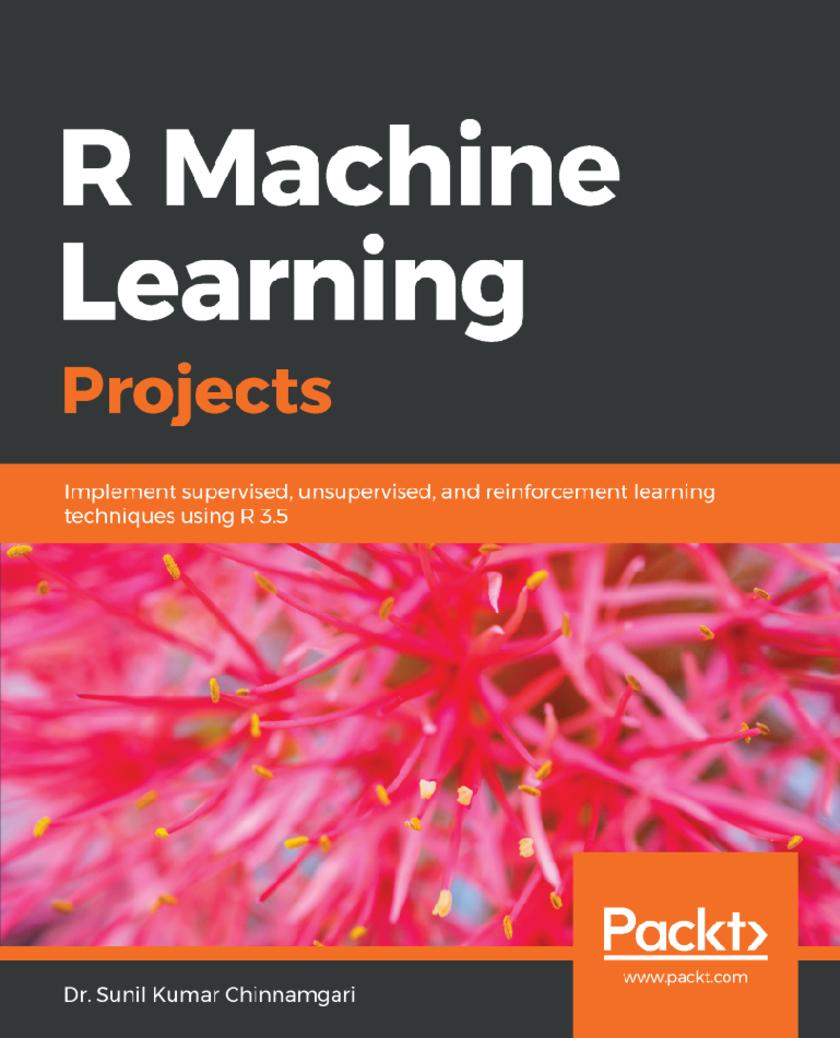
R Machine Learning Projects
¥71.93
Master a range of machine learning domains with real-world projects using TensorFlow for R, H2O, MXNet, and more Key Features *Master machine learning, deep learning, and predictive modeling concepts in R 3.5 *Build intelligent end-to-end projects for finance, retail, social media, and a variety of domains *Implement smart cognitive models with helpful tips and best practices Book Description R is one of the most popular languages when it comes to performing computational statistics (statistical computing) easily and exploring the mathematical side of machine learning. With this book, you will leverage the R ecosystem to build efficient machine learning applications that carry out intelligent tasks within your organization. This book will help you test your knowledge and skills, guiding you on how to build easily through to complex machine learning projects. You will first learn how to build powerful machine learning models with ensembles to predict employee attrition. Next, you’ll implement a joke recommendation engine and learn how to perform sentiment analysis on Amazon reviews. You’ll also explore different clustering techniques to segment customers using wholesale data. In addition to this, the book will get you acquainted with credit card fraud detection using autoencoders, and reinforcement learning to make predictions and win on a casino slot machine. By the end of the book, you will be equipped to confidently perform complex tasks to build research and commercial projects for automated operations. What you will learn *Explore deep neural networks and various frameworks that can be used in R *Develop a joke recommendation engine to recommend jokes that match users’ tastes *Create powerful ML models with ensembles to predict employee attrition *Build autoencoders for credit card fraud detection *Work with image recognition and convolutional neural networks *Make predictions for casino slot machine using reinforcement learning *Implement NLP techniques for sentiment analysis and customer segmentation Who this book is for If you’re a data analyst, data scientist, or machine learning developer who wants to master machine learning concepts using R by building real-world projects, this is the book for you. Each project will help you test your skills in implementing machine learning algorithms and techniques. A basic understanding of machine learning and working knowledge of R programming is necessary to get the most out of this book.
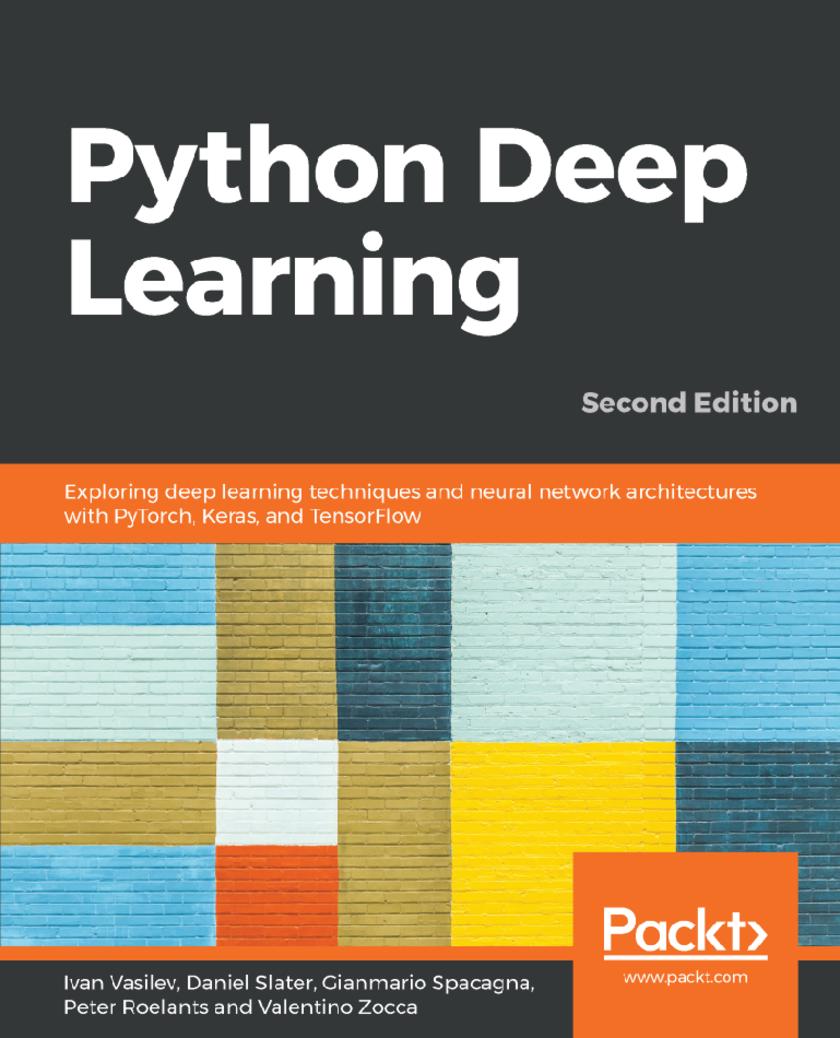
Python Deep Learning
¥71.93
Learn advanced state-of-the-art deep learning techniques and their applications using popular Python libraries Key Features *Build a strong foundation in neural networks and deep learning with Python libraries *Explore advanced deep learning techniques and their applications across computer vision and NLP *Learn how a computer can navigate in complex environments with reinforcement learning Book Description With the surge in artificial intelligence in applications catering to both business and consumer needs, deep learning is more important than ever for meeting current and future market demands. With this book, you’ll explore deep learning, and learn how to put machine learning to use in your projects. This second edition of Python Deep Learning will get you up to speed with deep learning, deep neural networks, and how to train them with high-performance algorithms and popular Python frameworks. You’ll uncover different neural network architectures, such as convolutional networks, recurrent neural networks, long short-term memory (LSTM) networks, and capsule networks. You’ll also learn how to solve problems in the fields of computer vision, natural language processing (NLP), and speech recognition. You'll study generative model approaches such as variational autoencoders and Generative Adversarial Networks (GANs) to generate images. As you delve into newly evolved areas of reinforcement learning, you’ll gain an understanding of state-of-the-art algorithms that are the main components behind popular games Go, Atari, and Dota. By the end of the book, you will be well-versed with the theory of deep learning along with its real-world applications. What you will learn *Grasp the mathematical theory behind neural networks and deep learning processes *Investigate and resolve computer vision challenges using convolutional networks and capsule networks *Solve generative tasks using variational autoencoders and Generative Adversarial Networks *Implement complex NLP tasks using recurrent networks (LSTM and GRU) and attention models *Explore reinforcement learning and understand how agents behave in a complex environment *Get up to date with applications of deep learning in autonomous vehicles Who this book is for This book is for data science practitioners, machine learning engineers, and those interested in deep learning who have a basic foundation in machine learning and some Python programming experience. A background in mathematics and conceptual understanding of calculus and statistics will help you gain maximum benefit from this book.
Mastering Python Scripting for System Administrators
¥81.74
Leverage the features and libraries of Python to administrate your environment efficiently. Key Features * Learn how to solve problems of system administrators and automate routine activities * Learn to handle regular expressions, network administration * Building GUI, web-scraping and database administration including data analytics Book Description Python has evolved over time and extended its features in relation to every possible IT operation. Python is simple to learn, yet has powerful libraries that can be used to build powerful Python scripts for solving real-world problems and automating administrators' routine activities. The objective of this book is to walk through a series of projects that will teach readers Python scripting with each project. This book will initially cover Python installation and quickly revise basic to advanced programming fundamentals. The book will then focus on the development process as a whole, from setup to planning to building different tools. It will include IT administrators' routine activities (text processing, regular expressions, file archiving, and encryption), network administration (socket programming, email handling, the remote controlling of devices using telnet/ssh, and protocols such as SNMP/DHCP), building graphical user interface, working with websites (Apache log file processing, SOAP and REST APIs communication, and web scraping), and database administration (MySQL and similar database data administration, data analytics, and reporting). By the end of this book, you will be able to use the latest features of Python and be able to build powerful tools that will solve challenging, real-world tasks What you will learn * Understand how to install Python and debug Python scripts * Understand and write scripts for automating testing and routine administrative activities * Understand how to write scripts for text processing, encryption, decryption, and archiving * Handle files, such as pdf, excel, csv, and txt files, and generate reports * Write scripts for remote network administration, including handling emails * Build interactive tools using a graphical user interface * Handle Apache log files, SOAP and REST APIs communication * Automate database administration and perform statistical analysis Who this book is for This book would be ideal for users with some basic understanding of Python programming and who are interested in scaling their programming skills to command line scripting and system administration. Prior knowledge of Python would be necessary.
SAP Business Intelligence Quick Start Guide
¥63.21
Designing and deploying solutions using the SAP BusinessObjects Business Intelligence platform 4.2. Key Features * Get up and running with the SAP BusinessObjects Business Intelligence platform * Perform effective data analysis and visualization for actionable insights * Enhance your BI strategy by creating different types of reports and dashboards using SAP BusinessObjects Book Description The SAP BusinessObjects Business Intelligence platform is a powerful reporting and analysis tool. This book is the ideal introduction to the SAP BusinessObjects Business Intelligence platform, introducing you to its data visualization, visual analytics, reporting, and dashboarding capabilities. The book starts with an overview of the BI platform and various data sources for reporting. Then, we move on to looking at data visualization, analysis, reporting, and analytics using BusinessObjects Business Intelligence tools. You will learn about the features associated with reporting, scheduling, and distribution and learn how to deploy the platform. Toward the end, you will learn about the strategies and factors that should be considered during deployment. By the end, you will be confident working with the SAP BusinessObjects Business Intelligence platform to deliver better insights for more effective decision making. What you will learn * Work with various tools to create interactive data visualization and analysis * Query, report, and analyze with SAP Business Objects Web Intelligence * Create a report in SAP Crystal Reports for Enterprise * Visualize and manipulate data using an SAP Lumira Storyboard * Deep dive into the workings of the SAP predictive analytics tool * Deploy and configure SAP BO Intelligence platform 4.2 Who this book is for This book is for Business Intelligence professionals and existing SAP ecosystem users who want to perform effective Business Intelligence using SAP BusinessObjects.
Learning Dart
¥107.90
"Mastering Dart by Projects" is a stepbystep guide that aims to give you handson knowledge about programming in Dart using an examplebased approach.If you want to become a web developer, or perhaps you already are a web developer but you want to add Dart to your tool belt, then this book is for you. This book assumes that you have at least some knowledge of HTML and how web applications work. Some previous programming experience, preferably in a modern language like C#, Java, Python, Ruby, or JavaScript, will also give you a head start. You can also work with Dart on your preferred platform, be it Linux, Mac OS X, or Windows.
Lo-Dash Essentials
¥80.65
If you are a curious JavaScript developer interested simultaneously in tweaking the efficiency of your code, as well as improving the conciseness of it, and maintaining the readability of it, then this is the book for you. Ideally, the book is intended for readers already working on JavaScript projects and using frameworks such as jQuery and Backbone. Even if you're already using Lo-Dash, this book will show you how to use it efficiently. While extensive JavaScript experience isn't a requirement, you should have at least some prior programming experience in order to best understand the concepts presented.
Learning SaltStack
¥54.49
If you are a system administrator who manages multiple servers, then you know how difficult it is to keep your infrastructure in line. If you've been searching for an easier way, this book is for you. No prior experience with SaltStack is required.


