


 购物车
购物车 个人中心
个人中心
iClone 4.31 3D Animation Beginner's Guide
¥80.65
This book is a part of the Beginner's guide series, wherein you will quickly start doing tasks with precise instructions. Then the tasks will be followed by explanation and then a challenging task or a multiple choice question about the topic just covered. Do you have a story to tell or an idea to illustrateThis book is aimed at film makers, video producers/compositors, vxf artists or 3D artists/designers like you who have no previous experience with iClone. If you have that drive inside you to entertain people via the internet on sites like YouTube or Vimeo, create a superb presentation video, showcase a product or create a movie, or get a fast start on the iClone program, this Beginner’s guide was written with you in mind.
Microsoft SharePoint 2010 Power User Cookbook
¥80.65
This hands-on cookbook takes readers through many highly applicable intermediate and advanced SharePoint recipes, as well as offering three real-world business scenarios to complement the knowledge already gained. The book specifically sets out to cover important SharePoint 2010 topics that are often avoided by other authors. If you are an advanced End User or Power User of SharePoint 2010 who wants to accomplish specific business tasks beyond the basics, then this cookbook is not to be missed. You should already be comfortable with SharePoint in order to get the most out the recipes, which are applicable up to and including SharePoint Enterprise edition. You'll find this book useful not only as a learning tool, but also as a reference guide as your SharePoint skills and experience increase.
IBM WebSphere Application Server 8.0 Administration Guide
¥107.90
IBM WebSphere Application Server 8.0 Administration Guide is a highly practical, example-driven tutorial. You will be introduced to WebSphere Application Server 8.0, and guided through configuration, deployment, and tuning for optimum performance. If you are an administrator who wants to get up and running with IBM WebSphere Application Server 8.0, then this book is not to be missed. Experience with WebSphere and Java would be an advantage, but is not essential.
Learning jQuery, Third Edition
¥71.93
Step through each of the core concepts of the jQuery library, building an overall picture of its capabilities. Once you have thoroughly covered the basics, the book returns to each concept to cover more advanced examples and techniques. This book is for web designers who want to create interactive elements for their designs, and for developers who want to create the best user interface for their web applications. Basic JavaScript programming and knowledge of HTML and CSS is required. No knowledge of jQuery is assumed, nor is experience with any other JavaScript libraries.
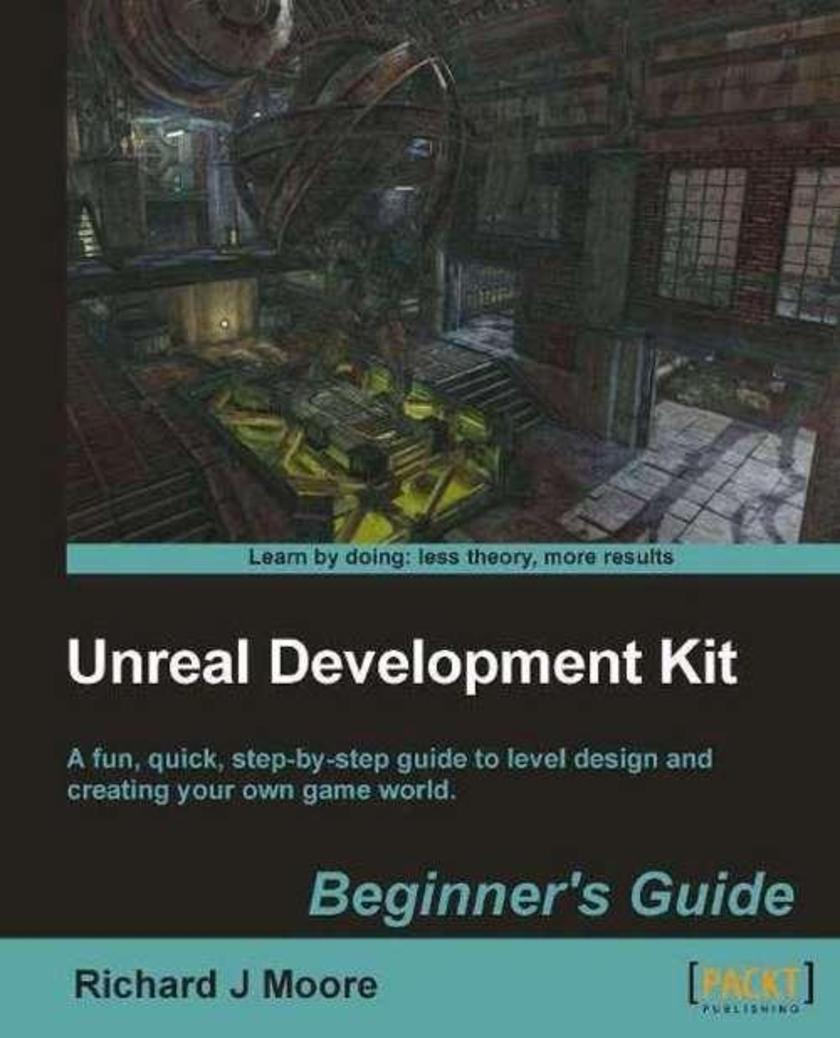
Unreal Development Kit 3: Beginners Guide
¥71.93
This beginner's guide focuses on getting you quickly through all the major learning points in a smooth, logical order. You'll also learn how to avoid some common pitfalls. Aspiring game developers who want to learn how to create their own levels, maps, game worlds and environments. You don’t need game design or game development experience and no experience of UDK is required
VMware ThinApp 4.7 Essentials
¥99.18
This book is written in practical tutorial style and it offers learning through vivid examples and. Each chapter contains step-by-step instructions about everything necessary to execute a particular task. The book is designed so that you can read it from start to end for beginners or just open up any chapter and start following the recipes as a reference for advanced users,This book will be useful to developers, System admins and consultants who want to install and manage a virtualized app environment using VMware ThinApp 4.7.
Windows Presentation Foundation 4.5 Cookbook
¥107.90
This book is written in an easy-to-read style, with a strong emphasis on real-world, practical examples. Step-by-step explanations are provided for performing important tasks. If you are C# developer looking forward to increasing your understanding and knowledge of WPF, then this is the best guide for you. Basic experience with Visual Studio 2010 is mandatory, as well as good C# skills. Previous experience with Windows Forms is not required.
MySQL Management and Administration with Navicat
¥54.49
Standard Mini. This book is written for MySQL Users, Developers, and admins who want to discover just how easy Navicat makes even normally arduous tasks.
Learning JavaScript Data Structures and Algorithms - Second Edition
¥80.65
Hone your skills by learning classic data structures and algorithms in JavaScript About This Book Understand common data structures and the associated algorithms, as well as the context in which they are used. Master existing JavaScript data structures such as array, set and map and learn how to implement new ones such as stacks, linked lists, trees and graphs. All concepts are explained in an easy way, followed by examples. Who This Book Is For If you are a student of Computer Science or are at the start of your technology career and want to explore JavaScript’s optimum ability, this book is for you. You need a basic knowledge of JavaScript and programming logic to start having fun with algorithms. What You Will Learn Declare, initialize, add, and remove items from arrays, stacks, and queues Get the knack of using algorithms such as DFS (Depth-first Search) and BFS (Breadth-First Search) for the most complex data structures Harness the power of creating linked lists, doubly linked lists, and circular linked lists Store unique elements with hash tables, dictionaries, and sets Use binary trees and binary search trees Sort data structures using a range of algorithms such as bubble sort, insertion sort, and quick sort In Detail This book begins by covering basics of the JavaScript language and introducing ECMAScript 7, before gradually moving on to the current implementations of ECMAScript 6. You will gain an in-depth knowledge of how hash tables and set data structure functions, as well as how trees and hash maps can be used to search files in a HD or represent a database. This book is an accessible route deeper into JavaScript. Graphs being one of the most complex data structures you’ll encounter, we’ll also give you a better understanding of why and how graphs are largely used in GPS navigation systems in social networks. Toward the end of the book, you’ll discover how all the theories presented by this book can be applied in real-world solutions while working on your own computer networks and Facebook searches. Style and approach This book gets straight to the point, providing you with examples of how a data structure or algorithm can be used and giving you real-world applications of the algorithm in JavaScript. With real-world use cases associated with each data structure, the book explains which data structure should be used to achieve the desired results in the real world.
Python Machine Learning Cookbook
¥107.90
100 recipes that teach you how to perform various machine learning tasks in the real world About This Book Understand which algorithms to use in a given context with the help of this exciting recipe-based guide Learn about perceptrons and see how they are used to build neural networks Stuck while making sense of images, text, speech, and real estateThis guide will come to your rescue, showing you how to perform machine learning for each one of these using various techniques Who This Book Is For This book is for Python programmers who are looking to use machine-learning algorithms to create real-world applications. This book is friendly to Python beginners, but familiarity with Python programming would certainly be useful to play around with the code. What You Will Learn Explore classification algorithms and apply them to the income bracket estimation problem Use predictive modeling and apply it to real-world problems Understand how to perform market segmentation using unsupervised learning Explore data visualization techniques to interact with your data in diverse ways Find out how to build a recommendation engine Understand how to interact with text data and build models to analyze it Work with speech data and recognize spoken words using Hidden Markov Models Analyze stock market data using Conditional Random Fields Work with image data and build systems for image recognition and biometric face recognition Grasp how to use deep neural networks to build an optical character recognition system In Detail Machine learning is becoming increasingly pervasive in the modern data-driven world. It is used extensively across many fields such as search engines, robotics, self-driving cars, and more. With this book, you will learn how to perform various machine learning tasks in different environments. We’ll start by exploring a range of real-life scenarios where machine learning can be used, and look at various building blocks. Throughout the book, you’ll use a wide variety of machine learning algorithms to solve real-world problems and use Python to implement these algorithms. You’ll discover how to deal with various types of data and explore the differences between machine learning paradigms such as supervised and unsupervised learning. We also cover a range of regression techniques, classification algorithms, predictive modeling, data visualization techniques, recommendation engines, and more with the help of real-world examples. Style and approach You will explore various real-life scenarios in this book where machine learning can be used, and learn about different building blocks of machine learning using independent recipes in the book.
Extending Puppet - Second Edition
¥71.93
Start pulling the strings of your infrastructure with Puppet – learn how to configure, customize, and manage your systems more intelligently About This Book Explore the wider Puppet ecosystem of useful tools Design and manage your Puppet architecture for optimum performance Write more efficient code that keeps your infrastructure more robust Who This Book Is For If you are a Puppet user, this book will help you on different levels. If you a beginner, we summarize the key Puppet components and give you the elements to have a broader vision. For more experienced users, you will be surprised by with topics on designing, implementing, adapting, and deploying Puppet architectures. If you are expert, you will find topics and information that is rarely exposed in other books, giving you an insight into Puppet's future and its usage on alternative devices. What You Will Learn Learn the principles of Puppet language and ecosystem Extract the features of Hiera and PuppetDB’s power usage Explore the different approaches to Puppet architecture design Use Puppet to manage network, cloud, and virtualization devices Manage and test the Puppet code workflow Tweak, hack, and adapt the Puppet extension points Get a run through of the strategies and patterns to introduce Puppet automation Master the art of writing reusable modules In Detail Puppet has changed the way we manage our systems, but Puppet itself is changing and evolving, and so are the ways we are using it. To tackle our IT infrastructure challenges and avoid common errors when designing our architectures, an up-to-date, practical, and focused view of the current and future Puppet evolution is what we need. With Puppet, you define the state of your IT infrastructure, and it automatically enforces the desired state. This book will be your guide to designing and deploying your Puppet architecture. It will help you utilize Puppet to manage your IT infrastructure. Get to grips with Hiera and learn how to install and configure it, before learning best practices for writing reusable and maintainable code. You will also be able to explore the latest features of Puppet 4, before executing, testing, and deploying Puppet across your systems. As you progress, Extending Puppet takes you through higher abstraction modules, along with tips for effective code workflow management. Finally, you will learn how to develop plugins for Puppet - as well as some useful techniques that can help you to avoid common errors and overcome everyday challenges. Style and approach This is a collection of specific information about multiple topics related to Puppet and its ecosystem. Starting from a review of the very basics to more advanced topics, mixing practical advice with important theory and broader perspective, along with implementation details.
Android Studio 2 Essentials - Second Edition
¥63.21
A fast-paced guide to get you up and running with Android application development using Android Studio 2 About This Book Configure, build, and run Android projects with Android Studio 2 Test your apps using the Android emulator and learn how to manage virtual devices Explore how Android Studio 2 can be made a part of your workflow to reduce the overall development time Who This Book Is For If you are an Android developer looking to quickly take advantage of Android Studio 2 and add it to your workflow, then this book is for you. It is assumed that you are familiar with the OOP paradigm and Java. You are recommended to have prior knowledge of the main characteristics of the Android mobile system to get the most out of this book. What You Will Learn Install Android Studio on your system and configure the Android Software Development Kit Create your first project and explore its structure Manage a project in Android Studio 2 with Gradle Improve your productivity while programming by getting the best of the code editor Design the user interface using layouts and see how to handle various user events Integrate Google Play services into your project efficiently Monitor your app while it's running and constantly improve its performance In Detail Android Studio 2, the official IDE for Android application development, dramatically improves your workflow by letting you quickly see changes running on your device or emulator. It gives developers a unique platform by making app builds and deployment faster. This book will get you up and running with all the essential features of Android Studio 2 to optimize your development workflow. Starting off with the basic installation and configuration of Android Studio 2, this book will help you build a new project by showing you how to create a custom launcher icon and guiding you to choose your project. You will then gain an insight into the additional tools provided in Android Studio, namely the Software Development Kit (SDK) Manager, Android Virtual Device (AVD) Manager, and Javadoc. You’ll also see how to integrate Google Play Services in an Android project. Finally, you’ll become familiar with the Help section in Android Studio, which will enable you to search for support you might require in different scenarios. Style and approach A comprehensive and practical guide that will give you the essential skills required to develop Android applications quickly using Android Studio. With the help of a real-world project, this book will show how to make Android Studio a part of your development process and optimize it.
Mastering Cloud Development using Microsoft Azure
¥80.65
Master the art of efficiently composing Azure services and implement them in real-world scenarios About This Book Build an effective development environment in Azure using the right set of technologies. Architect a full-stack solution in the cloud to choose the best service set A comprehensive guide full of real-life examples to help you take your developer skills up a notch Who This Book Is For If you are a developer, a full-stack developer, or an architect with an intermediate level understanding of cloud computing and Microsoft Azure, and you want to take your skills up a notch, this book is for you. Prior knowledge and understanding of cloud development strategies is assumed. What You Will Learn Set up a development environment with VMs, ARM, and RemoteApp Connect with VPNs to manage security and backups Establish a front-end architecture with AppService, storage, search, and caching Implement identity solutions, integrate applications, and use data Integrate cross-platform mobile applications with the cloud Consistently build and manage an API layer for millions of users Work with messages in the enterprise Deploy your services as an IT expert with ARM templates In Detail Microsoft Azure is a cloud computing platform that supports many different programming languages, tools, and frameworks, including both Microsoft-specific and third-party software and systems. This book starts by helping you set up a professional development environments in the cloud and integrating them with your local environment to achieve improved efficiency. You will move on to create front-end and back-end services, and then build cross-platform applications using Azure. Next you’ll get to grips with advanced techniques used to analyze usage data and automate billing operations. Following on from that, you will gain knowledge of how you can extend your on-premise solution to the cloud and move data in a pipeline. In a nutshell, this book will show you how to build high-quality, end-to-end services using Microsoft Azure. By the end of this book, you will have the skillset needed to successfully set up, develop, and manage a full-stack Azure infrastructure. Style and Approach This comprehensive guide to Azure has both explorative parts and step-by-step ones. Each chapter defines a learning path to a specific scenario, mixing the appropriate technologies and building blocks efficiently.
Mastering Magento 2 - Second Edition
¥80.65
Maximize the power of Magento 2 to create productive online stores About This Book Updated for Magento 2, this book offers a comprehensive coverage of all the new features of Magento to build modern online stores Exploit little-known techniques to extend, tune, and manage your Magento installation Detailed coverage to make your store run faster, better, and more productively Who This Book Is For This book is for web designers, developers, or e-commerce store-owners who design or manage Magento stores for their clients and want to gain an in-depth understanding of the various features of Magento 2. What You Will Learn Discover what makes Magento 2 different — and even more powerful Develop strategies to create multi-store environments Find out how to create themes and extend the functionality of Magento 2 Create sound development practices to insure code integrity and security Know the why, as well as the how, behind using Magento 2 In Detail The long-awaited release of the world's most popular online solution, Magento 2, is now out with an all new interface and several enhancements. This book offers you advanced guidance on managing, optimizing, and extending your store while taking advantage of the new features of Magento 2. This is a comprehensive guide to using the all new features and interface of Magento 2 to build, extend, and design online stores. From planning your Magento installation through to advanced techniques designed to make your store as successful as possible, this book is your roadmap to managing your Magento store. Focusing on Magento's Community version, the book covers everything from creating and managing multiple stores to fine-tuning Magento for speed and performance. You’ll learn how to manage categories, products, design themes, extensions, and more. Style and Approach This book will be a straightforward guide that will dive deep into both aspects of developing and administering beautiful and secure stores. Get a firm idea of the different tools that the latest version has to offer to ensure the best customer experience.
Linux Networking Cookbook
¥63.21
Over 40 recipes to help you set up and configure Linux networks About This Book Move beyond the basics of how a Linux machine works and gain a better understanding of Linux networks and their configuration Impress your peers by setting up and configuring a Linux server and its various network elements like a pro This is a hands-on solution guide to building, maintaining, and securing a network using Linux Who This Book Is For This book is targeted at Linux systems administrators who have a good basic understanding and some prior experience of how a Linux machine operates, but want to better understand how various network services function, how to set them up, and how to secure them. You should be familiar with how to set up a Linux server and how to install additional software on them. What You Will Learn Route an IPv6 netblock to your local network Modify your named instance to support setting hostnames for your IPv6 addresses Use SSH for remote console access Configure NGINX with TLS Secure XMPP with TLS Leverage iptables6 to firewall your IPv6 traffic Configure Samba as an Active Directory compatible directory service In Detail Linux can be configured as a networked workstation, a DNS server, a mail server, a firewall, a gateway router, and many other things. These are all part of administration tasks, hence network administration is one of the main tasks of Linux system administration. By knowing how to configure system network interfaces in a reliable and optimal manner, Linux administrators can deploy and configure several network services including file, web, mail, and servers while working in large enterprise environments. Starting with a simple Linux router that passes traffic between two private networks, you will see how to enable NAT on the router in order to allow Internet access from the network, and will also enable DHCP on the network to ease configuration of client systems. You will then move on to configuring your own DNS server on your local network using bind9 and tying it into your DHCP server to allow automatic configuration of local hostnames. You will then future enable your network by setting up IPv6 via tunnel providers. Moving on, we’ll configure Samba to centralize authentication for your network services; we will also configure Linux client to leverage it for authentication, and set up a RADIUS server that uses the directory server for authentication. Toward the end, you will have a network with a number of services running on it, and will implement monitoring in order to detect problems as they occur. Style and approach This book is packed with practical recipes and a task-based approach that will walk you through building, maintaining, and securing a computer network using Linux.
Arduino: Building LED and Espionage Projects
¥125.34
Find out how to transform your Arduino device into an awesome secret agent gadget with this course, taking in everything from robotics to remote control cameras About This Book ?This course won’t just teach you. It will help you apply your knowledge so you can get creative – quickly! ?Find out how to make a computer interact with the real-world – you’ll be learning the basics of IoT without realizing it. ?Robots. A sound controlled Christmas tree. This course proves anything is possible with an Arduino! Who This Book Is For Seeking inspirationThis course will help you get creative with your Arduino quickly. What You Will Learn ?Find out how to explore the full potential of your tiny Arduino ?Find out how to bridge the gap between the real world and software, as you gather and visualize data from the environment ?Create simple servers to allow communication to occur ?Transform your Arduino into a GPS tracker ?Use the Arduino to monitor top secret data ?Build a complete spy robot! In Detail An Arduino might be a tiny computer but it can be used as the foundation for a huge range of projects. In this course, we’ll show you how just some of the projects that are possible with an Arduino. From robotics to secret agent gadgets, we’re pretty confident that this course will get you thinking creatively – and inspire you to create your very own new projects using the Arduino hacking skills you learn. This course, combines both text and video content – it’s made up of three modules to help organize your learning. In the first module we’ll show you how to build three different Arduino projects. All of these will not only get you up and running with something practical, they’ll also help you better understand how the Arduino works. Find out how to develop a home automation system and even build a robot! In the second module we’ll go one step further to help you get creative as you learn how to program LEDs with your Arduino. You’ll find out how to build a mood lamp and a remote-controlled TV backlight, before going on to make a sound controlled LED Christmas tree that makes use of sound visualization. Finally, the third module takes you from stylish design into espionage, as you learn how to create neat secret agent gadgets with your Arduino. Find out how to build an alarm system, a fingerprint sensor, even open a lock with a text message. And that’s not all – but to find out more you’ll have to dive in! This Learning Path combines some of the best that Packt has to offer in one complete, curated package. It includes content from the following Packt products: ● Arduino By Example by Adith Jagadish Boloor ● Arduino BLINK Blueprints by Samarth Shah, Utsav Shah ● Arduino for Secret Agents by Marco Shwartz Style and approach Combining both video and text and built from some of Packt’s very best Arduino content, this course comprises of three modules covering a range of projects. It’s completely focused on helping the user get creative as quickly as possible so they can explore what’s possible with Arduino themselves.
PHP 7: Real World Application Development
¥179.84
Use new features of PHP 7 to solve practical, real-world problems faced by PHP developers like yourself every day. About This Book .This course covers the new features of version 7.x, best practices for server-side programming, and MVC frameworks .Leverage the potential of PHP for server-side programming, memory management, and Object-Oriented Programming to improve your programming productivity .This course also illustrates the development of a complete modular application using PHP 7 in detail Who This Book Is For If you are an aspiring web developer, mobile developer, or back-end programmer, who has basic experience in PHP programming and wants to develop performance-critical applications, then this course is for you. It will take your PHP programming skills to next level. What You Will Learn .Solve practical real-world programming problems using PHP 7 .Discover where and when PHP 5 code needs to be re-written to avoid backwards-compatibility breaks .Use advanced PHP 7 features such as the Abstract Syntax Tree, Uniform Variable Syntax, Scalar Type Hints, Generator Delegation, Anonymous Classes, and the Context Sensitive Lexer .Set up a high performance development and production environment for PHP 7 .Discover new OOP features in PHP 7 to achieve high performance .Discover the new features of PHP 7 that are relevant to modular application development .Explore the ins and outs of the Symfony framework .Build a set of modules based on the Symfony framework that comprise a simple web shop app In Detail PHP is a great language for developing web applications. It is essentially a server-side *ing language. PHP 7 is the latest version, providing major backward-compatibility breaks and focusing on improved performance and speed. This course follows a learning path which is divided into three modules. Each module is a mini course in its own right, taking your basic PHP programing skills to the next level by showing you intermediate to advanced PHP techniques with a focus on PHP 7. This way, get you equipped with the tools and skills required to develop professional and efficient applications for your websites and enterprises. The first module of the book is a programming cookbook that consists over 80 recipes! Each recipe is designed to solve practical, real-world problems faced by PHP developers like yourself every day. This course also covers new ways of writing PHP code made possible only in version 7. The second module of the course is designed to improve the performance and productivity of your application. We’ll introduce you to the concepts of Object-Oriented Programming (OOP) in PHP 7, then shed some light on how to improve the performance of your PHP 7 applications and database. Throughout this module you will be introduced to benchmarking tools. With all important concepts of PHP covered up you will move on to third module. In this module you will gain a deep insight into the modular programming paradigm and how to achieve modularity in your PHP code. Modular design techniques help you build readable, manageable, reusable, and more efficient codes. PHP 7, which is a popular open source *ing language, is used to build modular functions for your software. This Learning Path combines some of the best that Packt has to offer in one complete, curated package. It includes content from the following Packt products: .PHP 7 Programming Cookbook, Doug Bierer .Learning PHP 7 High Performance, Altaf Hussain .Modular Programming with PHP 7, Branko Ajzele Style and approach This book takes a practical, step-by-step approach with real-world examples that serve as building blocks for your application development and guide you through improving the quality of your code.
Getting Started with Terraform
¥71.93
Build, combine, and launch infrastructure in a fast, secure, and effective manner About This Book An up-to-date and comprehensive resource on Terraform that lets you quickly and efficiently launch your infrastructure Learn how to implement your infrastructure as code and make secure, effective changes to your infrastructure Learn to build multi-cloud fault-tolerant systems and simplify the management and orchestration of even the largest scale and most complex cloud infrastructures Who This Book Is For This book is for developers and operators who already have some exposure to working with infrastructure but want to improve their workflow and introduce infrastructure as a code practice. Knowledge of essential Amazon Web Services components (EC2, VPC, IAM) would help contextualize the examples provided. Basic understanding of Jenkins and Shell *s will be helpful for the chapters on the production usage of Terraform. What You Will Learn Understand what Infrastructure as Code (IaC) means and why it matters Install, configure, and deploy Terraform Take full control of your infrastructure in the form of code Manage complete complete infrastructure, starting with a single server and scaling beyond any limits Discover a great set of production-ready practices to manage infrastructure Set up CI/CD pipelines to test and deliver Terraform stacks Construct templates to simplify more complex provisioning tasks In Detail Terraform is a tool used to efficiently build, configure, and improve production infrastructure. It can manage existing infrastructure as well as create custom in-house solutions. This book shows you when and how to implement infrastructure as a code practices with Terraform. It covers everything necessary to set up complete management of infrastructure with Terraform, starting with the basics of using providers and resources. This book is a comprehensive guide that begins with very small infrastructure templates and takes you all the way to managing complex systems, all using concrete examples that evolve over the course of the book. It finishes with the complete workflow of managing a production infrastructure as code – this is achieved with the help of version control and continuous integration. At the end of this book, you will be familiar with advanced techniques such as multi-provider support and multiple remote modules. Style and approach This book focuses on providing the practical skills required to make full use of Terraform. It will take the readers slowly from very small infrastructure templates to the managing complex systems, all by using concrete examples, evolving over the course of the book.
.NET Design Patterns
¥71.93
Explore the world of .NET design patterns and bring the benefits that the right patterns can offer to your toolkit today About This Book This book is based on the latest version of .NET, .NET Core 1.0.·The code is explained piece by piece and the application of the pattern is also showcased. This fast-paced guide shows you how to implement the patterns into your existing applications Who This Book Is For This book is for those with familiarity with .NET development who would like to take their skills to the next level and be in the driver's seat when it comes to modern development techniques. Basic object-oriented C# programming experience and an elementary familiarity with the .NET framework library is required. What You Will Learn Put patterns and pattern catalogs into the right perspective Apply patterns for software development under C#/.NET Use GoF and other patterns in real-life development scenarios Be able to enrich your design vocabulary and well articulate your design thoughts Leverage object/functional programming by mixing OOP and FP Understand the reactive programming model using Rx and RxJs Writing compositional code using C# LINQ constructs Be able to implement concurrent/parallel programming techniques using idioms under .NET Avoiding pitfalls when creating compositional, readable, and maintainable code using imperative, functional, and reactive code. In Detail Knowing about design patterns enables developers to improve their code base, promoting code reuse and making their design more robust. This book focuses on the practical aspects of programming in .NET. You will learn about some of the relevant design patterns (and their application) that are most widely used. We start with classic object-oriented programming (OOP) techniques, evaluate parallel programming and concurrency models, enhance implementations by mixing OOP and functional programming, and finally to the reactive programming model where functional programming and OOP are used in synergy to write better code. Throughout this book, we'll show you how to deal with architecture/design techniques, GoF patterns, relevant patterns from other catalogs, functional programming, and reactive programming techniques. After reading this book, you will be able to convincingly leverage these design patterns (factory pattern, builder pattern, prototype pattern, adapter pattern, facade pattern, decorator pattern, observer pattern and so on) for your programs. You will also be able to write fluid functional code in .NET that would leverage concurrency and parallelism! Style and approach This tutorial-based book takes a step-by-step approach. It covers the major patterns and explains them in a detailed manned along with code examples.
Mastering Django: Core
¥90.46
Delivers absolutely everything you will ever need to know to become a master Django programmer About This Book Gain a complete understanding of Django—the most popular, Python-based web framework in the world Gain the skills to successfully designing, developing, and deploying your app This book is packaged with fully described code so you can learn the fundamentals and the advanced topics to get a complete understanding of all of Django’s core functions Who This Book Is For This book assumes you have a basic understanding of the Internet and programming. Experience with Python or Django would be an advantage, but is not necessary. It is ideal for beginner to intermediate programmers looking for a fast, secure, scalable, and maintainable alternative web development platform to those based on PHP, Java, and dotNET. What You Will Learn Use Django to access user-submitted form data, validate it, and work with it Get to know advanced URLconf tips and tricks Extend Django’s template system with custom code Define models and use the database API to create, retrieve, update, and delete records Fully extend and customize the default implementation as per your project’s needs Test and deploy your Django application Get to know more about Django’s session, cache Framework, and middleware In Detail Mastering Django: Core is a completely revised and updated version of the original Django Book, written by Adrian Holovaty and Jacob Kaplan-Moss - the creators of Django. The main goal of this book is to make you a Django expert. By reading this book, you’ll learn the skills needed to develop powerful websites quickly, with code that is clean and easy to maintain. This book is also a programmer’s manual that provides complete coverage of the current Long Term Support (LTS) version of Django. For developers creating applications for commercial and business critical deployments, Mastering Django: Core provides a complete, up-to-date resource for Django 1.8LTS with a stable code-base, security fixes and support out to 2018. Style and approach This comprehensive step-by-step practical guide offers a thorough understanding of all the web development concepts related to Django. In addition to explaining the features of Django, this book provides real-world experience on how these features fit together to build extraordinary apps.
Building VMware Software-Defined Data Centers
¥107.90
Make the most of software-defined data centers with revolutionary VMware technologies About This Book Learn how you can automate your data center operations and deploy and manage applications and services across your public, private, and hybrid infrastructure in minutes Drive great business results with cost-effective solutions without compromising on ease, security, and controls Transform your business processes and operations in a way that delivers any application, anywhere, with complete peace of mind Who This Book Is For If you are an IT professional or VMware administrator who virtualizes data centers and IT infrastructures, this book is for you. Developers and DevOps engineers who deploy applications and services would also find this book useful. Data center architects and those at the CXO level who make decisions will appreciate the value in the content. What You Will Learn Understand and optimize end-to-end processes in your data center Translate IT processes and business needs into a technical design Apply and create vRO workflow automation functionalities to services Deploy NSX in a virtual environment Technically accomplish DevOps offerings Set up and use vROPs to master the SDDC resource demands Troubleshoot all the components of SDDC In Detail VMware offers the industry-leading software-defined data center (SDDC) architecture that combines compute, storage, networking, and management offerings into a single unified platform. This book uses the most up-to-date, cutting-edge VMware products to help you deliver a complete unified hybrid cloud experience within your infrastructure. It will help you build a unified hybrid cloud based on SDDC architecture and practices to deliver a fully virtualized infrastructure with cost-effective IT outcomes. In the process, you will use some of the most advanced VMware products such as VSphere, VCloud, and NSX. You will learn how to use vSphere virtualization in a software-defined approach, which will help you to achieve a fully-virtualized infrastructure and to extend this infrastructure for compute, network, and storage-related data center services. You will also learn how to use EVO:RAIL. Next, you will see how to provision applications and IT services on private clouds or IaaS with seamless accessibility and mobility across the hybrid environment. This book will ensure you develop an SDDC approach for your datacenter that fulfills your organization's needs and tremendously boosts your agility and flexibility. It will also teach you how to draft, design, and deploy toolsets and software to automate your datacenter and speed up IT delivery to meet your lines of businesses demands. At the end, you will build unified hybrid clouds that dramatically boost your IT outcomes. Style and approach With the ever-changing nature of businesses and enterprises, having the capability to navigate through the complexities is of utmost importance. This book takes an approach that combines industry expertise with revolutionary VMware products to deliver a complete SDDC experience through practical examples and techniques, with proven cost-effective benefits.


