


 购物车
购物车 个人中心
个人中心
Yii2 By Example
¥80.65
Develop complete web applications from scratch through practical examples and tips for beginners and more advanced users About This Book Improve your programming experience and become a full stack developer Master real-life web applications, and create and manage four different projects Step-by-step guidance to develop real-world web applications smoothly Who This Book Is For This book is for anyone who wants to discover and explore Yii Framework. Basic programming experience with PHP and object oriented programming is assumed. What You Will Learn Understand basic concepts, along with the installation and customization of Yii Discover models, controllers, and views—concepts applied in a web context—and how they are employed in Yii Use ActiveRecord to manipulate a database Add access control to your web application through authentication and authorization Install and customize an advanced template for multiple applications in the same project Create a RESTful Web Service to allow remote access to data Develop a console application to launch a command in the console as an automated task (cron job) Make code reusable through widgets and components and localize text messages to make a multilanguage web app In Detail Yii is a high-performance PHP framework best for developing Web 2.0 applications. It provides fast, secure, and professional features to create robust projects, however, this rapid development requires the ability to organize common tasks together to build a complete application. It's all too easy to get confused; this is where this book comes in. This book contains a series of practical project examples for developers starting from scratch. Each section contains the most relevant theories for every topic as you walk through developing each project, focusing on key aspects that commonly confuse users. The book starts with all the framework’s basic concepts, such as controllers and views, to introduce you to Yii and creating your first application, a simple news reader. You will be learn to configure URL rules to make a pretty URL, essential for search engine optimization. Next, you will walk through Model and ActiveRecord, key concepts in database interaction. The second application you will develop is a reservation system that allows you to manage rooms, customers, and reservations. For this, you will use database connection through SQL and ActiveRecord. More complex than the first one, this application will introduce you to the advanced template of Yii 2, splitting the app into two parts: a frontend for all visitors and a backend for the admin. Finally, you will move on to the last two applications: one that allows connections from remote clients, through RESTful components of Yii 2, and another that creates and organizes automatic tasks using the console application structure of Yii 2. Style and approach This is a step-by-step guide with each topic introduced in the context of real-world applications, highlighting common cases where users may encounter difficulties.
QlikView for Finance
¥63.21
Concoct dynamic business intelligence dashboards for financial analysis with QlikView About This Book Get accustomed to QlikView features for effective data analysis and visualization in Finance Employ the Memory data store, which refreshes data in real time, providing a faster response to business financial information A step-by step guide to using Qlikview features such as key performance indicators, interactive charts, and tables for financial analysis Who This Book Is For If you are a finance professional with basic knowledge of QlikView functions and wish to increase your knowledge of QlikView to apply it in the field of finance, then this book is for you. A good knowledge of financial aspects is an must-have. What You Will Learn Design Key Performance Indicators and extend your revenue ratio reporting Set up actions within a Text Object and create variables to make a chart toggle between visible and not visible Merge data from multiple sources to get more asset management options Examine good and bad practices in dashboard design and create a Group button to make more data available in less space Analyse the sales dashboard by adding tending lines and forecasting Create input boxes and use the input in formulas to perform “What If” analysis Examine the Key Performance Indicator (KPI) and Inventory Turnover, and investigate the usefulness of Pivot Create a QlikView analysis document and add data to it to gain deep insights In Detail This book is an effective step-by-step tutoring guide for financial analysis using Qlikview. It begins by teaching you the crucial concepts of Qlikview Finance to help you develop an effective understanding of financial data analysis and finance. The book then goes on to cover real-world, practical examples on the use of Qlikview for financial planning and analysis, expense management, risk management, and more. Moving on, topics such as Asset Management QlikView Dashboard and Retail Sales Analysis are covered in a strategic way. We then shift the focus to deal with the concepts of Inventory, Supply Chain, and Plant Coverage Dashboards. The book then reaches its conclusion by dealing with ways to share your QlikView insights. By the end of this book, you will have a good understanding of how to use Qlikview for numerous applications in finance. Style and approach This book is designed to explore what can be done in QlikView to facilitate Financial Analysis. It follows a step-by-step approach and each chapter has easy-to-follow, hands-on examples of important concepts.
Apache Oozie Essentials
¥63.21
Unleash the power of Apache Oozie to create and manage your big data and machine learning pipelines in one go About This Book Teaches you everything you need to know to get started with Apache Oozie from scratch and manage your data pipelines effortlessly Learn to write data ingestion workflows with the help of real-life examples from the author’s own personal experience Embed Spark jobs to run your machine learning models on top of Hadoop Who This Book Is For If you are an expert Hadoop user who wants to use Apache Oozie to handle workflows efficiently, this book is for you. This book will be handy to anyone who is familiar with the basics of Hadoop and wants to automate data and machine learning pipelines. What You Will Learn Install and configure Oozie from source code on your Hadoop cluster Dive into the world of Oozie with Java MapReduce jobs Schedule Hive ETL and data ingestion jobs >Import data from a database through Sqoop jobs in HDFS Create and process data pipelines with Pig, hive *s as per business requirements. Run machine learning Spark jobs on Hadoop Create quick Oozie jobs using Hue Make the most of Oozie’s security capabilities by configuring Oozie’s security In Detail As more and more organizations are discovering the use of big data analytics, interest in platforms that provide storage, computation, and analytic capabilities is booming exponentially. This calls for data management. Hadoop caters to this need. Oozie fulfils this necessity for a scheduler for a Hadoop job by acting as a cron to better analyze data. Apache Oozie Essentials starts off with the basics right from installing and configuring Oozie from source code on your Hadoop cluster to managing your complex clusters. You will learn how to create data ingestion and machine learning workflows. This book is sprinkled with the examples and exercises to help you take your big data learning to the next level. You will discover how to write workflows to run your MapReduce, Pig ,Hive, and Sqoop *s and schedule them to run at a specific time or for a specific business requirement using a coordinator. This book has engaging real-life exercises and examples to get you in the thick of things. Lastly, you’ll get a grip of how to embed Spark jobs, which can be used to run your machine learning models on Hadoop. By the end of the book, you will have a good knowledge of Apache Oozie. You will be capable of using Oozie to handle large Hadoop workflows and even improve the availability of your Hadoop environment. Style and approach This book is a hands-on guide that explains Oozie using real-world examples. Each chapter is blended beautifully with fundamental concepts sprinkled in-between case study solution algorithms and topped off with self-learning exercises.
Puppet 4 Essentials - Second Edition
¥80.65
Acquire skills to manage your IT infrastructure effectively with Puppet About This BookBreeze through Puppet 4’s key features and performance improvements to bring real advantage to your IT infrastructureDiscover Puppet best practices to help you avoid common mistakes and pitfallsBlitz through easy-to-follow examples to get to grips with Puppet and succeed with everyday IT automationWho This Book Is ForIf you're an experienced IT professional and a new Puppet user, this book will provide you with all you need to know to go from installation to advanced automation in no time at all. Get a rapid introduction to the essential topics and then tackle Puppet for advanced automation.What You Will LearnWrite and employ individual Puppet manifestsUnderstand how Puppet implements system abstractionDeploy the Puppet master and agentsLeverage and extend Facter to summarize your systems Create modular and reusable Puppet code Extend your code base with publicly available Puppet modules Use the modern features of Puppet 4 Separate logic from data using Hiera In Detail Puppet is a configuration management tool that allows you to automate all your IT configurations, giving you control over what you do to each Puppet Agent in a network, and when and how you do it. In this age of digital delivery and ubiquitous Internet presence, it's becoming increasingly important to implement scalable and portable solutions, not only in terms of software, but also the systems that run it. The free Ruby-based tool Puppet has established itself as the most successful solution to manage any IT infrastructure. Ranging from local development environments through complex data center setups to scalable cloud implementations, Puppet allows you to handle them all with a unified approach. Puppet 4 Essentials, Second Edition gets you started rapidly and intuitively as you’ll put Puppet’s tools to work right away. It will also highlight the changes associated with performance improvements as well as the new language features in Puppet 4. We’ll start with a quick introduction to Puppet to get you managing your IT systems quickly. You will then learn about the Puppet Agent that comes with an all-in-one (AIO) package and can run on multiple systems. Next, we’ll show you the Puppet Server for high-performance communication and passenger packages. As you progress through the book, the innovative structure and approach of Puppet will be explained with powerful use cases. The difficulties that are inherent to a complex and powerful tool will no longer be a problem for you as you discover Puppet's fascinating intricacies. By the end of the book, you will not only know how to use Puppet, but also its companion tools Facter and Hiera, and will be able to leverage the flexibility and expressive power implemented by their tool chain. Style and approach This quick learning guide for Puppet follows a practical approach, starting with some basic commands that you can use from the shell right away. It comprises a series of examples that will get you familiar with the most important aspects of Puppet in a flash.

ArcGIS Blueprints
¥99.18
Explore the robust features of Python to create real-world ArcGIS applications through exciting, hands-on projects About This Book Get to grips with the big world of Python add-ins and wxPython in GUI development to implement their features in your application Integrate advanced Python libraries, ArcPy mapping, and data access module techniques to develop a mapping application Construct a top-notch intermediate-to-advanced project by accessing ArcGIS Server and ArcGIS Online resources through the ArcGIS REST API using a project-based approach Who This Book Is For If you have prior experience building simple apps with ArcGIS and now have a fancy for developing a more challenging and complex desktop application in ArcGIS, then this book is ideal for you. What You Will Learn Automate the creation of creative output data visualizations including maps, charts, and graphs Explore ways to use the ArcPy Mapping module and Data-driven Pages to automate the creation of map books in your own project Develop applications that use the Plotly platform and library to create stunning charts and graphs that can be integrated into ArcGIS Desktop Build tools that access REST services and download data to a local geodatabase Design, build, and integrate advanced GUIs with wxPython and ArcGIS Desktop in ArcGIS Get clued up about constructing applications that export data to Google Earth Pro to automate time-consuming complex processes Maximize the access of ArcGIS Server and ArcGIS Online using the ArcGIS REST API with Python In Detail This book is an immersive guide to take your ArcGIS Desktop application development skills to the next level It starts off by providing detailed de*ion and examples of how to create ArcGIS Desktop Python toolboxes that will serve as containers for many of the applications that you will build. We provide several practical projects that involve building a local area/community map and extracting wildfire data. You will then learn how to build tools that can access data from ArcGIS Server using the ArcGIS REST API. Furthermore, we deal with the integration of additional open source Python libraries into your applications, which will help you chart and graph advanced GUI development; read and write JSON, CSV, and XML format data sources; write outputs to Google Earth Pro, and more. Along the way, you will be introduced to advanced ArcPy Mapping and ArcPy Data Access module techniques and use data-driven Pages to automate the creation of map books. Finally, you will learn advanced techniques to work with video and social media feeds. By the end of the book, you will have your own desktop application without having spent too much time learning sophisticated theory. Style and approach This is an easy-to-follow, project-based guide that guides you through the whole ArcGIS theme with practical, real-world examples and a systematic approach.
Learning Network Programming with Java
¥90.46
Harness the hidden power of Java to build network-enabled applications with lower network traffic and faster processes About This BookLearn to deliver superior server-to-server communication through the networking channelsGain expertise of the networking features of your own applications to support various network architectures such as client/server and peer-to-peerExplore the issues that impact scalability, affect security, and allow applications to work in a heterogeneous environmentWho This Book Is ForLearning Network Programming with Java is oriented to developers who wish to use network technologies to enhance the utility of their applications. You should have a working knowledge of Java and an interest in learning the latest in network programming techniques using Java. No prior experience with network development or special software beyond the Java SDK is needed. Upon completion of the book, beginner and experienced developers will be able to use Java to access resources across a network and the Internet.What You Will LearnConnect to other applications using socketsUse channels and buffers to enhance communication between applicationsAccess network services and develop client/server applicationsExplore the critical elements of peer-to-peer applications and current technologies availableUse UDP to perform multicastingAddress scalability through the use of core and advanced threading techniques Incorporate techniques into an application to make it more secure Configure and address interoperability issues to enable your applications to work in a heterogeneous environment In Detail Network-aware applications are becoming more prevalent and play an ever-increasing role in the world today. Connecting and using an Internet-based service is a frequent requirement for many applications. Java provides numerous classes that have evolved over the years to meet evolving network needs. These range from low-level socket and IP-based approaches to those encapsulated in software services. This book explores how Java supports networks, starting with the basics and then advancing to more complex topics. An overview of each relevant network technology is presented followed by detailed examples of how to use Java to support these technologies. We start with the basics of networking and then explore how Java supports the development of client/server and peer-to-peer applications. The NIO packages are examined as well as multitasking and how network applications can address practical issues such as security. A discussion on networking concepts will put many network issues into perspective and let you focus on the appropriate technology for the problem at hand. The examples used will provide a good starting point to develop similar capabilities for many of your network needs. Style and approach Each network technology’s terms and concepts are introduced first. This is followed up with code examples to explain these technologies. Many of the examples are supplemented with alternate Java 8 solutions when appropriate. Knowledge of Java 8 is not necessary but these examples will help you better understand the power of Java 8.

Magento 2 Developer's Guide
¥80.65
Harness the power of Magento 2 – The most recent version of the world’s favourite e-Commerce platform for your online store About This Book Set up, configure, and power up your Magento environment from development to production Master the use of Web API to communicate with the Magento system and create custom services Create custom modules from scratch to extend the core functionality of the Magento system Who This Book Is For This book is intended primarily for intermediate to professional-level PHP developers who are interested in Magento development. For backend developers, several topics are covered that will enable you to modify and extend your Magento 2 store. Frontend developers will also find some coverage on how to customize the look of the site in the frontend. What You Will Learn Set up the development and production environment of Magento 2 Understand the new major concepts and conventions used in Magento 2 Build a miniature yet fully-functional module from scratch to manage your e-commerce platform efficiently Write models and collections to manage and search your entity data Dive into backend development such as creating events, observers, cron jobs, logging, profiling, and messaging features Get to the core of frontend development such as blocks, templates, layouts, and the themes of Magento 2 Use token, session, and Oauth token-based authentication via various flavors of API calls, as well as creating your own APIs Get to grips with testing Magento modules and custom themes, which forms an integral part of development In Detail Magento is one of the most exciting, flexible, and customizable e-commerce systems. It offers you an extensive suite of powerful tools for creating and managing an online store. After years of development, Magento 2 introduces itself with a strong emphasis on modularity, Web API's, automated testing and overall new technology stack platform. The long-awaited Magento 2 release introduces a whole new e-commerce platform to develop online stores. The all new Magento 2 architecture, Web APIs, and a host of other features are equally challenging to master as much as they are exciting to use. This book will ease the learning curve by offering step-by-step guidance on how to extend the core functionality of your Magento 2 store. This book is your one-stop guide to build and customize a quality e-commerce website from the latest version of one of the largest, fastest growing, and most popular e-commerce platforms—Magento 2. We start off with an introduction to the fundamental concepts of Magento to give you a foundation to work from. We then move on to configure the development and basic production environment for Magento. After this, you’ll get to grips with the major concepts and conventions that are new to the Magento 2 platform. We then delve deeper to get to the core of automated deployments, persisting data, writing data fixture *s and applying various backend and frontend modifications. As we near the end of the book, you will learn to make API calls and write automated tests. Finally, you will be guided through building a full-blown helpdesk module from scratch. By the end of this book, you will have learned a wide range of techniques to extend and customize your Magento 2 store to fit the requirements of your business. Style and approach This book is a mix of theoretical and step-by-step approaches, explained in a conversational and easy-to-follow style. Topics are explained sequentially, giving detailed explanations of the basic and advanced features to get you working on Magento 2.

Learning Qlik Sense?: The Official Guide - Second Edition
¥90.46
Get the most out of your Qlik Sense investment with the latest insight and guidance direct from the Qlik Sense team About This Book Updated with new coverage on Qlik Cloud, Qlik Sense Modeling, and Extending the Qlik Analytic Platform. Get insider insight on Qlik Sense and its new approach to business intelligence Explore practical demonstrations for utilizing Qlik Sense to discover data for sales, human resources, and more Who This Book Is For Learning Qlik Sense?: The Official Guide Second Edition is for anyone seeking to understand and utilize the revolutionary new approach to business intelligence offered by Qlik Sense. Familiarity with the basics of business intelligence will be helpful when picking up this book, but not essential. What You Will Learn Understand the vision behind the creation of Qlik Sense, and the promise that data discovery offers to you and your organization Get to grips with the life cycle of a Qlik Sense application Load and manage your data for app creation Visualize your data with Qlik Sense's engaging and informative graphing Administer your Qlik Sense system and monitor its security Build efficient and responsive Associative Models Extend the Qlik Analytic Platform with the Dev Hub Optimize Qlik Sense for sales, human resources, and demographic data discovery In Detail The intuitive and powerful Qlik Sense visual analytics software allows anyone to engage in data discovery, to explore your data, and find meaningful insights to empower your business. Qlik Sense lets you easily create personalized reports and visualizations and reveal essential connections to show new opportunities from every angle. Written by members of the Qlik Sense team, this book is the official guide from Qlik to understanding and using their powerful new product with fully updated coverage to the latest features of the most modern edition of Qlik Sense. Benefit from the vision behind the development of Qlik Sense and get to grips with how Qlik Sense can empower you as a data discovery consumer. Learn how to create your own applications for Qlik Sense to customize it to meet your personal needs for business intelligence, and how to oversee and administer the Qlik Sense data architecture. Finally, explore utilizing Qlik Sense to uncover essential data, with practical examples on finding and visualizing intelligence for sales figures, human resources information, travel expense tracking, and demographic data discovery. Style and approach This book is a practical guide to understand what Qlik Sense is and how to implement it. This is an example-rich, step-by-step book to implement and optimize Qlik Sense for sales, human resources, and demographic data discovery.
Learning Python
¥90.46
Learn to code like a professional with Python – an open source, versatile, and powerful programming language About This Book Learn the fundamentals of programming with Python – one of the best languages ever created Develop a strong set of programming skills that you will be able to express in any situation, on every platform, thanks to Python’s portability Create outstanding applications of all kind, from websites to *ing, and from GUIs to data science Who This Book Is For Python is the most popular introductory teaching language in U.S. top computer science universities, so if you are new to software development, or maybe you have little experience, and would like to start off on the right foot, then this language and this book are what you need. Its amazing design and portability will help you become productive regardless of the environment you choose to work with. What You Will Learn Get Python up and running on Windows, Mac, and Linux in no time Grasp the fundamental concepts of coding, along with the basics of data structures and control flow. Write elegant, reusable, and efficient code in any situation Understand when to use the functional or the object oriented programming approach Create bulletproof, reliable software by writing tests to support your code Explore examples of GUIs, *ing, data science and web applications Learn to be independent, capable of fetching any resource you need, as well as dig deeper In Detail Learning Python has a dynamic and varied nature. It reads easily and lays a good foundation for those who are interested in digging deeper. It has a practical and example-oriented approach through which both the introductory and the advanced topics are explained. Starting with the fundamentals of programming and Python, it ends by exploring very different topics, like GUIs, web apps and data science. The book takes you all the way to creating a fully fledged application. The book begins by exploring the essentials of programming, data structures and teaches you how to manipulate them. It then moves on to controlling the flow of a program and writing reusable and error proof code. You will then explore different programming paradigms that will allow you to find the best approach to any situation, and also learn how to perform performance optimization as well as effective debugging. Throughout, the book steers you through the various types of applications, and it concludes with a complete mini website built upon all the concepts that you learned. Style and approach This book is an easy-to-follow guide that will take you from a novice to the proficient level at a comfortable pace, using a lot of simple but effective examples. Each topic is explained thoroughly, and pointers are left for the more inquisitive readers to dig deeper and expand their knowledge.
Mathematica Data Analysis
¥63.21
Learn and explore the fundamentals of data analysis with power of Mathematica About This Book Use the power of Mathematica to analyze data in your applications Discover the capabilities of data classification and pattern recognition offered by Mathematica Use hundreds of algorithms for time series analysis to predict the future Who This Book Is For The book is for those who want to learn to use the power of Mathematica to analyze and process data. Perhaps you are already familiar with data analysis but have never used Mathematica, or you know Mathematica but you are new to data analysis. With the help of this book, you will be able to quickly catch up on the key points for a successful start. What You Will Learn Import data from different sources to Mathematica Link external libraries with programs written in Mathematica Classify data and partition them into clusters Recognize faces, objects, text, and barcodes Use Mathematica functions for time series analysis Use algorithms for statistical data processing Predict the result based on the observations In Detail There are many algorithms for data analysis and it’s not always possible to quickly choose the best one for each case. Implementation of the algorithms takes a lot of time. With the help of Mathematica, you can quickly get a result from the use of a particular method, because this system contains almost all the known algorithms for data analysis. If you are not a programmer but you need to analyze data, this book will show you the capabilities of Mathematica when just few strings of intelligible code help to solve huge tasks from statistical issues to pattern recognition. If you're a programmer, with the help of this book, you will learn how to use the library of algorithms implemented in Mathematica in your programs, as well as how to write algorithm testing procedure. With each chapter, you'll be more immersed in the special world of Mathematica. Along with intuitive queries for data processing, we will highlight the nuances and features of this system, allowing you to build effective analysis systems. With the help of this book, you will learn how to optimize the computations by combining your libraries with the Mathematica kernel. Style and approach This book takes a step-by-step approach, accompanied by examples, so you get a better understanding of the logic of writing algorithms for data analysis in Mathematica. We provide a detailed explanation of all the nuances of the Mathematica language, no matter what your level of experience is.
Mastering iOS Game Development
¥80.65
Master the advanced concepts of game development for iOS to build impressive games About This Book Create a complete game with advanced techniques through the course of the book using in-depth, hands-on instructions Learn how to multi-task and improve performance optimization in your game playing experience The author, Miguel, has 11 years of iOS game development using xcode and has released over 10 games to the Apple AppStoreMaster player movement using touch controls as well as discuss motion controls Who This Book Is For This book is for those who have created an iOS game already and want to hone their skills. A reasonable level of knowledge and an understanding of the core elements and applications would be helpful. What You Will Learn Blast off and start developing fun games Optimize the assets for the best performance in the game app Master player movement using touch controls as well as discuss motion controls Perform bug Squashing by testing and debugging Design interesting various characters and enemies for your game Test your game on both, the simulator on the computer and on real devices Tweak and fine tune the code and graphics before the release of your app Uncover some awesome new gameplay by adding in multiplayer elements, to get more people playing together In Detail iOS is an operating system for Apple manufactured phones and tablets. Mobile gaming is one of the fastest-growing industries, and compatibility with iOS is now becoming the norm for game developers. SpriteKit is part of the native SDK from Apple, and enables developers to make simple entry into game development without unnecessary overhead and a long learning process. SpriteKit also provides other functionality that is useful for games, including basic sound playback support and physics simulation. In addition, Xcode provides built-in support for SpriteKit so that you can create complex special effects and texture atlases directly in Xcode. This combination of framework and tools makes SpriteKit a good choice for games and other apps that require similar kinds of animation. Become a master in iOS game development through this fast and fun guide! In the beginning, we’ll tell you everything you need to plan and design your game. You’ll then start developing your game through step-by-step instructions using the various built-in technologies of Xcode. From there on, we discuss how to deploy your game to the iOS App Store, as well as monetizing it to make more revenue. You will also learn advanced techniques to improve your game playing experience, including better multi-tasking, improved performance optimization, battery management, and more. To end the book off, we’ll show you how to update your game with different features, then port the update to the App Store. Style and approach This book provides an easy-to-understand and fun approach to game development, with step-by-step instructions and detailed explanation of each block of code. The topics covered range from easy to advanced, so buckle up for a fast-paced ride!
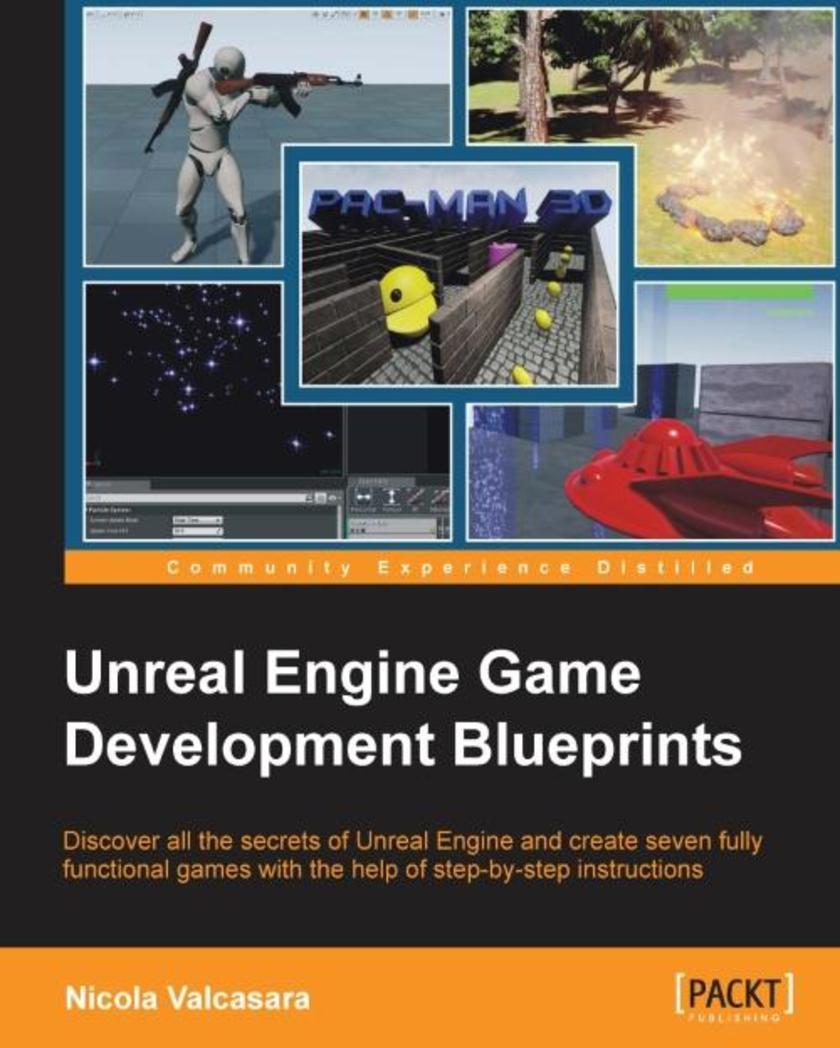
Unreal Engine Game Development Blueprints
¥90.46
Discover all the secrets of Unreal Engine and create seven fully functional games with the help of step-by-step instructions About This Book Understand what a Blueprint is and how to create a complex visual *ing code Discover the infinite possibilities that Unreal Engine offers, and understand which tool to use, where and when Learn to think like a real game developer in order to create enjoyable and bug-free games using this comprehensive and practical handbook Who This Book Is For This book is ideal for intermediate level developers who know how to use Unreal Engine and want to go through a series of projects that will further their expertise. Working knowledge of C++ is a must. What You Will Learn Write clean and reusable Blueprint *s Develop any kind of game you have in mind, following the rules used by experts Move through Unreal Engine 4, always knowing what you are doing and where to find the right tool for your needs Integrate C++ code into your projects using Visual Studio and the tools that Unreal provides Extricate between classes, nodes, interfaces, macros, and functions Work with different types of assets, from 3D objects to audio sources, from UI buttons to animations Explore all the aspects of the game logic—collisions, navigation meshes, matinees, volumes, events, and states In Detail With the arrival of Unreal Engine 4, a new wonderful tool was born: Blueprint. This visual *ing tool allows even non-programmers to develop the logic for their games, allowing almost anyone to create entire games without the need to write a single line of code. The range of features you can access with Blueprint * is pretty extensive, making it one of the foremost choices for many game developers. Unreal Engine Game Development Blueprints helps you unleash the real power of Unreal by helping you to create engaging and spectacular games. It will explain all the aspects of developing a game, focusing on visual *ing, and giving you all the information you need to create your own games. We start with an introductory chapter to help you move fluidly inside the Blueprint user interface, recognize its different components, and understand any already written Blueprint *. Following this, you will learn how to modify generated Blueprint classes to produce a single player tic-tac-toe game and personalize it. Next, you will learn how to create simple user interfaces, and how to extend Blueprints through code. This will help you make an informed decision between choosing Blueprint or code. You will then see the real power of Unreal unleashed as you create a beautiful scene with moving, AI controlled objects, particles, and lights. Then, you will learn how to create AI using a behavior tree and a global level Blueprint, how to modify the camera, and how to shoot custom bullets. Finally, you will create a complex game using Blueprintable components complete with a menu, power-up, dangerous objects, and different weapons. Style and approach This is an easy-to-follow guide full of practical game examples. Each chapter contains step-by-step instructions to build a complete game and each game uses a different tool in order to cover all the topics in a detailed and progressive manner.

Mastering MeteorJS Application Development
¥80.65
MeteorJS makes full-stack JavaScript Application Development simple – Learn how to build better modern web apps with MeteorJS, and become an expert in the innovative JavaScript framework About This Book Get your dream project up and running by building exceptional MeteorJS applications in a matter of days Learn how to integrate other JavaScript frameworks into your MeteorJS project and become an expert in full-stack development Go beyond coding and learn how to make modern design decisions – from mobile design to SEO – that drive great user experiences Who This Book Is For If you’ve already had some experience with MeteorJS but want to learn how to build even better modern web application, this book has been created for you. It provides you with a comprehensive look at one of those most important frameworks being used for the modern web today.What You Will Learn Get to grips with the basics and learn how to build a complete real-time application with MeteorJS Find out how Meteor makes full-stack development simple – become a better developer, fast. Use some of the most effective testing tools in modern web development to troubleshoot, debug and optimize your app Find out how to write custom packages for applications – so you can build your project exactly how you want Integrate React and Angular into your project Design and develop high quality animations that will give your UI the edge Build MeteorJS to serve as REST-based application and reactive system Learn how to host a MeteorJS application and then scale it for data Find out how MeteorJS can help you build for mobile Learn how to make sure you implement an effective SEO strategy in your MeteorJS application In Detail The web is dead – applications now rule our online experiences. But how are you going to build themWell, if you’ve been paying attention, you might already have tried your hand with MeteorJS, the JavaScript framework that helps you build complete full-stack web applications that are responsive and fast with ease. Mastering MeteorJS Application Development shows you how to do even more with MeteorJS – if you’re ready to try a comprehensive course through one of the most exciting frameworks in web development today, this is the book you need. Designed to take you through the entire process of building an advanced multipage application with Meteor, you’ll be able to bring your web development ideas with surprising ease. You’ll not only learn how Meteor makes web development easier, but also how you can make using Meteor easier, by automating and simplifying tasks so you can be confident you have full control of everything in your workflow – especially everything that could go wrong. From automated testing to integrating other useful frameworks such as Angular and D3, each chapter covers a crucial element in the Meteor development process. Discover how to integrate animations using Meteor’s Blaze, to give your UI designs the edge, and explore reactive programming to effectively harness RESTful systems in your projects. You will also learn how to deploy and scale your application, two crucial aspects of modern development and vital in a changing digital environment with users expecting a product and experience that delivers. With further insights on developing for mobile – and how Meteor can help you tackle the challenges of the trend – and details on incorporating SEO strategies into your application, this book isn’t just a code tutorial – it’s about creating a product that users love. Style and approach This book is a practical guide that teaches you different ways to create custom packages, efficient client and server code, and more using Meteor. This book is packed with perfect examples and explanations to help you understand the concepts. With the perfect mix of theory and practical experience, it will equip you to become a professional MeteorJS developer.
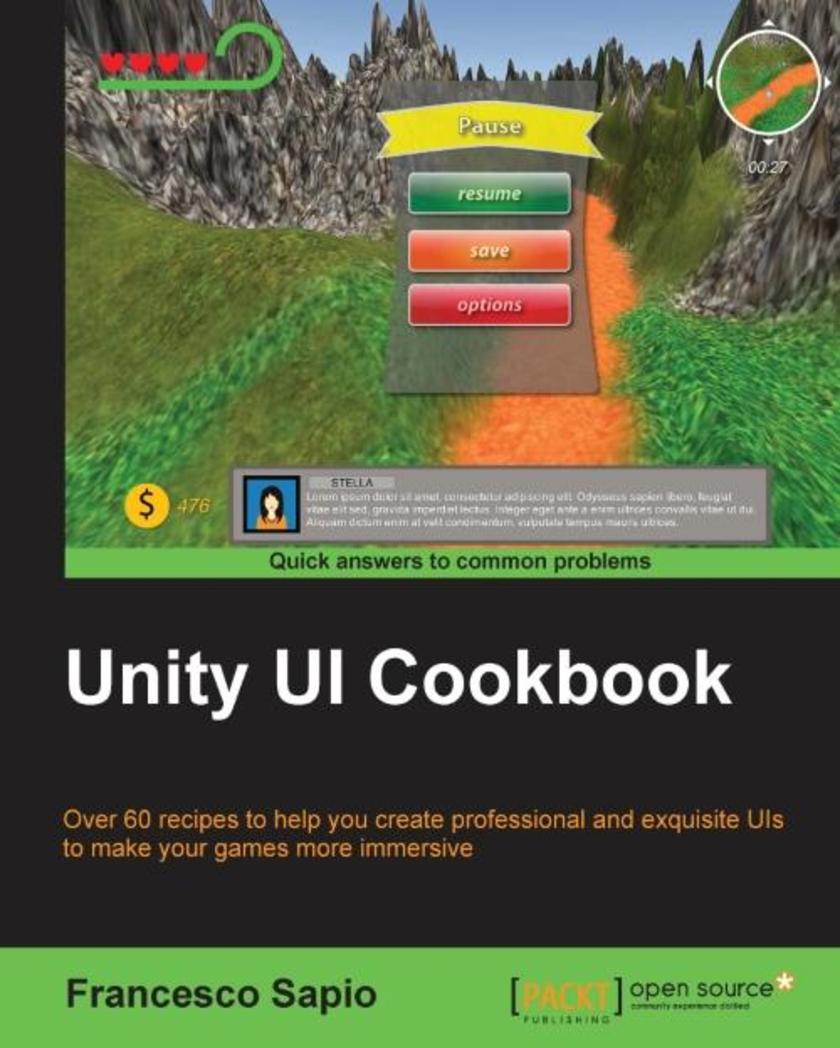
Unity UI Cookbook
¥90.46
Over 60 recipes to help you create professional and exquisite UIs to make your games more immersive About This Book Design and develop interactive and professional user interfaces (UIs) for games in Unity Discover how to implement and deal with various in-game UI elements that will impress your players This practical recipe guide will help you to efficiently create powerful and remarkable UIs using C# code Who This Book Is For If you are a game developer with some experience in Unity and C# and want to create the best interactive experience fast and intuitively, then this book is for you. If you are an intermediate game developer or an expert, these recipes will help you bring out the power of the new UI Unity system. What You Will Learn Implement different kinds of counters and healthbars Deal with timers and find out how to format them Animate and vivify UI elements Handle runtime customizations Add complex Head-up displays (HUDs) Design and implement 3D UIs Integrate minimaps in the UI In Detail With the increasing interest in game development, it's essential to design and implement a UI that reflects the game settings and shows the right information to the player. The Unity system is used to create complex and aesthetically pleasing user interfaces in order to give a professional look and feel to a game. Although the new Unity UI system is powerful and quite easy to use, by integrating it with C# *s, it's possible to realize the potential of this system and bring an impressive UI to games.This guide is an invaluable collection of recipes if you are planning to use Unity to develop a game. Starting with the basic concepts of the UI components, we’ll take you all the way through to creating complex interfaces by including animations and dynamics elements. Based on real-world problems, these recipes will start by showing you how to make common UI elements such as counters and healthbars. You will then get a walkthrough of how to manage time using timers, and will learn how to format them. You will move on to decorating and animating the UI elements to vivify them and give them a professional touch. Furthermore, you will be guided into the 3D UI world and into HUD *ing. Finally, you will discover how to implement complex minimaps in the interface.Style and approach Interactive, easy-to-follow recipes will help you create and implement UIs that make gaming an exhilarating experience.
Learning Apache Thrift
¥63.21
Make applications cross-communicate using Apache Thrift! About This Book Leverage Apache Thrift to enable applications written in different programming languages (Java, C++, Python, PHP, Ruby, and so on) to cross-communicate. Learn to make your services ready for real-world applications by using stepwise examples and modifying code from Industry giants. Be a crackerjack at solving Apache Thrift-related issues. Who This Book Is For If you have some experience of developing applications in one or more languages supported by Apache Thrift (C++, Java, PHP, Python, Ruby, and others) and want to broaden your knowledge and skills in building cross-platform, scalable applications, then this book is for you. What You Will Learn Understand the need for cross-language services and the basics of Apache Thrift. Learn how Apache Thrift works and what problems it solves. Determine when to use Apache Thrift instead of other methods (REST API), and when not to use it. Create and run an example application using Apache Thrift. Use Apache Thrift in your applications written in different languages supported by Apache Thrift (PHP, Python, Ruby, Java, and C++). Handle exceptions and deal with errors. Modify code in different languages.< Use Apache Thrift in the production environments of big applications. In Detail With modern software systems being increasingly complex, providing a scalable communication architecture for applications in different languages is tedious. The Apache Thrift framework is the solution to this problem! It helps build efficient and easy-to-maintain services and offers a plethora of options matching your application type by supporting several popular programming languages, including C++, Java, Python, PHP, Ruby, Erlang, Perl, Haskell, C#, Cocoa, JavaScript, Node.js, Smalltalk, OCaml, and Delphi. This book will help you set aside the basics of service-oriented systems through your first Apache Thrift-powered app. Then, progressing to more complex examples, it will provide you with tips for running large-scale applications in production environments. You will learn how to assess when Apache Thrift is the best tool to be used. To start with, you will run a simple example application, learning the framework's structure along the way; you will quickly advance to more complex systems that will help you solve various real-life problems. Moreover, you will be able to add a communication layer to every application written in one of the popular programming languages, with support for various data types and error handling. Further, you will learn how pre-eminent companies use Apache Thrift in their popular applications. This book is a great starting point if you want to use one of the best tools available to develop cross-language applications in service-oriented architectures. Style and approach A stepwise guide to learning Apache Thrift, with ready-to-run examples explained comprehensively. Advanced topics supply the inspiration for further work.
Learning Geospatial Analysis with Python - Second Edition
¥90.46
An effective guide to geographic information systems and remote sensing analysis using Python 3 About This Book Construct applications for GIS development by exploiting Python This focuses on built-in Python modules and libraries compatible with the Python Packaging Index distribution system—no compiling of C libraries necessary This practical, hands-on tutorial teaches you all about Geospatial analysis in Python Who This Book Is For If you are a Python developer, researcher, or analyst who wants to perform Geospatial, modeling, and GIS analysis with Python, then this book is for you. Familarity with digital mapping and analysis using Python or another *ing language for automation or crunching data manually is appreciated. What You Will Learn Automate Geospatial analysis workflows using Python Code the simplest possible GIS in 60 lines of Python Mold thematic maps with Python tools Get hold of the various forms that geospatial data comes in Produce elevation contours using Python tools Create flood inundation models Apply Geospatial analysis to find out about real-time data tracking and for storm chasing In Detail Geospatial Analysis is used in almost every field you can think of from medicine, to defense, to farming. This book will guide you gently into this exciting and complex field. It walks you through the building blocks of geospatial analysis and how to apply them to influence decision making using the latest Python software. Learning Geospatial Analysis with Python, 2nd Edition uses the expressive and powerful Python 3 programming language to guide you through geographic information systems, remote sensing, topography, and more, while providing a framework for you to approach geospatial analysis effectively, but on your own terms. We start by giving you a little background on the field, and a survey of the techniques and technology used. We then split the field into its component specialty areas: GIS, remote sensing, elevation data, advanced modeling, and real-time data. This book will teach you everything you need to know about, Geospatial Analysis from using a particular software package or API to using generic algorithms that can be applied. This book focuses on pure Python whenever possible to minimize compiling platform-dependent binaries, so that you don’t become bogged down in just getting ready to do analysis. This book will round out your technical library through handy recipes that will give you a good understanding of a field that supplements many a modern day human endeavors. Style and approach This is a practical, hands-on tutorial that teaches you all about Geospatial analysis interactively using Python.
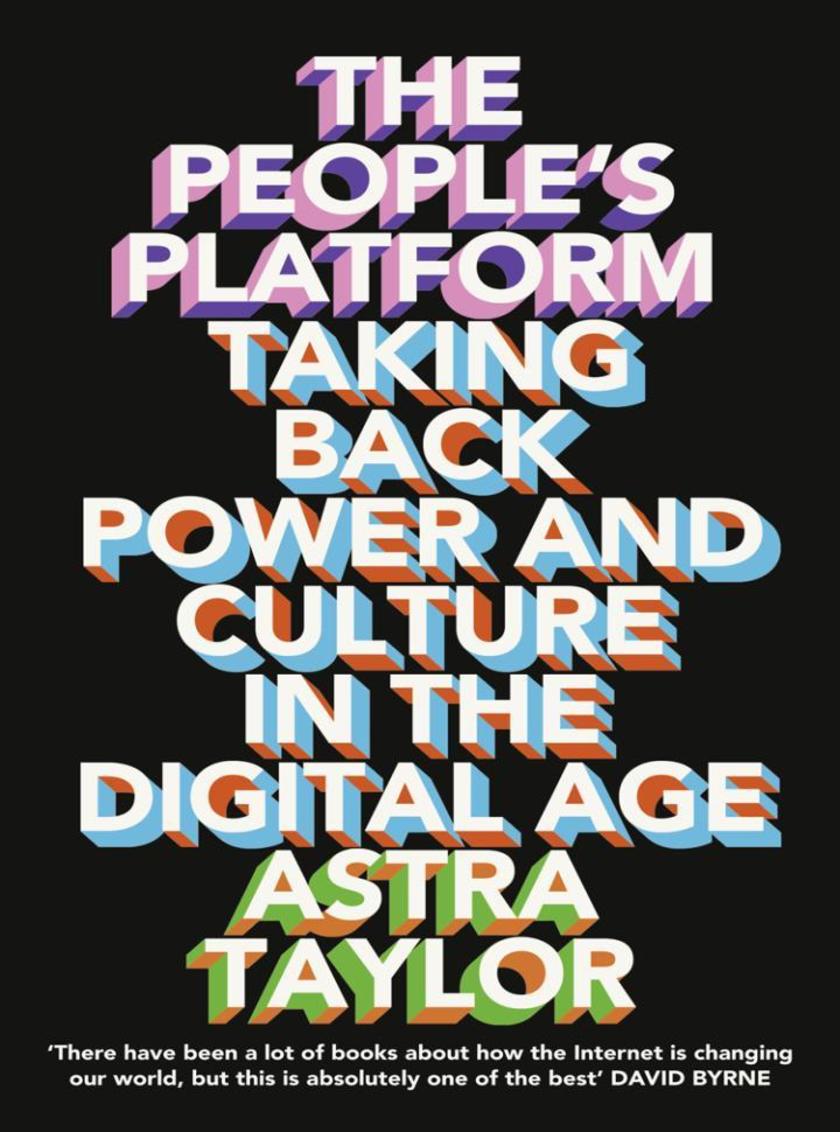
The People’s Platform: Taking Back Power and Culture in the Digital Age
¥95.75
From a cutting-edge cultural commentator, a bold and brilliant challenge to cherished notions of the internet as the great leveler of our age. The internet has been hailed as an unprecedented democratising force, a place where everyone can participate. ? So why are minorities and marginalized groups under-represented on user-generated websites, with less than 15% of Wikipedia written by women? ? Why does keyword-jammed and star-studded churnalism proliferate, at the expense of in-depth, investigative journalism? ? And how have a handful of giant corporations like Facebook, Google and Apple seized control of our creativity, galvanizing individuals to produce content for free? ‘The People’s Platform’ argues that for all our ‘sharing’, the internet reflects real-world inequalities as much as it reduces them, as attention and income frequently accrue to those who already have plenty of both. The online world does offer a unique opportunity for greater freedom, but a community that supports the diverse and lasting will not spring up from technology alone. If we want the internet to be a people’s platform, we will have to make it so.
Implementing DevOps with Microsoft Azure
¥90.46
"Accelerate and Automate Build, Deploy, and Management of applications to achieve High Availability. About This Book ?This guide highlights tools that offer development and deployment environments for application services ?Secure and continuously monitor your web application in order to make it highly available ?Use Visual Studio Team Services for Continuous Integration and Continuous Development to expedite your application life cycle management process ?Use Microsoft Azure App Services (Azure Web Apps / Azure Websites), PaaS offering from Microsoft to deploy web application Who This Book Is For This book is for DevOps engineers, system administrators, and developers (.net) who want to implement DevOps for their organization. You do not need to have any knowledge of VSTS or Azure App Services (Azure Web Apps / Azure Websites). What You Will Learn ?Explore the features of PaaS and aPaaS in DevOps ?Use Visual Studio Team Services (VSTS) to manage versions of code and integrating VSTS with Eclipse IDE ?Understand and configure Continuous Integration in VSTS ?Review Unit Test Execution for Automated Testing ?Create different environments that can be used to continuous deploy a web application ?Configure Roll-based Access to enable secure access for Azure Web Apps ?Create and configure the App Service Environment to enhance security ?Understand the execution of the end-to-end automation process ?Conduct Performance Testing using JMeter ?Discover the different monitoring options available in Microsoft Azure Portal In Detail This book will teach you all about the Visual Studio Team Services and Microsoft Azure PaaS offerings that support Continuous Integration, Continuous Delivery, Continuous Deployment, and execution in the cloud with high availability, disaster recovery, and security. You will first be given a tour of all the concepts and tools that Microsoft Azure has to offer and how these can be used in situations to cultivate the DevOps culture. You'll be taught how to use and manage Visual Studio Team Services (VSTS) and about the structure of the sample application used throughout the book. You will become familiar with the nitty gritty of Continuous Integration and Continuous Development with VSTS and Microsoft Azure Apps. You will not only learn how to create App service environments, but also how to compare Azure Web Apps and App Service Environments to deploy web applications in a more secure environment. Once you have completed Continuous Integration and created the Platform for application deployment, you will learn more about the final stepping stone in achieving end-to-end automation using approval-based Continuous Delivery and Deployment. You will then learn about Continuous Monitoring, using the monitoring and notification options provided by Microsoft Azure and Visual Studio Team Services. Style and Approach This book is an easy-to-follow guide filled with examples and real-world applications for gaining an in-depth understanding of Microsoft Azure and Visual Studio. This book will help you leverage Microsoft Azure and Visual Studio using real-world examples. "
Sitecore Cookbook for Developers
¥90.46
Over 70 incredibly effective and practical recipes to get you up and running with Sitecore development About This Book Build enterprise-level rich websites quickly and deliver the best possible content management to your website Get maximum usage of functionalities like different user interfaces, workflow, publishing, search, analytics, etc and learn different rendering techniques using presentation components for data bindings, events, handlers, schedulers, media, etc. Add a surprising amount of functionality just by customizing the Sitecore architecture through the best practices contained in this book Who This Book Is For If you are a Sitecore developer or a programmer who wants to expand your Sitecore development skills, this book is ideal for you. You will need working knowledge of ASP.NET WebForms or MVC, as well as HTML, and a basic knowledge of Sitecore installation. What You Will Learn Create, access, and personalize your website content using different Sitecore presentation components Learn how to extend the presentation components to fulfill some real-life requiremnts such as improving the site’s performance, generating Rss feeds and so on Work with multiple websites on a single Sitecore instance and create multilingual websites Customize the Sitecore interfaces as per your business requirements to provide easier and error-free user interface to content authors to save time and improve accuracy Customize the Sitecore backend architecture as per your business needs Automate tasks and achieve scalability by altering the development and configuration settings Integrate external systems with Sitecore to import or export content and secure user interactions Integrate the advanced features of analytics and personalization, to get the best possible customer experience and generate its reports In Detail This book will get you started on building rich websites, and customizing user interfaces by creating content management applications quickly. It will give you an insight into web designs and how to customize the Sitecore architecture as per your website's requirements using best practices. Packed with over 70 recipes to help you achieve and solve real-world common tasks, requirements, and the problems of content management, content delivery, and publishing instance environments. It also presents recipes on Sitecore’s backend processes of customizing pipelines, creating custom event handler and media handler, setting hooks to interpret foreign language URL and more. Other topics covered include creating a workflow action, publishing sublayouts and media files, securing your environment by customizing user profiles and access rights, boosting search capabilities, optimising performance, scalability and high-availability of Sitecore instances and much more. By the end of this book, you will have be able to add virtually limitless features to your websites by developing and deploying Sitecore efficiently. Style and approach This easy-to-follow guide is full of hands-on recipes on real-world development tasks to improve your existing Sitecore system. Each topic is presented with its benefits and detailed steps to achieve it through well-explained code and images.

3D Printing Designs: Design an SD Card Holder
¥35.96
Learn how to design 3D-printed objects that work in the real world About This Book This book shows you how to design from a reference to physical objects that can be easily represented by simple basic objects in Blender (cube, cylinder, sphere, and so on) by measuring them This is the only book on the market that shows you how to take your first steps to create 3D printed objects that are able to interact with existing objects Learn how to utilize Blender's functionality to make your designs more precise and accurate Who This Book Is For Reader will have basic knowledge of Blender and 3D Printing, and will have probably already made something simple. They will be interested in printing their first object. What You Will Learn Gain techniques to accurately measure the objects with rules, manual calipers, and digital calipers Break down complex geometries into multiple simple shapes and model them in layers using Blender Scale and re-scale a model to fit based on volume or size constraints See how to multishell geometries and auto-intersections using the Boolean Modifier In Detail Want to model a 3D printed prototype of an object that needs to be replaced or brokenThis book will teach you how to accurately measure objects in the real world with a few basic measuring techniques and how to create an object for 3D printing around the objects measured. In this book, you'll learn to identify basic shapes from a given object, use Vernier and Digital calipers and grid paper tracing techniques to derive measurements for the objects. With the help of measurements, you'll see to model these objects using Blender, organize the parts into layers, and later combine them to create the desired object, which in this book is a 3D printable SD card holder ring that fits your finger. Style and approach This book will be an easy-to-follow guide to learn the methods of scaling, precise measurements, and accurate designing. Using a step-by-step approach, this book will guide you on your journey to model different parts of a complex object and later combine them to create 3D printed objects that work in the real world.
Troubleshooting NetScaler
¥80.65
Gain essential knowledge and keep your NetScaler environment in top form About This Book Learn how the main features - Load Balancing, Content Switching, GSLB, SSL offloading, AAA, AppFirewall, and Gateway work under the hood using vividly explained flows and traces Explore the NetScaler layout and the various logs, tools and methods available to help you when it’s time to debug An easy-to-follow guide, which will walk you through troubleshooting common issues in your NetScaler environment Who This Book Is For This book is aimed at NetScaler administrators who have a basic understanding of the product but are looking for deeper exposure and guidance in identifying and fixing issues to keep their application environment performing optimally. What You Will Learn Troubleshoot traffic management features such as load balancing, SSL, GSLB and content switching Identify issues with caching and compression Deal with authentication issues when using LDAP, RADIUS, certificates, Kerberos and SAML Diagnose NetScaler high availability and networking issues Explore how application firewall protections work and how to avoid false positives Learn about NetScaler Gateway integration issues with XenApp, XenDesktop, and XenMobile Deal with NetScaler system-level issues Discover the NetScaler troubleshooting tools In Detail NetScaler is a high performance Application Delivery Controller (ADC). Making the most of it requires knowledge that straddles the application and networking worlds. As an ADC owner you will also likely be the first person to be solicited when your business applications fail. You will need to be quick in identifying if the problem is with the application, the server, the network, or NetScaler itself. This book provides you with the vital troubleshooting knowledge needed to act fast when issues happen. It gives you a thorough understanding of the NetScaler layout, how it integrates with the network, and what issues to expect when working with the traffic management, authentication, NetScaler Gateway and application firewall features. We will also look at what information to seek out in the logs, how to use tracing, and explore utilities that exist on NetScaler to help you find the root cause of your issues. Style and approach This helpful guide to troubleshooting NetScaler is delivered in a comprehensive and easy-to-follow manner. The topics in the book adopt a step-by-step approach.


