


 购物车
购物车 个人中心
个人中心
Notes from the Underground: "Illustrated"
¥18.74
In 1888 a client, Mary Morstan, comes with two puzzles for Holmes. The first is the disappearance of her father Captain Arthur Morstan in December 1878 and the second is that she has received 6 pearls in the mail from an anonymous benefactor once a year since 1882, since she answered an anonymous newspaper query inquiring for her. With the last pearl she has received a letter remarking that she has been a wronged woman and asks for meeting. Holmes takes the case and soon discovers that Major Sholto — Morstan's only friend who had denied seeing Morstan — had died in 1882 and that within a short span of time Mary began to receive the pearls, implying a connection. The only clue Mary can give Holmes is a map of a fortress with the names of Jonathan Small and three Sikhs, who are named Dost Akbar, Abdullah Khan, and Mahomet Singh. Holmes, Watson, and Mary meet Thaddeus Sholto, the son of the late Major Sholto and Capt Morstan's Army friend who has sent her the pearls. Thaddeus remarks that his father had a paranoid fear of one-legged men and confirms that Mary's father had seen the Major the night he died. That night, in a quarrel about an Agra Treasure, Morstan — who was in weak health — suffered a heart attack. Not wanting to bring attention to the object of the quarrel to public notice, Sholto disposed of the body and hid the treasure. However his own health became worse when he received a letter from India. Dying, he called his two sons and confessed to Morstan's death and was about to divulge the location of the treasure when he suddenly cried "Keep him out!". The puzzled sons glimpsed a face in the window but the only trace was a single footstep in the dirt. On their father's body is a note reading "The Sign of Four". Both brothers quarreled over whether a legacy should be left to Mary Morstan and Thaddeus left his brother Bartholomew, taking a chaplet and sending its pearls to Mary. The reason he sent the letter is that Bartholomew has found the treasure and possibly Thaddeus and Mary might confront him for a division of it. Bartholomew is found dead in his home from a poison dart and the treasure is missing. While the police wrongly take Thaddeus in as a suspect Holmes deduces that there are two persons involved in the murder: a one-legged man, Jonathan Small, as well as another "small" accomplice. He traces them to a boat landing where Small has hired a launch named the Aurora. With the help of his Baker Street Irregulars and his own disguise Holmes traces the launch. In a Police launch Holmes and Watson chase the Aurora and capture it but in the process end up killing the "small" companion after he attempts to kill Holmes with a poisoned dart shot from a blow-pipe. Small tries to escape but is captured. However the iron treasure box is empty; Small claims to have dumped the treasure over the side during the chase.
Pen Drawing: "An Illustrated Treatise"
¥18.74
The book's protagonist is an English scientist and gentleman inventor living in Richmond, Surrey in Victorian England, and identified by a narrator simply as the Time Traveller. The narrator recounts the Traveller's lecture to his weekly dinner guests that time is simply a fourth dimension, and his demonstration of a tabletop model machine for travelling through it. He reveals that he has built a machine capable of carrying a person, and returns at dinner the following week to recount a remarkable tale, becoming the new narrator.In the new narrative, the Time Traveller tests his device with a journey that takes him to A.D. 802,701, where he meets the Eloi, a society of small, elegant, childlike adults. They live in small communities within large and futuristic yet slowly deteriorating buildings, doing no work and having a frugivorous diet. His efforts to communicate with them are hampered by their lack of curiosity or discipline, and he speculates that they are a peaceful communist society, the result of humanity conquering nature with technology, and subsequently evolving to adapt to an environment in which strength and intellect are no longer advantageous to survival. Returning to the site where he arrived, the Time Traveller is shocked to find his time machine missing, and eventually works out that it has been dragged by some unknown party into a nearby structure with heavy doors, locked from the inside, which resembles a Sphinx. Later in the dark, he is approached menacingly by the Morlocks, ape-like troglodytes who live in darkness underground and surface only at night. Within their dwellings he discovers the machinery and industry that makes the above-ground paradise possible. He alters his theory, speculating that the human race has evolved into two species: the leisured classes have become the ineffectual Eloi, and the downtrodden working classes have become the brutish light-fearing Morlocks. Deducing that the Morlocks have taken his time machine, he explores the Morlock tunnels, learning that they feed on the Eloi. His revised analysis is that their relationship is not one of lords and servants but of livestock and ranchers. The Time Traveller theorizes that intelligence is the result of and response to danger; with no real challenges facing the Eloi, they have lost the spirit, intelligence, and physical fitness of humanity at its peak. Meanwhile, he saves an Eloi named Weena from drowning as none of the other Eloi take any notice of her plight, and they develop an innocently affectionate relationship over the course of several days. He takes Weena with him on an expedition to a distant structure that turns out to be the remains of a museum, where he finds a fresh supply of matches and fashions a crude weapon against Morlocks, whom he fears he must fight to get back his machine. He plans to take Weena back to his own time. Because the long and tiring journey back to Weena's home is too much for them, they stop in the forest, and they are then overcome by Morlocks in the night, and Weena faints. The Traveller escapes only when a small fire he had left behind them to distract the Morlocks catches up to them as a forest fire; Weena is presumably lost in the fire, as are the Morlocks. The Morlocks use the time machine as bait to ensnare the Traveller, not understanding that he will use it to escape. He travels further ahead to roughly 30 million years from his own time. There he sees some of the last living things on a dying Earth, menacing reddish crab-like creatures slowly wandering the blood-red beaches chasing butterflies in a world covered in simple lichenous vegetation. He continues to make short jumps through time, seeing Earth's rotation gradually cease and the sun grow larger, redder, and dimmer, and the world falling silent and freezing as the last degenerate living things die out.
Prodigal Village: "A Christmas Tale"
¥18.74
Through the Looking-Glass, and What Alice Found There (1871) is a novel by Lewis Carroll (Charles Lutwidge Dodgson), the sequel to Alice's Adventures in Wonderland (1865). The themes and settings of Through the Looking-Glass make it a kind of mirror image of Wonderland: the first book begins outdoors, in the warm month of May (4 May), uses frequent changes in size as a plot device, and draws on the imagery of playing cards; the second opens indoors on a snowy, wintry night exactly six months later, on 4 November (the day before Guy Fawkes Night), uses frequent changes in time and spatial directions as a plot device, and draws on the imagery of chess. In it, there are many mirror themes, including opposites, time running backwards, and so on. Short Summary: Alice is playing with a white kitten (whom she calls "Snowdrop") and a black kitten (whom she calls "Kitty")—the offspring of Dinah, Alice's cat in Alice's Adventures in Wonderland—when she ponders what the world is like on the other side of a mirror's reflection. Climbing up on the fireplace mantel, she pokes at the wall-hung mirror behind the fireplace and discovers, to her surprise, that she is able to step through it to an alternative world. In this reflected version of her own house, she finds a book with looking-glass poetry, "Jabberwocky", whose reversed printing she can read only by holding it up to the mirror. She also observes that the chess pieces have come to life, though they remain small enough for her to pick up. Upon leaving the house (where it had been a cold, snowy night), she enters a sunny spring garden where the flowers have the power of human speech; they perceive Alice as being a "flower that can move about." Elsewhere in the garden, Alice meets the Red Queen, who is now human-sized, and who impresses Alice with her ability to run at breathtaking speeds. This is a reference to the chess rule that queens are able to move any number of vacant squares at once, in any direction, which makes them the most "agile" of pieces. The Red Queen reveals to Alice that the entire countryside is laid out in squares, like a gigantic chessboard, and offers to make Alice a queen if she can move all the way to the eighth rank/row in a chess match. This is a reference to the chess rule of Promotion. Alice is placed in the second rank as one of the White Queen's pawns, and begins her journey across the chessboard by boarding a train that literally jumps over the third row and directly into the fourth rank, thus acting on the rule that pawns can advance two spaces on their first move.
Rubens: "Masterpieces in Colour" Series: Book-IV
¥28.04
In “True Ghost Stories,” Mr. Carrington presents a number of startling cases of this character; but they are not the ordinary “ghost stories”—based on pure fiction, and having no foundation in reality. Here we have a well-arranged collection of incidents, all thoroughly investigated and vouched for, and the testimony obtained first-hand and corroborated by others. The chapter on “Haunted Houses” is particularly striking. The first chapter deals with the interesting question, “What is a Ghost?” and attempts to answer this question in the light of the latest scientific theories which have been advanced to explain these supernatural happenings and visitants. It is a book of absorbing interest, and cannot fail to grip and hold the attention of every reader—no matter whether he be a student of these questions, or one merely in search of hair-raising anecdotes and stories. He will find them here a-plenty! The following little book endeavors to bring together a number of “ghost stories” of the more startling and dramatic type,—but stories, nevertheless, which seem to be well authenticated; and which have been obtained, in most instances, at first hand, from the original witnesses; and often contain corroborative testimony from others who also experienced the ghostly phenomena. Some of these incidents, indeed, rise to the dignity of scientific evidence; others are less well authenticated cases,—but interesting for all that. These have been grouped in various Chapters, according to their evidential value. Chapters II. and III. contain well-evidenced cases, some of which have been taken from the Proceedings and Journals of the Society for Psychical Research (S. P. R.), or from Phantasms of the Living, or from other scientific books, in which narratives of this character receive serious consideration. Chapter V., on the contrary, contains a number of incidents which,—striking and dramatic as they are,—cannot be included in the two earlier Chapters, as presenting real evidence of Ghosts; but are published rather as startling and interesting ghost stories. Chapter IV., devoted to “Haunted Houses,” contains brief accounts of the most famous Haunted Houses, and of the phenomena which have been witnessed within them. Appendix A gives a list of a few of the important “Historical Ghosts,” Appendix B describes the “Phantom Armies” lately seen by the Allied troops in France—while Appendix C lists a number of books of Ghost Stories which the interested reader may care to peruse. A short Glossary, at the beginning of the book, explains the meaning of certain terms used,—which are not, perhaps, ordinarily met with in books of this character. In the Introductory Chapter, I have endeavored to explain, very briefly, the nature and character of Ghosts; what they are; and the various scientific theories which have been brought forward, of late years, to explain Ghosts. I hope that this may prove of interest to the reader; in case it does not do so, he is invited to “skip” directly to Chapter II., which begins our account of “True Ghost Stories.” I wish to express my thanks in this place to the Council of the English S. P. R. for special permission to quote and to summarize several striking cases here reproduced; also to Miss Estelle Stead, for permission to utilize several cases previously printed at length in Mr. Wm. T. Stead’s collections of Ghost Stories. H. C. [Author]
Az ?gett-hegyi K?nyvtár
¥65.66
Alice was beginning to get very tired of sitting by her sister on the bank, and of having nothing to do: once or twice she had peeped into the book her sister was reading, but it had no pictures or conversations in it, 'and what is the use of a book,' thought Alice 'without pictures or conversation?'So she was considering in her own mind (as well as she could, for the hot day made her feel very sleepy and stupid), whether the pleasure of making a daisy-chain would be worth the trouble of getting up and picking the daisies, when suddenly a White Rabbit with pink eyes ran close by her. There was nothing so VERY remarkable in that; nor did Alice think it so VERY much out of the way to hear the Rabbit say to itself, 'Oh dear! Oh dear! I shall be late!' (when she thought it over afterwards, it occurred to her that she ought to have wondered at this, but at the time it all seemed quite natural); but when the Rabbit actually TOOK A WATCH OUT OF ITS WAISTCOAT-POCKET, and looked at it, and then hurried on, Alice started to her feet, for it flashed across her mind that she had never before seen a rabbit with either a waistcoat-pocket, or a watch to take out of it, and burning with curiosity, she ran across the field after it, and fortunately was just in time to see it pop down a large rabbit-hole under the hedge. In another moment down went Alice after it, never once considering how in the world she was to get out again. The rabbit-hole went straight on like a tunnel for some way, and then dipped suddenly down, so suddenly that Alice had not a moment to think about stopping herself before she found herself falling down a very deep well. Either the well was very deep, or she fell very slowly, for she had plenty of time as she went down to look about her and to wonder what was going to happen next. First, she tried to look down and make out what she was coming to, but it was too dark to see anything; then she looked at the sides of the well, and noticed that they were filled with cupboards and book-shelves; here and there she saw maps and pictures hung upon pegs. She took down a jar from one of the shelves as she passed; it was labelled 'ORANGE MARMALADE', but to her great disappointment it was empty: she did not like to drop the jar for fear of killing somebody, so managed to put it into one of the cupboards as she fell past it. 'Well!' thought Alice to herself, 'after such a fall as this, I shall think nothing of tumbling down stairs! How brave they'll all think me at home! Why, I wouldn't say anything about it, even if I fell off the top of the house!' (Which was very likely true.) Down, down, down. Would the fall NEVER come to an end! 'I wonder how many miles I've fallen by this time?' she said aloud. 'I must be getting somewhere near the centre of the earth. Let me see: that would be four thousand miles down, I think—' (for, you see, Alice had learnt several things of this sort in her lessons in the schoolroom, and though this was not a VERY good opportunity for showing off her knowledge, as there was no one to listen to her, still it was good practice to say it over) '—yes, that's about the right distance—but then I wonder what Latitude or Longitude I've got to?' (Alice had no idea what Latitude was, or Longitude either, but thought they were nice grand words to say.) ? ? ABOUT AUTHOR: ??Charles Lutwidge Dodgson (1832 – 1898), better known by his pen name, as “Lewis Carroll”, was an English writer, mathematician, logician, Anglican deacon and photographer. His most famous writings are Alice's Adventures in Wonderland and its sequel Through the Looking-Glass, as well as the poems "The Hunting of the Snark" and "Jabberwocky", all examples of the genre of literary nonsense.

Mózes egy, huszonkett?
¥71.69
F?szerepl?nk Kópé, egy erdei manó, aki kirándulók fogságábae sik, majd az erd?b?l egy f?városi lakótelepre kerül. A manó megsz?kik a rabságból, és meghúzódik egy limlommal zsúfolter kélyen. Nem esik kétségbe, hanem kényelmes kuckót alakít ki a kacatok k?z?tt. Kópé az épület el?tt magasodó akácfán k?zlekedik az erkélyek k?z?tt. ?gy talál egy barátot, Dórit, aki egyedül él az anyukájával, és soha nem járt erd?ben. A manó mesélni kezd az otthonáról, az odvas t?lgyrol, a barátairól. A mesékhez Dóri rajzokat készít. A rideg lakótelepen nem ismerik egymást az emberek, és éppen Kópé kalandozása, kíváncsisága hozza ?ket ?szsze. Dóri megismerkedik Olga nénivel, akit?l kertész kedni tanul,virágokat nevel az erkélyen, másoktól cicát kap. A k?nyvben az izgalmas kalandokat, mint például amikor Kópét majdnem elüti egy autó, vagy amikor lepottyan egyik erkélyrol a másikra, mulatságos részek gazdagítják. Az erdei él?világ valóságh? bemutatása keveredik a fantáziavilágbeli lények, tündérek és manók jellemzésével. Megtudhatjuk például, milyen is egy manó esküv?! Ajánlott korosztály: 5 és 10 év k?z?tt.

Az ?rd?g egyetlen barátja
¥57.47
When does life begin?... A well-known book says "forty". A well-known radio program says "eighty". Some folks say it's mental, others say it's physical. But take the strange case of Mel Carlson who gave a lot of thought to the matter. Mel felt as if he were floating on clouds in the deepest, most intense dark he had ever experienced. He tried opening his eyes but nothing happened, only a sharp pain. Little bits of memory flashed back and he tried to figure out what could have happened, where he was. The last thing he could remember was the little lab hidden back in the mountains in an old mine tunnel. Remote, but only an hour's drive from the city. What had he been doing? Oh yes, arguing with Neil again. He even recalled the exact words."Damn it, Mel," his partner had said. "We've gone about as far as possible working with animal brains. We've got to get a human one." "We can't," Mel had disagreed. "There'd be enough of an uproar if the papers got hold of what we've been doing with animals. If we did get someone in a hospital to agree to let us use his brain on death, they would close us up tighter than a drum.""But our lab's too well hidden, they'd never know." "It wouldn't work anyway. The brain might be damaged for lack of oxygen and all of our work would go for nothing. Worse, it might indicate failure where a fresh, healthy brain would mean success.""We'll never know unless we try," said Neil almost violently, dark eyes glittering. "Our funds aren't going to last forever."

Assassin's Creed: Alvilág
¥71.69
To the irreverent—and which of us will claim entire exemption from that comfortable classification—there is something very amusing in the attitude of the orthodox criticism toward Bernard Shaw. He so obviously disregards all the canons and unities and other things which every well-bred dramatist is bound to respect that his work is really unworthy of serious criticism (orthodox). Indeed he knows no more about the dramatic art than, according to his own story in "The Man of Destiny," Napoleon at Tavazzano knew of the Art of War. But both men were successes each in his way—the latter won victories and the former gained audiences, in the very teeth of the accepted theories of war and the theatre. Shaw does not know that it is unpardonable sin to have his characters make long speeches at one another, apparently thinking that this embargo applies only to long speeches which consist mainly of bombast and rhetoric. There never was an author who showed less predilection for a specific medium by which to accomplish his results. He recognized, early in his days, many things awry in the world and he assumed the task of mundane reformation with a confident spirit. It seems such a small job at twenty to set the times aright. He began as an Essayist, but who reads essays now-a-days—he then turned novelist with no better success, for no one would read such preposterous stuff as he chose to emit. He only succeeded in proving that absolutely rational men and women—although he has created few of the latter—can be most extremely disagreeable to our conventional way of thinking. As a last resort, he turned to the stage, not that he cared for the dramatic art, for no man seems to care less about "Art for Art's sake," being in this a perfect foil to his brilliant compatriot and contemporary, Wilde. He cast his theories in dramatic forms merely because no other course except silence or physical revolt was open to him. For a long time it seemed as if this resource too was doomed to fail him. But finally he has attained a hearing and now attempts at suppression merely serve to advertise their victim. It will repay those who seek analogies in literature to compare Shaw with Cervantes. After a life of heroic endeavor, disappointment, slavery, and poverty, the author of "Don Quixote" gave the world a serious work which caused to be laughed off the world's stage forever the final vestiges of decadent chivalry. The institution had long been outgrown, but its vernacular continued to be the speech and to express the thought "of the world and among the vulgar," as the quaint, old novelist puts it, just as to-day the novel intended for the consumption of the unenlightened must deal with peers and millionaires and be dressed in stilted language. Marvellously he succeeded, but in a way he least intended. We have not yet, after so many years, determined whether it is a work to laugh or cry over. "It is our joyfullest modern book," says Carlyle, while Landor thinks that "readers who see nothing more than a burlesque in 'Don Quixote' have but shallow appreciation of the work." Shaw in like manner comes upon the scene when many of our social usages are outworn. He sees the fact, announces it, and we burst into guffaws. The continuous laughter which greets Shaw's plays arises from a real contrast in the point of view of the dramatist and his audiences. When Pinero or Jones describes a whimsical situation we never doubt for a moment that the author's point of view is our own and that the abnormal predicament of his characters appeals to him in the same light as to his audience. With Shaw this sense of community of feeling is wholly lacking. He describes things as he sees them, and the house is in a roar. Who is right If we were really using our own senses and not gazing through the glasses of convention and romance and make-believe, should we see things as Shaw does Must it not cause Shaw to doubt his own or the public's sanity to hear audiences laughing boisterously over tragic situations And yet, if they did not come to laugh, they would not come at all. Mockery is the price he must pay for a hearing. Or has he calculated to a nicety the power of reaction Does he seek to drive us to aspiration by the portrayal of sordidness, to disinterestedness by the picture of selfishness, to illusion by disillusionment It is impossible to believe that he is unconscious of the humor of his dramatic situations, yet he stoically gives no sign. He even dares the charge, terrible in proportion to its truth, which the most serious of us shrinks from—the lack of a sense of humor. Men would rather have their integrity impugned. In "Arms and the Man" the subject which occupies the dramatist's attention is that survival of barbarity—militarism—which raises its horrid head from time to time to cast a doubt on the reality of our civilization. No more hoary superstition survives than that the donning of a uniform changes the nature of the wearer. This
14
¥51.58
BOW-WOW AND MEW-MEW is one of the few books for beginners in reading that may be classed as literature. Written in words of mostly one syllable, it has a story to tell, which is related in so attractive a manner as to immediately win the favor of young children. It teaches English and English literature to the child in the natural way: through a love for the reading matter. It is the character of story that will, in the not distant future, replace the ordinary primer or reader with detached sentences, and which seldom possesses any relation to literature.The ultimate objects of any story can only be effected through the love for a story. The prominent point in this story is development of good character, which may well be regarded as the highest purpose of education. The transformation from bad to good traits in the dog and cat cannot but have a desirable effect on every child that reads the story. Bow-Wow and Mew-Mew become dissatisfied with their home and their surroundings, and ungrateful toward their benefactress. As the story tells, "They did not find good in any thing." But after running away and suffering hunger, neglect, and bad treatment, their characters begin to change. They naturally come to reflect their mistress's goodness. They learn the value of companionship and friendship, and the appreciation of a home. However, the ethical thoughts in the story are presented without a moral. The child really lives the scenes described. He has the emotions of the characters and feels their convictions. And this determines the worth of a story as an agent in character development.The narrative furnishes, further, the proper kind of exercise for the imagination. It affords abundant opportunity for the play of the dramatic instinct in the child, and effects a happy union of the "home world" and the "school world." The illustrations, drawn by Miss Hodge, have been planned and executed with considerable care.

Mrs. Jeffries és a gyilkos bál
¥52.16
A mérf?ldk?nek számító Sons of Anarchy - Kemény motorosok cím? televíziós sorozat negyedik évadja után játszódó t?rténetét Kurt Sutter, a széria vezet? producere találta ki. A klubtagság fele éppenhogy csak kiszabadult a Stockton állami b?rt?nb?l, de a Galindo drogkartell máris a nyakukban liheg, így nem unatkoznak a motorosok. Jax Teller, a SAMCRO aleln?ke mégis kénytelen egy másik problémával foglalkozni, amikor megtudja, hogy ír féltestvére, Trinity már hónapok óta az Egyesült ?llamokban tartózkodik - és az orosz Bratva-gengszterekkel lóg. Most azonban elt?nt, és Jax biztos abban, hogy ehhez az életét fenyeget? maffiaháborúnak van k?ze. Jax, Chibs és Opie társaságában Nevadába utazik, hogy megkeresse, és hazavigye. Trinity ugyan félig ír, félig viszont Teller, és ahol a Tellerek megjelennek, ott k? k?v?n nem marad. ?A Maffiózók óta nem uralta így a tévéképerny?t egy csapat izzadt, er?szakos vadállat...” - Rolling Stone. ?Els? osztályú... A mai napig az egyik legjobb tévésorozat.” - Newsday. ?Az egyik legjobb dráma a tévében.” - Time. ??t csillagból négy... A Sons csúcsra járatja a drámát.” - New York Daily News.?
A makkabeusok els? k?nyve
¥25.91
The Discovery of the Future is a philosophical lecture by H. G. Wells that argues for the knowability of the future. It was originally delivered to the Royal Institution on January 24, 1902. Before appearing in book form. Wells begins by distinguishing between “two divergent types of mind,” one that judges and attaches importance principally to what has happened in the past and one that judges and attaches importance principally to what will happen in the future. To the former he attributes the adjectives “legal or submissive,” “passive,” and “oriental,” and to the latter the adjectives “legislative, creative, organizing, or masterful,” and “active,” calling it “a more modern and much less abundant type of mind.” ? ? ? ? ? ? ? ? ? ? ? ? ? ? ? ? ? ? ? ? ? ? ? ? ? ? ?*** It will lead into my subject most conveniently to contrast and separate two divergent types of mind, types which are to be distinguished chiefly by their attitude toward time, and more particularly by the relative importance they attach and the relative amount of thought they give to the future. The first of these two types of mind, and it is, I think, the predominant type, the type of the majority of living people, is that which seems scarcely to think of the future at all, which regards it as a sort of blank non-existence upon which the advancing present will presently write events. The second type, which is, I think, a more modern and much less abundant type of mind, thinks constantly and by preference of things to come, and of present things mainly in relation to the results that must arise from them. The former type of mind, when one gets it in its purity, is retrospective in habit, and it interprets the things of the present, and gives value to this and denies it to that, entirely with relation to the past. The latter type of mind is constructive in habit, it interprets the things of the present and gives value to this or that, entirely in relation to things designed or foreseen. While from that former point of view our life is simply to reap the consequences of the past, from this our life is to prepare the future. The former type one might speak of as the legal or submissive type of mind, because the business, the practice, and the training of a lawyer dispose him toward it; he of all men must constantly refer to the law made, the right established, the precedent set, and consistently ignore or condemn the thing that is only seeking to establish itself. The latter type of mind I might for contrast call the legislative, creative, organizing, or masterful type, because it is perpetually attacking and altering the established order of things, perpetually falling away from respect for what the past has given us. It sees the world as one great workshop, and the present is no more than material for the future, for the thing that is yet destined to be. It is in the active mood of thought, while the former is in the passive; it is the mind of youth, it is the mind more manifest among the western nations, while the former is the mind of age, the mind of the oriental. Things have been, says the legal mind, and so we are here. The creative mind says we are here because things have yet to be. Now I do not wish to suggest that the great mass of people belong to either of these two types. Indeed, I speak of them as two distinct and distinguishable types mainly for convenience and in order to accentuate their distinction. There are probably very few people who brood constantly upon the past without any thought of the future at all, and there are probably scarcely any who live and think consistently in relation to the future. The great mass of people occupy an intermediate position between these extremes, they pass daily and hourly from the passive mood to the active, they see this thing in relation to its associations and that thing in relation to its consequences, and they do not even suspect that they are using two distinct methods in their minds.

Szobortánc
¥58.29
Soman Chainani els? regénye, a New York Times bestseller Jók és Rosszak Iskolája folytatásában Sophie és Agatha visszatér Gavaldonba, és boldogan élnek saját világukban, ám az élet nem olyan tündérmese, amilyennek képzelték… Agatha már úgy érzi, bárcsak más boldog befejezést kívánt volna a mesének, ám ekkor véletlenül megtalálja és kinyitja a Jók és Rosszak Iskolájának kapuját. A lányok azzal szembesülnek, hogy az a világ, amit az els? tanévben tapasztaltak, megváltozott. A boszorkányok és a hercegn?k a Lányok Iskolájában laknak. Elhatározták, hogy kirekesztik életükb?l a hercegeket. Tedros és a fiúk a Rossz Iskolája régi tornyainak lakói lettek. A két iskola k?z?tt háború van kit?r?ben. Vajon Agatha és Sophie helyre tudják állítani a békét? Vajon Sophie jó tud maradni úgy, hogy Tedros állandóan üld?zi? ?s kihez húz Agatha szíve? A barátn?jéhez vagy a hercegéhez? Soman Chainani kül?nleges világot teremtett. A Newbery-díj legutóbbi jutalmazottja, Ann M. Martin ?páratlan mesének” nevezi, amely ?csupa romantika, varázslat, humor és rejtvény. Legszívesebben egyhuzamban olvasnánk végig.”
Hosszúhajú veszedelem
¥8.67
The stories were written when Irish nationalism was at its peak, and a search for a national identity and purpose was raging; at a crossroads of history and culture, Ireland was jolted by various converging ideas and influences. They centre on Joyce's idea of an epiphany: a moment where a character experiences self-understanding or illumination. Many of the characters in Dubliners later appear in minor roles in Joyce's novel Ulysses. The initial stories in the collection are narrated by child protagonists, and as the stories continue, they deal with the lives and concerns of progressively older people. This is in line with Joyce's tripartite division of the collection into childhood, adolescence and maturity. THERE was no hope for him this time: it was the third stroke. Night after night I had passed the house (it was vacation time) and studied the lighted square of window: and night after night I had found it lighted in the same way, faintly and evenly. If he was dead, I thought, I would see the reflection of candles on the darkened blind for I knew that two candles must be set at the head of a corpse. He had often said to me: "I am not long for this world," and I had thought his words idle. Now I knew they were true. Every night as I gazed up at the window I said softly to myself the word paralysis. It had always sounded strangely in my ears, like the word gnomon in the Euclid and the word simony in the Catechism. But now it sounded to me like the name of some maleficent and sinful being. It filled me with fear, and yet I longed to be nearer to it and to look upon its deadly work.Old Cotter was sitting at the fire, smoking, when I came downstairs to supper. While my aunt was ladling out my stirabout he said, as if returning to some former remark of his: "No, I wouldn't say he was exactly... but there was something queer... there was something uncanny about him. I'll tell you my opinion...." He began to puff at his pipe, no doubt arranging his opinion in his mind. Tiresome old fool! When we knew him first he used to be rather interesting, talking of faints and worms; but I soon grew tired of him and his endless stories about the distillery. "I have my own theory about it," he said. "I think it was one of those... peculiar cases.... But it's hard to say...." He began to puff again at his pipe without giving us his theory. My uncle saw me staring and said to me:"Well, so your old friend is gone, you'll be sorry to hear." "Who?" said I."Father Flynn.""Is he dead?" ? ABOUT AUTHOR: ? James Augustine Aloysius Joyce (1882 – 1941) was an Irish novelist and poet, considered to be one of the most influential writers in the modernist avant-garde of the early 20th century. Joyce is best known for Ulysses (1922), a landmark work in which the episodes of Homer's Odyssey are paralleled in an array of contrasting literary styles, perhaps most prominent among these the stream of consciousness technique he perfected. Other major works are the short-story collection Dubliners (1914), and the novels A Portrait of the Artist as a Young Man (1916) and Finnegans Wake (1939). His complete oeuvre also includes three books of poetry, a play, occasional journalism, and his published letters.
Candide: Illustrated
¥18.74
High into air are the great New York buildings lifted by a ray whose source no telescope can find.It seemed only fitting and proper that the greatest of all leaps into space should start from Roosevelt Field, where so many great flights had begun and ended. Fliers whose names had rung—for a space—around the world, had landed here and been received by New York with all the pomp of visiting kings. Fliers had departed here for the lands of kings, to be received by them when their journeys were ended. Of course Lucian Jeter and Tema Eyer were disappointed that Franz Kress had beaten them out in the race to be first into the stratosphere above fifty-five thousand feet. There was a chance that Kress would fail, when it would be the turn of Jeter and Eyer. They didn't wish for his failure, of course. They were sports-men as well as scientists; but they were just human enough to anticipate the plaudits of the world which would be showered without stint upon the fliers who succeeded. The warship simply vanished into the night sky. "At least, Tema," said Jeter quietly, "we can look his ship over and see if there is anything about it that will suggest something to us. Of course, whether he succeeds or fails, we shall make the attempt as soon as we are ready.""Indeed, yes," replied Eyer. "For no man will ever fly so high that another may not fly even higher. Once planes are constructed of unlimited flying radius ... well, the universe is large and there should be no end of space fights for a long time."
Divine Comedy (Volume I): Paradise {Illustrated}
¥18.74
The Metamorphosis (German: Die Verwandlung, also sometimes translated as The Transformation) is a novella by Franz Kafka, first published in 1915. It has been cited as one of the seminal works of fiction of the 20th century and is studied in colleges and universities across the Western world. The story begins with a traveling salesman, Gregor Samsa, waking to find himself transformed (metamorphosed) into a large, monstrous insect-like creature. The cause of Samsa's transformation is never revealed, and Kafka never did give an explanation. The rest of Kafka's novella deals with Gregor's attempts to adjust to his new condition as he deals with being burdensome to his parents and sister, who are repulsed by the horrible, verminous creature Gregor has become. Part I: One day, Gregor Samsa, a traveling salesman, wakes up to find himself transformed into a "ungeheures Ungeziefer", literally "monstrous vermin", often interpreted as a giant bug or insect. He believes it is a dream, and reflects on how dreary life as a traveling salesman is. As he looks at the wall clock, he realizes he has overslept, and missed his train for work. He ponders on the consequences of this delay. Gregor becomes annoyed at how his boss never accepts excuses or explanations from any of his employees no matter how hard working they are, displaying an apparent lack of trusting abilities. Gregor's mother knocks on the door and he answers her. She is concerned for Gregor because he is late for work, which is unorthodox for Gregor. Gregor answers his mother and realizes that his voice has changed, but his answer is short so his mother does not notice the voice change. His sister, Grete, to whom he was very close, then whispers through the door and begs him to open the door. All his family members think that he is ill and ask him to open the door. He tries to get out of bed, but he is incapable of moving his body. While trying to move, he finds that his office manager, the chief clerk, has shown up to check on him. He finally rocks his body to the floor and calls out that he will open the door shortly.
The Exploration of the World
¥8.09
First part of Jules Verne's three-part history of the exploration of the world. This volume covers from Hanno and Herodotus to Champlain and LaSale. According to Wikipedia: "Jules Gabriel Verne (February 8, 1828 – March 24, 1905) was a French author who pioneered the science-fiction genre. He is best known for his novels Journey to the Center of the Earth (written in 1864), From the Earth to the Moon (1865), Twenty Thousand Leagues Under the Sea (1869–1870), and Around the World in Eighty Days (1873). Verne wrote about space, air, and underwater travel before navigable aircraft and practical submarines were invented, and before any means of space travel had been devised. Consequently he is often referred to as the "Father of science fiction", along with H. G. Wells. Verne is the second most translated author of all time, only behind Agatha Christie with 4162 translations..."
Guy Mannering
¥8.09
First published in 1815. Set in Galloway, Scotland, 1760-1765 and 1781-1782. According to Wikipedia: "Sir Walter Scott, 1st Baronet (1771 – 1832) was a prolific Scottish historical novelist and poet popular throughout Europe during his time. In some ways Scott was the first English-language author to have a truly international career in his lifetime, with many contemporary readers all over Europe, Australia, and North America. His novels and poetry are still read, and many of his works remain classics of both English-language literature and of Scottish literature. Famous titles include Ivanhoe, Rob Roy, The Lady of The Lake, Waverley, The Heart of Midlothian and The Bride of Lammermoor."
The Moon Endureth: Tales and Fancies
¥8.09
The Moon Endureth by John Buchan is a collection of tales and fancies, in prose and verse, which were originally published in Blackwood's Magazine. It includes From the Pentlands looking North and South, The Company of the Marjolaine, Avignon 1759, Lucid Interval, The Shorter Catechism (revised version), The Lemnian, Atta's song, Space, Stocks and Stones, Streams of Water in the South, The Gipsy's song to the lady Cassilis, The Grove of Ashtaroth, Wood magic, The riding of Ninemileburn, Plain Folk, The Kings of Orion, Babylon, The Green Glen, The Wise Years, Updater's note: Chapter 9 missing from etext], and The Rime of True Thomas. According to Wikipedia, "John Buchan, 1st Baron Tweedsmuir (26 August 1875 – 11 February 1940) was a Scottish novelist and Unionist politician who served as Governor General of Canada. Buchan's 100 works include nearly thirty novels, seven collections of short stories and biographies of Sir Walter Scott, Caesar Augustus, and Oliver Cromwell. Buchan's most famous of his books were the spy thrillers (including) The 39 Steps (which was converted to a play as well as an Alfred Hitchcock movie starring Robert Donat as Richard Hannay, though with Buchan's story much altered.) The "last Buchan" (as Graham Greene entitled his appreciative review) was the 1941 novel Sick Heart River (American title: Mountain Meadow), in which a dying protagonist confronts in the Canadian wilderness the questions of the meaning of life. The insightful quotation "It's a great life, if you don't weaken" is famously attributed to Buchan, as is "No great cause is ever lost or won, The battle must always be renewed, And the creed must always be restated."
The Awakening and Selected Short Stories
¥8.09
From the Introduction: "In the early Christian centuries thousands turned to the Bible, as drowning men to a life buoy, because it offered them the only way of escape from the intolerable social and moral ills that attended the death pangs of the old heathenism. Then came the Dark Ages, with their resurgent heathenism and barbarism, when the Bible was taken from the hands of the people. In the hour of a nation's deepest humiliation and moral depravity, John Wycliffe, with the aid of a devoted army of lay priests, gave back the Bible to the people, and in so doing laid the foundations for England's intellectual, political and moral greatness. The joy and inspiration of the Protestant Reformers was the rediscovery and popular interpretation of the Bible. In all the great forward movements of the modern centuries the Bible has played a central role. The ultimate basis of our magnificent modern scientific and material progress is the inspiration given to the human race by the Protestant Reformation."
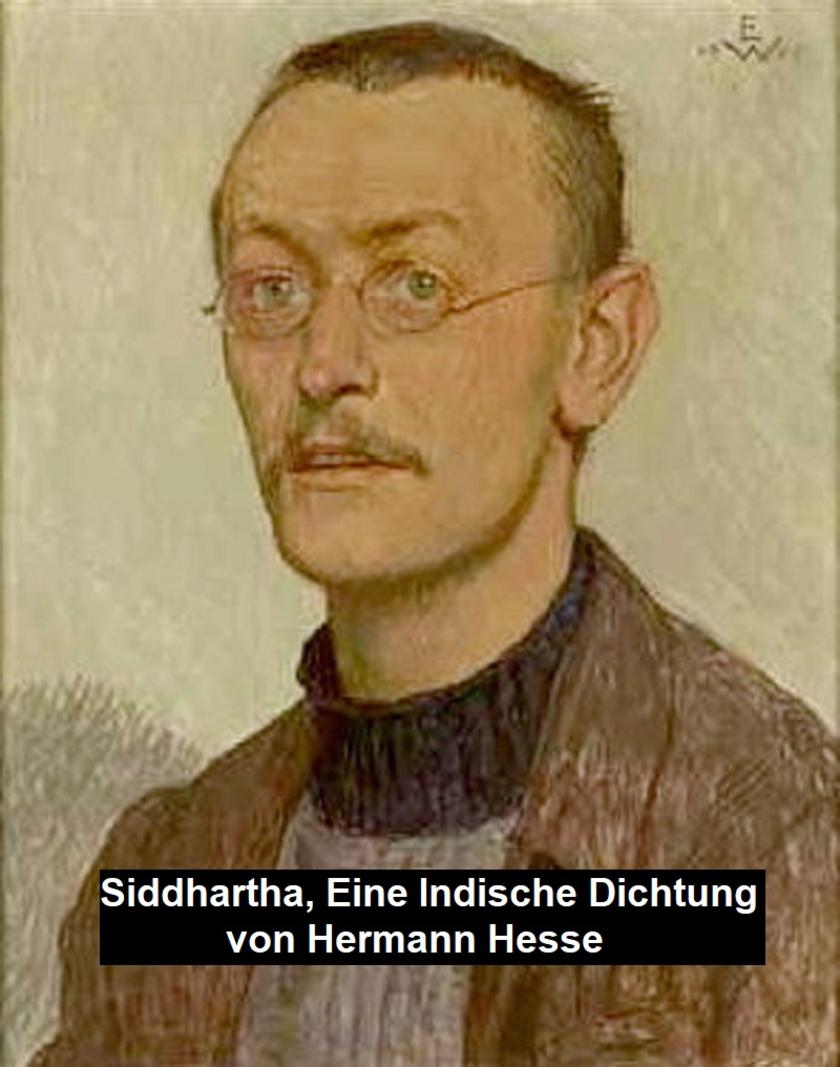
Siddhartha, Eine Indische Dichtung
¥8.09
Klassischer Roman, erstmals im Original 1922 ver?ffentlicht. Nach Wikipedia: "Siddhartha ist ein Roman von Hermann Hesse, der sich mit der spirituellen Reise eines Jungen namens Siddhartha vom indischen Subkontinent zur Zeit des Buddha besch?ftigt. Das Buch , Hesses neunter Roman, wurde auf eine einfache, aber dennoch kraftvolle und lyrische Art geschrieben, die 1951 in den USA ver?ffentlicht wurde und in den 1960er Jahren einflussreich wurde: Hesse widmete Siddhartha Ninon Hesse, seiner Frau, das Wort Siddhartha von zwei W?rtern in der Sanskrit-Sprache, siddha (erreicht) + artha (Bedeutung oder Reichtum). Die beiden W?rter zusammen bedeuten "derjenige, der Bedeutung (der Existenz) gefunden hat" oder "Er, der seine Ziele erreicht hat". Der Name des Buddha, vor seiner Entsagung war Prinz Siddhartha Gautama. In diesem Buch wird der Buddha als "Gotama" bezeichnet. "Hermann Hesse (2. Juli 1877 - 9. August 1962) war ein in Deutschland geborener Schweizer Dichter, Romancier und Maler. Im Jahr 1946 erhielt er den Nobelpreis für Literatur. Zu seinen bekanntesten Werken z?hlen Steppenwolf, Siddhartha und The Glass Bead Game (auch bekannt als Magister Ludi), die alle die Suche nach Authentizit?t, Selbsterkenntnis und Spiritualit?t untersuchen. "
Cranford
¥8.09
Gaskell's best-known novel, the subject of a recent movie starring Dame Judi Dench and Simon Woods. According to Wikipedia: "Elizabeth Cleghorn Gaskell ( 1810 – 1865), often referred to simply as Mrs. Gaskell, was an English novelist and short story writer during the Victorian era. She is perhaps best known for her biography of Charlotte Bront?. Her novels offer a detailed portrait of the lives of many strata of society, including the very poor, and as such are of interest to social historians as well as lovers of literature."


