


 购物车
 个人中心


The Scarlet Letter: [Illustrated Edition]
¥27.71
The Scarlet Letter is an 1850 romantic work of fiction in a historical setting, written by Nathaniel Hawthorne, and is considered to be his magnum opus. Set in 17th-century Puritan Boston, Massachusetts, during the years 1642 to 1649, it tells the story of Hester Prynne, who conceives a daughter through an affair and struggles to create a new life of repentance and dignity. Throughout the book, Hawthorne explores themes of legalism, sin, and guilt. The experience of Hester and Dimmesdale recalls the story of Adam and Eve because, in both cases, sin results in expulsion and suffering. But it also results in knowledge – specifically, in knowledge of what it means to be immoral. For Hester, the Scarlet Letter is a physical manifestation of her sin and reminder of her painful solitude. She contemplates casting it off to obtain her freedom from an oppressive society and a checkered past as well as the absence of God. Because the society excludes her, she considers the possibility that many of the traditions held up by the Puritan culture are untrue and are not designed to bring her happiness.As for Dimmesdale, the "cheating minister", his sin gives him "sympathies so intimate with the sinful brotherhood of mankind, so that his chest vibrate[s] in unison with theirs." His eloquent and powerful sermons derive from this sense of empathy. The narrative of the Reverend Arthur Dimmesdale is quite in keeping with the oldest and most fully authorized principles in Christian thought. His "Fall" is a descent from apparent grace to his own damnation; he appears to begin in purity but he ends in corruption. The subtlety is that the minister's belief is his own cheating, convincing himself at every stage of his spiritual pilgrimage that he is saved. The rose bush's beauty forms a striking contrast to all that surrounds it – as later the beautifully embroidered scarlet "A" will be held out in part as an invitation to find "some sweet moral blossom" in the ensuing, tragic tale and in part as an image that "the deep heart of nature" (perhaps God) may look more kind on the errant Hester and her child than her Puritan neighbors do. Throughout the work, the nature images contrast with the stark darkness of the Puritans and their systems.Chillingworth's misshapen body reflects (or symbolizes) the anger in his soul, which builds as the novel progresses, similar to the way Dimmesdale's illness reveals his inner turmoil. The outward man reflects the condition of the heart; an observation thought to be inspired by the deterioration of Edgar Allan Poe, whom Hawthorne "much admired".

The Voyage Out
¥28.04
Virginia Woolf was an English writer, and one of the foremost modernists of the twentieth century. Woolf was a significant figure in London literary society and a central figure in the influential Bloomsbury Group of intellectuals. Her most famous works include the novels Mrs Dalloway, To the Lighthouse and Orlando. Rachel Vinrace leaves on her father's ship for South America and her journey of self-discovery begins. The eclectic group of passengers provides Woolf with an opportunity to poke fun at Edwardian life. The novel is the first published by Woolf and introduces Clarissa Dalloway, the central character of Woolf's later novel, Mrs. Dalloway During the interwar period, Woolf was a signifi-cant figure in London literary society and a member of the Bloomsbury Group. Her most famous works include the novels Mrs Dalloway (1925), To the Lighthouse (1927), and Orlando (1928), and the book-length essay A Room of One's Own (1929) with its famous dictum, "a woman must have money and a room of her own if she is to write fiction". Other Books of V. Woolf: To the Lighthouse (1927)Mrs Dalloway (1925)A Haunted House (1921)Orlando (1928)Mrs Dalloway in Bond Street (1923)Between the Acts (1941)The Duchess and the Jeweller (1938)The New Dress (1927)The Mark on the Wall (1917)The Years (1937)
Seventeen: A Tale of Youth and Summer Time and the Baxter Family Especially Will
¥9.00
Seventeen: A Tale of Youth and Summer Time and the Baxter Family Especially William is a humorous novel by Booth Tarkington that gently satirizes first love, in the person of a callow 17-year-old, William Sylvanus Baxter. Seventeen takes place in a small city in the Midwestern United States shortly before World War I. It was published as sketches in the Metropolitan Magazine in 1914, and collected in a single volume in 1916, when it was the bestselling novel in the United States.
Penrod
¥9.00
Penrod is a collection of comic sketches by Booth Tarkington that was first published in 1914. The book follows the misadventures of Penrod Schofield, an eleven-year-old boy growing up in the pre-World War I Midwestern United States, in a similar vein to The Adventures of Tom Sawyer. In Penrod, Tarkington established characters who appeared in two further books, Penrod and Sam (1916) and Penrod Jashber (1929). The three books were published together in one volume, Penrod: His Complete Story, in 1931.

Alexander's Bridge
¥9.00
Alexander's Bridge is the first novel by American author Willa Cather. First published in 1912, it was re-released with an author's preface in 1922. It also ran as a serial in McClure's, giving Cather some free time from her work for that magazine.
The Whisperer in Darkness
¥9.00
The story is told by Albert N. Wilmarth, an instructor of literature at Miskatonic University in Arkham. When local newspapers report strange things seen floating in rivers during a historic Vermont flood, Wilmarth becomes embroiled in a controversy about the reality and significance of the sightings, though he sides with the skeptics. Wilmarth uncovers old legends about monsters living in the uninhabited hills who abduct people who venture or settle too close to their territory.

The Unnamable
¥9.00
"The Unnamable" is a horror short story by American author H. P. Lovecraft. It was written in September 1923, first published in the July 1925 issue of Weird Tales, and first collected in Beyond the Wall of Sleep. Carter, a weird fiction writer, who is likely the Randolph Carter who features in some of Lovecraft's other tales such as The Statement of Randolph Carter, meets with his close friend, Joel Manton, in a cemetery near an old, dilapidated house on Meadow Hill in the town of Arkham, Massachusetts. As the two sit upon a weathered tomb, Carter tells Manton the tale of an indescribable entity that allegedly haunts the house and surrounding area. He contends that because such an entity cannot be perceived by the five senses, it becomes impossible to quantify and accurately describe, thus earning itself the term unnamable.

The Tree on the Hill
¥9.00
The story is written in first person. It depicts the main character going outside Hampden and finding a special tree. The tree makes him day dream about a big temple in a land with three suns. The temple was half-violet, half-blue. Some shadows attracted him into the inside. He thought he saw three flaming eyes watching him and he shouted twice and the vision was gone.
The Man with the Pan Pipes: "And Other Stories"
¥18.56
Then I was a little girl, which is now a good many years ago, there came to spend some time with us a cousin who had been brought up in Germany. ??She was almost grown-up—to me, a child of six or seven, she seemed quite grown-up; in reality, she was, I suppose, about fifteen or sixteen. She was a bright, kind, good-natured girl, very anxious to please and amuse her little English cousins, especially me, as I was the only girl. ??But she had not had much to do with small children; above all, delicate children, and she was so strong and hearty herself that she did not understand anything about nervous fears and fancies.
The Strange High House in the Mist
¥9.00
"The Strange High House in the Mist" is a short story by H. P. Lovecraft. Written on November 9, 1926, it was first published in the October 1931 issue of Weird Tales. It concerns a character traveling to the titular house which is perched on the top of cliff which seems inaccessible both by land and sea, yet is apparently inhabited. Thomas Olney, a "philosopher" visiting the town of Kingsport, Massachusetts with his family, is intrigued by a strange house on a cliff overlooking the ocean. It is unaccountably high and old and the locals have a generations-long dread of the place which no one is known to have visited.
The Statement of Randolph Carter
¥9.00
"The Statement of Randolph Carter" is a short story by H. P. Lovecraft. Written December 1919, it was first published in The Vagrant, May 1920. It tells of a traumatic event in the life of Randolph Carter, a student of the occult loosely representing Lovecraft himself. It is the first story in which Carter appears and is part of Lovecraft's Dream Cycle.

Children's Stories in American History
¥27.80
Many ages ago in North America there was no spring or summer or autumn, but only winter all the time; there were no forests or fields or flowers, but only ice and snow, which stretched from the Arctic Ocean to Maryland. Sometimes the climate would grow a little warmer, and then the great glaciers would shrink toward the north, and then again it would grow cold, while the ice crept southward; but finally it became warmer and warmer until all the southern part of the country was quite free from the ice and snow, which could then only be seen, as it is now, in the Polar regions.??Ages and ages after this, grass and trees began to ap-pear, and at last great forests covered the land, and over the fields and through the woods gigantic animals roved—strange and terrible-looking beasts, larger than any animal now living, and very fierce and strong. Among these were the mammoth and mastodon, which were so strong and ferocious that it would take hundreds of men to hunt and kill them. These great animals would go trampling through the forests, breaking down the trees and crushing the grass and flowers under their feet, or rush over the fields in pursuit of their prey, making such dreadful, threatening noises that all the other animals would flee before them, just as now the more timid animals flee from the lion or rhinoceros. ??Sometimes they would rush or be driven by men into swamps and marshes, where their great weight would sink them down so deep into the mud that they could not lift themselves out again, and then, they would die of starvation or be killed by the arrows of the men who were hunting them.??Besides these mammoths and mastodons there were other animals living in North America at that time, very different from those that are found here now. ?
The Shunned House
¥9.00
"The Shunned House" is a horror fiction novelette by American author H. P. Lovecraft, written on October 16–19, 1924. It was first published in the October 1937 issue of Weird Tales. The Shunned House of the title is based on an actual house in Providence, Rhode Island, built around 1763 and still standing at 135 Benefit Street. Lovecraft was familiar with the house because his aunt Lillian Clark lived there in 1919-20 as a companion to Mrs. H. C. Babbit. However, it was another house in Elizabeth, New Jersey that actually compelled Lovecraft to write the story.
Dorothy
¥27.80
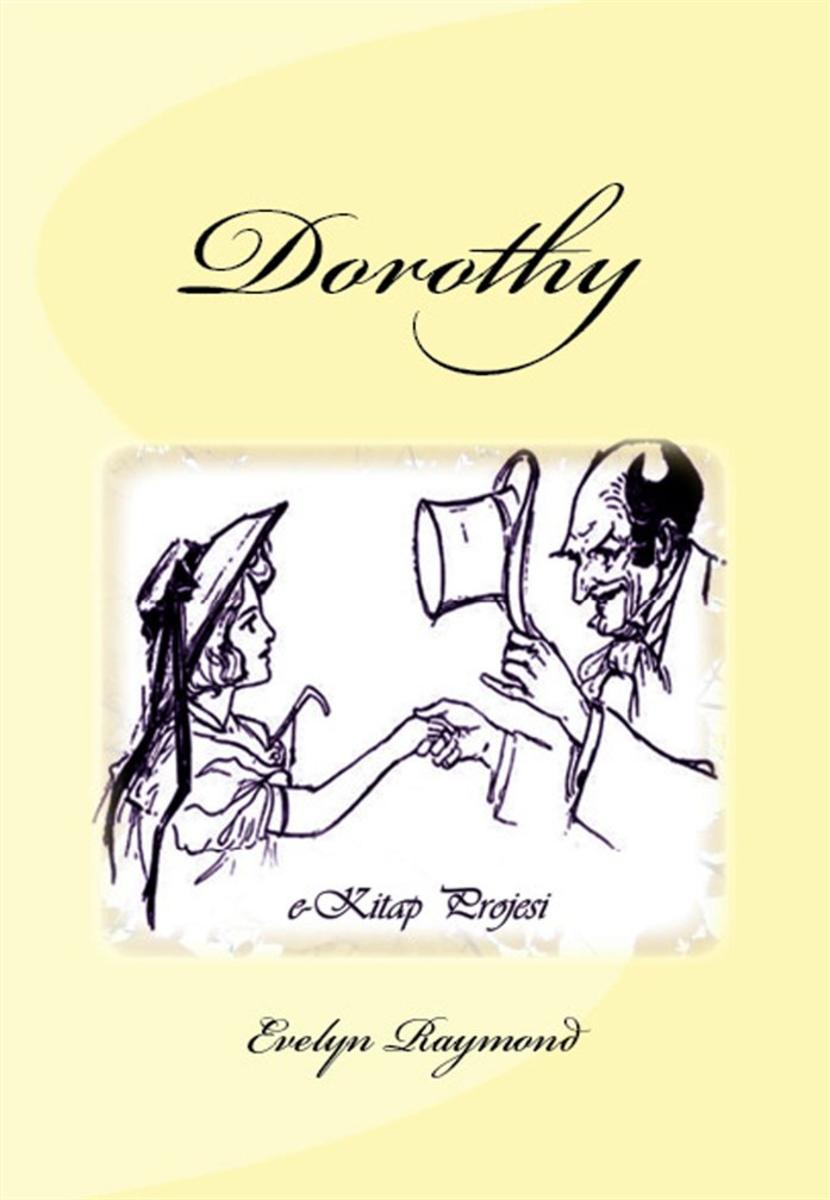
So long a time had passed that Dorothy C. had grown to be what father John called "a baker's dozen of years old"; and upon another spring morning, as fair as that when she first came to them, the girl was out upon the marble steps, scrubbing away most vigorously. The task was known locally as "doing her front," and if one wishes to be considerable respectable, in Baltimore, one's "front" must be done every day. On Saturdays the entire marble facing of the basement must also be polished; but "pernickity" Mrs. Chester was known to her neighbors as such a forehanded housekeeper that she had her Saturday's work done on Friday, if this were possible.??Now this was Friday and chanced to be a school holiday; so Dorothy had been set to the week-end task, which she hated; and therefore she put all the more energy into it, the sooner to have done with it, meanwhile singing at the top of her voice. Then, when the postman came round the corner of the block, she paused in her singing to stare at him for one brief instant. The next she had pitched her voice a few notes higher still, and it was her song that greeted her father's ears and set him smiling in his old familiar fashion. ??Unfortunately, he had not been smiling when she first perceived him and there had been a little catch in her tones as she resumed her song. Each was trying to deceive the other and each pretending that nothing of the sort was happening.??"Heigho, my child! At it again, giving the steps a more tombstone effect? Well, since it's the fashion—go ahead!"??"I wish the man, or men, who first thought of putting scrubby-steps before people's houses had them all to clean himself! Hateful old thing!"
The Picture in the House
¥9.00
A lone traveler seeks shelter from an approaching storm in an apparently abandoned house, only to find that it is occupied by a "loathsome old, white-bearded, and ragged man."
Poetry of the Gods
¥9.00
Poetry and the Gods is a short story by horror writer and poet H.P. Lovecraft in collaboration with writer Anna Helen Crofts. The story is very different from the vast majority of Lovecraft's other work and collaborations. It does, however, bear similar themes regarding dreams as a doorway to magic realms, and slumbering gods. The narrative follows the dream-voyage of Marcia, a young woman filled with weariness of the mundane world and all its woes. She resolves to ease her troubled soul by reading a magazine of poetry. As she does, a dream-state unfolds in which the Greek god Hermes appears and bears Marcia to the court of Zeus and the Olympians.

Stories from Dante: Told to the Children
¥14.06
IN the far-off days when Dante lived, those who wrote books wrote them in the Latin tongue. Dante himself wrote the first seven cantos of his great poem in Latin. But like many another poet, he was not satisfied with his first attempt. He flung the seven Latin cantos aside and seemingly forgot all about them, for when he was banished from Florence the poem he had begun was not among his treasures. His wife, however, found the seven cantos and tossed them into a bag among her jewels. Then she also seemed to forget all about them. Five years later a nephew of Dante chanced to find the long-forgotten verses. He at once sent them to his uncle, who was still living in exile. When Dante received the cantos he had written so long ago, he believed that their recovery was a sign from Heaven that he should complete the great poem he had begun. He therefore set to work afresh, but this time he wrote, not in Latin, but in his own beautiful mother-tongue, which was, as you know, Italian. When at length the great poem was finished, Dante named it simply, "The Comedy," and it was not until many years after his de-ath that the title was changed into "The Divine Comedy." A comedy was a tale which might be as sad as tale could be, so only that it ended in gladness.In "The Divine Comedy," then, about which this little book tells, you may expect to find much that is sad, much that is terrible. Yet you may be certain that before the end of the tale you will find in it gladness and joy..

The Sage and the Atheist
¥40.79
John was not twenty years old when he assisted, as a volunteer, at the attack on Mont-Joui, which was captured, and where the Prince of Hesse lost his life. Our poor Johnny was wounded, taken prisoner, and carried into the town. The following is an account of his adventures from the attack of Mont-Joui till the taking of Barcelona. It is as told by a Catalonian lady, a little too free and too simple. Such stories do not find a way to the hearts of your wise men. I received it from her when I entered Barcelona in the suite of Lord Peterborough. You must read it without offence, as a true description of the manners of the country.

Maniobra de evasión: Un thriller de suspense y misterio de Katerina Carter
¥95.48
Un thriller de suspense y misterio de Katerina Carter, detective privada edición Espa?ol Diamantes, peligro y desaparición La investigadora de fraudes Katerina Carter no sabe retirarse a tiempo, y eso la coloca en situaciones peligrosas y precarias. Ahora que está sin trabajo y casi sin dinero, necesita conseguir clientes o se verá obligada a volver arrastrándose al cubículo de la empresa en la que trabajaba antes. Y para Kat, ese es un destino peor que las deudas. Por eso, cuando Susan Sullivan, directora ejecutiva de Liberty Diamond Mines, la contrata para buscar al director financiero, que ha desaparecido junto con una gran suma de dinero, Kat se apresura a aceptar el trabajo. La pobreza abyecta motiva mucho a la hora de aceptar casos difíciles, pero la alegría de Kat no tarda en dar paso al terror cuando dos empleados de la empresa son brutalmente asesinados. Eso hace que se dé cuenta de que la investigación puede ser más peligrosa de lo que anticipaba. Como si el caso no fuera ya bastante complicado, descubre una conexión siniestra entre diamantes de guerra y el crimen organizado. Lo único que tiene que hacer ya es conseguir pruebas… e impedir que la maten antes de que desenmascare a los criminales. Kat cuenta con la ayuda de sus amigos y de su excéntrico tío, pero tendrá que ir con cuidado si no quiere que su primer caso sea también el último. Maniobra de evasión es un suspense legal, económico y criminal al estilo de Michael Connelly, Karin Slaughter y John Grisham. “Una historia internacional de diamantes, peligro y desaparición, Maniobra de evasión me enganchó desde la primera página…” “Maniobra de evasión, la primera novela llena de acción de la serie de suspenses de Katerina Carter, es un thriller psicológico lleno de intriga que no le permitirá dejar de leer”.. “… Tensión e intriga de vértigo”. Elogios a Maniobra de evasión “Un estupendo primer libro en una serie de suspense que supone el debut de la autora Colleen Cross… La contable forense Katerina Carter aprende del modo más duro que cuando algo huele mal, probablemente esté podrido hasta el núcleo. Hablamos de diamantes de guerra, de tráfico de armas y más… con la cantidad exacta de enredos para hacernos seguir pasando las páginas”. “Una historia internacional de diamantes, peligro y desaparición, Maniobra de evasion me agarró desde la primera página y me hizo seguir pasando páginas hasta mucho después de la hora en la que quería dormir”. La investigación de un fraude por parte de Katerina Carter saca a la luz una conspiración de blanqueo masivo de diamantes en Liberty Diamond Mines, justo cuando dos miembros claves de Liberty son asesinados. Kat podría ser la siguiente – a menos que deje ir sin castigo a los criminales. Maniobra de evasión es un suspense legal y lleno de acción en la línea de Michael Connelly y John Grisham. espa?ol,?suspense legal, policiaca negra suspense, misterio y thriller judicial, investigadora privado, acción y aventura, la chica del tren, ?ficción contemporánea,?espa?ol, hispanica, mujeres detectives, novela policiacas, novela negra

The Princess of Babylon
¥40.79
The aged Belus, king of Babylon, thought himself the first man upon earth; for all his courtiers told him so, and his historians proved it. We know that his palace and his park, situated at a few parafangs from Babylon, extended between the Euphrates and the Tigris, which washed those enchanted banks. His vast house, three thousand feet in front, almost reached the clouds. The platform was surrounded with a balustrade of white marble, fifty feet high, which supported colossal statues of all the kings and great men of the empire.

The Magic City
¥8.82
An extremely unhappy ten-year-old magically escapes into a city he has built out of books, chessmen, candlesticks, and other household items.


