


 购物车
购物车 个人中心
个人中心

Murder Without Pity
¥8.09
Murder Without Pity

A Tale of Three Lions
¥8.09
A Tale of Three Lions

Beyond The Black River
¥8.09
Beyond The Black River

The Portrait of a Lady: both volumes
¥8.09
According to Wikipedia: "The Portrait of a Lady is a novel by Henry James, first published as a serial in The Atlantic Monthly and Macmillan's Magazine in 1880–81 and then as a book in 1881. It is one of James's most popular long novels, and is regarded by critics as one of his finest. The Portrait of a Lady is the story of a spirited young American woman, Isabel Archer, who "affronts her destiny" and finds it overwhelming. She inherits a large amount of money and subsequently becomes the victim of Machiavellian scheming by two American expatriates. Like many of James's novels, it is set in Europe, mostly England and Italy. Generally regarded as the masterpiece of James's early period, this novel reflects James's continuing interest in the differences between the New World and the Old, often to the detriment of the former. It also treats in a profound way the themes of personal freedom, responsibility, and betrayal."

Frank's Campaign
¥8.09
According to Wikipedia: "Horatio Alger, Jr. (January 13, 1832 – July 18, 1899) was a prolific 19th-century American author whose principal output was formulaic juvenile novels that followed the adventures of bootblacks, newsboys, peddlers, buskers, and other impoverished children in their rise from humble backgrounds to lives of respectable middle-class security and comfort. His novels were hugely popular in their day. Born in Chelsea, Massachusetts, the son of a Unitarian minister, Alger entered Harvard at the age of 16. Following graduation, he briefly worked in education before touring Europe for almost a year. He then entered the Harvard Divinity School, and, in 1864, took a position at a Unitarian church in Brewster, Massachusetts. Two years later, he resigned following a pederastic scandal involving two teenage boys. He subsequently retired from the ministry entirely and moved to New York City where he formed an association with the Newsboys Lodging House and other agencies offering aid to impoverished children. His empathy for the working boys of the city, coupled with the moral values learned at home, were the basis of his many juvenile "[rags to riches]" novels. He died in 1899. The first Alger biography was published in 1928, and later proved to be heavily fictionalized. Other biographies followed, sometimes citing the 1928 hoax as fact. In the last decades of the twentieth century however, a few reliable biographies were published that corrected the errors and fictionalizations of the past. Many of Alger's works have been described as rags to riches stories, illustrating how down-and-out boys might be able to achieve the American Dream of wealth and success through hard work, courage, determination, and concern for others. This widely held view involves Alger's characters achieving extreme wealth and the subsequent remediation of their "old ghosts." Alger is noted as a significant figure in the history of American cultural and social ideals."
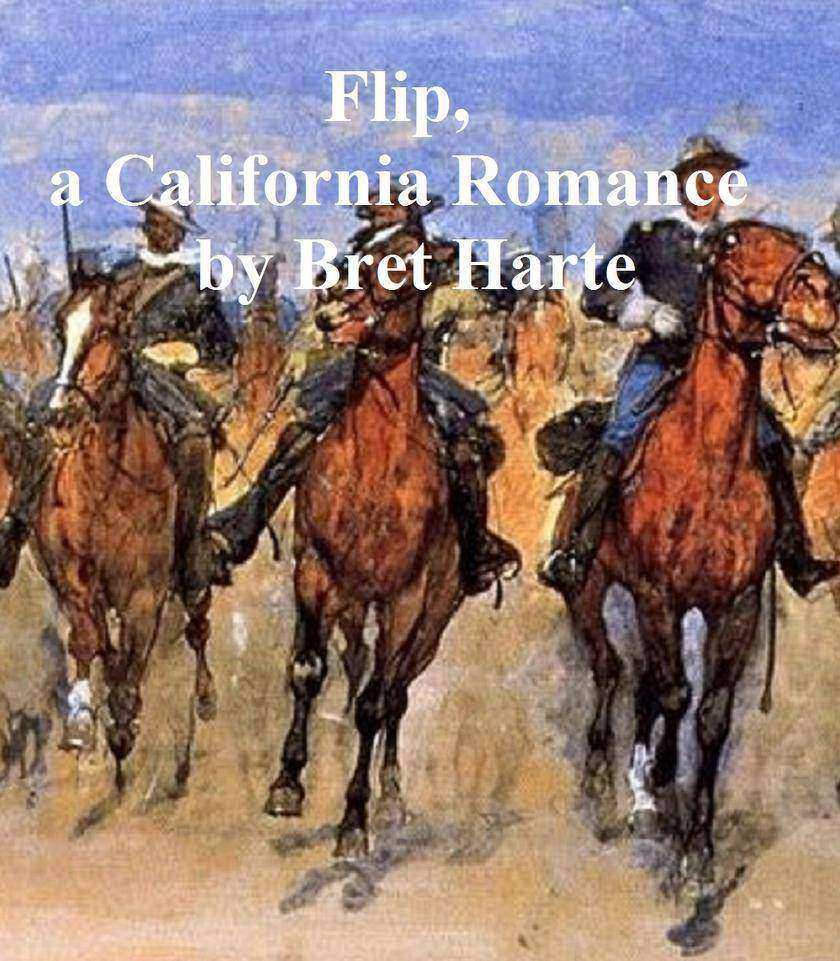
Flip: a California Romance, a short story
¥8.09
Classic western short story. According to Wikipedia: "Bret Harte (August 25, 1836[2] – May 6, 1902) was an American author and poet, best remembered for his accounts of pioneering life in California. He was born in Albany, New York. ... He moved to California in 1853, later working there in a number of capacities, including miner, teacher, messenger, and journalist. He spent part of his life in the northern California coast town now known as Arcata, then just a mining camp on Humboldt Bay. His first literary efforts, including poetry and prose, appeared in The Californian, an early literary journal edited by Charles Henry Webb. In 1868 he became editor of The Overland Monthly, another new literary magazine, but this one more in tune with the pioneering spirit of excitement in California. His story, "The Luck of Roaring Camp," appeared in the magazine's second edition, propelling Harte to nationwide fame... Determined to pursue his literary career, in 1871 he and his family traveled back East, to New York and eventually to Boston, where he contracted with the publisher of The Atlantic Monthly for an annual salary of $10,000, "an unprecedented sum at the time." His popularity waned, however, and by the end of 1872 he was without a publishing contract and increasingly desperate. He spent the next few years struggling to publish new work (or republish old), delivering lectures about the gold rush, and even selling an advertising jingle to a soap company. In 1878 Harte was appointed to the position of United States Consul in the town of Krefeld, Germany and then to Glasgow in 1880. In 1885 he settled in London. During the thirty years he spent in Europe, he never abandoned writing, and maintained a prodigious output of stories that retained the freshness of his earlier work. He died in England in 1902 of throat cancer and is buried at Frimley."
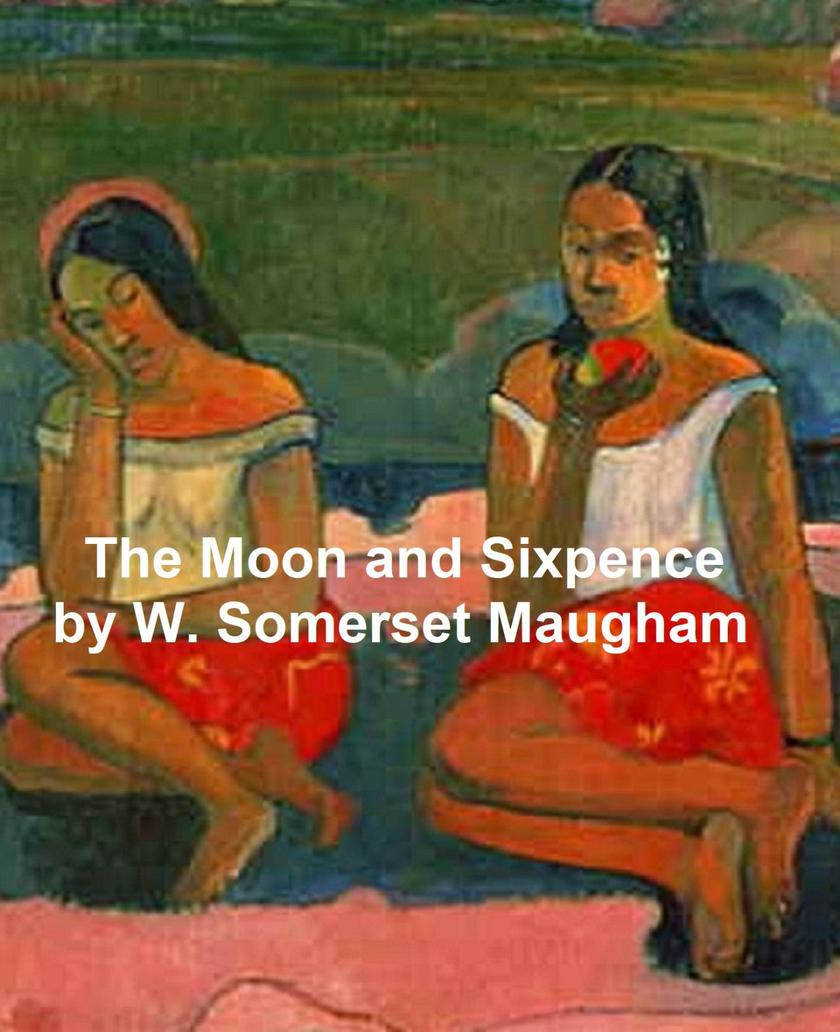
The Moon and Sixpence
¥8.09
Classic novel, first published in 1919. According to Wikipedia: "The Moon and Sixpence is a short novel of 1919 by William Somerset Maugham based on the life of the painter Paul Gauguin. The story is told in episodic form by the first-person narrator as a series of glimpses into the mind and soul of the central character, Charles Strickland, a middle-aged English stockbroker who abandons his wife and children abruptly to pursue his desire to become an artist."

The Hosts of the Air, The Story of a Quest in the Great War
¥8.09
Historical novel in the World War series. According to Wikipedia: "Joseph Alexander Altsheler (1862 - 1919), was an American author of popular juvenile historical fiction. Altsheler was born in Three Springs, Kentucky to Joseph and Louise Altsheler. In 1885, he took a job at the Louisville Courier-Journal as a reporter and later, an editor. He started working for the New York World in 1892, first as the paper's Hawaiian correspondent and then as the editor of the World's tri-weekly magazine. Due to a lack of suitable stories, he began writing children's stories for the magazine.
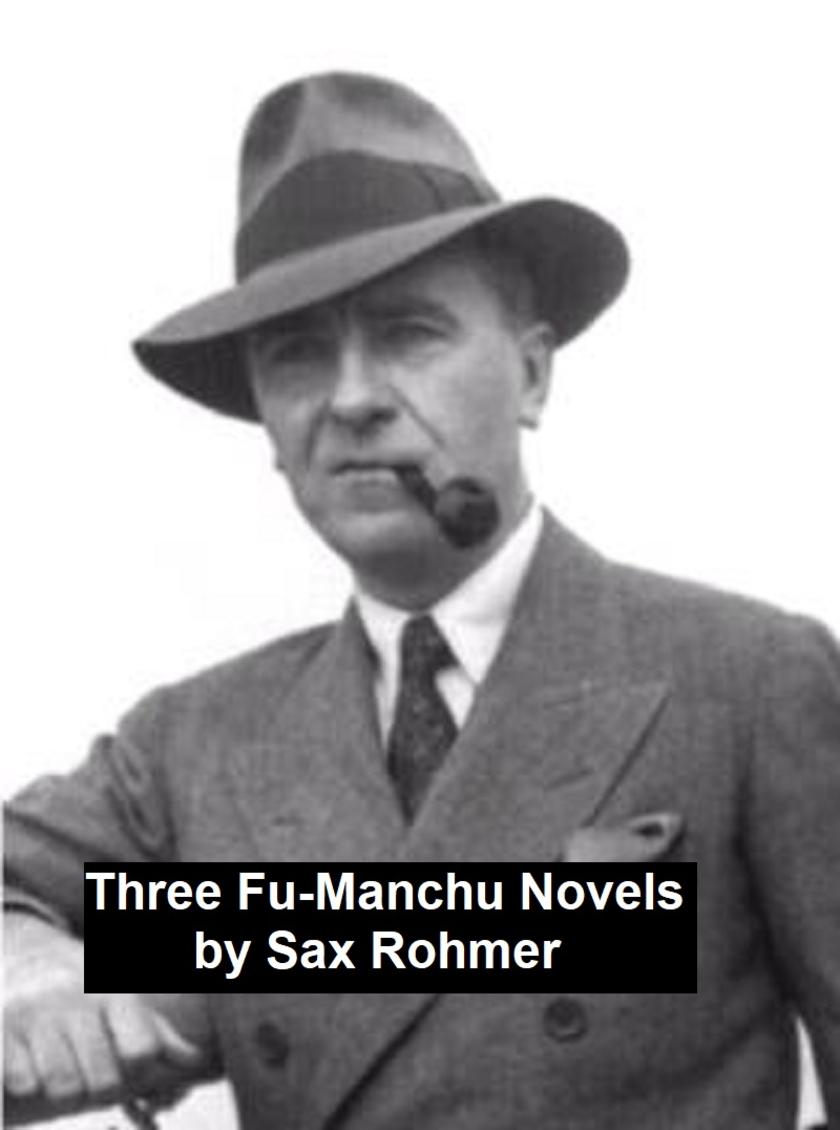
Three Fu-Manchu Novels
¥8.09
This file includes: The Insidious Dr. Fuu-Manchu (AKA The Mystery of Fu-Manchu), 1913; The Devil Doctor (AKA The Return of Dr. Fu-Manchu), 1916; and The Hand of Fu-Manchu (AKA The Si-Fan Mysteries), 1917. According to Wikipedia: "Dr. Fu Manchu is a fictional character introduced in a series of novels by British author Sax Rohmer during the first half of the 20th century. The character was also featured extensively in cinema, television, radio, comic strips and comic books for over 90 years, and has become an archetype of the evil criminal genius while inspiring the Fu Manchu moustache." "Arthur Henry Sarsfield Ward (15 February 1883 - 1 June 1959), better known as Sax Rohmer, was a prolific English novelist. He is best remembered for his series of novels featuring the master criminal Dr. Fu Manchu... His first published work was in 1903, the short story The Mysterious Mummy was sold to Pearson's Weekly. He gradually transitioned from writing for Music Hall performers to concentrating on short stories and serials for magazine publication. In 1909 he married Rose Elizabeth Knox. He published his first novel Pause! anonymously in 1910 and the first Fu Manchu novel, The Mystery of Dr. Fu-Manchu, was serialized from October 1912 - June 1913. It was an immediate success with its fast-paced story of Denis Nayland Smith and Dr. Petrie facing the worldwide conspiracy of the 'Yellow Peril'. The Fu Manchu stories, together with his more conventional detective series characters: Paul Harley, Gaston Max, Red Kerry, Morris Klaw, and The Crime Magnet made Rohmer one of the most successful and well-paid authors of the 1920s and 1930s.Rohmer also wrote several novels of supernatural horror, including Brood of the Witch-Queen. Sadly, Rohmer was very poor at managing his wealth and made several disastrous business decisions that hampered him througout his career. His final success came with a series of novels featuring a female variation on Fu Manchu, Sumuru."

The Blue Lagoon
¥8.09
Classic novel, first published in 1908, source of the movie of the same title. According to Wikipedia, "Henry De Vere Stacpoole (9 April 1863 – 12 April 1951) was an Irish century author, born in Kingstown (now Dún Laoghaire). His best known work is the 1908 romance novel The Blue Lagoon, which has thrice been adapted into a feature film. He also wrote under the pseudonym Tyler De Saix. A ship's doctor for more than forty years, Stacpoole was also an expert on the South Pacific islands. His books frequently contained detailed descriptions of the natural life and civilizations with which he had become familiar on those islands. He moved to the Isle of Wight in the 1920s and lived there until his death. He was buried at Bonchurch in 1951."
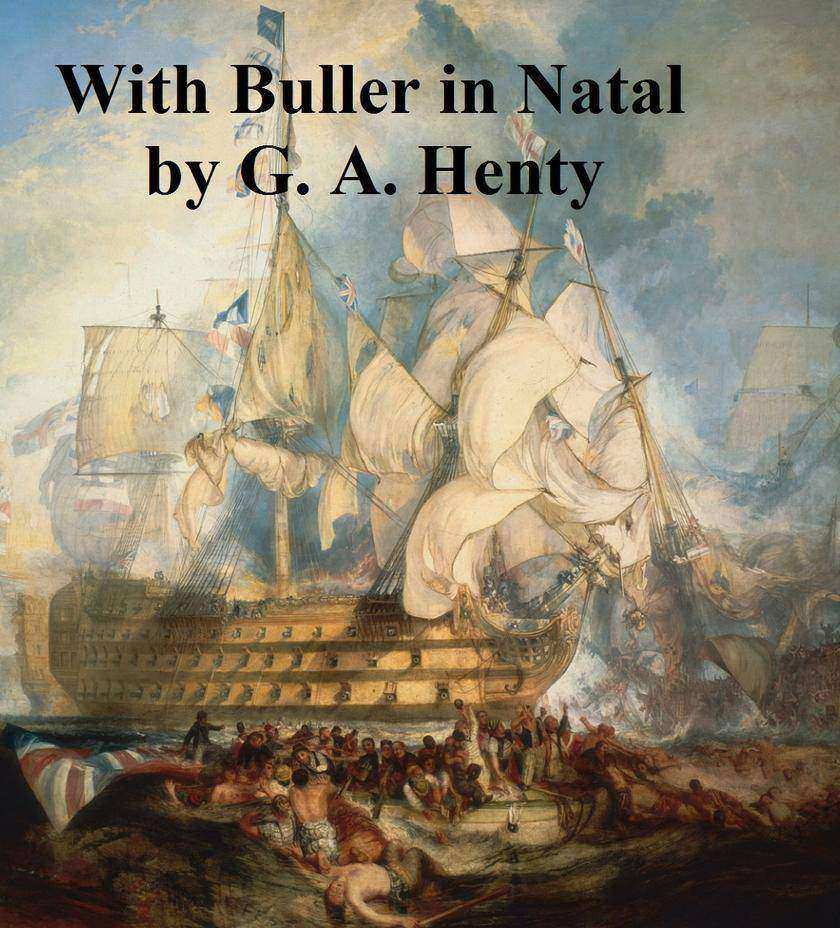
With Buller in Natal
¥8.09
Historical novel set in South Africa in the late 19th century, during the Zulu War. The Preface begins: "It will be a long time before the story of the late war can be written fully and impartially. Even among the narratives of those who witnessed the engagements there are many differences and discrepancies, as is necessarily the case when the men who write are in different parts of the field. Until, then, the very meagre military despatches are supplemented by much fuller details, anything like an accurate history of the war would be impossible. I have, however, endeavoured to reconcile the various narratives of the fighting in Natal, and to make the account of the military occurrences as clear as possible. Fortunately this is not a history, but a story, to which the war forms the background, and, as is necessary in such a case, it is the heroes of my tale, the little band of lads from Johannesburg, rather than the leaders of the British troops, who are the most conspicuous characters in the narrative." According to Wikipedia: "George Alfred Henty (8 December 1832 - 16 November 1902), referred to as G. A. Henty, was a prolific English novelist, special correspondent, and Imperialist born in Trumpington, Cambridgeshire, England. He is best known for his historical adventure stories that were popular in the late 19th century. His works include Out on the Pampas (1871), The Young Buglers (1880), With Clive in India (1884) and Wulf the Saxon (1895)."
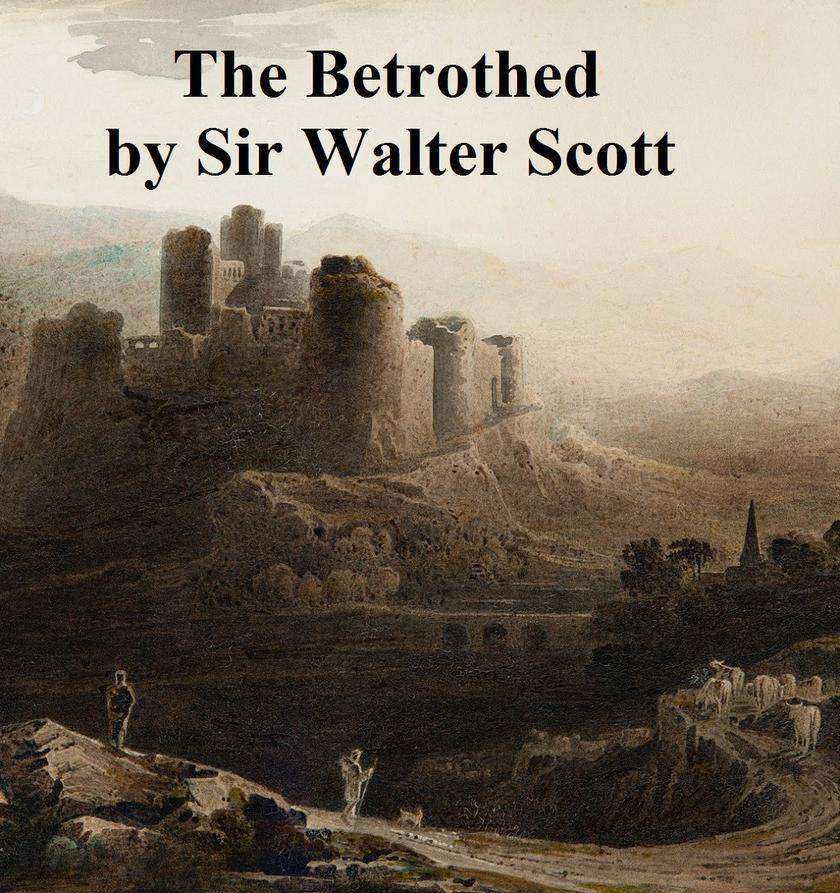
The Betrothed
¥8.09
Historical novel, first published in 1825. Set in Wales and Gloucester, England, in 1187-1192. According to Wikipedia: "Sir Walter Scott, 1st Baronet (1771 – 1832) was a prolific Scottish historical novelist and poet popular throughout Europe during his time. In some ways Scott was the first English-language author to have a truly international career in his lifetime, with many contemporary readers all over Europe, Australia, and North America. His novels and poetry are still read, and many of his works remain classics of both English-language literature and of Scottish literature. Famous titles include Ivanhoe, Rob Roy, The Lady of The Lake, Waverley, The Heart of Midlothian and The Bride of Lammermoor."

The Frontier
¥8.09
According to Wikipedia: "Maurice Marie ?mile Leblanc (11 November 1864 – 6 November 1941) was a French novelist and writer of short stories, known primarily as the creator of the fictional gentleman thief and detective Arsène Lupin, often described as a French counterpart to Arthur Conan Doyle's creation Sherlock Holmes.
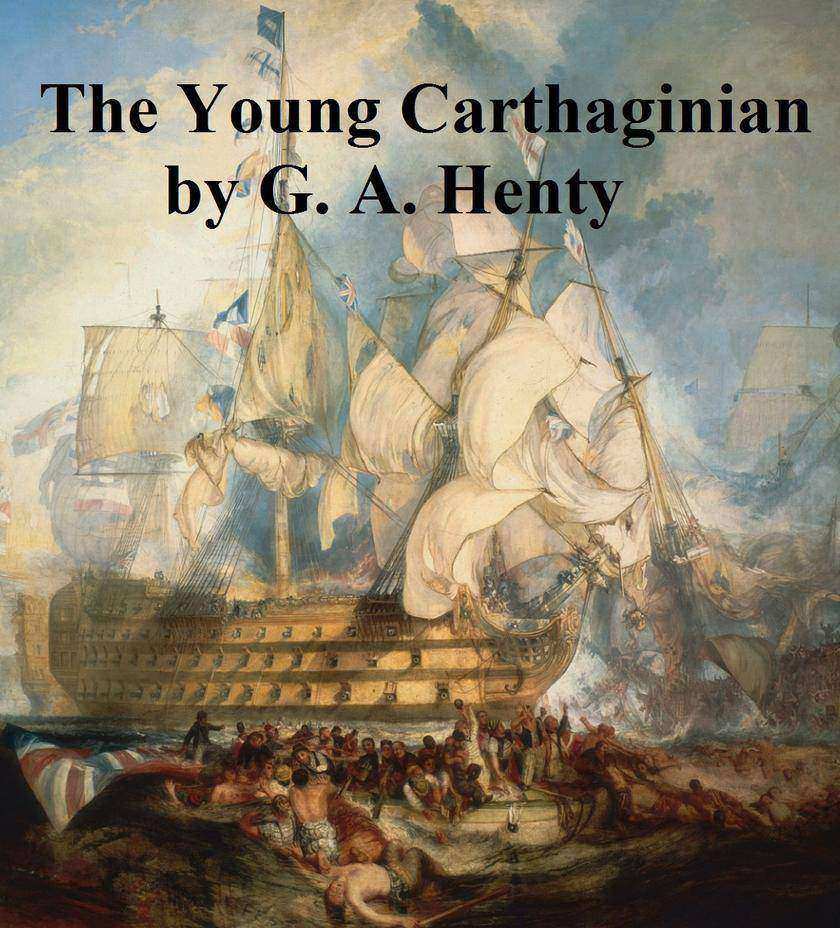
The Young Carthaginian
¥8.09
Historical novel, set during the Punic Wars between Carthage and Rome. The Preface begins: "When I was a boy at school, if I remember rightly, our sympathies were generally with the Carthaginians as against the Romans. Why they were so, except that one generally sympathizes with the unfortunate, I do not quite know; certainly we had but a hazy idea as to the merits of the struggle and knew but little of its events, for the Latin and Greek authors, which serve as the ordinary textbooks in schools, do not treat of the Punic wars. That it was a struggle for empire at first, and latterly one for existence on the part of Carthage, that Hannibal was a great and skilful general, that he defeated the Romans at Trebia, Lake Trasimenus, and Cannae, and all but took Rome, and that the Romans behaved with bad faith and great cruelty at the capture of Carthage, represents, I think, pretty nearly the sum total of our knowledge." According to Wikipedia: "George Alfred Henty (8 December 1832 - 16 November 1902), referred to as G. A. Henty, was a prolific English novelist, special correspondent, and Imperialist born in Trumpington, Cambridgeshire, England. He is best known for his historical adventure stories that were popular in the late 19th century. His works include Out on the Pampas (1871), The Young Buglers (1880), With Clive in India (1884) and Wulf the Saxon (1895)."
A March on London
¥8.09
Historical novel, set in England around 1400. According to the Preface: "The events that took place during the latter half of the fourteenth century and the first half of the fifteenth are known to us far better than those preceding or following them, owing to the fact that three great chroniclers, Froissart, Monstrelet, and Holinshed, have recounted the events with a fulness of detail that leaves nothing to be desired. The uprising of the Commons, as they called themselves--that is to say, chiefly the folk who were still kept in a state of serfdom in the reign of Richard II.--was in itself justifiable." According to Wikipedia: "George Alfred Henty (8 December 1832 - 16 November 1902), referred to as G. A. Henty, was a prolific English novelist, special correspondent, and Imperialist born in Trumpington, Cambridgeshire, England. He is best known for his historical adventure stories that were popular in the late 19th century. His works include Out on the Pampas (1871), The Young Buglers (1880), With Clive in India (1884) and Wulf the Saxon (1895)"

A Sentimental Journey Through France and Italy
¥8.09
According to Wikipedia: "It was published in nine volumes, the first two appearing in 1759, and seven others following over the next 10 years. It was not always held in high esteem by other writers (Samuel Johnson responded that, "Nothing odd can last"), but its bawdy humour was popular with London society, and it has come to be seen as one of the greatest comic novels in English, as well as a forerunner for many modern narrative devices.""

The Range Boss
¥8.09
Classic western. According to Pulprack (quoting Adventure Fiction.com) "Charles Alden Seltzer (Aug. 15, 1875 - Feb. 9, 1942) The vital statistics are: Born in August 1875, at the village of Janesville, Wisconsin. One year in Wisconsin. Then to Columbus, Ohio, where after a time I worked at various enterprises, such as newsboy, telegraph messenger, painter, carpenter and manager of the circulation of a newspaper. Spent the better part of five summer and some of the winters in Union County, New Mexico. At twenty I was in Cleveland, Ohio, where I was again a carpenter. Foreman, contractor. Began to write about this time -- nights. Thirteen years of writing without finding a publisher. In the interim I was engaged in various enterprises: Building inspector for the City of Cleveland, editor of a small newspaper, expert for the Cuyahoga County Board of Appraisers. Wrote and sold about one hundred short stories. Published a book of short stories called the Range Riders in 1911. A success. Followed it with a full length novel called The Two Gun Man in 1911. Another bell-ringer..."
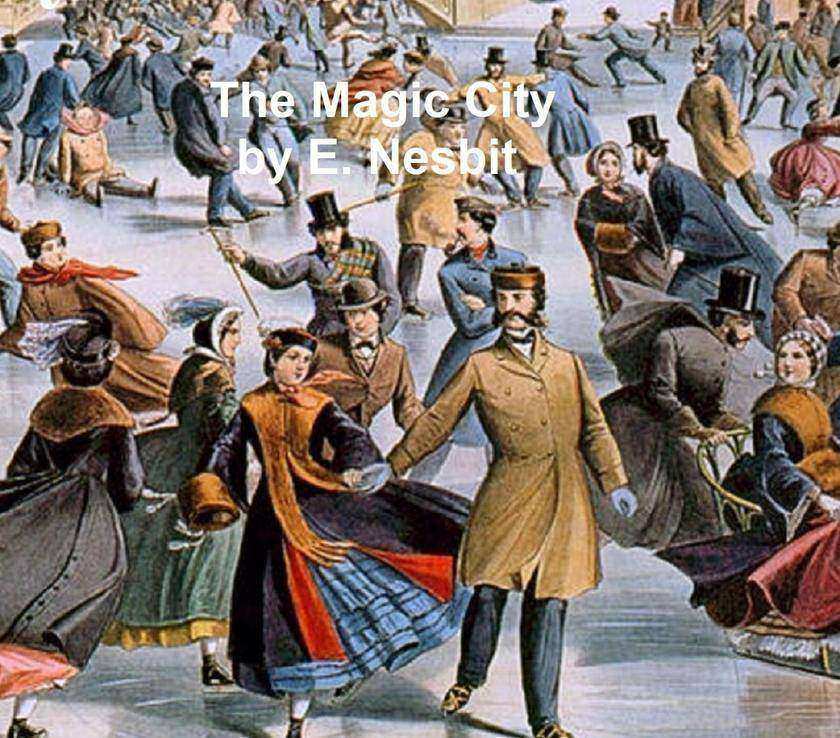
The Magic City
¥8.09
Novel for children. According to Wikipedia: "Edith Nesbit (married name Edith Bland; 15 August 1858 – 4 May 1924) was an English author and poet whose children's works were published under the name of E. Nesbit. She wrote or collaborated on over 60 books of fiction for children, several of which have been adapted for film and television. She was also a political activist and co-founded the Fabian Society, a precursor to the modern Labour Party.... Nesbit published approximately 40 books for children, both novels and collections of stories. Collaborating with others, she published almost as many more. According to her biographer Julia Briggs, Nesbit was "the first modern writer for children": "(Nesbit) helped to reverse the great tradition of children's literature inaugurated by [Lewis] Carroll, [George] MacDonald and Kenneth Grahame, in turning away from their secondary worlds to the tough truths to be won from encounters with things-as-they-are, previously the province of adult novels." Briggs also credits Nesbit with having invented the children's adventure story. Among Nesbit's best-known books are The Story of the Treasure Seekers (1898) and The Wouldbegoods (1899), which both recount stories about the Bastables, a middle class family that has fallen on relatively hard times. Her children's writing also included numerous plays and collections of verse. She created an innovative body of work that combined realistic, contemporary children in real-world settings with magical objects and adventures and sometimes travel to fantastic worlds."

The LeRouge Case
¥8.09
Classic French detective novel, in English translation. According to Wikipedia: "?mile Gaboriau (November 9, 1832 – September 28, 1873) was a French writer, novelist, journalist, and a pioneer of detective fiction... after publishing some novels and miscellaneous writings, found his real gift in L'Affaire Lerouge (1866). The book, which was Gaboriau's first detective novel, introduced an amateur detective. It also introduced a young police officer named Monsieur Lecoq, who was the hero in three of Gaboriau's later detective novels. The character of Lecoq was based on a real-life thief turned police officer, Eugène Fran?ois Vidocq (1775–1857)." One of Robert Louis Stevenson's favorite authors.

Caught in the Net
¥8.09
Classic French mystery novel, in English translation. According to Wikipedia: "Emile Gaboriau (November 9, 1832 - September 28, 1873), was a French writer, novelist, and journalist, and a pioneer of modern detective fiction." One of Robert Louis Stevenson's favorite authors.
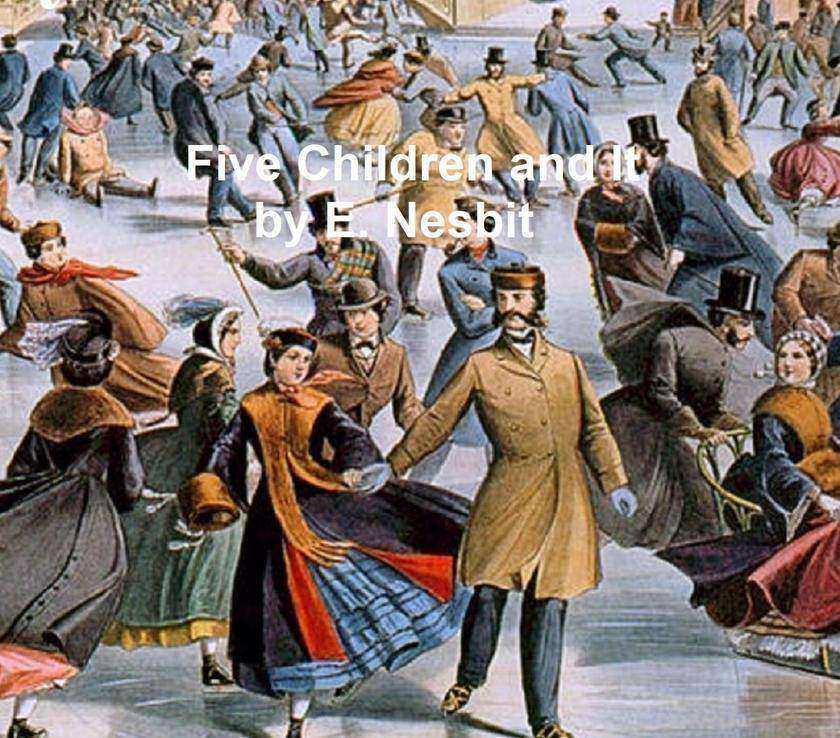
Five Children and It
¥8.09
Classic novel for children. According to Wikipedia: "Edith Nesbit (married name Edith Bland; 15 August 1858 – 4 May 1924) was an English author and poet whose children's works were published under the name of E. Nesbit. She wrote or collaborated on over 60 books of fiction for children, several of which have been adapted for film and television. She was also a political activist and co-founded the Fabian Society, a precursor to the modern Labour Party.... Nesbit published approximately 40 books for children, both novels and collections of stories. Collaborating with others, she published almost as many more. According to her biographer Julia Briggs, Nesbit was "the first modern writer for children": "(Nesbit) helped to reverse the great tradition of children's literature inaugurated by [Lewis] Carroll, [George] MacDonald and Kenneth Grahame, in turning away from their secondary worlds to the tough truths to be won from encounters with things-as-they-are, previously the province of adult novels." Briggs also credits Nesbit with having invented the children's adventure story. Among Nesbit's best-known books are The Story of the Treasure Seekers (1898) and The Wouldbegoods (1899), which both recount stories about the Bastables, a middle class family that has fallen on relatively hard times. Her children's writing also included numerous plays and collections of verse. She created an innovative body of work that combined realistic, contemporary children in real-world settings with magical objects and adventures and sometimes travel to fantastic worlds."


