


 购物车
购物车 个人中心
个人中心
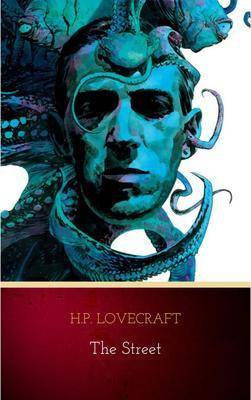
The Street
¥9.00
"The Street" is a short story by American horror fiction writer H. P. Lovecraft, written in late 1919 and first published in the December 1920 issue of the Wolverine amateur journal. The story traces the history of the eponymous street in a New England city, presumably Boston, from its first beginnings as a path in colonial times to a quasi-supernatural occurrence in the years immediately following World War I.
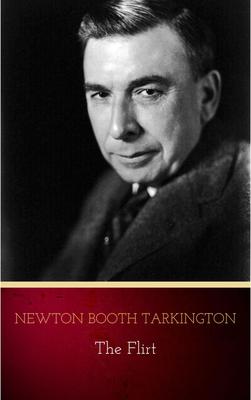
The Flirt
¥9.00
Newton Booth Tarkington (July 29, 1869 – May 19, 1946) was an American novelist and dramatist best known for his novels The Magnificent Ambersons and Alice Adams. He is one of only three novelists to win the Pulitzer Prize for Fiction more than once, along with William Faulkner and John Updike.
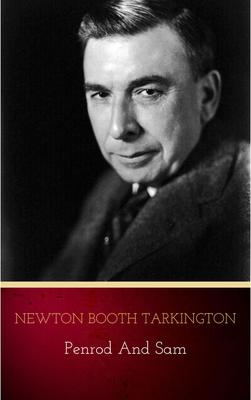
Penrod and Sam
¥9.00
Penrod and Sam is a novel by Booth Tarkington that was first published in 1916. The book is the sequel to his 1914 work, Penrod, and focuses more on the relationship between the main character of the previous book, Penrod Schofield, and his best friend, Sam Williams. More of Penrod's adventures appear in the final book of the series Penrod Jashber (1929). The three books were published together in one volume, Penrod: His Complete Story, in 1931.
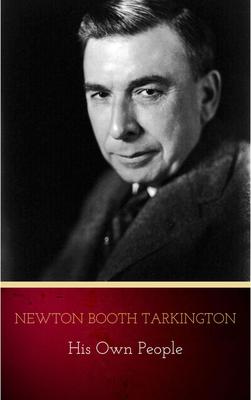
His Own People
¥9.00
Newton Booth Tarkington (July 29, 1869 – May 19, 1946) was an American novelist and dramatist best known for his novels The Magnificent Ambersons and Alice Adams. He is one of only three novelists to win the Pulitzer Prize for Fiction more than once, along with William Faulkner and John Updike.
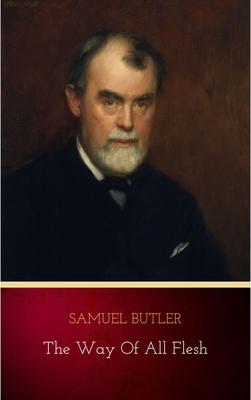
The Way of All Flesh
¥9.00
A semi-autobiographical novel that attacks Victorian era hypocrisy as it traces four generations of the Pontifex family. Butler dared not publish it during his lifetime, but when it was published, it was accepted as part of the general revulsion against Victorianism.

Through the Gates of the Silver Key
¥9.00
At a gathering to decide the fate of Randolph Carter's estate which has been held in trust since his disappearance the mysterious Swami Chandraputra, who wears curious mittens and enveloping robes, tells Carter's acquaintances of his ultimate fate. He explains that the key took Carter to a type of higher dimension. There, Carter, on an ill-defined mission (or out of sheer curiosity), travelled strange sections of the cosmos by first meeting with 'Umr at-Tawil, a dangerous being warned of in the Necronomicon, saying those who deal with it never return
The Temple
¥9.00
"The Temple" is a short story written by H. P. Lovecraft in 1920, and first published in the pulp magazine Weird Tales in February 1925. It was the first story Lovecraft published in Weird Tales, and indeed was his first publication in any professional outlet. The story is narrated as a "found manuscript" penned by Karl Heinrich, Graf von Altberg-Ehrenstein, a Lieutenant Commander in the Imperial German Navy during the days of World War I. It documents his untimely end at the bottom of the ocean
Supernatural Horror in Literature
¥9.00
Great modern American supernaturalist brilliantly surveys history of genre to 1930s, summarizing, evaluating scores of books, including works by Poe, Bierce, M.R. James, "Monk" Lewis, many others. Praised by critics as diverse as Edmund Wilson and Vincent Starrett.

The Other Gods
¥9.00
A high priest and prophet greatly learned in the lore of the gods of earth attempts to scale the mountain of Hatheg-Kla in order to look upon their faces, accompanied by his young disciple. But the gods of the earth are not there alone.
The Evil Clergyman
¥9.00
"The Evil Clergyman" is an excerpt from a letter written by American horror fiction writer H. P. Lovecraft in 1933. After his death, it was published in the April 1939 issue of Weird Tales as a short story. The story was later adapted into the unreleased 1987 anthology film Pulse Pounders. The story begins in the attic of an ancient house. The narrator’s companion refers to the former owner of the house and the presumably violent end that befell him. He advises the narrator not to stay after dark or touch anything, especially the small object on a table, which the companion seems to fear considerably.
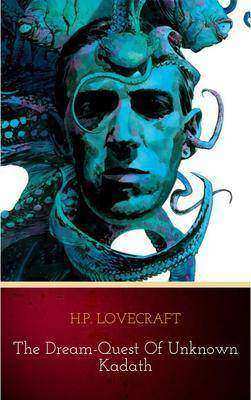
The Dream-Quest of Unknown Kadath
¥9.00
Randolph Carter dreams three times of a majestic sunset city, but each time he is abruptly snatched away before he can see it up close. When he prays to the gods of dream to reveal the whereabouts of the phantasmal city, they do not answer, and his dreams of the city stop altogether. Undaunted, Carter resolves to go to Kadath, where the gods live, to beseech them in person. However, no one has ever been to Kadath and none even knows how to get there. In dream, Randolph Carter descends "the seventy steps to the cavern of flame" and speaks of his plan to the priests Nasht and Kaman-Thah, whose temple borders the Dreamlands. The priests warn Carter of the great danger of his quest and suggest that the gods withdrew his vision of the city on purpose.
Do?a Milagros
¥9.00
Su modelo de “mujer del futuro” viene encarnada en el personaje de Feíta, hija de don Benicio Neira, un hidalgo venido a menos, situado en la clase media, cuya hija alberga unos inmensos deseos de instrucción, de autonomía personal, de trabajo para independizarse… que la alejan de las “se?oritas” de su clase y del resto de sus hermanas.
Insolación
¥9.00
La autora se aleja de las premisas Naturalismo centrándose en el estudio psicológico de los personajes, empleando para ello una inusitada y compleja técnica narrativa. El feminismo, la crítica de los valores morales y la doble vara de medir de la sociedad de la época son puestas en escena en historia donde una sensual viuda tiene una aventura con un hombre mucho más joven que ella.
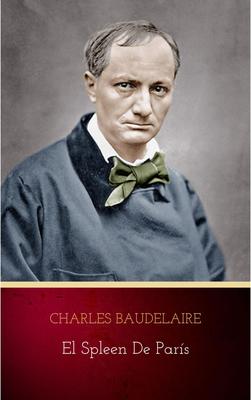
El spleen de París
¥9.00
Los peque?os poemas en prosa, también conocido como El spleen de París es una colección de 50 peque?os poemas escritos en prosa poética. La melancolía, el horror al paso del tiempo, el deseo de infinito, la crítica corrosiva contra la religión y la moral, así como la burla contra los ideales que mueven a las personas y una aversión enorme contra la sociedad y la hipocresía que la domina son temas recurrentes en estas poesías.
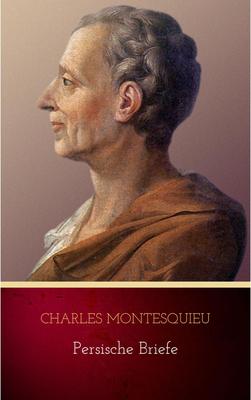
Persische Briefe
¥9.00
Die "Lettres persanes" (erste Ausgabe 1721) des franz?sischen Staatsphilosophen der Aufkl?rung Charles-Louis de Secondat, Baron de La Brède de Montesquieu (so sein vollst?ndiger Name) ist eines der wirkm?chtigsten Bücher der Weltliteratur, zugleich eines der erfolgreichsten zu seiner Zeit. Es ist nach der franz?sischen Revolution allerdings zunehmend in den Schatten von Montesquieus Hauptwerk, "De l’esprit des loix" (1748, Vom Geist der Gesetze), getreten, obwohl es im Vergleich zu den politischen Positionen in den Persischen Briefen durchaus als Rückschritt betrachtet werden kann. Im Gegensatz zu dem Hauptwerk gehen die Persischen Briefe unterhaltsam und satirisch an die zentralen Fragestellungen der Zeit heran; wenn man bedenkt, dass es dem Verfasser vor allem darum zu tun gewesen sein soll, mit diesem Text seine Aufnahme in die Academie fran?aise, die er in den Briefen noch dazu geh?rig verspottet, zu erreichen - was ihm auch gelang -, dann dr?ngt sich der Gedanke auf, dass das Selbstinteresse einmal mehr einen Zweck durchgesetzt hat, den es gar nicht vordringlich verfolgte.
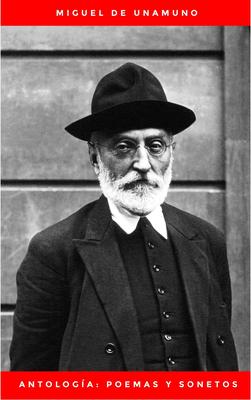
Antología: poemas y sonetos
¥9.00
Antología de poemas, sonetos y Rimas de Miguel de Unamuno. Una breve selección de María del Pilar MARTINEZ. -El Cristo de Velázquez (1920) -Blas, el bobo (Blas, el bobo de la aldea) -Castilla (Tú me levantas, tierra de Castilla,) -El armador aquel (El armador aquel de casas rústicas) -El cuerpo canta -El mar de encinas (En este mar de encinas castellano) -En un cementerio de lugar castellano (Corral de muertos, entre pobres tapias,) -Habla, que lo quiere el ni?o -Incidente doméstico (Traza la ni?a toscos garrapatos) -La luna y la rosa (En el silencio estrellado) -Madre, llévame a la cama -Me destierro (Me destierro a la memoria) -Ofelia de Dinamarca (Rosa de nube de carne) -Oh, Se?or, tú que sufres del mundo (Salmo III) -Qué es tu vida (?Qué es tu vida, alma mía?, ?cuál tu pago?,) -Sombra de humo (?Sombra de humo cruza el prado!) -Vendrá de noche (Vendrá de noche cuando todo duerma,) -Y ?qué es eso? (Y ?qué es eso del Infierno?) -De vuelta a casa (Desde mi cielo a despedirme llegas) -Es una antorcha (Es una antorcha al aire esta palmera,) -Horas serenas (Horas serenas del ocaso breve,) -La estrella polar (Luciérnaga celeste, humilde estrella) -La mar ci?e (La mar ci?e a la noche en su regazo) -La sangre de mi espíritu (La sangre de mi espíritu es mi lengua) -Muerte (Eres sue?o de un dios; cuando despierte) -Noche de luna llena (Noche blanca en que el agua cristalina) -Cuando duerme una madre junto al ni?o -Por qué esos lirios que los hielos matan
Henry V
¥9.00
Henry V is a history play by William Shakespeare, believed to be written in 1599. It is based on the life of King Henry V of England, and focuses on events immediately before and after the Battle of Agincourt during the Hundred Years' War. The play is the final part of a tetralogy, preceded by Richard II, Henry IV, part 1 and Henry IV, part 2. The original audiences would thus have already been familiar with the title character, who was depicted in the Henry IV plays as a wild, undisciplined lad known as "Prince Hal." In Henry V, the young prince has become a mature man and embarks on an attempted conquest of France.
The Two Gentlemen of Verona
¥9.00
The Two Gentlemen of Verona is a comedy by William Shakespeare from early in his career. It has the smallest cast of any of Shakespeare's plays, and is the first of his plays in which a heroine dresses as a boy. It deals with the themes of friendship and infidelity. The highlight of the play is considered by some to be Launce, the clownish servant of Proteus, and his dog Crab, to whom "the most scene-stealing non-speaking role in the canon" has been attributed.
Troilus and Cressida
¥9.00
Troilus and Cressida is a tragedy by William Shakespeare, believed to have been written in 1602. The play (also described as one of Shakespeare's problem plays) is not a conventional tragedy, since its protagonist (Troilus) does not die. The play ends instead on a very bleak note with the death of the noble Trojan Hector and destruction of the love between Troilus and Cressida. Throughout the play, the tone lurches wildly between bawdy comedy and tragic gloom, and readers and theatre-goers have frequently found it difficult to understand how one is meant to respond to the characters.
Timon of Athens
¥9.00
The Life of Timon of Athens is a play by William Shakespeare about the legendary Athenian misanthrope Timon (and probably influenced by the eponymous philosopher, as well), generally regarded as one of his most obscure and difficult works. Originally grouped with the tragedies, it is generally considered such, but some scholars group it with the problem comedies.
Richard III
¥9.00
Richard III is a history play by William Shakespeare, believed to have been written in approximately 1591. The play is an unflattering depiction of the short reign of Richard III of England. While generally classified as a history, as grouped in the First Folio, the play is sometimes called a tragedy (as in the first quarto). It picks up the story from Henry VI, Part 3 and concludes the historical series that stretches back to Richard II.


