


 购物车
购物车 个人中心
个人中心
A Thief in the Nght, A Book of Raffles' Adventures
¥8.09
Classic mystery/detective novel. According to Wikipedia: "Ernest William Hornung (June 7, 1866 – March 22, 1921)... was an English author, most famous for writing the Raffles series of novels about a gentleman thief in late Victorian London. Hornung was the third son of John Peter Hornung, a Hungarian, and was born in Middlesbrough, England. He was educated at Uppingham School during some of the later years of its great headmaster, Edward Thring. He spent most of his life in England and France, but in 1884 left for Australia and stayed for two years where he working as a tutor at Mossgiel station. Although his Australian experience had been so short, it coloured most of his literary work from A Bride from the Bush published in 1899, to Old Offenders and a few Old Scores, which appeared after his death. He returned from Australia in 1886, and married Constance ("Connie") Doyle (1868-1924), the sister of Sir Arthur Conan Doyle in 1893. Hornung published the poems Bond and Free and Wooden Crosses in The Times. The character of A. J. Raffles, a "gentleman thief", first appeared in Cassell's Magazine in 1898 and the stories were later collected as The Amateur Cracksman (1899). Other titles in the series include The Black Mask (1901), A Thief in the Night (1905), and the full-length novel Mr. Justice Raffles (1909). He also co-wrote the play Raffles, The Amateur Cracksman with Eugene Presbrey in 1903."
Nana
¥8.09
Classic naturalist novel about a prostitute in Paris, in English translation. First published in 1880. According to Wikipedia: "Nana is a novel by the French naturalist author ?mile Zola. Completed in 1880, Nana is the ninth installment in the 20-volume Les Rougon-Macquart series, the object of which was to tell "The Natural and Social History of a Family under the Second Empire", the subtitle of the series....Nana tells the story of Nana Coupeau's rise from streetwalker to high-class cocotte during the last three years of the French Second Empire. Nana first appears in the end of L'Assommoir (1877), another of Zola's Rougon-Macquart series, in which she is portrayed as the daughter of an abusive drunk; in the end, she is living in the streets and just beginning a life of prostitution.... Emile Zola (2 April 1840 - 29 September 1902) was an influential French writer, the most important example of the literary school of naturalism, and a major figure in the political liberalization of France..."

The Deserter
¥8.09
Classic western novel. According to Wikipedia: "Charles King (October 12, 1844 in Albany, New York – 17 March 1933 in Milwaukee, Wisconsin) was a United States soldier and a distinguished writer. King was the son of Civil War general Rufus King, grandson of Columbia University president Charles King, and great grandson of Rufus King, one of the signers of the Declaration of Independence. He graduated from West Point in 1866 and served in the Army during the Indian Wars under George Crook. He was wounded in the arm forcing his retirement from the regular army. During this time he became acquainted with Buffalo Bill Cody. King would later write scripts for several of Cody's silents films.... In 1898, he was appointed brigadier general of volunteers and sailed to the Philippines during the Spanish-American War. The fighting with Spain was over by the time he arrived, but he assisted in the surrender negotiations. During the following Philippine-American War, King was placed in command of the 1st Brigade in Henry W. Lawton's division. He led his brigade during the Battle of Manila and sailed for Santa Cruz with Lawton's division. He was incapacitated by sickness during the Battle of Santa Cruz, but he returned to fight in the following Battle of Pagsanjan. He took part in the final major campaigns before the fighting turned primarily to guerilla warfare. He returned to the United States and was active in the Wisconsin National Guard and in training troops for World War I. He wrote and edited over 60 books and novels. Among his list of titles are Campaigning with Crook, Fort Frayne, Under Fire and Daughter of the Sioux."

The Eagle's Heart
¥8.09
Classic western novel. According to Wikipedia: "Hamlin Hannibal Garland (September 14, 1860 – March 4, 1940) was an American novelist, poet, essayist, and short story writer. He is best known for his fiction involving hard-working Midwestern farmers."

The Spirit of Sweetwater
¥8.09
Classic western novel. According to Wikipedia: "Hamlin Hannibal Garland (September 14, 1860 – March 4, 1940) was an American novelist, poet, essayist, and short story writer. He is best known for his fiction involving hard-working Midwestern farmers."

The Portrait of a Lady: both volumes
¥8.09
According to Wikipedia: "The Portrait of a Lady is a novel by Henry James, first published as a serial in The Atlantic Monthly and Macmillan's Magazine in 1880–81 and then as a book in 1881. It is one of James's most popular long novels, and is regarded by critics as one of his finest. The Portrait of a Lady is the story of a spirited young American woman, Isabel Archer, who "affronts her destiny" and finds it overwhelming. She inherits a large amount of money and subsequently becomes the victim of Machiavellian scheming by two American expatriates. Like many of James's novels, it is set in Europe, mostly England and Italy. Generally regarded as the masterpiece of James's early period, this novel reflects James's continuing interest in the differences between the New World and the Old, often to the detriment of the former. It also treats in a profound way the themes of personal freedom, responsibility, and betrayal."
The Whirlpool
¥8.09
Classic novel. According to Wikipedia: "George Robert Gissing (November 22, 1857 – December 28, 1903) was an English novelist who wrote twenty-three novels between 1880 and 1903. From his early naturalistic works, he developed into one of the most accomplished realists of the late-Victorian era. ... In 1880 when his first novel, Workers in the Dawn, proved to be an abject failure, he became a private tutor to keep poverty from the door. In 1883, he separated from his wife, now an alcoholic, but gave her a weekly income on what little money he had until her death in 1888. In 1884 his second novel, The Unclassed, which saw a marked improvement in style and characterisation, met with moderate critical acclaim. After this Gissing published novels almost on a yearly basis, but so little money did they bring him, that for several more years he had to continue working as a tutor. Although notoriously exploited by his publishers, he was able to visit Italy in 1889 from the sale of the copyright of The Nether World, his most pessimistic book. Between 1891 and 1897 (his so-called middle period) Gissing produced his best works, which include New Grub Street, Born in Exile, The Odd Women, In the Year of Jubilee, and The Whirlpool. In advance of their time, they variously deal with the growing commercialism of the literary market, religious charlatanism, the situation of emancipated women in a male-dominated society, the poverty of the working classes, and marriage in a decadent world. During this period, having belatedly become aware of the financial rewards of writing short stories for the press, he produced almost seventy stories. As a result he was able to give up teaching. ... The middle years of the decade saw Gissing's reputation reach new heights: by some critics he is counted alongside George Meredith and Thomas Hardy as one of the best three novelists of his day. He also enjoyed new friendships with fellow writers such as Henry James, and H.G. Wells, and came into contact with many other up and coming writers such as Joseph Conrad and Stephen Crane. ... In 1903 Gissing published The Private Papers of Henry Ryecroft, which brought him much acclaim. This is his most autobiographical work. It is the memoir of the last happy years of a writer who had struggled much like Gissing, but thanks to a late legacy had been able to give up writing to retire to the countryside."
Vandover and the Brute
¥8.09
Classic novel. According to Wikipedia: "Benjamin Franklin Norris, Jr. (March 5, 1870 – October 25, 1902) was an American novelist, during the Progressive Era, writing predominantly in the naturalist genre. His notable works include McTeague (1899), The Octopus: A California Story (1901), and The Pit (1903). Although he did not openly support socialism as a political system, his work nevertheless evinces a socialist mentality and influenced socialist/progressive writers such as Upton Sinclair. Like many of his contemporaries, he was profoundly influenced by the advent of Darwinism, and Thomas Henry Huxley's philosophical defense of it. Norris was particularly influenced by an optimistic strand of Darwinist philosophy taught by Joseph LeConte, whom Norris studied under while at the University of California, Berkeley. Through many of his novels, notably McTeague, runs a preoccupation with the notion of the civilized man overcoming the inner "brute," his animalistic tendencies. His peculiar, and often confused, brand of Social Darwinism also bears the influence of the early criminologist Cesare Lombroso and the French naturalist Emile Zola."
England, My England
¥8.09
Classic novel. According to Wikipedia: "David Herbert Richards Lawrence (11 September 1885 – 2 March 1930) was an English author, poet, playwright, essayist and literary critic. His collected works represent an extended reflection upon the dehumanizing effects of modernity and industrialization. In them, Lawrence confronts issues relating to emotional health and vitality, spontaneity, human sexuality and instinct. Lawrence's opinions earned him many enemies and he endured official persecution, censorship, and misrepresentation of his creative work throughout the second half of his life, much of which he spent in a voluntary exile he called his "savage pilgrimage." At the time of his death, his public reputation was that of a pornographer who had wasted his considerable talents. E. M. Forster, in an obituary notice, challenged this widely held view, describing him as, "The greatest imaginative novelist of our generation." Later, the influential Cambridge critic F. R. Leavis championed both his artistic integrity and his moral seriousness, placing much of Lawrence's fiction within the canonical "great tradition" of the English novel. Lawrence is now generally valued as a visionary thinker and significant representative of modernism in English literature, although some feminists object to the attitudes toward women and sexuality found in his works."
The Club of Queer Trades
¥8.09
Classic novel. According to Wikipedia: "Gilbert Keith Chesterton (1874 - 1936) was an influential English writer of the early 20th century. His prolific and diverse output included journalism, philosophy, poetry, biography, Christian apologetics, fantasy and detective fiction. Chesterton has been called the "prince of paradox."[1] He wrote in an off-hand, whimsical prose studded with startling formulations. For example: "Thieves respect property. They merely wish the property to become their property that they may more perfectly respect it."[2] He is one of the few Christian thinkers who are equally admired and quoted by both liberal and conservative Christians, and indeed by many non-Christians. Chesterton's own theological and political views were far too nuanced to fit comfortably under the "liberal" or "conservative" banner."
Marm Lisa
¥8.09
Classic novel. According to Wikipedia: "Kate Douglas Wiggin ( 1856 - 1923) was an American children's author and educator. Kate Douglas Smith Wiggin was born in Philadelphia, and was of Welsh descent. She started the first free kindergarten in San Francisco in 1878 (the Silver Street Free Kindergarten). With her sister in the 1880s she also established a training school for kindergarten teachers. She was also a writer of children's books, the best known being The Birds' Christmas Carol (1887) and Rebecca of Sunnybrook Farm (1903)."
Memoirs of Charles J. Yellowplush
¥8.09
Classic novel. According to Wikipedia: "Thackeray is most often compared to one other great novelist of Victorian literature, Charles Dickens. During the Victorian era, he was ranked second only to Dickens, but he is now much less read and is known almost exclusively for Vanity Fair. In that novel he was able to satirize whole swaths of humanity while retaining a light touch. It also features his most memorable character, the engagingly roguish Becky Sharp. As a result, unlike Thackeray's other novels, it remains popular with the general reading public; it is a standard fixture in university courses and has been repeatedly adapted for movies and television. In Thackeray's own day, some commentators, such as Anthony Trollope, ranked his History of Henry Esmond as his greatest work, perhaps because it expressed Victorian values of duty and earnestness, as did some of his other later novels. It is perhaps for this reason that they have not survived as well as Vanity Fair, which satirizes those values."
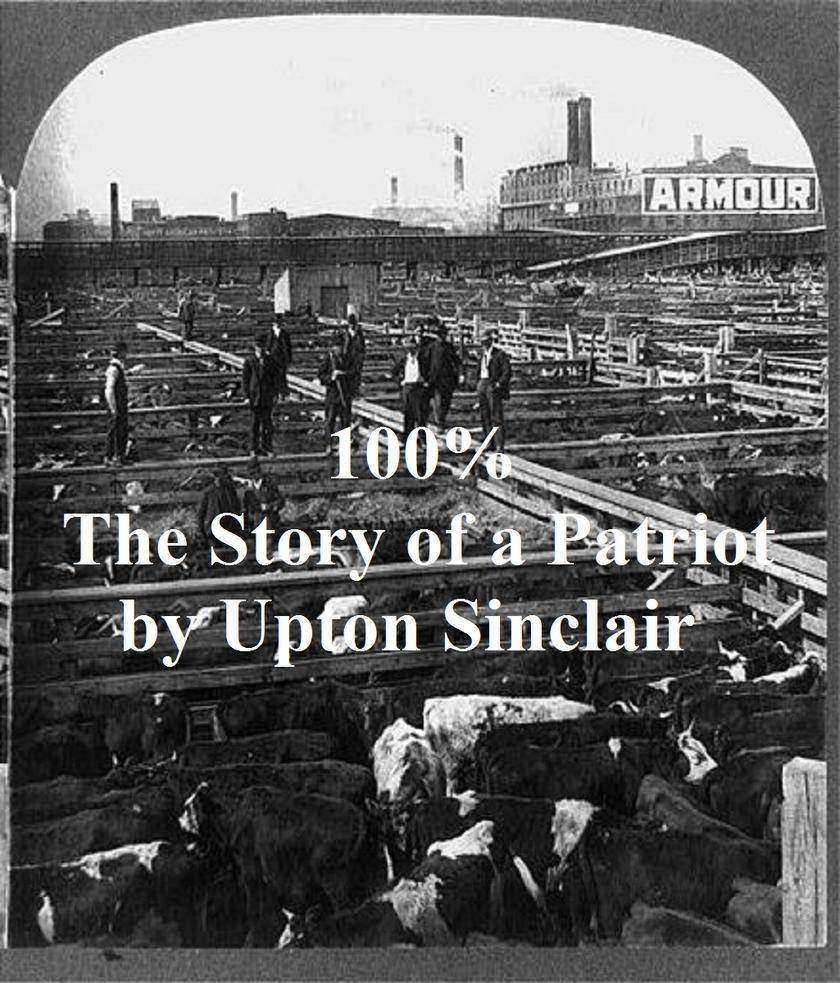
100%: The Story of a Patriot
¥8.09
Classic novel. According to Wikipedia: "Upton Beall Sinclair, Jr. (1878 - 1968), was a prolific American author who wrote over 90 books in many genres and was widely considered to be one of the best investigators advocating socialist views. He achieved considerable popularity in the first half of the 20th century. He gained particular fame for his 1906 novel The Jungle, which dealt with conditions in the U.S. meat packing industry and caused a public uproar that partly contributed to the passage of the Pure Food and Drug Act and the Meat Inspection Act in 1906."
Jo's Boys
¥8.09
Classic novel by the author of "Little Women". According to Wikipedia: "Louisa May Alcott (1832 – 1888) was an American novelist. She is best known for the novel Little Women, published in 1868. This novel is loosely based on her childhood experiences with her three sisters."
Little Men
¥8.09
Classic novel by the author of "Little Women". According to Wikipedia: "Louisa May Alcott (1832 – 1888) was an American novelist. She is best known for the novel Little Women, published in 1868. This novel is loosely based on her childhood experiences with her three sisters."
La Tentation de Saint Antoine
¥8.09
Roman classique d'abord publié en 1848, dans le fran?ais original. Selon Wikipédia: "La Tentation de Saint Antoine" est un livre que l'auteur fran?ais Gustave Flaubert a pratiquement travaillé toute sa vie, en trois versions qu'il a achevées en 1849, 1856 (extraits publiés au même temps) et 1872 avant de publier la version finale en 1874. Il prend comme sujet la fameuse tentation de Saint Antoine le Grand dans le désert égyptien, un thème souvent repris dans l'art médiéval et moderne. Il raconte une nuit dans la vie d'Anthony le Grand, où Anthony est confronté à de grandes tentations, et il a été inspiré par la peinture qu'il a vue au palais Balbi à Gênes. Madame Bovary, que Flaubert considérait son chef-d'?uvre.
Gunman's Reckoning
¥8.09
Classic western. According to Wikipedia: "Frederick Schiller Faust (May 29, 1892 - May 12, 1944) was an American fiction author known primarily for his thoughtful and literary Westerns. Faust wrote mostly under pen names, and today is primarily known by one, Max Brand. Others include George Owen Baxter, Evan Evans, David Manning, John Frederick, Peter Morland, George Challis, and Frederick Frost. ... Faust managed a massive outpouring of fiction, rivaling Edgar Wallace and especially Isaac Asimov as one of the most prolific authors of all time. He wrote more than 500 novels for magazines and almost as many stories of shorter length. His total literary output is estimated to have been between 25,000,000 and 30,000,000 words. Most of his books and stories were turned out at breakneck rate, sometimes as quickly as 12,000 words in the course of a weekend. New books based on magazine serials or unpublished manuscripts or restored versions continue to appear so that he has averaged a new book every four months for seventy-five years. Beyond this, some work by him is newly reprinted every week of every year in one or another format somewhere in the world."
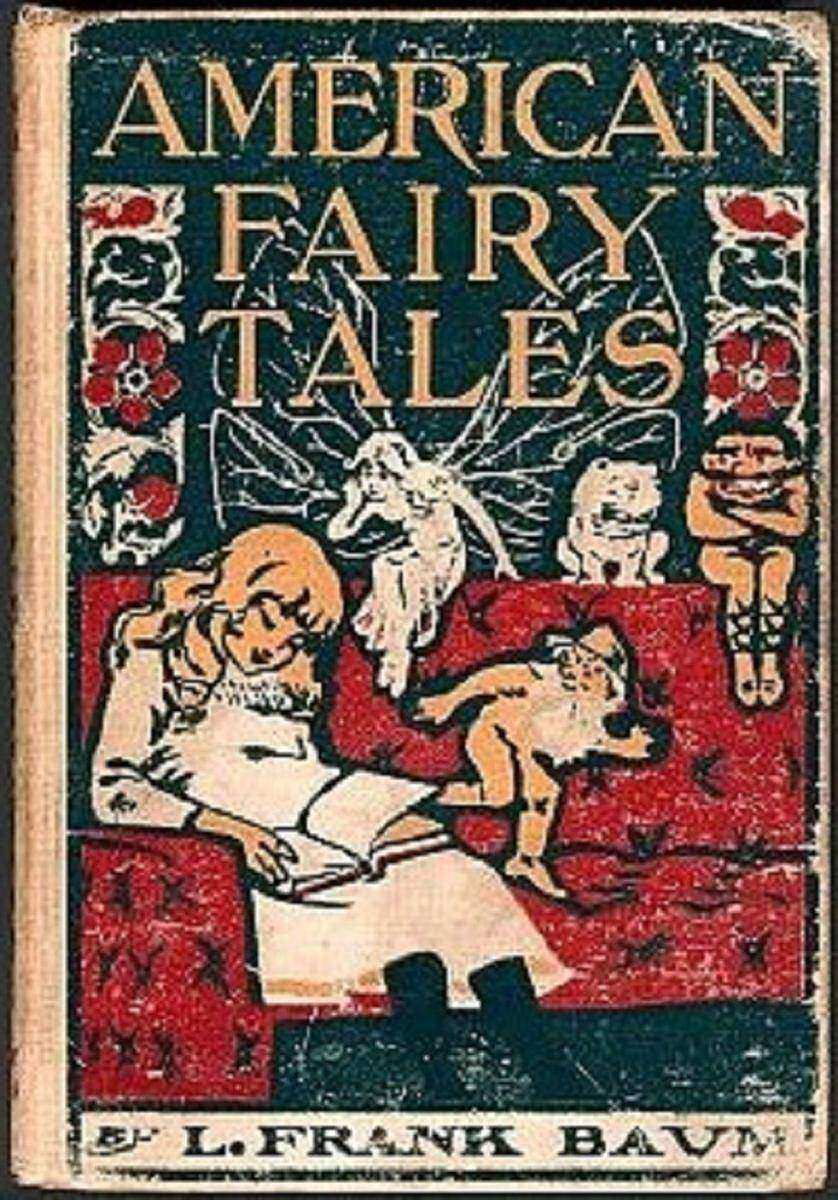
American Fairy Tales
¥8.09
According to Wikipedia: "American Fairy Tales is the title of a collection of twelve fantasy stories by L. Frank Baum, published in 1901.. The stories, as critics have noted, lack the high-fantasy aspect of the best of Baum's work, in Oz or out. With ironic or nonsensical morals attached to their ends, their tone is more satirical, glib, and tongue-in-cheek than is usual in children's stories; the serialization in newspapers for adult readers was appropriate for the materials. "The Magic Bon Bons" was the most popular of the tales, judging by number of reprints. Two of the stories, "The Enchanted Types" and "The Dummy That Lived," employ knooks and ryls, the fairies that Baum would use in The Life and Adventures of Santa Claus the next year, 1902. "The Dummy That Lived" depends upon the idea of a department-store mannequin brought to life, an early expression of an idea that would be re-used by many later writers in television and films."
The Seventh Man
¥8.09
Classic western. According to Wikipedia: "Frederick Schiller Faust (May 29, 1892 - May 12, 1944) was an American fiction author known primarily for his thoughtful and literary Westerns. Faust wrote mostly under pen names, and today is primarily known by one, Max Brand. Others include George Owen Baxter, Evan Evans, David Manning, John Frederick, Peter Morland, George Challis, and Frederick Frost. ... Faust managed a massive outpouring of fiction, rivaling Edgar Wallace and especially Isaac Asimov as one of the most prolific authors of all time. He wrote more than 500 novels for magazines and almost as many stories of shorter length. His total literary output is estimated to have been between 25,000,000 and 30,000,000 words. Most of his books and stories were turned out at breakneck rate, sometimes as quickly as 12,000 words in the course of a weekend. New books based on magazine serials or unpublished manuscripts or restored versions continue to appear so that he has averaged a new book every four months for seventy-five years. Beyond this, some work by him is newly reprinted every week of every year in one or another format somewhere in the world."
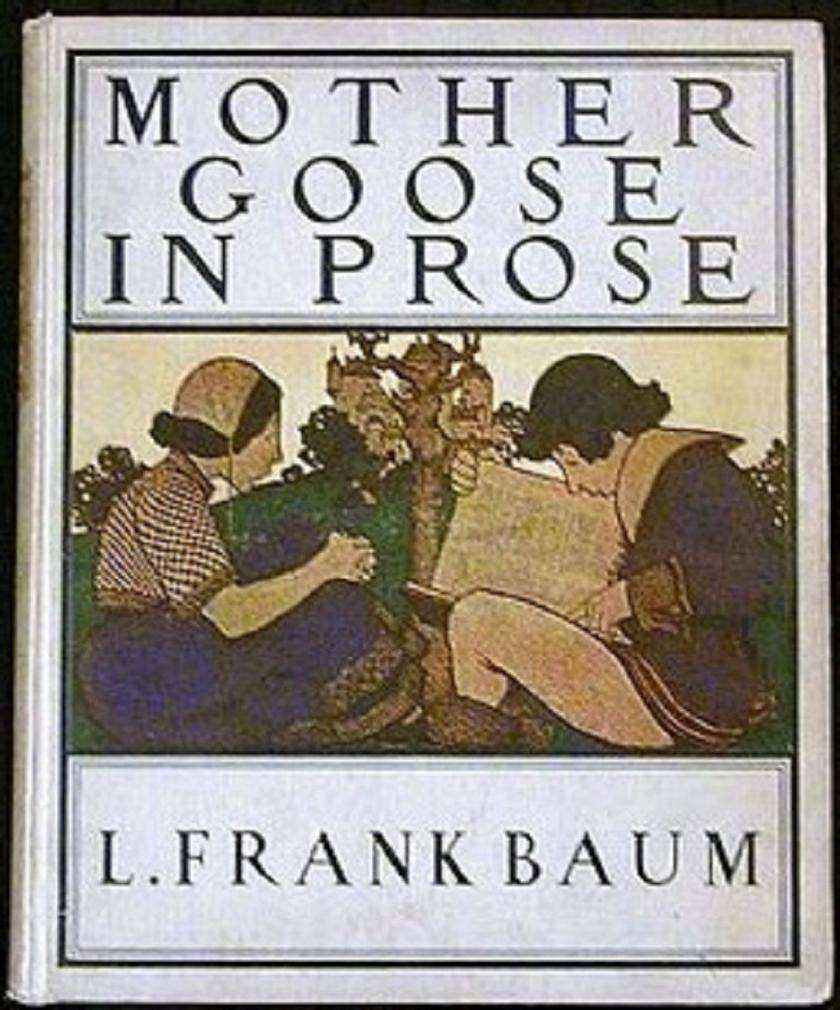
Mother Goose in Prose
¥8.09
According to Wikipedia: "Mother Goose in Prose is a collection of twenty-two children's stories based on Mother Goose nursery rhymes. It was the first children's book written by L. Frank Baum, and the first book illustrated by Maxfield Parrish. It was originally published in 1897 by Way and Williams of Chicago, and re-released by the George M. Hill Company in 1901. The book opens with an introduction by Baum that traces the history of Mother Goose. It is followed by the original text of a nursery rhyme with a broader story to establish its literary context... The book's last selection features a girl named Dorothy who can talk to animals — an anticipation of the Oz books. When Baum later included this story in his Juvenile Speaker (1910) and The Snuggle Tales (1916–17), he changed the girl's name to Doris, to avoid confusing her with Dorothy Gale."
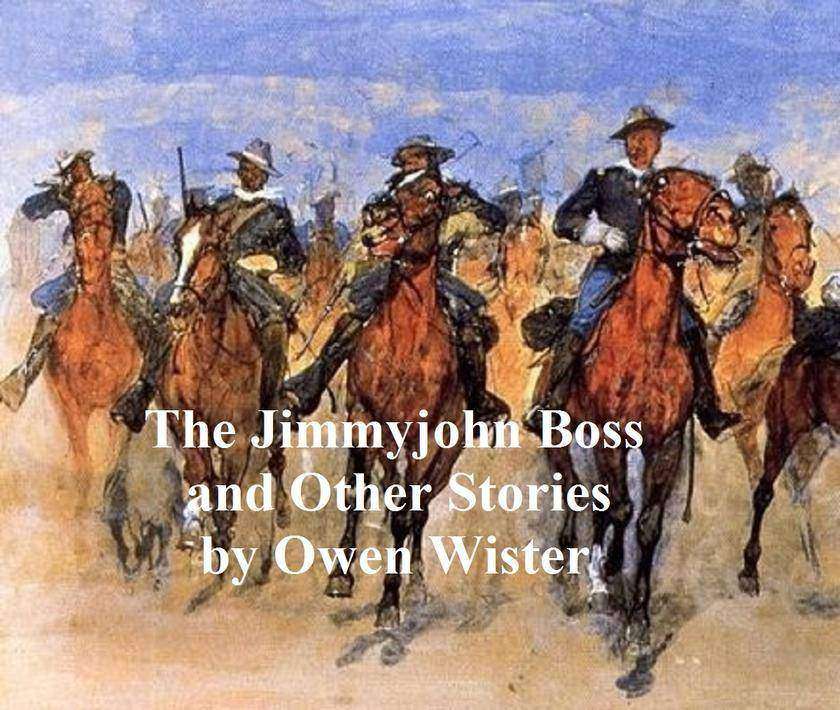
The Jimmyjohn Boss and Other Stories
¥8.09
Classic western. According to Wikipedia: "Owen Wister (July 14, 1860 – July 21, 1938) was an American writer of western fiction... Wister had spent several summers out in the American West, making his first trip to Wyoming in 1885. Like his friend Teddy Roosevelt, Wister was fascinated with the culture, lore and terrain of the region. On an 1893 visit to Yellowstone, Wister met the western artist Frederic Remington; they remained lifelong friends. When he started writing, he naturally inclined towards fiction set on the western frontier. Wister's most famous work remains the 1902 novel The Virginian, the loosely constructed story of a cowboy who is a natural aristocrat, set against a highly mythologized version of the Johnson County War and taking the side of the large land owners. This is widely regarded as being the first cowboy novel and was reprinted fourteen times in eight months. The book is dedicated to Theodore Roosevelt."


